Our readers keep the lights on and my smoothie glass nicely filled. As an Amazon Associate, I earn from qualifying purchases.
A road cycling shoe is the single most direct connection between your legs and the drivetrain. Every watt you produce either transfers to the pedals or gets lost in a flexing, ill-fitting sole, turning a crisp power stroke into a soggy, inefficient push. The right shoe locks your foot in place, eliminates hotspots, and makes that 80-mile Saturday ride feel noticeably more responsive.
I’m Mohammad Maruf — the founder and writer behind WellFizz. My analysis of cycling footwear focuses on sole stiffness indices, closure system mechanics, and last geometry as the primary differentiators between a good shoe and a losing bet.
Whether you are chasing a new personal record or simply want to enjoy a group ride without numb feet, choosing the best cycling road shoes requires matching your foot shape and riding style to the correct closure system and sole material.
How To Choose The Best Cycling Road Shoes
Selecting cycling road shoes is a two-part equation: fitting your foot correctly and choosing a stiffness level that matches your riding output. A shoe that is too soft wastes energy; a shoe that is too stiff can be uncomfortable on long, low-intensity spins. Understanding the interplay between sole material, closure system, and last shape will narrow the field quickly.
Sole Stiffness and Material
The sole is the platform through which you push. Nylon composite soles offer a good balance of comfort and moderate stiffness, suitable for endurance rides and new cyclists. Carbon-reinforced nylon blends step up the rigidity without the full race-day stiffness of a unidirectional carbon fiber layup. Full carbon soles — found on premium models — deliver maximum power transfer but transmit more road vibration, which some riders find fatiguing over long distances. Look for an advertised stiffness index between 8 and 12 if you are a competitive rider; lower numbers suit recreational use.
Closure Systems: BOA, Velcro, and Laces
The closure system dictates how evenly pressure distributes across the top of your foot. A single velcro strap is the simplest, lightest option but offers only coarse adjustment. Two velcro straps improve fit at the forefoot and instep but can create pressure points if not positioned correctly. BOA dials allow micro-adjustments in 1mm increments, letting you dial in tension mid-ride as feet swell. Dual BOA dials separate forefoot and instep zones, offering the most race-ready fit. Laces are lightest of all but cannot be adjusted easily while riding. For most riders, a single BOA dial plus a velcro forefoot strap provides the best balance of precision and simplicity.
Last Shape and Brand Fit
Brands build their shoes on different lasts, and understanding yours is critical. Shimano shoes tend to run a touch wider in the toe box, suiting riders with broader forefeet. Giro shoes are generally medium-volume with a snug heel pocket. Fizik uses an asymmetric last that curves to follow the natural shape of the foot. Sidi is famously narrow, designed for slender feet with high arches. Measure your foot length in centimeters and check the brand-specific size chart — many riders go up half a size from their street shoe to accommodate foot swelling and cycling sock thickness.
Quick Comparison
On smaller screens, swipe sideways to see the full table.
| Model | Category | Best For | Key Spec | Amazon |
|---|---|---|---|---|
| Giro Regime | Premium | Race-ready performance | Dual BOA dials | Amazon |
| SHIMANO SH-RC703 | Premium | Stiff carbon power transfer | Carbon fiber sole | Amazon |
| Sidi Shot 2S | High-End | Competitive racing, narrow feet | Adjustable heel retention | Amazon |
| SiDI T-5 AIR | Premium | Triathlon transitions | Velcro closure | Amazon |
| SHIMANO SH-RC302 | Mid-Range | All-day endurance rides | Bottom air channel | Amazon |
| Giro Cadet | Mid-Range | Versatile indoor/outdoor | 80 N/mm stiffness rating | Amazon |
| Fizik Tempo Overcurve R5 | Mid-Range | Ergonomic asymmetric fit | Carbon-reinforced nylon sole | Amazon |
| Giro Stylus | Entry-Level | Budget-friendly indoor spinning | Velcro triple-strap closure | Amazon |
| Tommaso Strada | Value | Wide feet, pre-installed cleats | SPD cleats pre-installed | Amazon |
In‑Depth Reviews
1. Giro Regime Road Cycling Shoes
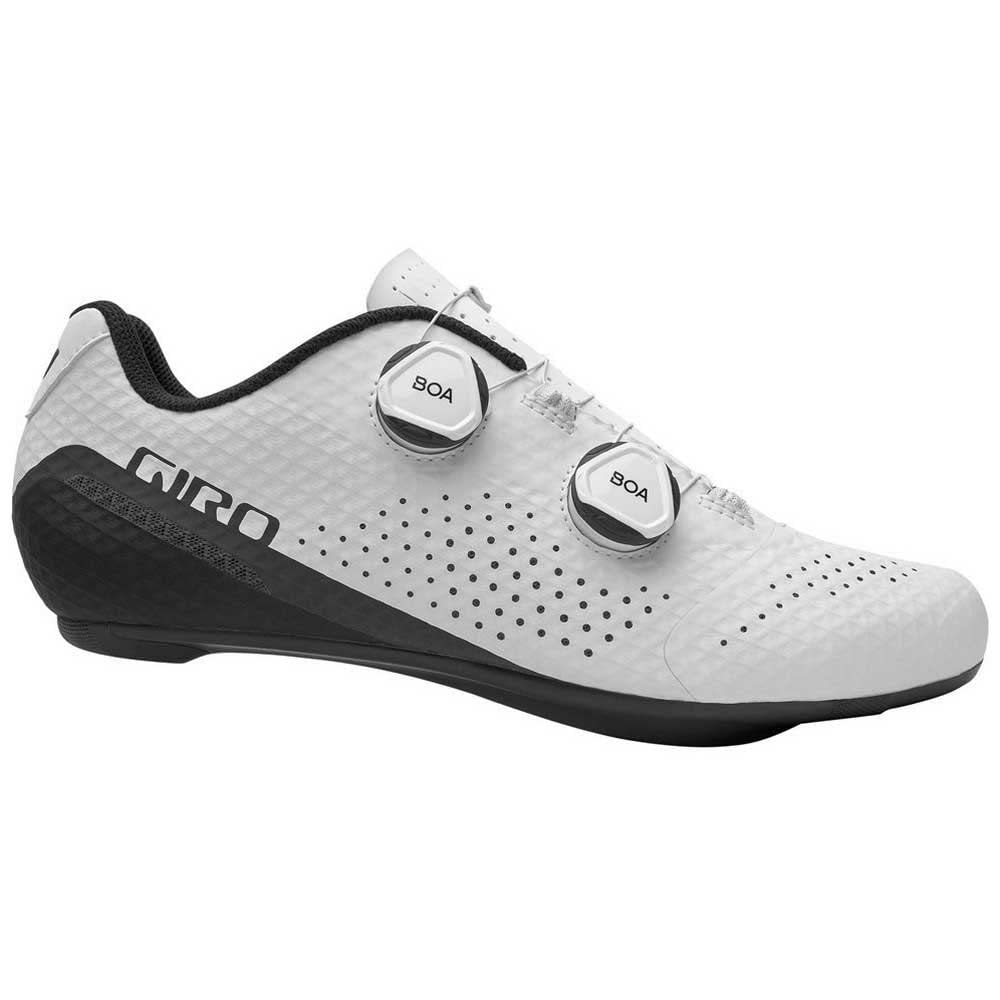
The Giro Regime lands at the sweet spot where race-day stiffness meets all-day comfort. Its injection-molded carbon short fiber outsole delivers the kind of rigid platform that translates every pedal stroke into forward motion without the bone-jarring harshness of a full unidirectional carbon plate. The dual BOA dials let you independently tension the forefoot and instep, which is a lifesaver when your feet swell after the first two hours in the saddle.
Reviewers consistently note the lightweight feel and the fact that the shoes are comfortable without requiring a painful break-in period. The minimal cushioning keeps your foot close to the sole for better proprioception, and the reflective rear tab adds a layer of visibility for dawn patrols. The fit runs slightly narrow through the midfoot, so riders with wider feet should consider going up half a size.
For a rider who wants the stiffness and adjustability of a premium shoe without stepping into the three-digit premium tier, the Regime is the benchmark. It is a shoe you can race in on Saturday and wear for a century ride on Sunday without regret.
Why it’s great
- Dual BOA dials provide precise, independent zonal tensioning.
- Carbon short fiber sole offers excellent power transfer with moderate vibration damping.
Good to know
- Midfoot is snug; wide-footed riders may prefer a half-size up.
- Minimal insole cushioning — aftermarket insoles may help high arches.
2. SHIMANO SH-RC703 Cycling Shoes
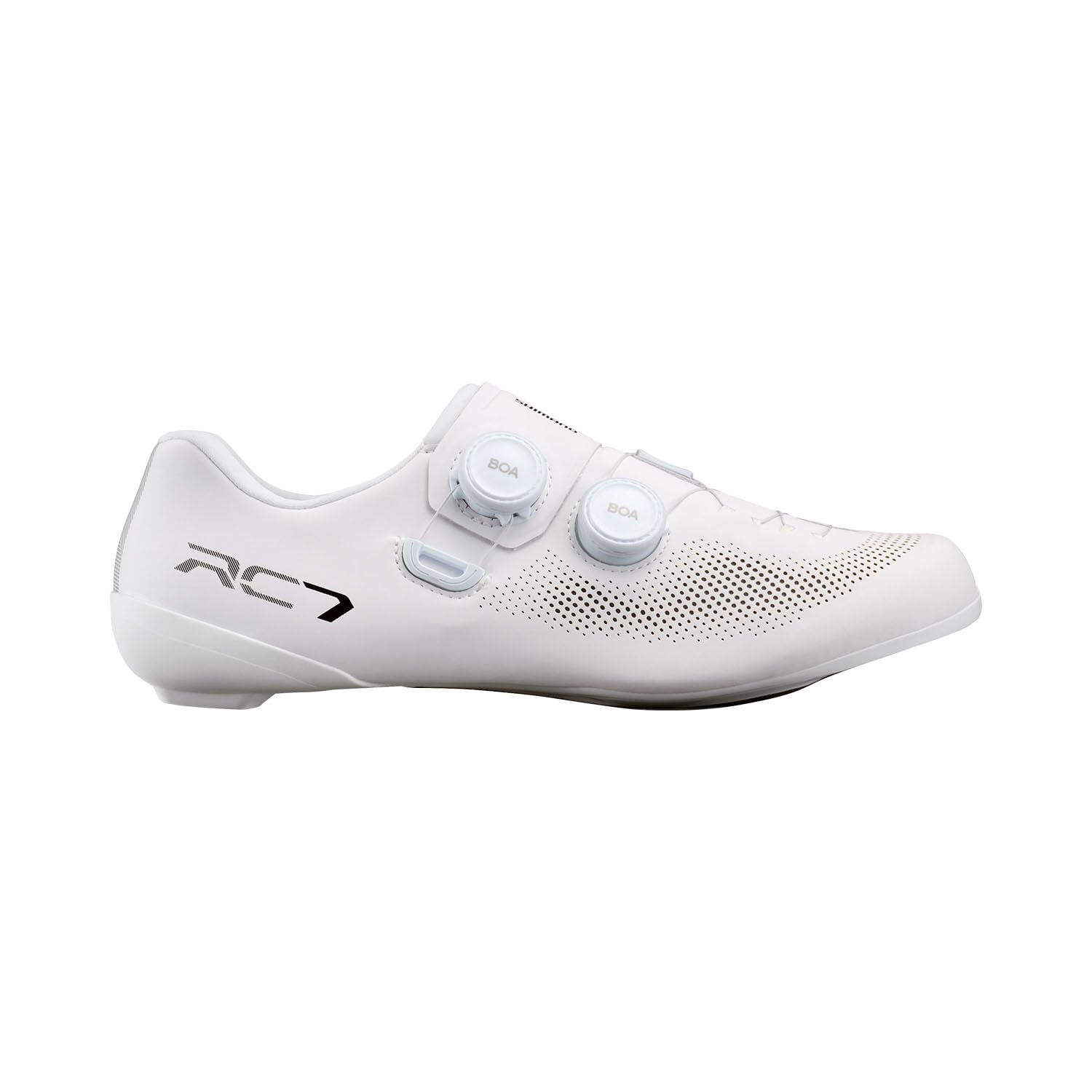
The SH-RC703 is Shimano’s performance workhorse, packing a full unidirectional carbon fiber sole that delivers the kind of stiffness serious riders demand. The dual BOA Li2 dials offer micro-adjustable precision, and the surround upper wraps the foot securely without creating pressure points. Reviewers praise its sleek design and the wide toe box, which accommodates the natural splay of the forefoot during hard efforts.
Sizing is where this shoe requires attention — it runs about a half size large, and the wide toe box can make a standard-width shoe feel roomy. Riders with narrow feet report that even after cinching the BOA dials, there is some lateral movement. For those with medium to wide feet, however, this spaciousness eliminates the toe pinch common to many race-oriented shoes.
The stiffness index here is clearly aimed at racers and fast group riders. The sole flexes minimally, meaning you lose almost no power to sole deformation. If your weekly mileage includes threshold intervals and race-pace efforts, the RC703 will reward you with every watt.
Why it’s great
- Unidirectional carbon sole maximizes power transfer for competitive riding.
- Spacious toe box reduces numbness and hot spots on long rides.
Good to know
- Sizing runs large; order at least a half size down from street shoe.
- Narrow-footed riders may struggle to achieve a locked-in fit.
3. Sidi Shot 2S Road Bike Shoes

Sidi has built a decades-long reputation for narrow-lasted shoes, and the Shot 2S continues that tradition. The stand-out feature here is the adjustable heel retention device, which lets you fine-tune the heel pocket circumference — a godsend for riders whose heel lifts in other shoes. The unique fastening system combines a proprietary dial with a velcro power strap, allowing both macro positioning and micro tensioning.
This shoe is unmistakably for narrow-footed riders. Reviewers with medium-to-wide feet still found the fit snug even after sizing up. The sole is stiff and stable, and the overall build quality feels bombproof — one reviewer noted the shoes showed almost no wear after 3,000 miles. The velcro strap placement initially feels awkward but becomes intuitive after a few rides.
The Shot 2S is not for casual cyclists. It is a high-end tool for competitive riders who demand a locked-in heel, a narrow platform, and a sole that transmits every gram of force. If your foot shape matches, there is no better-feeling shoe at this level.
Why it’s great
- Adjustable heel retention prevents lift and eliminates hotspots.
- Exceptional durability; shows minimal wear after a full season of training.
Good to know
- Very narrow last — medium or wide feet may not fit.
- Unique closure system has a learning curve for quick adjustments.
4. SiDI T-5 AIR Cycling Shoes

The SiDI T-5 AIR is engineered for triathlon transitions, where seconds count. The highly secure velcro closure system is designed for rapid entry and exit — no dials to spin, no laces to tie. One review from a 70.3 athlete reported cutting transition time by over a minute simply by switching to these shoes. The textile lining and regular fit make them comfortable for sockless riding, a common triathlon preference.
Sidi’s signature narrow fit carries over here, but the T-5 AIR is slightly more accommodating than the Shot 2S, with a regular-fit designation that works for a broader range of foot shapes. The sole is stiff enough for race efforts but not as aggressive as a full carbon plate, which makes them more tolerable for post-swim legs that are still finding their rhythm.
For triathletes who prioritize fast transitions and a secure feeling at high cadences, the T-5 AIR is a specialized tool. It lacks the micro-adjustability of BOA systems, but for its intended use — race day speed — the trade-off is worth it. Casual roadies who do not race triathlon may find the velcro closure less precise than they prefer.
Why it’s great
- Quick velcro closure shaves seconds off transition times.
- Regular fit is more forgiving than other Sidi models.
Good to know
- Velcro cannot be micro-adjusted on the fly like BOA.
- Best suited for triathlon; less ideal for long road group rides.
5. SHIMANO SH-RC302 Bicycle Shoes
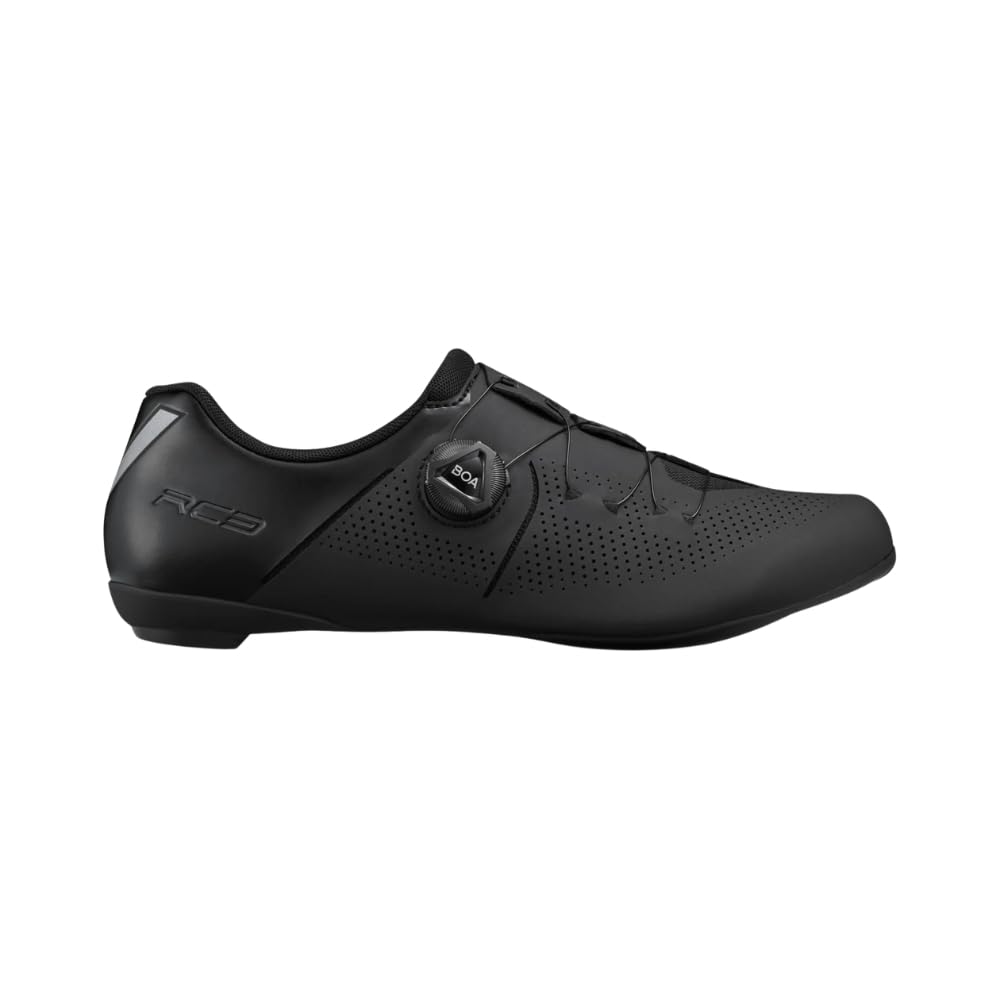
The SH-RC302 is the mid-range endurance specialist in Shimano’s line, designed for riders who log long hours in the saddle without needing the absolute stiffness of a carbon race shoe. Its defining spec is the bottom air channel, which pulls cool air through the sole and pushes hot air out — a real advantage when temperatures climb on a century ride. The nylon composite sole offers a stiffness that suits cadence-based spinning without feeling overly rigid.
Reviewers consistently mention the comfortable fit right out of the box and the generous toe box that accommodates foot swelling during Ironman training sessions. One rider noted they sized up half a per shop recommendation and found the fit ideal. The single BOA dial covers most of the adjustment need, though some riders wished for a second dial for independent forefoot tensioning.
If your riding focuses on endurance events, long climbs, or multi-day tours, the RC302 delivers a compliant platform that reduces foot fatigue. It is not the fastest shoe on the list, but it may be the most comfortable over the course of six hours in the saddle.
Why it’s great
- Integrated ventilation channel keeps feet cooler on hot rides.
- Roomier toe box suits endurance riders and swollen feet.
Good to know
- Sole stiffness is moderate; sprint-heavy riders may want more rigidity.
- Single BOA dial lacks independent zone control.
6. Giro Cadet Men’s Cycling Shoes

The Giro Cadet bridges the gap between entry-level and serious road shoes by offering a carbon short fiber outsole with a stiffness rating of 80 N/mm — stiff enough for spirited group rides but forgiving enough for all-day touring. The Synchwire upper is made from thermo-bonded TPU film and textile mesh, which conforms to the foot without adding weight and provides excellent ventilation through laser-cut vents.
Reviewers highlight the BOA L6 dial combined with a hook-and-loop forefoot strap as a winning combination for precise fit. Riders with high insteps report the shoes accommodate their foot shape well, and those using them on indoor trainers with Delta clips find the shoe comfortable for high-intensity sessions. The sole accommodates both 2-bolt and 3-bolt cleats, making it flexible across pedal systems.
The Cadet runs slim through the toe box compared to Shimano, so riders with wider forefeet should consider sizing up half a step. For an indoor-outdoor hybrid shoe that does not break the bank, the Cadet delivers a stiffness-to-comfort ratio that few competitors in its tier can match.
Why it’s great
- 80 N/mm stiffness offers a balanced ride for varied terrain and efforts.
- Dual cleat compatibility (2-hole SPD and 3-hole SPD-SL) adds versatility.
Good to know
- Toe box runs narrow; half-size up recommended for wider feet.
- Velcro forefoot strap can feel less secure than a second BOA dial.
7. Fizik Tempo Overcurve R5 Road Cycling Boa Shoes

Fizik’s Overcurve R5 stands out for its asymmetric construction, which curves over the top of the foot to match the natural anatomy rather than compressing it into a symmetrical tunnel. The Microtex upper is thin yet durable, and the R5 carbon-reinforced nylon sole provides a middle-ground stiffness that favors riders transitioning from recreational to more serious riding. A real BOA dial — not a budget copy — gives smooth, incremental tension control.
Reviewers consistently praise the comfort, with several noting the shoes are the most comfortable pair they have owned, even compared to more expensive models. The sizing aligns closely with Shimano in EU sizing, making it easier to guess your size if you already wear another brand. Some riders caution that the sole and upper can run warm in summer due to limited ventilation.
The Tempo Overcurve R5 is a good pick for riders who have struggled with pressure points on top of the foot from conventional symmetrical shoes. Its ergonomic shape reduces the need for extreme tension to achieve a secure fit, which translates to less numbness on long rides.
Why it’s great
- Asymmetric Overcurve last relieves pressure on the top of the foot.
- Carbon-reinforced nylon sole balances comfort with efficient power transfer.
Good to know
- Limited ventilation may lead to warmer feet in summer.
- Long-term durability of the Microtex upper is unproven at high mileage.
8. Giro Stylus Cycling Shoe – Men’s
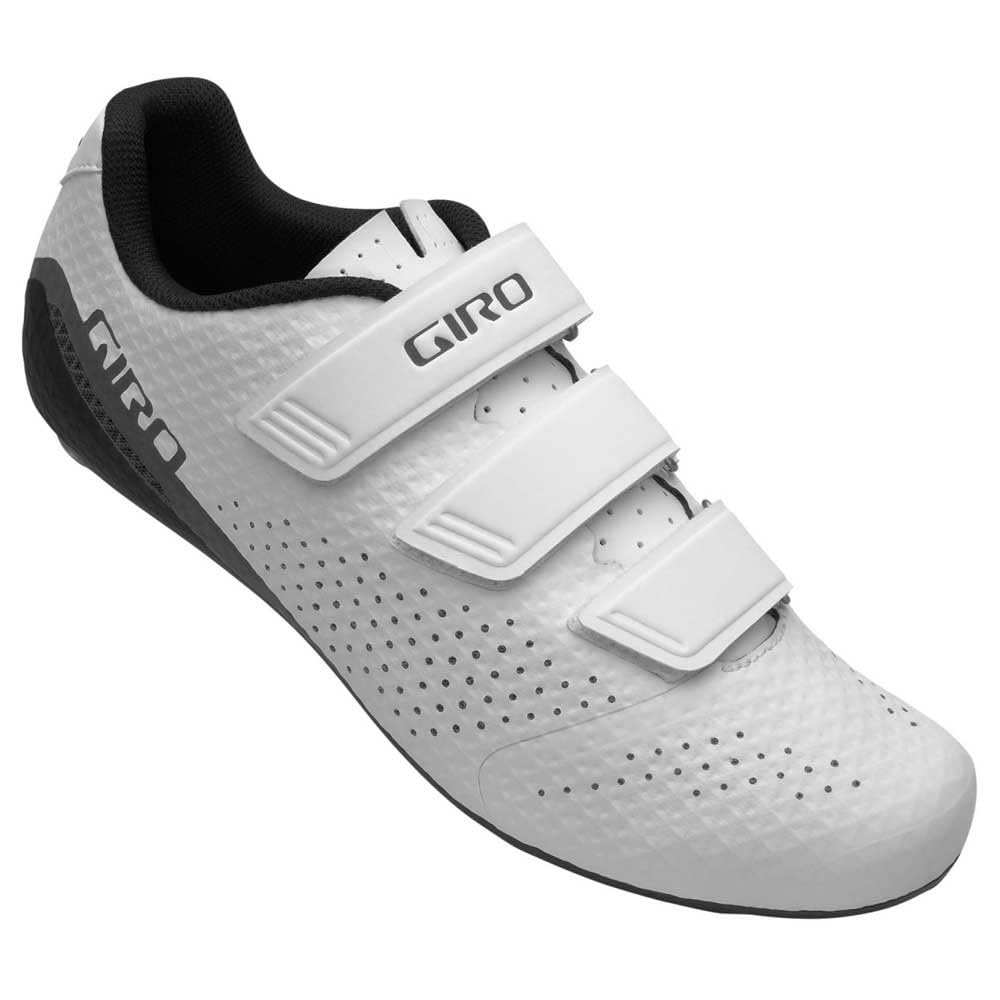
The Giro Stylus is a no-frills entry point into clipless cycling, designed primarily for indoor spinning and short outdoor rides. The three velcro straps provide a secure hold, and the universal 3/2 cleat bolt pattern means it works with both SPD and SPD-SL pedals. The nylon outsole is flexible enough for walking short distances, which makes the Stylus more approachable for beginners who are not yet comfortable clattering around on a carbon plate.
Reviewers praise the comfortable fit, particularly for riders with medium-volume feet. The toe box is not as generous as the Tommaso Strada, but the shoe runs true to size and accommodates a normal foot shape well. Some riders noted the shoes were stiff at first but broke in after a few sessions. The synthetic upper is easy to clean and holds up well to regular indoor use.
If your cycling is primarily indoors on a spin bike or Peloton, and you are not looking to drop a lot of money on a stiff sole you will not benefit from, the Stylus is a sensible choice. It lacks the performance edge of a BOA or carbon sole but fulfills the basic function of connecting your foot to the pedal reliably.
Why it’s great
- Triple velcro straps provide a reliable, straightforward closure.
- Flexible nylon sole allows comfortable walking in transitions.
Good to know
- Limited stiffness; not ideal for high-power outdoor riding.
- No micro-adjustability; fit is determined by strap position only.
9. Tommaso Strada Mens SPD Shoes
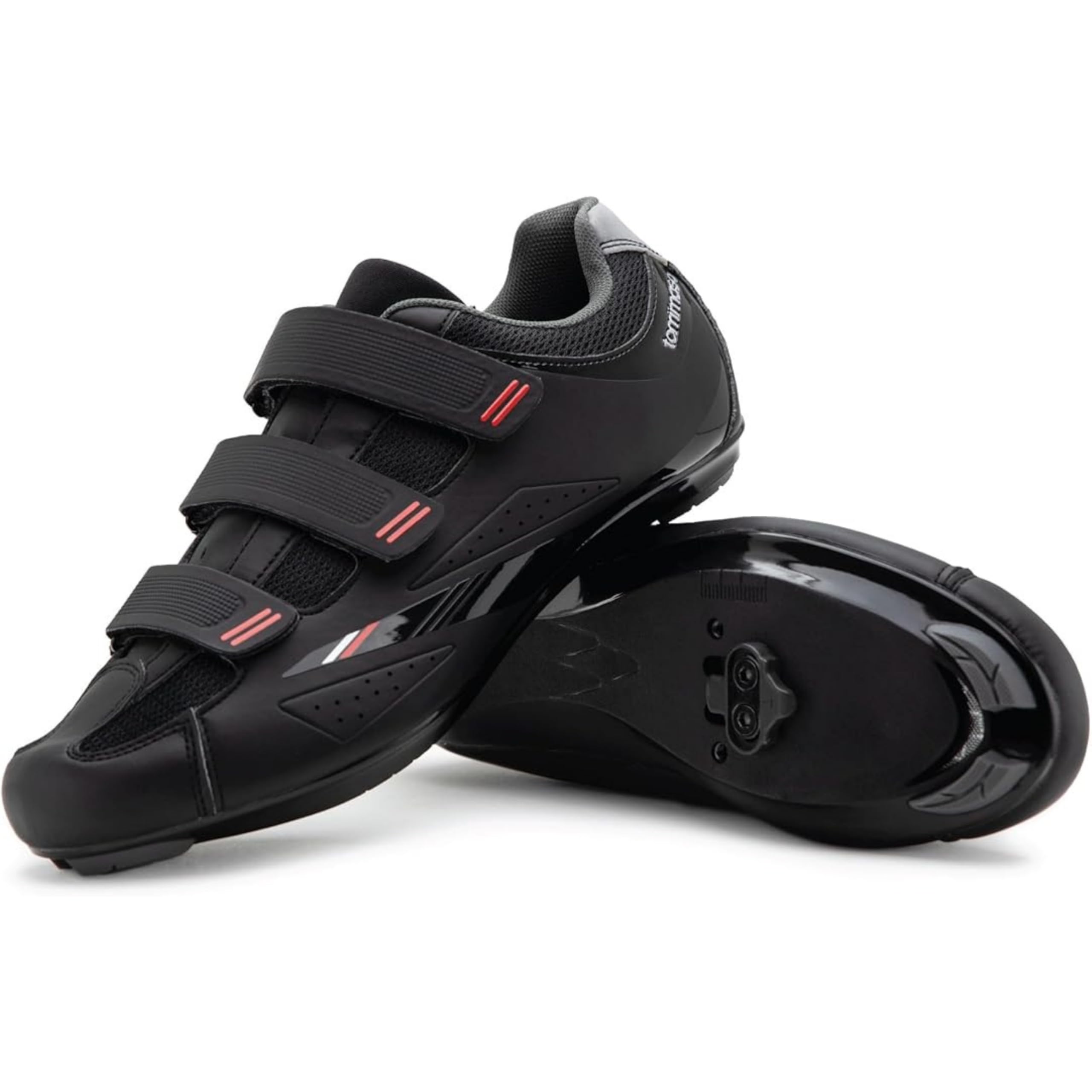
The Tommaso Strada solves a specific problem: finding a road-style cycling shoe that genuinely accommodates wide feet. The toe box is noticeably roomier than most competitors, which is a relief for riders who feel pinched in Giro or Sidi shoes. It ships with SPD cleats pre-installed, so you can clip into a compatible pedal immediately — a nice convenience for new riders who do not want to mess with cleat alignment on day one.
Customer feedback consistently praises the fit for wider feet, with several riders noting the shoes were comfortable even when Peloton-branded shoes were too tight. The adjustable lever system is simple to operate, though it lacks the precision of a BOA dial. Some reviewers recommend ordering a half size up if you plan to wear thicker cycling socks, especially if you have a high-volume foot.
It is important to check the torque on the pre-installed cleats before the first ride, as one reviewer found them loose. The sole is stiff enough for spin class and short outdoor rides but will flex noticeably under heavy efforts. For the price and the wide fit, the Strada is an excellent value for riders who prioritize comfort over peak stiffness.
Why it’s great
- Roomy toe box is rare in road-style cycling shoes; ideal for wide feet.
- Pre-installed SPD cleats eliminate the need for initial setup.
Good to know
- Pre-installed cleats may require re-torquing before use.
- Moderate sole stiffness limits performance on high-power outdoor rides.
FAQ
How should cycling road shoes fit compared to regular shoes?
Can I use SPD-SL cleats on any road cycling shoe?
What is the advantage of a carbon fiber sole over nylon?
Final Thoughts: The Verdict
For most users, the best cycling road shoes winner is the Giro Regime because it combines dual BOA precision, a carbon short fiber sole, and a weight that competes with shoes costing significantly more. If you want the absolute stiffness of a full carbon race shoe and have a medium-to-wide foot, grab the SHIMANO SH-RC703. And for triathletes who value lightning-fast transitions and a proven narrow fit, nothing beats the SiDI T-5 AIR.

Mo Maruf
I created WellFizz to bridge the gap between vague wellness advice and actionable solutions. My mission is simple: to decode the research and give you practical tools you can actually use.
Beyond the data, I am a passionate traveler. I believe that stepping away from the screen to explore new environments is essential for mental clarity and physical vitality.