Our readers keep the lights on and my smoothie glass nicely filled. As an Amazon Associate, I earn from qualifying purchases.
Mosquitoes and ticks don’t just annoy your dog—they carry diseases like heartworm, Lyme, and West Nile that can threaten their health and your peace of mind. Finding a repellent that actually works without exposing your pet to harsh chemicals is the real challenge every dog owner faces.
I’m Mohammad Maruf — the founder and writer behind WellFizz. I’ve spent hundreds of hours dissecting the formulation chemistry, application methods, and real-world efficacy data behind dozens of insect repellents to bring you a shortlist that balances safety with genuine stopping power.
This guide focuses on products you can apply directly to your dog or their gear, sorting through active ingredients like permethrin, DEET, and essential oils so you can confidently choose the best dog mosquito repellent for your specific situation—whether that means daily walks in the park or backcountry hikes through tick-heavy brush.
How To Choose The Best Dog Mosquito Repellent
The right repellent depends on where you live, how long your dog spends outside, and their individual skin sensitivity. You cannot judge a product by its brand name—the active ingredient and its concentration are what determine real-world protection.
Active Ingredient Matters Most
Permethrin is a synthetic compound that bonds to fabric fibers and kills insects on contact, remaining effective through up to six wash cycles. It is not for application on dog skin. DEET works on the skin by confusing insect receptors, but it can be irritating to dogs if licked. Plant-based oils like lemongrass, cedarwood, and rosemary offer a gentler alternative but generally require more frequent reapplication—every two to eight hours depending on the oil blend and concentration.
Application Method Affects Coverage and Compliance
Sprays allow you to cover large areas like a dog’s back and legs quickly, but they can miss the face and belly if the dog is skittish. Wipes give you precise control with zero overspray, making them ideal for portable use on hikes or at the park. Each format has trade-offs in speed, mess, and how much product you’re likely to actually use per application.
Duration of Protection in Real Conditions
The label claim is rarely achieved in the real world—sweat, rain, swimming, and rolling in grass all degrade efficacy faster than lab tests predict. A product advertising eight hours of protection may only give you four in high-humidity, high-activity conditions. Choose a shorter reapplication interval if your dog is constantly wet or highly active outdoors.
Quick Comparison
On smaller screens, swipe sideways to see the full table.
| Model | Category | Best For | Key Spec | Amazon |
|---|---|---|---|---|
| Sawyer SP624 Permethrin | Gear Spray | Clothing & Collar Treatment | 0.5% Permethrin, bonds 6 weeks | Amazon |
| kin+kind Natural Flea & Tick Spray | Dog Skin Spray | Daily Gentle Protection | 2% Cedarwood + 1% Peppermint | Amazon |
| Murphy’s Naturals Wipes | Wipe-On Repellent | Travel & Face Application | Lemongrass + Rosemary, 10 wipes | Amazon |
| OFF! Deep Woods Towelettes | Human Wipe | Owner & Dog (indirect gear) | 25% DEET, 8-hour protection | Amazon |
| Grandpa Gus’s Spray | Human Spray | Owner’s Skin & Clothing | Geraniol + Lemongrass, 8-hour | Amazon |
In‑Depth Reviews
1. Sawyer Products SP624 Permethrin

This is the only product in this lineup that addresses the gear layer rather than the dog’s skin. A 0.5% permethrin solution that binds to fabric fibers, it remains active through six wash cycles or six weeks—whichever comes first. University of Rhode Island research cited by the manufacturer shows treated shoes and socks reduce tick bite likelihood by 73.6 times compared to untreated footwear.
User reports consistently praise its odorless, non-staining finish on everything from dog collars and bandanas to hiking pants and tent netting. The 24-ounce aerosol treats roughly four full outfits of shirt, pants, and socks, making it cost-effective for multi-dog households or heavy outdoor use. A wipe-on method via glove is recommended for direct collar treatment—spraying onto a gloved hand and then rubbing the collar avoids aerosol drift toward the dog’s face.
One caveat: permethrin is toxic to cats while wet and should never be sprayed on cat bedding or near feline living areas. For dog-only households, this is the most durable, longest-lasting repellent option available. Reapplication is only needed after washing the treated item or after six weeks of UV exposure.
Why it’s great
- Bonds to fabric for 6 weeks of continuous protection
- Odorless after drying—no chemical smell on walks
- Effective against mosquitoes, ticks, chiggers, and spiders
Good to know
- Not for direct application to dog skin—gear and collar only
- Highly toxic to cats before it dries
- Aerosol can requires careful storage to avoid leaking
2. kin+kind Natural Flea and Tick Prevention Spray

Kin+kind takes a plant-based approach with 2% cedarwood oil and 1% peppermint oil as its active ingredients. The manufacturer claims over 90% repellency efficacy in clinical testing, and the fact that it is USDA Biobased certified and Leaping Bunny cruelty-free gives it a strong safety profile for dogs with chemical sensitivities or allergies to synthetic pesticides.
The lavender scent is pleasant to humans but appears to mask the dog’s natural odor cues that attract mosquitoes and ticks. Users with senior dogs who had allergic reactions to topical chemical treatments report significant improvement after switching to this spray. One caveat from the review data: some units have defective spray mechanisms that fail within days. This is a manufacturer quality control issue that seems intermittent, but it is worth testing the nozzle immediately upon arrival.
Application is straightforward—spray onto a gloved hand and massage into the dog’s coat, avoiding eyes, nose, and mouth. Daily reapplication is recommended for continuous protection, which makes this a good choice for dogs who tolerate handling well but frustrating for owners who prefer a spray-and-go routine.
Why it’s great
- Safe for dogs 12 weeks and older with sensitive skin
- Pleasant lavender scent, not medicinal
- USDA Biobased and cruelty-free certification
Good to know
- Spray nozzle quality inconsistency reported by multiple users
- Requires daily reapplication for best results
- Higher per-ounce cost than synthetic alternatives
3. OFF! Deep Woods Insect Repellent Towelettes
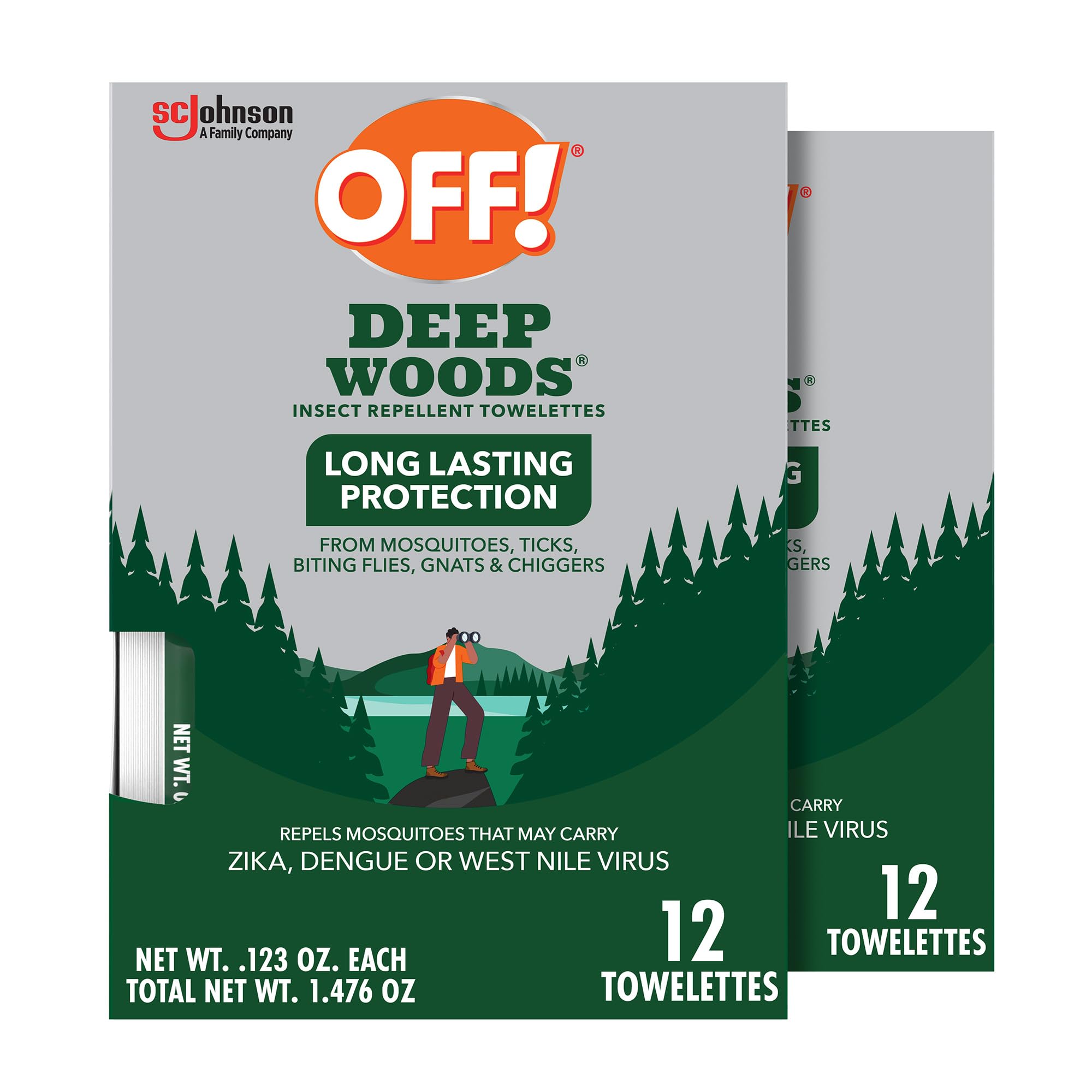
OFF! Deep Woods is a human product, but dog owners use it indirectly—applying it to their own skin before handling the dog, or wiping it onto the dog’s collar and walking harness rather than the dog’s coat. The 25% DEET concentration provides up to eight hours of protection against mosquitoes, ticks, biting flies, gnats, chiggers, and fleas, making it one of the most broad-spectrum options available.
The individually wrapped towelettes are a game-changer for portability: you can stash one in a pocket or backpack without worrying about aerosol cans or bottle leaks. Users report that one wipe covers an entire adult’s arms, neck, and legs, and two wipes cover a larger male. The non-greasy formula resists sweat and dries quickly, although the initial chemical smell takes about 30 minutes to dissipate.
For dog-specific use, the limitation is clear: DEET should never be applied directly to a dog’s skin or fur, as ingestion through licking can cause drooling, vomiting, or neurological symptoms. The safe strategy is to apply it to your own exposed skin and to your dog’s collar and pack only—never to coat or skin. This relegates it to an owner-level protection tool rather than a direct dog repellent, but for owners who need to protect themselves while walking a tick-heavy trail, it is a reliable companion.
Why it’s great
- Proven 8-hour efficacy against mosquitoes and ticks
- Portable, individually wrapped—no aerosol needed
- Non-greasy and sweat-resistant formula
Good to know
- DEET is toxic to dogs if applied directly to skin or ingested
- One wipe may not cover a large adult fully
- Strong initial chemical odor until fully dry
4. Murphy’s Naturals Mosquito Repellent Wipes
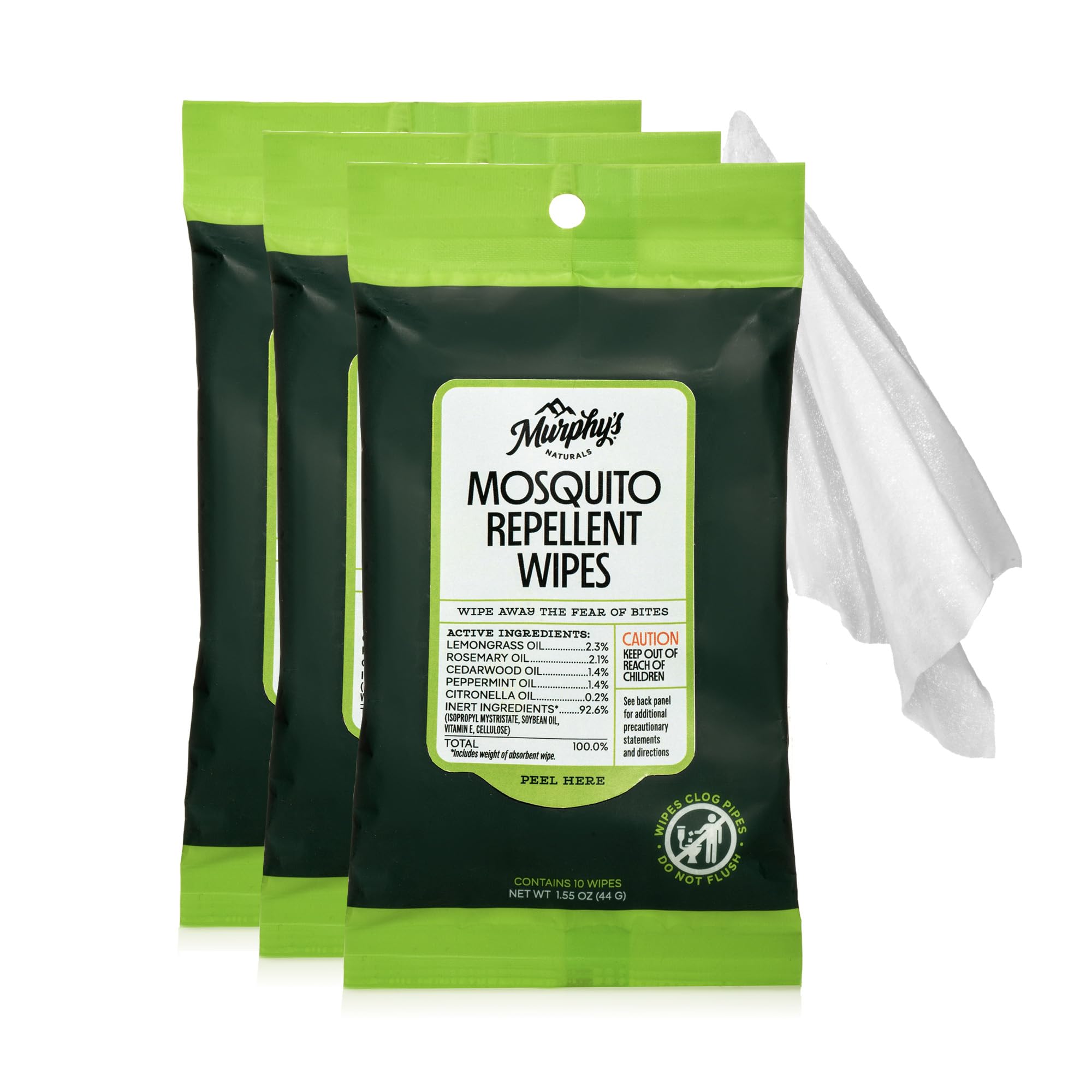
Murphy’s Naturals uses a plant-based formula of lemongrass and rosemary oils in a wipe format that makes application near-mess-free. The manufacturer claims two hours of mosquito protection and one hour of tick protection per application, which is shorter than DEET or permethrin options but acceptable for quick walks or backyard potty breaks.
The wipe format is particularly useful for applying repellent to a dog’s face and ears without the startling sound of an aerosol spray. One wipe covers a small to medium dog’s coat when rubbed gently against the fur, and the formula dries to a non-greasy finish within about 30 seconds. Users with toddlers in the household highlight the wipe format as safer for curious children who might wander into a spray cloud.
The strong lemongrass scent is a double-edged sword: it effectively masks the dog’s attractant odors, but some users find it overpowering indoors. The shorter duration means you will need to reapply frequently during long outdoor sessions, and the per-wipe cost is slightly higher than spray-based options.
Why it’s great
- Wipe format eliminates aerosol fright and overspray
- Dermatologist tested and safe for sensitive skin
- Compact 3-pack is easy to carry in a bag or car
Good to know
- Short protection window—2 hours for mosquitoes
- Strong lemongrass scent may be unpleasant for some
- Not for use on dogs prone to licking treated areas immediately
5. Grandpa Gus’s Natural Tick and Mosquito Repellent Spray
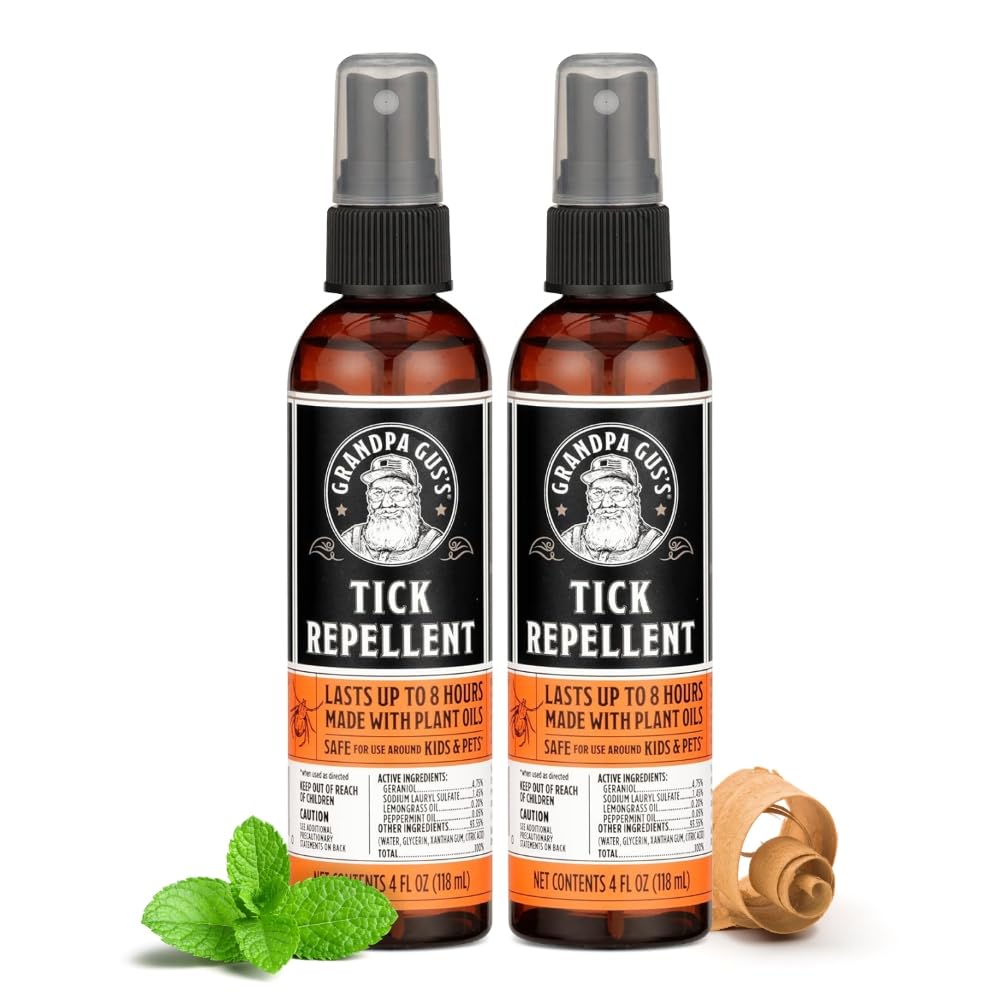
Grandpa Gus’s spray is a DEET-free, plant-based repellent formulated for human use but highly relevant to dog owners who want to avoid transferring synthetic chemicals to their pets through direct contact. Its active ingredients—geraniol, lemongrass, and peppermint oils—are designed for application to both exposed skin and clothing, with an eight-hour window for tick protection and six hours for mosquitoes.
User reports confirm that it outperforms some DEET-based sprays specifically for tick prevention on clothing, while mosquito protection is less reliable in high-pressure environments. The product works best when sprayed generously on pant legs and sleeves—the same surfaces that a dog’s head and body brush against during walks. This indirect transfer is enough to help protect the dog from ticks that climb onto the owner’s clothing first.
The 4-ounce bottle is compact and fits in a jacket pocket, though the two-pack format doubles the volume for multi-dog households. A significant catch: the manufacturer explicitly warns the product is not for use on pets, meaning it should only be used on the owner’s clothing and skin. This limits its utility for direct dog protection but makes it a solid companion product to pair with a direct dog repellent like the Sawyer permethrin for clothing.
Why it’s great
- Long 8-hour tick protection claim without DEET
- Non-greasy formula absorbs quickly on skin
- Pleasant herbal scent, not medicinal
Good to know
- Not approved for direct application on dogs
- Mosquito protection weaker than tick protection in user reports
- Requires generous application to clothing for best results
FAQ
Can I use human mosquito repellent directly on my dog?
How often should I reapply an essential oil repellent on my dog?
Is permethrin spray safe to use on my dog’s bed or collar?
Final Thoughts: The Verdict
For most users, the best dog mosquito repellent winner is the Sawyer SP624 Permethrin because it delivers six weeks of protection on gear, collars, and bedding without needing daily reapplication. If you want a gentle plant-based option safe for direct application on your dog’s coat, grab the kin+kind Natural Spray. And for portable, mess-free protection during hikes or travel, nothing beats the Murphy’s Naturals Wipes for quick application on the go.

Mo Maruf
I created WellFizz to bridge the gap between vague wellness advice and actionable solutions. My mission is simple: to decode the research and give you practical tools you can actually use.
Beyond the data, I am a passionate traveler. I believe that stepping away from the screen to explore new environments is essential for mental clarity and physical vitality.