Our readers keep the lights on and my smoothie glass nicely filled. As an Amazon Associate, I earn from qualifying purchases.
The constant drone of a lawn mower isn’t just annoying—it’s a direct assault on your hearing that accumulates damage with every pass. Whether you’re pushing a gas mower or riding on a zero-turn, the decibel levels easily exceed safe thresholds, turning a weekly chore into a long-term health risk. Finding the right ear protection means balancing noise reduction with comfort for the duration of the job, and that balance is harder to strike than most people realize.
I’m Mohammad Maruf — the founder and writer behind WellFizz. I’ve spent countless hours analyzing the acoustic performance data, comfort engineering, and real-world user feedback across dozens of hearing protection models to separate the genuinely effective options from the ones that just look the part.
This guide cuts through the marketing noise to deliver a clear, category-specific breakdown of the top performers. By the end, you’ll know exactly which ear protection for mowing fits your head, your mower, and your need for lasting hearing safety.
How To Choose The Best Ear Protection For Mowing
Choosing the right ear protection for mowing is about understanding the specific noise profile of your equipment and how it interacts with the shape of your head. A one-size-fits-all approach fails because the real-world noise reduction depends entirely on maintaining a perfect acoustic seal while you move, sweat, and turn your head. We break down the key factors below.
Noise Reduction Rating (NRR) vs Real-World Protection
NRR is a lab measurement, not a guarantee. A mower pushing 95–100 dB requires an NRR of at least 22–25 dB to bring exposure down to safe levels. However, the actual protection you get is roughly half the NRR number due to fit variability and seal leakage. Prioritize muffs with an NRR of 25 or higher, but know that a perfect seal from quality cushions matters more than the printed number.
Design: Over-the-Head vs Behind-the-Head
Traditional over-the-head earmuffs are the most common, but they can conflict with a wide-brimmed hat or safety glasses. Behind-the-head models like the 3M Peltor Optime 105 sit clear of headwear, making them ideal for mowing under a sun hat or with a full brim safety helmet. Low-profile cups also reduce interference when you’re turning to check behind you on a riding mower.
Passive vs Electronic Earmuffs
Passive earmuffs are simple, durable, and require no batteries—just foam and plastic doing their job. Electronic earmuffs, on the other hand, use microphones to amplify low-level sounds (like a conversation or a warning call) while instantly clamping down on impulse noises above a threshold. For mowing, electronic muffs let you hear your surroundings—a child playing nearby, a car backing up—while staying protected from the engine roar.
Quick Comparison
On smaller screens, swipe sideways to see the full table.
| Model | Category | Best For | Key Spec | Amazon |
|---|---|---|---|---|
| Walker’s Razor Slim | Electronic | Hearing while protecting | NRR 23 dB | Amazon |
| Qozybuds Bluetooth 6.0 | Bluetooth + Passive | Music + all-day runtime | SNR 30 dB | Amazon |
| 3M Peltor Optime 105 | Passive Behind-Head | Maximum noise reduction | NRR 29 dB | Amazon |
| Dewalt DPG62-C | Passive Over-Head | Simple reliable protection | NRR 28 dB | Amazon |
| PROHEAR Electronic | Electronic Entry | Budget-friendly electronics | NRR 23 dB | Amazon |
In‑Depth Reviews
1. Walker’s Razor Slim Electronic Muff

The Walker’s Razor Slim stands out because it combines a low-profile, compact design with effective electronic noise suppression, making it ideal for mowing where you need situational awareness. The slim cups provide a solid cheek weld if you also use shoulder-fired tools, but for mowing, the key benefit is that they don’t bump into your collar or hat brim when you turn your head. The electronic circuit amplifies ambient sound—letting you hear a car approaching or someone calling your name—while instantly clamping down on the mower’s roar.
Users consistently report that the sound quality of the amplification is clear and natural, and the suppression of loud impulse noises is immediate and comfortable. The headband is durable and the battery life holds up well across multiple mowing sessions. The only physical drawback for some is that the ear cups, while slim, can create pressure on larger ears after about an hour, causing fatigue rather than pain. This is a trade-off for the low-profile design that makes them so practical for active outdoor work.
For mowing specifically, the ability to have a conversation without removing the muffs is a genuine safety advantage. You can hear a child, a pet, or a warning from a neighbor without sacrificing protection. The Walker’s Razor Slim is the best electronic option for the mowing use case because it prioritizes both protection and awareness in a package that doesn’t get in the way.
Why it’s great
- Electronic amplification allows hearing surroundings while blocking mower noise.
- Low-profile cups fit under hats and don’t interfere with turning your head.
- Durable build with good battery life.
Good to know
- Ear cups may feel tight on larger ears after extended wear.
- Sound quality is functional, not audiophile-grade.
2. Qozybuds Bluetooth 6.0 Hearing Protection Headphones

The Qozybuds take a hybrid approach, combining a high 30 dB SNR passive noise reduction with Bluetooth 6.0 for music and calls, making them perfect for long mowing sessions where you want to cut the monotony. The 120-hour playtime is genuinely transformative—you can go weeks without charging, and a five-minute quick charge gives you four hours of use. The larger physical buttons are easy to operate with work gloves on, which is a thoughtful design detail for the mowing environment.
The passive noise reduction is effective enough to handle a gas mower’s low-frequency drone, and the Bluetooth audio quality is solid for speech and mid-range music, though not audiophile-grade. The fit is snug and the ear cushions are comfortable for three-plus hours, according to user feedback. The headband is adjustable and the cups seal well around glasses without too much pressure. The rechargeable 1200mAh battery eliminates the need for disposable batteries, which is a cost and convenience win.
There are two minor annoyances: the voice prompt that announces “please charge” repeats every few minutes below 20% battery, and the ear pads can compress over time, requiring replacement. But for the price point, the combination of effective hearing protection and Bluetooth convenience is hard to beat. This is the best choice if you want to listen to podcasts or music while mowing without sacrificing safety.
Why it’s great
- Exceptional 120-hour battery life with fast charging.
- Effective 30 dB SNR passive noise reduction for gas mowers.
- Large buttons easy to use with gloves.
Good to know
- Voice charge warning repeats frequently at low battery.
- Ear pads may compress and need replacement over time.
3. 3M Peltor Optime 105 Behind-the-Head Earmuff
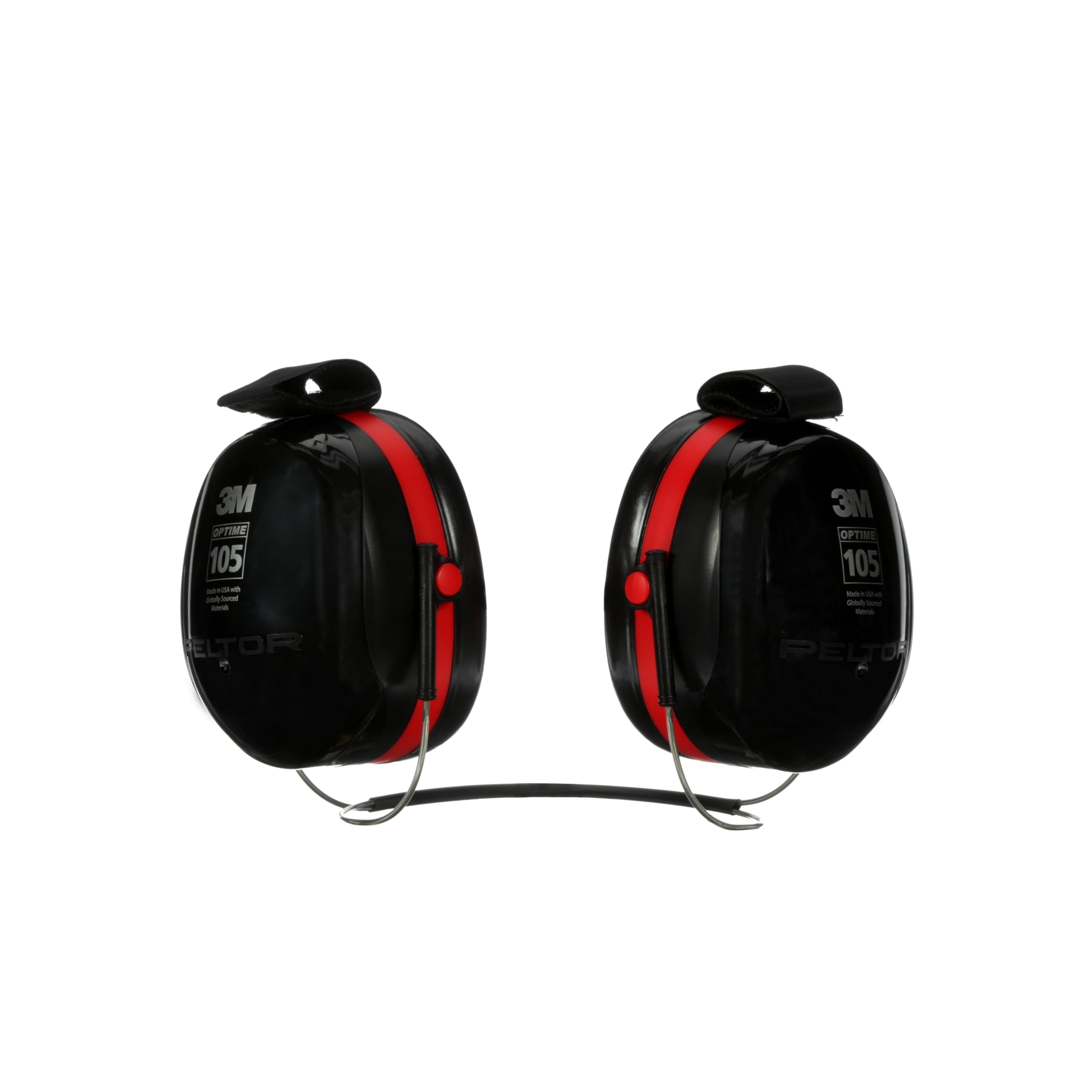
The 3M Peltor Optime 105 is a classic heavy-duty passive earmuff that delivers exceptional noise reduction with a NRR of 29 dB. The behind-the-head design is its defining feature for mowing: it stays completely out of the way of a wide-brimmed hat, safety helmet, or even a hood, making it the go-to choice for anyone who mows under a sun hat or in wet weather with a hood up. The double-shell technology and thick foam-filled cushions create a very effective acoustic seal.
Users who have worn these for years in industrial settings praise their durability and the consistent seal they maintain even with safety glasses. The stainless steel headband resists bending, and the cushions are soft enough to avoid hot spots during extended wear. One reviewer with a large head size (7 7/8) found them very comfortable, while others noted the behind-the-head style can be loose on smaller heads. The included removable top strap provides extra security for active movement.
The trade-off is that these are purely passive—no amplification, no Bluetooth, no electronics. You will not hear conversations while wearing them, and they don’t fold down small for storage. But if maximum passive noise reduction without batteries or electronics is your priority, and you need to wear a hat, the 3M Peltor Optime 105 is the most effective and durable option in this list.
Why it’s great
- Best-in-class NRR of 29 dB for mower noise.
- Behind-the-head design works perfectly with hats and helmets.
- Extremely durable with stainless steel construction.
Good to know
- May be loose on smaller heads without the top strap.
- No electronic features or audio passthrough.
4. Dewalt DPG62-C Interceptor Protective Safety Earmuff

The Dewalt DPG62-C is a straightforward, no-nonsense passive earmuff that delivers reliable protection with a NRR of 28 dB, making it more than capable of handling the loudest residential mowers. The bright yellow color is a practical safety feature—it makes you more visible to others, which is especially useful if you mow near driveways or roads. The headband adjusts easily and the ear cups swivel for a good fit, with many users noting it works well for smaller heads, including women and older adults.
Customer reviews consistently highlight the build quality and comfort for the price point. The cushions are soft and the tension is balanced—not too tight, not too loose. One user reported that after prolonged use on a larger head, the cups felt tight and caused some ear soreness, suggesting that the clamp force is moderate but may not suit every head shape for long sessions. The headband slides down compactly for storage, and the overall design is simple to maintain.
For mowing, the Dewalt DPG62-C is a solid, affordable choice that doesn’t compromise on protection. It lacks any electronic features, but if all you need is a simple, effective earmuff that works well with most head sizes and provides a clear visual safety cue, this is a highly dependable option. It’s the kind of product that just works, without any fuss or battery concerns.
Why it’s great
- Effective NRR 28 dB for mowing noise.
- Bright yellow color improves visibility and safety.
- Good adjustability, works for smaller heads.
Good to know
- May feel tight on larger heads after extended wear.
- No electronic features or audio passthrough.
5. PROHEAR Electronic Ear Protection
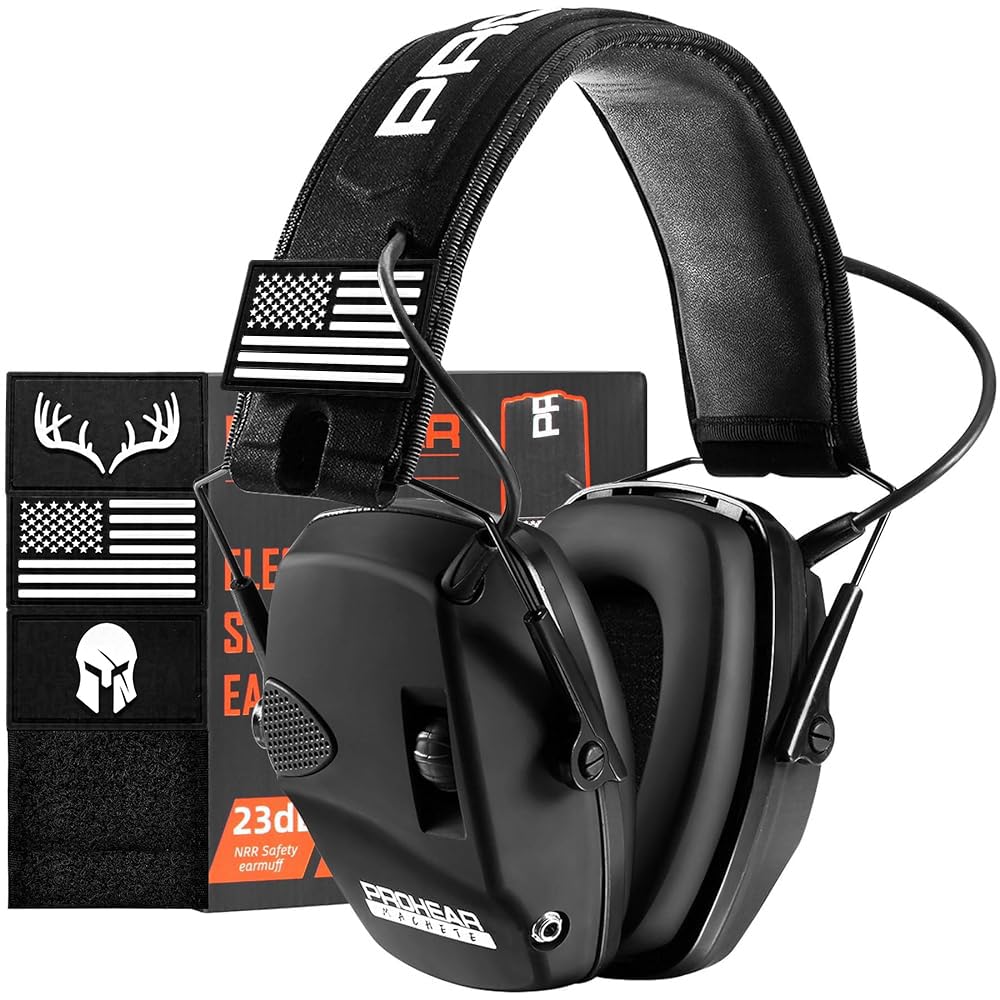
The PROHEAR Electronic Ear Protection brings active hearing technology to an entry-level price point, making it the most accessible way to try electronic muffs for mowing. With an NRR of 23 dB, it provides adequate protection for most residential mowers, though users with particularly loud equipment (tractors or zero-turns) may want to double up with foam earplugs underneath. The SMART technology suppresses impulse noises within 0.01 seconds while amplifying ambient sounds up to 4x, allowing for conversation and awareness.
The design is lightweight at 0.6 pounds, with cushioned ear cups that are comfortable for extended wear. The single-knob volume control is easy to operate with gloves on, and the IPX4 water-resistant build means sweat or light rain won’t damage the electronics. Users report that the active noise control works well for its price point, with clear sound amplification and effective suppression of loud noises. Some users have noted a faint high-pitch tone in the electronics intermittently, which is a minor annoyance but not harmful.
For mowing, the PROHEAR is a great starter electronic muff that lets you test if you like situational awareness protection without a big investment. The included carrying pouch, audio cable, and patches add some value, but the real draw is the low entry cost to electronic hearing protection. If your mower is not excessively loud and you want to hear your surroundings, this is a practical, budget-friendly way to achieve that.
Why it’s great
- Affordable electronic hearing protection with ambient amplification.
- Lightweight at 0.6 lbs with comfortable cushions.
- IPX4 water-resistant for outdoor use in sweat or light rain.
Good to know
- NRR of 23 dB is lower; best paired with foam plugs for very loud mowers.
- Some units have a faint intermittent high-pitch tone.
FAQ
Can I wear earplugs under my earmuffs for extra protection?
Will electronic earmuffs work with safety glasses?
How do I know if my ear protection fits properly?
Final Thoughts: The Verdict
For most users, the ear protection for mowing winner is the Walker’s Razor Slim because it combines effective electronic suppression with a low-profile design that stays out of your way, letting you hear your surroundings while staying safe. If you want maximum passive noise reduction and need to wear a hat, grab the 3M Peltor Optime 105. And for long mowing sessions with music or podcasts, nothing beats the Qozybuds Bluetooth 6.0 with its incredible battery life.

Mo Maruf
I created WellFizz to bridge the gap between vague wellness advice and actionable solutions. My mission is simple: to decode the research and give you practical tools you can actually use.
Beyond the data, I am a passionate traveler. I believe that stepping away from the screen to explore new environments is essential for mental clarity and physical vitality.