Our readers keep the lights on and my smoothie glass nicely filled. As an Amazon Associate, I earn from qualifying purchases.
An irregular heartbeat detected in time can be the difference between a quick medical visit and a long hospital stay. The ability to record a single-lead electrocardiogram (ECG) directly from your wrist has transformed how we monitor cardiac health, shifting atrial fibrillation detection out of the clinic and into your daily life. Each generation of smartwatch sensors pushes signal clarity higher and false-positive rates lower, but sorting through FDA-cleared algorithms versus marketing claims takes effort.
I’m Mohammad Maruf — the founder and writer behind WellFizz. I’ve spent countless hours analyzing sensor specifications, FDA clearance documentation, and real-world validation data to separate genuine medical-grade ECG tracking from feature-bloated noise.
After researching the top nine models for heart rhythm analysis, workout precision, and long-term wearability, finding the right one means understanding sensor accuracy, battery endurance, and app ecosystem support. Here is a definitive breakdown of the best ecg smartwatch options available today.
How To Choose The Best ECG Smartwatch
Selecting an ECG smartwatch involves more than comparing app icons and band colors. The three factors that truly determine whether a model improves your cardiac awareness — or just fills your wrist with noise — are sensor certification, battery architecture, and data interoperability. Each element directly impacts how often you capture a diagnostic-quality reading and how usable that reading becomes for your doctor.
FDA Clearance Versus Consumer Claims
Not every watch that says “ECG” has undergone the same regulatory scrutiny. Models from Apple, Garmin, Samsung, and Withings carry clearance from the FDA for generating a waveform that can detect atrial fibrillation. Many lower-cost watches use raw photoplethysmography (PPG) data and call it “ECG-like.” A truly cleared device stores a Lead-I trace that a physician can review. Always verify the manufacturer’s regulatory filings if you intend to share readings with a cardiologist.
Battery Capacity and Monitoring Consistency
An ECG recording is a spot-check — you take a 30-second reading when you feel a symptom. But irregular rhythm notifications require the watch to continuously sample heart rate data in the background. High-end sports watches can run 15 to 29 days in smartwatch mode, while a premium lifestyle watch may need charging every two days. If your goal is to receive rhythm alerts through the night, a longer battery cycle ensures you never miss a window of monitoring during sleep.
App Ecosystem and Physician Accessibility
The most accurate ECG reading loses value if the data remains trapped inside a proprietary app. Look for watches that export a PDF or a CSV of the waveform that you can attach to a patient portal message or email to your doctor. Native Apple Health and Google Health Connect support streamline this process. Watches that allow direct sharing from the manufacturer’s app without a subscription save time during a telemedicine visit.
Quick Comparison
On smaller screens, swipe sideways to see the full table.
| Model | Category | Best For | Key Spec | Amazon |
|---|---|---|---|---|
| Withings ScanWatch Nova | Premium | Classic look with medical sensors | 30-day battery, TempTech24/7 | Amazon |
| Garmin Forerunner 970 | Premium | Triathlon training & ECG | 15d smartwatch mode, 26h GPS | Amazon |
| Apple Watch Ultra 3 | Premium | Rugged adventure & cellular | 49mm titanium, 100m water resist | Amazon |
| Garmin fēnix 8 | Premium | Diving & multi-sport endurance | 29d smartwatch, 84h GPS | Amazon |
| Apple Watch Series 7 | Premium | iPhone ecosystem & daily health | Blood oxygen & ECG apps | Amazon |
| Samsung Galaxy Watch Ultra | Premium | Android users & Galaxy AI | Titanium case, 590mAh battery | Amazon |
| Amazfit Balance 2 | Mid-Range | Long battery & offline maps | 21d battery, sapphire crystal | Amazon |
| Fitbit Sense 2 | Mid-Range | Stress management & ECG | cEDA sensor, 6+ day battery | Amazon |
| CARBINOX Edge | Budget | Worksite durability & tracking | IP69K, 25-day battery | Amazon |
In-Depth Reviews
1. Withings ScanWatch Nova Brilliant Health Smart Watch

The Withings ScanWatch Nova achieves something rare: it looks like a traditional Swiss timepiece while housing an FDA-cleared ECG sensor, continuous temperature monitoring via the TempTech24/7 module, and overnight SpO2 tracking. At 30 days of battery life in smartwatch mode, it demands far fewer charging interruptions than any AMOLED competitor, meaning your overnight rhythm and respiratory disturbance data flows without gaps. The stainless steel case and domed sapphire crystal give it a weight and polish that draws compliments, not stares.
The onboard ECG requires you to touch the crown for 30 seconds, generating a Lead-I waveform that syncs to the Withings app. Users report that the app allows PDF exports, which can be directly attached to a patient portal message. Sleep tracking is generally reliable, though several experienced reviewers noted that lying still while reading books can occasionally register as light sleep, skewing sleep onset times by an hour or so. Real-world battery averages closer to 20 days when daily temperature and SPO2 readings are active.
The lack of an always-on AMOLED display and the absence of onboard GPS for run mapping mean this watch prioritizes medical-grade health tracking over sports performance. For someone who wants a dress watch that passively tracks cardiac temperature and breathing disturbances, the Nova is unmatched. The hybrid approach — analog hands atop a digital health engine — delivers 90% of the health insight of a full smartwatch without the 1.5-inch screen glow.
Why it’s great
- 30-day battery eliminates charging anxiety for sleep monitoring
- FDA-cleared ECG with downloadable PDF waveform export
- 24/7 skin temperature trending via dedicated module
Good to know
- On-watch alarm configuration requires app, no direct watch alarm setting
- Readings can be misidentified as sleep during motionless wakefulness
- Battery not replaceable; watch lifespan tied to internal cell
2. Garmin Forerunner 970

The Garmin Forerunner 970 marries a bright AMOLED touchscreen with physical button controls, a lightweight titanium bezel, and a sapphire lens — then adds an FDA-cleared ECG app that can record heart rhythm and flag signs of atrial fibrillation for users 22 and older. This is the first Forerunner to embed lead-I ECG directly into a triathlon-focused platform, giving serious endurance athletes a way to spot-check cardiac rhythm between swim-bike-run sessions without wearing a separate chest strap for diagnostics.
Battery life reaches 15 days in smartwatch mode and 26 hours in full GPS mode, which means you can run a 50-mile ultra without dropping ECG and HRV logging mid-race. The Training Readiness Score draws on sleep quality, recovery, and HRV status, while the running economy metrics — step speed loss, ground contact time, and wrist-based running power — help you adjust form in real time. The built-in LED flashlight adds low-light safety for early morning or late-night runs.
The steep learning curve of Garmin’s Connect IQ ecosystem is a known friction point. Some users find the initial setup overwhelming due to the sheer volume of data fields, zones, and glance widgets. But once configured, the 970 delivers the most comprehensive single-device window into cardiovascular and musculoskeletal load available. If your training revolves around structured intervals, race pace targets, and recovery windows, this watch becomes the hub of your performance management.
Why it’s great
- FDA-cleared ECG integrated into triathlon training workflows
- 15-day battery life eliminates daily charging during race blocks
- Customizable gym and run profiles with advanced dynamic data
Good to know
- Steep initial setup; requires time to personalize data screens
- HRM monitor required for running dynamics, sold separately
- ECG app not available in all countries
3. Apple Watch Ultra 3
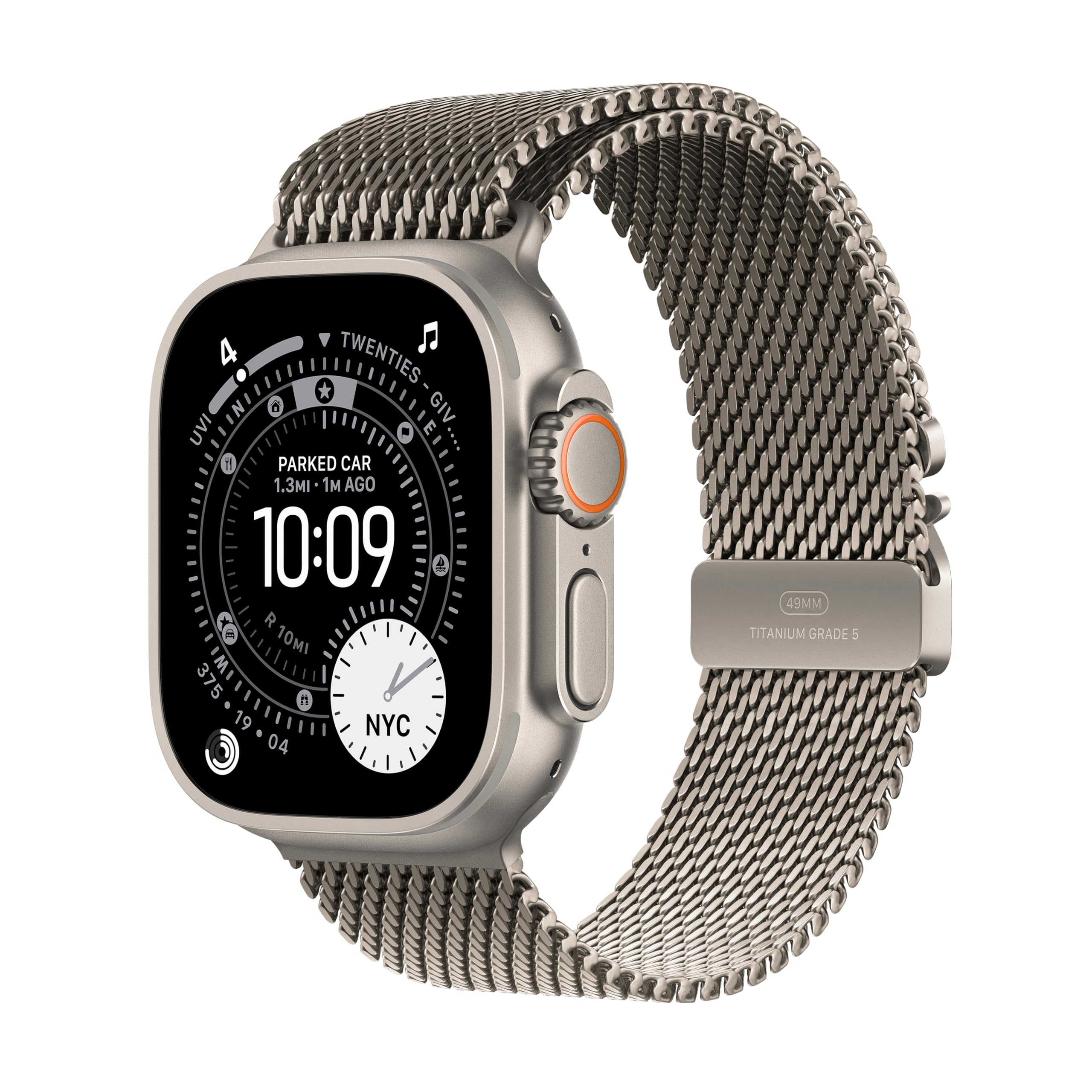
The Apple Watch Ultra 3 pushes the boundary of what a mainstream wearable can do for cardiac vigilance. It features an FDA-cleared ECG app that works with the Digital Crown, irregular rhythm notifications, and passive nighttime monitoring for sleep apnea detection. The 49mm titanium case houses a 100-meter water resistance rating and a sapphire crystal display that survives mud runs, ocean swims, and granite countertops. With up to 42 hours of normal use (72 in Low Power Mode), it bridges the gap between daily Apple Watch charging and multi-day adventure endurance.
The addition of satellite communication for emergency SOS when out of cellular range makes this the strongest safety-oriented ECG smartwatch. You can record an ECG, then immediately text emergency services via satellite if the reading indicates rapid heart rhythm changes. The dual-frequency GPS keeps track accurate even in deep urban canyons or dense forest canopy. The customizable Action Button can be set to launch the ECG app with one press, reducing the steps between a palpitation and a saved waveform.
Battery life, while improved over the Series 10, still lands around 1.5 to 2.5 days with always-on display and regular GPS workouts. Users with large wrists may find the 49mm case size prominent during sleep, slightly impacting overnight HRV consistency. The titanium Milanese Loop band looks elegant but requires caution to avoid scratching the sapphire crystal during weightlifting — a silicone band is safer for gym sessions.
Why it’s great
- Satellite SOS works independently of cellular, ideal for remote areas
- ECG plus irregular rhythm + sleep apnea notifications in one device
- 100m water resistance for diving and high-speed water sports
Good to know
- Charges every 1.5 days with typical heavy use
- Large 49mm case can be bulky for smaller wrists during sleep
- Metal bands may scratch the watch face during strength workouts
4. Garmin fēnix 8 51mm

The Garmin fēnix 8 in the 51mm size is a multisport powerhouse that includes an FDA-cleared ECG app for atrial fibrillation detection, a built-in LED flashlight, and a 40-meter dive rating with leakproof metal buttons. The 1.4-inch AMOLED display is paired with a scratch-resistant sapphire lens and a durable titanium bezel, all wrapped in a package that delivers up to 29 days in smartwatch mode and 84 hours in GPS mode. For intervals between expeditions, you can record an ECG by holding the action button, then use the off-grid voice command feature to control watch functions even without a paired phone.
Training readiness draws on HRV status, sleep quality, and recovery history to tell you whether your body is primed for a hard effort or needs rest. Real-time stamina tracking shows your remaining energy reserves during runs, while the multi-band GPS with SatIQ technology adjusts satellite reception to maximize tracking accuracy without draining battery. The strength training plans adapt based on your progress and target injury prevention through load recommendations.
At nearly one thousand dollars for the 51mm AMOLED model, the Fenix 8 is a significant investment. Some users report that the optical heart rate sensor can struggle with stabilization during strength work, occasionally logging impossible calorie burns. A firmware calibration step may be needed to address stiffness in the new metal buttons. But for someone who dives, climbs, trails, and wants a single watch that handles ECG checks, dive logs, and ultrarunning plans, the Fenix 8 is the most capable device in this list.
Why it’s great
- 29-day smartwatch battery covers multi-week expeditions without charging
- ECG app with dive-rated build for underwater rhythm checks
- Off-grid voice control and built-in flashlight for field use
Good to know
- Initial button stiffness may require manual calibration
- Optical HR can struggle with stabilization during heavy lifting
- Premium price limits audience to serious multisport users
5. Apple Watch Series 7

The Apple Watch Series 7 remains one of the most accessible FDA-cleared ECG devices on the market, with a sensor that measures blood oxygen and takes a single-lead electrocardiogram directly from the wrist. The Always-On Retina display makes it easy to read your heart rate in direct sunlight, and the crack-resistant front crystal and dust resistance make it durable enough for daily gym sessions, pool laps, and kitchen prep. The cellular model lets you leave your iPhone behind while still receiving calls, texts, and ECG uploads to your health record.
Health tracking depth on the Series 7 includes irregular heart rhythm notifications, sleep stage tracking, fall detection, and the walking steadiness metric that can flag fall risk over time. Users who pair the watch with a DexCom continuous glucose monitor can read their glucose levels directly on the watch face. The gamification of exercise — closing Activity rings, hourly stand reminders, and personalized coaching via Apple Fitness+ — lowers the barrier to maintaining a daily movement practice.
The trade-off is battery life. With typical use, the Series 7 needs a nightly charge, meaning you cannot wear it for overnight sleep tracking without a mid-day top-up. The Series 7 hardware is also older, lacking the temperature sensor and crash detection of newer Ultra and Series 8 models. Still, for someone who wants the most streamlined integration with an iPhone and does not need multi-day battery endurance, the Series 7 offers proven ECG reliability at a lower entry point than the Ultra line.
Why it’s great
- FDA-cleared ECG and blood oxygen apps with seamless iOS integration
- Always-On Retina display for quick HR glances during workouts
- Gamified Activity Ring system increases daily exercise adherence
Good to know
- Requires nightly charging, limiting overnight ECG monitoring
- Older generation, lacks temperature sensing and crash detection
- No plug adapter included in retail packaging
6. Samsung Galaxy Watch Ultra (2024)
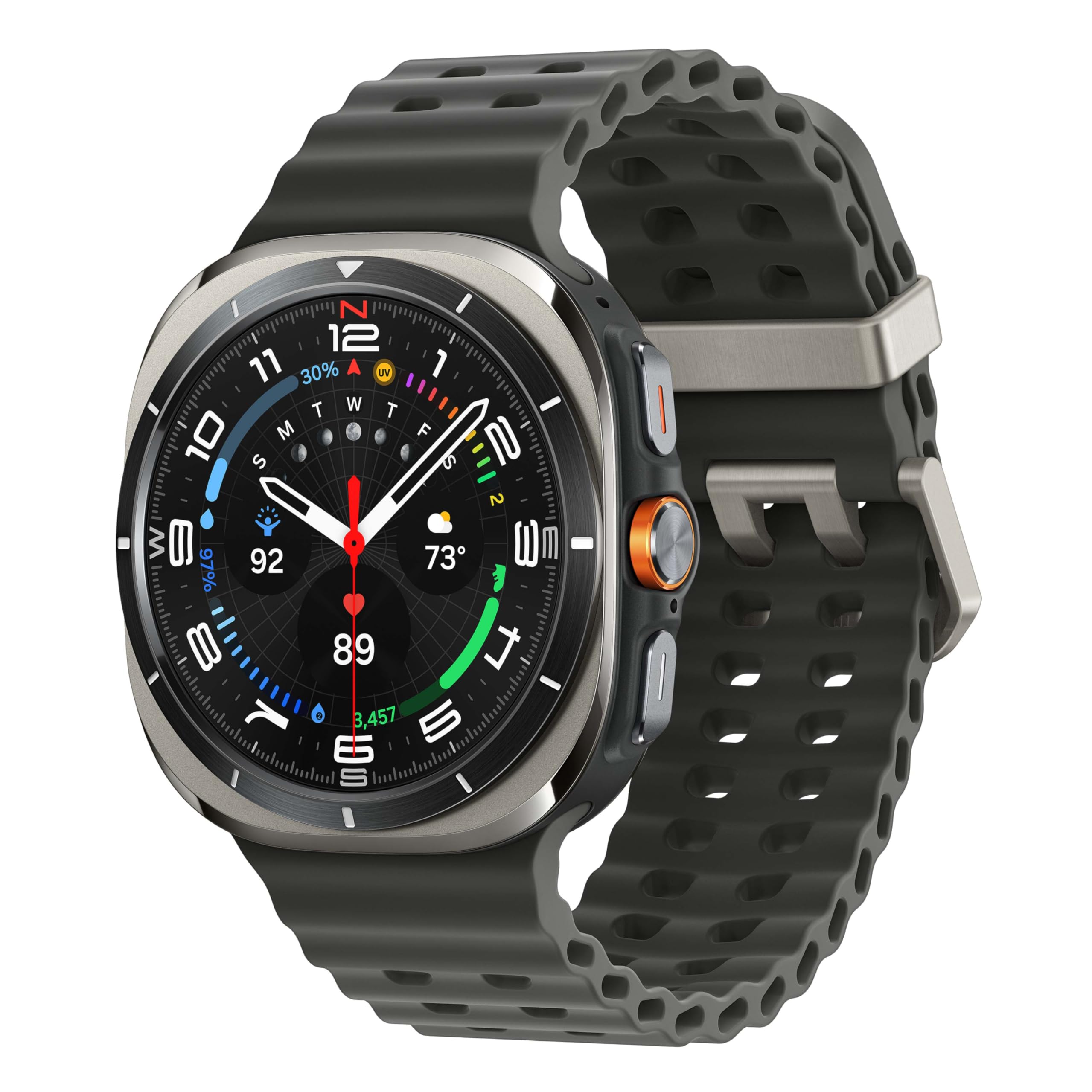
The Samsung Galaxy Watch Ultra 47mm LTE is the most capable Android-native ECG smartwatch, combining a titanium case, a 590mAh battery, and Galaxy AI-powered insights across heart rate tracking, sleep analysis, and energy score. The ECG app is FDA-cleared and works in conjunction with irregular heart rhythm notifications, while the BioActive Sensor array captures heart rate with motion filtering to reduce workout noise. The Energy Score feature fuses previous day’s sleep, heart rate, and step data into a single readiness number.
Ruggedness is a central theme — the titanium case survives hiking, rain, dusty trails, and ocean swimming, while the LTE model lets you make calls, stream music, and send SOS alerts without a phone nearby. The programmable buttons can be reversed for left-handed wear, and the 47mm screen is large enough to display full workout metrics, map segments, and current ECG waveform simultaneously. Users report strong battery performance (some staying above 75% after 12 hours), though actual endurance depends heavily on LTE usage and GPS tracking.
The health tracking plateau compared to a Garmin Fenix is noticeable for structured workout plans. While the Galaxy Watch Ultra captures heart rate, sleep, and basic running metrics, it lacks the deep training load analysis and recovery recommendations that serious runners depend on. Some users supplement with third-party apps like Hevy for gym tracking. For an Android user who wants a rugged smartwatch with polished ECG functionality and strong daily wearability, this is the most cohesive package.
Why it’s great
- FDA-cleared ECG with Galaxy AI-powered health insights
- Titanium case and LTE cellular for phone-free adventure use
- Excellent screen visibility and quick voice-to-text for replies
Good to know
- Health tracking depth lags behind Garmin for structured training plans
- Bulkier than standard Galaxy Watch, noticeable during sleep
- ECG benefits require Samsung Health ecosystem for full utility
7. Amazfit Balance 2

The Amazfit Balance 2 delivers a 1.5-inch sapphire crystal AMOLED display, dual-band GPS from six satellite systems, and up to 21 days of battery life—all without requiring the sticker price typical of premium sports watches. The Zepp OS platform includes an ECG sensor that captures single-lead readings, though it lacks the FDA clearance of Apple or Samsung models, so the data serves more as a wellness signal than a diagnostic file. For casual health monitoring, the HRV, sleep, blood-oxygen, and stress tracking pipeline is robust without driving battery anxiety.
Offline maps with turn-by-turn directions, support for 40,000 golf courses, Hyrox competition mode, and underwater dive tracking up to 45 meters make this a versatile sports watch that punches well above its weight class. The Zepp Flow voice assistant lets you start activities, check stats, and respond to messages without tapping the screen. The aluminum body and silicone band keep the total weight low enough for comfortable 24/7 wear, supporting overnight sleep and HRV logging.
The absence of on-board music storage and the reliance on the Zepp app—rather than a deeply integrated third-party ecosystem—are the primary downsides for users who want streaming services or direct physician portal data exports. The ECG readout is visible on the watch and app but cannot generate a PDF waveform for a cardiologist review. For budget-conscious buyers who prioritize battery life, screen clarity, and multi-sport tracking over formal medical clearance, the Balance 2 offers excellent value.
Why it’s great
- 21-day battery life reduces charging to twice a month
- Sapphire crystal AMOLED display is highly scratch-resistant for daily wear
- Offline maps and Hyrox mode expand training variety significantly
Good to know
- ECG reading lacks FDA clearance, not suitable for formal diagnosis
- No on-board music storage for phone-free workout audio
- Nutrition tracking is AI-only, requiring a separate food diary app
8. Fitbit Sense 2

The Fitbit Sense 2 distinguishes itself with a continuous electrodermal activity (cEDA) sensor for all-day stress tracking, alongside an FDA-cleared ECG app for atrial fibrillation assessment and irregular heart rhythm notifications. The 24/7 heart rate monitor, SpO2, sleep staging, and health metrics dashboard give a comprehensive overview of your circadian recovery and stress load. The Daily Readiness Score uses your previous day’s activity, sleep, and heart rate variability to tell you whether to push hard or rest, while the built-in GPS tracks outdoor routes without a phone.
The Sense 2’s slim, raised band attachment design improves comfort for all-day wear, especially during sleep tracking. The watch supports on-wrist Bluetooth calls, text notifications, Google Wallet, and Amazon Alexa, making it practical for everyday errands and office use. The three-month Google Health Premium membership includes personalized coaching and advanced analytics, deepening the data you can extract from the ECG and stress metrics.
Build quality concerns surface in long-term reviews. Several users report that charging prongs can clog over time, eventually preventing the watch from charging after 12 to 18 months. Battery life typically starts around six days but may drop to 1.5 days after two years of heavy use. The sync process via the Fitbit app can sometimes stall, requiring multiple attempts. For casual health monitoring where stress data is as important as ECG, the Sense 2 remains a solid option if you plan to upgrade every two years.
Why it’s great
- cEDA sensor offers unique continuous stress tracking alongside ECG
- FDA-cleared ECG app with irregular rhythm notifications included
- Comfortable all-day fit with silent alarm and do not disturb mode
Good to know
- Charging prongs can clog and stop working after 12-18 months
- Battery life degrades noticeably after two years of daily use
- Sync can be slow and occasionally fails, requiring reconnection
9. CARBINOX Edge Smart Watch
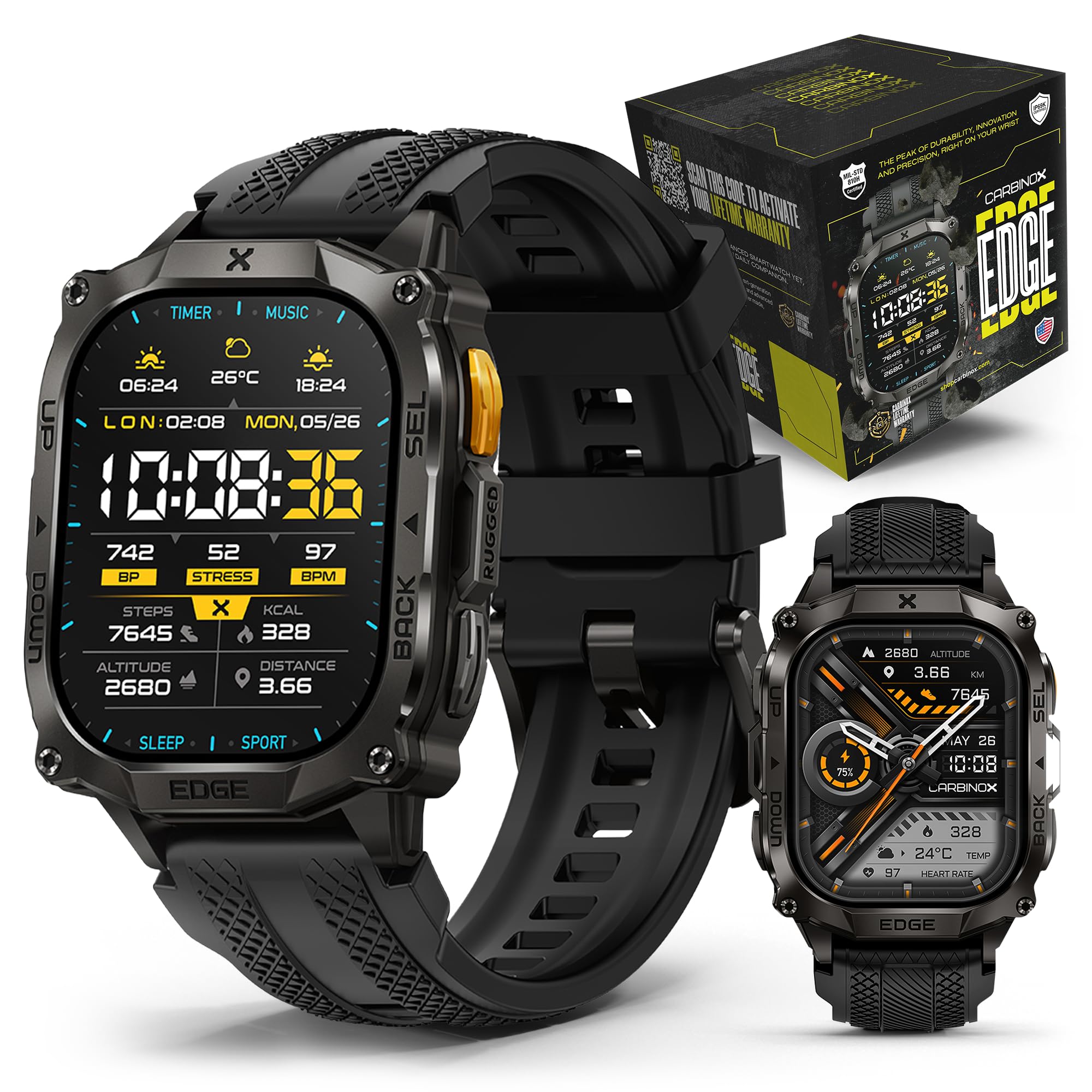
The CARBINOX Edge is built for harsh environments, featuring a stainless steel case reinforced with Gorilla Glass, IP69K dust and water sealing, and a 500mAh battery that delivers up to 25 days of runtime on a single charge. The 1.96-inch AMOLED display is bright and clear, visible even under direct sun or when splashed with mud. While it does not carry FDA clearance for an ECG app, the sensor suite includes heart rate, SpO2, sleep, and stress tracking, and the dual-band GNSS provides phone-free GPS tracking across six satellite systems for remote job sites or trail work.
The rugged build is matched by practical features: Bluetooth calling, AI voice texting, altimeter, barometer, compass, and 23 sport modes. The 22mm quick-release strap fits wrists from 150mm to 240mm and can be swapped for standard bands. Users who work in construction, landscaping, or field services consistently note that the watch survives daily exposure to concrete dust, rain, and vibration that would destroy a consumer-grade smartwatch in weeks. The Carbinox Max app works with both Android and iOS, though iMessage replies are restricted on iPhones.
Quality control appears inconsistent across units. A small number of buyers report that the watch stopped functioning within three months, requiring warranty replacement. The watch is also large and heavy, which some users find uncomfortable for sleep tracking.
Why it’s great
- IP69K and 5ATM waterproofing withstand mud, rain, and swimming
- 25-day battery eliminates need for frequent charging on work sites
- Large, bright AMOLED screen readable in direct sunlight
Good to know
- ECG feature lacks FDA clearance, acts as a wellness signal only
- Quality control inconsistencies reported across units
- Large and heavy design can be uncomfortable for sleep tracking
FAQ
Can my doctor use the ECG reading from a smartwatch?
Does an ECG smartwatch detect heart attacks?
Do I need to wear my ECG smartwatch while sleeping?
Final Thoughts: The Verdict
For most users, the best ecg smartwatch winner is the Withings ScanWatch Nova because it combines a stunning traditional watch design with 30 days of battery life and an FDA-cleared ECG sensor that exports downloadable PDF waveforms to your doctor. If you want deep training readiness metrics alongside AFib detection, grab the Garmin Forerunner 970. And for rugged adventure use where satellite SOS and dive-rated water resistance matter most, nothing beats the Apple Watch Ultra 3.

Mo Maruf
I created WellFizz to bridge the gap between vague wellness advice and actionable solutions. My mission is simple: to decode the research and give you practical tools you can actually use.
Beyond the data, I am a passionate traveler. I believe that stepping away from the screen to explore new environments is essential for mental clarity and physical vitality.