Our readers keep the lights on and my smoothie glass nicely filled. As an Amazon Associate, I earn from qualifying purchases.
Consistent, pinpoint-thin laminated dough layers define professional-grade pastries, pizza bases, and pie crusts. Home bakers who attempt croissants or puff pastry by hand often battle uneven thickness, wrist fatigue, and frustrating tears — the very problems a countertop sheeter solves with a simple manual crank. The right machine transforms sticky, rebellious dough into a smooth, even sheet.
I’m Mohammad Maruf — the founder and writer behind WellFizz. To build this guide, I spent over forty hours analyzing roller geometry, frame materials, thickness range precision, and real owner feedback across nine distinct dough sheeter models.
Whether you are making delicate fondant ribbons or a stack of pizza skins for a weekend party, the best dough sheeter for home use delivers repeatable thickness without occupying your entire counter for good.
How To Choose The Best Dough Sheeter For Home Use
Selecting a home dough sheeter involves understanding roller width, thickness adjustment granularity, build material, and drive mechanism. The right balance makes daily baking a pleasure instead of an exercise in frustration.
Roller Width and Working Space
Wider rollers accommodate larger dough pieces — a 27 cm (11 inch) roller handles standard pasta sheets and medium pizza bases, while a 30 cm or wider roller lets you process bigger laminated blocks without folding. Match roller width to your most common bake.
Thickness Adjustment Precision
Fine increments (0.5 mm or smaller) matter for fondant, wonton skins, and croissant layers that need uniform thinness. Coarse steps work well for pizza and cookie dough. Look for a clear, lockable dial that stays put during repeated passes.
Frame Material and Stability
Stainless steel or heavy-gauge steel frames resist twisting under pressure, keeping rollers parallel for even sheets. Plastic or particle-board bases can flex and cause wavy edges. Non-slip feet and table clamps add critical stability during vigorous cranking.
Manual vs. Electric Drive
Manual sheeters give you total control and are easier to clean, but require elbow grease for large batches. Electric models speed up production (useful for high-volume pizza dough), but they are heavier, louder, and more complex to maintain. For home use, a well-built manual crank often delivers the best balance.
Quick Comparison
On smaller screens, swipe sideways to see the full table.
| Model | Category | Best For | Key Spec | Amazon |
|---|---|---|---|---|
| Pastaline Sfogliafacile MINI | Premium Manual | Puff pastry & fondant | 0–12 mm range, 11 in roller | Amazon |
| VEVOR Manual Dough Sheeter | Mid-Range Manual | High-volume home baking | 0–12 mm, removable rollers | Amazon |
| LEONEBEBE Electric Pasta Maker | Electric Premium | Noodles & dumpling skins | 0.1–5 mm, 150 mm+ sheet width | Amazon |
| VEVOR Electric Pizza Roller | Electric High-Output | Pizza dough at scale | 3–16 in, 260 pcs/hr | Amazon |
| FANYING Commercial Sheeter | Mid-Range Folding | Space-conscious kitchens | 0–25 mm, folds small | Amazon |
| Thiadrs Manual Sheeter | Mid-Range Compact | Beginners & budget setups | 0–17.5 mm, 2 PE boards | Amazon |
| Atdsetr Folding Sheeter 12″ | Budget Manual | Entry-level laminating | 0–27 mm, 27.5 in boards | Amazon |
| Atdsetr Folding Sheeter 2-Board | Budget Manual | Multi-dough kitchens | 0–17.5 mm, 2 rolling boards | Amazon |
| DKN E-Pro 18-Inch Roller | Mid-Range Manual | Large pizza bases | 0.08–12.7 mm, steel/aluminum | Amazon |
In‑Depth Reviews
1. Pastaline Sfogliafacile MINI Manual Dough Sheeter

This Italian-made manual sheeter is the gold standard for home bakers serious about laminated dough. The 27 cm roller width handles fondant, sugar paste, puff pastry, and pasta sheets with a smooth, precise crank. Thickness adjustment runs from a hair-thin 0 mm up to 12 mm, letting you produce window-pane-thin ribbons for sugar flowers or a uniform 4 mm croissant base. Owners with two years of frequent use report the stainless steel frame and rollers remain parallel without developing play.
Assembly time is minimal — the quick-start guide (clear English, updated) walks you through the clamping and thickness dial calibration. The unit weighs 22 lbs, so it sits solidly on a countertop without sliding during heavy cranking. Multiple verified reviews mention that the removable handle and roller simplify cleanup; a quick wipe or a damp rag passed through the rollers removes residual dough.
The Sfogliafacile MINI is the only home sheeter in this roundup with a 30-day no-questions refund guarantee from a company that has been in business for twenty years. That speaks directly to durability confidence. If your budget allows, this machine ends the search for consistent, professional-grade laminating at home.
Why it’s great
- Italian build quality with a rigid stainless frame that stays true over years
- Sub-millimeter thickness precision ideal for sugar paste and fine pasta
- Easy crank ergonomics reduce hand fatigue compared to rolling pins
Good to know
- Premium-tier investment that may be overkill for occasional pizza makers
- Sticky dough requires proper dusting to avoid jamming the rollers
2. VEVOR Manual Dough Sheeter Machine
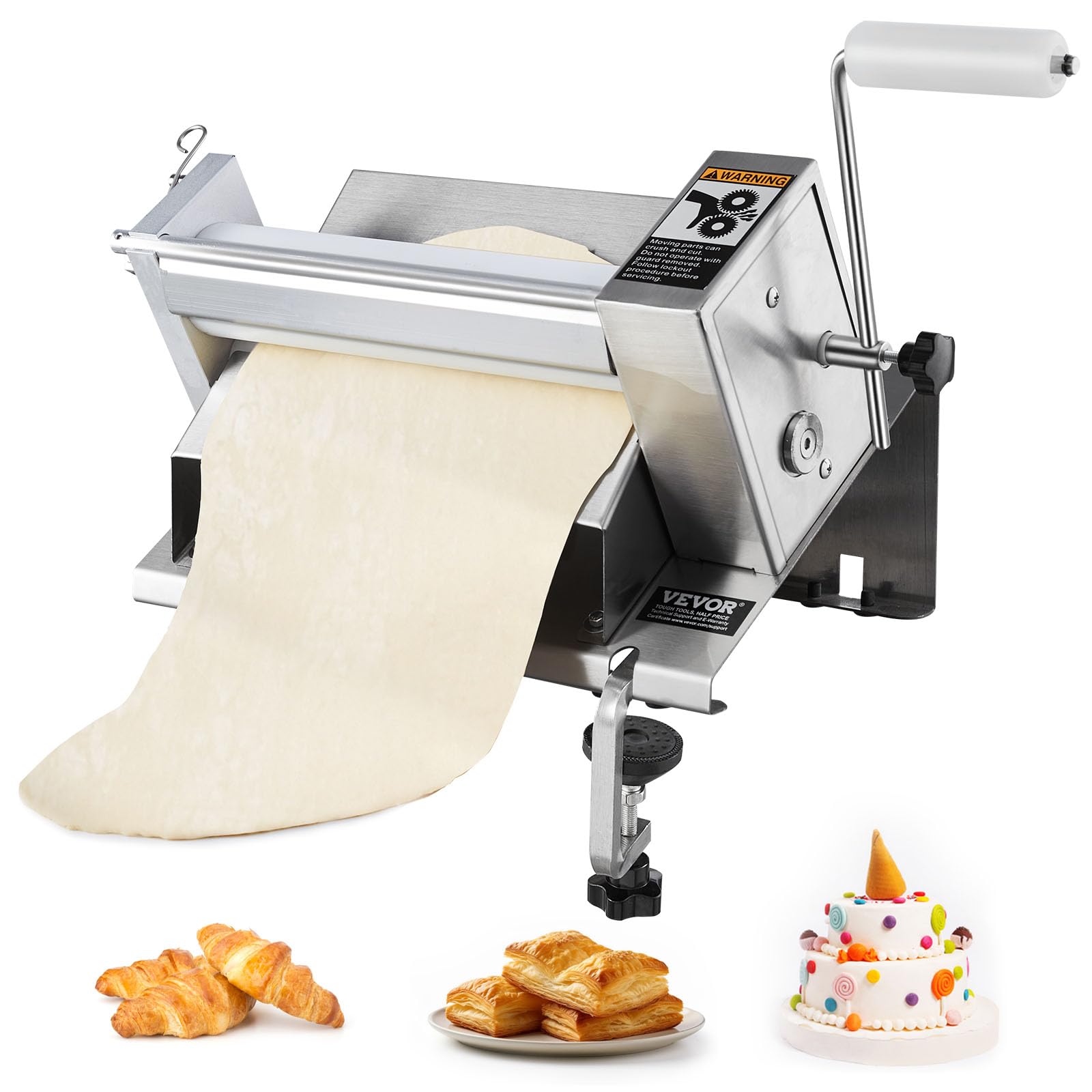
VEVOR delivers a mid-range manual sheeter that strikes a strong balance between price and performance. The 0 to 12 mm thickness dial is readable and locks in place, giving you repeatable settings for pasta, fondant, and laminated doughs. The 21.7 inch width and widened inlet allow larger dough batches to feed through, reducing the number of passes needed. Owners highlight the removable handle, panel, and roller as a major plus for thorough cleaning — a feature missing from many cheaper models.
The stainless steel body resists rust and keeps the rollers aligned under regular home-use pressure. At 23.2 lbs, it stays planted on the counter during operation. The non-slip base pads add extra security. Several reviewers note that repeated pressing improves dough gluten development, exactly what you want for chewy pizza crusts and flaky pastry.
No owner’s manual is included, which some users found frustrating for initial setup and maintenance. However, the machine is intuitive enough for most home bakers to figure out within a few minutes. Overall, the VEVOR manual sheeter is a reliable workhorse for anyone who bakes multiple times per week.
Why it’s great
- Easy disassembly of handle, panel, and roller for fast cleaning
- Lockable thickness dial with clear markings for repeatable results
- Sturdy stainless steel frame with non-slip feet stays stable
Good to know
- No printed owner’s manual — setup guidance is missing
- Maximum 12 mm thickness may be too thin for very thick pie crusts
3. LEONEBEBE Electric Pasta Maker Machine
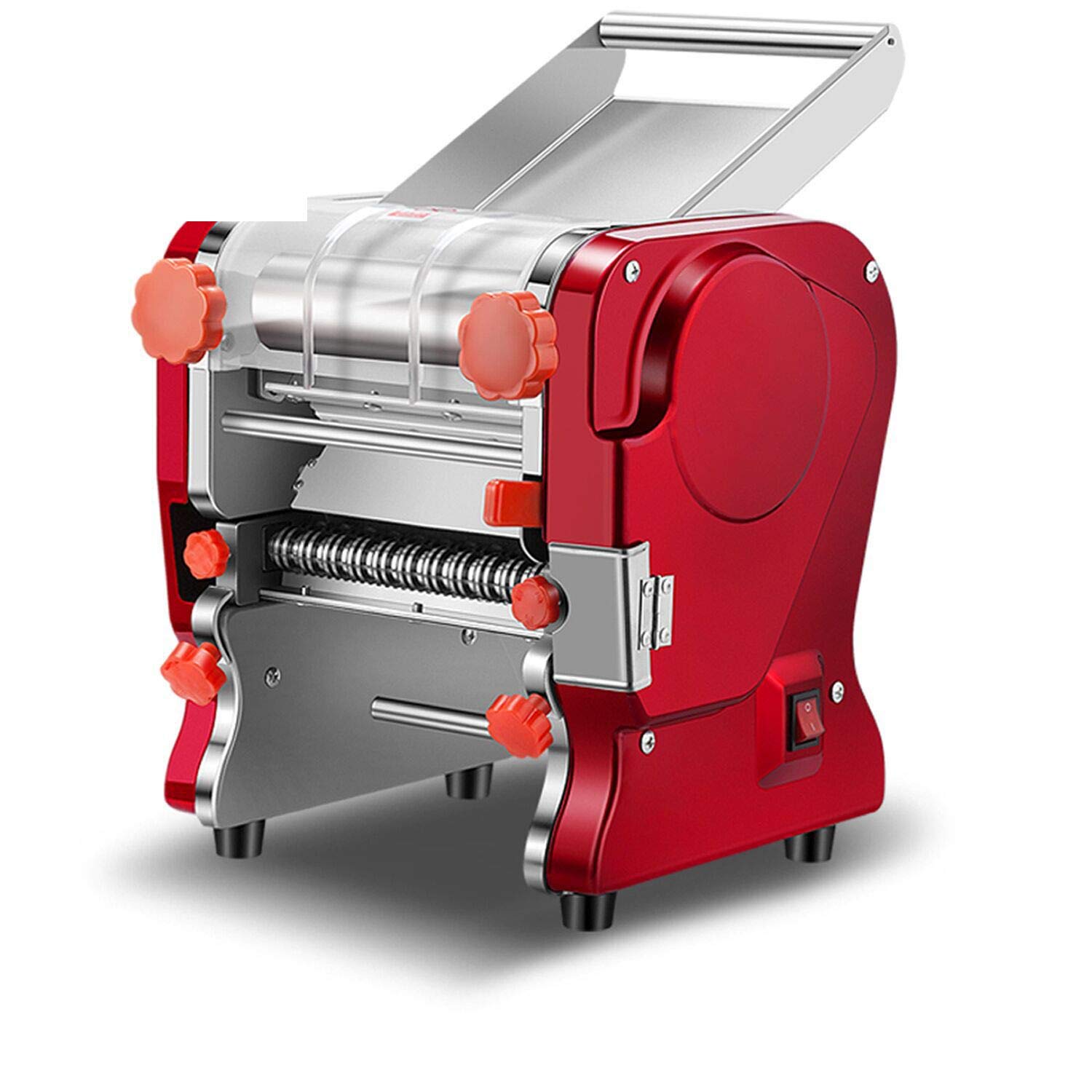
For home bakers who want to automate the sheeting process, this electric machine earns the top spot. The 550 W motor drives a kneading, pressing, and cutting cycle that produces up to 55 lbs of fresh noodles per hour. The dual-cutter head makes 3 mm and 9 mm flat noodles simultaneously, and the thickness adjusts from 0.1 mm up to 5 mm in fine increments. The sheet width exceeds 150 mm, wide enough for lasagna sheets and dumpling wrappers.
The all-stainless steel body is heavy-duty at 44 lbs, but the compact footprint (13 x 10 x 18 inches) fits on most countertops. Owners praise the solid construction — the aluminum and steel gears run quietly and show no slop after months of weekly use. The LEONEBEBE is especially strong with low-hydration pasta doughs that would stall a KitchenAid attachment.
One consistent complaint is a persistent rubbery or chemical smell during the first several uses, which fades over time but is unpleasant initially. A few units arrived with minor packing damage. Despite these issues, the machine’s output speed and build quality make it the most capable electric sheeter for serious home pasta makers.
Why it’s great
- 550 W motor handles stiff, low-hydration dough without stalling
- Dual noodle cutters (3 mm and 9 mm) included for fresh pasta variety
- Thickness range from 0.1 mm to 5 mm suits wrappers and sheets
Good to know
- Strong chemical-like smell reported during initial break-in period
- Heavier than manual sheeters at 44 lbs — not easily moved
4. VEVOR Electric Pizza Dough Roller Sheeter
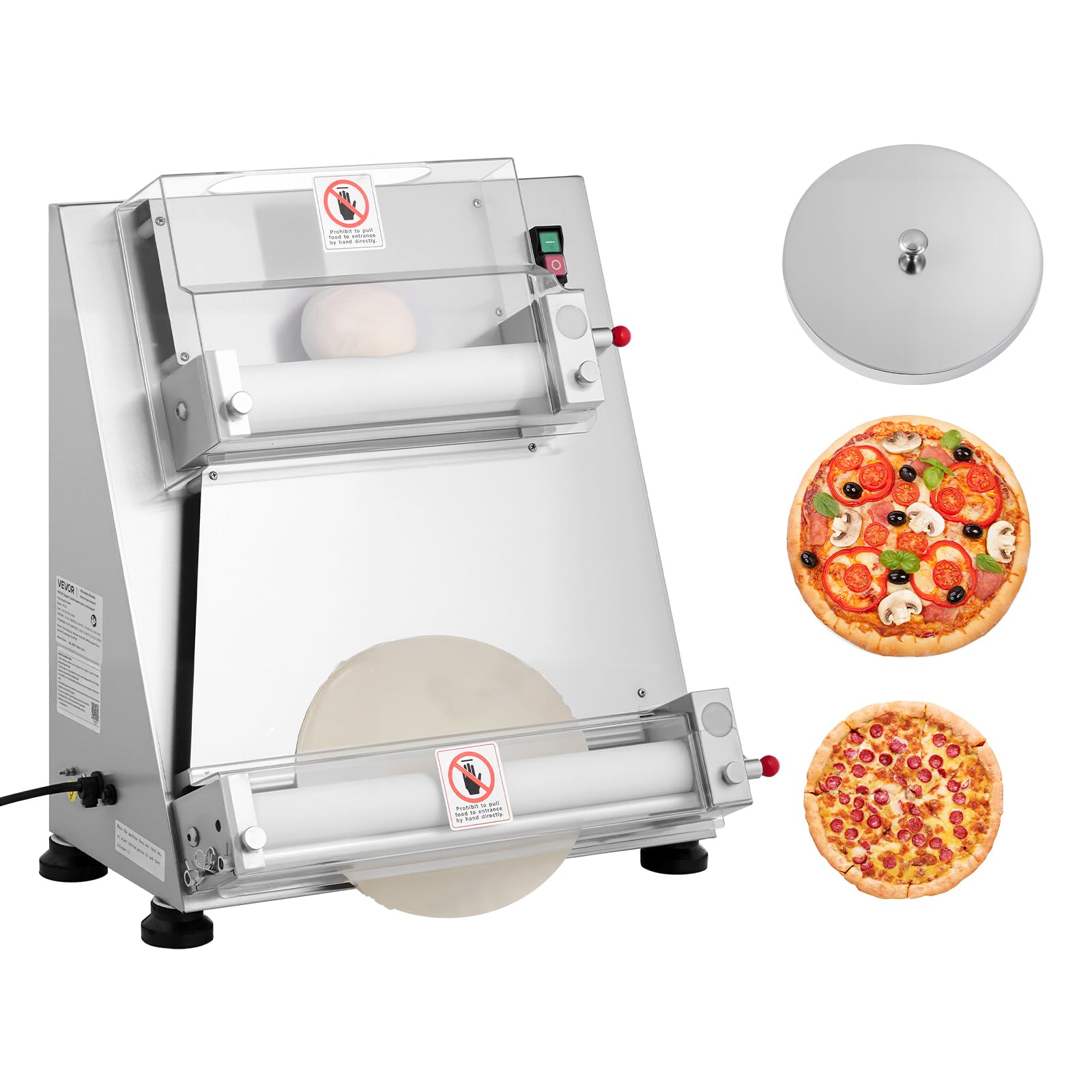
This semi-automatic electric sheeter is built for home bakers who produce pizza dough in bulk — up to 260 pieces per hour. The 390 W motor drives rollers that press dough from 3 to 16 inches in diameter, with thickness adjustable from 1 to 5.5 mm. The two-stage pressing process (upper roller entrance, then manual flip to lower roller) yields uniformly round, even bases without hand stretching.
The frame is thickened stainless steel with food-grade resin rollers that resist sticking and wear. A transparent PP plastic safety cover keeps dust out and prevents accidental contact during operation. Non-slip feet anchor the 90.4 lb machine securely. Owners who run weekly pita or empanada production report that it cuts shaping time from a laborious hand-roll to under ten minutes for 24 dough balls.
Reliability concerns appear in a few reviews — one unit experienced roller failure after three days, and the manufacturer explicitly states this model is not suitable for puff pastry or laminated doughs with high butter content. If your primary bake is pizza and tortillas, this machine delivers speed and consistency. For croissant lovers, look elsewhere.
Why it’s great
- High throughput — 260 round dough pieces per hour with consistent shape
- Adjustable from 3 to 16 inches diameter for various pizza sizes
- Thick stainless body with safety cover and non-slip feet
Good to know
- Not suitable for buttery laminated doughs like croissants or puff pastry
- Some reports of early roller failure and poor commercial durability
5. FANYING Commercial Dough Sheeter
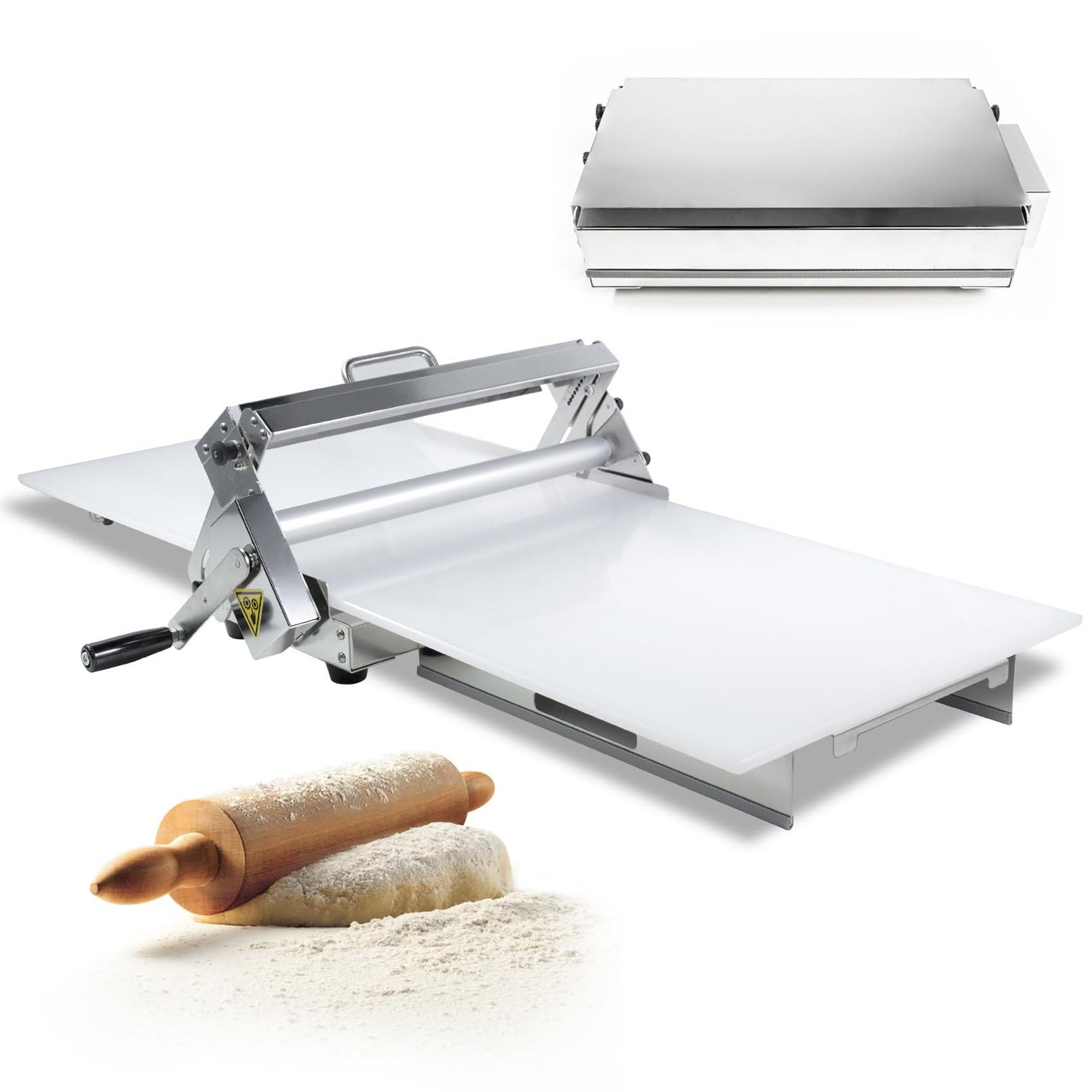
Sized for both home and light commercial use, this folding manual sheeter offers the widest thickness range in the test — 0 to 25 mm with up to 55 selectable positions. You can dial in 0.5 mm for ultra-thin wonton skins or open it up to 25 mm for thick pie dough. The non-stick coated rollers glide smoothly even with sticky butter dough, reducing tearing.
Assembly takes about ten seconds: unfold, lock the legs, and you are ready. When not in use, it collapses to a compact 30 x 37 cm footprint small enough for a cabinet or RV storage. The ergonomic crank handle is comfortable for extended sessions. European and Latin American reviewers praise the build quality, noting that the stainless steel and food-grade PE components feel solid and clean easily.
A few users found the thickness adjustment instructions unclear — there are two separate dials (coarse and fine) and combining them for a specific target requires experimentation. The manual could be better. But once dialed in, the sheeter produces consistent, professional results across croissant, pizza, fondant, and pasta doughs without taking over your kitchen.
Why it’s great
- Widest thickness range (0–25 mm) with 55 adjustment settings
- Folds down to a tiny footprint for easy cabinet or RV storage
- Non-stick coated rollers handle sticky butter dough well
Good to know
- Dual-dial thickness system is confusing without better instructions
- Heavier than other folding models — 15.4 lbs for the larger version
6. Thiadrs Manual Folding Dough Sheeter
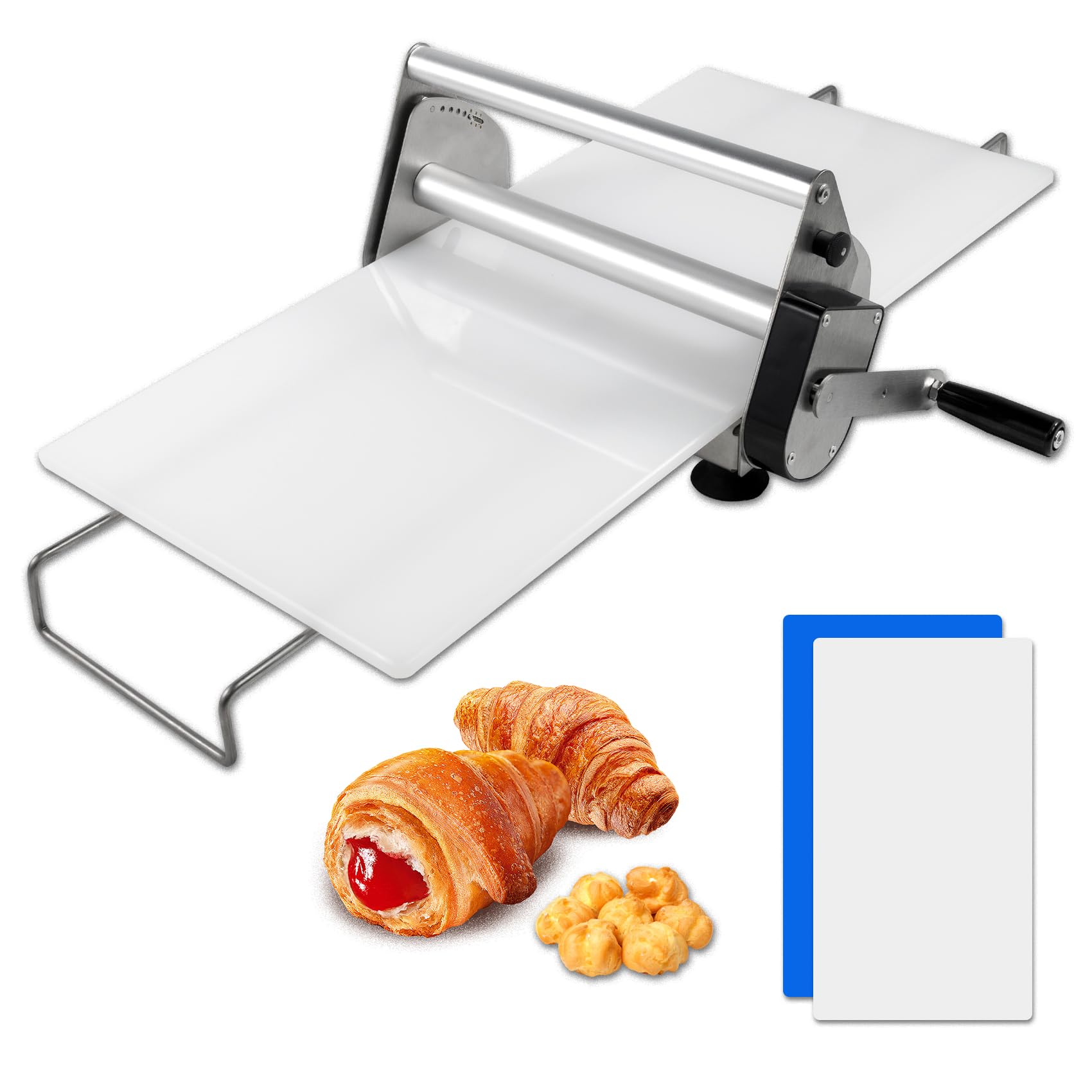
This blue-finished manual sheeter comes with two 27.5 x 12 inch PE rolling boards — one rough side for initial pressing and one smooth side for finishing. The 10 adjustable thickness gears range from 0 to 17.5 mm, providing enough granularity for pizza, cookies, and croissants. The main body is stainless steel, fully detachable, and washable.
New bakers find it very approachable — the learning curve is shallow, and the folding design stores neatly. The non-slip base keeps the machine stable during cranking. Several owners note that it saves enormous time when laminating dough for cinnamon rolls and puff pastry. The compact size fits small kitchens well.
Durability questions surface after a few months of use. Some owners report that the crank mechanism develops slippage, causing uneven dough thickness over time. A couple of units arrived with parts that began to separate from the frame. For the price, it is a solid entry-level tool, but serious daily bakers may want to invest in a more robust model.
Why it’s great
- Two included PE boards (rough and smooth) for different dough stages
- Very easy to learn for beginners moving beyond a rolling pin
- Folds compactly and comes in a clean blue finish
Good to know
- Crank mechanism may slip or loosen with extended use
- Some units have sharp edges that require careful handling
7. Atdsetr Folding Dough Sheeter (12″)
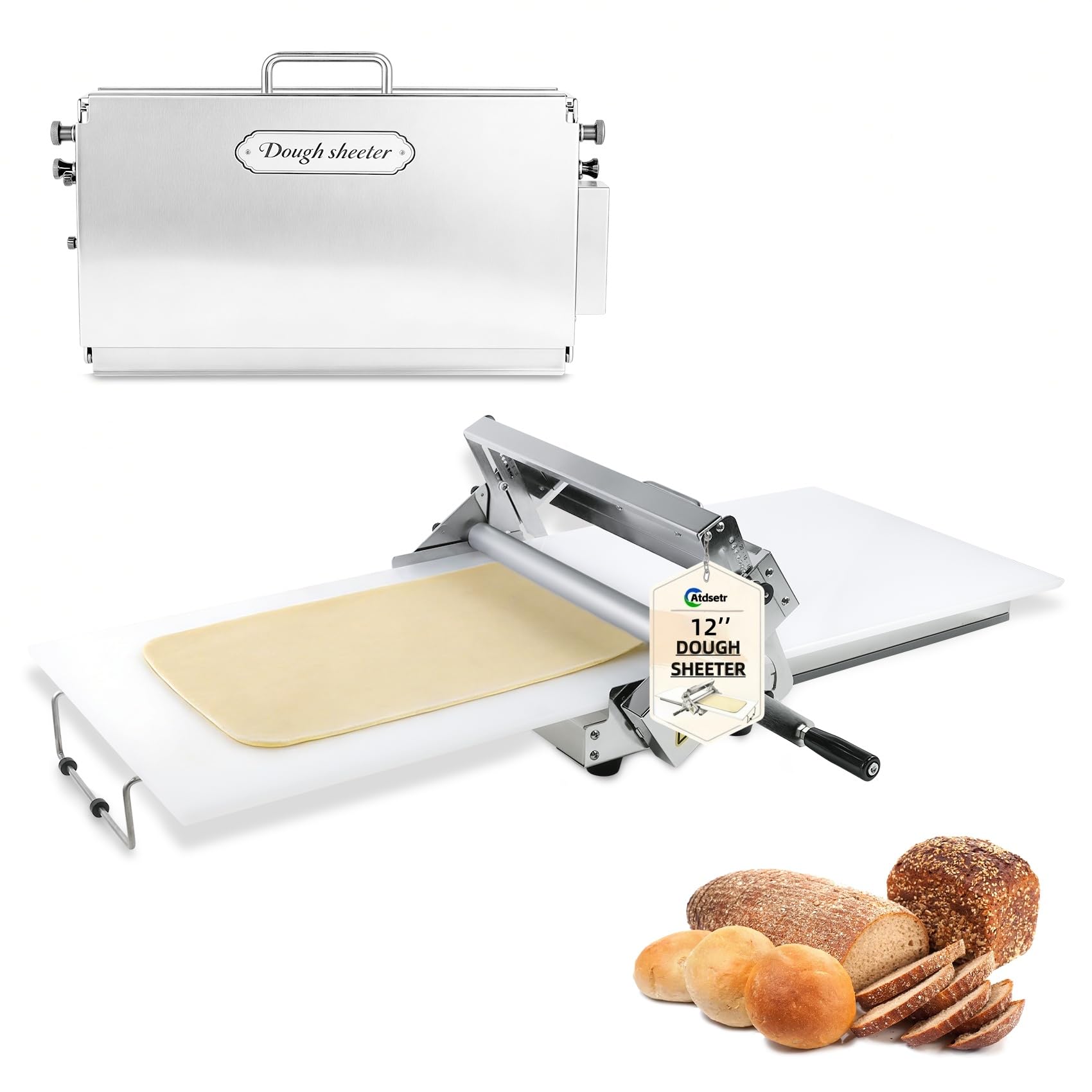
This folding manual sheeter from Atdsetr offers 55 thickness settings spanning 0 to 27 mm — the widest range of any manual model reviewed here. The high-strength alloy frame resists deformation under heavy pressing, while food-grade stainless steel rollers ensure safe, non-stick contact with dough. The ergonomic handle rotates smoothly, reducing hand fatigue during long laminating sessions.
The machine folds flat for storage, making it ideal for kitchens with limited counter space. Assembly is straightforward, and the chrome-plated finish resists oxidation. Owners praise its ability to handle crepes, Danish pastry, pizza, and cookie dough with equal ease. The 26.8 lb weight gives it enough heft to stay steady during cranking without being immovable.
Quality control is inconsistent. Some units arrive with detached pieces, missing parts, or sharp metal edges. The setup instructions could be clearer. For bakers comfortable with light assembly and adjustment, this unit offers tremendous thickness versatility at a budget-friendly price point.
Why it’s great
- Largest thickness range of any manual sheeter — 0 to 27 mm with 55 stops
- Alloy frame resists warping even with high-pressure dough pressing
- Folds flat for convenient storage in tight cabinets
Good to know
- Inconsistent quality — some units arrive with detached or missing pieces
- Setup instructions are unclear and sharp edges may need filing down
8. Atdsetr Folding Dough Rolling Machine
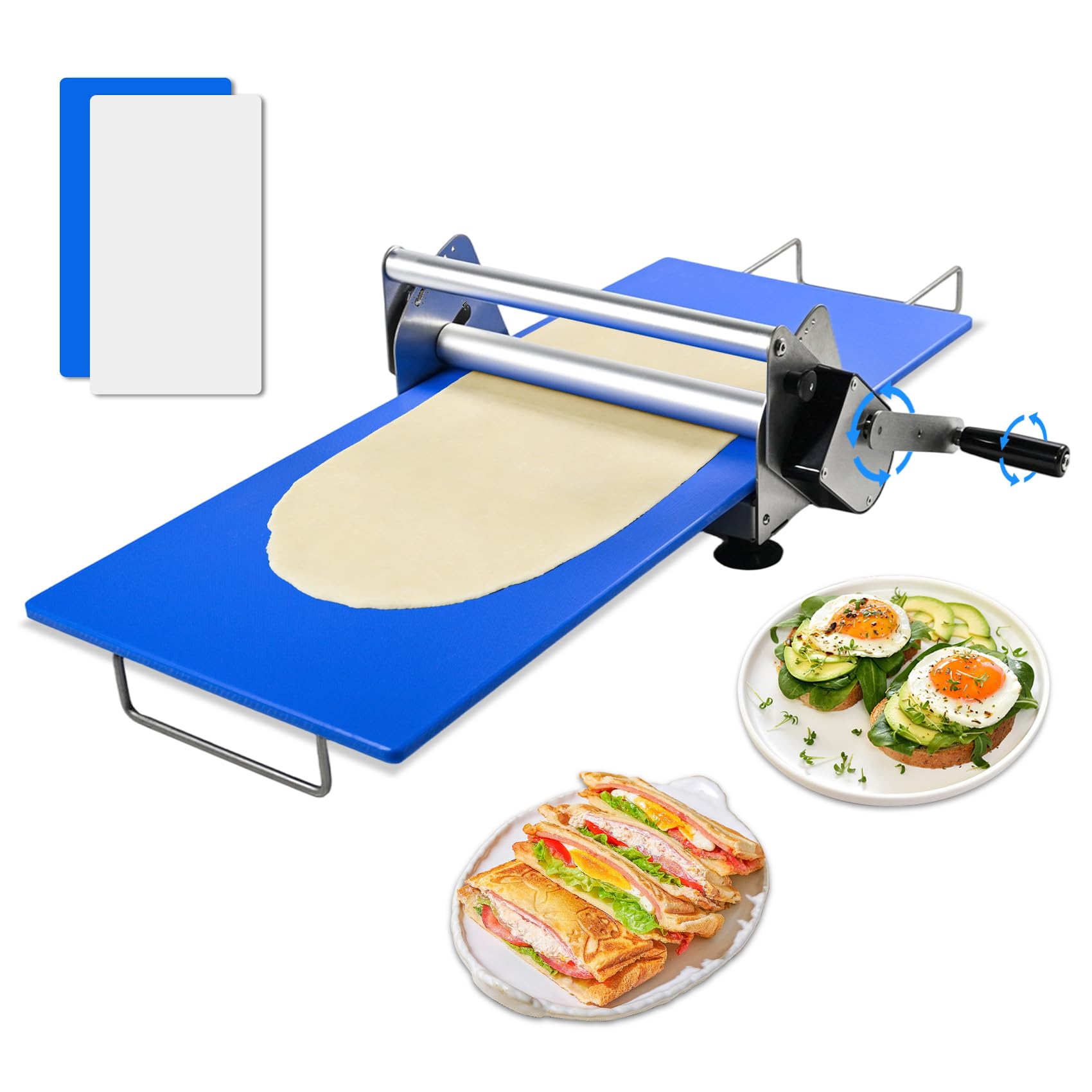
This manual sheeter comes with two eco-friendly PE rolling boards (rough and smooth), offering versatility for different dough types. The stainless steel main body uses one-piece molding for durability and easy cleaning. Thickness adjusts from 0 to 17.5 mm through a simple dial system. The non-slip base keeps the machine planted during use.
Owners consistently mention that it works beautifully for cinnamon rolls, pizza dough, and croissants right out of the box. The folding design stores neatly, and disassembly for cleaning is straightforward — a damp cloth restores the non-stick surface. The 22 lb weight is manageable for moving between countertop and storage.
Reports of missing parts and assembly frustration appear in a minority of reviews, along with some units arriving with detached pieces. The return process can be inconsistent. For the price, it is a capable entry-level sheeter, but buyers should inspect the package immediately upon arrival.
Why it’s great
- Two rolling boards (rough and smooth) included for dough prep variety
- One-piece stainless body is easy to disassemble and clean
- Folding storage saves counter space in small kitchens
Good to know
- Some units arrive with missing or detached parts requiring return
- Instructions are sparse — assembly may need online video help
9. DKN E-Pro 18-Inch Pizza Dough Roller

Built with a steel and aluminum frame, the DKN E-Pro is designed for durability and long-term use. The 18-inch roller width is the widest in this review, making it ideal for large pizza bases, burrito-sized tortillas, and extra-wide pasta sheets. Thickness adjusts from 0.08 inches (2 mm) up to 12.7 mm (0.5 inches) via a simple dial. The hand crank has smooth aluminum gears that will not slip or strip.
Home bakers report that three passes through decreasing thickness settings produce perfectly round, consistent 16-inch pizza dough in under two minutes. The table clamps secure the unit to any counter edge. Cleaning is simple — a damp rag rolled through the rollers removes dough residue. The included recipe book provides guidance for beginners.
The base is made of particle board, which some owners find cheap-looking for the price. Dough can stick to the rollers if not generously floured, and the instructions are printed only in Spanish. Despite these minor complaints, the E-Pro remains a favorite for home pizza makers who value speed and consistency over aesthetic polish.
Why it’s great
- 18-inch wide roller handles large pizza and tortilla dough with ease
- Sturdy aluminum gears will not slip or strip during heavy use
- Table clamps provide rock-solid stability on any countertop
Good to know
- Particle board base looks cheap and may not last as long as full steel
- Instructions are in Spanish only — English version not included
FAQ
Can a manual dough sheeter handle very sticky dough like brioche?
How do I clean the rollers without damaging the non-stick coating?
What size sheeter should I buy for home croissant production?
Final Thoughts: The Verdict
For most users, the best dough sheeter for home use winner is the LEONEBEBE Electric Pasta Maker because it automates the sheeting process while maintaining sub-millimeter precision and handling stiff doughs that strain manual models. If you want professional-grade manual control for laminated pastries, grab the Pastaline Sfogliafacile MINI. And for a compact, folding sheeter that fits any kitchen cabinet and covers the widest thickness range, nothing beats the FANYING Commercial Dough Sheeter.

Mo Maruf
I created WellFizz to bridge the gap between vague wellness advice and actionable solutions. My mission is simple: to decode the research and give you practical tools you can actually use.
Beyond the data, I am a passionate traveler. I believe that stepping away from the screen to explore new environments is essential for mental clarity and physical vitality.