Our readers keep the lights on and my smoothie glass nicely filled. As an Amazon Associate, I earn from qualifying purchases.
A smoke detector that only catches slow smoldering fires or fast-flaming ones leaves half your home exposed. That gap is why choosing between photoelectric and ionization sensing alone is a gamble you do not want to take. A dual-sensor unit combines both technologies to cover the full fire spectrum, giving you critical seconds when every moment counts.
I’m Mohammad Maruf — the founder and writer behind WellFizz. After spending countless hours comparing UL 217 listings, sensor types, battery life ratings, and interconnectivity features across the market, I built this guide to help you find the right dual sensor smoke detector without getting lost in misleading marketing.
Whether you are retrofitting an older home or equipping a new build, the best protection starts with choosing the right alarm. This guide breaks down the top-rated models to help you find the best dual sensor smoke detector for your specific layout and budget.
How To Choose The Best Dual Sensor Smoke Detector
A dual sensor smoke detector combines both photoelectric and ionization technologies in one unit. The photoelectric sensor responds to slow, smoldering fires that produce thick smoke before flames erupt. The ionization sensor catches fast-flaming fires that produce little visible smoke. Together, they provide the earliest possible warning across the widest range of fire scenarios.
Battery Life and Power Source
The most important practical decision is whether you want a sealed 10-year lithium battery or a replaceable 9V or AA pack. Sealed units eliminate the low-battery chirp for a full decade but must be discarded entirely when the battery dies — the alarm itself becomes the disposable item. Replaceable-battery models let you swap cells and keep the detector running, but you must remember to change them regularly. Hardwired units with battery backup offer the best of both worlds: constant power from your home wiring plus a backup AA or 9V battery for outages. If you choose a hardwired model, confirm it uses a side-loading battery drawer so you can replace the backup without removing the alarm from its base.
Interconnection Method
Interconnection lets one triggered alarm sound all connected units throughout your home — critical for multi-floor houses where a basement fire might go unheard upstairs. Hardwired 3-wire interconnection is the most reliable method but requires existing wiring or an electrician. Wireless RF interconnection, like the X-Sense system, links up to 18 alarms over 820 feet without running new cables. Smart Wi-Fi detectors, such as the Kidde Ring-compatible model, push notifications directly to your phone and work with voice assistants, giving you remote awareness even when you are away. For most homes, wireless RF interconnection offers the best balance of installation simplicity and whole-home coverage.
Nuisance Alarm Reduction
Cooking steam, shower humidity, and toaster smoke are the top causes of false alarms. Dual sensor detectors are especially prone to ionization sensor triggers during normal cooking. Modern units address this with Precision Detection or Enhanced Sensing technology that adjusts sensitivity without sacrificing safety. The First Alert SM310 uses Precision Detection to reduce cooking nuisance alarms while maintaining early fire warning. Kidde’s smart detector reduces false alarms compared to its previous generations. Look for models that explicitly mention false-alarm reduction in their specs — it makes a real difference in daily life.
Additional Features Worth Paying For
Voice alerts that clearly say “Fire!” or “Warning! Carbon Monoxide!” help you identify the threat instantly so you can react appropriately. End-of-life warnings alert you when the entire detector needs replacement — mandatory in some jurisdictions for sealed-battery units. Self-testing circuits continuously check internal electronics and alert you if something fails. Some models, like the Kidde hardwired smart detector, also detect carbon monoxide, eliminating the need for a separate CO alarm in the same area. If you choose a combo unit, verify it meets both UL 217 (smoke) and UL 2034 (CO) standards independently.
Quick Comparison
On smaller screens, swipe sideways to see the full table.
| Model | Category | Best For | Key Spec | Amazon |
|---|---|---|---|---|
| First Alert BRK 3120B | Hardwired | Whole-home hardwired network | Photoelectric + Ionization, 120V | Amazon |
| Kidde Smart Smoke & CO | Smart | Remote alerts via Ring app | Smoke + CO, Hardwired + AA | Amazon |
| First Alert SM310 | Sealed Battery | Low-maintenance 10-year battery | Precision Detection, Sealed 10-yr | Amazon |
| X-Sense SC01-W 3-Pack | Wireless RF | Multi-floor wireless interconnection | 820 ft RF range, Smoke + CO | Amazon |
| Kidde 30CUD10-V 2-Pack | Battery+Voice | Combo smoke/CO with voice alerts | Voice “Fire!” & “CO!”, 10-yr battery | Amazon |
| SITERWELL GS525A 2-Pack | Sealed Battery | Budget sealed 10-year battery | Built-in 3V lithium, 10-yr life | Amazon |
| SITERWELL GS509A 2-Pack | Replaceable Battery | Budget with replaceable 9V | Photoelectric, 85dB alarm | Amazon |
In‑Depth Reviews
1. First Alert BRK 3120B

The BRK 3120B is a true dual-sensor hardwired alarm pairing a photoelectric cell and an ionization chamber in one unit. This combination detects both fast-flaming fires that produce small combustion particles and slow smoldering fires that generate large smoke particles. Optipath 360 Technology directs smoke into the sensing chambers more efficiently, reducing detection time without increasing nuisance alarms.
Installation is straightforward for any home with existing 3-wire hardwired interconnect. The side-loading battery drawer makes swapping the two included AA Duracells simple without removing the whole alarm from the ceiling. The tandem wiring feature lets you link multiple units so when one detects smoke, all connected alarms sound. Users consistently report no false triggers from shower steam or cooking, even after months of daily use.
One experienced reviewer noted that the battery polarity markings on the drawer can be confusing — reversing a battery causes rapid discharge and overheating. Double-check polarity during installation. Also verify that your Amazon-shipped unit has a recent manufacture date; third-party stock may sit in warehouses for years, and building codes require replacement within ten years of manufacture regardless of use.
Why it’s great
- True dual-sensor (photoelectric + ionization) covers both fire types
- Hardwired 3-wire interconnection for whole-home alerting
- Side-loading battery drawer for easy AA replacement
Good to know
- Battery polarity markings can be confusing — double-check orientation
- Requires existing hardwiring; not for battery-only installations
- Third-party stock may have old manufacture dates
2. Kidde Smart Smoke and Carbon Monoxide Detector
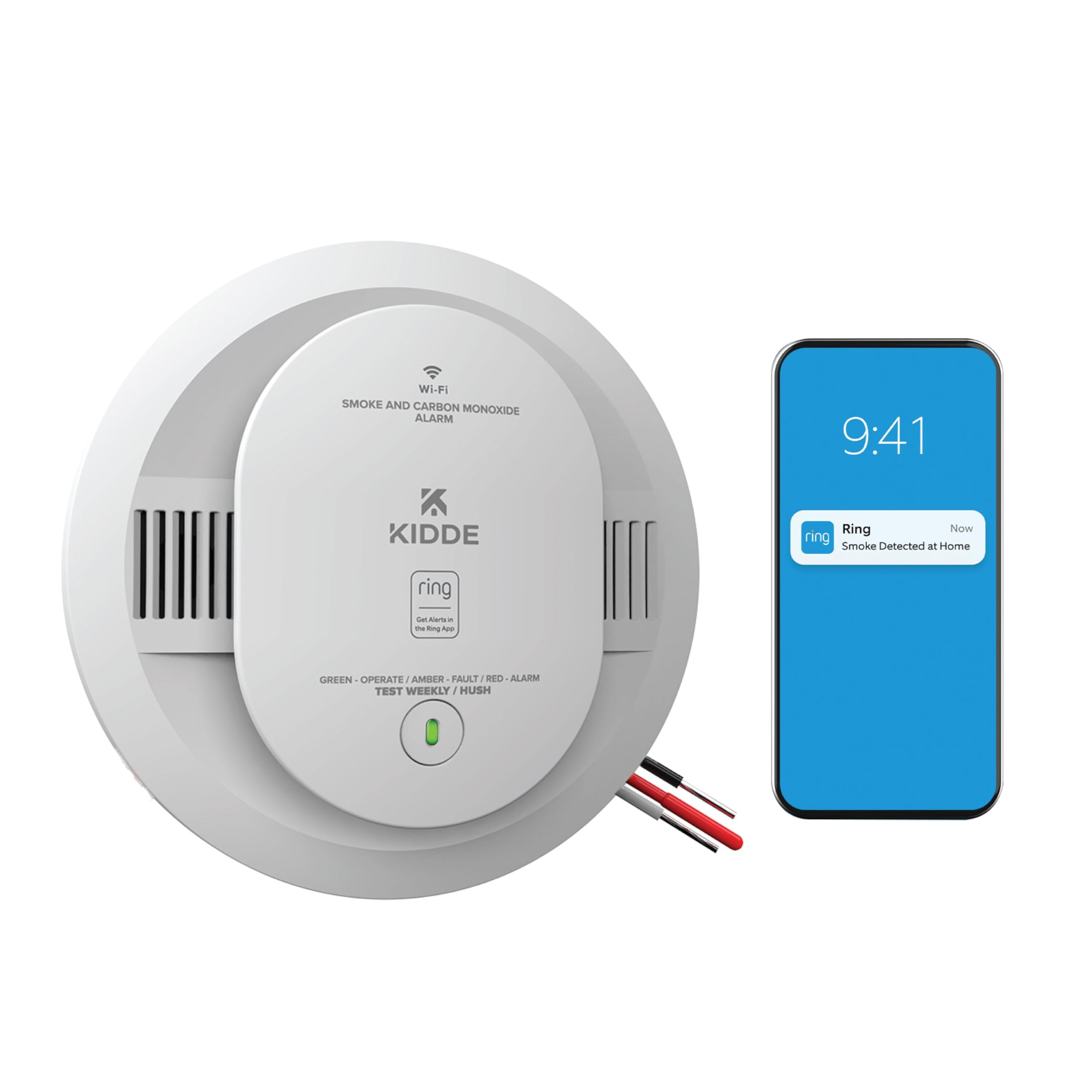
This is the first smoke and CO detector built for the Ring ecosystem. It sends real-time alerts to your phone when smoke or carbon monoxide is detected — whether you are home or away — with no subscription required for basic notifications. Over 25 percent faster smoke detection than a leading competitor, per Kidde’s internal testing, gives you critical extra seconds.
The unit is hardwired with two AA backup batteries, so it keeps working during a power outage. Adding just one smart detector to your existing hardwired interconnect chain lets you receive mobile alerts for every traditional Kidde alarm already installed in your home. The optional Ring subscription adds 24/7 professional monitoring for just a few dollars a month. Users report easy installation and reliable connectivity, with no false alarms during weeks of use.
A firmware update triggered a chirping sound during updates that cannot be silenced, which some users found frustrating. Additionally, this is a hardwired-only model — there is no battery-only version for homes without existing wiring. If your home lacks hardwired interconnect, the X-Sense or Kidde battery models below are better suited.
Why it’s great
- Real-time smoke and CO alerts via Ring app — no subscription needed
- Over 25% faster smoke detection than leading competitor
- Integrates with existing hardwired Kidde alarms
Good to know
- Firmware update causes chirping that cannot be silenced
- Hardwired only — no battery-powered version available
- Optional professional monitoring adds monthly cost
3. First Alert SM310
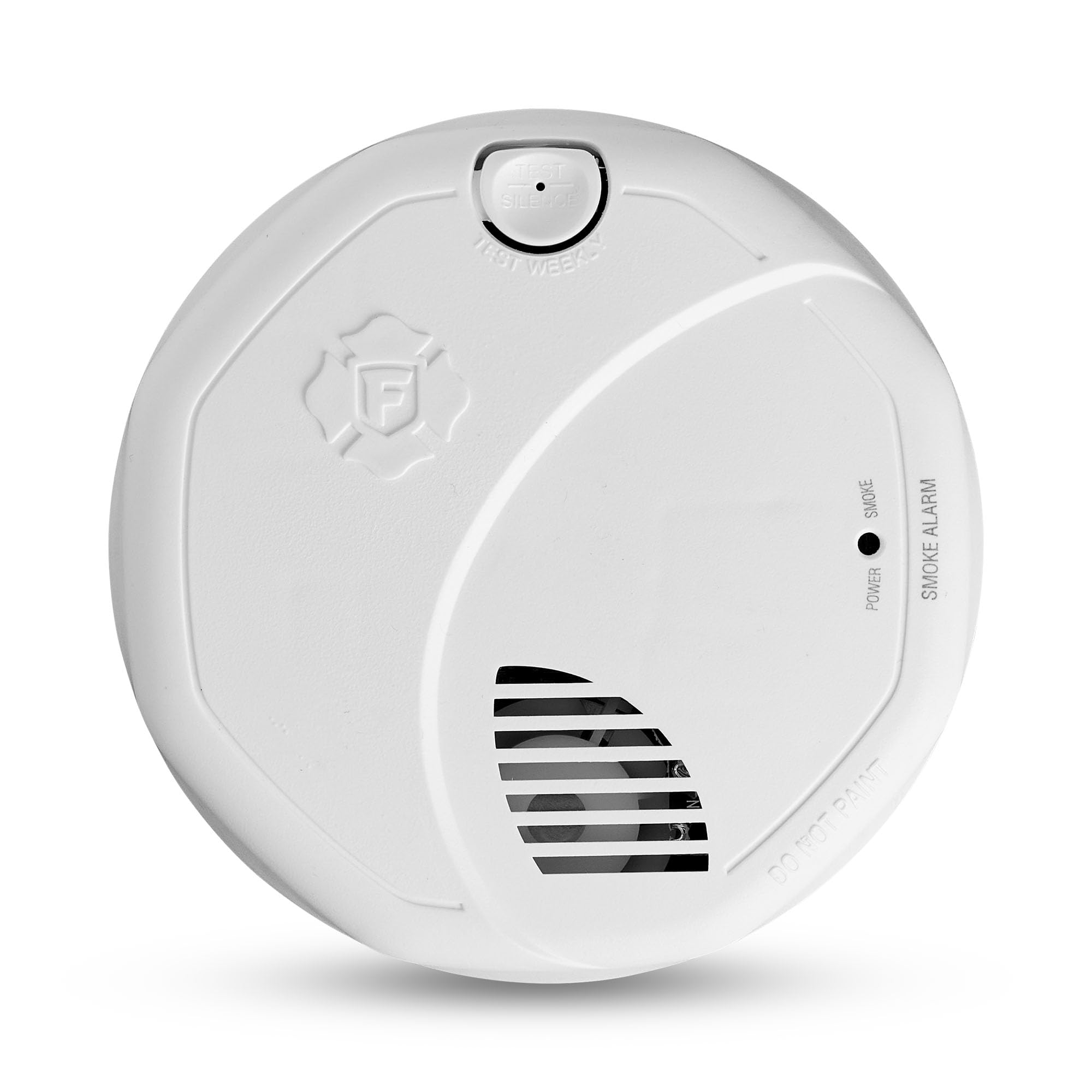
The SM310 is First Alert’s sealed-battery dual-sensor alarm with Precision Detection technology. This advanced sensing system complies with new industry standards specifically designed to reduce cooking nuisance alarms while still providing early warning for real fires. The sealed 10-year lithium battery eliminates both battery changes and the low-battery chirp for the entire life of the alarm — you install it once and forget it for a decade.
The dual sensors in this unit cover both photoelectric and ionization detection, so it catches smoldering and flaming fires equally well. An end-of-life warning chirps when the entire detector nears its ten-year replacement date, which is required by code in many jurisdictions. The compact 5-inch diameter footprint fits most existing mounting brackets. Users report it works well as a direct replacement for older models with AA batteries.
The sealed design means the entire unit must be discarded at end of life — there is no way to replace just the battery. Some users found the alarm difficult to remove from the base once snapped on, so plan for a permanent installation. If you want the option to swap batteries rather than replace the whole detector, look at the SITERWELL GS509A below instead.
Why it’s great
- Sealed 10-year battery with no low-battery chirps
- Precision Detection reduces cooking nuisance alarms
- Compact 5-inch design fits standard mounting locations
Good to know
- Entire unit must be replaced at end of 10-year life
- Very difficult to remove from base once installed
- No wireless interconnect — standalone only
4. X-Sense Wireless Interconnected Smoke & CO Alarm 3-Pack
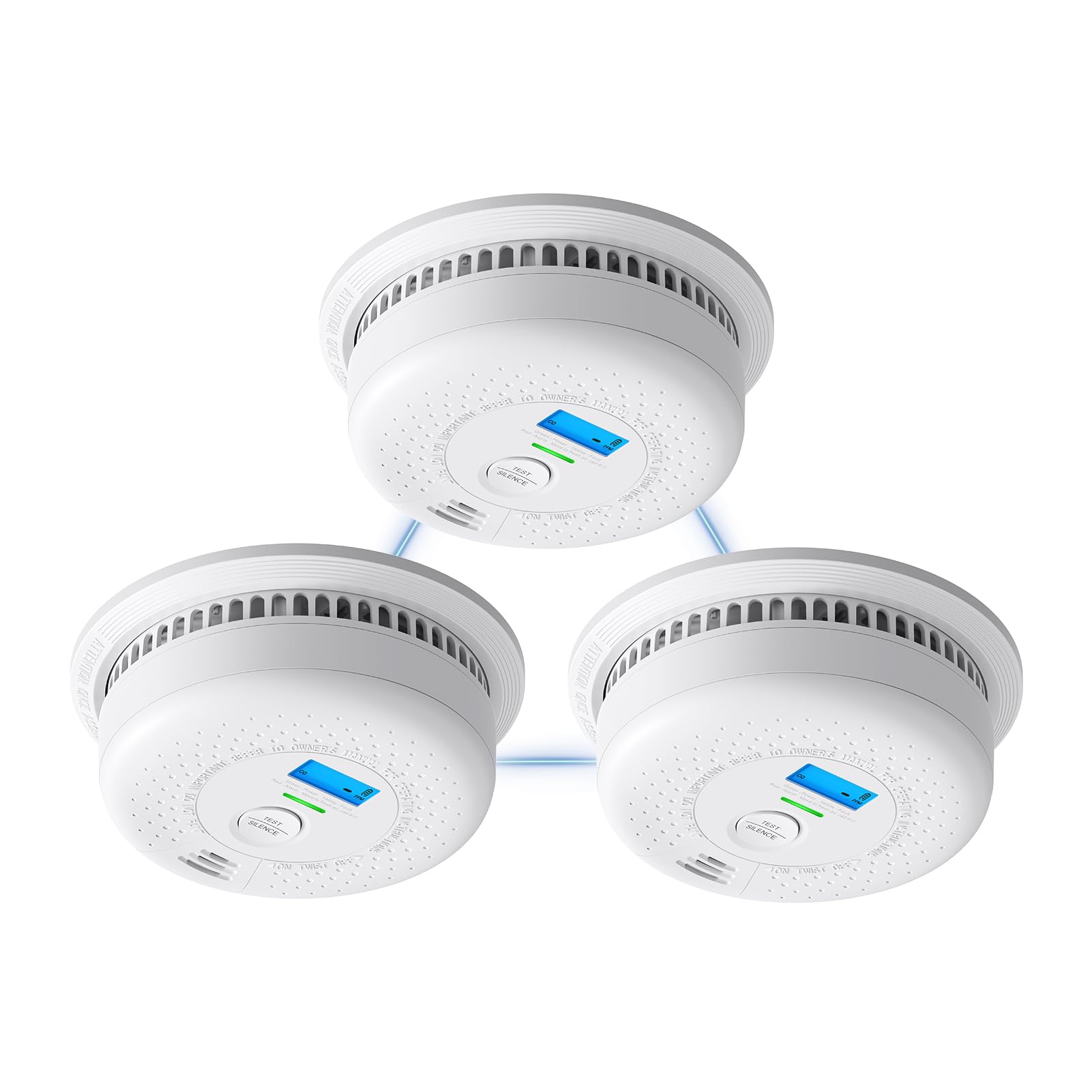
This three-pack from X-Sense delivers whole-home protection through wireless RF interconnection — no hardwiring required. When one alarm detects smoke or carbon monoxide, all connected alarms sound simultaneously, covering multiple floors and areas up to 820 feet apart. You can link up to 18 units in a single network, making it ideal for large homes, basements, and detached garages without running cable.
Each alarm uses a photoelectric smoke sensor paired with an electrochemical CO sensor. The photoelectric element is less prone to false triggers from cooking than ionization types, and the CO sensor meets UL 2034 standards. The sealed 10-year lithium battery powers the entire unit for its lifespan with no battery changes. The included magnetic fastening kit and screw anchors make installation on walls or ceilings a five-minute job.
The mounting plate is smaller than standard round electrical boxes, so retrofitting over an existing box may require a 5-inch white electrical cover with a 2-inch hole to hide the gap. Some users found the screws alone sufficient for lightweight units and skipped the wall anchors. At a 3-pack, this is one of the best value propositions for whole-home coverage without hiring an electrician.
Why it’s great
- Wireless RF interconnects up to 18 alarms over 820 ft
- Huge 3-pack covers most homes in one purchase
- Sealed 10-year battery — no replacements needed
Good to know
- Mounting plate too small for standard round electrical boxes
- Photoelectric only for smoke — no ionization sensor
- No smart phone alerts or voice warnings
5. Kidde Smoke & Carbon Monoxide Detector 2-Pack with Voice Alerts

This Kidde 2-pack combines smoke and carbon monoxide detection in a single battery-powered unit with crystal-clear voice alerts. When smoke is detected, the alarm says “Fire!” in a human voice; when CO is present, it says “Warning! Carbon Monoxide!” knowing which threat you are dealing with instantly helps you respond appropriately — evacuate for fire, ventilate for CO.
The never-change 10-year sealed battery eliminates low-battery chirps and battery swaps for the entire decade. Enhanced Sensing Technology reduces false alarms from cooking compared to older Kidde generations. The alarm is self-testing — internal electronics continuously check operation and alert you if something fails, though you should still perform a weekly manual push test. Each unit weighs under a pound and installs with a simple twist-lock base that fits standard mounting locations.
The mounting base uses a new bracket design that is not compatible with older Kidde bases. If you are replacing a previous Kidde model, you will need to swap the base plate — an easy two-screw job using the existing electrical box. Additionally, this is not a hardwired unit, so it cannot interconnect with existing hardwired systems. Users looking for whole-home alerting should consider the X-Sense RF system above.
Why it’s great
- Voice alerts distinguish fire from CO immediately
- Sealed 10-year battery with no chirps
- Enhanced Sensing reduces cooking false alarms
Good to know
- New base design not compatible with older Kidde brackets
- No hardwire or wireless interconnect capability
- No smart phone app or remote alerts
6. SITERWELL GS525A Smoke Detector 2-Pack
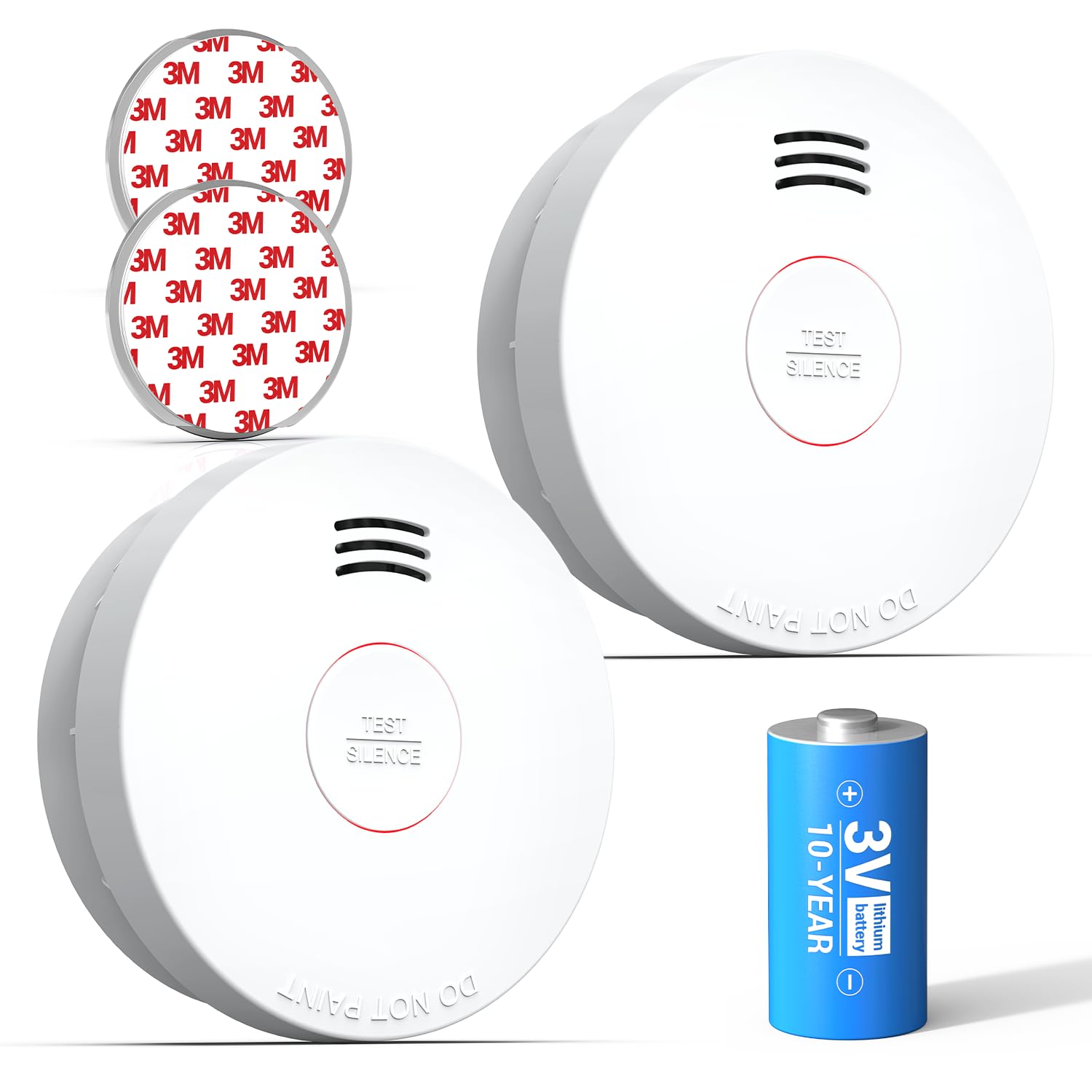
The GS525A is SITERWELL’s sealed-battery photoelectric alarm with a built-in 3V lithium cell that powers the unit for ten full years. You pull a plastic tab to activate the alarm before installation, and then you are done — no battery drawer, no annual swaps, no chirps until the end-of-life warning sounds a decade later. The UL 217 10th Edition listing ensures it meets current safety standards.
The photoelectric sensor is optimized for detecting slow smoldering fires common in upholstery and electrical wiring. An 85dB alarm tone is loud enough to wake heavy sleepers. The included magnetic fastening kit lets you mount the detector without screws — just stick the metal plate to your ceiling or wall with the adhesive pad and the alarm snaps on magnetically. Screws are also provided if you prefer a permanent mount.
This is a photoelectric-only unit, not a true dual sensor combining photoelectric and ionization. It will miss fast-flaming fires that produce little smoke before bursting into flame. If full-spectrum coverage matters to you, the First Alert SM310 or BRK 3120B include both sensor types. Additionally, the 3V lithium battery is non-replaceable — when the unit dies, the whole alarm gets recycled.
Why it’s great
- Sealed 10-year battery eliminates all maintenance
- Magnetic fastening kit for tool-free installation
- UL 217 10th Edition listed for current safety
Good to know
- Photoelectric only — not a true dual sensor
- Non-replaceable battery — entire unit discarded at end of life
- No interconnection or smart features
7. SITERWELL GS509A Smoke Detector 2-Pack
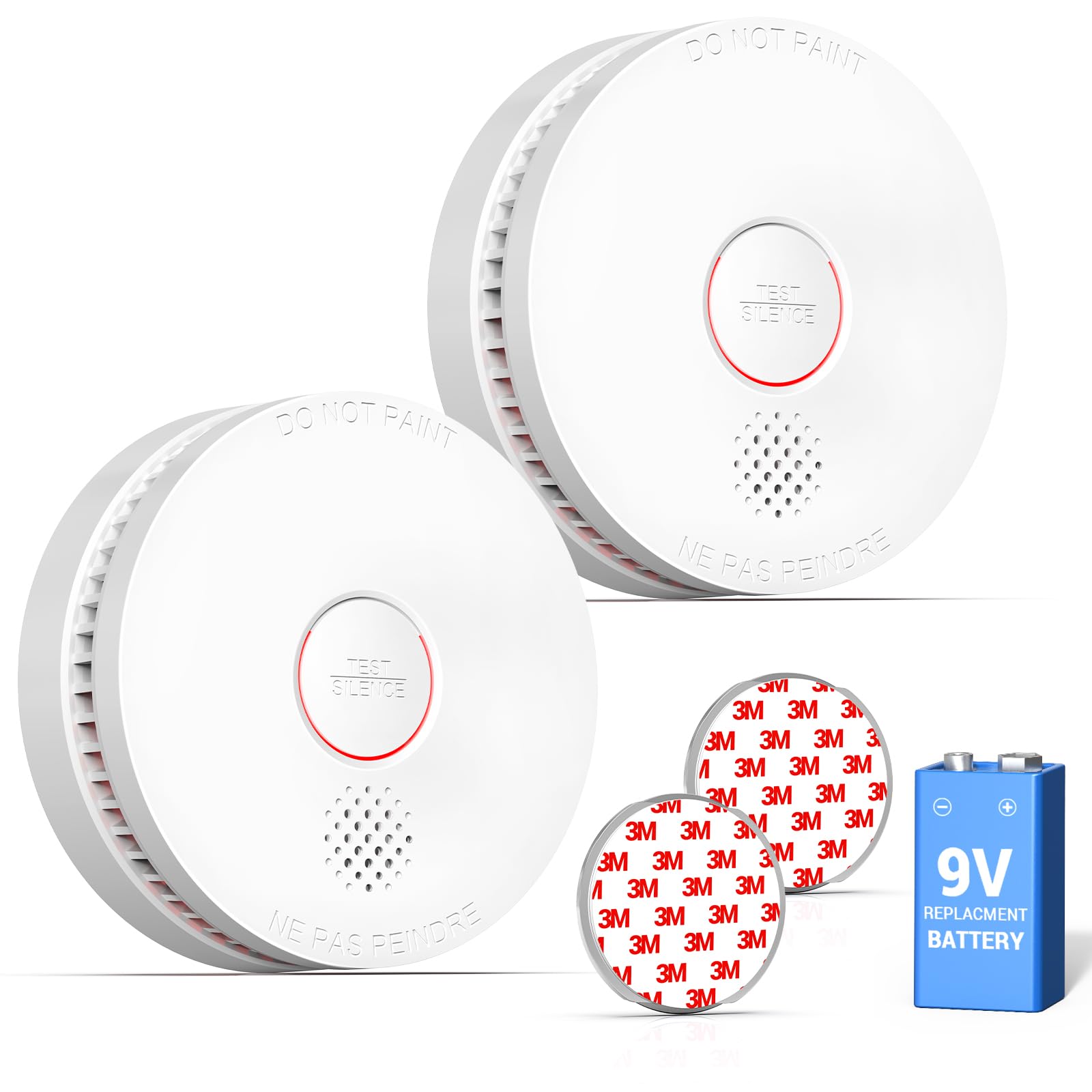
The GS509A is an entry-level photoelectric alarm powered by a standard 9V battery that you replace annually. This is one of the most budget-friendly paths to basic smoke coverage, especially for rental properties, workshops, or temporary setups where you do not want to commit to a sealed unit. The 85dB alarm is notably loud — several users commented it is significantly louder than expected for its compact 3.93-inch diameter.
The magnetic fastening kit makes installation incredibly simple: stick the metal plate to your ceiling or wall using the adhesive pad, and the alarm clicks onto the magnet. Screws and plastic anchors are included for a permanent mount if you prefer. The photoelectric sensor is sensitive to slow smoldering fires, and a low-battery warning chirp tells you when to swap in a fresh 9V cell. The UL 217 listing assures basic safety compliance.
This unit uses a replaceable 9V carbon-zinc battery that lasts about one year, not a sealed lithium pack. You must remember to change the battery annually or risk the alarm failing when needed. Like the GS525A, this is photoelectric-only, not a dual sensor. For full-spectrum coverage combining both fire types, consider the First Alert BRK 3120B or SM310 instead. The GS509A works best as a supplemental or budget option where you accept the annual battery chore.
Why it’s great
- Extremely loud 85dB alarm in a compact body
- Magnetic fastening kit for easy installation
- Replaceable 9V battery keeps initial cost low
Good to know
- Photoelectric only — misses fast-flaming fires
- Annual battery replacement required
- No interconnection or smart features
FAQ
Does a dual sensor smoke detector also detect carbon monoxide?
How long does a sealed 10-year battery actually last?
Can I mix a dual sensor alarm with my existing single-sensor detectors?
Final Thoughts: The Verdict
For most users, the best dual sensor smoke detector winner is the First Alert BRK 3120B because it is a true dual-sensor hardwired unit with reliable whole-home interconnection at a mid-range price. If you want remote alerts and smart integration, grab the Kidde Smart Smoke and CO Detector. And for covering a multi-story home without hiring an electrician, nothing beats the X-Sense Wireless Interconnected 3-Pack for whole-home protection and outstanding value.

Mo Maruf
I created WellFizz to bridge the gap between vague wellness advice and actionable solutions. My mission is simple: to decode the research and give you practical tools you can actually use.
Beyond the data, I am a passionate traveler. I believe that stepping away from the screen to explore new environments is essential for mental clarity and physical vitality.