Our readers keep the lights on and my smoothie glass nicely filled. As an Amazon Associate, I earn from qualifying purchases.
Your desk chair isn’t just furniture — it’s the single most important tool for protecting your spine during eight-hour workdays. A poorly designed seat lets your pelvis rotate backward, flattening the lumbar curve and loading up the discs in your lower back with unnecessary pressure. The right chair reverses that cycle by providing adjustable lumbar support, a waterfall seat edge to reduce leg pressure, and armrests that keep your shoulders relaxed rather than hunched.
I’m Mohammad Maruf — the founder and writer behind WellFizz. I’ve spent hundreds of hours analyzing the adjustability mechanisms, mesh tension ratings, foam densities, and BIFMA certification reports behind the most talked-about ergonomic chairs on the market to separate real posture support from marketing fluff.
This guide breaks down the specific lumbar mechanics, seat depth ranges, and armrest adjustability that actually matter when you’re searching for the best desk chair for posture your workspace can get.
How To Choose The Best Desk Chair For Posture
Posture support isn’t about a single lumbar pillow. It’s a system of adjustments that work together to keep your spine in its natural S-curve while you work. Missing even one adjustment zone can force your body to compensate — usually by slouching, leaning, or tensing your shoulders.
Lumbar Support: Depth Is the Secret
Many chairs offer lumbar height adjustment but ignore depth. A lumbar pad that sits too flat won’t fill the gap between your lower back and the backrest, leaving your pelvis free to tilt backward. Look for chairs that allow you to move the lumbar support forward and backward — not just up and down — so it actually presses into the curve of your spine.
Seat Depth and Waterfall Edge
When the seat pan is too long, it hits the back of your knees and cuts off circulation. When it’s too short, your thighs don’t get full support. A seat depth range of 16 to 19 inches fits most body types. The front edge should curve downward (waterfall shape) to reduce pressure on the underside of your thighs. This keeps blood flowing and prevents the urge to shift forward into a slouch.
Armrest Adjustability Prevents Shoulder Hunching
Fixed armrests force you to either wing your elbows out or drop your shoulders into a forward roll. 3D armrests (height, width, angle) let you match your desk surface height. 4D armrests add depth adjustment so you can pull the armrest closer or push it away depending on your keyboard position. This keeps your shoulders stacked over your hips rather than collapsed forward.
Quick Comparison
On smaller screens, swipe sideways to see the full table.
| Model | Category | Best For | Key Spec | Amazon |
|---|---|---|---|---|
| Hbada X7 | Premium | Auto-adjusting lumbar tracking | Auto lumbar tracking + 140° recline | Amazon |
| TRALT Ergonomic Chair | Premium | Wide seat with flip-up arms | 20″ wide seat, 330 lb capacity | Amazon |
| FelixKing Office Chair | Mid-Range | Memory foam cushion with lumbar | 3.9″ high-density memory foam seat | Amazon |
| Desktronic SitPro | Premium | 9-point adjustability | 9 adjustable settings + seat depth | Amazon |
| Vari CoreChair | Premium | Active sitting core engagement | Tilting mechanism, armless design | Amazon |
| WorkPro Quantum 9000 | Mid-Range | Mid-back all-mesh durability | Ratchet back height + seat depth | Amazon |
| SIHOO M18 | Mid-Range | Four-point support system | 4 support points, 330 lb capacity | Amazon |
| ELABEST T96 | Mid-Range | Golden Triangle upper back support | Bionic-curve backrest, 3D arms | Amazon |
| MOLENTS Ergonomic Chair | Mid-Range | Forward/backward lumbar depth | 4-way lumbar (up/down + forward/back) | Amazon |
In‑Depth Reviews
1. Hbada X7 Smart Ergonomic Chair
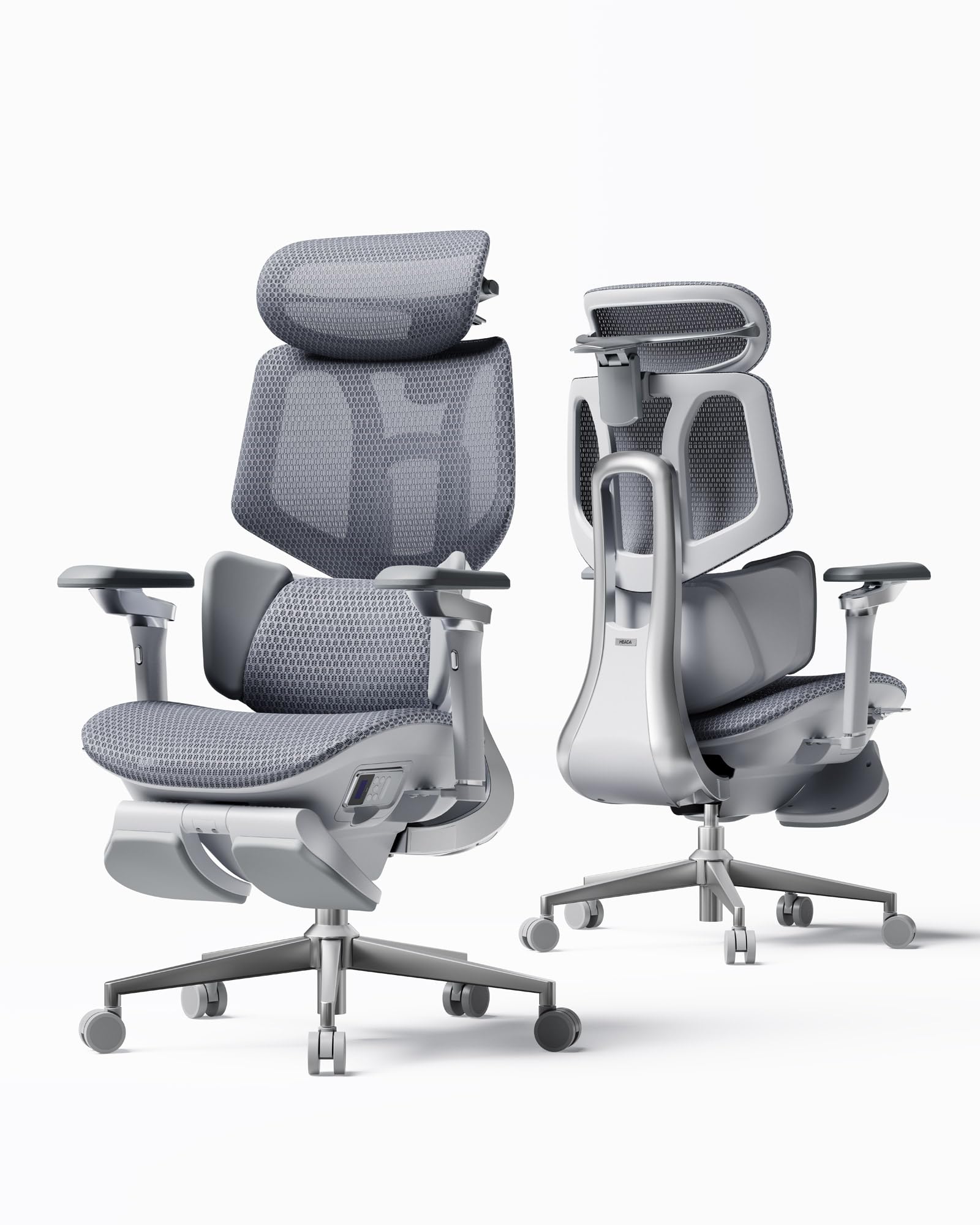
The Hbada X7 brings automated lumbar tracking into the desk chair category — a gravity-sensing base that adapts lumbar pressure in real time based on your seated posture. This is not a static pad you push into place; it mechanically responds as you shift, keeping the lumbar curve supported even when you lean forward to type or recline to read. The 8D massage rollers with three levels of heating (40–50°C) add a therapeutic layer that targets muscle fatigue in the lower back during long sessions.
The 4D headrest rotates 70°, slides 55mm, and adjusts 45mm in height, making neck alignment possible regardless of your torso length. The 720° omnidirectional armrests rotate a full 360° and extend 110mm, which means you can position them in front of your body for typing or swing them out of the way entirely when pushing back from the desk. The dual-fan ventilated seat offers three airflow speeds — a serious advantage for users who overheat in foam or standard mesh.
The aircraft-grade aluminum frame and five-star nylon base keep the weight at a manageable level while supporting up to 330 pounds. Assembly is minimal because much of the chair arrives pre-assembled. The 140° recline with synced armrest movement is rare at any price point — the armrests tilt with the backrest so your elbows don’t lose support when you lean back.
Why it’s great
- Automated lumbar tracking adapts as you shift positions
- Ventilated seat with adjustable fan speeds prevents heat buildup
- Massage and heat functions relieve lower back muscle fatigue
- Aluminum frame with 330 lb weight capacity
Good to know
- Users over 6 feet may find the gas cylinder limits optimal ergonomic position
- Premium feature set comes at a higher investment tier
2. TRALT Ergonomic Office Chair
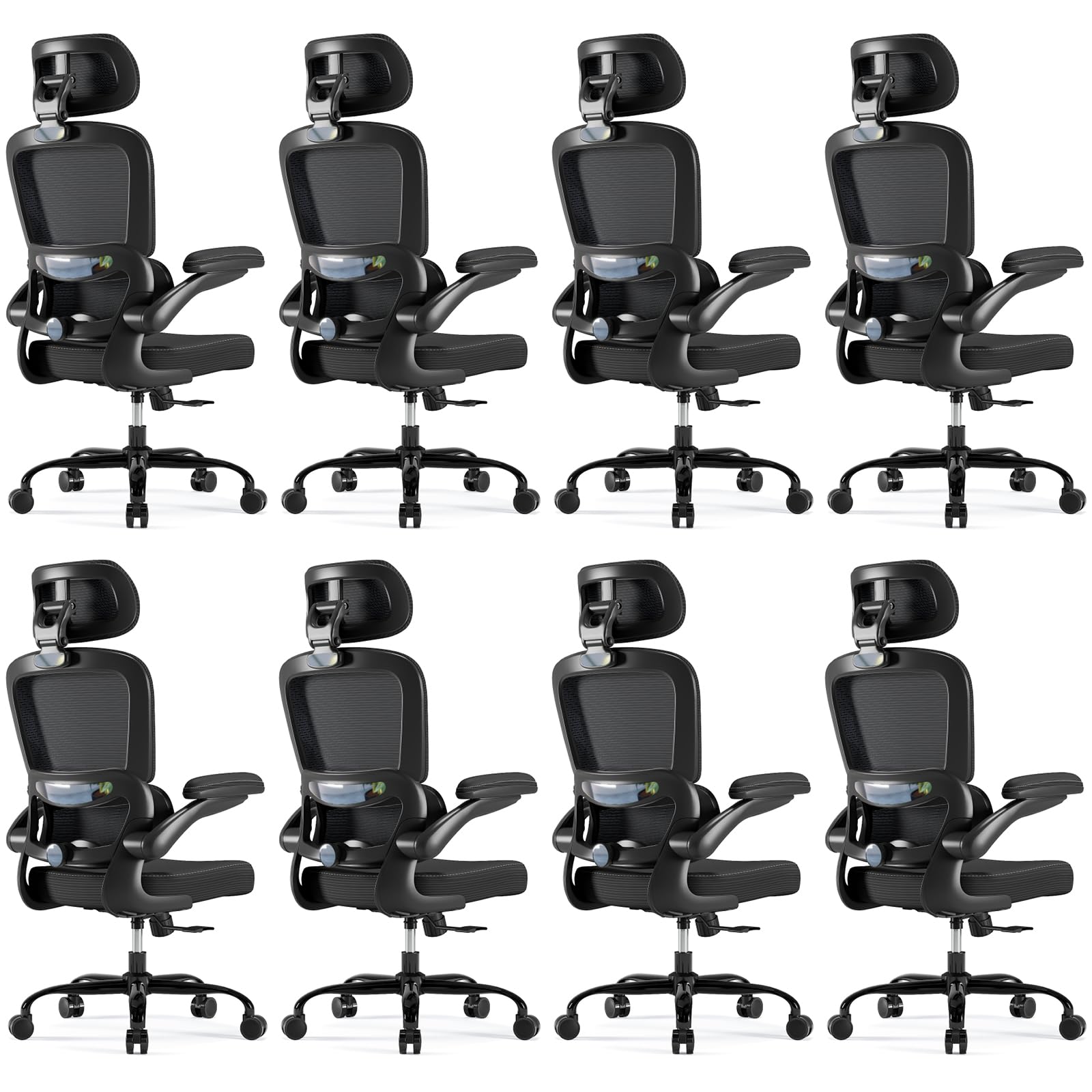
The TRALT chair addresses a common limitation in ergonomic seating — narrow seat pans that pinch the hips. Its 20-inch-wide seat distributes weight across a larger surface area, reducing pressure points on the outer thighs. The 3.5-inch high-density sponge cushion balances softness with rebound support, meaning it won’t bottom out after a few months of daily use. The flip-up armrests are a practical bonus for small-space setups, allowing the chair to slide fully under a desk when not in use.
The backrest uses breathable mesh while the seat is upholstered in PU leather, giving you ventilation where you need it most (the back) and an easy-to-clean surface on the seat. The adjustable lumbar support and headrest cover a height range suitable for users from about 5 feet 5 inches to 6 feet 2 inches. The Class-3 gas lift and metal base support up to 330 pounds, and the casters roll quietly on both carpet and hard floors without scratching.
Assembly takes roughly 25 to 30 minutes with clear instructions and an installation video available. The 24-hour response system for customer inquiries adds a layer of confidence, especially given the price point. For users who need a wider seat pan without upgrading to a plus-size chair category, this is a strong mid-range contender.
Why it’s great
- 20-inch wide seat pan distributes weight for larger frames
- Flip-up armrests save space when pushed under desk
- PU leather seat is easy to clean and resists staining
- 330 lb weight capacity with metal base construction
Good to know
- Flip-up armrests feel less stable when leaned on compared to fixed designs
- Short users (under 5’4″) may find seat depth proportionally large
3. FelixKing Office Chair
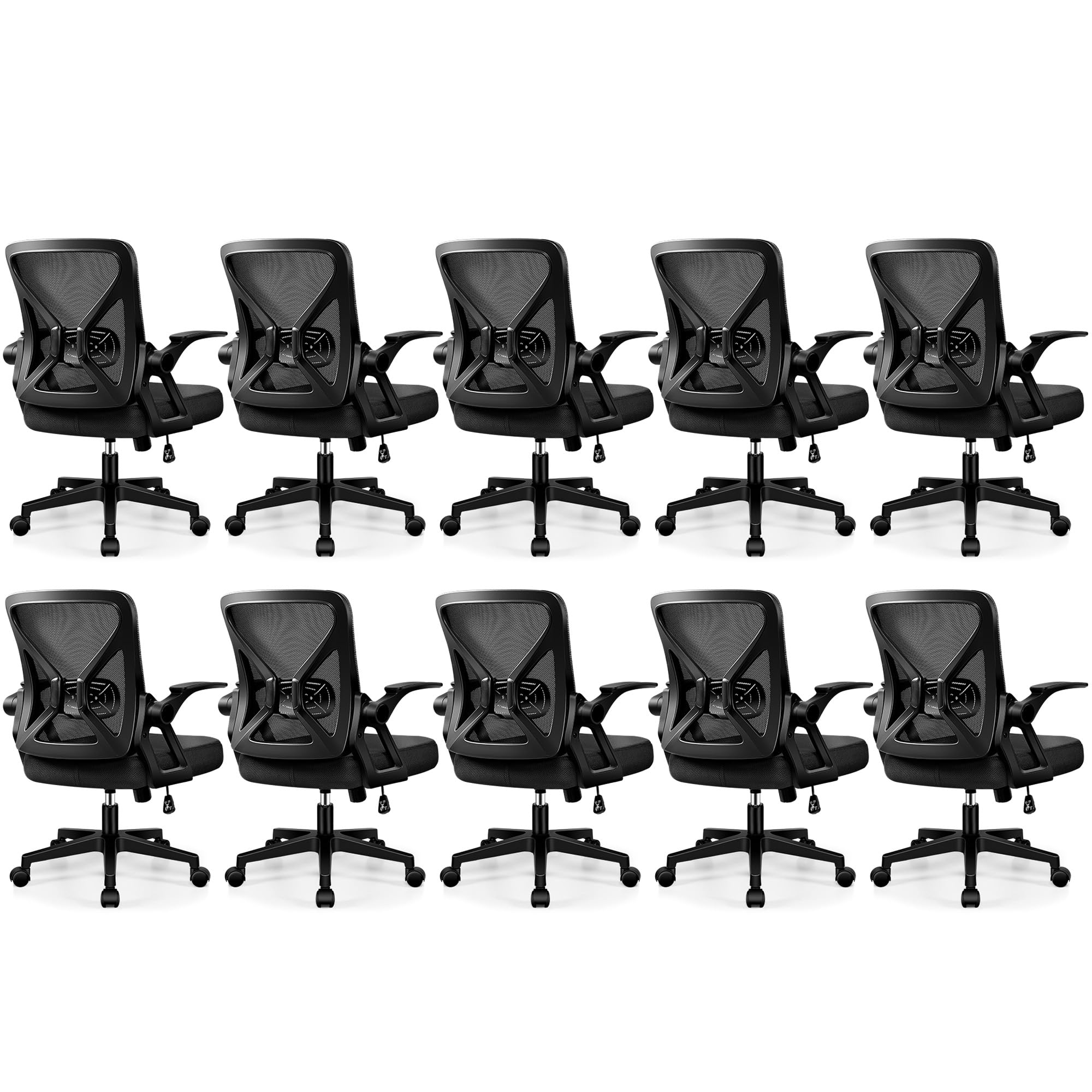
The FelixKing chair uses a 3.9-inch thick high-density memory foam seat cushion that contours to the user’s shape while maintaining enough rebound to avoid the sinking feeling associated with low-density foam. The seat frame is made from FSC-certified wood, which is an environmental plus often missing in this category. The backrest is a curved mesh design that follows the natural shape of the spine, with lumbar support that can be positioned up to 2 inches for targeted lower-back pressure.
The chair offers 4 inches of vertical seat height adjustment to accommodate various desk heights, and the 120° backrest tilt promotes a slight recline that offloads spinal disc pressure. Flip-up armrests pivot 90° to allow the chair to be tucked away, making it suitable for shared or compact workspaces. The five-star nylon base and explosion-proof base plate support up to 300 pounds, adding a safety layer for heavier users.
Assembly includes a manual and all necessary tools, and the brand backs the chair with a 1-year service commitment. Some early users reported the memory foam cushion beginning to lose density after several days of use, so heavier users may want to monitor long-term compression. For its feature set — memory foam, mesh back, flip arms, adjustable lumbar — this chair delivers solid value at its tier.
Why it’s great
- Thick memory foam cushion provides pressure relief without sagging
- FSC-certified wood frame adds environmental consideration
- Flip-up armrests enable space-saving desk storage
- Explosion-proof base plate improves safety at higher weights
Good to know
- Some users report foam collapsing after a week of heavy use
- Seat cushion firmness may not suit users who prefer plush feel
4. Desktronic SitPro
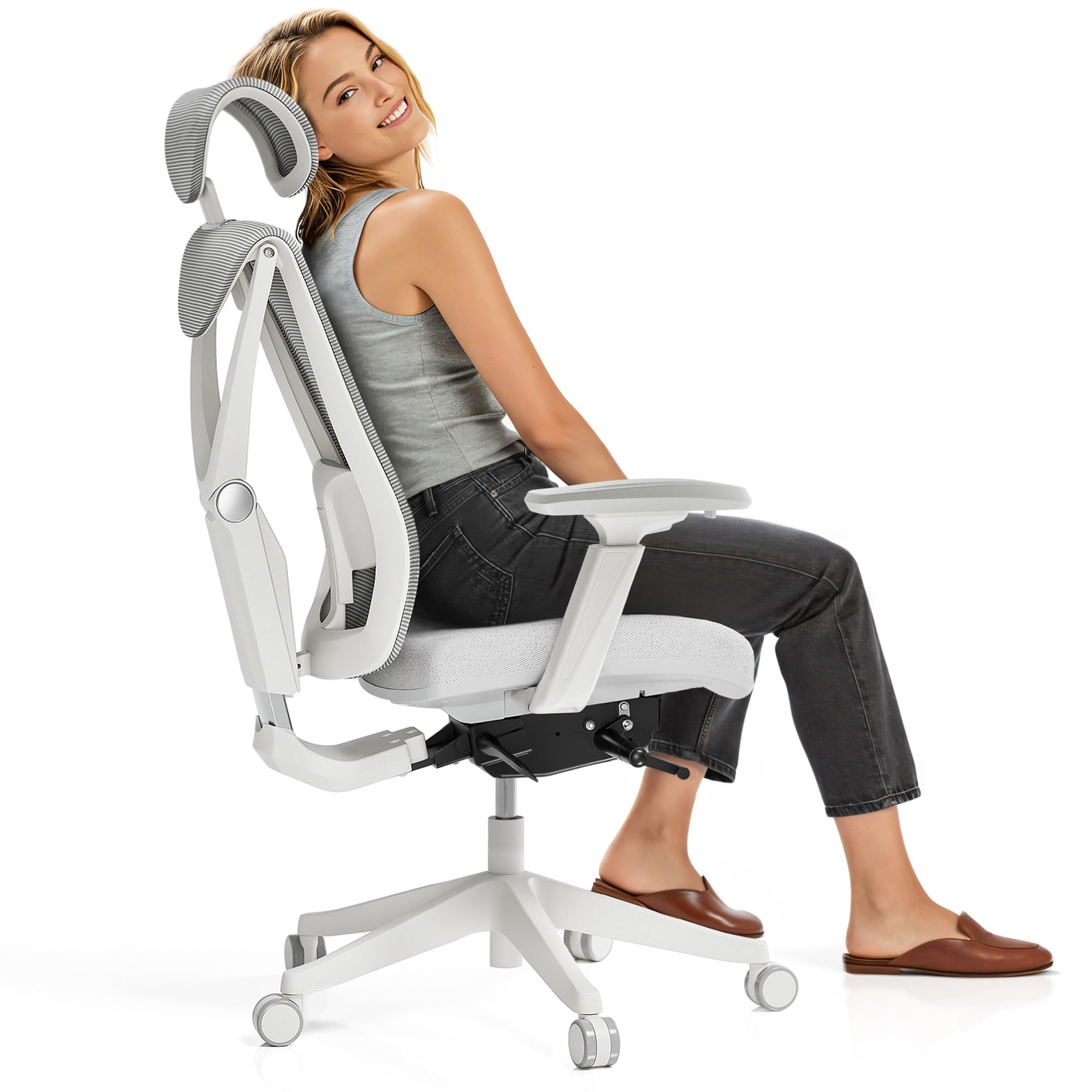
The Desktronic SitPro stands out for its nine independently adjustable settings — seat height, seat depth, lumbar support, headrest, 4D armrests, recline angle, and tilt tension — which is more adjustment points than most ergonomic chairs in its class. Seat depth adjustment is particularly valuable for posture because it controls where the front edge of the seat hits your thighs; getting this wrong forces you to either scoot forward (losing lumbar contact) or sit with your knees pressed into a too-short pan.
The breathable mesh back promotes constant airflow, which translates to less sweat accumulation during eight-hour workdays. The wide contoured seat cushion uses pressure-relieving foam that distributes weight evenly across the sit bones rather than concentrating it at the tailbone. The alloy steel frame gives the chair a solid, creak-free feel during reclining movements, though the 48-pound weight means it’s not a chair you’ll want to move between rooms frequently.
Assembly is rated at under 30 minutes with all hardware included. The BIFMA certification indicates the chair has passed durability and safety testing for commercial use. A common note from users is that the armrests feel easy to bump out of position — the 4D adjustment mechanism doesn’t lock as firmly as some competitors. For buyers who want the maximum number of adjustment levers to fine-tune their sitting position, the SitPro delivers the most options per dollar.
Why it’s great
- Nine independent adjustments including seat depth
- BIFMA certified for commercial-grade durability
- Alloy steel frame provides stable, creak-free recline
- Breathable mesh back prevents heat buildup
Good to know
- Armrests can be bumped out of position due to loose locking
- Headrest and backrest mesh texture may irritate bare skin
5. Vari CoreChair
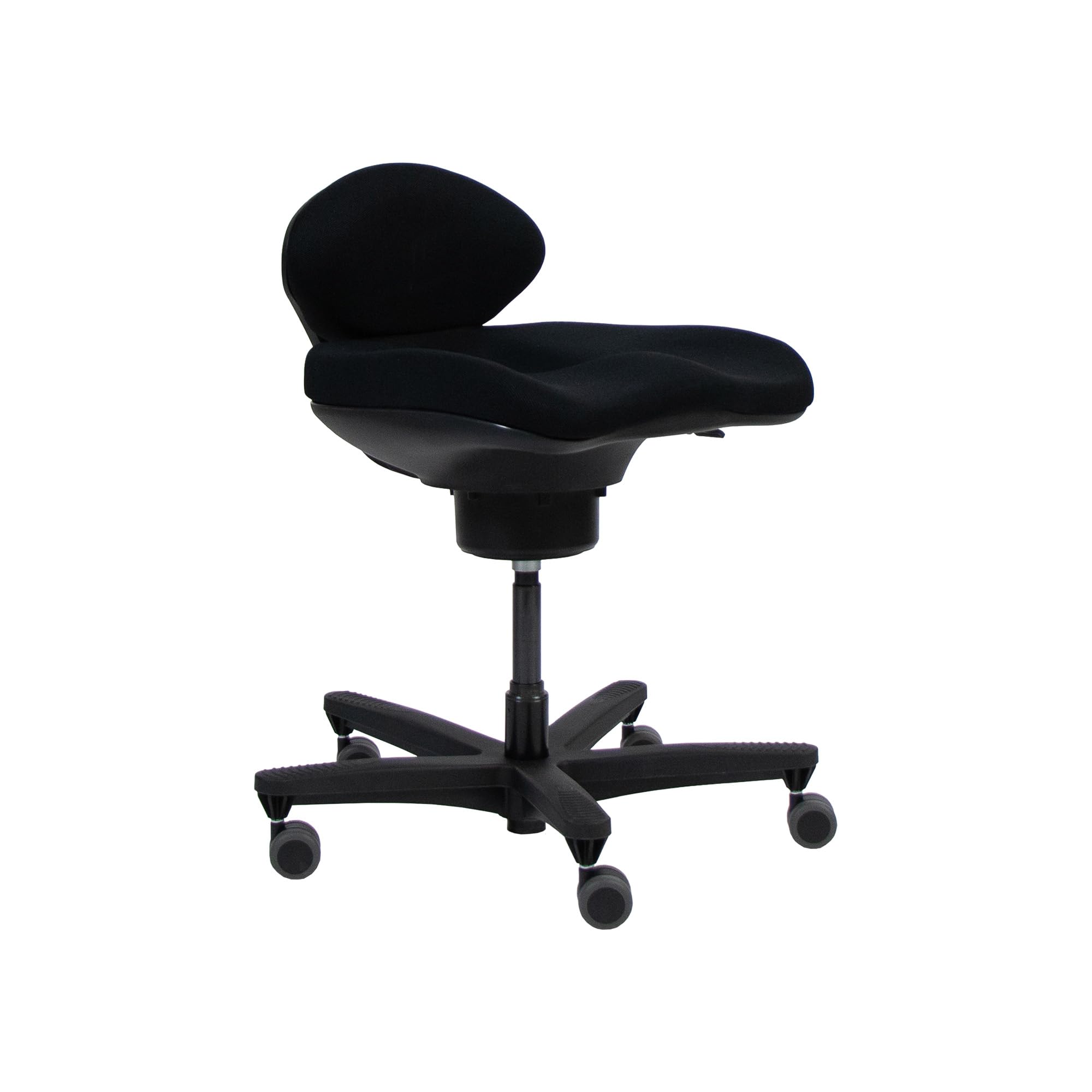
The Vari CoreChair breaks from traditional static seating by incorporating a patented tilting mechanism that deliberately challenges your core stabilizers. Instead of locking you into one position, the seat allows subtle pelvic tilts that force your deep abdominal muscles to engage, which keeps your spine from collapsing into a C-curve over time. This is not a chair for passive sitting — it’s designed for users who want micro-movement throughout the day to maintain spinal fluid exchange and reduce disc compression.
The sculpted seat and contoured backrest stabilize the pelvis and promote upright alignment, but the seat pan itself is intentionally firm to discourage prolonged pressure on one spot. The height adjusts from 17 to 21.5 inches and the seat depth from 16.75 to 18.33 inches, accommodating a range of leg lengths. The armless design allows the chair to slide under standing desks easily and forces you to rely on your own arm support rather than leaning on armrests.
BIFMA certification and a 3-year warranty back the build quality. The 3D knit upholstery breathes well and the treaded base provides stability even during active shifts. Users with chronic back pain or limited core strength may find the constant engagement fatiguing initially. This chair rewards consistent use but requires a willingness to adapt to active sitting rather than expecting passive comfort.
Why it’s great
- Tilting mechanism engages core and promotes micro-movement
- Compact armless design fits under standing desks
- BIFMA certified with 3-year warranty
- Adjustable seat depth and height for custom fit
Good to know
- Firm seat pan feels uncomfortable for users expecting plush cushioning
- Not recommended for those with severe back issues or limited core strength
6. WorkPro Quantum 9000

The WorkPro Quantum 9000 has been on the market long enough to accumulate six-year user reviews, which is rare for an office chair at this price tier. The ratchet-based back height adjustment allows you to raise or lower the backrest in discrete increments, and the seat depth slides forward and backward independently — a combination that lets you dial in the exact distance between your lumbar curve and the back of your knees. The all-mesh construction (both back and seat) eliminates foam breakdown entirely, which is the failure point most chairs hit after two to three years.
Weight capacity is tested to 275 pounds, and the chair is rated for 8 to 10 hours of professional use per day. The integrated seat and back tilt mechanism locks in three positions with adjustable tension, so you can set the resistance to your preferred recline pressure. The armrests adjust in height, width, and angle, though the padding on the armrest pads tends to wear after four to five years based on long-term user feedback.
Assembly requires only eight bolts and takes under 15 minutes. The limited lifetime warranty means replacement parts are available even years after purchase, which is unusual at this price level. The chair does not include a headrest, and the mesh seat may feel firmer than foam users expect. For buyers who want a no-nonsense chair that holds up for half a decade without losing its support properties, the Quantum 9000 is a credible pick.
Why it’s great
- Proven six-year durability with consistent user feedback
- Ratchet back height and sliding seat depth for precise adjustability
- All-mesh construction eliminates foam sagging over time
- Limited lifetime warranty with available replacement parts
Good to know
- No headrest included for neck support
- Armrest padding may wear after 4–5 years of daily use
7. SIHOO M18 Ergonomic Office Chair
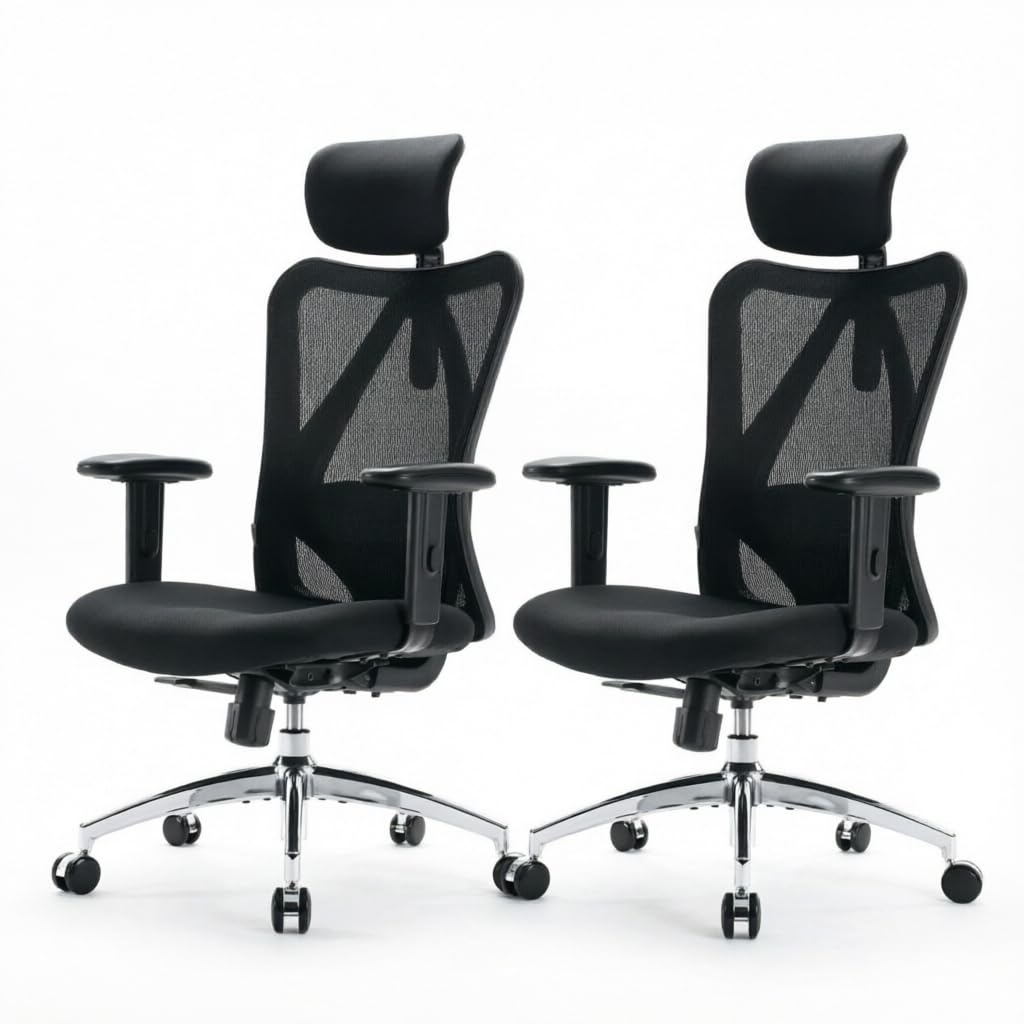
The SIHOO M18 provides four support points — head, back, hips, and hands — at a price point that undercuts most chairs with similar adjustment ranges. The lumbar support is independently adjustable, and the headrest moves vertically and tilts to accommodate different neck angles. The mesh backrest is a non-pattern weave that balances breathability with tension, though the mesh density is not as high as premium options like the WorkPro or Hbada. The seat cushion uses a firm foam base rather than memory foam, which helps maintain consistent support for users up to the 330-pound weight capacity.
The chair passed BIFMA testing and a 1,136 kg static pressure test, so the structural integrity goes beyond what the price suggests. The aluminum frame keeps the total weight manageable at 44 pounds, and the tilt lock mechanism offers both upright and reclined positions. The armrests adjust vertically only — there is no width, angle, or depth adjustment — which is the biggest limitation for users who need to narrow or widen their arm position relative to the desk.
Assembly takes roughly eight steps with clearly labeled parts. The 3-year warranty covers free replacement parts, and the 30-day return period applies to quality-related issues. Users between 5 feet 6 inches and 6 feet 2 inches report the best fit. This chair is not designed for plus-size or very tall frames beyond the stated range, but within its target demographics, it punches well above its price class.
Why it’s great
- Four-point support system (head, back, hips, hands) for full-body alignment
- BIFMA tested with 1,136 kg static pressure certification
- Firm foam cushion resists sagging better than budget memory foam
- 3-year warranty with free replacement parts
Good to know
- Armrests only adjust vertically — no width or angle change
- Backrest height is not adjustable
8. ELABEST T96 Ergonomic Mesh Office Chair

The ELABEST T96 uses a design philosophy called the “Golden Triangle” back structure, which widens the upper back support to engage the shoulder blades — an area many ergonomic chairs neglect. Most chairs with lumbar support stop at the mid-back, leaving the upper spine to roll forward. The T96’s bionic-curve backrest extends upward to provide scapular support, which helps keep the entire posterior chain in a neutral position rather than isolating just the lower back. The adjustable lumbar support moves vertically to match the user’s spinal curve.
The 3D adjustable armrests allow height, width, and angle customization, which directly reduces shoulder hunching by letting you match the armrest to your desk surface. The full-mesh seat (both back and bottom) prevents heat accumulation better than foam-and-mesh hybrids, and the waterfall front edge reduces pressure on the underside of the thighs. The synchro-tilt mechanism offers three lockable positions with adjustable tension, so you can dial in the recline resistance based on your weight.
BIFMA 5.1 certification verifies commercial-grade durability for multi-shift use. The seat height ranges from 19.6 to 23.6 inches, accommodating a wide range of desk heights. Assembly takes roughly 30 minutes, and the brand provides customer support via a warranty card for replacement gas cylinders if needed. This chair is best suited for users under 5 feet 10 inches — taller users may find the backrest too short for full scapular support.
Why it’s great
- Golden Triangle back structure supports shoulder blades, not just lumbar
- Full-mesh construction prevents heat buildup and foam sagging
- 3D armrests reduce shoulder strain when typing
- BIFMA 5.1 certified for commercial durability
Good to know
- Armrests may be too wide for users with narrow shoulder frames
- Taller users (over 5’10”) may outgrow the backrest height
9. MOLENTS Ergonomic Office Chair

The MOLENTS chair distinguishes itself by offering lumbar support that adjusts not just up and down but also forward and backward — a feature usually reserved for chairs costing significantly more. This forward/backward depth adjustment allows you to fill the gap between the small of your back and the backrest with a precise amount of pressure, which is critical for users whose natural lumbar curve is deeper or shallower than average. Most chairs at this tier only offer vertical lumbar movement, which cannot compensate for spinal curvature variations.
The 3D adjustable armrests move in height, width, and angle, with the panel sliding forward and backward or rotating left and right. The full-mesh construction (both seat and back) uses a skin-friendly premium mesh that breathes well without catching on clothing. The seat foam is a shaped sponge rather than a flat slab, which provides a contoured surface that cradles the sit bones and reduces pressure on the tailbone. The backrest reclines from 90° to 120° with three lockable positions.
Assembly is rated at 15 minutes with parts labeled to the specific step in the manual. The brand’s customer service team proactively follows up after purchase to confirm fit and offer adjustments — including free replacement parts like foam seat covers if needed. The chair dimensions (seat height 19.5 to 23.3 inches, seat depth 18.9 inches) fit users from about 5 feet 4 inches to 6 feet. For buyers who prioritize getting the lumbar curve exactly right, the MOLENTS offers the most lumbar detail at its price tier.
Why it’s great
- 4-way lumbar support adjusts forward/backward, not just up/down
- Skin-friendly mesh resists snagging and breathes effectively
- Contoured foam seat cradles sit bones for pressure distribution
- Proactive customer support includes free part replacements
Good to know
- Armrest panels slide easily and may shift during use
- Wheels may not roll smoothly on thick carpet without replacement casters
FAQ
Is a high back or mid back chair better for posture?
Should I pick mesh or foam for posture support?
How do 3D and 4D armrests affect posture?
Final Thoughts: The Verdict
For most users, the desk chair for posture winner is the Hbada X7 because its automated lumbar tracking adapts to your shifting posture without requiring manual readjustment throughout the day. If you want a proven chair that holds up for years without mechanical issues, grab the WorkPro Quantum 9000. And for active users who need to strengthen their core while sitting, nothing beats the Vari CoreChair with its tilting mechanism that forces continuous micro-movement.

Mo Maruf
I created WellFizz to bridge the gap between vague wellness advice and actionable solutions. My mission is simple: to decode the research and give you practical tools you can actually use.
Beyond the data, I am a passionate traveler. I believe that stepping away from the screen to explore new environments is essential for mental clarity and physical vitality.