Our readers keep the lights on and my smoothie glass nicely filled. As an Amazon Associate, I earn from qualifying purchases.
A vlogging camera needs to do a few things well: lock onto your eyes in mixed lighting, stabilize the shake from a handheld walk, and not break your budget. The mistake many new creators make is assuming all budget-friendly options produce the same grainy, jittery footage. That assumption costs you both time and the chance for a polished look. Smart spenders know that the right sensor size and stabilization tech matter far more than flashy “4K” badges on the box.
I’m Mohammad Maruf — the founder and writer behind WellFizz. I’ve spent hundreds of hours researching the sensor tech, gimbal mechanics, and real-world low-light performance that separate a daily carry vlogger from a forgotten drawer camera.
This guide breaks down the top contenders tested against smoothness, autofocus speed, and audio clarity so you can confidently pick the best budget vlogging camera for your channel.
How To Choose The Best Budget Vlogging Camera
Finding a camera that doesn’t compromise on core image quality while staying entry-level requires looking past marketing catchphrases. Here are the category-specific details you should examine before buying.
Sensor Size and Low-light Capability
A 1-inch or larger CMOS sensor captures significantly more light than the 1/2.3-inch sensors found in many budget action cameras. This translates directly to less grain in indoor or twilight shots. An APS-C sensor, found on interchangeable lens cameras, offers even more dynamic range and depth of field control. Never choose a camera solely based on megapixel count—the physical sensor size dictates how clean your footage looks.
Stabilization Technology
Handheld vlogging without a gimbal requires either optical or electronic stabilization built into the camera body. A 3-axis mechanical gimbal (as found in pocket cameras) delivers the smoothest walk-and-talk footage without extra gear. Digital stabilization introduces a crop factor and can create a jello effect during fast panning. Prioritize mechanical or optical image stabilization (IBIS or OIS) for walking shots.
Autofocus System and Lens Versatility
Fast phase-detect autofocus with face and eye tracking keeps you sharp when moving toward the lens or spinning around. A fixed ultra-wide lens (around 20mm equivalent) is ideal for arm’s-length framing, while an interchangeable lens system lets you adapt to different shooting environments over time. If you plan to film yourself cooking, unboxing, or demonstrating, ensure the camera can smoothly transition from a subject in hand (Product Showcase mode) back to your face.
Quick Comparison
On smaller screens, swipe sideways to see the full table.
| Model | Category | Best For | Key Spec | Amazon |
|---|---|---|---|---|
| DJI Osmo Pocket 3 | Pocket Gimbal | All-around best value | 1-inch CMOS, 3‑axis mech gimbal | Amazon |
| Xtra Muse Pocket Gimbal | Pocket Gimbal | Budget 4K/120fps | 1-inch CMOS, 3‑axis mech gimbal | Amazon |
| Canon PowerShot V10 | Compact Fixed Lens | Ultra-portable selfie rig | 1-inch BSI CMOS, 19mm f/2.8 | Amazon |
| DJI Osmo Nano | Action Camera | Hands-free POV vlogging | 1/1.3‑inch sensor, 4K/60fps | Amazon |
| Sony ZV-1F | Compact Fixed Lens | Skin tones and mic quality | 1-inch sensor, 20mm f/2.0 | Amazon |
| Sony Alpha ZV-E10 | Mirrorless ILC | Interchangeable lens versatility | APS-C 24MP, 4K oversampled | Amazon |
| Insta360 X5 | 360 Action Camera | Shoot now, frame later | 8K30fps 360°, dual sensors | Amazon |
In‑Depth Reviews
1. DJI Osmo Pocket 3
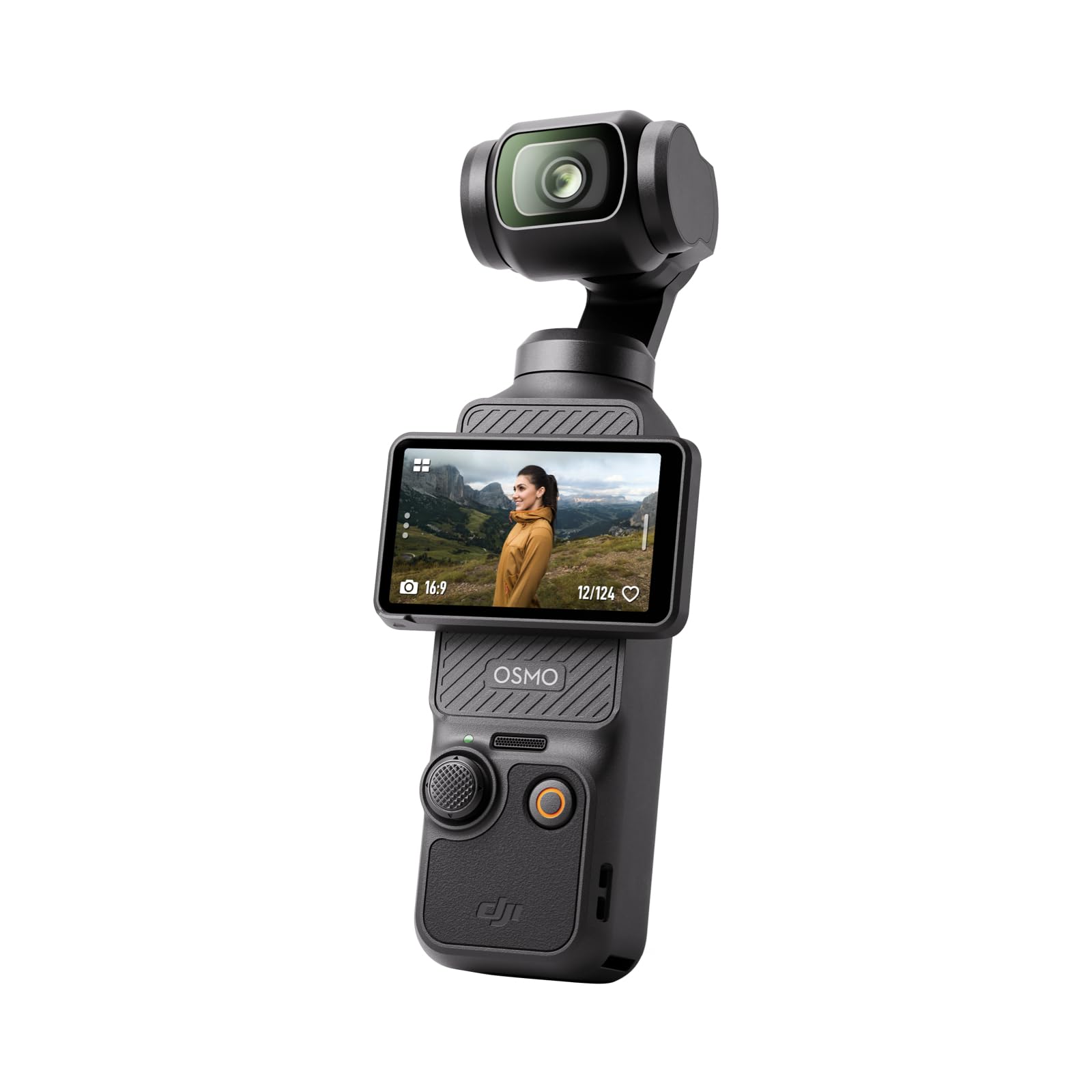
The Osmo Pocket 3 sits at the sweet spot between a pocket gimbal and a serious vlogging tool. Its 1-inch CMOS sensor delivers 4K resolution at 120fps, giving you the slow-motion headroom most competing budget models lack. The 3-axis mechanical stabilization is genuinely gimbal-grade — you can walk at normal pace and the horizon stays locked without the artificial wobble of electronic-only systems.
ActiveTrack 6.0 is surprisingly sticky. It holds onto a face even when you spin in place or crouch to pick up a subject, making solo vlogging with a tripod practical. The 2-inch rotatable touchscreen automatically switches between horizontal and vertical orientation, which saves significant time when posting to both YouTube and Instagram without cropping. Battery life averages just under three hours of mixed recording, and USB-C PD charging tops up quickly between takes.
Reviewers consistently note the fast autofocus and the quality of the built-in stereo mics, though external mic support works best with DJI’s own Mic 2 or Mic Mini transmitters. The main trade-off is the fixed lens — there is no optical zoom, so composition relies entirely on moving the camera physically. For the price point, the Pocket 3 offers the most balanced combination of stabilization, sensor quality, and portability.
Why it’s great
- True 3-axis mechanical gimbal stabilization
- 1-inch sensor captures clean 4K/120fps slow motion
- Rotating touchscreen handles vertical content instantly
Good to know
- Fixed wide-angle lens, no optical zoom
- Requires DJI app activation before unlimited use
- Snap-on chassis base adds thickness
2. Xtra Muse Vlogging Camera

The Xtra Muse directly challenges the premium jig by offering a 1-inch CMOS sensor with 4K/120fps recording and a built-in 3-axis gimbal stabilizer at an entry-level price. The gimbal is genuinely effective — handheld walking footage shows minimal shake, and the camera can handle everything from jogging shots to spin-around pans without introducing jello artifacts. Face and object tracking feel responsive enough for a solo creator to set the camera on a tripod and walk through a scene.
The 2-inch touchscreen is bright and works well for framing both horizontal and vertical videos. True 10-bit X-Log color mode preserves detail in highlights and shadows, which gives you considerable room in post-production for color grading. The standard bundle includes a carrying bag, threaded handle, and USB-C PD cable — all practical accessories that eliminate the need for a separate purchase. The user interface is straightforward enough that reviewers call it “user-friendly” right out of the box.
Battery life clocks in around 161 minutes in moderate use, and the camera can run off an external USB-C battery pack for extended recording sessions. The main catch is that the brand is less established than DJI or Sony, so firmware updates and long-term support are less proven. Several customer reviews note that DJI Pocket 3 accessories are physically compatible, which adds flexibility. For the money, the sensor and gimbal combo is hard to beat.
Why it’s great
- 1-inch sensor at a lower practical price
- Integrated 3-axis gimbal for shake-free walking
- 10-bit X-Log color for editing flexibility
Good to know
- Less established brand for firmware support
- Micro SD required separately (C10/U3)
3. Canon PowerShot V10

The PowerShot V10 is built around a simple idea: make a camera that fits in a fanny pack and can shoot a selfie without extra rigging. The 15.2-megapixel 1-inch back-illuminated CMOS sensor performs well in mixed lighting, and the fixed 19mm wide-angle lens ensures your face stays in frame even when recording at arm’s length. The built-in folding stand props the camera up on a desk or shelf without needing a tripod, which simplifies travel vlogging immensely.
Canon packed three stereo microphones with a third center mic that actively filters wind noise. This matters when you narrate outdoors — reviewers consistently praise the audio clarity compared to other pocket cameras in this range. The flip-out touchscreen makes composition natural, though the screen is on the smaller side. Recent firmware updates added three image stabilization modes (IS Off, IS On, IS Enhanced) that reduce handheld shake, though digital stabilization introduces a crop that feels tighter than mechanical alternatives.
The battery life is the biggest trade-off — expect about 45 minutes of continuous 4K recording, which is notably shorter than the competition. The fixed lens means no zoom at all, so framing is rigid. The lack of a built-in lens cover also leaves the glass exposed, and the included soft case is thin. For a creator who wants the simplest possible point-and-shoot with true Canon color science and excellent audio, the V10 delivers a very clean package.
Why it’s great
- Built-in fold-out stand eliminates tripod need
- Directional 3-mic array with wind reduction
- Canon color science with 14 movie color filters
Good to know
- Short battery life around 45 minutes
- Fixed lens with no optical or digital zoom
- No included lens cover
4. DJI Osmo Nano
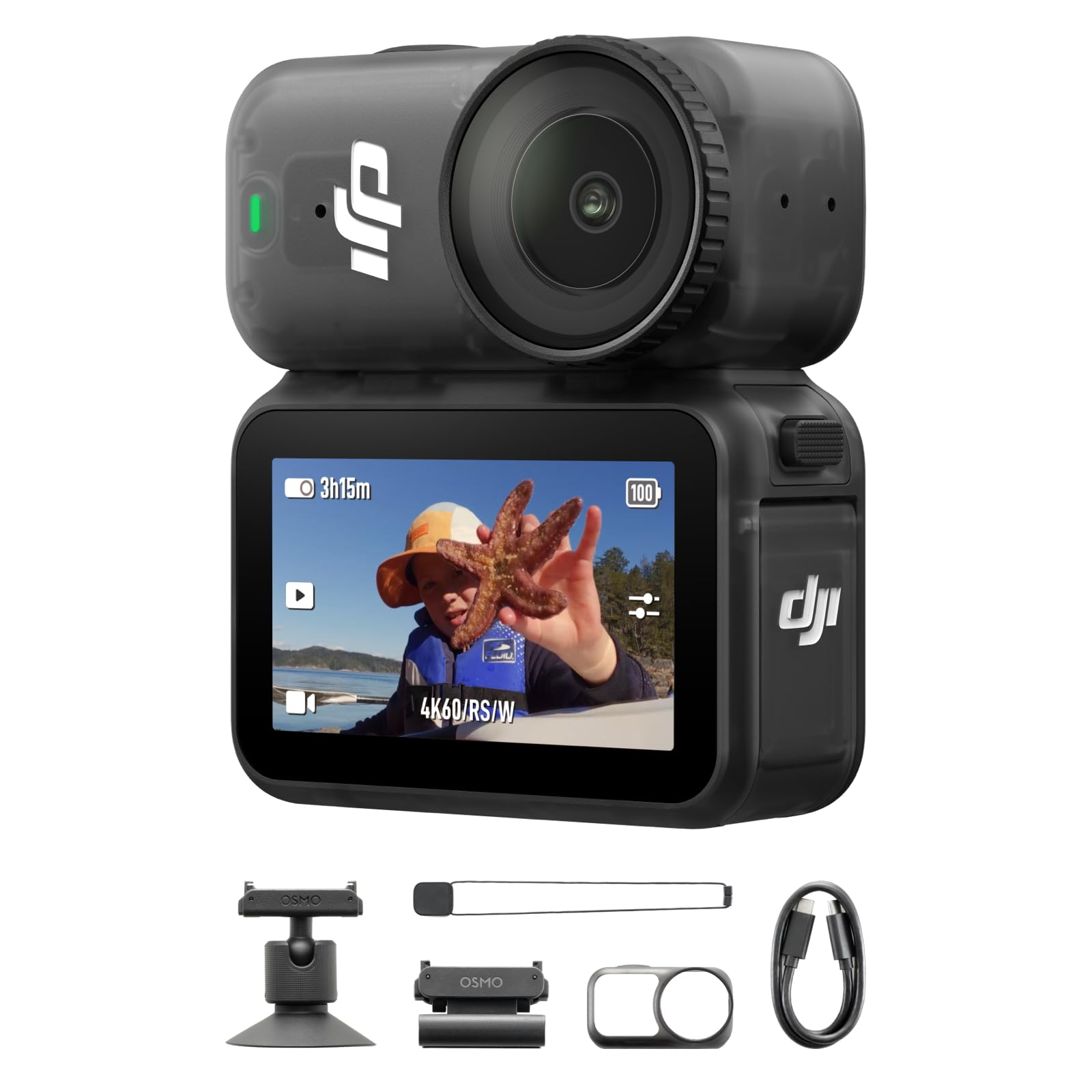
The Osmo Nano is DJI’s smallest action camera, designed for creators who want a magnetic clip-and-go POV camera without the bulk of a traditional vlogging rig. The 1/1.3-inch sensor captures 4K/60fps video with a 143-degree field of view, giving you an immersive perspective that works well for cooking tutorials, pet POV, or workout form checks. The magnetic mounting system—including a hat clip and lanyard—attaches firmly and detaches quickly, making it practical for hands-free shooting.
The camera supports 10-bit D-Log M color, which retains highlight and shadow detail for grading, and includes 128GB of built-in storage so you can start recording immediately without hunting for a memory card. Battery life reaches up to 200 minutes when the Vision Dock is attached, though recording at 4K/60fps on the camera alone lasts closer to 60 minutes. OsmoAudio connects directly to DJI Mic 2 or Mic Mini transmitters for clean vocal capture without wires.
The lack of a viewfinder screen on the camera body itself requires some trust or the companion app to frame shots—the Vision Dock provides a charging point and some status LEDs but no live preview. Heat buildup during high-resolution recording is normal, and the camera has built-in overheat protection that stops recording if internal temperatures get too high. For creators who shoot primarily from unique angles or need a tiny backup camera for a main rig, the Nano is incredibly flexible.
Why it’s great
- Magnetic mounting for instant POV setups
- 143-degree ultra-wide FOV for immersive shots
- 128GB built-in storage included
Good to know
- No built-in screen for live framing
- Overheating possible during long 4K sessions
- Vision Dock drains battery even when idle
5. Sony ZV-1F

The ZV-1F is Sony’s fixed-lens answer to beginner vloggers who care about reliable autofocus and good skin tone reproduction. The 20mm f/2.0 ultra-wide lens is wide enough to include background scenery while keeping your face prominent at arm’s length. Sony’s Eye AF and real-time tracking lock onto a subject quickly and stay stuck even when objects pass between the lens and the face, which reduces reshoots significantly. The side-articulating touchscreen flips forward for self-recording and has a clear red tally light so you know when the camera is rolling.
The directional 3-capsule microphone with an included windscreen accessory delivers surprisingly good audio for a camera this small. Product Showcase mode transitions focus from your face to whatever object you hold up to the lens, which is useful for unboxing or cooking demos. The background defocus button instantly switches between a shallow depth of field and a fully sharp frame—this is controlled by a physical button, not a menu dive.
The main limitations are the lack of optical zoom and a battery that lasts roughly 45 minutes of continuous recording. The digital stabilization works decently but produces a cropped frame and is not effective for walking shots—there is visible wobble at normal walking pace. The camera body feels light and slightly plasticky, but the image quality and autofocus performance punch above the price tier. For a creator who mostly films stationary or uses a tripod, the ZV-1F is a very strong contender.
Why it’s great
- Excellent Eye AF tracking autofocus
- Three-capsule mic with effective windscreen
- Product Showcase and defocus button
Good to know
- Short battery life, roughly 45 minutes
- No optical zoom, fixed 20mm lens
- Digital stabilization not great for walking
6. Sony Alpha ZV-E10
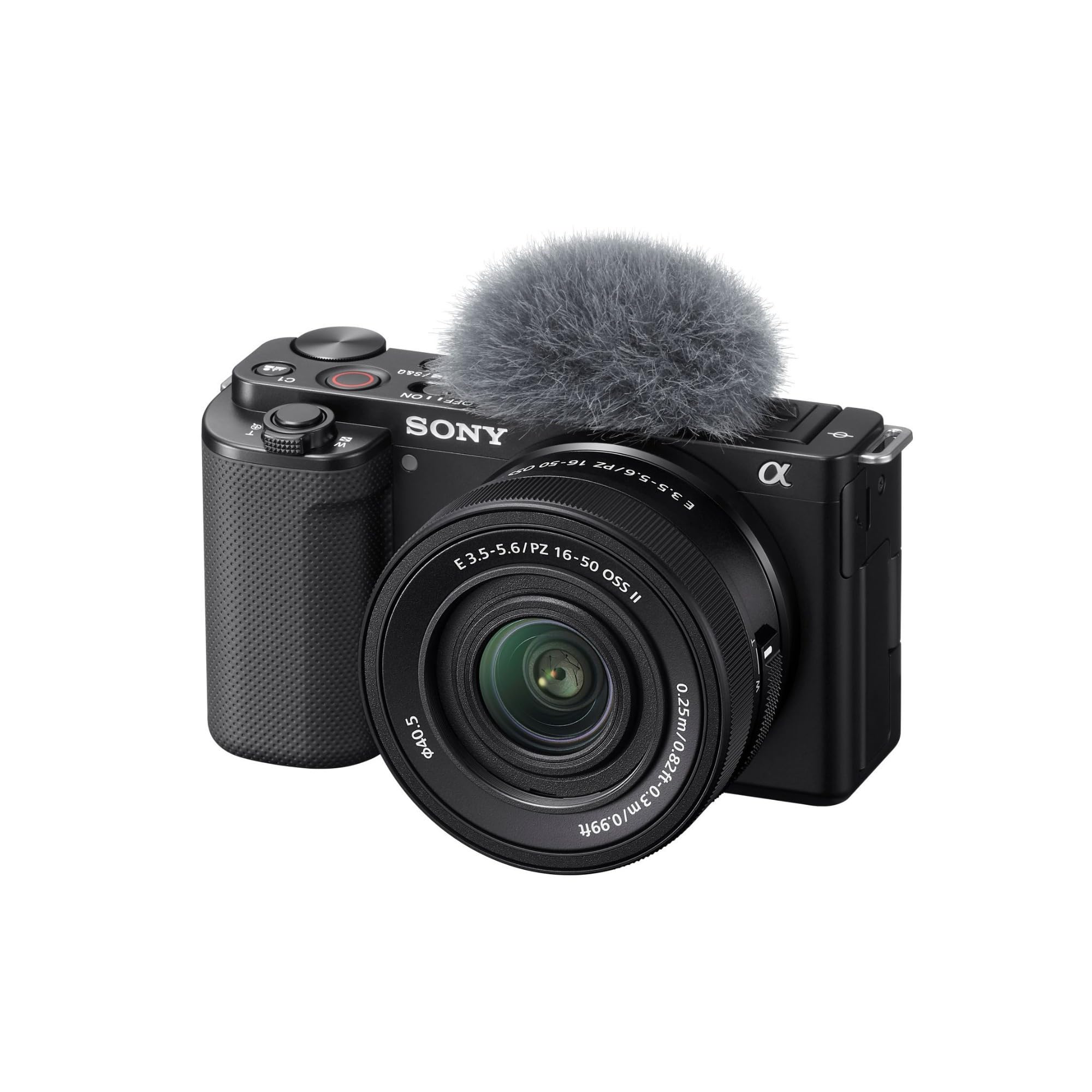
The ZV-E10 is the only mirrorless interchangeable-lens camera on this list, and it earns its place by offering an APS-C sensor that significantly outperforms 1-inch sensors in dynamic range and bokeh control. The kit lens is the Sony E PZ 16-50mm f/3.5-5.6 OSS II, which gives you optical zoom range from wide to short-telephoto — a feature none of the fixed-lens pocket cameras offer. The 4K video is oversampled from a 6K readout without pixel binning, resulting in noticeably sharper detail than native 4K sensors.
The 425-point phase-detection autofocus system with Eye AF is the best on this list — it locks onto a human or animal eye and stays locked through movement, head turns, and partial occlusion. The Product Showcase setting transitions focus from your face to an object instantly, and the Background Defocus button toggles the aperture electronically. The USB-C connection enables easy live streaming as a webcam without separate capture hardware, which adds versatility for creators who also live stream.
The downside is size and complexity — this is a full mirrorless body with a protruding lens, not a pocket camera. The kit lens has a variable maximum aperture (f/3.5-5.6) that limits low-light performance compared to a fast prime. The battery life is moderate, and the menu system is deep. For a creator willing to learn a more capable system and invest in additional lenses over time, the ZV-E10 offers the highest ceiling image quality in this budget bracket.
Why it’s great
- APS-C sensor delivers best dynamic range
- Oversampled 4K from 6K readout
- Interchangeable lens mount for future upgrades
Good to know
- Larger and heavier than pocket cameras
- Kit lens aperture limits low-light
- Battery life is modest
7. Insta360 X5

The Insta360 X5 is the most unorthodox entry on this list. Instead of a traditional directional camera, it shoots 8K 360-degree video using dual 1/1.28-inch sensors. This allows you to capture everything around you in a single take and then reframe the shot in post-production — the “invisible selfie stick” effect makes it look like you hired a separate camera operator even when filming solo. The triple AI chip design improves noise reduction in low-light scenarios, and PureVideo mode delivers clean footage in dim indoor environments where most action cameras fall apart.
The 4-mic array with an advanced Wind Guard is genuinely improved over the X4 — wind noise is noticeably reduced during outdoor vlogs. FlowState stabilization keeps the video smooth even during heavy movement, and full 360-degree Horizon Lock prevents tilt regardless of how the camera rotates. The replaceable lenses are a practical durability upgrade: one drop can scratch a lens, and swapping it yourself takes seconds instead of sending the camera for repair. Battery life averages over three hours across mixed use, and the IPX4 water resistance handles splashes confidently.
The X5 requires a different workflow — you must stitch the two fisheye views in the app or desktop software, and the file sizes are large (high-speed SD cards are mandatory). The learning curve is steep, and the price point is the highest on this list. For creators who regularly shoot action sports, real estate walkthroughs, or want the flexibility to frame the shot after the clip ends, the X5 saves time and gear that a multi-camera setup would otherwise demand.
Why it’s great
- 8K 360-degree capture with invisible selfie stick
- Replaceable lenses for field repair
- Excellent stabilization and 360 Horizon Lock
Good to know
- Steep learning curve for stitching and app workflow
- Requires high-speed SD card for 8K
- Higher entry price point
FAQ
What is the minimum sensor size I should accept in a budget vlogging camera?
Can I use a camera without a flip-out screen for self-recording?
Do I need an external microphone for a budget vlogging camera?
Final Thoughts: The Verdict
For most users, the best budget vlogging camera winner is the DJI Osmo Pocket 3 because it combines a 1-inch sensor with true 3-axis mechanical stabilization and the most reliable autofocus in this price range. If you want a camera with interchangeable lenses and room to grow into a professional setup, grab the Sony Alpha ZV-E10. And for the most portable, drop-in-your-pocket option with great audio, nothing beats the Canon PowerShot V10.

Mo Maruf
I created WellFizz to bridge the gap between vague wellness advice and actionable solutions. My mission is simple: to decode the research and give you practical tools you can actually use.
Beyond the data, I am a passionate traveler. I believe that stepping away from the screen to explore new environments is essential for mental clarity and physical vitality.