Our readers keep the lights on and my smoothie glass nicely filled. As an Amazon Associate, I earn from qualifying purchases.
Moving from single-color to multi-color 3D printing opens up a world of vibrant detail, but it also introduces new challenges—wasted filament from purging, complex setups, and higher upfront costs. The best machines today solve these problems with smart material switching, faster speeds, and quieter operation that makes multicolor printing a practical reality for home workshops and small studios.
I’m Mohammad Maruf — the founder and writer behind WellFizz. This guide reflects hundreds of hours spent analyzing core specifications, user workflows, and real-world failure points across the latest multicolor-ready FDM printers to find the models that truly deliver on their promises.
After comparing build volumes, maximum nozzle temperatures, speed ratings, and multi-material system designs, these are the models that define the best 3 in 1 3d printer category for reliable, high-quality output.
How To Choose The Best 3 In 1 3D Printer
Selecting the right multi-color 3D printer means looking beyond just the build volume. The quality of its multi-material system, the maximum nozzle temperature, whether the chamber is heated, and the noise level all define your daily experience. Here are the key factors to weigh.
Multi-Color System Design
The best systems automatically switch filaments mid-print, purging the previous color before starting the next. Look for a setup that minimizes waste—some printers cut purge volume by over 80% through smarter toolpathing. The number of supported colors (up to 16 with multiple units) and whether the system drys filaments during printing are both crucial for avoiding jams and maintaining consistent extrusion.
Build Volume and Chamber Control
Larger build volumes let you print bigger parts in one go, but an actively heated chamber is essential for materials like ABS, PC, and nylon to prevent warping and ensure strong layer adhesion. Entry-level printers often lack this feature, while mid-range and premium models include a heated chamber that reaches 60-65°C, enabling reliable printing with advanced filaments.
Speed and Motion System
CoreXY motion systems deliver higher accelerations and smoother prints at speeds above 500mm/s compared to traditional bed-slinger designs. Vibration compensation and rigid frames further reduce artifacts. For engineers printing functional prototypes, a CoreXY printer with a maximum speed of 600-800mm/s is a significant time saver without compromising detail.
Quick Comparison
On smaller screens, swipe sideways to see the full table.
| Model | Category | Best For | Key Spec | Amazon |
|---|---|---|---|---|
| Anycubic Kobra X | Mid-Range | Family & Beginners | 4-Color, 600mm/s, 300°C Nozzle | Amazon |
| ELEGOO Centauri Carbon | Mid-Range | Fast Out-of-Box Prints | CoreXY, 500mm/s, 320°C Nozzle | Amazon |
| FLASHFORGE Adventurer 5M Pro | Mid-Range | Reliable Enclosed Printing | CoreXY, 600mm/s, 280°C Nozzle | Amazon |
| FLASHFORGE AD5M Pro | Mid-Range | Quick-Swap Nozzle Users | 3s Nozzle Swap, 600mm/s | Amazon |
| Bambu Lab A1 Combo | Mid-Range | Effortless Multi-Color | 4-Color AMS, ≤48 dB Quiet | Amazon |
| Creality K2 Combo | Premium | Versatile Multi-Material | 16-Color CFS, 600mm/s | Amazon |
| QIDI Q2 Combo | Premium | Engineering Materials | 65°C Chamber, 370°C Nozzle | Amazon |
| QIDI Max4 Combo | Premium | Large Industrial Parts | 390x390x340mm, 800mm/s | Amazon |
| Snapmaker Artisan | Premium | Multi-Process Makers | 400mm³ Build, Dual Extrusion | Amazon |
| Dremel DigiLab 3D45 | Premium | Education & Beginners | 280°C Nozzle, 100°C Bed | Amazon |
In‑Depth Reviews
1. Anycubic Kobra X Multicolor 3D Printer
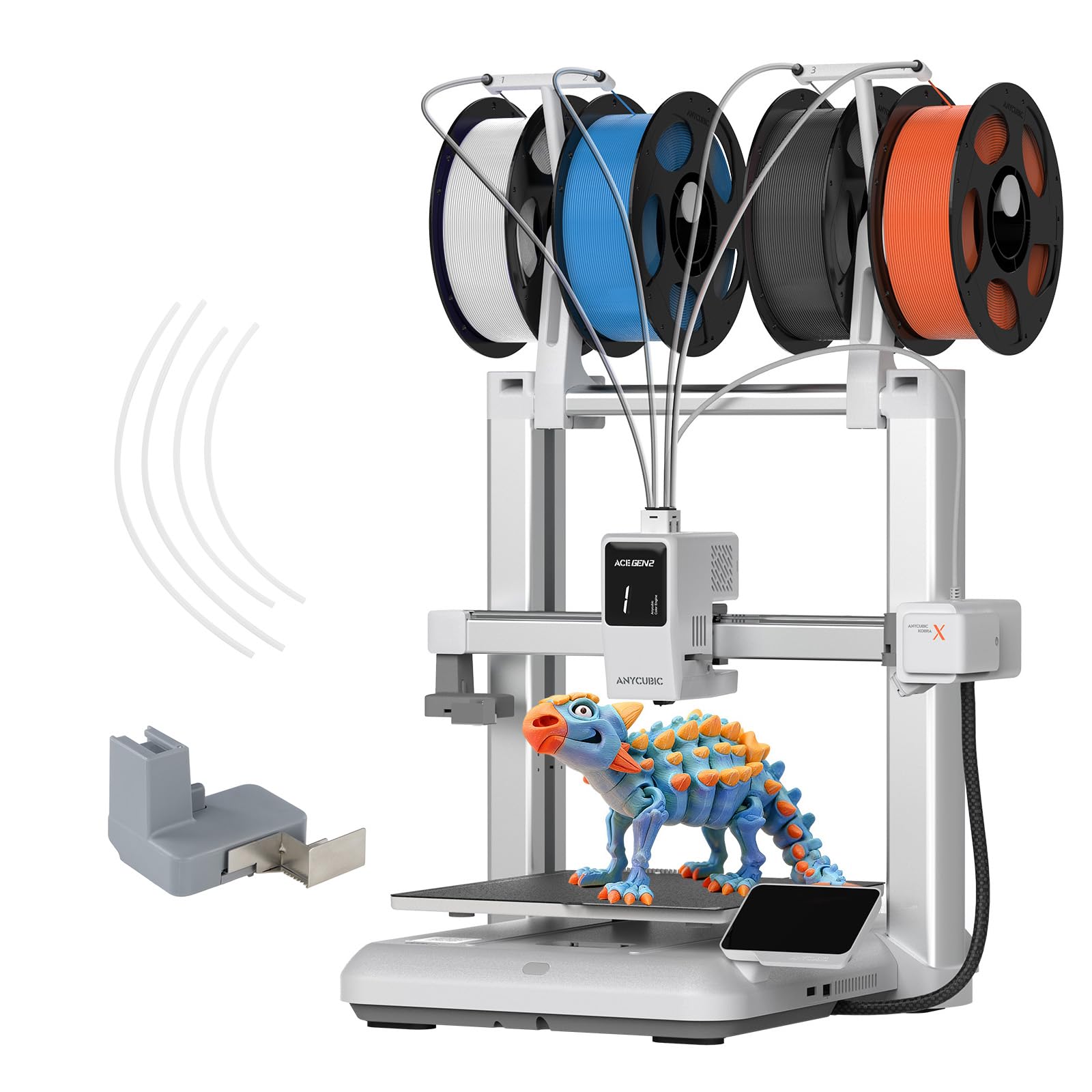
The Kobra X delivers native 4-color printing right out of the box, with the option to expand to 19 colors using additional ACE 2 Pro units. Its LeviQ 3.0 auto-leveling system uses 49-point calibration to ensure a perfectly flat first layer every time, and the hardened steel nozzle reaches 300°C for compatibility with PLA, PETG, TPU, and ASA.
Speed tops out at 600mm/s with vibration compensation keeping layers smooth, and the 45dB operation makes it one of the quietest printers at this price point. The built-in AI camera detects print failures like spaghetti buildup and foreign objects, sending notifications through the Anycubic app for remote monitoring.
Users report excellent print quality with crisp details and strong bed adhesion right from the first print. The intuitive setup process and cloud integration make it approachable for beginners while the multicolor capability and advanced materials support satisfy experienced makers.
Why it’s great
- Built-in 4-color printing eliminates manual filament swaps for vibrant models
- AI spaghetti detection and remote monitoring via smartphone app
- Quiet 45dB operation suitable for home and classroom environments
Good to know
- Expanding beyond 4 colors requires purchasing additional ACE 2 Pro units
- Occasional quality control issues reported with sensor defects on early units
2. ELEGOO Centauri Carbon 3D Printer
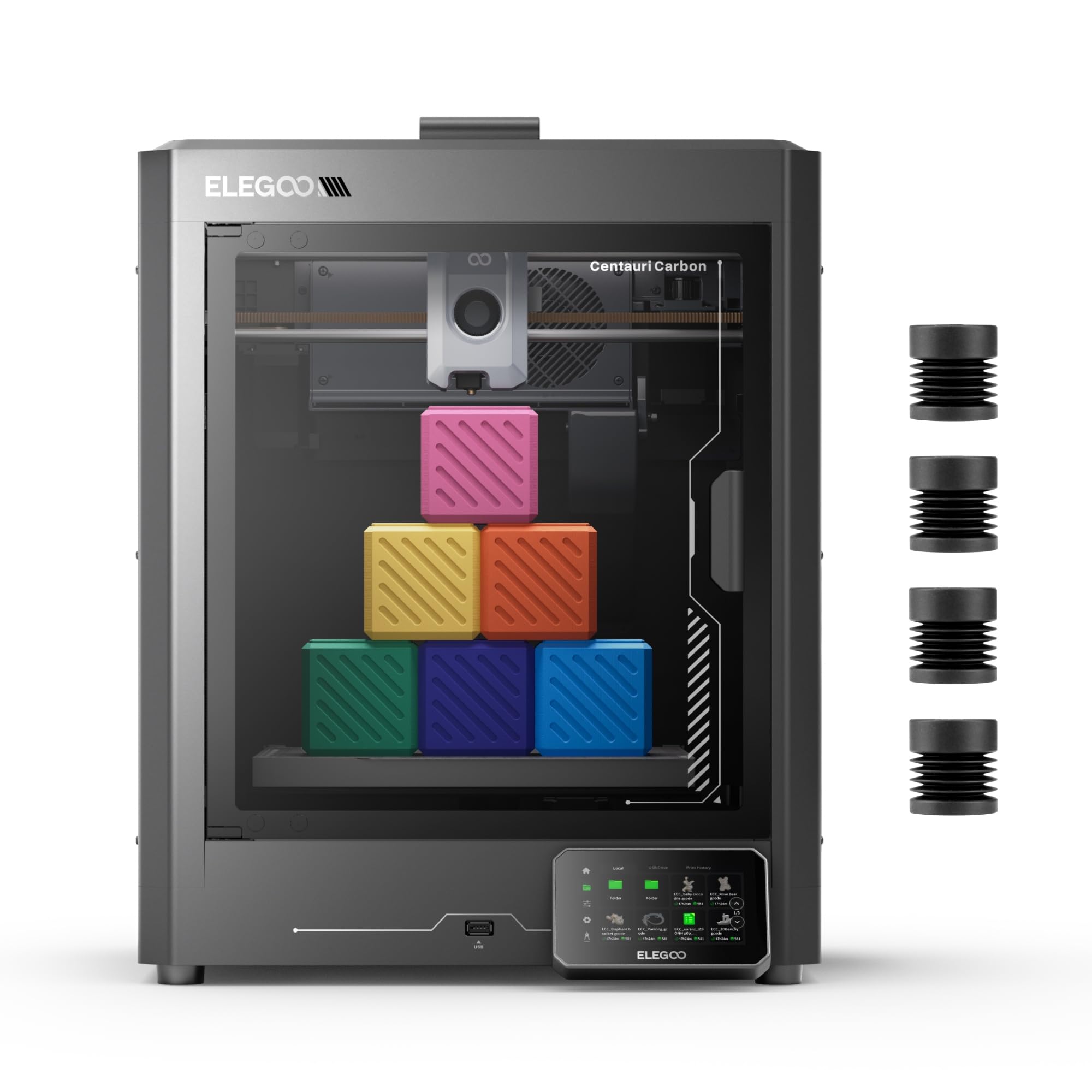
The Centauri Carbon arrives fully assembled and pre-calibrated, reducing setup to a few minutes. Its CoreXY structure achieves 500mm/s print speeds with 20,000mm/s² acceleration, while the brass-hardened steel nozzle reaches 320°C to handle carbon fiber-reinforced filaments and other abrasive materials.
A rigid die-cast aluminum frame minimizes vibration at high speeds, and automatic vibration compensation combined with pressure advance ensures consistent first layers and smooth surface finishes. The enclosed chamber features enhanced cooling for advanced materials, and the built-in camera enables real-time monitoring and time-lapse capture with dual LED lighting.
Early adopters report completing a benchy print in about 18 minutes with good quality. The intuitive touchscreen and ELEGOO Slicer with WiFi connectivity make it straightforward to operate. Some users experienced initial hardware issues that required support intervention, though replacement units performed reliably for hundreds of hours.
Why it’s great
- Fully assembled with auto bed leveling for immediate printing out of the box
- Rigid die-cast aluminum frame reduces vibrations for high-speed precision
- 320°C nozzle supports carbon fiber and other advanced filaments
Good to know
- Heavy at 38.5 pounds, requiring a sturdy table or cart
- Some early units experienced hotend communication errors requiring replacement
3. FLASHFORGE Adventurer 5M Pro

The Adventurer 5M Pro reaches a maximum travel speed of 600mm/s with 20,000mm/s² acceleration and heats its nozzle to 200°C in just 35 seconds. Its CoreXY all-metal structure and pressure sensing auto-leveling deliver reliable first layers without manual Z-axis calibration or print rafts.
The dual-sided PEI platform allows tool-less model removal, and the fully enclosed chamber includes a dual circulation system with HEPA and activated carbon filtration to reduce dust and fumes. The Flash Maker mobile app provides remote video monitoring, progress tracking, and parameter adjustments, plus features like auto shutdown and resume printing.
Users praise the fast setup—about 10 minutes from unboxing to first print—and the consistent print quality across PLA, ABS, PETG, and TPU. The 0.4mm and 0.6mm quick-swap nozzles (and compatibility with 0.25mm and 0.8mm options) offer flexibility for detailed or larger prints. A few users reported initial shipping damage or software compatibility issues, but overall reliability after replacement units is high.
Why it’s great
- Dual-layer HEPA and carbon filtration for safer indoor operation
- Nozzle heats to 200°C in 35 seconds, reducing wait times significantly
- Dual-sided PEI platform for easy, tool-less model removal
Good to know
- Initial setup requires smartphone app for WiFi registration on some units
- Some users experienced nozzle clogs or calibration errors shortly after purchase
4. FLASHFORGE AD5M Pro

The AD5M Pro shares the same CoreXY 600mm/s platform as the Adventurer 5M Pro but emphasizes quick-swap nozzle convenience, with a 3-second nozzle change mechanism. The fully enclosed chamber includes dual-layer filtration, and the 220×220×220mm build volume is suitable for most hobbyist projects.
Its direct-drive extruder handles flexible TPU smoothly alongside PLA, ABS, PETG, and carbon-fiber filaments. The built-in camera offers real-time monitoring through the Maker app, and features like filament runout detection, power-loss recovery, and auto-shutdown ensure reliable operation over long prints.
The quiet operation and fast Wi-Fi sync make it a solid choice for beginners. Some users noted software guidance could be improved, and a few reported extruder failures requiring replacement.
Why it’s great
- 3-second nozzle swap for quick size changes without tools
- Reliable direct-drive extruder handles flexible filaments without jamming
- Dual-layer filtration for reduced dust and smoke in enclosed prints
Good to know
- Single extruder limits multi-color printing to manual filament changes
- Some users experienced extruder failure after a few prints
5. Bambu Lab A1 Combo + LED Lamp Kit
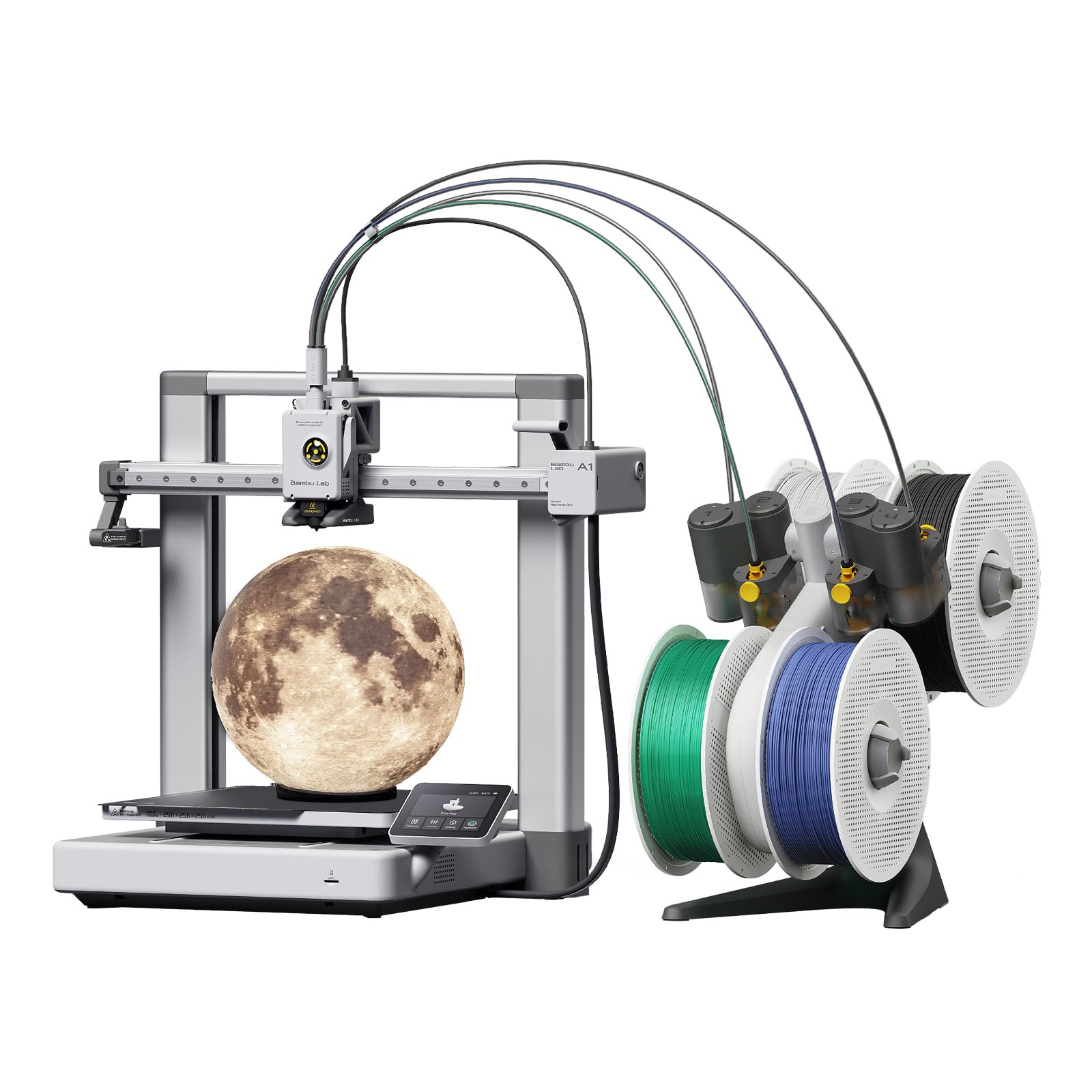
The Bambu Lab A1 Combo pairs a high-speed FDM printer with an AMS lite system that supports up to 4 colors, making multi-color printing accessible and reliable. It reaches 10,000mm/s² acceleration and includes full-auto calibration that handles Z-offset, bed leveling, and flow rate compensation automatically.
Active flow rate compensation adjusts extrusion in real-time based on sensor readings, ensuring consistent surface quality. The printer operates at ≤48 dB with active motor noise canceling, and the 1-Clip quick-swap nozzle simplifies maintenance. The included LED Lamp Kit lets users create illuminated decorative models directly.
Users consistently praise the A1 Combo for its exceptional ease of use, calling it a printer that “just works” right out of the box. The AMS system handles multiple PLA brands without issues, and the app provides access to thousands of free designs. Some users note the printer is noticeably noisy despite the noise canceling feature, and setup instructions could be more detailed.
Why it’s great
- Full-auto calibration eliminates manual leveling and flow adjustments
- Active flow rate compensation ensures smooth, consistent extrusion
- AMS lite system enables reliable 4-color printing with minimal waste
Good to know
- Printer can be noisy during operation despite noise canceling technology
- Setup instructions are minimal, and only a small sample of filament is included
6. Creality K2 Combo (A)
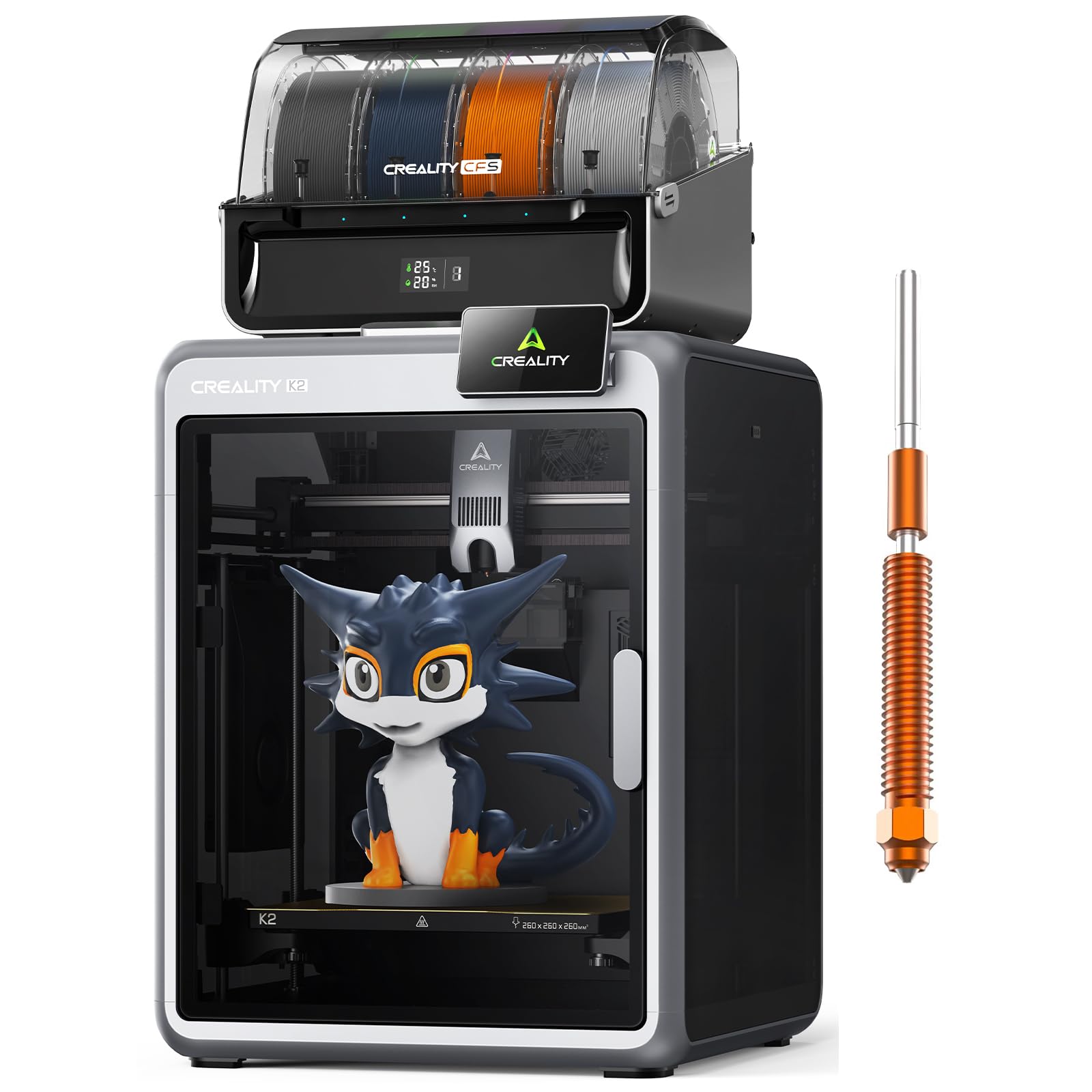
The Creality K2 Combo (A) includes one CFS unit for up to 4-color printing, expandable to 16 colors with additional CFS units. Its step-servo motor system on the extruder and X/Y axes boosts extrusion consistency and accuracy, achieving 600mm/s print speeds with 20,000mm/s² acceleration.
The die-cast aluminum frame uses aerospace-grade alloy for rigidity, and the steel X-axis rail provides wear resistance. The smart RFID system auto-reads Creality filament profiles and presets optimal settings, while the airtight case with desiccants keeps filaments dry during storage. The chamber AI camera detects print failures and provides time-lapse capture.
Users report excellent print quality with quiet operation and easy setup, taking under an hour to go from unboxing to a 4-color print. The auto-leveling system works perfectly, and the CFS auto-feeds and dries filament. A few users experienced failed prints due to adhesion issues and found the Creality app limited in free content, but overall feedback is strongly positive.
Why it’s great
- Step-servo motors improve extrusion consistency and overall print accuracy
- RFID filament recognition auto-applies correct settings for Creality materials
- Expandable CFS system supports up to 16 colors for complex multi-color models
Good to know
- Premium price point compared to other mid-range multi-color options
- Camera AI may miss some adhesion failures, requiring user vigilance
7. QIDI Q2 Combo 3D Printer
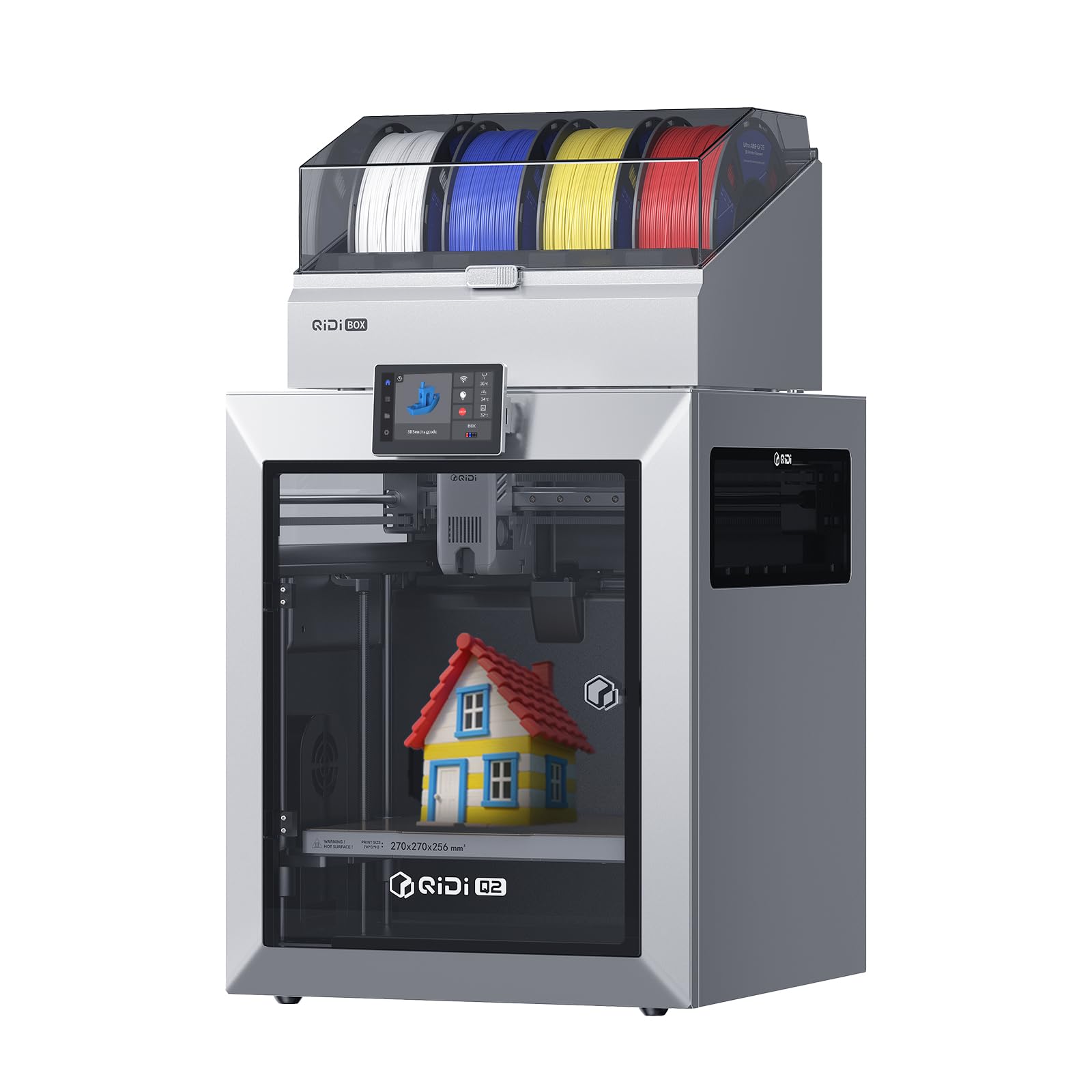
The QIDI Q2 Combo is built for users who need to print demanding materials. Its 2nd-generation PTC heated chamber reaches 65°C to minimize warping in ABS, PC, and nylon, while the 370°C high-temp nozzle unlocks carbon fiber and glass-fiber composites. The QIDI BOX adds dry-while-print technology and auto-filament reloading for up to 16 colors.
Precision features include a 1.5GT synchronous belt that reduces vibration artifacts for ultra-smooth surfaces, and the nozzle itself acts as the leveling sensor for unmatched first-layer accuracy. The triple filtration system—G3 pre-filter, H12 HEPA, and activated carbon—effectively reduces odors and harmful particles for safe indoor use.
Experienced users praise the open Klipper firmware for customizability and the strong community support via the QIDI wiki. First-timers report being able to print flawless ABS and PETG within two hours of unboxing. Some users experienced initial connection issues with the QIDI BOX, typically resolved with firmware updates, and a few found phone integration limited compared to competitors.
Why it’s great
- 65°C actively heated chamber prevents warping in engineering-grade materials
- 370°C nozzle handles advanced composites like carbon fiber nylon
- Triple air filtration system for safe use in occupied spaces
Good to know
- Initial setup of the QIDI BOX multi-material system may require firmware updates
- Phone integration is less polished than some competing ecosystems
8. QIDI Max4 Combo 3D Printer
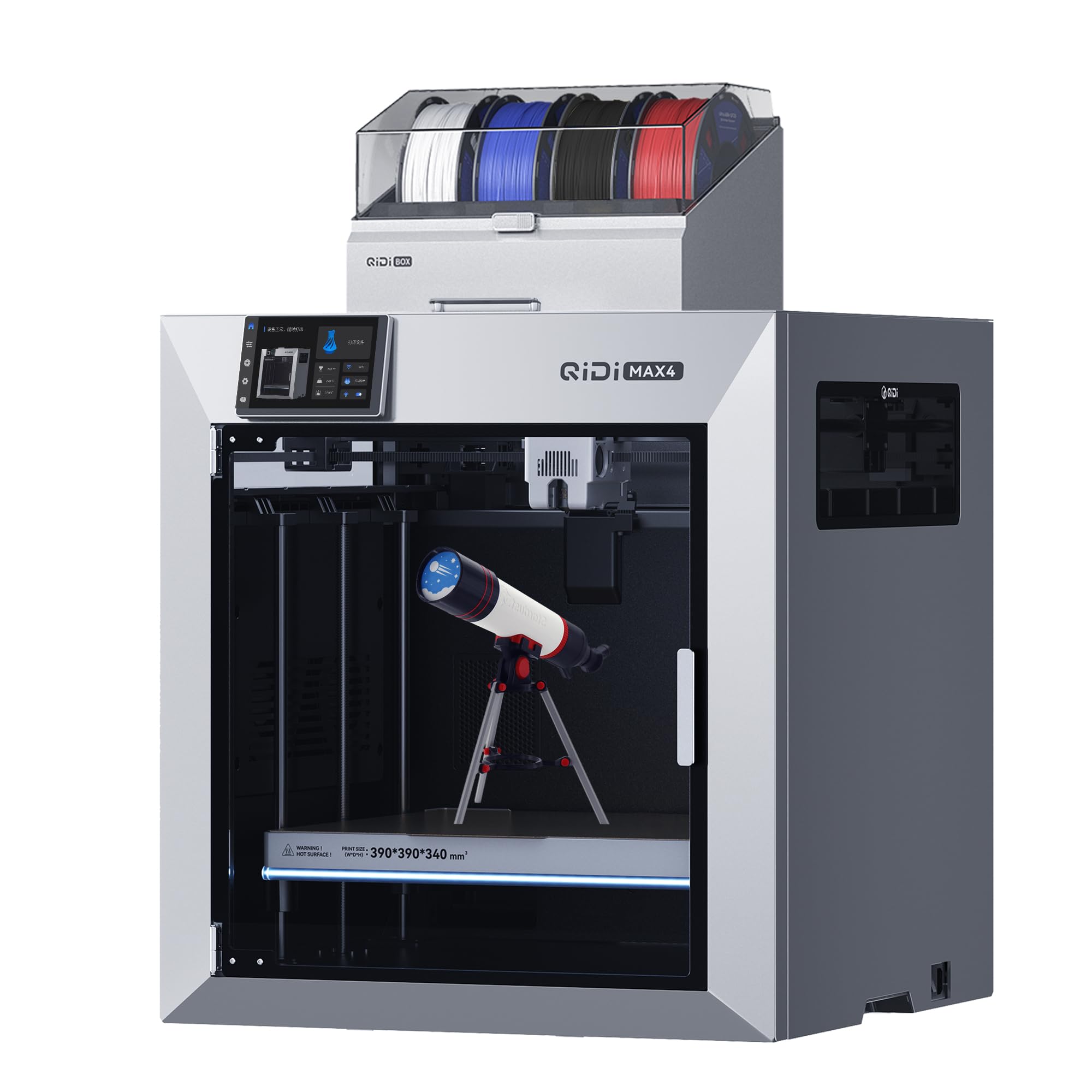
With a build volume of 390×390×340mm—55% larger than its predecessor—the Max4 Combo handles industrial-sized parts without splitting. Closed-loop motors on X/Y axes enable 800mm/s maximum speed with 30,000mm/s² acceleration, while the 2mm lead screw and anti-backlash nut on Z-axis reduce vertical gaps for precise layer stacking.
The 40mm³/s high-flow hotend with hardened steel nozzle supports standard and abrasive filaments, and the 65°C active heated chamber combined with the optional Polar Cooler system creates ideal conditions for high-temperature materials like ABS-CF and PPS-CF. The built-in AI camera detects spaghetti failures and pauses printing instantly, and the QIDI BOX connection enables 16-color printing.
Users report outstanding print quality with engineering filaments, noting the machine feels more solid than older Prusa designs. The open-source nature allows compatibility with multiple slicers, and the right-to-repair philosophy is a key advantage for long-term ownership. The large build volume is described as “freeing” for ambitious projects. Some users experienced a warped bed on arrival, but QIDI provided replacement parts and guided repairs.
Why it’s great
- Ultra-large 390x390x340mm build volume for industrial parts and molds
- Closed-loop motors deliver 800mm/s speed with high precision
- Open-source firmware and hardware for repairability and customization
Good to know
- Weighs 120 pounds and requires significant dedicated workspace
- High purge waste and long pre-print calibration times
9. Snapmaker Artisan 3D Printer

The Snapmaker Artisan is a modular 3-in-1 machine that swaps between 3D printing, laser engraving, and CNC carving in about one minute. The dual-extrusion print head uses a 7:5:1 planetary gear system for improved extrusion torque, and the 400×400×400mm build volume is one of the largest available in a desktop system.
Industrial-grade linear rails, made from CNC-ground steel at micron-level tolerances, provide rigidity during high-speed operations. The upgraded die-cast base plate enhances stability for both 3D printing and CNC work. The 7-inch touchscreen offers live status previews and module swapping without powering down, and the free Snapmaker software unifies all three workflows.
Users praise the build quality and versatility, noting the laser module produces excellent results at 40W and the CNC module is powerful for its size. The 3D printing quality is reliable with near-perfect prints, though speed is average compared to dedicated CoreXY printers. The learning curve for the software is steep, and some users found assembly instructions lacking, requiring external video guides.
Why it’s great
- Modular design allows 3D printing, laser engraving, and CNC in one machine
- Large 400mm³ build volume for ambitious multi-process projects
- Industrial-grade linear rails ensure precision across all functions
Good to know
- 3D printing speed is average compared to dedicated CoreXY printers
- Software has a steep learning curve, and assembly instructions are minimal
10. Dremel DigiLab 3D45

The Dremel DigiLab 3D45 is designed for education and beginner environments, with a fully enclosed plastic build chamber that includes a carbon filter and particulate filter for safer operation. The 5-inch full-color touchscreen guides users from unboxing to first print in under 15 minutes, and the removable glass build plate heats to 100°C.
The all-metal 0.4mm nozzle reaches 280°C, supporting PLA, ABS, PETG, ECO-ABS, and nylon. The RFID system auto-configures temperature and print settings when using Dremel filament spools, removing guesswork. An auto-pause on filament runout and easy bed leveling further reduce the learning curve for new users.
Users consistently describe the 3D45 as very user-friendly, with excellent customer support and high-quality prints using Dremel filament. The quiet, enclosed design and low odor emissions make it suitable for school settings. Drawbacks include a small build volume (6.7″ x 10″ x 6″), expensive proprietary filaments, and limited ability to change settings mid-print. The DigiLab slicer also has compatibility issues with newer Mac operating systems.
Why it’s great
- RFID system auto-configures temperatures and settings for Dremel filaments
- Fully enclosed design with carbon and particulate filtration for safe indoor use
- Guided setup gets new users printing in under 15 minutes
Good to know
- Small build volume limits larger projects to multi-part assembly
- Proprietary Dremel filament spools are expensive and not widely available
FAQ
What is the difference between a multi-color and a multi-material 3D printer?
How much filament waste does a multi-color print generate?
Do I need a heated chamber for printing PLA?
What build volume do I need for most projects?
Final Thoughts: The Verdict
For most users, the best 3 in 1 3d printer winner is the Anycubic Kobra X because it combines native multi-color printing with fast 600mm/s speeds, AI monitoring, and beginner-friendly setup at a mid-range price. If you need a heated chamber for engineering-grade materials like ABS and carbon fiber nylon, grab the QIDI Q2 Combo. And for the largest build volume and open-source repairability for industrial projects, nothing beats the QIDI Max4 Combo.

Mo Maruf
I created WellFizz to bridge the gap between vague wellness advice and actionable solutions. My mission is simple: to decode the research and give you practical tools you can actually use.
Beyond the data, I am a passionate traveler. I believe that stepping away from the screen to explore new environments is essential for mental clarity and physical vitality.