Our readers keep the lights on and my smoothie glass nicely filled. As an Amazon Associate, I earn from qualifying purchases.
Every newborn is born with a tiny digestive system and a powerful gag reflex, but the wrong bottle can turn a quiet feeding into an hour of gas, spit-up, and frustrated tears. The challenge isn’t just picking a container — it’s selecting a nipple shape, flow rate, and venting system that matches how your baby actually sucks and swallows during those first fragile weeks.
I’m Mohammad Maruf — the founder and writer behind WellFizz. I’ve spent hundreds of hours cross-referencing customer feedback, material safety certifications, and venting-mechanism designs to isolate the specs that actually prevent colic and support a natural latch for newborns.
Whether you are prepping a hospital bag or building a home feeding station for a 2-week-old, this guide dissects five proven models so you can confidently choose the best baby bottles for newborns without second-guessing.
How To Choose The Best Baby Bottles For Newborns
Newborns swallow air because their oral muscles are still coordinating — the right venting system and nipple flow rate directly reduce how much of that air turns into gas, colic, or spit-up. Focus on three specifications that determine whether feeding is calm or chaotic.
Nipple Flow Rate and Material
For babies under 3 months, the nipple should be a stage 0 or extra-slow (SS) flow, releasing milk only when the baby actively sucks, not by gravity. Silicone nipples that are soft and breast-like encourage a deep latch, while firmer nipples may cause a shallow suck that swallows more air. Look for nipples with latch guides or marked orientation points.
Anti-Colic Venting System
Not all anti-colic vents are equal. Internal vent tubes (like Dr. Brown’s system) physically separate air from milk, which is highly effective but adds extra cleaning steps. Nipple-based vents (like Comotomo’s dual slits) require fewer parts but can clog if not rinsed properly. For a newborn, a system that removes air before it enters the nipple delivers the most consistent relief from gas.
Bottle Material: Glass vs. Plastic (PPSU)
Borosilicate glass is chemically inert, won’t leach anything into warm milk, and resists thermal shock — but it is heavier and can break if dropped. PPSU plastic is nearly unbreakable, lightweight, and heat-resistant up to 180°C, making it dishwasher-safe and ideal for on-the-go parents. Both are BPA-free; choose glass for home storage longevity and PPSU for portability.
Quick Comparison
On smaller screens, swipe sideways to see the full table.
| Model | Category | Best For | Key Spec | Amazon |
|---|---|---|---|---|
| Smilo Baby Bottle Set | Mid-Range | Colic-prone newborns | Patented anti-colic vent system | Amazon |
| Gulicola Glass Bottles | Mid-Range | Breastfed transition | Extra-slow SS nipple, 3 oz | Amazon |
| Dr. Brown’s Anti-Colic Options+ | Premium | Gas reduction & durability | Internal vent system, borosilicate glass | Amazon |
| Comotomo Double Pack | Premium | Bottle rejection / teething | Full silicone body, 5 oz | Amazon |
| Pigeon PPSU Nursing Bottle | Premium | Latch guidance / low gas | Latch-on line nipple, PPSU body | Amazon |
In‑Depth Reviews
1. Smilo Baby Bottle Set
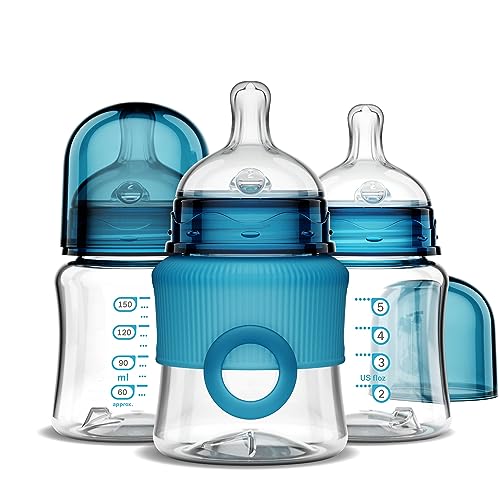
Smilo’s patented anti-colic vent system uses an internal channel that routes air away from the milk, substantially reducing gas and discomfort for newborns. The stage-0 slow-flow nipple is calibrated for 0–3 months, releasing milk only when the baby actively sucks — this prevents choking and mimics breastfeeding rhythm. Parents who tried Dr. Brown and Avent without success report Smilo finally solved colic issues, especially for babies that rejected other bottles.
The 5 oz / 150 ml size is ideal for early feeds, and the BPA-free plastic is thinner than some competitors, so milk heats faster and the bottle cools quickly. The skinnier shape (compared to Comotomo’s round body) makes it easier for small hands to grip later. Nipples for later stages are sold separately, but the included stage 0 covers the first 2 months effectively.
Some users note the lid can be stiff to open and close, and water may collect inside the vent during cleaning — a quick shake-out resolves this. The bottle is easy to clean overall, with no tiny parts like Dr. Brown’s internal tube. For a mid-range option that delivers consistent gas relief, Smilo punches above its tier.
Why it’s great
- Patented anti-colic vent reduces gas effectively
- Stage-0 slow flow prevents choking for newborns
- Easy to clean with no tiny internal parts
- Skinnier shape is easy to grip
Good to know
- Lid can be stiff to open and close
- Level 0 nipple only included — later stages sold separately
- Plastic heats faster than glass
2. Gulicola Small Glass Baby Bottle

These 3 oz borosilicate glass bottles are designed specifically for newborns and preemies who need an extra-slow flow. The SS (super slow) nipple releases milk at a pace that mimics breastmilk letdown, which helps breastfed babies latch without frustration. The nipple has a latch-guide ridge that promotes proper oral positioning, reducing the chance of a shallow suck that leads to air swallowing.
The glass is lightweight for its material and has survived drops on tile and hardwood without shattering, according to multiple parents. The wide neck makes cleaning effortless — only 4 pieces total, and everything is safe for sterilizers, microwave hot-water baths, and boiling water. The 3 oz capacity is perfect for the first weeks when newborns take only 1–2 ounces per feed, and it transitions well to a 8 oz version for older babies.
A small number of users report that milk collects on the inner ledge of the nipple and that the vent system is less effective than competing designs — you may see air bubbles inside the nipple during feeding. Still, for a dedicated breast-to-bottle tool with an authentic slow flow, Gulicola solves the latch problem that many parents struggle with during the first month.
Why it’s great
- SS extra-slow nipple mimics breastmilk flow rate
- Borosilicate glass survives drops without shattering
- Lightweight glass design is easy to hold
- Wide neck allows quick, thorough cleaning
Good to know
- Milk can collect on inner ledge of nipple
- Vent system is less effective than internal-tube designs
- Only 3 oz — need larger bottles for 4+ months
3. Dr. Brown’s Anti-Colic Options+ Narrow Glass
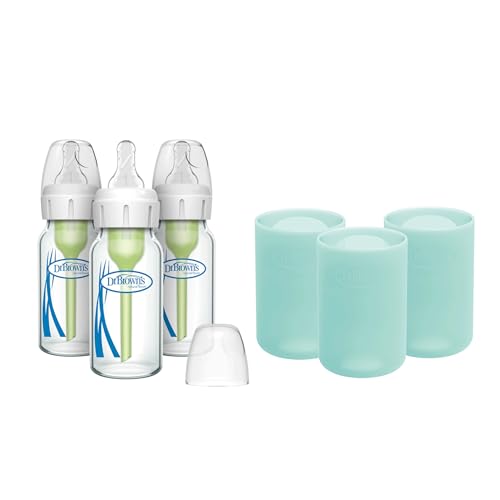
Dr. Brown’s narrow glass bottle is the category benchmark for anti-colic performance. The internal vent tube creates a vacuum-free feeding environment — air travels down the center tube while milk remains in the bottle body, preventing bubbles from forming. Clinically proven to reduce colic, the system decreases spit-up, burping, and gas by physically separating air from liquid before it reaches the nipple.
The borosilicate glass construction is heat and thermal-shock resistant, surviving hot sterilization cycles and sudden temperature changes without cracking. The narrow shape fits standard breast pump flanges directly, allowing mothers to pump and feed in the same bottle without transferring milk. The level 1 slow flow nipple is appropriate for newborns, and the included mint silicone sleeve provides grip and fall protection.
The primary trade-off is cleaning complexity: five separate pieces (bottle, nipple, collar, vent tube, and vent insert) require disassembly and careful brushing. Many parents accept this because the gas relief is dramatic — babies who struggled with colic on other bottles often settle immediately on Dr. Brown’s. The glass heats faster than plastic, so test the temperature before feeding.
Why it’s great
- Internal vent system physically removes air bubbles from milk
- Borosilicate glass resists thermal shock and cracking
- Narrow shape fits breast pump flanges directly
- Clinically proven to reduce colic and spit-up
Good to know
- Five separate pieces require thorough cleaning
- Glass body is heavier than plastic alternatives
- Milk heats faster — always check temperature before feeding
4. Comotomo Baby Bottle Double Pack
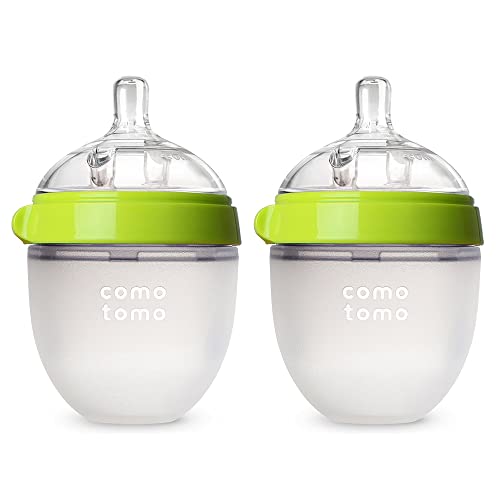
Comotomo’s defining feature is its full silicone body — a soft, squeezable material that feels like breast skin against the baby’s face. This skin-like texture helps ease bottle rejection, especially during teething when babies turn away from hard plastic. The wide nipple shape is designed for a deep latch, and the dual anti-colic vents (integrated into the nipple base) allow consistent milk flow without dripping when the bottle is inverted.
The 5 oz size is appropriate for newborns, and the wide neck opening makes cleaning by hand or dishwasher trivial — no brushes needed. The bottle has only three pieces: bottle body, nipple, and ring. Parents report that babies who refused Dr. Brown, Philips Avent, and Medela bottles accepted Comotomo within the first feeding, making it a top choice for picky newborns.
A minor quirk: because the bottle is round, it can roll off tables, and the last drops of milk tend to pool at the nipple side rather than at the bottom, requiring you to tilt the bottle upward near the end. The silicone material can also absorb odors over time if not cleaned promptly with hot water. If your baby needs a tactile, breast-like feeding experience, Comotomo delivers that sensory comfort better than any glass or hard-plastic competitor.
Why it’s great
- Soft silicone body mimics breast skin feel
- Wide nipple promotes deep latch for bottle-refusing newborns
- Only 3 pieces — fastest cleaning of any bottle
- Dual anti-colic vents prevent dripping and reduce gas
Good to know
- Last milk pools at nipple side — need to tilt upright
- Silicone can absorb odors if not cleaned promptly
- Round shape rolls off flat surfaces
5. Pigeon PPSU Nursing Baby Bottle
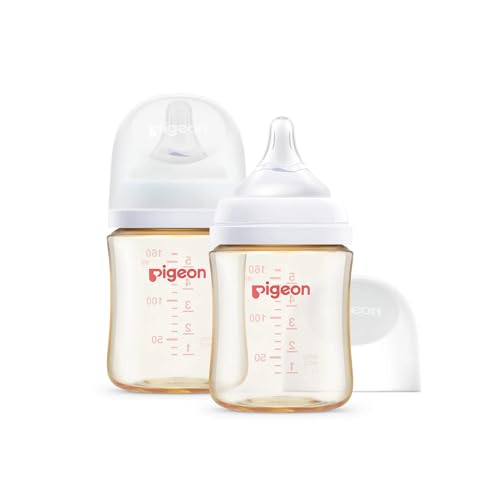
Pigeon bottles are built on research into the three natural sucking movements babies perform during breastfeeding: latching, squeezing, and swallowing. The SS (extra-slow) nipple features a latch-on line — a raised ridge that guides the baby’s mouth into proper positioning — reducing milk leakage and encouraging an effective suck. The result is less air swallowed and fewer burps during feeds.
The PPSU plastic body is heat-resistant to 180°C, dishwasher-safe without degrading, and nearly unbreakable — a practical choice for parents who want glass-level safety without the weight and fragility. The wide neck and streamlined body make cleaning easy, and the bottle has no internal tubes or complex parts. Many OT-recommended users and parents switching from Dr. Brown or Hegen report that Pigeon bottles reduced feeding time from 10 minutes per ounce to a more manageable pace.
The nipples come in sizes SS through 3L, each with specific hole shape and thickness calibrated to the baby’s age. The SS nipple included with the 0m+ bottles is extremely slow, which is perfect for a newborn but may frustrate a 2-month-old who wants faster flow. You’ll need to purchase larger nipples separately as your baby grows. For a premium all-in-one system that balances latch science with durable materials, Pigeon is a top-tier investment.
Why it’s great
- Latch-on line guides correct oral positioning
- PPSU plastic is unbreakable, heat-resistant, and BPA-free
- No internal tubes — easy to clean and assemble
- Research-backed nipple design reduces air swallowing
Good to know
- SS nipple may be too slow for some 2-month-olds
- Larger nipple sizes sold separately and can be expensive
- Premium pricing compared to mid-range glass options
FAQ
How many bottles do I need for a newborn feeding cycle?
Can I use a stage 1 nipple for a 2-week-old?
How do I know if the anti-colic vent is working properly?
Are glass bottles safer than plastic for newborn milk?
Final Thoughts: The Verdict
For most users, the best baby bottles for newborns winner is the Dr. Brown’s Anti-Colic Options+ Narrow Glass because its internal vent system removes air before it reaches the milk, delivering clinically proven colic relief that few competitors match. If you want a soft silicone body that helps a bottle-rejecting newborn latch, grab the Comotomo Double Pack. And for a lightweight, shatterproof PPSU bottle with a latch-guidance nipple, nothing beats the Pigeon PPSU Nursing Bottle.

Mo Maruf
I created WellFizz to bridge the gap between vague wellness advice and actionable solutions. My mission is simple: to decode the research and give you practical tools you can actually use.
Beyond the data, I am a passionate traveler. I believe that stepping away from the screen to explore new environments is essential for mental clarity and physical vitality.