Our readers keep the lights on and my smoothie glass nicely filled. As an Amazon Associate, I earn from qualifying purchases.
The difference between a wearable you actually wear and one that ends up in a drawer often comes down to one thing: how well it tracks your unique energy output. A calorie and activity tracker that guesses your burn based on generic formulas won’t help you adjust your diet or training with any real precision. You need a device that captures your heart rate response, movement patterns, and recovery signals with enough granularity to make smart, daily decisions.
I’m Mohammad Maruf — the founder and writer behind WellFizz. I’ve spent hundreds of hours analyzing sensor specs, battery architectures, and companion app algorithms across the wearable market to understand which trackers deliver actionable data rather than just step counts.
This guide cuts through the marketing to focus on the models that provide reliable, category-specific metrics. Whether you prioritize GPS accuracy, 24/7 heart rate monitoring, or seamless app integration, you’ll find the best calorie and activity tracker for your lifestyle right here.
How To Choose The Best Calorie And Activity Tracker
Selecting the right tracker involves more than picking the most popular model. You need to match the device’s sensor package, battery philosophy, and companion app depth to your specific daily routine and fitness goals. Here are the key factors to weigh before you buy.
Sensor Accuracy & Heart Rate Monitoring
Optical heart rate sensors vary widely in quality. A tracker that samples your pulse every few seconds can produce calorie burn estimates that are off by as much as 40% during high-intensity intervals. Look for devices that use multi-LED photoplethysmography (PPG) sensors and include metrics like resting heart rate and heart rate variability (HRV) — these give you a more honest picture of your recovery and true energy expenditure.
Battery Life & Recharge Cycle
A tracker that needs daily charging quickly becomes an ornament. Devices with longer battery life — think 7 to 10 days — allow you to wear the tracker through the night for proper sleep analysis without worrying about a dead battery during a morning run. Fast-charging support (like five minutes for a day’s worth of power) is a practical bonus for those who forget to charge regularly.
GPS & Activity Profiles
If you run, cycle, or hike outdoors, built-in GPS saves you from carrying your phone. Connected GPS, which uses your phone’s location, saves battery but adds a dependency on your smartphone. Consider how many sport modes you actually need — a swimmer requires 5ATM water resistance, while a yoga practitioner benefits from stress tracking and guided breathing features.
App Ecosystem & Data Integration
The companion app is where your raw data becomes actionable. A good app presents trends in sleep, stress, and activity without overwhelming you with noise. Check whether the tracker syncs with Apple Health, Google Fit, or third-party nutrition apps like MyFitnessPal — especially if you want to correlate calorie intake with your tracked burn.
Quick Comparison
On smaller screens, swipe sideways to see the full table.
| Model | Category | Best For | Key Spec | Amazon |
|---|---|---|---|---|
| Garmin Lily 2 Active | Premium | Style with fitness depth | 9 days battery + Built-in GPS | Amazon |
| Garmin vívomove Trend | Premium | Analog looks, smart health | Hybrid dial with hidden touchscreen | Amazon |
| WITHINGS Body Comp | Premium | Full body composition analysis | 50 g weight precision + medical validation | Amazon |
| Fitbit Inspire 3 | Mid-Range | Core fitness tracking | 10 day battery + Stress management | Amazon |
| Fitbit Versa 2 Special Edition | Mid-Range | Smartwatch features, music & Alexa | Always-on AMOLED + Music storage | Amazon |
| Bvlrksc Smart Watch | Mid-Range | Offline maps & AI features | 1.46” AMOLED + 550 mAh battery | Amazon |
| Google Fitbit Air | Mid-Range | Screenless wellness coaching | Screenless + 7 day battery | Amazon |
In‑Depth Reviews
1. Garmin Lily 2 Active

The Garmin Lily 2 Active is a standout for anyone who wants a compact, elegant wearable that doesn’t compromise on fitness data. It packs built-in GPS, a hidden touchscreen, and a patterned lens that looks more like jewelry than a tracker. The 9-day battery life means you can wear it through the night for continuous sleep analysis without hunting for a charger midweek.
Beyond the stylish 38mm case, the sensor array covers sleep score, respiration tracking, Body Battery energy monitoring, and all-day stress tracking with low/high heart rate alerts. It supports Garmin Coach training plans and on-screen workouts for strength, HIIT, and yoga — making it a legitimate training tool, not just a step counter. The app ecosystem is rich without being cluttered.
The main trade-off is proprietary charging and a learning curve for the gesture-based controls. But for users with smaller wrists who value a discrete, feminine design paired with robust fitness features (GPS, Garmin Pay, menstrual cycle tracking), this is a rare combination that most other trackers miss entirely.
Why it’s great
- Built-in GPS tracks outdoor runs without a phone
- Patterned lens hides display for a refined look
- Robust sleep and Body Battery insights
Good to know
- Proprietary charger adds cable dependency
- Limited watch face customization compared to full Garmin models
2. Garmin vívomove Trend

The Garmin vívomove Trend blends classic wristwatch aesthetics with modern health tracking. A stainless steel bezel and analog hands conceal a full-dial touchscreen that appears only when you interact with it. This hybrid approach means you never sacrifice style for functionality — the watch looks appropriate in a boardroom or on a trail.
Health monitoring includes continuous heart rate sampling, Body Battery energy levels, Pulse Ox, sleep score, and stress tracking. For activity, it connects to your phone’s GPS for outdoor walks, runs, and bike rides, and includes profiles for yoga, strength, and cardio. The smart notifications, contactless Garmin Pay, and incident detection add a layer of convenience and safety.
The battery lasts up to 5 days in smart mode, which is respectable for a hybrid. Some users note that the hands can drift over time and require occasional alignment. It’s a fantastic choice for someone who wants a sophisticated watch that also delivers comprehensive daily wellness data and doesn’t look like a fitness gadget.
Why it’s great
- Analog hands with a hidden touchscreen
- Garmin Pay for contactless transactions
- Comprehensive health and stress tracking
Good to know
- Analog hands may need occasional manual alignment
- Battery life is 5 days, shorter than dedicated trackers
3. WITHINGS Body Comp

The WITHINGS Body Comp is a Wi-Fi and Bluetooth smart scale that delivers a clinical-grade scan of your body composition. It measures weight to within 50 grams, plus estimates visceral fat, muscle mass, and cardiovascular health by assessing arterial condition. It also evaluates sweat gland activity as a proxy for skin barrier function — an unusual but insightful metric.
The high-resolution color display shows weight trends directly on the scale, and automatic user recognition makes it easy for multiple household members to track their own data. The companion Health Mate app is clean and integrates seamlessly with Apple Health. The scale’s readings are consistent and repeatable, providing a solid foundation for trending your body composition over weeks and months.
The main drawbacks are occasional measurement failures (a red ‘X’ on the screen requires a second weigh-in) and a subscription upsell for deeper analytics. However, for someone serious about tracking body fat percentage and lean mass changes alongside their calorie burn data from a wrist tracker, the Body Comp is the most reliable home scale available.
Why it’s great
- Clinical-grade weight precision (±50 g)
- Measures visceral fat, muscle mass, arterial health
- Automatic user recognition for families
Good to know
- Occasional measurement errors require re-weigh
- Premium subscription pushed within the app
4. Fitbit Inspire 3

The Fitbit Inspire 3 is the definition of focused, no-nonsense tracking. It’s a slim, lightweight band that records 24/7 heart rate, sleep stages, stress levels, and over 40 exercise modes. The color touchscreen is bright enough for outdoor visibility, and the companion Fitbit app presents your data in clear daily and weekly views.
Battery life reaches up to 10 days with the always-on display turned off — enough to cover a full week and weekend without charging. It includes a Daily Readiness Score, Active Zone Minutes, and Relax breathing sessions. The inclusion of a 3-month Google Health Premium membership adds guided programs, but the core tracking features work well without any subscription.
The plastic casing and proprietary charging cable feel less premium than Garmin’s offerings, and the small screen limits on-wrist interaction. But for someone who wants reliable heart rate, activity, and sleep data in a comfortable, unobtrusive package at a budget-friendly price point, the Inspire 3 delivers more value per dollar than almost any alternative.
Why it’s great
- Exceptional 10-day battery life
- Accurate 24/7 heart rate and sleep tracking
- Lightweight, comfortable for all-day wear
Good to know
- Proprietary cable required for charging
- Plastic band hinge may wear over time
5. Fitbit Versa 2 Special Edition

The Fitbit Versa 2 Special Edition blends smartwatch convenience with robust fitness tracking. It features an always-on AMOLED display, built-in Alexa for voice control, and the ability to store 300+ songs or control Spotify and Pandora. This makes it a strong option for runners who want music on their wrist without a phone.
Health monitoring covers 24/7 heart rate, sleep scoring with REM tracking, floors climbed, and swim tracking with 5ATM water resistance. The battery lasts 3 to 5 days with typical use — shorter than simpler trackers, but reasonable for a full-featured smartwatch. The notification system works well with both iOS and Android, allowing quick replies on Android.
The main downsides are the lack of built-in GPS (it uses connected GPS from your phone) and the dated 2019 hardware platform. Some units develop HR sensor or battery seal issues after about a year of heavy use. Still, for someone who wants Alexa voice commands and offline music at a mid-range price, the Versa 2 remains a versatile, function-packed choice.
Why it’s great
- Alexa voice assistant for quick info and commands
- Always-on AMOLED display with customizable clock faces
- Music storage and Spotify control on wrist
Good to know
- No built-in GPS — relies on phone connection
- Battery life ~3-5 days with always-on display
6. Bvlrksc Smart Watch
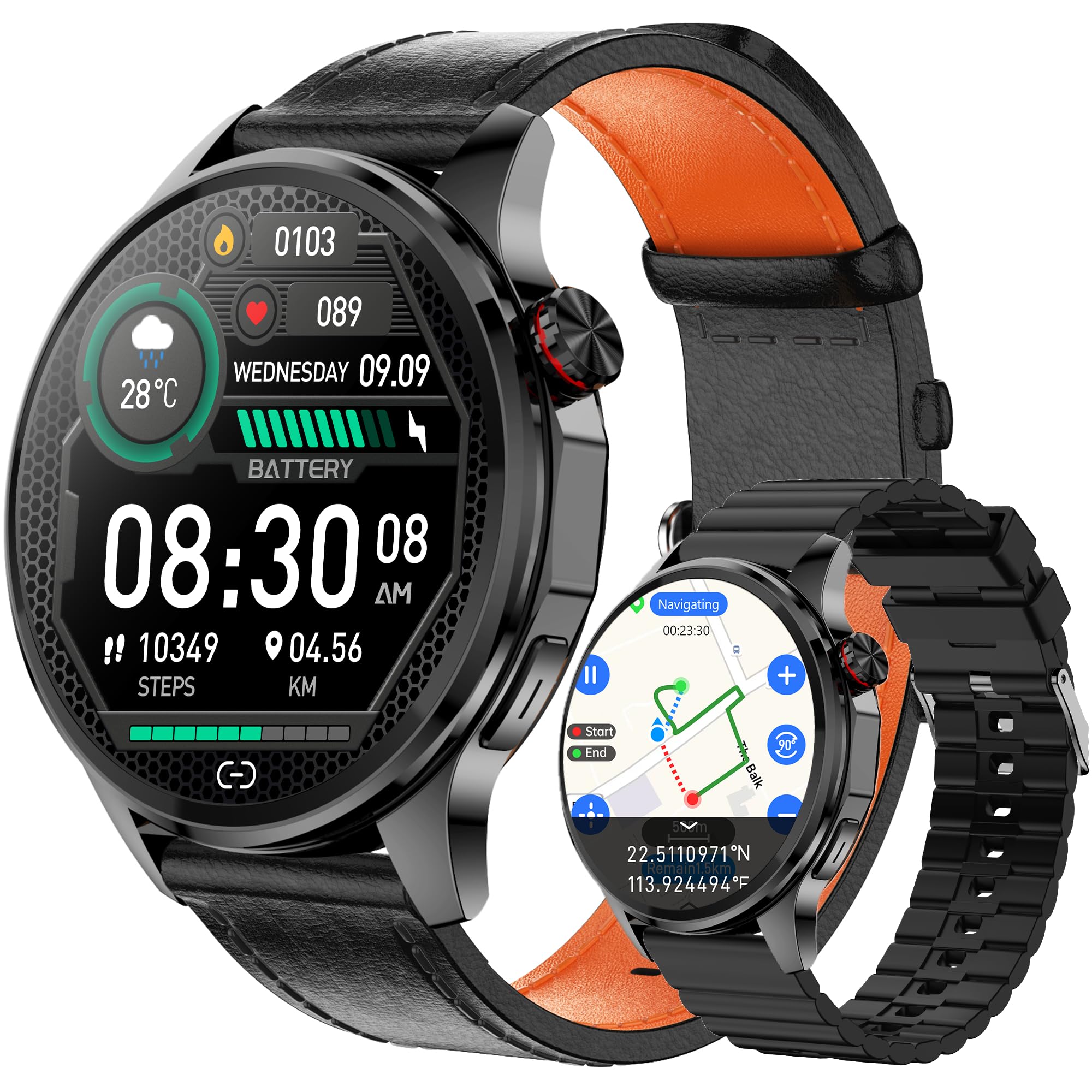
The Bvlrksc Smart Watch is a surprisingly capable entry-level wearable for its price. The standout feature is support for offline maps via GPS, GLONASS, Galileo, and QZSS — you can download hiking trails or city maps before leaving home, then navigate without any cellular signal. A built-in compass, altimeter, and barometer add real utility for outdoor enthusiasts.
The 1.46-inch HD AMOLED touchscreen is bright and legible even in direct sunlight. The 550mAh battery delivers several days of mixed use, and the included genuine leather band plus a spare silicone strap let you switch between professional and gym-ready looks quickly. Health monitoring covers heart rate, SpO2, all-day sleep, stress, and over 100 sports modes.
Accuracy for intense interval workouts and distance tracking may lag behind premium brands, and the companion app is less polished than Fitbit or Garmin. But for a budget-conscious user who needs offline mapping, AI voice translation, and a good-quality display, this watch packs a feature set that punches well above its price tier.
Why it’s great
- Offline GPS maps for hiking and travel
- Large 1.46″ AMOLED display with good sunlight visibility
- Includes both leather and silicone bands
Good to know
- Exercise distance tracking can be inconsistent
- Companion app is less refined than Fitbit/Garmin
7. Google Fitbit Air
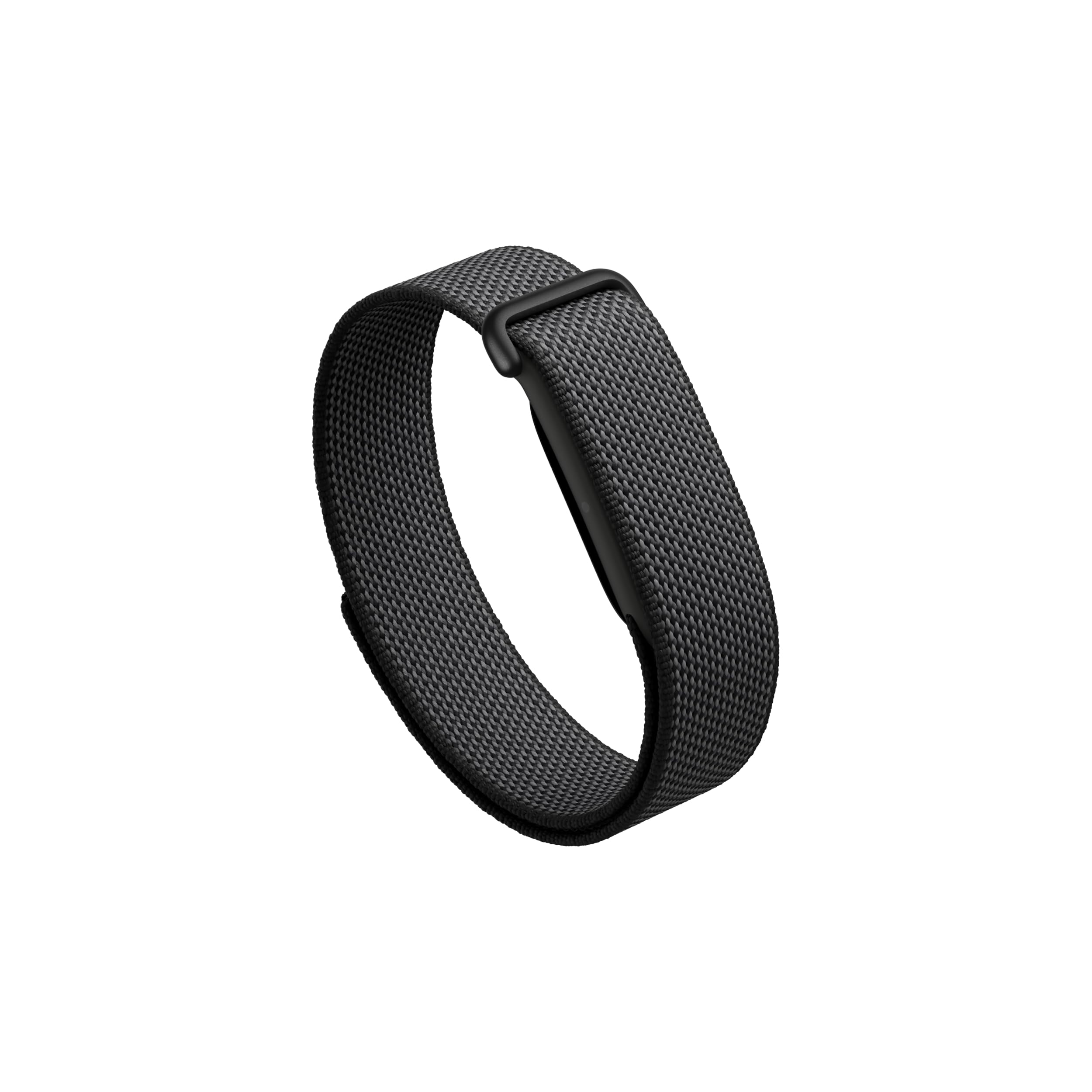
The Google Fitbit Air takes a minimalist approach — it’s a screenless tracker that relies entirely on haptics and the companion app to deliver your health insights. The lightweight micro-adjustable band sits discreetly on your wrist, making it ideal for users who want health data without the distraction of notifications or screen time.
Despite the lack of a display, the sensor suite is surprisingly complete: it tracks heart rate, SpO2, sleep stages, HRV, and even AFib detection. Battery life hits a full week, and the quick-charge feature gives you a whole day of use in just five minutes. The integration with Google Health Premium (three-month trial included) offers AI-powered coaching that adapts to your routines and recovery status.
The trade-off is that you cannot glance at your stats during a workout without opening your phone. The distance tracking for runs is also less accurate than a phone-connected GPS. But for boxing, muay thai, or other activities where a screen would get damaged, or for those seeking a mindful, low-distraction approach to health tracking, the Fitbit Air is a refreshingly singular product.
Why it’s great
- Zero screen distraction — pure haptic feedback
- 5-minute fast charge for a full day of use
- Accurate 24/7 heart rate, SpO2, and HRV tracking
Good to know
- Requires phone to check any real-time data
- Distance tracking for runs is less reliable
FAQ
How accurate are wrist-based calorie burn estimates?
Should I get a screen or screenless calorie tracker?
Can a calorie tracker help with weight loss?
Final Thoughts: The Verdict
For most users, the best calorie and activity tracker winner is the Garmin Lily 2 Active because it packs built-in GPS, a 9-day battery, and deep health metrics into a small, elegant design that works for everyday wear and serious training alike. If you want a hybrid watch that looks like a classic timepiece, grab the Garmin vívomove Trend. And for the purest, most clinical body composition analysis to complement your wearable data, nothing beats the WITHINGS Body Comp.

Mo Maruf
I created WellFizz to bridge the gap between vague wellness advice and actionable solutions. My mission is simple: to decode the research and give you practical tools you can actually use.
Beyond the data, I am a passionate traveler. I believe that stepping away from the screen to explore new environments is essential for mental clarity and physical vitality.