Our readers keep the lights on and my smoothie glass nicely filled. As an Amazon Associate, I earn from qualifying purchases.
Buying a hybrid camera means choosing a body that must excel at two fundamentally different things: freezing a decisive moment as a still image and capturing a sequence of those moments as smooth, detailed video. The camera that does both well is rare, and the wrong pick leaves you either frustrated with video rolling shutter or underwhelmed by photo resolution.
I’m Mohammad Maruf — the founder and writer behind WellFizz. I’ve spent hundreds of hours parsing sensor readout speeds, bit depths, AF point coverage, and rolling shutter measurements from lab tests and real-world user reports to find the cameras that truly deliver on their hybrid promise.
Whether you are upgrading from a phone or building a professional kit, the right best hybrid camera balances sensor size, autofocus intelligence, video bit rates, and ergonomic weight into a single reliable tool.
How To Choose The Best Hybrid Camera
Hybrid shooters need a camera that does not compromise on stills resolution or video frame rates. The market splits into sensor size tiers — full-frame, APS-C, and Micro Four Thirds — each with distinct reading speeds, bit depths, and lens ecosystems. Understanding three key decision points narrows the field fast.
Sensor Readout Speed and Rolling Shutter
When you record video or use the electronic shutter, the sensor reads out line by line. A slow readout creates a wobble or slant on fast-moving subjects — called rolling shutter. Cameras with stacked sensors or high-speed readout designs minimize this distortion. Specs to check: whether 4K 60p is oversampled from a higher resolution and if the electronic shutter allows full autofocus tracking at high burst rates.
Autofocus Coverage and AI Tracking
Hybrid cameras demand autofocus that works during both still burst shooting and continuous video recording. Look for phase-detection coverage that exceeds 90 percent of the frame and dedicated AI processors that recognize people, animals, and vehicles. Real-time Eye AF for humans and animals is now standard on premium bodies, but its accuracy varies significantly between brands.
Video Log Profiles and Bit Depth
For color grading in post-production, you need at least 10-bit 4:2:2 internal recording and a flat log profile such as V-Log, S-Log, or C-Log. Cameras offering these features without external recorders are true hybrid tools. Also verify whether the camera supports internal ProRes RAW or Cinema RAW Light for the highest flexibility.
Quick Comparison
On smaller screens, swipe sideways to see the full table.
| Model | Category | Best For | Key Spec | Amazon |
|---|---|---|---|---|
| Sony Alpha 6700 | Mid-Range APS-C | AI tracking & 4K 120p | 26MP sensor, 759 AF points | Amazon |
| Sony Alpha 7 IV | Premium Full-Frame | 33MP stills + 4K 60p video | 33MP sensor, 10-bit 4:2:2 | Amazon |
| Canon EOS R8 | Premium Full-Frame | Lightweight full-frame hybrid | 24.2MP, uncropped 4K 60p | Amazon |
| Canon EOS R5 | Luxury Full-Frame | 8K internal recording | 45MP sensor, 8K RAW | Amazon |
| Fujifilm X100VI | Premium Fixed-Lens | Street photography & film sims | 40.2MP, 6-stop IBIS | Amazon |
| Nikon Z6 III | Premium Full-Frame | 6K internal RAW video | 24.5MP, 6K/60p N-RAW | Amazon |
| Nikon Z 6II | Mid-Range Full-Frame | Dual slots & low light | 24.5MP, 4K 60p full pixel | Amazon |
| Panasonic LUMIX S5II | Premium Full-Frame | Unlimited 4K 10-bit | 24.2MP, Phase Hybrid AF | Amazon |
| Panasonic LUMIX S1RII | Luxury Full-Frame | 44MP stills & 8K video | 44.3MP sensor, 8K | Amazon |
| Sony a7 III | Mid-Range Full-Frame | Battery life & value | 24.2MP, 693 AF points | Amazon |
| Canon EOS R50 Kit | Entry-Level APS-C | Hybrid starter kit | 24.2MP, Dual Pixel AF | Amazon |
| OM SYSTEM E-M10 Mark IV | Entry-Level MFT | Compact & lightweight | 20MP, 4.5-stop IBIS | Amazon |
| Sony ZV-E10 | Entry-Level APS-C | Vlogging & live streams | 24.2MP, 4K oversampled | Amazon |
In‑Depth Reviews
1. Sony Alpha 6700

The Alpha 6700 packs Sony’s latest AI processing unit into a compact APS-C body, enabling Real-time Recognition that tracks subjects with uncanny reliability. Its 26MP back-illuminated sensor delivers sharp stills with excellent dynamic range, while the BIONZ XR processor powers 6K-oversampled 4K at 60p and high frame rate 4K at 120p — all in 10-bit 4:2:2.
Paired with a fast prime like the Sigma 16mm f/1.4, this camera becomes a lightweight hybrid beast. The AI autofocus doesn’t just follow faces — it identifies birds, cars, insects, and even specific body parts with precision. In-body stabilization is decent but not gimbal-replacing for walking shots, though it helps with static handheld video.
The menu system remains Sony’s labyrinthine design, requiring a learning curve for new users. Battery life is strong for an APS-C body, and the build feels dense and weather-resistant. For hybrid shooters who want cutting-edge autofocus in a portable package, the Alpha 6700 is hard to beat.
Why it’s great
- Best autofocus in class with dedicated AI processor
- 4K 120p and 6K-oversampled 4K 60p internal
- Compact, durable body with excellent battery life
Good to know
- Menu system is complex and unintuitive
- IBIS is average — gimbal recommended for smooth walking video
- No mechanical shutter option for flash sync above 1/160s
2. Sony Alpha 7 IV

The Alpha 7 IV is Sony’s statement that a single full-frame body can serve both high-resolution stills and professional video. Its 33MP Exmor R sensor captures stunning detail and color depth, while the BIONZ XR engine enables 4K 60p in 10-bit 4:2:2 with full pixel readout from 7K oversampling in 4K 30p. S-Cinetone color profile brings a cinematic look straight out of camera.
Autofocus is excellent with Real-time Eye AF for both humans and animals, covering 693 phase-detection points over 94 percent of the sensor. The improved ergonomics — deeper grip, better button layout, and fully articulating screen — make long shoots comfortable. Dual card slots (CFexpress Type A plus SD) give professional redundancy.
The 4K 60p mode introduces a 1.5x crop, which limits some compositional flexibility. Battery life is solid at roughly 2000 shots per charge, but heavy video users will want a spare. Overall, the A7IV is one of the most complete hybrid cameras at its tier.
Why it’s great
- 33MP sensor with 7K oversampled 4K 30p
- S-Cinetone color profile for pro video
- Dual card slots and excellent ergonomics
Good to know
- 4K 60p uses a 1.5x crop
- No internal RAW video recording
- Menu system still dense despite improvements
3. Canon EOS R8

The EOS R8 is Canon’s lightest full-frame RF mount camera, weighing in at just 461 grams with battery. Despite the featherweight build, it packs the same 24.2MP sensor and DIGIC X processor found in the R6 Mark II, delivering uncropped 4K 60p oversampled from 6K, 10-bit internal recording, and C-Log 3. The Dual Pixel CMOS AF II covers 100 percent of the frame with 1,053 zones and intelligently tracks people, animals, and vehicles.
Shooting at 40fps with electronic shutter and full AF tracking makes it usable for fast action, though rolling shutter is present. The vari-angle touchscreen and 0.39-inch OLED EVF with 120fps refresh rate provide clear composition. For content creators needing a compact full-frame hybrid, the R8 delivers R6 II internals at a lower tier.
The lack of in-body stabilization is its biggest compromise — you’ll need stabilized RF lenses for handheld video. Battery life is also modest, CIPA-rated at around 220 shots. It does not include weather sealing like its sibling. For controlled environments and travel photography, these are acceptable trade-offs.
Why it’s great
- R6 II sensor and processor in an ultralight body
- Uncropped 4K 60p with C-Log 3
- 40fps electronic burst with full AF
Good to know
- No IBIS — relies on lens stabilization
- Battery life is short for video use
- No weather sealing
4. Canon EOS R5

The EOS R5 redefined what a hybrid camera can do when it introduced 8K RAW internal recording. Its 45MP stacked, back-side illuminated full-frame sensor produces images with phenomenal detail and low noise, while the DIGIC X processor drives up to 20fps electronic shutter with full AF tracking. The Dual Pixel CMOS AF II covers 100 percent of the sensor with 1,053 points and includes Eye Control AF that lets you select focus points just by looking at them.
IBIS is rated at up to 8 stops of compensation, making handheld low-light shooting and video work far more reliable. The 4K HQ mode oversamples from 8K to produce incredibly sharp 4K footage. For wildlife, sports, and studio work, the R5 is a true workhorse.
The overheating controversy around 8K recording is largely resolved in real-world use, but continuous 8K 30p recording is limited. Battery life is around 650 shots with the LP-E6NH, and the body is weather-sealed. For professionals who need the highest resolution and video capability in one body, the R5 is a top-tier choice.
Why it’s great
- 45MP sensor with stunning detail and dynamic range
- 8K RAW internal recording capability
- Industry-leading IBIS and Dual Pixel AF II
Good to know
- 8K recording limited by heat management
- Battery life lower than competitors
- Premium tier investment
5. Fujifilm X100VI

The X100VI is the sixth generation of Fujifilm’s iconic fixed-lens compact, now with a 40.2MP X-Trans CMOS 5 HR sensor and in-body stabilization rated at up to 6 stops. The 23mm f/2 lens (35mm equivalent) is a versatile wide-angle that works beautifully for street, travel, and everyday photography. Fujifilm’s film simulations — including the new REALA ACE — produce stunning out-of-camera JPEGs that eliminate the need for post-processing.
The hybrid viewfinder is unique: you can switch between optical and electronic views, or overlay EVF data on the OVF. The built-in 4-stop ND filter allows wide-aperture shooting in bright daylight. For video, it records 6.2K internally, though the fixed lens and contrast-detection autofocus limit its hybrid appeal compared to interchangeable-lens rivals.
Autofocus is inconsistent in low contrast scenes, and the lens mechanics feel behind the camera’s new processing power. Battery life is modest at roughly 400 shots. It’s not a primary video tool, but for stills-heavy hybrid users who want film-like color and a compact, tactile experience, the X100VI is unmatched.
Why it’s great
- 40.2MP sensor with exceptional color science
- 6-stop IBIS for handheld low-light shooting
- Unique hybrid OVF/EVF viewfinder
Good to know
- Fixed 23mm f/2 lens — no zoom
- Video autofocus is below interchangeable-lens rivals
- Battery life is short
6. Nikon Z6 III

The Nikon Z6 III is a significant leap over the Z6 II, adding 6K/60p internal N-RAW recording, a 4000-nit brightness EVF, and substantially improved autofocus with deep learning subject recognition. The 24.5MP BSI sensor delivers excellent low-light performance and dynamic range, while the 20 percent faster AF detection and -10EV sensitivity make it reliable in challenging conditions.
The EVF is best-in-class at 5760K-dot resolution with a 120fps refresh rate, offering a clear, vibrant view even in bright sunlight. Video features include oversampled 4K UHD, 4K/120p, and Full HD/240p slow motion, plus professional monitoring tools. The dual card slots accept CFexpress, XQD, and SD cards for flexible workflow.
The menu system is less intuitive than Sony’s, and the autofocus can be finicky in very low contrast night scenes. Battery life is approximately 2 hours of continuous use. For video-first hybrid shooters who want internal RAW without a separate recorder, the Z6 III is a compelling premium option.
Why it’s great
- 6K/60p internal N-RAW recording
- 4000-nit EVF with 5760K-dot resolution
- Improved -10EV AF detection
Good to know
- AF can be finicky in very low light
- Menu system less intuitive than competitors
- Battery life moderate for video
7. Nikon Z 6II

The Z 6II is Nikon’s refined full-frame hybrid with a 24.5MP BSI sensor that excels in low light, delivering clean images even at high ISOs. It shoots 4K UHD 60p using full pixel readout, and the dual card slots (CFexpress/XQD plus UHS-II SD) give redundancy for weddings and events. The 273-point phase-detection AF system is reliable, and the 14fps burst rate suits moderate action.
The body is comfortable and durable, with intuitive controls that Nikon DSLR users will find familiar. IBIS provides effective stabilization for both stills and video. The FTZ adapter gives access to over 360 F-mount lenses, making it a flexible platform for existing Nikon shooters.
Autofocus tracking can lose subjects in complex scenes, and the burst rate is limited to 14fps with the mechanical shutter. The screen does not flip forward for vlogging, which limits self-filming. For hybrid photographers who prioritize low-light quality and dual card security, the Z 6II remains a strong value.
Why it’s great
- Excellent low-light performance with BSI sensor
- Dual card slots for redundancy
- Comfortable, intuitive handling
Good to know
- AF tracking can lose subjects
- Screen doesn’t flip forward for self-filming
- 14fps burst rate is moderate
8. Panasonic LUMIX S5II
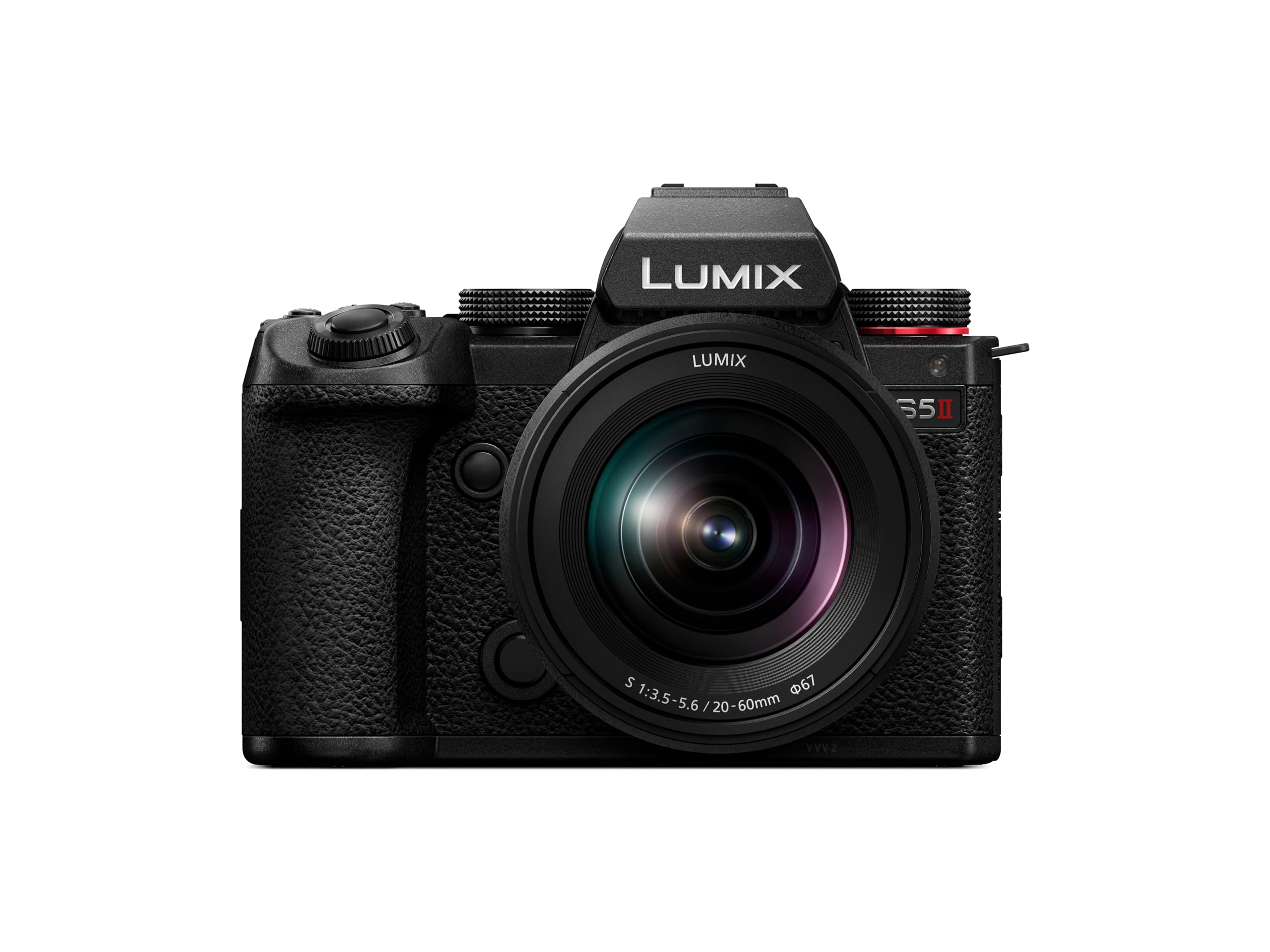
Panasonic solved its long-standing autofocus limitation by introducing Phase Hybrid AF in the S5II, combining phase-detection with contrast detection for fast, accurate tracking. The 24.2MP full-frame sensor delivers 14+ stops of dynamic range with V-Log/V-Gamut capture, and the in-body Active I.S. reduces the need for a gimbal for walking shots. Unlimited 4K 60p 10-bit recording is enabled by an internal fan and heat sink, making it reliable for long shoots.
The L-mount ecosystem offers access to Sigma, Leica, and Panasonic lenses, giving flexibility for different shooting styles. REAL TIME LUT allows in-camera color grading, which is a powerful feature for content creators who want quick, custom looks. The build is solid with good weather sealing.
Battery life is below average for the full-frame class, and the camera’s square design scratches easily. The High ISO performance above 12800 is usable but not class-leading. For hybrid creators who value stabilization, unlimited recording, and color science, the S5II is a standout.
Why it’s great
- Phase Hybrid AF with fast subject tracking
- Active I.S. for handheld walking video
- Unlimited 4K 60p 10-bit recording
Good to know
- Battery life is below average
- Build susceptible to scratches
- High ISO above 12800 is not class-leading
9. Panasonic LUMIX S1RII

The LUMIX S1RII pushes resolution to 44.3MP with a full-frame sensor and adds 8K video recording — Panasonic’s first. The Phase Hybrid AF now includes advanced AI that recognizes human shapes with improved accuracy when multiple subjects intersect. It shoots up to 40fps burst in AFC mode with the electronic shutter, making it capable for sports and wildlife.
The camera supports 32-bit float audio recording through a microphone adapter, which is a professional audio feature rarely found in hybrid cameras. The LUMIX Camera Flow app provides wireless live view and file transfer designed for production environments. For stills shooters who occasionally need 8K video, the S1RII is a niche tool.
Some users report overheating issues during extended video recording, and the low-light autofocus performance lags behind Sony and Canon. The lens ecosystem for L-mount is growing but still limited compared to RF or E-mount. It is a powerful but specialized hybrid for high-resolution applications.
Why it’s great
- 44.3MP sensor with 8K internal recording
- 40fps AFC burst for action photography
- 32-bit float audio support
Good to know
- Overheating reports during extended video
- Low-light AF not class-leading
- Limited L-mount lens selection
10. Sony a7 III

The a7 III has been a benchmark full-frame hybrid since its release, thanks to its 24.2MP Exmor R sensor, 693 phase-detection AF points covering 93 percent of the frame, and 10fps continuous shooting with AE/AF tracking. It delivers 4K video with full pixel readout, and the 15-stop dynamic range provides flexibility in post-production. The NP-FZ100 battery lasts roughly 710 shots — class-leading endurance for a full-frame mirrorless camera.
For photographers transitioning from DSLR or upgrading from APS-C, the a7 III offers a dramatic improvement in low-light performance and autofocus speed. The kit 28-70mm lens is decent for general use but struggles in low light — upgrading to a prime like the Sony 35mm f/1.8 unlocks the camera’s full potential.
The menu system is dense, and the touchscreen functionality is limited compared to newer models. It does not have a fully articulating screen, and 4K 60p is not available. For budget-conscious full-frame buyers who need reliable hybrid performance, the a7 III is still a very solid choice.
Why it’s great
- Excellent battery life for full-frame
- Fast autofocus with 693 points covering 93%
- Great low-light performance and dynamic range
Good to know
- No 4K 60p video mode
- Limited touchscreen functionality
- Dense menu system
11. Canon EOS R50 Kit
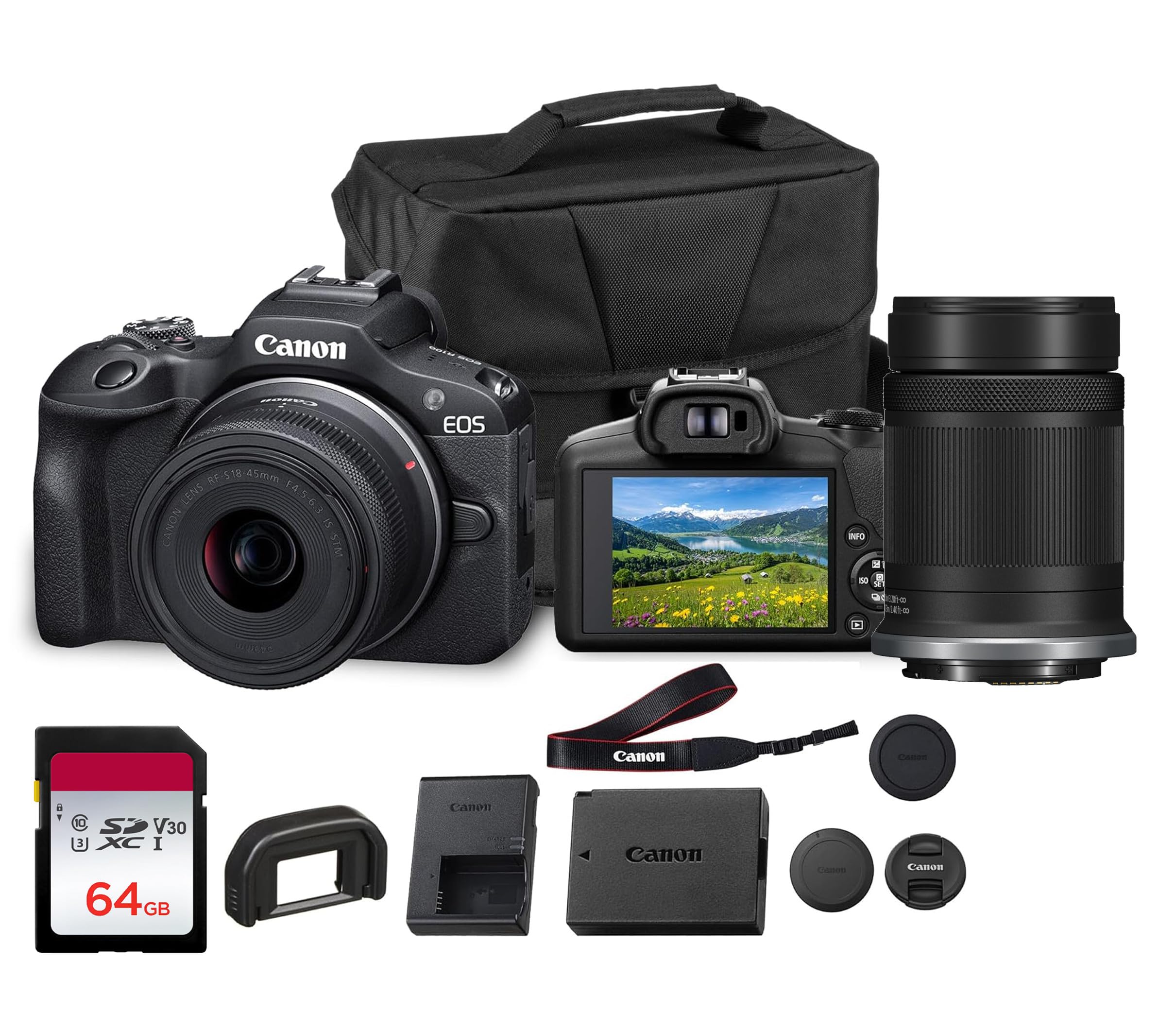
The EOS R50 is Canon’s entry-level APS-C hybrid, featuring a 24.2MP sensor and the brand’s excellent Dual Pixel CMOS AF with subject detection. The kit includes both the RF-S 18-45mm f/4.5-6.3 IS STM standard zoom and the RF-S 55-210mm f/5-7.1 IS STM telephoto zoom, plus a shoulder bag and 64GB memory card. It shoots 4K video at 30fps with minimal crop and has built-in wireless download and iPhone shutter control.
For beginners moving from a phone or compact camera, the R50 is lightweight and easy to learn, with preset scene modes that guide framing and exposure. The dual lens kit covers a versatile range from wide-angle to telephoto, making it a one-purchase solution for travel, portraits, and everyday photography.
The kit lenses have small maximum apertures that limit low-light performance and background blur. The camera lacks IBIS, relying on lens-based stabilization. An upgrade to a 50mm f/1.8 lens will significantly improve image quality. For a true hybrid entry point with a full kit, the R50 is a practical choice.
Why it’s great
- Complete kit with two zoom lenses and accessories
- Lightweight body with easy-to-learn controls
- Dual Pixel CMOS AF for reliable autofocus
Good to know
- Kit lenses are slow (f/4.5-7.1)
- No IBIS
- No internal flash
12. OM SYSTEM E-M10 Mark IV

The E-M10 Mark IV is a Micro Four Thirds camera that prioritizes portability and image stabilization. Its 20MP Live MOS sensor and 5-axis IBIS rated at 4.5 stops allow handheld shooting at shutter speeds as slow as 1 second. The silver retro design with interchangeable lenses is stylish and compact — paired with the 14-42mm EZ pancake lens, it fits in a jacket pocket.
This camera includes a flip-down monitor with a dedicated selfie mode and 16 art filters including Instant Film for a nostalgic look. Autofocus uses 121 contrast-detection points, which is adequate for general shooting but slower than modern phase-detection systems. For beginners who want a lightweight travel camera with great stabilization, the E-M10 Mark IV is a fun and capable option.
The app-based WiFi transfer is slow and inconvenient for on-the-go sharing. The burst rate is limited, and 4K video quality is basic compared to APS-C rivals. It does not include USB-C charging or an external charger. It is an ideal entry-level hybrid for portability and stabilization, not for action or professional video.
Why it’s great
- Extremely compact and pocketable with pancake lens
- 4.5-stop IBIS for steady handheld shots
- Fun art filters and selfie mode
Good to know
- Contrast-detection AF is slower than phase-detection
- Slow WiFi transfer via app
- No USB-C charging included
13. Sony ZV-E10
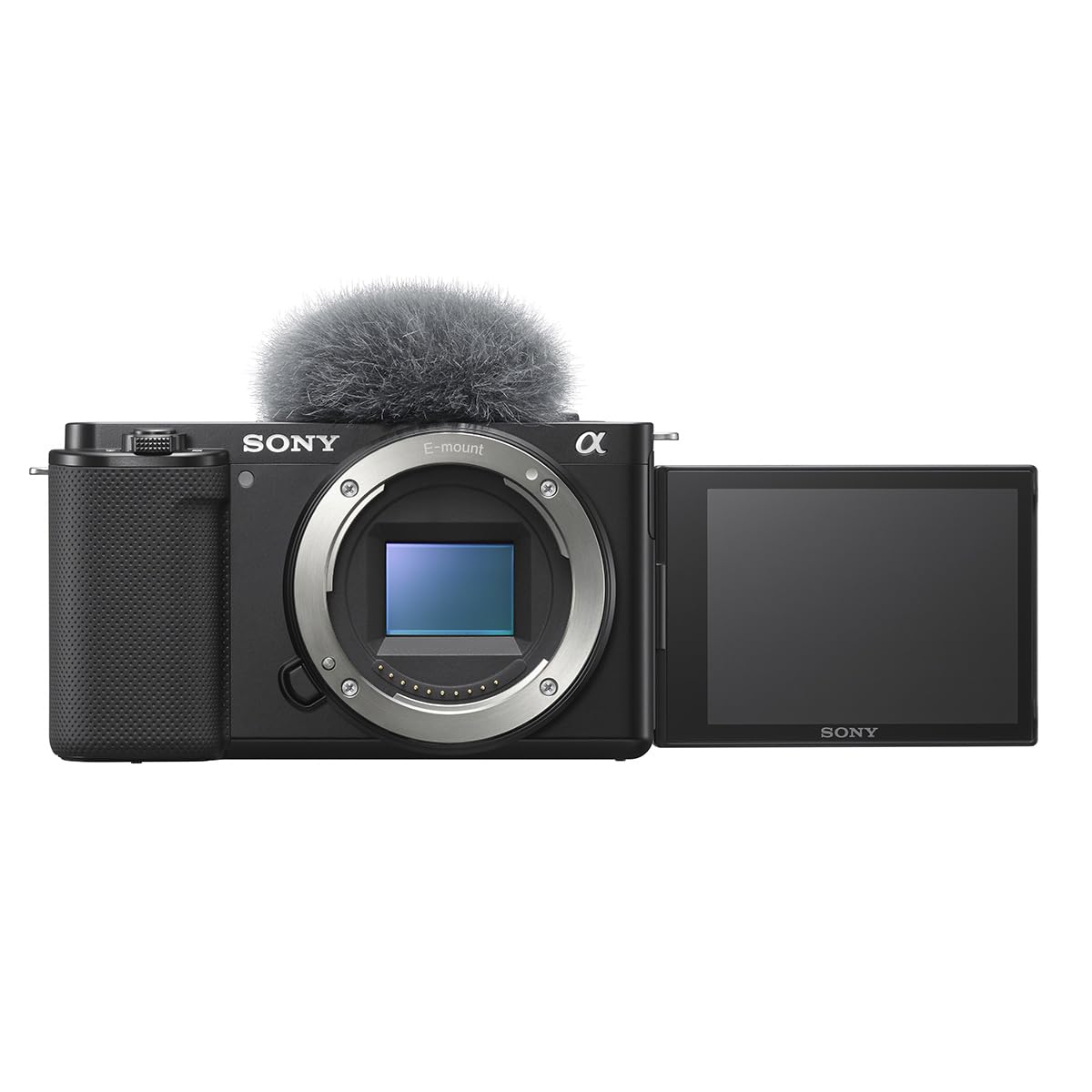
The ZV-E10 is Sony’s dedicated vlogging hybrid, built around the 24.2MP APS-C sensor and BIONZ X processor that produce sharp 4K video oversampled from 6K with full pixel readout. It features a Product Showcase mode that smoothly transitions focus from face to object, and a Background Defocus button for instant shallow depth of field. The 425-point phase-detection autofocus with Real-time Eye AF is fast and reliable when paired with native lenses.
The camera includes a 3.5mm mic input, an articulating screen, and UVC/UAC support for plug-and-play live streaming without extra hardware. It is lightweight and simple to set up — an excellent upgrade from an iPhone for YouTube content creators who want interchangeable lenses.
The ZV-E10 has severe rolling shutter in 4K, no in-body stabilization, and a small LCD that really needs an external monitor. 4K 30p disables the face/eye tracking AF, and the battery lasts roughly 25 minutes in 4K recording. It also lacks a viewfinder. For vloggers who can work around these limitations, it is a powerful tool, but it is not a general purpose hybrid body.
Why it’s great
- Excellent 4K oversampled quality with fast AF
- Product Showcase mode for vlogging
- Plug-and-play USB streaming
Good to know
- Severe rolling shutter in 4K
- No IBIS — needs post stabilization crop
- Short battery life in 4K recording
FAQ
Is a full-frame sensor necessary for hybrid shooting?
What does 10-bit 4:2:2 mean for video?
How important is IBIS for video recording?
Final Thoughts: The Verdict
For most hybrid shooters, the best hybrid camera winner is the Sony Alpha 6700 because it delivers the most advanced autofocus with AI subject tracking in a compact APS-C body that shoots 4K 120p. If you want full-frame resolution with professional video features, grab the Sony Alpha 7 IV. And for the absolute highest stills resolution with 8K video in a single body, nothing beats the Canon EOS R5.

Mo Maruf
I created WellFizz to bridge the gap between vague wellness advice and actionable solutions. My mission is simple: to decode the research and give you practical tools you can actually use.
Beyond the data, I am a passionate traveler. I believe that stepping away from the screen to explore new environments is essential for mental clarity and physical vitality.