Our readers keep the lights on and my smoothie glass nicely filled. As an Amazon Associate, I earn from qualifying purchases.
The search for a capable camera that doesn’t drain your wallet often leads to a pile of disappointing compromises: grainy low-light shots, sluggish autofocus that misses the moment, and digital zoom that turns distant subjects into a pixelated mess. A true bargain isn’t just a low sticker price—it’s the balance of reliable autofocus, usable zoom range, and decent sensor resolution that actually improves on your smartphone.
I’m Mohammad Maruf — the founder and writer behind WellFizz. I’ve spent countless hours analyzing sensor specs, lens configurations, and user feedback across dozens of entry-level camera models to pinpoint which ones deliver real-world performance without demanding a premium budget.
Whether you’re documenting family trips, starting a vlog, or exploring photography fundamentals, finding the best bargain digital camera means prioritizing fast autofocus, sturdy build quality, and reliable image stabilization over inflated megapixel claims.
How To Choose The Best Bargain Digital Camera
Navigating the budget camera aisle requires a clear head and a focus on specs that actually matter. Entry-level cameras often feature boastful megapixel numbers and dramatic zoom claims, but a sharp image starts with the lens, sensor, and processor—not the marketing sheet. Below are the critical factors that separate a true bargain from a costly mistake.
Optical Zoom vs. Digital Zoom: The Real Reach
Optical zoom uses the lens glass to magnify the image without losing resolution—this is the spec you want. A 6X or 12X optical zoom brings distant subjects into clear view. Digital zoom, by contrast, simply crops and enlarges the image inside the camera, resulting in a pixelated, soft picture. When you see zoom numbers in the double digits, check whether “optical” or “digital” is attached. Many budget cameras list the digital zoom figure prominently while burying the optical spec.
Autofocus System: Contrast vs. Phase Detection
Two autofocus technologies dominate the budget tier. Contrast detection (CDAF) hunts for the sharpest contrast in the frame—it works fine for static subjects but tends to “search” in low light or during video recording. Phase detection (PDAF) measures the light path directly, offering snappier focus for moving subjects and smoother video transitions. Phase detection is rare in bargain cameras but transforms the shooting experience. Look for cameras that explicitly mention PDAF or “hybrid autofocus” if you plan to capture kids, pets, or action scenes.
Image Stabilization: Optical vs. Electronic
Handheld shots at full zoom or in dim light are prone to blur. Optical image stabilization (OIS) physically moves a lens element to compensate for shake, preserving image sharpness. Electronic stabilization (EIS) applies a software crop and correction, which can degrade the field of view. Cameras with genuine OIS—like the Kodak model with its 25X zoom—will consistently deliver cleaner stills and steadier video. For vlogging or walkaround shooting, OIS is worth the small premium over EIS-only models.
Sensor Resolution and Native Megapixels
Many budget cameras advertise 48MP or 64MP, but these figures often come from software interpolation (guessing extra pixels) or tiny sensors that can’t physically resolve that level of detail. A 16MP or 20MP sensor with decent CMOS technology will usually outperform an interpolated 64MP sensor in color accuracy, dynamic range, and low-light noise. The true measure of sensor quality is the size of the sensor itself—larger APS-C or 1-inch sensors gather more light than the small 1/2.3-inch sensors common to entry-level compacts.
Quick Comparison
On smaller screens, swipe sideways to see the full table.
| Model | Category | Best For | Key Spec | Amazon |
|---|---|---|---|---|
| Canon EOS R100 | Mirrorless | Learning photography | 24.1MP APS-C sensor | Amazon |
| Canon PowerShot ELPH 360 HS | Point & Shoot | Pocket travel camera | 20.2MP CMOS / 12X optical zoom | Amazon |
| Kodak PIXPRO AZ255-BK | Point & Shoot | Long-distance zoom | 16MP sensor / 25X optical zoom | Amazon |
| THPACIP 4K Camcorder | Camcorder | Video-centric use | 4K 30fps / 18X digital zoom | Amazon |
| Nsoela 5K Touch Camera | Point & Shoot | Vlogging with touchscreen | 6X optical zoom / 2.8″ touchscreen | Amazon |
| FACLAM 4K WiFi Camera | Point & Shoot | WiFi sharing | 64MP sensor / 16X digital zoom | Amazon |
| Saneen 8K Camera | Point & Shoot | High-resolution stills | 8K video / 18X digital zoom | Amazon |
| Jukanur 5K Camera | Point & Shoot | Beginner value | 6X optical zoom / 64GB card | Amazon |
| VJIANGER 64MP Vlog Camera | Point & Shoot | Manual focus learning | 52mm filter lens / 16X digital zoom | Amazon |
In‑Depth Reviews
1. Canon EOS R100 Mirrorless Camera

The Canon EOS R100 sits at the top of the bargain tier because it brings a true APS-C sensor and interchangeable lens capability to a price point where most competitors offer fixed-lens compacts. The 24.1 megapixel CMOS sensor captures noticeably more detail and dynamic range than the smaller 1/2.3-inch sensors found in budget point-and-shoots. Dual Pixel CMOS AF with human, animal, and vehicle detection gives you 143 phase-detection autofocus points—a huge leap ahead of the contrast-detection systems common at this level.
Its 4K video recording at 24fps is capped by modern standards, but the Full HD at 60fps and 120fps HD slow-motion options offer genuine creative flexibility. The DIGIC 8 processor handles continuous shooting at 6.5 fps, enough for casual action sequences. The RF-S 18-45mm kit lens provides a versatile standard zoom range with optical image stabilization, though the maximum aperture of f/4.5-6.3 means you’ll want good light for the sharpest results.
Build quality is what you’d expect from Canon’s entry-level mirrorless line: lightweight polycarbonate body with a comfortable grip, but no in-body stabilization. The compact form factor makes it an easy everyday carry, and the intuitive menu system welcomes beginners without overwhelming them. Battery life is adequate for a day of casual shooting, but the lack of a bundled charger in some kits is a minor inconvenience.
Why it’s great
- Large APS-C sensor delivers superior image quality over smaller sensor competitors
- Phase-detection autofocus with eye/face/animal tracking keeps moving subjects sharp
- Interchangeable RF mount opens long-term upgrade path with native lenses
Good to know
- 4K video limited to 24fps with a significant crop factor
- No in-body image stabilization, relies on lens-based OIS
- Single SD card slot and no weather-sealing
2. Canon PowerShot ELPH 360 HS
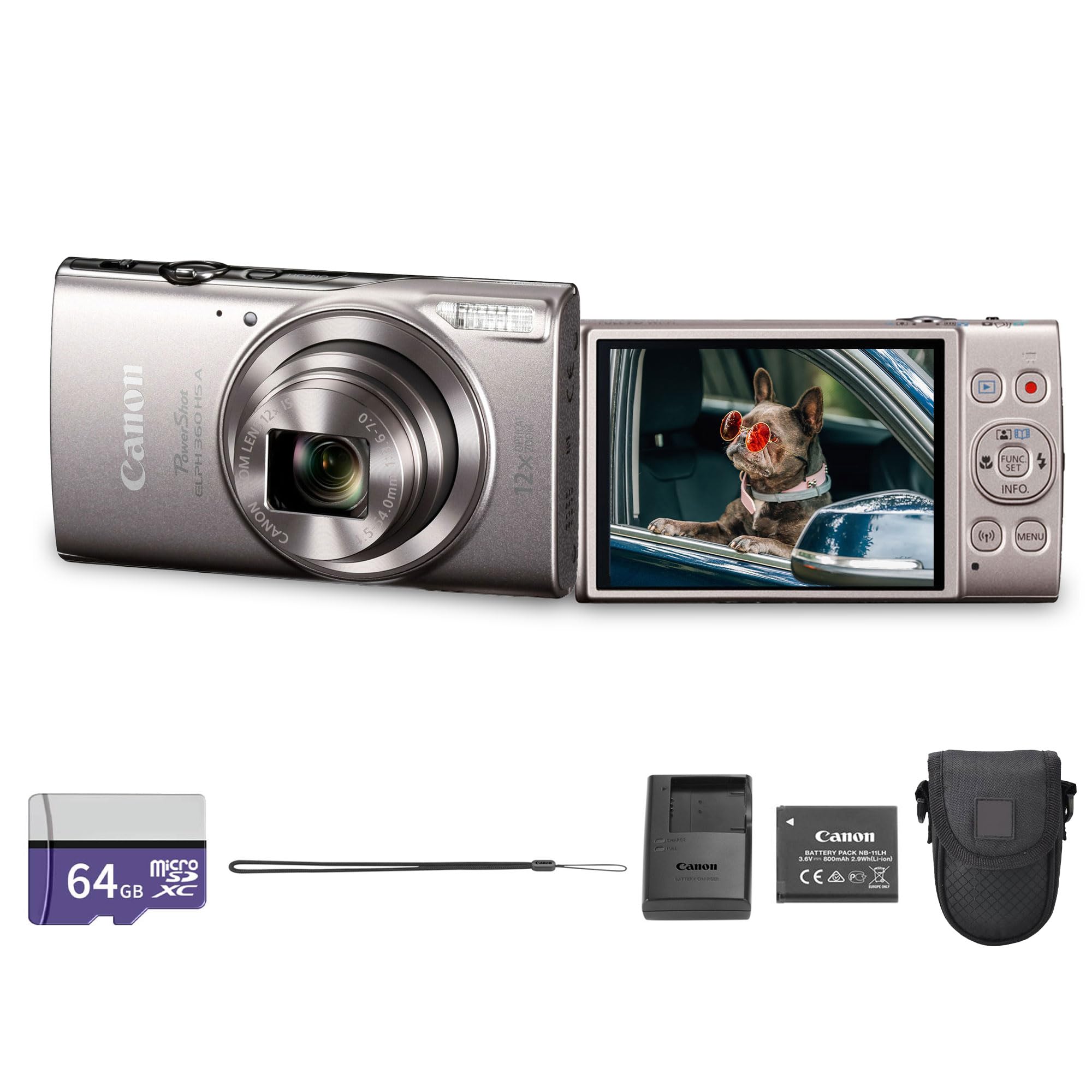
The Canon PowerShot ELPH 360 HS is the quintessential pocket point-and-shoot: a 20.2MP CMOS sensor paired with a 12x optical zoom (25-300mm equivalent) packed into a jacket-pocket-friendly chassis. This 12x optical range gives you genuine wide-angle to telephoto coverage without any resolution loss, something no digital zoom can replicate. The DIGIC 4+ processor is aging but still capable of producing vibrant, noise-controlled images at ISO settings up to 3200 in good light.
Built-in Wi-Fi with NFC allows quick wireless image transfers to your smartphone, and the camera doubles as a simple remote-controlled device via the Canon Camera Connect app. The 3.0-inch LCD with 461k dots is bright enough for outdoor framing, though it lacks touch sensitivity. Creative Shot and Hybrid Auto modes are welcome flourishes for casual shooters who want unique looks straight out of camera without editing.
Image stabilization comes via Intelligent IS, which automatically selects between six different stabilization modes based on the scene. This is particularly valuable when shooting handheld video at the telephoto end of the zoom. The camera shoots 1080p Full HD at 30fps with continuous autofocus, making it a reliable companion for family events and travel vlogs where portability is king.
Why it’s great
- True 12X optical zoom with OIS gives clear reach without pixelation
- Pocketable design with Wi-Fi for instant social sharing
- Intelligent IS adjusts stabilization automatically for video and stills
Good to know
- No 4K video recording; tops out at 1080p 30fps
- Battery not included in box; uses rechargeable NB-11LH
- 1/2.3-inch sensor struggles in dim lighting compared to larger sensors
3. Kodak PIXPRO AZ255-BK

The Kodak PIXPRO AZ255-BK stands out in the bargain segment with a full 25X optical zoom lens (24-600mm equivalent) combined with optical image stabilization—an unusually powerful reach for the price. The 16-megapixel CMOS sensor is modest by today’s standards, but the real advantage here is the optical zoom range. You can fill the frame with distant wildlife, stage performers, or mountain details while maintaining sharpness that no digital zoom can touch.
Operationally, the camera relies on contrast-detection autofocus, which is adequate for static scenes but will hunt for focus when tracking fast-moving subjects. The 3-inch LCD is usable but low-resolution by modern standards. One practical quirk is that it runs on four AA batteries—a double-edged sword: you can replace them anywhere in the world, but you’ll want to stock up on high-capacity NiMH rechargeable cells to keep costs down.
Photography beginners will find the PASM (Program, Aperture Priority, Shutter Priority, Manual) modes helpful for learning exposure fundamentals without diving into full mirrorless complexity. The camera also shoots 1080p Full HD video, though the electronic stabilization is noticeably less effective than the optical system used for stills. For users who prioritize zoom reach above all else at a budget-friendly price, the AZ255 delivers surprisingly clean glass at the long end.
Why it’s great
- 25X optical zoom with OIS provides exceptional telephoto reach
- 24mm wide-angle covers broad landscapes and group shots
- Manual control modes offer a genuine photography learning experience
Good to know
- AA batteries required; no rechargeable pack included
- Contrast-detect autofocus struggles in low light and with motion
- Small 1/2.3-inch sensor limits dynamic range and low-light performance
4. THPACIP 4K Camcorder
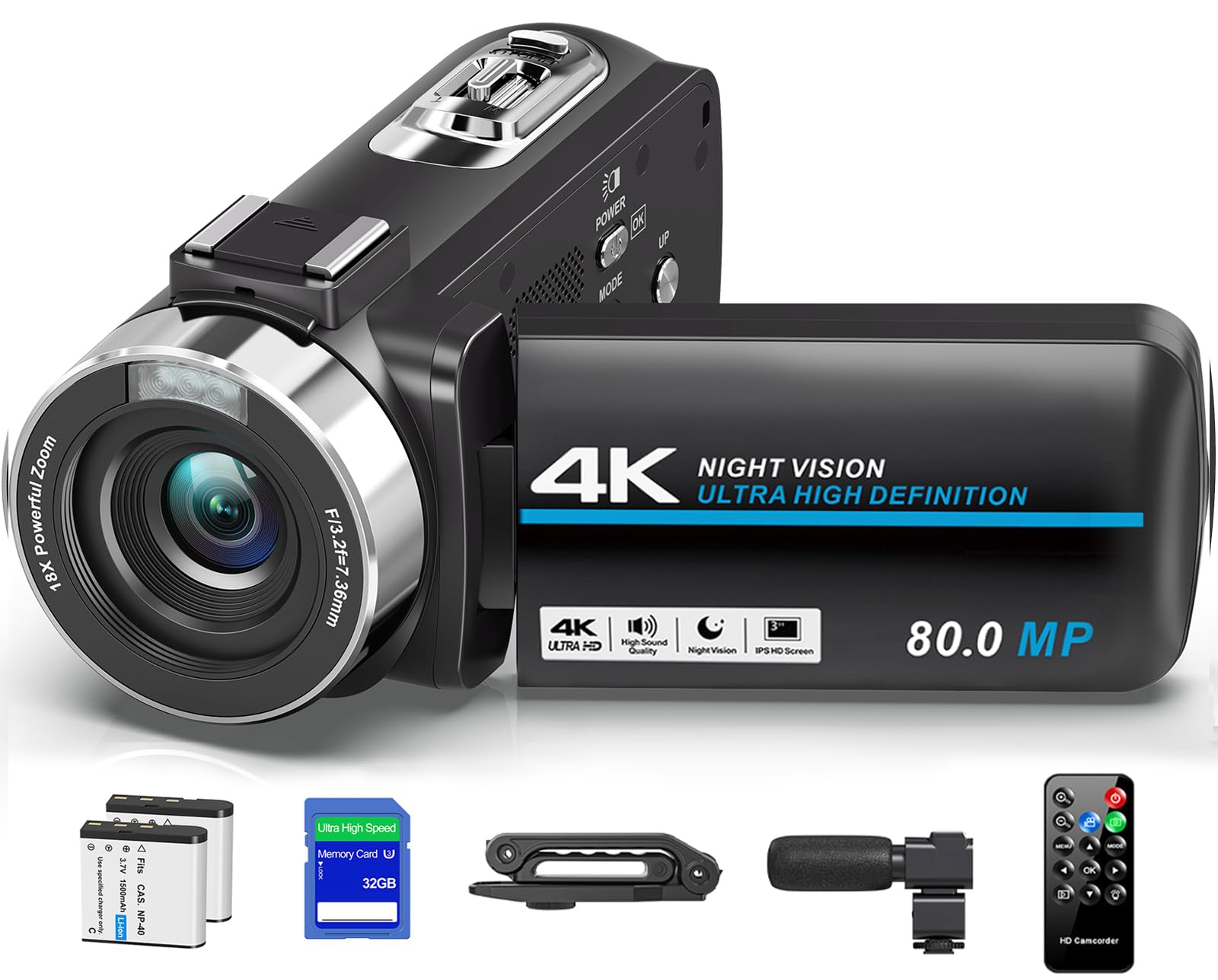
If video is your primary use case, the THPACIP 4K camcorder deserves serious attention at this price tier. It records true 4K UHD at 30fps and captures 80-megapixel still images, though the still resolution is software-enhanced. The camcorder form factor includes a 270-degree rotatable 3-inch IPS screen, an IR night vision mode that records black-and-white footage in complete darkness, and a bundled handheld stabilizer grip that noticeably smooths out walking shots.
The kit is remarkably generous: two 1500mAh rechargeable batteries (each good for about 65 minutes of 4K recording), a 32GB SD card, an external clip-on microphone to improve audio over the built-in mic, and a remote control for tripod-mounted self-portraits or group shots. The 18X digital zoom is purely electronic, so you’ll want to stay within optical range for the best image quality. The external microphone jack is a welcome find at this price—it allows you to upgrade audio quality for vlogs or interviews.
Manual focus is the primary focusing method here, which can be a limitation for beginner videographers who expect continuous autofocus. The touchscreen LCD is responsive for menu navigation and settings adjustment. For users who want a dedicated video tool with night vision capability and a complete accessory bundle, this camcorder offers impressive feature density at a mid-range price.
Why it’s great
- True 4K 30fps video recording with usable detail in daylight
- IR night vision mode for black-and-white capture in total darkness
- Comprehensive kit with external mic, grip stabilizer, and remote control
Good to know
- Manual focus only; no continuous autofocus for video
- 18X digital zoom degrades quality; no optical zoom range
- Built-in microphone picks up handling noise; external mic recommended
5. Nsoela 5K Touch Camera
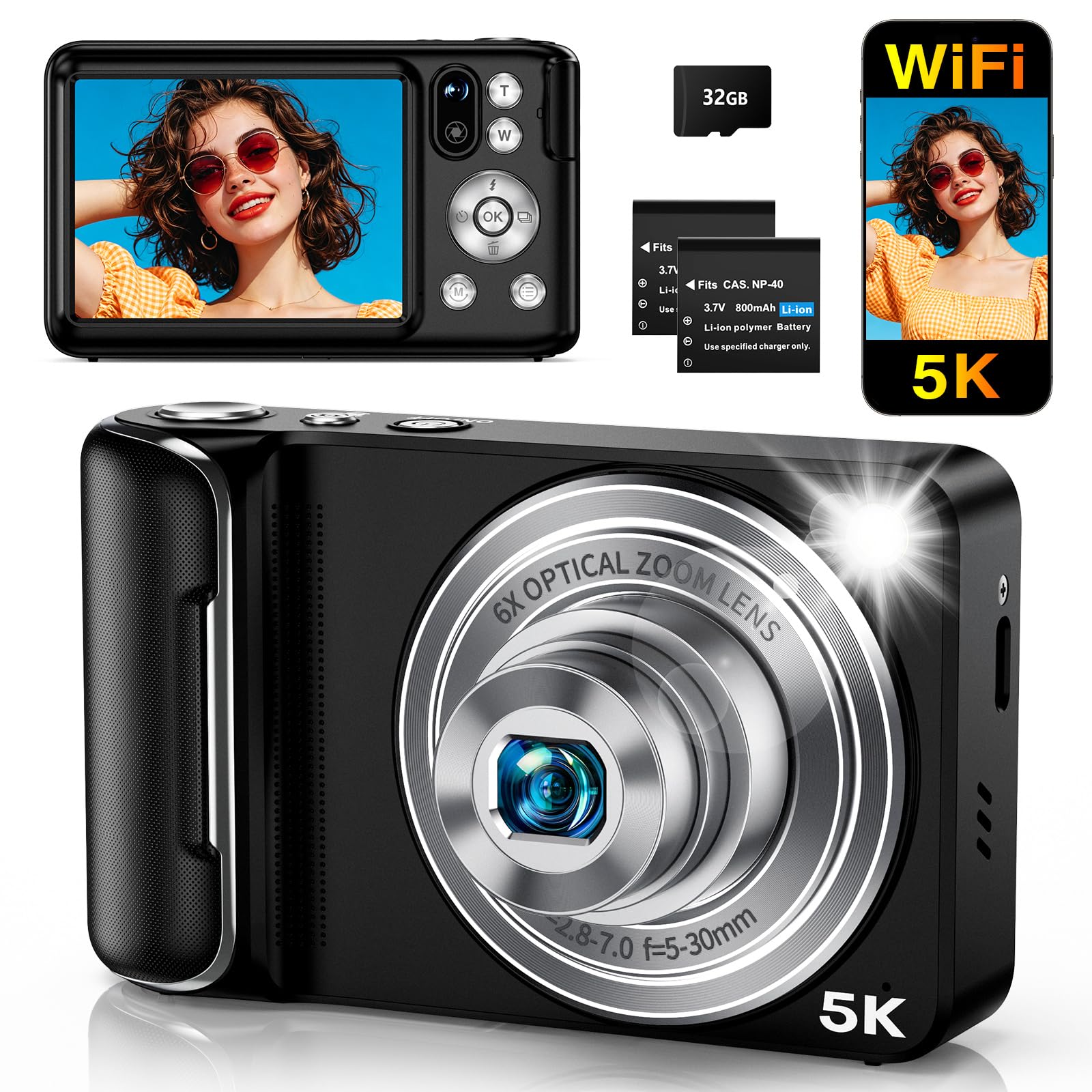
The Nsoela 5K camera brings a rare combination to the bargain segment: a 6X optical zoom lens paired with a 2.8-inch IPS touchscreen. The touch interface supports pinch-to-zoom during playback and intuitive gesture navigation, which is a major usability upgrade over the button-based menus found on most budget cameras. It records 5K video and captures 64MP stills, with a dual-lens front setup designed specifically for selfie and vlog recording.
Built-in Wi-Fi enables remote control via the Viipulse app and one-tap downloads of original-quality files to your phone. The camera also doubles as a webcam over USB-C, switching between front and rear lenses for live streaming. The auto-opening dust- and scratch-resistant lens cover is a thoughtful design detail—no more lost lens caps. Two rechargeable batteries and a 32GB card are included, and the record-while-charging feature means you can power it from a USB power bank during long recording sessions.
Image stabilization is achieved through built-in axis stabilization, which reduces handheld shake noticeably at full zoom. The autofocus system uses contrast detection, so it performs best in even lighting. Some user reports mention occasional zoom mechanism jams, though this appears to be a quality-control variance rather than a design-wide flaw. For vloggers and casual content creators who value an intuitive touch interface, this is a strong mid-range contender.
Why it’s great
- 2.8-inch IPS touchscreen with pinch-to-zoom for intuitive playback
- 6X optical zoom preserves image quality at telephoto distances
- Record-while-charging via USB-C enables all-day shooting with a power bank
Good to know
- Contrast-detect autofocus can hunt in low-contrast or dim scenes
- Occasional reports of zoom mechanism binding; quality control varies
- 5K video is interpolated; not native 5K from the sensor
6. FACLAM 4K WiFi Camera
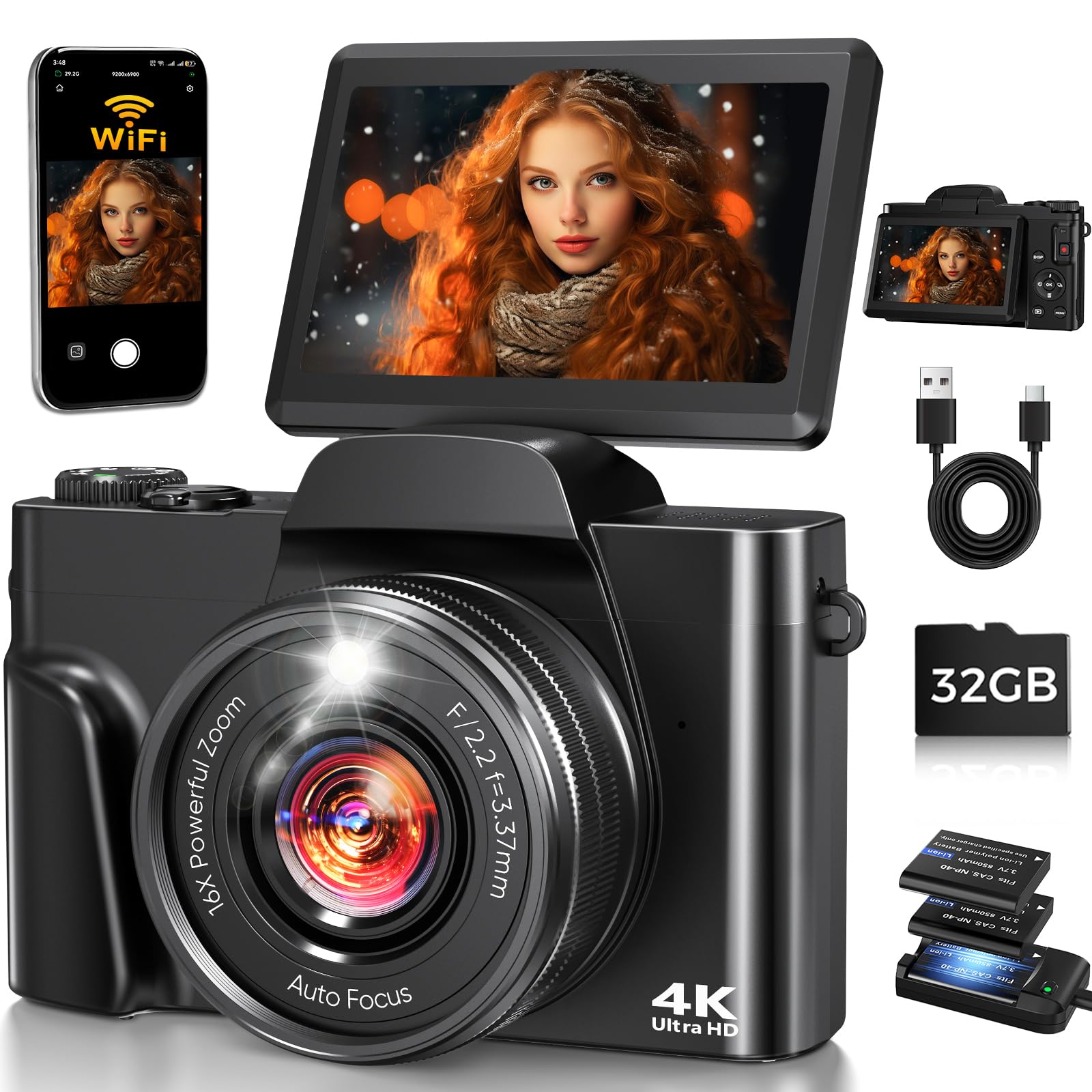
The FACLAM 4K camera offers one of the more advanced autofocus systems in its peer group: phase detection autofocus (PDAF) instead of the typical contrast detection. This translates to faster subject locking and more reliable focus during video recording, a meaningful advantage when filming moving subjects or changing compositions. The 64MP sensor and 4K UHD video capability are complemented by a 180-degree flip screen for self-framing and vlogging.
Built-in Wi-Fi with the companion app supports both file transfer and remote camera control, letting you frame shots from your phone or trigger the shutter from across the room. The 16X digital zoom is less useful for print-quality work but can help identify distant subjects on the LCD. The kit includes two rechargeable batteries and a 32GB memory card, along with a USB-C cable and carrying bag. Users consistently praise the sharp, vibrant image quality and intuitive controls.
The top-mounted mode dial provides quick switching between photo, video, slow motion, and filter modes—a small but significant ergonomic win for beginners learning to shoot in different scenarios. Battery life is solid for a full day of casual shooting, and the lightweight body (roughly 0.57 pounds) makes it an easy travel companion. For buyers seeking PDAF performance at an entry-level price point, this model delivers a noticeably better autofocus experience than CDAF alternatives.
Why it’s great
- Phase detection autofocus locks focus faster than contrast-detect rivals
- 180-degree flip screen ideal for selfie framing and vlog recording
- Built-in Wi-Fi with companion app for remote control and file transfer
Good to know
- 16X digital zoom only; no optical zoom for premium sharpness
- Small 1/2.53-inch sensor limits low-light performance
- No viewfinder; relies entirely on the 3-inch LCD screen
7. Saneen 8K Camera
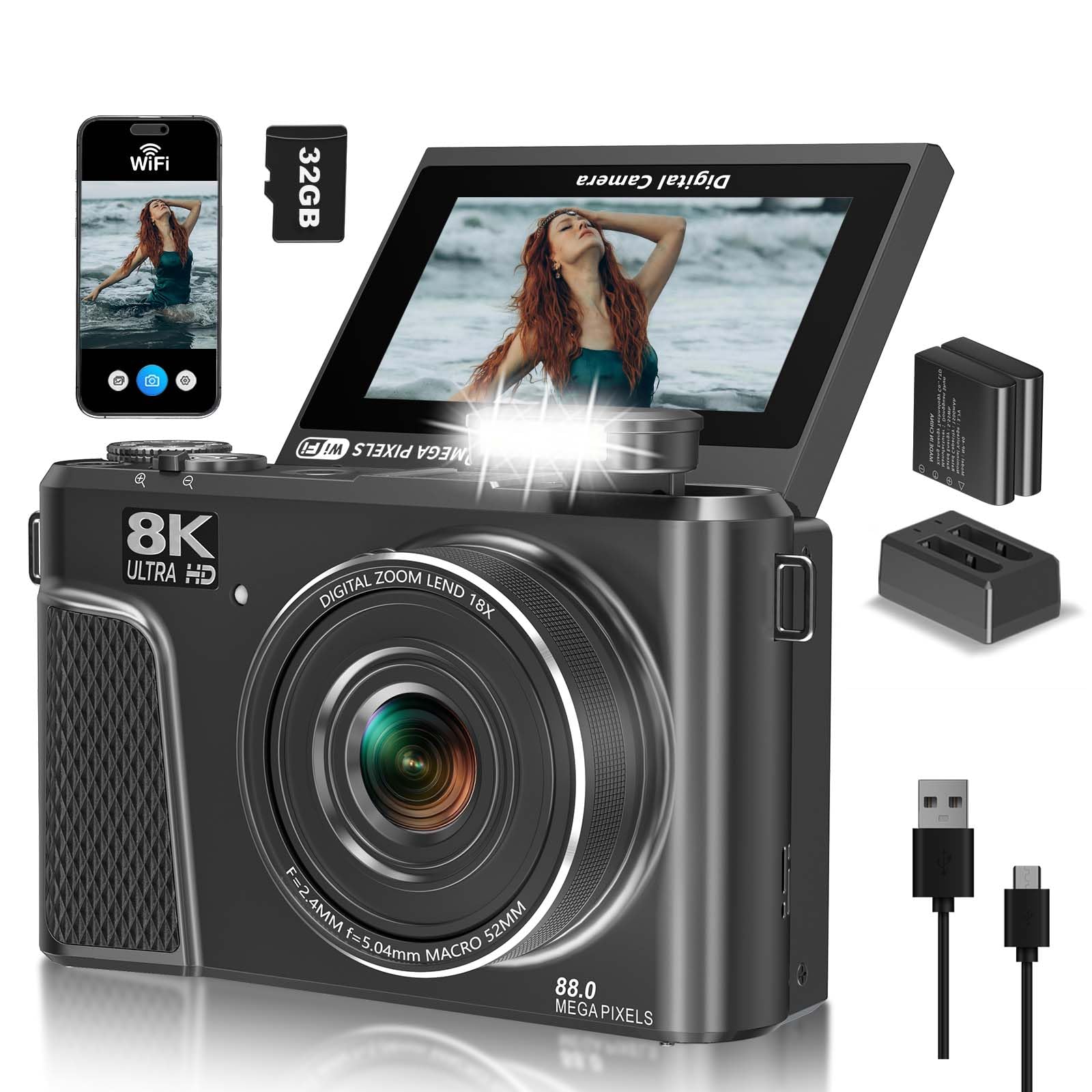
The Saneen 8K camera markets itself on eye-catching resolution figures—8K video and 88MP stills—but the practical value here lies in the built-in features that make shooting easier for beginners. The 3-inch LCD flips 180 degrees for selfie and vlog framing, and the integrated fill light helps illuminate faces in low-light environments without requiring an external flash. The included beauty mode smooths skin tones, which is popular among younger content creators shooting directly for social platforms.
Built-in Wi-Fi handles quick photo and video transfer to your smartphone for immediate social sharing, and the camera can function as an HD webcam via USB for live streaming or video calls. The 18X digital zoom provides framing flexibility, though image quality at the long end is soft. The kit includes two rechargeable batteries rated at roughly 50 minutes each for 8K recording, a 32GB memory card, and a carrying case.
Autofocus is contrast-detection based and performs well in good lighting but can struggle in dimmer environments. The low-light performance is limited by the small sensor size—while the built-in fill light helps for close subjects, wide low-light scenes will show visible noise. For users who prioritize high-resolution numbers, an easy sharing workflow, and a flip screen for self-taping, this is a budget-friendly entry point. The gunmetal finish gives it a slightly more premium look than the typical black plastic body.
Why it’s great
- Built-in fill light and beauty mode for flattering self-portraits in dim conditions
- WiFi transfer and webcam function for easy content sharing and streaming
- 180° flip screen simplifies vlogging and selfie composition
Good to know
- 8K resolution is interpolated, not native sensor output
- 180° flip screen cannot rotate inward for screen protection when stored
- Battery life drops significantly when shooting 8K video
8. Jukanur 5K Camera
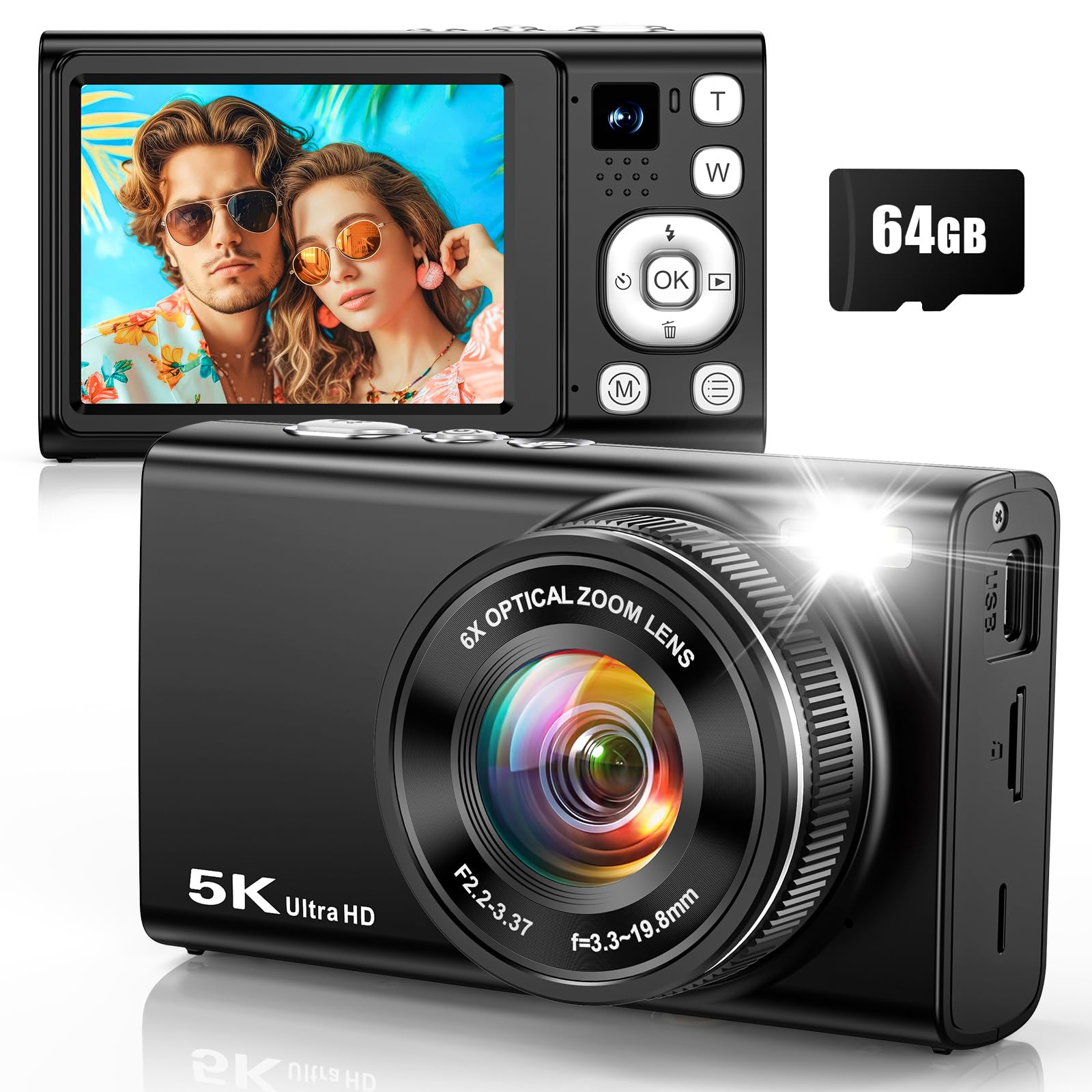
The Jukanur 5K camera is built around a 6X optical zoom lens and an IMX415 CMOS sensor, offering genuine zoom reach without the resolution loss of digital-only systems. It records 5K video (5120×2880) and interpolates stills up to 96MP. The dual-lens design includes a front-facing lens for selfies, and the built-in anti-shake system helps stabilize handheld shots, particularly useful at the telephoto end of the 6X zoom.
This camera ships with a generous 64GB micro memory card—double the storage capacity of most competitors in this tier—and a built-in rechargeable battery that eliminates the need for separate battery installation. The kit includes a storage bag, lanyard, USB cable, and adapter. Users consistently note the lightweight, portable design (roughly 0.5 pounds) that makes it easy to pack for travel or daily carry. The date/time stamp feature and various creative filters add flexibility for casual use.
The autofocus system has drawn mixed feedback: some users report fast, accurate locking, while others note a 50% blurry rate, suggesting quality control variance. The sensor size is small (1/2.8-inch typical of budget cameras), so low-light performance is limited despite the built-in flash. For absolute beginners, kids, or seniors who want a simple point-and-shoot with optical zoom and a large bundled memory card, this is a solid entry-level choice. The 18-month replacement warranty provides added confidence for first-time camera buyers.
Why it’s great
- 6X optical zoom with anti-shake for clear telephoto handheld shots
- Includes a large 64GB microSD card for extensive storage out of the box
- Front and rear dual-lens design for easy selfie and vlog capture
Good to know
- Autofocus reliability inconsistent between individual units
- Sensor struggles in low light; best results in bright outdoor conditions
- Battery lasts approximately 2 hours of active use
9. VJIANGER 64MP Vlog Camera
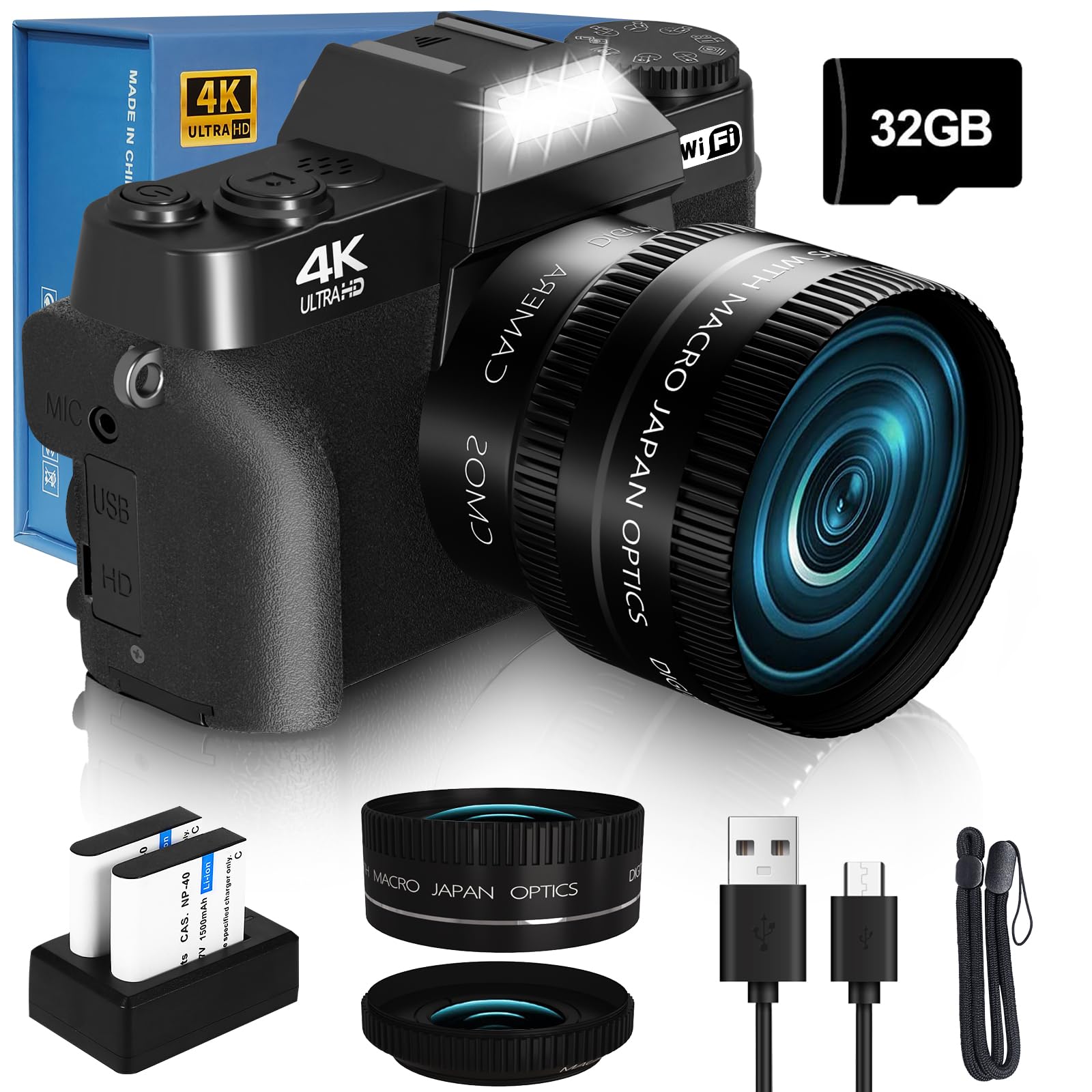
The VJIANGER 64MP camera takes a different approach: it relies on manual focus rather than autofocus, with a focus-assist frame that appears on the display when you half-press the shutter button. This design forces the user to deliberately control when the camera locks focus, which can yield sharper results in static scenes but requires patience and steady hands. The camera comes with a 52mm wide-angle lens and a macro attachment, offering genuine optical versatility that most budget cameras lack.
Built-in Wi-Fi allows wireless image transfer to a smartphone, though the app experience is less polished than more established brands. The 180-degree flip screen is useful for self-framing, and the 16X digital zoom provides framing flexibility at the cost of sharpness. The kit includes two batteries and a 32GB microSD card. Users highlight the durable build, noting it withstands heat, dust, and active work environments better than many plastic-bodied competitors.
The camera measures just 4.3 x 2.96 x 1.2 inches and weighs 0.57 pounds, making it genuinely pocketable. You can also use it as a webcam by connecting via USB and selecting “Camera mode.” The manual focus system can be a barrier for beginners expecting autofocus convenience, but for those who want to learn zone focusing or macro photography on a tight budget, this camera offers unique optical adaptability. The included 52mm threaded lens ring opens up the world of clip-on filters and lens attachments.
Why it’s great
- 52mm filter thread system allows for wide-angle, macro, and other lens attachments
- Manual focus with on-screen aid provides sharp control for static subjects
- Rugged construction stands up to dust and heat better than typical budget models
Good to know
- No autofocus; manual focus only, which challenges beginners
- “Saving photo” delay in manual mode prevents fast action shots
- WiFi app reliability is inconsistent; USB transfer is more reliable
FAQ
Is a 64MP or 88MP camera better than a 20MP camera for under ?
Why do budget cameras still use AA batteries in 2025?
Can a cheap digital camera really outperform a modern smartphone?
What does “5K” or “6K” mean on a budget camera?
Is image stabilization worth paying extra for in a bargain camera?
Final Thoughts: The Verdict
For most users, the best bargain digital camera winner is the Canon EOS R100 because its large APS-C sensor, reliable phase-detection autofocus, and interchangeable lens system provide a genuine upgrade path that no fixed-lens budget camera can match. If you want pocket-sized portability with solid optical zoom reach, grab the Canon PowerShot ELPH 360 HS. And for deep telephoto coverage without a budget-breaking price tag, nothing beats the Kodak PIXPRO AZ255 with its 25X optical zoom and optical stabilization.

Mo Maruf
I created WellFizz to bridge the gap between vague wellness advice and actionable solutions. My mission is simple: to decode the research and give you practical tools you can actually use.
Beyond the data, I am a passionate traveler. I believe that stepping away from the screen to explore new environments is essential for mental clarity and physical vitality.