Our readers keep the lights on and my smoothie glass nicely filled. As an Amazon Associate, I earn from qualifying purchases.
Buying a new television today means navigating a sea of claims about dimming zones, refresh rates, and color volumes—all while staring at a screen that will dominate your living room for the next half-decade. The difference between a pleasant movie night and a truly cinematic experience comes down to the panel technology and processing power under the hood, not the brand name on the bezel.
I’m Mohammad Maruf — the founder and writer behind WellFizz. I’ve spent hundreds of hours analyzing panel specs, dimming algorithms, and real-world HDR performance across every major television line to separate genuine upgrades from marketing fluff.
Here are the models that deliver the best picture quality, gaming performance, and longevity for the money in today’s market, compiled into a clear, no-nonsense guide to finding your ideal 4k tv.
How To Choose The Best 4K TV
The core of any television decision boils down to three pillars: panel technology, processing power, and the ports that connect your gear. Ignore marketing names and focus on what these elements actually deliver in your home.
Panel Technology: Mini-LED vs. OLED vs. QLED
Mini-LED uses thousands of tiny backlights to control brightness in precise zones, offering excellent contrast and high peak brightness for bright rooms. OLED uses self-lit pixels that turn off completely for perfect blacks, ideal for dark-room cinematic viewing but generally less bright. QLED is a marketing term for quantum dot color enhancement, often paired with Mini-LED or standard LED backlights to boost color volume. Your room’s ambient light is the deciding factor—bright rooms favor Mini-LED, dark rooms favor OLED.
Local Dimming Zones: The Contrast Number That Matters
A TV with 64 dimming zones will show visible blooming around bright objects on a dark background. A set with 500 or more zones minimizes this significantly, and models with 2,000-plus zones approach the per-pixel control of OLED. This spec directly determines how “inky” the blacks look during movies with letterbox bars or starfield scenes. Always check the zone count, not just the “local dimming” checkbox.
HDMI 2.1 and Refresh Rate for Gaming
If you connect a PlayStation 5, Xbox Series X, or a gaming PC, HDMI 2.1 is non-negotiable for 4K at 120Hz or 144Hz with Variable Refresh Rate (VRR) to eliminate screen tearing. Two ports is the minimum for a multi-console setup. Also check for Auto Low Latency Mode (ALLM) which switches the TV into game mode automatically when it detects a console signal.
Processor and Upscaling Quality
Most content you watch—cable, YouTube, streaming—is not native 4K. A good processor (Sony’s XR, Samsung’s NQ4, LG’s α9, or TCL’s AiPQ) uses neural networks to clean up and sharpen lower-resolution footage. A weak processor makes 1080p content look soft or noisy on a 4K panel. This is why Sony TVs often look better with standard cable than cheaper alternatives with similar panels.
Quick Comparison
On smaller screens, swipe sideways to see the full table.
| Model | Category | Best For | Key Spec | Amazon |
|---|---|---|---|---|
| Samsung S90F OLED | Premium QD-OLED | Vibrant color & deep blacks | 128 Neural Network AI Processor | Amazon |
| Hisense U7 Mini-LED | Premium Mini-LED | Bright rooms & high-refresh gaming | Native 165Hz / 3000 Nits | Amazon |
| Sony BRAVIA 8 OLED | High-End OLED | Cinematic movies & PS5 gaming | XR Processor / Acoustic Surface | Amazon |
| Panasonic Z8 OLED | Premium OLED | Filmmaker mode & HDR accuracy | HCX Pro AI MKII Processor | Amazon |
| LG C5 OLED evo | Mid-Range OLED | Gaming & 4 HDMI 2.1 ports | α9 AI Processor Gen7 | Amazon |
| Samsung Q8F QLED | Mid-Range QLED | Bright room & AirSlim design | 100% Color Volume Quantum Dot | Amazon |
| TCL QM7K Mini-LED | Mid-Range Mini-LED | Value & precise local dimming | Up to LD2500 Dimming Zones | Amazon |
| iFFALCON 55U85 | Budget Gaming | 144Hz gaming & hotel mode | 4x HDMI 2.1 / 6000:1 Contrast | Amazon |
| Amazon Ember Mini-LED | Mid-Range Mini-LED | Fire TV integration & Alexa | 512 Dimming Zones / 144Hz | Amazon |
| Sony BRAVIA 2 II | Budget Sony | PS5 compatibility & upscaling | 4K Processor X1 / Motionflow | Amazon |
| Roku Plus Series | Budget Mini-LED | Ease of use & free streaming | QLED Mini-LED / Dolby Vision | Amazon |
In‑Depth Reviews
1. Samsung S90F OLED

The Samsung S90F uses a QD-OLED panel that combines quantum dot color volume with self-lit pixel technology, producing some of the most vibrant and accurate colors available outside of professional monitors. The NQ4 AI Gen3 processor with 128 neural networks handles upscaling and motion smoothing intelligently, making lower-resolution content look remarkably sharp. Motion Xcelerator at 144Hz ensures tear-free gaming, and the anti-reflective coating helps maintain contrast in rooms with ambient light.
The Graphite Black chassis is exceptionally thin and rigid, designed for flush wall mounting. Input lag is minimal across all four HDMI ports, and the Tizen-based smart platform offers thousands of free channels through Samsung TV Plus without any subscription. The built-in speakers are decent for casual viewing, but the real strength is the panel’s ability to render HDR content with high brightness and near-infinite contrast.
One caveat is the screen’s fragility—the QD-OLED layer is more susceptible to pressure damage than standard LCD panels, so careful handling during setup is critical. The remote is minimalist and charges via USB-C or solar, but lacks a dedicated previous-channel button, which some users find frustrating. Overall, this is the best combination of brightness and black level for anyone who wants premium performance without stepping up to a reference monitor.
Why it’s great
- Outstanding QD-OLED color volume and contrast
- Excellent upscaling via 128 neural network processor
- 144Hz VRR for smooth gaming performance
Good to know
- Fragile screen edges require careful setup
- Anti-reflective coating can be damaged by improper cleaning
- Minimalist remote lacks a previous channel button
2. Hisense U7 Mini-LED
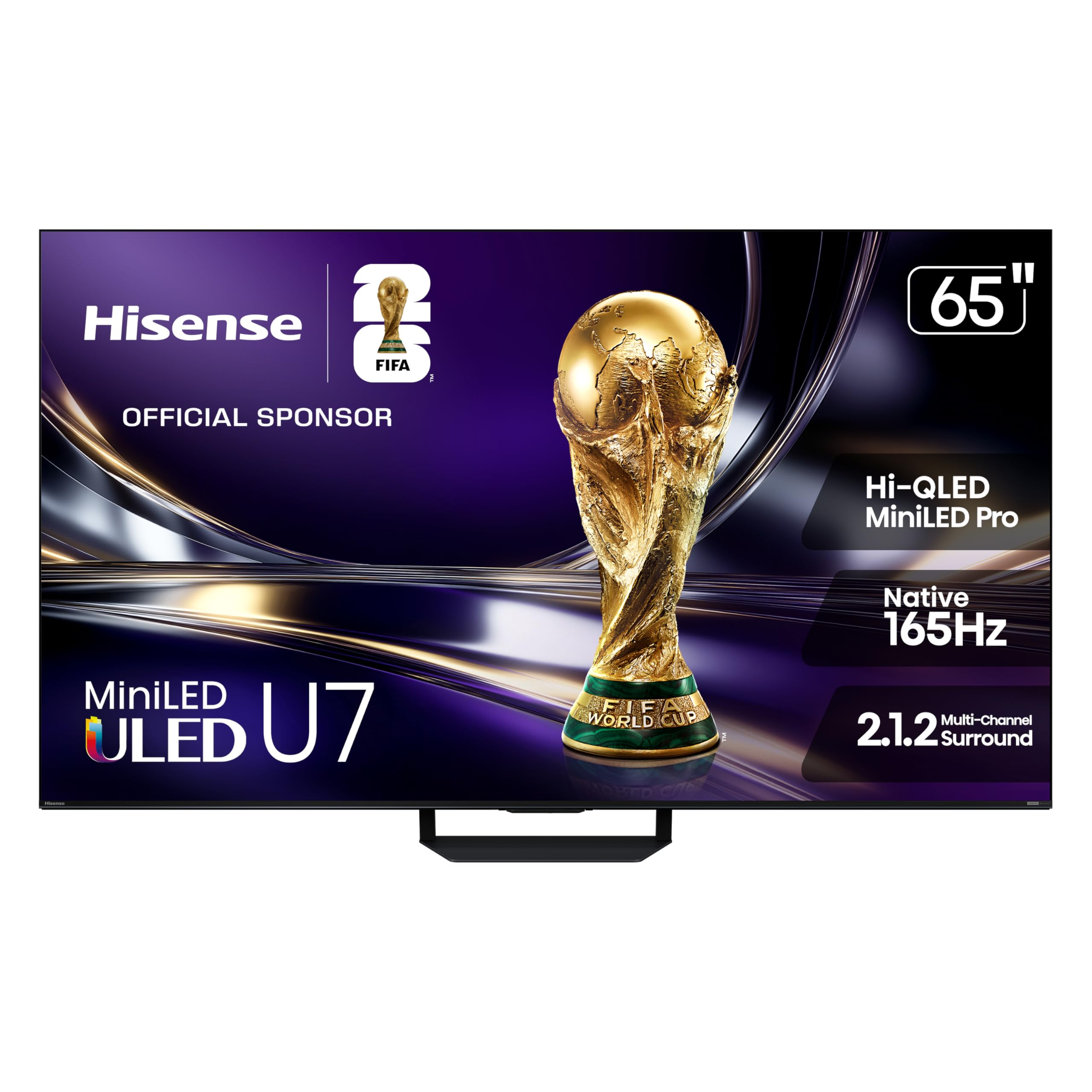
The Hisense U7 is engineered for bright rooms, with an anti-glare layer and peak brightness that can hit up to 3000 nits—enough to overcome direct sunlight through a window. The Hi-QLED MiniLED Pro backlight system with up to 3000 local dimming zones delivers contrast that rivals OLED in all but the deepest blacks, with significantly more headroom for HDR highlights. The native 165Hz refresh rate and VRR up to 330Hz make it one of the smoothest panels for PC gaming and fast-paced sports.
The Hi-View AI Engine Pro processor constantly analyzes scenes and adjusts color, contrast, and sharpness in real time. Filmmaker Mode is available for those who want to bypass processing entirely, and Dolby Vision IQ adapts brightness based on room lighting. The 2.1.2-channel speaker system with Dolby Atmos is surprisingly powerful for built-in audio, though an external soundbar still benefits the experience.
The biggest downside is the Google TV interface, which can feel bloated with pre-installed apps and ads on the home screen. Bluetooth 5.3 is included, but some users have reported lip-sync issues with certain wireless headphones. At its price point, however, the U7 offers brightness and zone control that typically costs significantly more from competitors.
Why it’s great
- Extremely high peak brightness for bright rooms
- Up to 3000 local dimming zones for impressive contrast
- Native 165Hz refresh rate with high VRR range
Good to know
- Google TV interface has pre-loaded ads and bloatware
- Built-in sound is good but benefits from a soundbar
- Some Bluetooth audio lip-sync issues reported
3. Sony BRAVIA 8 OLED

The Sony BRAVIA 8 OLED uses over 8 million self-lit pixels with XR Contrast Booster 15, delivering pure blacks and high brightness that makes HDR content pop without the blooming artifacts seen on Mini-LED displays. The XR Processor is arguably the best in the business for upscaling—it cleans up low-bitrate streaming and standard cable to near-4K quality with impressive detail recovery. Acoustic Surface Audio+ uses the screen itself as a speaker, making dialogue sound like it’s coming directly from the actors’ mouths.
For PlayStation 5 owners, the exclusive Auto HDR Tone Mapping and Auto Genre Picture Mode are genuinely useful, removing the need to fiddle with settings when switching between games and streaming. Game Menu keeps all gaming-related settings in one dashboard. Support for Dolby Vision, Dolby Atmos, IMAX Enhanced, and DTS:X covers every major HDR and audio format. The Google TV interface is clean and integrates well with Google Assistant and AirPlay 2.
The main drawback is that this is strictly a dark-room television—it cannot compete with Mini-LED panels in brightly lit rooms due to lower peak brightness. Some users have reported intermittent sound dropouts through the Google TV apps, which may require a firmware update to resolve. The 77-inch panel is also heavy, requiring sturdy wall mounts and two-person installation.
Why it’s great
- Industry-leading upscaling from lower-resolution sources
- Perfect blacks with excellent HDR brightness for dark rooms
- Exclusive PS5 features and Game Menu integration
Good to know
- Not bright enough for well-lit rooms
- Some users report intermittent audio dropouts in apps
- Heavy panel requires careful installation
4. Panasonic Z8 OLED
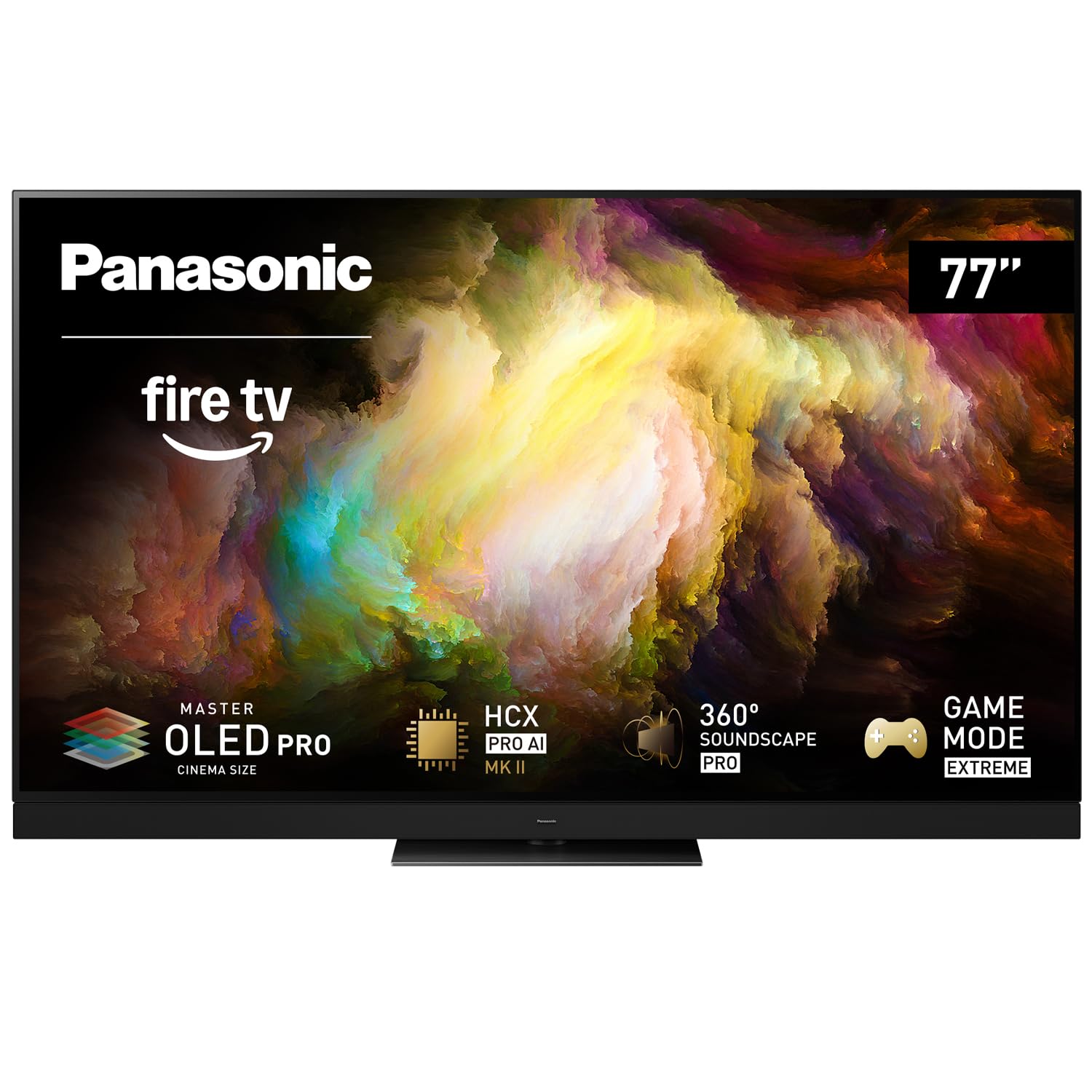
The Panasonic Z8 OLED brings the brand’s renowned color science to a large 77-inch canvas, using a Master OLED PRO panel with micro-lens-array technology for enhanced brightness and contrast. The HCX Pro AI MKII processor is calibrated for color accuracy, making Filmmaker Mode look genuinely reference-grade out of the box. Dolby Vision IQ and HDR10+ Adaptive both adjust to room brightness, ensuring consistent picture quality whether you watch during the day or at night.
The 360 Soundscape Pro audio system, tuned by Technics, includes front-array, upward, and side-firing speakers that create a convincing Dolby Atmos bubble without external speakers. Game Mode Extreme supports HDMI 2.1 with 144Hz, VRR, AMD FreeSync Premium, and NVIDIA G-SYNC, making it fully capable for high-end PC and console gaming. The build quality is robust, with a solid metal stand and premium cabling management.
The biggest limitation is brightness—this panel is not as luminous as Samsung’s QD-OLEDs, so a bright room with direct sunlight will wash out the image. The Fire TV operating system is functional but not as polished as Google TV or webOS, with some users finding the ad placement intrusive. The USB media player is also limited in supported codecs, requiring external streaming devices for some file formats.
Why it’s great
- Reference-grade color accuracy in Filmmaker Mode
- Excellent built-in 360 Soundscape Pro audio system
- Full HDMI 2.1 gaming support with major VRR standards
Good to know
- Lower peak brightness than QD-OLED competitors
- Fire TV OS can feel cluttered with ads
- Limited USB media format support
5. LG C5 OLED evo
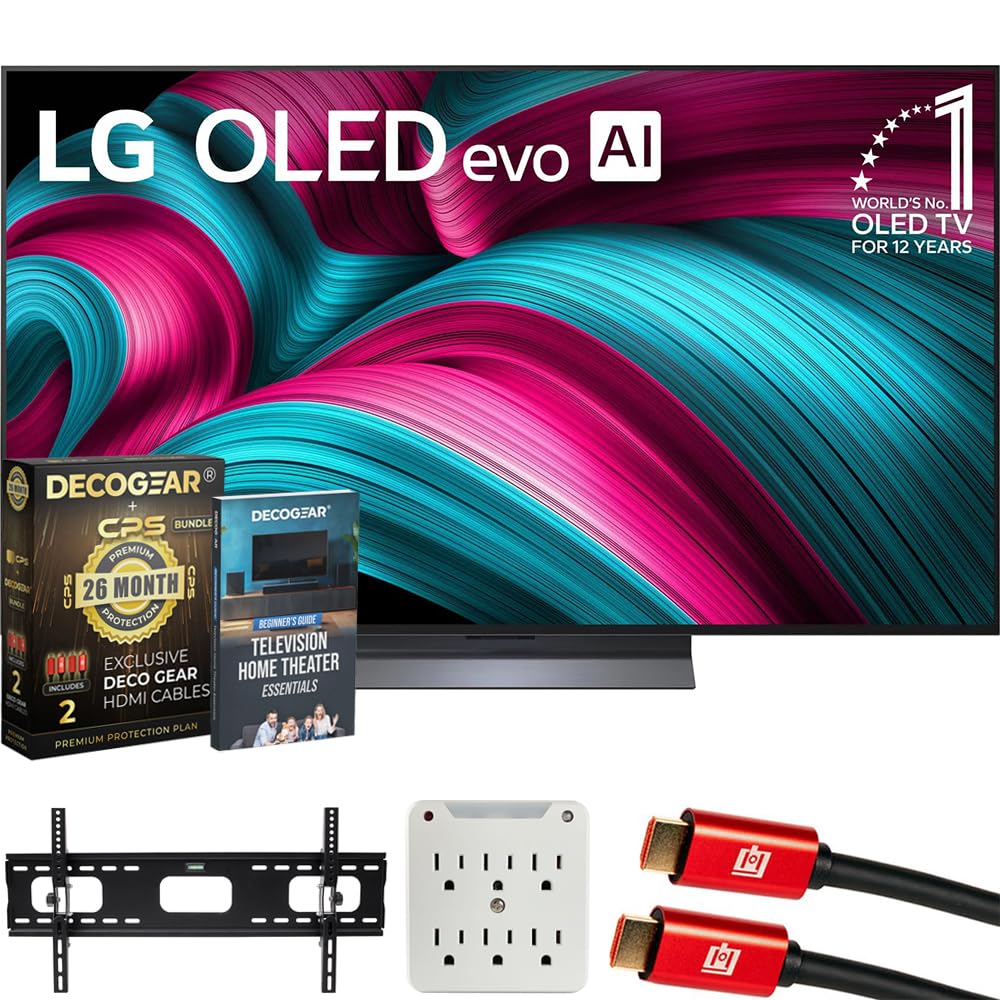
The LG C5 OLED evo is a proven all-rounder that has dominated the mid-range OLED space for years, and the 2025 model refines the formula with the α9 AI Processor Gen7. This chip analyzes content in real time to boost HDR brightness and clarity, addressing the main historical complaint about OLEDs being too dim. The four HDMI 2.1 ports are all full-bandwidth, supporting 4K at 144Hz with VRR, NVIDIA G-SYNC, and AMD FreeSync Premium—ideal for connecting a console, PC, and soundbar simultaneously without swapping cables.
Dolby Vision and Dolby Atmos are both handled natively, and the Game Optimizer dashboard puts all gaming settings—including black stabilizer and crosshair overlays—into a single overlay. webOS 25 is faster and cleaner than previous versions, with personalized AI recommendations and over 300 free LG Channels. The Magic Remote with its air mouse pointer is a unique interface that some love and others find fiddly.
The physical stand is notoriously difficult to install, requiring multiple people and careful alignment to avoid scratching the panel. The built-in speakers are adequate but not exceptional, so most buyers will pair this with a soundbar or AV receiver. Burn-in risk is lower with OLED evo panels but still present for static content like news tickers and HUDs, so varied content consumption is recommended.
Why it’s great
- Four full-bandwidth HDMI 2.1 ports for multi-device setups
- Excellent gaming features with VRR and low input lag
- Improved HDR brightness with α9 AI processing
Good to know
- Stand installation is difficult and poorly documented
- Built-in sound quality is only average
- OLED burn-in remains a long-term consideration
6. Samsung Q8F QLED

The Samsung Q8F uses Quantum Dot technology to achieve 100% Color Volume, meaning it can display the full DCI-P3 color gamut at any brightness level—a significant advantage over standard LED panels that lose color saturation as brightness drops. The Q4 AI Processor upscales content to near-4K quality, and Motion Xcelerator at 144Hz keeps sports and action sequences smooth. The AirSlim design allows the TV to sit almost flush against the wall, creating a clean, minimalist look.
Samsung TV Plus provides access to over 2,700 free channels without any subscription, covering news, sports, and movies. The Tizen operating system is responsive and integrates well with Samsung smart home devices. The rechargeable remote is a nice touch, using USB-C or solar power, eliminating the need for disposable batteries. HDR support includes HDR10+ but notably does not include Dolby Vision, which is a limitation for some streaming content.
The local dimming performance is decent but not class-leading—blooming can be visible around bright subtitles in dark scenes. The rear mounting holes are spaced only 8.5 inches apart, which can cause stability issues with some third-party wall mounts and stands. The remote sensor is also extremely sensitive, occasionally changing channels or opening menus with the slightest bump.
Why it’s great
- 100% Color Volume maintains vibrancy at all brightness levels
- Ultra-slim AirSlim design for flush wall mounting
- Rechargeable remote with solar and USB-C charging
Good to know
- No Dolby Vision support (HDR10+ only)
- Visible blooming around bright objects in dark scenes
- Remote is overly sensitive to touch
7. TCL QM7K Mini-LED
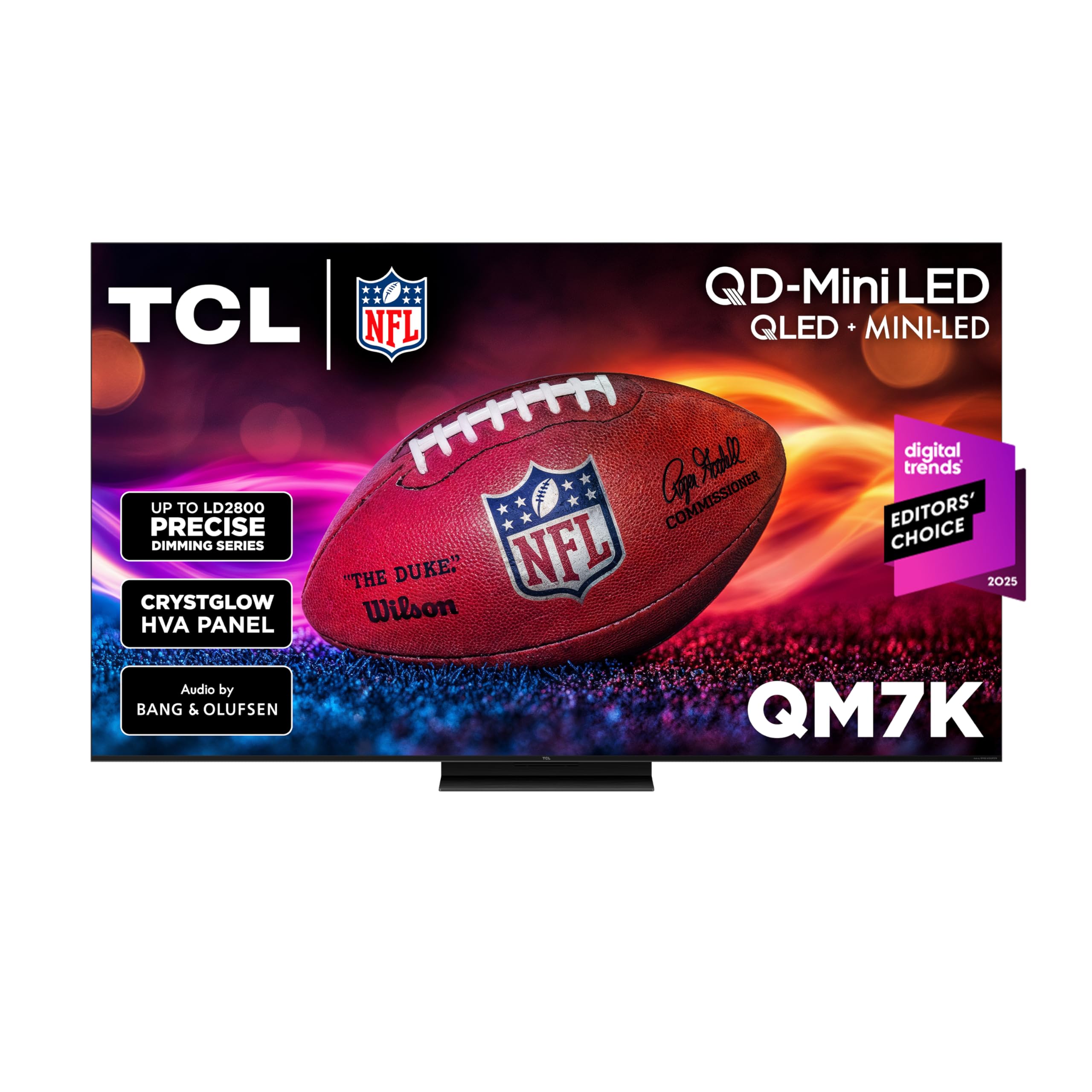
TCL’s QM7K series uses QD-Mini LED technology with the Halo Control System, which combines a new high-energy LED microchip, condensed micro lenses, and a bidirectional 23-bit backlight controller to deliver up to 2,500 local dimming zones. This zone density allows the TV to produce pure black levels with minimal blooming, approaching OLED performance in dark scenes. The CrystGlow HVA panel also features an anti-reflective layer that keeps details crisp even with overhead lights or windows behind the viewer.
The Google TV platform provides access to all major streaming apps, and the Onkyo-tuned 2.1-channel speaker system delivers solid sound with a dedicated subwoofer. Game Mode supports 144Hz VRR, AMD FreeSync Premium, and ALLM for smooth console and PC gaming. The Bang & Olufsen audio collaboation on this model adds a level of clarity and soundstage that is rare in this price tier.
The included remote feels cheap and plasticky, which contrasts with the premium picture quality. The Google TV interface has noticeable bloatware and pre-installed apps that cannot be removed. Some users also report that the built-in sound, while decent, lacks the low-end depth needed for action movies without an external soundbar.
Why it’s great
- Up to 2,500 precise local dimming zones for deep blacks
- Excellent anti-reflective CrystGlow panel for bright rooms
- Strong Onkyo-tuned audio with dedicated subwoofer
Good to know
- Included remote feels low-quality
- Google TV interface has pre-installed bloatware
- Built-in sound needs a soundbar for impactful bass
8. iFFALCON 55U85
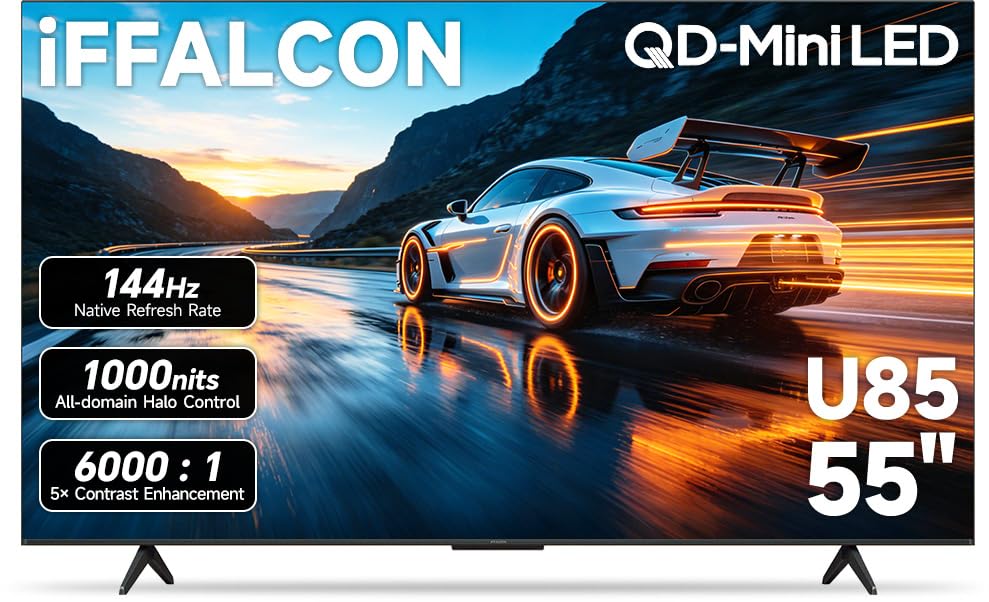
The iFFALCON 55U85 is a dark horse that punches well above its tier, offering a native 144Hz Mini-LED panel with VRR up to 288Hz and four HDMI 2.1 ports—a configuration typically reserved for much more expensive televisions. The 6,000:1 contrast ratio and Dolby Vision Gaming support make it genuinely capable for competitive gaming on PS5 and Xbox Series X, with minimal screen tearing and low input lag. The 50W 2.1-channel audio system with a built-in woofer provides solid, room-filling sound.
A standout feature is the built-in hotel mode and IP/IR control, which allows menu locking, default input selection, and remote management—features normally found on commercial displays. This makes the 55U85 an excellent choice for Airbnb properties, hotel rooms, or office meeting spaces. Google TV provides a familiar app ecosystem with Alexa and Google Assistant voice control.
The panel is thicker than ultra-slim competitors, and the built-in smart interface can feel sluggish compared to higher-end processors. The price can vary significantly depending on sales, and at full retail it approaches entry-level OLED territory where the panel quality difference becomes noticeable. For pure gaming performance and commercial features at a low entry point, however, it is hard to beat.
Why it’s great
- Four HDMI 2.1 ports with native 144Hz VRR
- Hotel mode and IP control for commercial use
- Impressive 50W audio with built-in woofer
Good to know
- Chassis is thicker than premium competitors
- Smart interface can feel slow at times
- Price varies; full retail approaches OLED territory
9. Amazon Ember Mini-LED
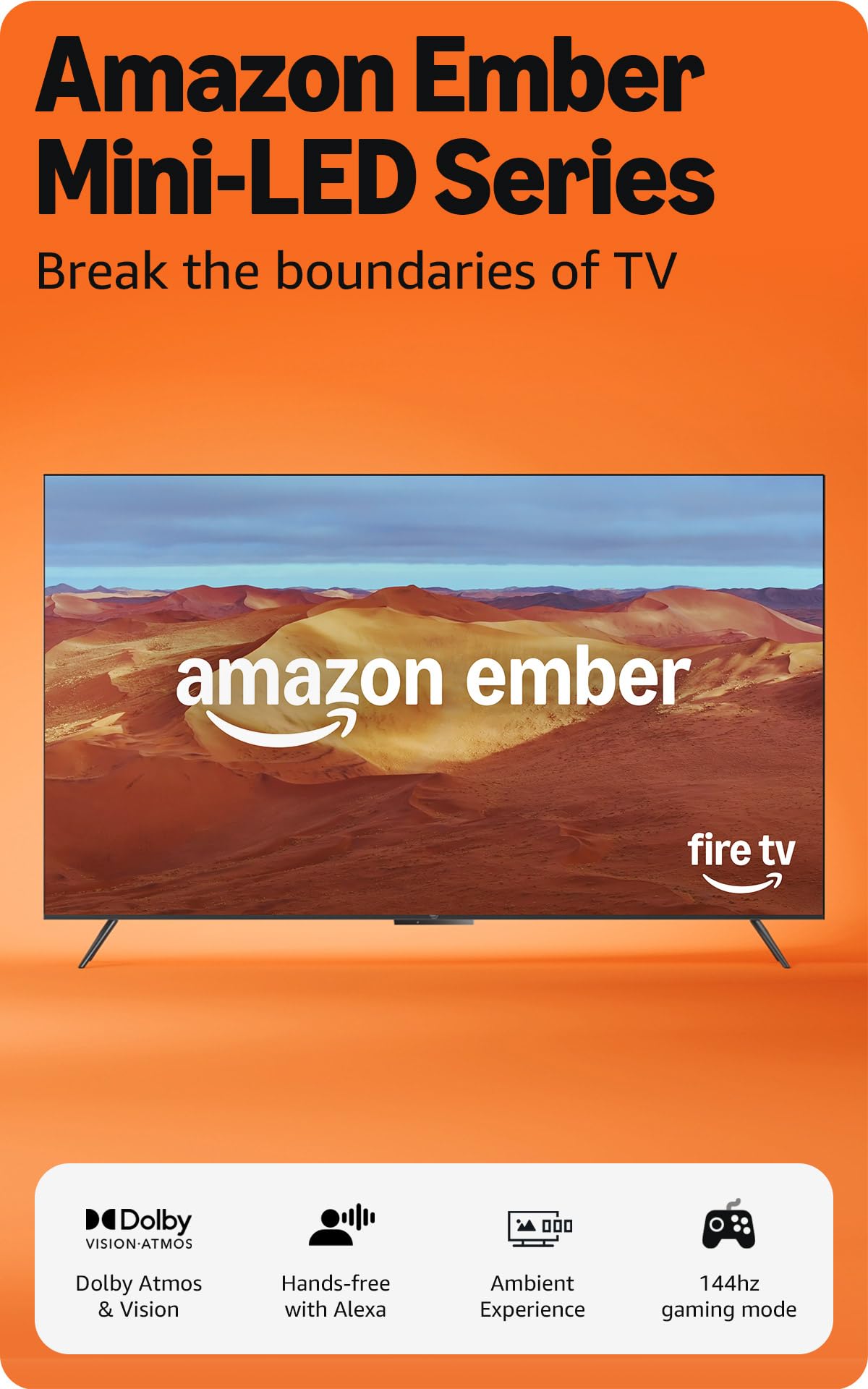
The Amazon Ember Mini-LED series is built around the Fire TV ecosystem, offering seamless integration with Alexa, Blink cameras, and Ring doorbells. The QLED Mini-LED panel with 512 dimming zones delivers impressive contrast and peak brightness of up to 1,400 nits, making it well-suited for bright living rooms. The 144Hz refresh rate with AMD FreeSync Premium Pro certification ensures smooth, tear-free gaming on Xbox and PC.
Fire TV Intelligent Picture uses a dedicated processor to automatically optimize the image scene-by-scene, adjusting for room lighting and content type. The built-in 2.1 Dolby Atmos audio system with a subwoofer provides cinematic sound without external speakers. The Omnisense technology wakes the screen when you enter the room, turning the TV into a digital art frame when idle—a thoughtful touch for home integration.
The Fire TV software is the main point of contention—while it offers deep Alexa integration and personalized recommendations, the home screen is cluttered with Amazon ads and promoted content. Some users report performance degradation over time, with the interface becoming laggy enough to require an external Fire Stick 4K Max as a workaround. The internal processor can feel underpowered for demanding app navigation.
Why it’s great
- Deep Alexa integration with smart home controls
- Strong HDR brightness with 512 dimming zones
- Omnisense wake feature and art frame mode
Good to know
- Fire TV interface has heavy ad placement
- Performance can degrade over time, requiring external streamer
- Internal processor may struggle with complex navigation
10. Sony BRAVIA 2 II

The Sony BRAVIA 2 II is the entry point into Sony’s TV lineup, but it retains the brand’s core strength: excellent processing. The 4K Processor X1 with 4K XR-Reality PRO upscaling brings lower-resolution content to near-4K quality better than most competitors at this level. Motionflow XR keeps sports and action scenes blur-free, and the exclusive PlayStation 5 features—Auto HDR Tone Mapping and Auto Genre Picture Mode—make it the best budget option for PS5 owners.
Google TV provides a clean, organized interface with all major streaming apps, plus Apple AirPlay 2 and Google Cast for easy mobile sharing. The Game Menu centralizes gaming settings, and the Eco Dashboard helps monitor energy consumption—this model uses significantly less power than larger or brighter competitors. The built-in speakers are adequate for TV shows and casual viewing.
The panel is a standard LED-backlit LCD, not Mini-LED or OLED, so contrast and black levels are limited compared to higher-end models. Some users have reported intermittent freezing and WiFi connectivity issues that require unplugging the TV to resolve. The initial setup forces navigation through the smart menu to reach live TV, which can be confusing for less tech-savvy household members.
Why it’s great
- Excellent upscaling from lower-resolution sources
- Best budget option for PlayStation 5 integration
- Low power consumption and Eco Dashboard
Good to know
- Standard LED panel with limited contrast and black levels
- Some users report freezing and WiFi dropping issues
- Smart menu required to access live TV channels
11. Roku Plus Series
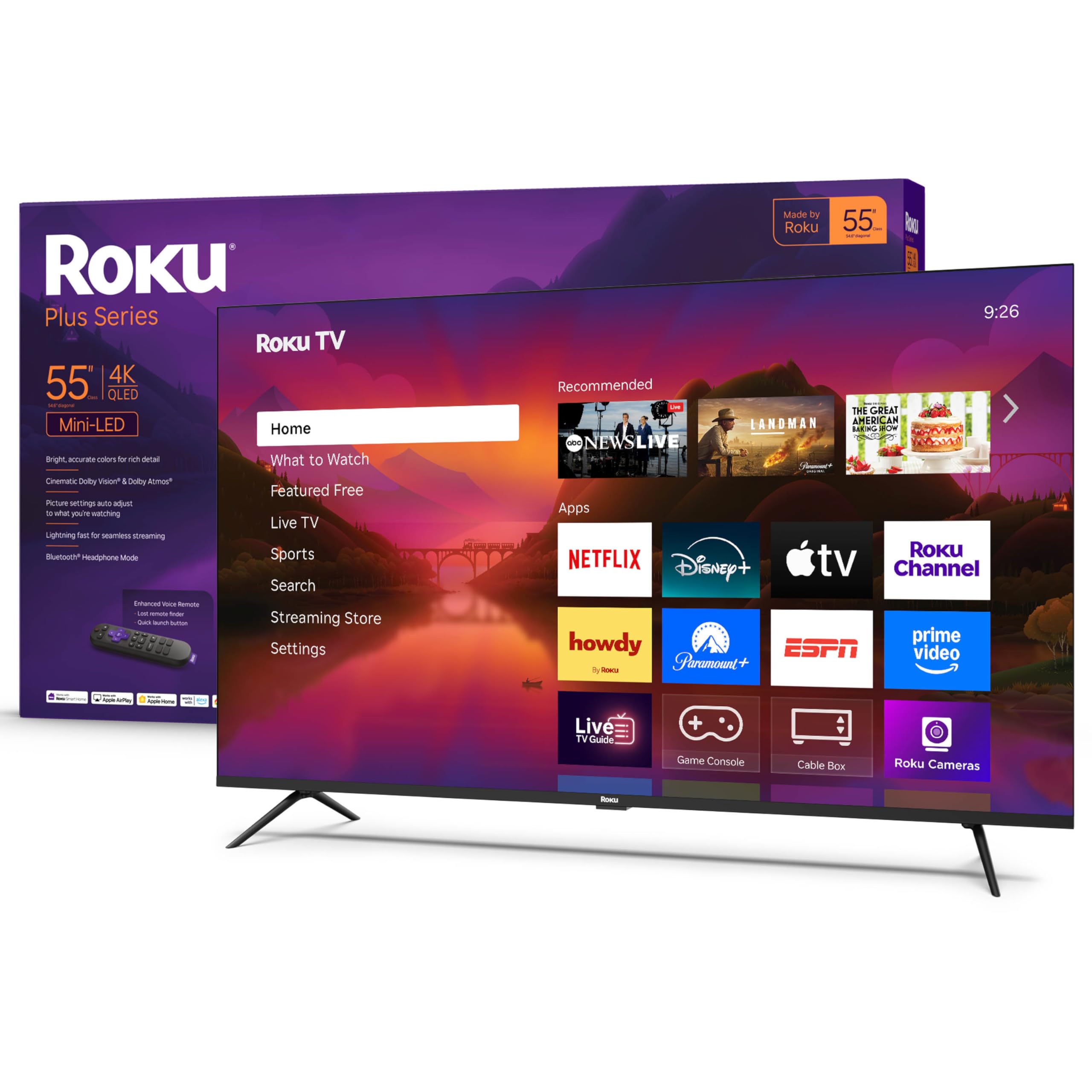
The Roku Plus Series focuses on simplicity and value, combining a QLED Mini-LED panel with the famously intuitive Roku operating system. The Mini-LED backlighting and Dolby Vision support deliver vibrant colors and solid HDR performance that far exceed expectations at this tier. Roku’s home screen is clean, ad-light compared to competitors, and easy to navigate even for non-technical users—a major advantage for families or older viewers.
The Enhanced Voice Remote includes a lost remote finder, personal shortcut buttons, and voice search across thousands of apps. Roku Smart Picture Max uses AI to optimize incoming signals for clarity and sharpness. The built-in subwoofer and Dolby Atmos support create a surprisingly cinematic audio experience for a value-priced television. Bluetooth Headphone Mode allows private listening without waking others.
The connectivity is adequate but not future-proof—there is no HDMI 2.1 support, limiting gaming to 60Hz, and the USB port is USB-C rather than the more common Type-A. The interface, while fast, has a dated visual design compared to Google TV or webOS. The panel’s peak brightness is lower than premium Mini-LED models, so it is best suited for rooms with moderate ambient light.
Why it’s great
- Exceptionally simple and clean Roku interface
- Surprisingly good built-in sound with subwoofer
- Enhanced Voice Remote with lost remote finder
Good to know
- No HDMI 2.1 ports, capped at 60Hz gaming
- Peak brightness is modest compared to premium models
- Interface design feels visually dated
FAQ
What is the difference between QLED and Mini-LED?
Is 144Hz noticeable over 120Hz for gaming on a 4K TV?
Should I worry about OLED burn-in with a 4K TV?
What is Dolby Vision IQ and why does it matter?
Final Thoughts: The Verdict
For most users, the 4k tv winner is the Samsung S90F OLED because it delivers the best balance of vibrant QD-OLED color, deep blacks, and high brightness for diverse room conditions. If you need extreme brightness for a sun-drenched living room, grab the Hisense U7 Mini-LED. And for a dedicated home theater setup with the best upscaling and PS5 integration, nothing beats the Sony BRAVIA 8 OLED.

Mo Maruf
I created WellFizz to bridge the gap between vague wellness advice and actionable solutions. My mission is simple: to decode the research and give you practical tools you can actually use.
Beyond the data, I am a passionate traveler. I believe that stepping away from the screen to explore new environments is essential for mental clarity and physical vitality.