Our readers keep the lights on and my smoothie glass nicely filled. As an Amazon Associate, I earn from qualifying purchases.
You lift your binoculars to scan a ridge or follow a bird in flight, and the image jumps with every heartbeat and breath. That frustrating shake blurs detail, causes eye strain, and turns an afternoon of wildlife watching into a battle with your own hands. Image stabilization cuts the tremor so your view locks onto the subject, not your pulse.
I’m Mohammad Maruf — the founder and writer behind WellFizz. I’ve spent countless hours analyzing optical specifications, stabilization architectures, and real-world user reports to separate the truly steady from the marketing hype in this niche category.
This guide breaks down the top performers across price tiers, explains the mechanics behind gyro and electronic stabilization, and helps you match a specific model to your primary use case — whether that’s marine observation, hunting, birding, or astronomy. Read on for the definitive analysis of the best binoculars with stabilization.
How To Choose The Best Binoculars With Stabilization
Stabilized binoculars merge traditional optics with either an electronic gyroscope or a vari-angle prism system that physically counter-rotates to cancel motion. Choosing the right pair means understanding how magnification, objective lens size, stabilizer type, and correction angle interact with the environments and subjects you observe most.
Magnification and Objective Lens Diameter
Higher magnification (12x, 14x, 16x) reveals more detail but also amplifies shake, making a capable stabilizer non-negotiable. The objective lens diameter (30mm, 40mm, 42mm, 50mm) controls light-gathering — larger diameters yield brighter images at dawn and dusk but add weight. The exit pupil (objective diameter divided by magnification) should be at least 2.5mm for daytime use and 4mm or more for low-light conditions; a 7×50 produces a 7.1mm exit pupil perfect for maritime night use, while a 16×42 produces only 2.6mm.
Stabilization Type and Correction Angle
Electronic image stabilization uses a battery-powered vari-angle prism or lens group that shifts to counteract movement — common in Canon and Nikon consumer models, offering correction angles around 0.7° to 1°. Gyroscopic stabilization (found in the Fujinon TS-X series) uses a spinning gyro sensor and motor-driven prism to achieve much wider correction angles (5° to 6°), which is essential for use on boats, moving vehicles, or in strong wind. Wider correction angles consume more battery and add bulk.
Prism Design and Lens Coatings
Roof prism binoculars (compact, straight-tube design) are lighter and more portable but typically more expensive to build to high optical standards. Porro II prisms (offset barrels) often provide better depth perception and light transmission for the price. Look for fully multi-coated optics and phase-correction coatings on roof prisms to maximize contrast and eliminate color fringing. Some premium models also include field-flattener lenses to keep the image sharp all the way to the edge.
Quick Comparison
On smaller screens, swipe sideways to see the full table.
| Model | Category | Best For | Key Spec | Amazon |
|---|---|---|---|---|
| Canon 10×30 IS II | Mid-Range | Compact all-purpose viewing | 30mm objective / 3mm exit pupil | Amazon |
| Nikon STABILIZED 10×25 | Mid-Range | Travel & pocket portability | 2.5mm exit pupil / 12hr battery | Amazon |
| Nikon STABILIZED 12×25 | Mid-Range | Pocketable 12x reach | 2.1mm exit pupil / 12hr battery | Amazon |
| Canon 12×36 IS III | Premium | Bright 12x all-around use | 36mm objective / 3mm exit pupil | Amazon |
| Fujinon Techno-Stabi TS1440 | Premium | Marine & extreme stabilization | 5° gyro correction / 14×40 | Amazon |
| Fujinon TS-X 14×40 | Premium | Broadest gyro correction (6°) | 6° gyro correction / 14×40 | Amazon |
| SIG SAUER Zulu6 16×42 | Premium | High-mag hunting glassing | 16×42 / OIS Scan & Target mode | Amazon |
| Kite Optics APC 16×42 | Premium | Military-grade stabilization | 2° & 3° correction / 16×42 | Amazon |
| Steiner Military-Marine 7×50 | Budget | Low-light marine stability | 7.1mm exit pupil/ floating prism | Amazon |
In‑Depth Reviews
1. Canon 10×30 Image Stabilization II Binoculars
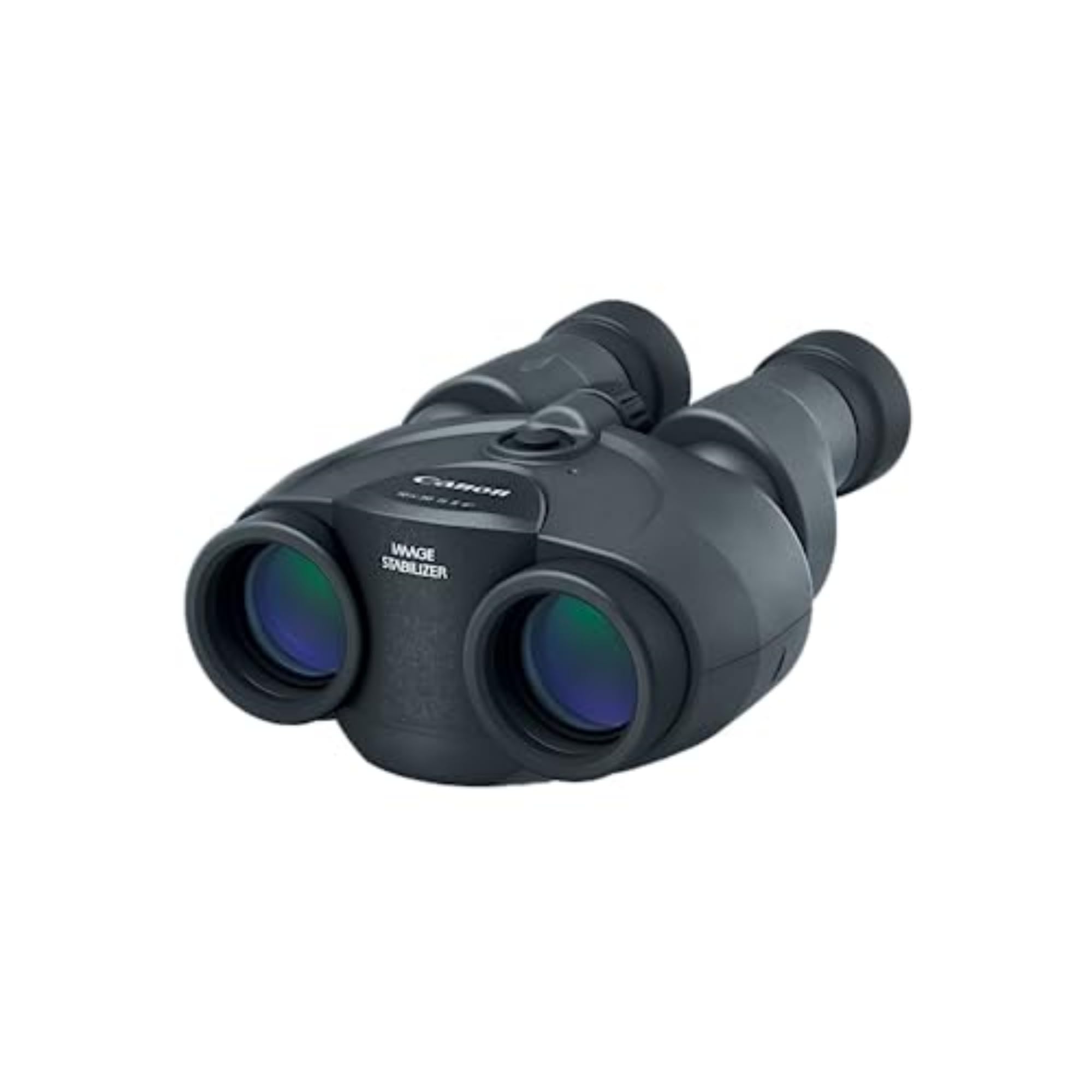
The Canon 10×30 IS II strikes the ideal balance between portability and steady viewing. It uses Canon’s proven vari-angle prism system that activates with one button, eating up normal hand tremor so thoroughly that you can read license plates at 200 yards without a tripod. The 10x magnification paired with a 30mm objective yields a 3mm exit pupil — bright enough for most daylight to dusk conditions, though not ideal for deep twilight scanning. The center focus knob is smooth and precise, and the doublet field-flattener keeps the image sharp corner-to-corner.
Optically, the Super Spectra multi-coating delivers rich, true-to-life color with minimal chromatic aberration. The Porro II prism design offers excellent depth perception and light transmission compared to compact roof prism competitors at a similar price. At just over a pound, it’s genuinely comfortable to carry around the neck for a full day of birding or sports. The included soft case is functional, but many users find the strap attachment fiddly and the lack of objective lens caps frustrating — a simple workaround is adding generic 39mm spring-loaded caps.
Battery life is solid, with a single AA powering the IS for roughly nine hours of continuous use. The IS button must be held down to engage, which some find tiring; others tape a coin over the button for long sessions. For the price, the combination of stabilization quality, optical clarity, and light weight makes this the reference standard for mid-range stabilized binoculars. Serious birders and all-day observers who need a compact unit that delivers rock-solid images will find this hard to beat.
Why it’s great
- Excellent stabilization cancels hand tremor completely
- Sharp corner-to-corner field-flattener optics
- Light, compact and comfortable for long carry
Good to know
- No objective lens caps included
- IS button must be held continuously
- Eyecups may be too deep for eyeglass wearers
2. Canon 12×36 Image Stabilization III Binoculars

The Canon 12×36 IS III packs the same proven vari-angle prism stabilization as the 10×30 but steps up to 12x magnification and a bigger 36mm objective. The image is noticeably brighter than its 30mm sibling, with a 3mm exit pupil that works well in overcast or forest-shaded conditions. At high magnification, the stabilization really earns its keep — the difference between a bouncy 12x handheld and this locked-on view is night and day. The Porro II prism system provides excellent contrast and a satisfying three-dimensional feel to the image.
Optical quality is outstanding for the price: Super Spectra coatings suppress flare, and the doublet field-flattener again delivers edge-to-edge sharpness. Chromatic aberration is very well controlled, with only faint purple fringing visible on high-contrast branches against bright sky. The unit is lightweight enough at about 1.4 pounds to carry on hikes, though the added magnification demands a steadier trigger finger on the IS button. The biggest ergonomic complaint — shared across many Canon IS models — is that you must hold the stabilization button down the entire time you’re viewing, which can cause finger fatigue during long sessions.
Battery life is improved over the previous generation, delivering roughly 12 hours of stabilization from one AA battery. As with the 10×30, there are no tethered objective lens caps; the eyepiece caps are loose. For its price, the 12×36 III delivers more reach and light than the 10×30 while maintaining similar portability. It’s the ideal option for general wildlife observation, sporting events, and casual astronomy where you want the extra magnification without stepping up to a much heavier and more expensive unit.
Why it’s great
- Great optics with edge-to-edge sharpness
- Lightweight for a stabilized 12x
- Excellent stabilization eliminates shake
Good to know
- IS button must be pressed continuously
- No objective lens caps included
- Rubber coating durability concerns over time
3. Nikon STABILIZED 10×25 Binoculars
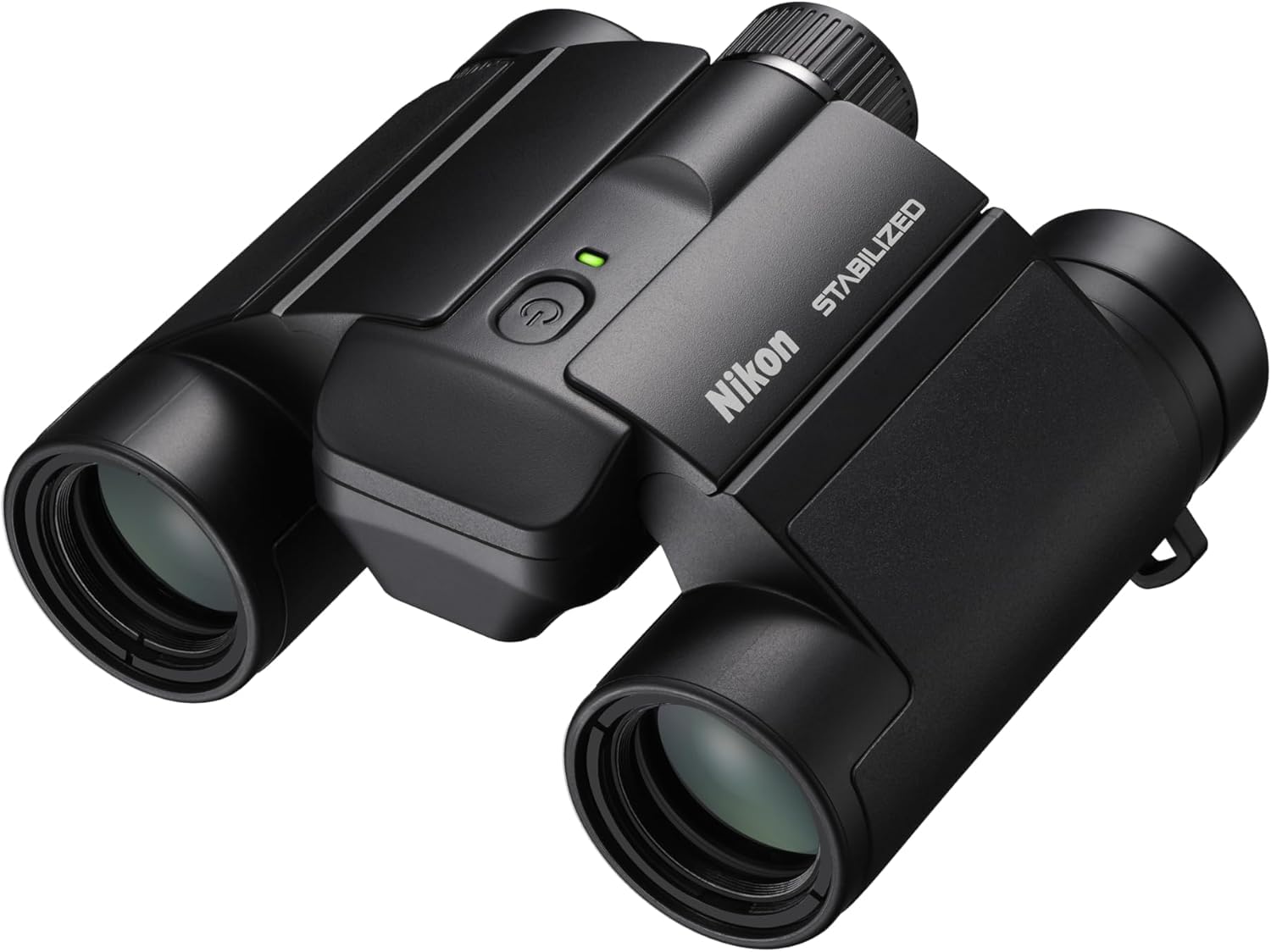
Nikon’s STABILIZED 10×25 is the most pocket-friendly image-stabilized binocular on the market. The electronic stabilization system compensates for natural hand shake with a simple on/off switch, and it works — the view locks into place, making it possible to clearly read small text at over 100 yards without any tripod. The 10x magnification with a 25mm objective yields a 2.5mm exit pupil, which is adequate for daytime and bright twilight but noticeably dimmer than larger objectives in deep woods or at dawn.
The roof prism design keeps the body slim and light — under 14 ounces — making it easy to slip into a jacket pocket or small bag. Optical quality is classic Nikon: sharp center resolution with good contrast, though the small exit pupil demands precise eye alignment for the full field of view. The diamond-like AR coatings minimize reflections, and the 14mm eye relief is generous for eyeglass wearers. The turn-and-slide eyecups click into place firmly, and the closed-bridge design adds rigidity. The biggest disappointment is the accessory bundle: the included case is flimsy and the single dust cover is inadequate, forcing most buyers to purchase third-party replacements.
Power comes from standard AA batteries with an advertised 12-hour run time; the automatic shutoff after 60 minutes of inactivity is a smart battery-saving addition. The compact size makes it perfect for concerts, theater, travel, and quick birding dashes, but serious birders or those who glass in low light will need a larger objective. For a grab-and-go stabilized option that disappears into a bag, the Nikon 10×25 delivers reliable performance in a genuinely portable package.
Why it’s great
- Truly compact — fits in a jacket pocket
- Effective electronic stabilization with simple on/off
- Excellent optical clarity and contrast
Good to know
- Small exit pupil limits low-light use
- Poor included case and lens caps
- Stabilization button placement awkward
4. Nikon STABILIZED 12×25 Binoculars
What if you could get 12x magnification in a package barely larger than a deck of cards? The Nikon STABILIZED 12×25 makes that trade-off real. The electronic stabilization system works identically to its 10×25 sibling — a simple on/off switch kills hand shake, and the rock-steady view is genuinely impressive for a unit this small. At 12x, the need for stabilization is even more pronounced, and the Nikon system handles it confidently.
The 2.1mm exit pupil (25mm objective divided by 12x) is the trade-off: it demands a bright day or well-lit scene to produce a usable image. In dim forest understory or late evening, the view becomes dark and hard to use. That said, in good light, the optics are sharp and contrasty, with Nikon’s signature anti-reflective coatings delivering punchy colors. The roof prism body weighs under 14 ounces and fits easily in a coat pocket. The focus knob is textured and precise, though the eye relief at 14mm is adequate but not generous for eyeglass wearers.
Battery life is rated at 12 hours on standard AA batteries, with an auto shutoff after 60 minutes to prevent draining. As with the Nikon 10×25, the included accessories are weak — the case and lens caps feel like afterthoughts, and you’ll likely want to replace them. The 12×25 is best suited for daytime travelers, theater-goers, or sports fans who want serious reach in a tiny body and are willing to sacrifice low-light performance for portability. For anyone who prioritizes pocket size over all else, this is the most compact way to get 12x stabilization.
Why it’s great
- Only stabilized 12x binocular that fits in a pocket
- Excellent stabilization compensates for high magnification
- Lightweight and easy to carry all day
Good to know
- Very dim in low-light conditions (2.1mm exit pupil)
- Poor quality included case and caps
- Stabilization button location is awkward to reach
5. SIG SAUER Zulu6 FDE HDX OIS 16x42mm

The SIG SAUER Zulu6 HDX with Optical Image Stabilization is a premium hunting tool that redefines hand-held high-magnification glassing. At 16x magnification with a 42mm objective, the 2.63mm exit pupil pushes the boundary of what’s usable without a tripod — but the two-mode OIS system makes it feasible. Scan mode provides smooth, natural viewing for gridding hillsides, while Target mode locks the image with 50% more stability for scrutinizing a specific animal or detail. The difference is dramatic: whiskers on a seal at 150 yards in a 15 mph wind resolve with crisp clarity.
The HDX glass lenses produce outstanding resolution and definition, with SpectraCoat anti-reflective coatings that maximize light transmission and suppress flare. Chromatic aberration is minimal even at the edges, and the 16mm eye relief is comfortable for extended sessions. The aluminum chassis with rubber armor feels substantial and well-balanced, and the focus knob is smooth and precise. At 2.5 pounds, it’s not a casual hiking companion, but for a hunter or wildlife observer who drives to a vantage point or stalks slowly, the weight is a reasonable price for 16x stabilized reach.
Battery life is good for the performance level, though the unit uses CR123 batteries which are less common than AA. The IPX-7 waterproof rating means it survives submersion in a meter of water for 30 minutes. The major downside is the price — this is a serious investment. A few users received units that appeared used, and the stabilization, while excellent, produces a slightly narrower field of view than lower-magnification competitors. For long-range hunters and birders who need to count points or identify species at extreme distances, the Zulu6 is transformative.
Why it’s great
- Dual-mode OIS (Scan & Target) covers different glassing scenarios
- Exceptional resolution and definition with HDX glass
- 16x stabilization eliminates need for tripod in most conditions
Good to know
- Narrow field of view at 16x requires practice to acquire targets
- Expensive — entry into legitimate high-end territory
- Uses CR123 batteries, not standard AA
6. Kite Optics APC Stabilized 16×42 Binoculars
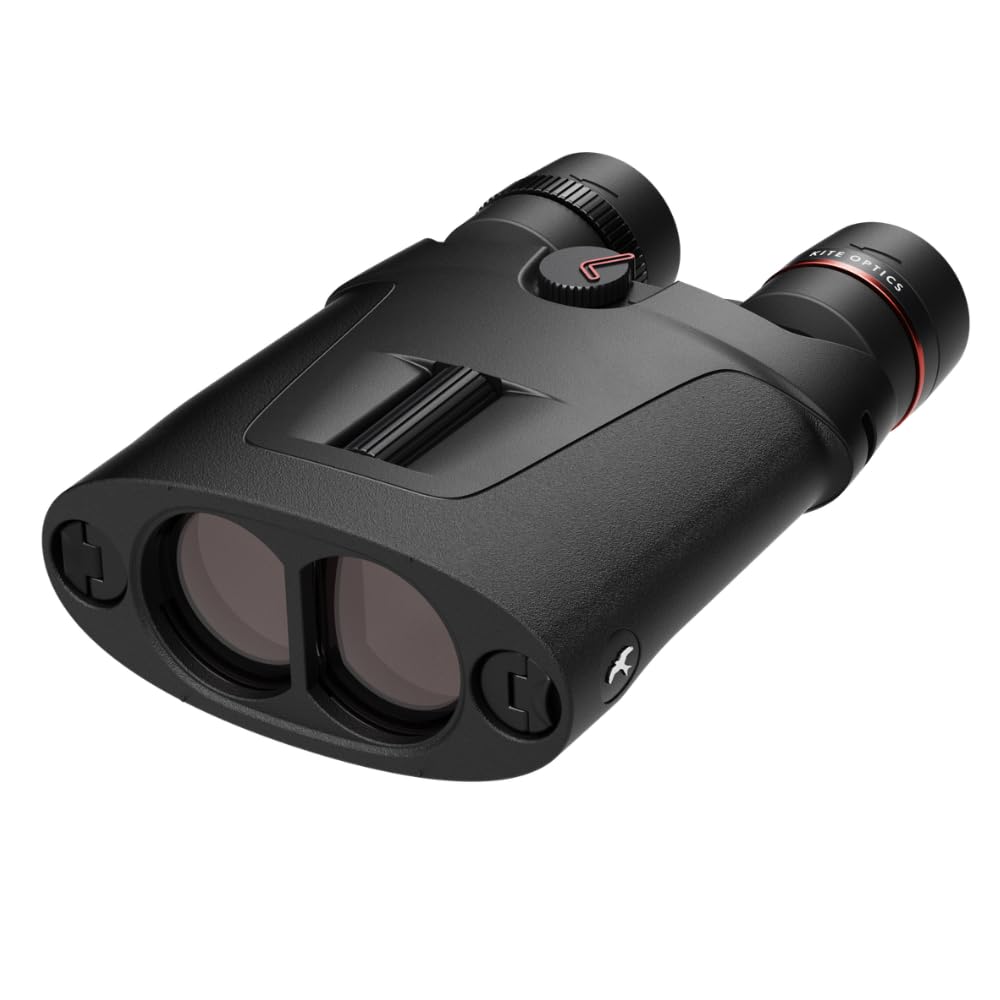
Kite Optics, an Austrian manufacturer, brings military-grade stabilization to the consumer market with the APC 16×42. The system offers two correction angles — 2° for normal hand tremor and 3° for heavy vibration environments like boats or helicopters — and it works remarkably well. In side-by-side tests, the Kite unit outperforms the Canon 15×50 in stability, producing a locked-on image even when walking or standing on a swaying deck. The 16x magnification combined with a 42mm objective gives serious reach with reasonable brightness.
The optical quality is excellent: sharp center resolution, good color fidelity, and minimal chromatic aberration. The roof prism design keeps the body relatively compact at 25 ounces, and the nitrogen-purged IPX7 housing means it’s completely sealed against water and fog. The rubber armor is grippy and provides a confident hold in wet conditions. The auto shut-off feature when the binoculars are pointed downward saves battery life, and the unit runs on standard AA batteries — a thoughtful choice for field use.
Where the Kite APC falls short is ergonomics. The interpupillary adjustment mechanism is stiff, using a bridge adjustment that some users find awkward. The focus dial is small and can be difficult to manipulate with gloved or cold hands. Additionally, the standby mode times out too quickly, requiring a power cycle to reactivate the stabilization. For the price, these are premium optics that deliver on stabilization performance, but the tactile experience doesn’t match the optical excellence. Ideal for law enforcement, military use, or serious boaters who prioritize stability above all else.
Why it’s great
- Military-grade stabilization with 2° and 3° correction
- Excellent optical quality with sharp resolution
- IPX7 waterproof and nitrogen-purged for all-weather use
Good to know
- Stiff interpupillary adjustment and small focus dial
- Standby mode times out too quickly
- Ergonomics not as refined as competitors at the same price
7. Fujinon Techno-Stabi TS-X 14×40 Image Stabilization Binocular

The Fujinon TS-X 14×40 uses a true gyroscopic stabilization system that sets it apart from every electronic vari-angle prism competitor. With a correction angle of 6°, it can compensate for severe motion — think rolling boats, moving vehicles, or heavy wind — where electronic systems with 1° of correction would fail. The gyro sensor detects the tiniest vibrations and drives the internal prism to counter-rotate instantly, and the result is a view that stays glued to the target regardless of what your body or environment does.
Optically, the TS-X is exceptional. The EBC (Electron Beam Coating) multi-coating suppresses flare and ghosting, and the four-element objective design controls chromatic aberration so effectively that fringing is invisible in normal use. The 40mm objective with a 2.9mm exit pupil provides a bright, crisp image in most conditions, and the 14x magnification reveals fine details that lower-power optics miss. The field of view is a generous 315 feet at 1,000 yards, making it easier to track moving subjects than many high-magnification stabilized binoculars.
The penalty for gyroscopic stabilization is weight and bulk. At 2.8 pounds and a footprint that rivals a small loaf of bread, the TS-X is not a hiking companion — it’s a boat, car, or blind optic. It requires four AA batteries, though the auto-off feature conserves power. The rubber armor provides a secure grip, and the Pentax-style case is padded and protective. A small number of users have reported reliability issues, and one reviewer had a unit fail after two weeks. For marine, aviation, and extreme-stability applications, however, nothing in the consumer price range matches the TS-X’s correction angle.
Why it’s great
- Industry-leading 6° gyroscopic correction angle
- Exceptional optics with EBC coatings and minimal CA
- Wide field of view for a 14x stabilized binocular
Good to know
- Very heavy (2.8 pounds) — not for hiking
- Requires 4 AA batteries
- Occasional reliability complaints reported
8. Fujinon Techno Stabi TS1440-14×40 Image Stabilization Binocular
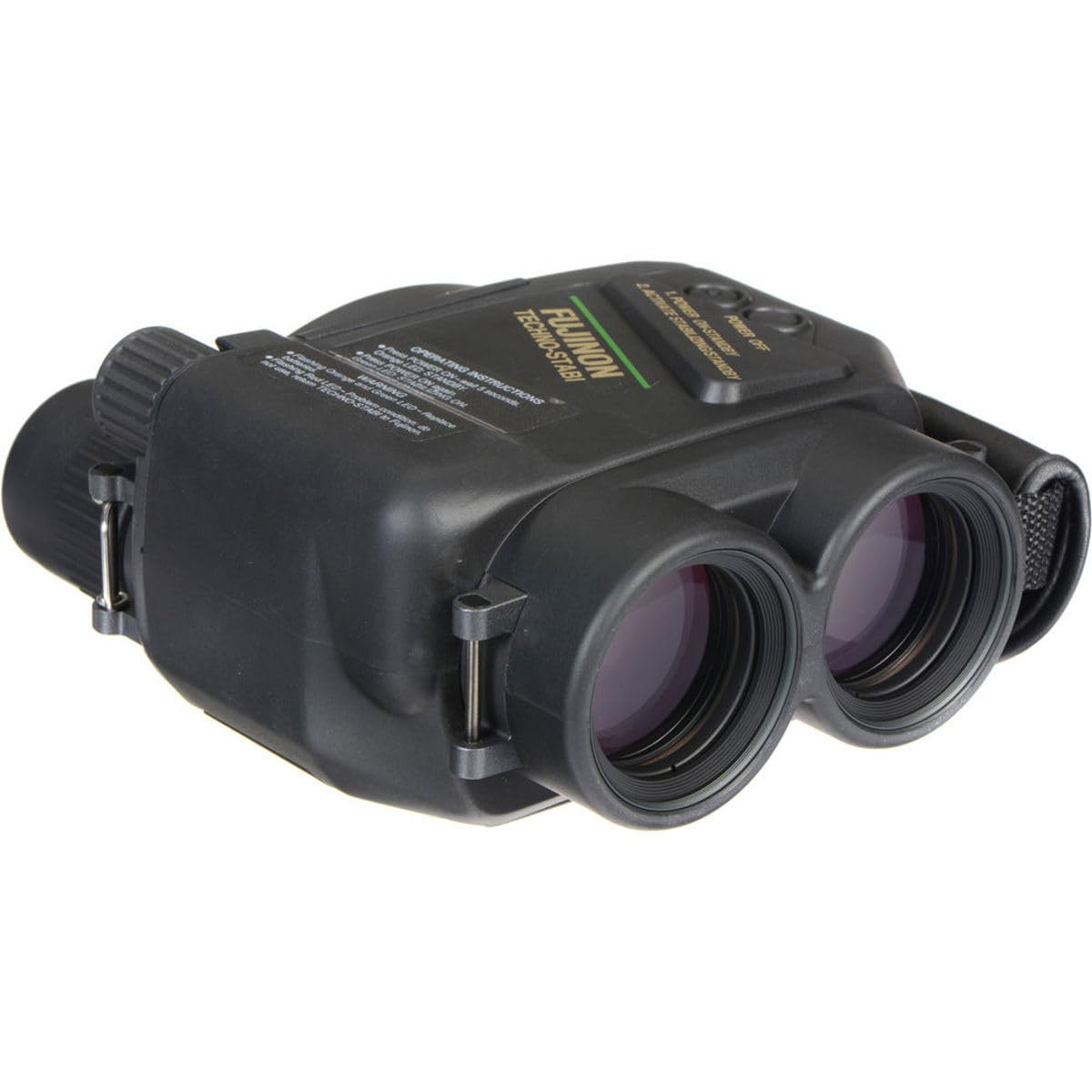
The older Fujinon Techno Stabi TS1440 is the predecessor to the TS-X, offering 5° of gyroscopic stabilization in a slightly more affordable package. It’s built on the same core technology — a spinning gyroscope and a motor-driven prism that counter-rotates to cancel vibration — and it works brilliantly for marine and heavy-motion environments. On a small boat in choppy seas, the difference between the TS1440 and a conventional 14x binocular is the difference between seeing a whale breach and seeing a blurry smear.
Optically, the TS1440 is very good but not quite at the TS-X level. The multi-layer coatings deliver solid contrast and color, and the 40mm objective provides adequate brightness for most daytime and twilight conditions. The 2.86mm exit pupil is usable in good light but will feel dim in deep shade. The center focus knob is well-positioned, and the rubber armor provides a confident grip. The unit ships with a hard Pelican-style case that offers excellent protection — a welcome inclusion. However, there are no tethered objective lens caps, and the eyepiece caps are loose.
The main drawback is weight and power consumption. At over 2.5 pounds and requiring four AA batteries, this is strictly a stationary or vehicle-based optic. Some users report the stabilization makes an audible whirring sound from the gyro, which is normal but noticeable. Battery life is adequate but not exceptional, and the unit lacks the auto-off feature of the newer TS-X. For boaters, sailors, and wildlife watchers who spend their time on or near the water and need reliable gyro stabilization without paying for the latest model, the TS1440 remains a strong performer.
Why it’s great
- 5° gyro stabilization handles rough seas and heavy movement
- Solid optical performance with good contrast
- Includes a rugged Pelican-style hard case
Good to know
- Heavy and bulky — not for hiking
- Requires 4 AA batteries with no auto-off
- Audible gyro whir during operation
9. Steiner Military-Marine 7x50mm Binoculars

The Steiner Military-Marine 7×50 takes a different approach to stability: instead of electronic or gyroscopic stabilization, it uses a floating prism system with silicone lens mounts that absorb shock and vibration. Combined with the inherently steadier 7x magnification and massive 50mm objective lenses, this design delivers a remarkably stable view for a non-powered binocular. The 7.1mm exit pupil is enormous — brighter than any other optic in this guide — making it the undisputed king of low-light and nighttime marine observation.
Optically, the Steiner’s multi-coated lenses produce a bright, neutral image with good color rendition and minimal chromatic aberration. The Sports-Auto-Focus system lets you set the diopter once and then enjoy sharp focus from 20 yards to infinity without touching the focus wheel, which is incredibly useful for tracking fast-moving targets or scanning changing distances. The Makrolon polycarbonate housing is extremely durable, and the NBR Long Life rubber armoring provides a non-slip, noise-dampening grip. The Steiner Heritage warranty is transferable and covers any damage — a lifetime guarantee that adds real long-term value.
The trade-offs are significant. These are heavy at nearly 3 pounds, and the 7x magnification limits how far you can see compared to 10x or 12x units. The wide field of view (387 feet at 1,000 yards) makes target acquisition easy, but you won’t count antler points at 300 yards. The “auto focus” is really a per-eye fixed focus that must be adjusted for each user, and some users find the rear lens caps insecure. The Steiner is not a stabilized binocular in the electronic sense, but for a boat, deck, or deep-woods night watch where passive stability and maximum light gathering matter most, it’s a legendary choice.
Why it’s great
- Massive 7.1mm exit pupil — best-in-class low-light brightness
- Floating prism absorbs shock without batteries
- Lifetime transferable warranty covers any damage
Good to know
- Very heavy (nearly 3 pounds)
- Only 7x magnification — less reach than stabilized 10x+ models
- Not true electronic stabilization; relies on passive damping
FAQ
How does gyroscopic stabilization differ from electronic image stabilization?
Can I use stabilized binoculars for astronomy without a tripod?
Why do some stabilized binoculars require holding the IS button continuously?
What is the real-world battery life of image-stabilized binoculars?
Final Thoughts: The Verdict
For most users, the binoculars with stabilization winner is the Canon 10×30 IS II because it delivers proven vari-angle prism stabilization, excellent optics with edge-to-edge sharpness, and true all-day portability at a fair price. If you want maximum magnification in a compact body, grab the Nikon STABILIZED 10×25 for travel or the SIG SAUER Zulu6 16×42 for long-range hunting. And for marine or extreme stabilization where nothing less than a 6° correction angle will do, nothing beats the Fujinon TS-X 14×40.

Mo Maruf
I created WellFizz to bridge the gap between vague wellness advice and actionable solutions. My mission is simple: to decode the research and give you practical tools you can actually use.
Beyond the data, I am a passionate traveler. I believe that stepping away from the screen to explore new environments is essential for mental clarity and physical vitality.