Our readers keep the lights on and my smoothie glass nicely filled. As an Amazon Associate, I earn from qualifying purchases.
A weight bench is the structural center of any serious home gym, yet most home buyers end up with a model that shifts under load or fails to support proper form. The difference between a productive session and a frustrating one often comes down to one thing—the bench’s frame geometry and padding density, not its brand name.
I’m Mohammad Maruf — the founder and writer behind WellFizz. I’ve spent hundreds of hours analyzing steel gauge, adjustment mechanisms, load distribution, and pad configuration to understand what separates a safe, durable bench from a wobbly compromise.
Whether you’re pressing heavy or training with light dumbbells, choosing the right bench for home gym comes down to matching weight capacity, pad width, and adjustment range to your specific body mechanics and lifting goals.
How To Choose The Best Bench For Home Gym
Buying a bench without understanding pad height, frame construction, and backrest range often leads to buying twice. The home gym market is flooded with benches that look identical in photos but behave completely differently under a loaded barbell. Focus on three core aspects before you click add to cart.
Frame Steel Gauge and Base Geometry
The steel tube thickness, measured in gauge, determines whether the bench flexes during heavy pressing. A bench with 14-gauge steel or thicker will resist twisting under uneven loads. The base shape also matters—triangular frames distribute force into the floor better than simple rectangular legs, and wide rubber feet grip the floor to stop sliding on smooth concrete or rubber mats.
Pad Density and Backrest Length
A soft, squishy pad feels comfortable for five minutes but compresses under load, destabilizing your shoulders during pressing. High-density foam (160D or higher) with vinyl or PU leather covering maintains shape and provides surface grip so your upper back doesn’t slide during leg drive. Backrest length should support your entire torso—at least 30 inches—to avoid your hips rolling off during decline work.
Adjustment Mechanism Reliability
Spring-loaded pull pins and C-shaped lock catches offer faster transitions between flat, incline, and decline than ladder systems that require lifting the pad to reposition. The locking mechanism must engage with an audible click and hold without play even when you shift your weight. Look for benches with at least 7 backrest positions to cover the common pressing angles from 15 to 45 degrees.
Quick Comparison
On smaller screens, swipe sideways to see the full table.
| Model | Category | Best For | Key Spec | Amazon |
|---|---|---|---|---|
| YOLEO Commercial Adjustable Weight Bench | Adjustable | High-volume powerlifting at home | 2,315 lb test load limit | Amazon |
| Rep Nighthawk Adjustable Weight Bench | Foldable Adjustable | Small home gyms needing vertical storage | 700 lb incline capacity | Amazon |
| JOROTO MD80 Adjustable Weight Bench | Adjustable | Commercial-grade feel without footrest | 1,300 lb safe capacity | Amazon |
| Keppi Fitness Bench3000 Max | Multi-Function | Leg extension and preacher curl work | 12 backrest positions | Amazon |
| WFLGFT Y170 Commercial Adjustable | Adjustable | Deep incline ranges and upright storage | 1,800 lb capacity | Amazon |
| Titan Fitness Elite Series Single Post Flat | Flat | Dedicated flat benching without gaps | 1,000 lb capacity | Amazon |
| Pooboo Y-160 Adjustable | Adjustable | Budget-friendly incline/decline work | 1,500 lb capacity steel frame | Amazon |
| Finer Form Decline Ab Bench | Decline | Ab work and decline pressing | 1100 lb steel frame | Amazon |
| leikefitness Multifunctional Aerobic Deck | Multi-Purpose | Versatile step, ramp, and bench hybrid | 330 lb weight limit | Amazon |
In‑Depth Reviews
1. YOLEO Commercial Adjustable Weight Bench
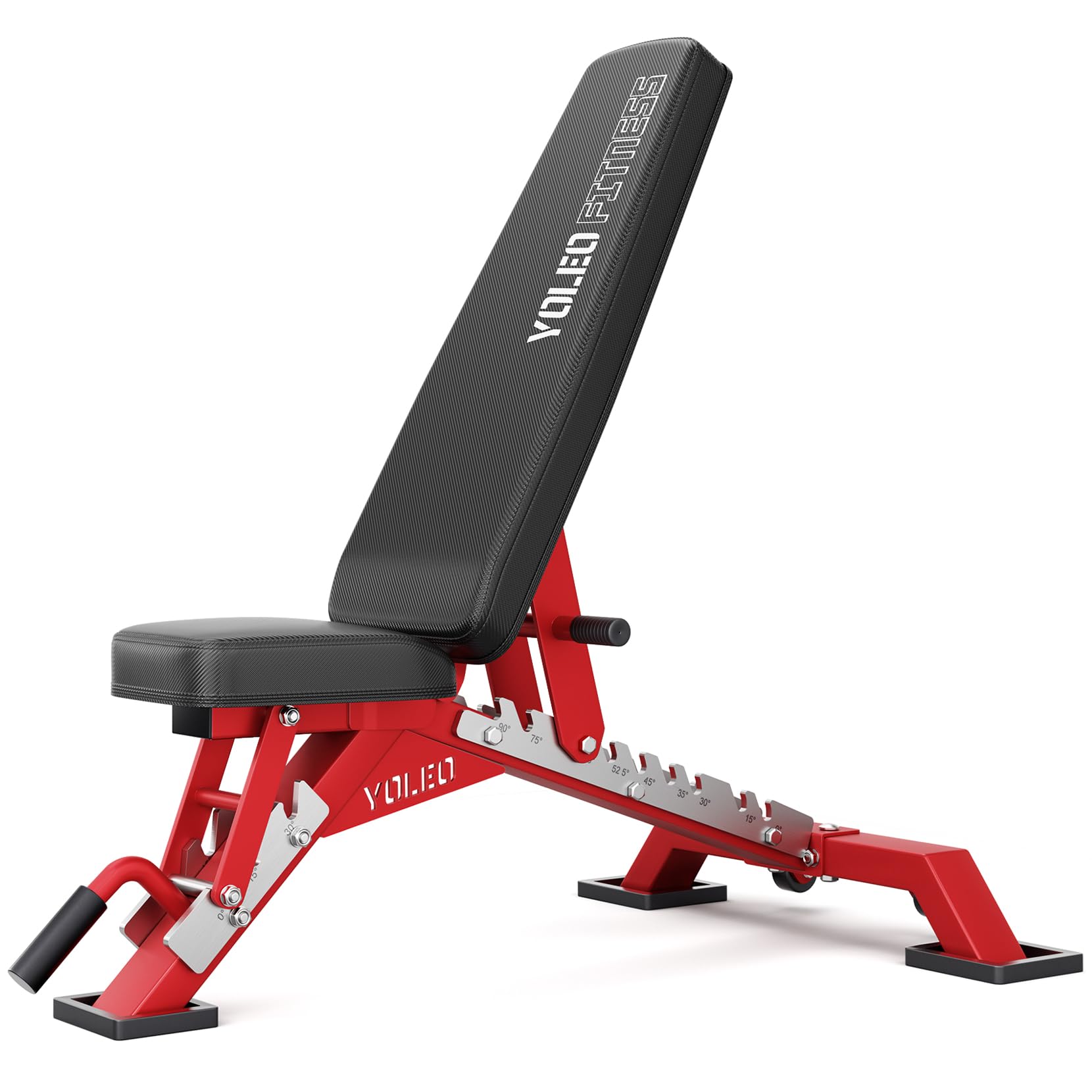
The YOLEO bench uses a three-post base design that eliminates lateral wobble even when you load it near its test limit of 2,315 pounds. The H-shaped back support and triangular frame distribute force evenly, so the bench stays planted on rubber mats or concrete without sliding. At 60.6 pounds, it has enough mass to resist shifting during explosive pressing, yet the built-in wheels and handle make relocation simple.
The adjustment range covers -15 to 90 degrees across ten backrest positions, which means you can hit flat presses, deep inclines for upper chest, and a fully upright position for seated shoulder work. The pad uses 160D high-density pearl sponge with a 2.4-inch thickness, so it remains firm under a loaded barbell without bottoming out. The PU twill leather cover resists sweat absorption and provides enough surface friction to keep your upper back locked in place.
Assembly takes under 20 minutes since the unit arrives 80 percent pre-assembled, and the included wrenches have the correct sizing for all bolts. YOLEO backs the frame with a 10-year replacement service, which reflects confidence in the 8-gauge upgraded steel construction. The 17.7-inch seat height matches IPF standards, allowing proper leg drive for powerlifters who train at home.
Why it’s great
- Three-post frame delivers competition-level lateral stability
- Ten backrest positions from -15 to 90 degrees cover every pressing angle
- 10-year replacement warranty on frame and components
Good to know
- Pad is firmer than plush benches—may feel hard initially if you are used to soft foam
- Transport wheels are 3 inches—adequate for smooth floors but small for rough surfaces
2. Rep Nighthawk Adjustable Weight Bench
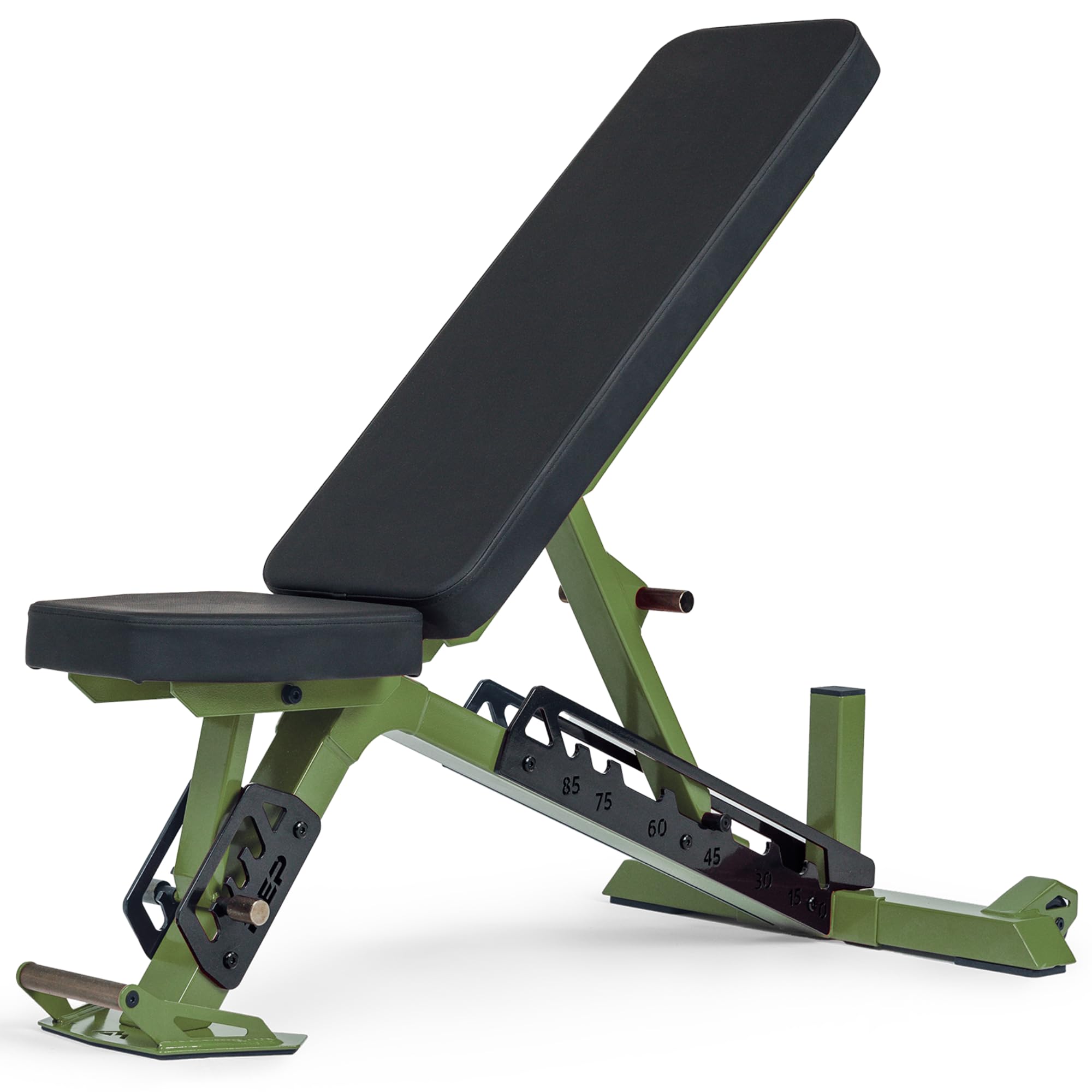
Rep designed the Nighthawk for home gym owners who need a solid bench that folds vertically to reclaim floor space. The alloy steel frame folds into a compact footprint without compromising structural integrity—the closed ladder adjustment system uses thick steel ladders that lock securely at each position. At 88 pounds, this bench feels planted during heavy dumbbell work and does not tip when you lean hard into a single-arm row.
The backrest offers multiple flat, incline, and decline positions, including a 15-degree low incline that is ideal for filling the gap between flat and a steep 30-degree incline. The wider back pad supports broad shoulders and prevents your upper back from slipping during leg drive. The pad material is grippy and easy to clean with a damp cloth, which matters for home gyms shared by multiple users.
The frame includes a port that accepts optional attachments like a leg developer, and the bench stands vertically on its end for storage—a major advantage for garage gyms where floor space is tight. Assembly is straightforward with clear instructions, and the all-metal construction means there are no plastic parts to crack under heavy use. The 700-pound incline rating is conservative enough that intermediate lifters can train with confidence.
Why it’s great
- Folds vertically to save floor space in small home gyms
- Closed ladder system provides secure, wobble-free angle locks
- Wider pad offers better support for broader shoulders
Good to know
- Seat adjustment range is limited—may not suit very short or tall users equally
- No fat pad option for users who prefer extra-wide cushioning
3. JOROTO MD80 Adjustable Weight Bench
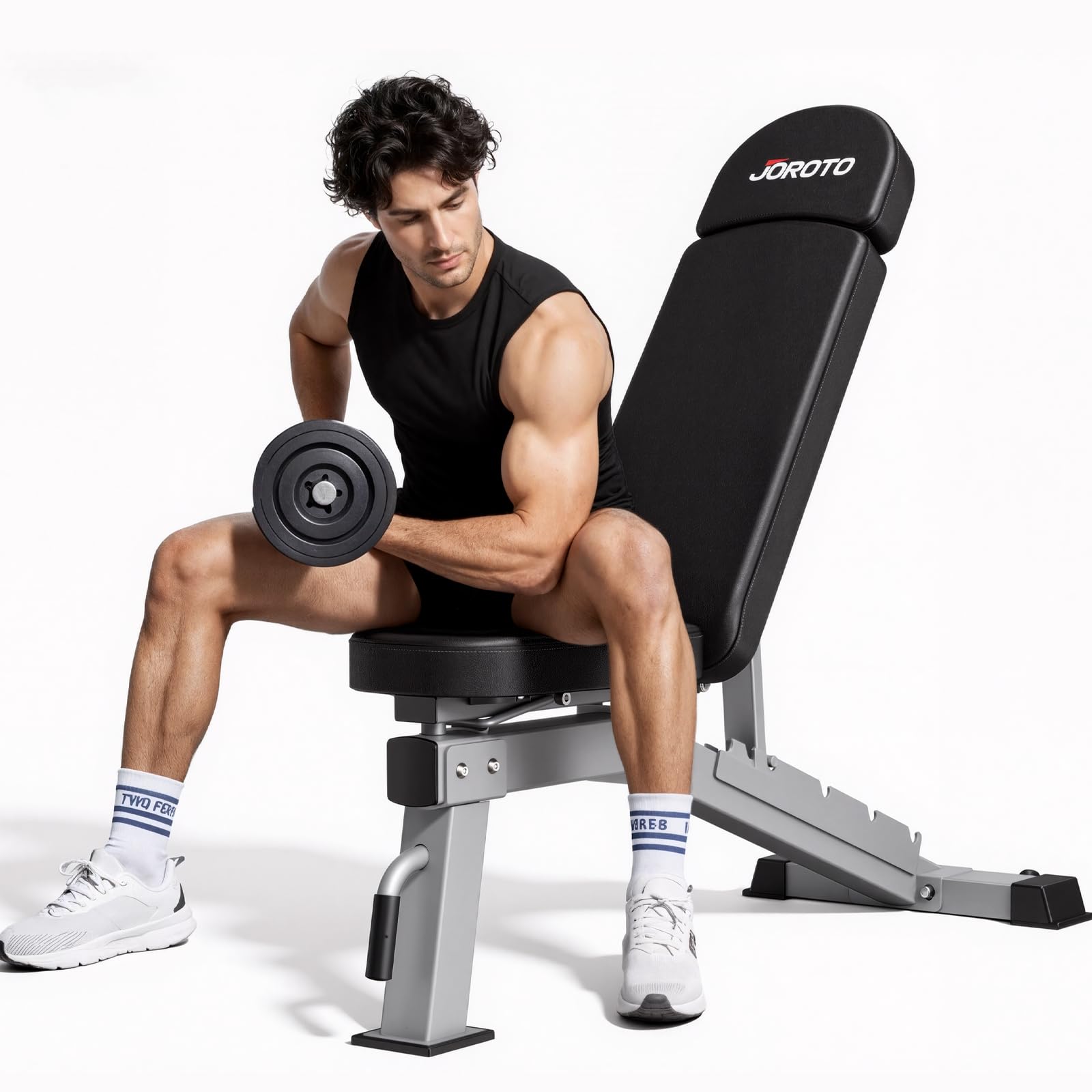
JOROTO built the MD80 with a reinforced triangular frame and high-grade alloy steel that tests to 1,500 pounds despite a rated safe capacity of 1,300 pounds. The frame uses thick steel with tight welds and a zero-wobble design that remains rigid even when you shift your body during unsteady reps. The bench weighs 52.9 pounds, heavy enough to stay put but light enough to roll on its built-in wheels.
The backrest extends to 34 inches, which accommodates taller users who need support from glutes to upper traps without their head hanging off the end. The high-density foam padding uses firm foam rather than soft squishy material—it does not compress under heavy loads, keeping your shoulders in a consistent position rep after rep. The sweat-resistant faux leather is easy to wipe down after sessions.
Seven backrest angles and two seat adjustments cover the standard flat, incline, and decline positions. Assembly requires only five bolts, making it one of the easiest premium benches to set up. The notches that hold the backrest in place are curved into the base rather than welded on, which adds safety by preventing accidental disengagement. The bench does not include a padded footrest for flat exercises, so you will need to anchor your feet on the floor.
Why it’s great
- 34-inch backrest supports tall lifters during flat and incline pressing
- Five-bolt assembly gets you lifting in under 10 minutes
- Curved safety notches prevent accidental backrest collapse
Good to know
- No padded foot extension for decline leg anchoring
- Pad gap between seat and backrest may bother some users during flat pressing
4. Keppi Fitness Bench3000 Max
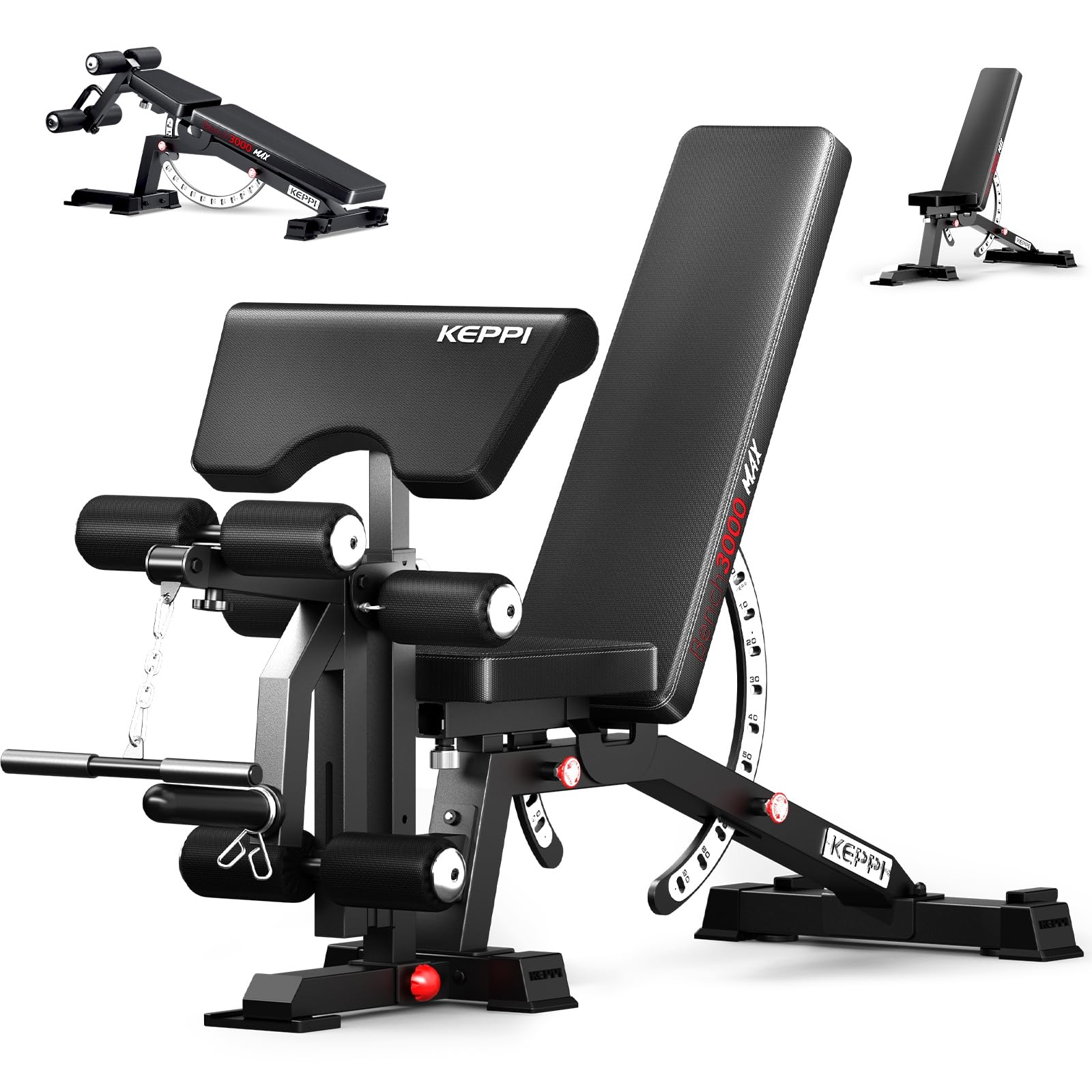
Keppi designed the Bench3000 Max as a complete training station that includes leg extension, leg curl, and preacher curl attachments without requiring a separate machine. The frame uses 2.7 by 1.9-inch commercial thickness steel that supports 1,200 pounds in the flat position, so the bench handles both upper and lower body work without flex. At 76 pounds, it is the heaviest bench in this lineup, which works in your favor for stability.
The backrest offers 12 angle settings from -20 to 90 degrees, while the seat adjusts to three positions, giving you precise control over exercise angles. The leg extension system has five lower support positions to accommodate different leg lengths, and the preacher curl pad adjusts in five height increments for bicep isolation. Both attachments accept 1-inch and 2-inch weight plates, so you do not need to buy specialty collars.
The IPF-style pad measures 11.41 inches wide and 2.36 inches thick, using high-density foam that stays firm under load. Assembly takes about 40 minutes because of the multiple attachments, but the unit arrives partially pre-assembled. The bench can store upright to reduce its footprint when not in use. The 20-inch seat height is taller than standard—users under 6 feet may find it difficult to plant their feet firmly during heavy bench pressing.
Why it’s great
- Leg extension and preacher curl attachments replace separate machines
- 12 backrest positions cover the widest range of any bench reviewed
- Stores upright to minimize floor space in compact home gyms
Good to know
- 20-inch seat height is too tall for safe heavy pressing if you are under 6 feet
- Leg roller pads can feel uncomfortable on thighs during leg curls
5. WFLGFT Y170 Commercial Adjustable Bench
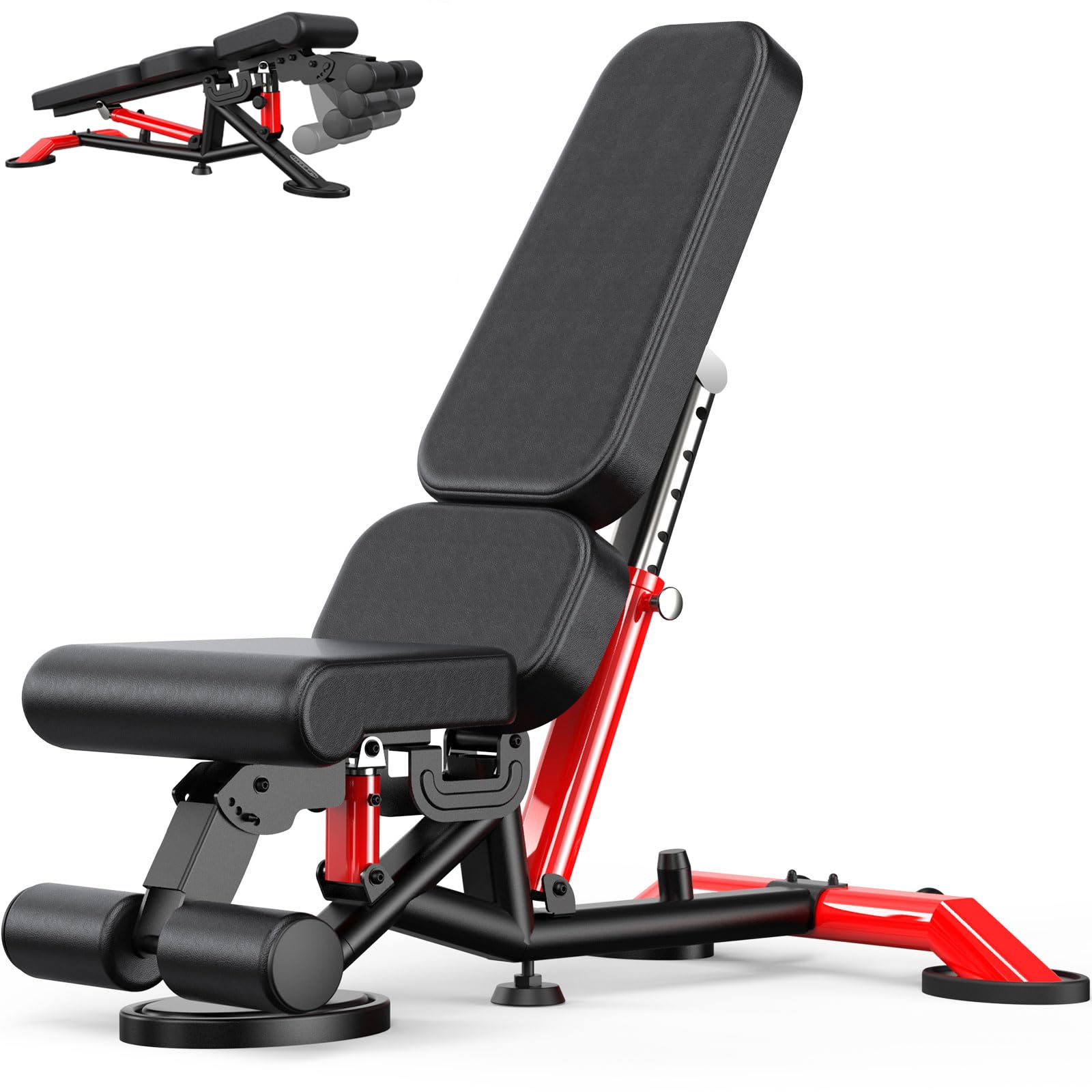
The WFLGFT Y170 uses 50 by 70 millimeter commercial steel with a reinforced triangular frame that holds up to 1,800 pounds. Dual backrest supports attach to the main frame rather than a single central pivot, which eliminates the side-to-side play that cheaper adjustable benches develop after a few months. The bench weighs 68 pounds and stays planted on both rubber gym mats and carpet.
A spring-loaded pin system lets you adjust the backrest to seven positions and the seat to three positions in seconds. The adjustment range covers flat, incline, and decline angles, and the foot bar support tube adjusts in height for decline pressing. The bench folds upright for storage and includes rear wheels for moving it across the room without dragging the rubber feet.
Assembly is straightforward since most of the frame arrives pre-assembled—you mainly attach the backrest and seat padding. The padding is thick and comfortable, with a premium knob system that feels solid in hand. Reviewers specifically highlight the instant backrest adjustment via a lever mechanism that requires no pin removal, which speeds up transitions between sets.
Why it’s great
- Dual backrest supports eliminate side wobble during heavy pressing
- Folds upright with rear wheels for easy storage in tight spaces
- Lever-based backrest adjustment is faster than pin systems
Good to know
- Adjustable head pad is excellent for rows but may shift during flat bench pressing
- Some users report the seat padding feels slightly less dense than the backrest pad
6. Titan Fitness Elite Series Single Post Flat Bench
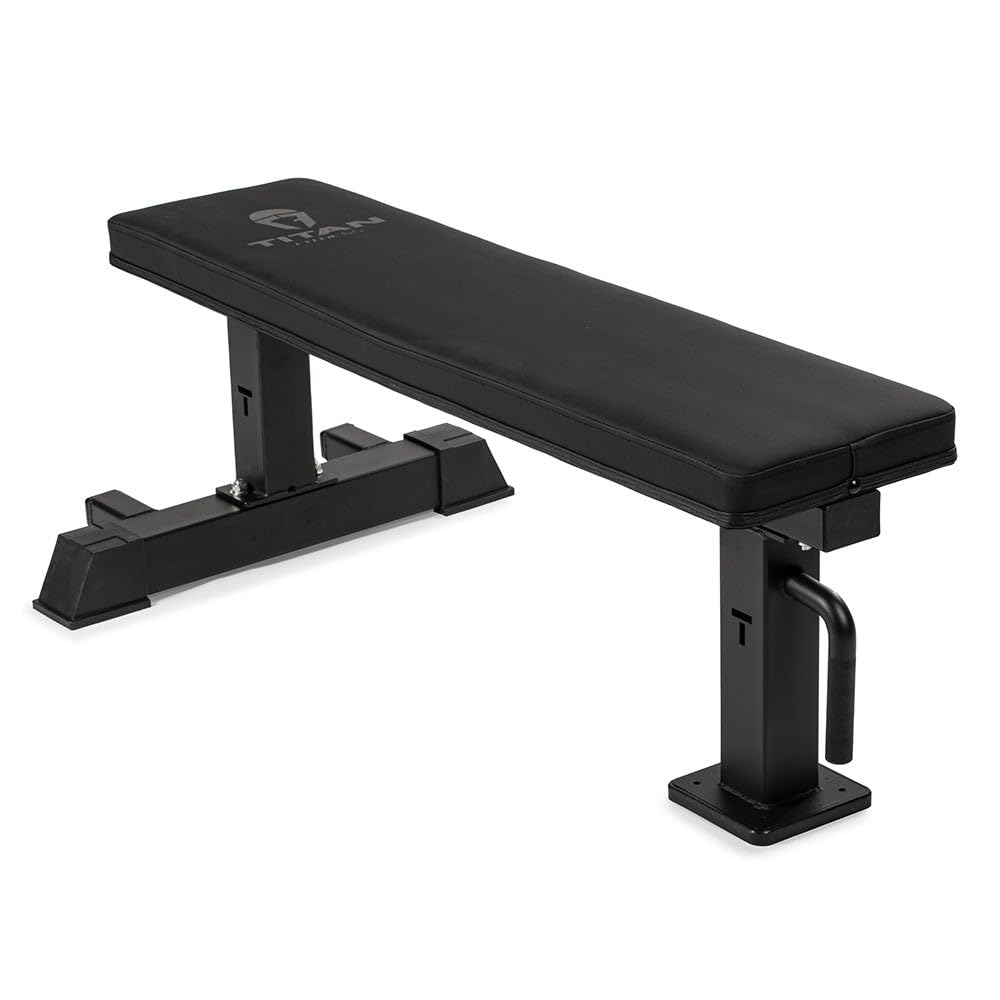
Titan built this flat bench for lifters who want a dedicated, non-adjustable platform without the gap between seat and backrest that adjustable benches create. The single-post base allows your feet to sit flat during heavy benching, enabling a better arch and stronger leg drive. The 2×3 and 3×3 inch steel construction supports up to 1,000 pounds without flexing or twisting.
The HeftyGrip vinyl pad is 2.5 inches thick with a textured surface that grabs your shirt and prevents sliding during overloaded eccentrics. The pad is wide enough to support your shoulder blades during a competition-style setup. At 56 pounds, the bench stays stable during heavy dumbbell presses and does not tip when you re-rack unevenly.
Transport wheels and a knurled handle make it easy to move this bench around the gym, even though it lacks wheels on the base. Assembly is minimal because the frame comes mostly welded—you attach the pad to the frame with the included hardware. The flat-only design means you need a separate adjustable bench if you want incline or decline angles, but for pure bench press work this is one of the most stable options available.
Why it’s great
- Single-post base allows unrestricted foot placement for better arch
- HeftyGrip vinyl pad prevents shirt slippage during heavy pressing
- 2×3 and 3×3 steel frame resists twisting at high loads
Good to know
- Flat bench only—no incline or decline capability
- Pad width may feel narrow for users with very broad shoulders
7. Pooboo Y-160 Adjustable Weight Bench
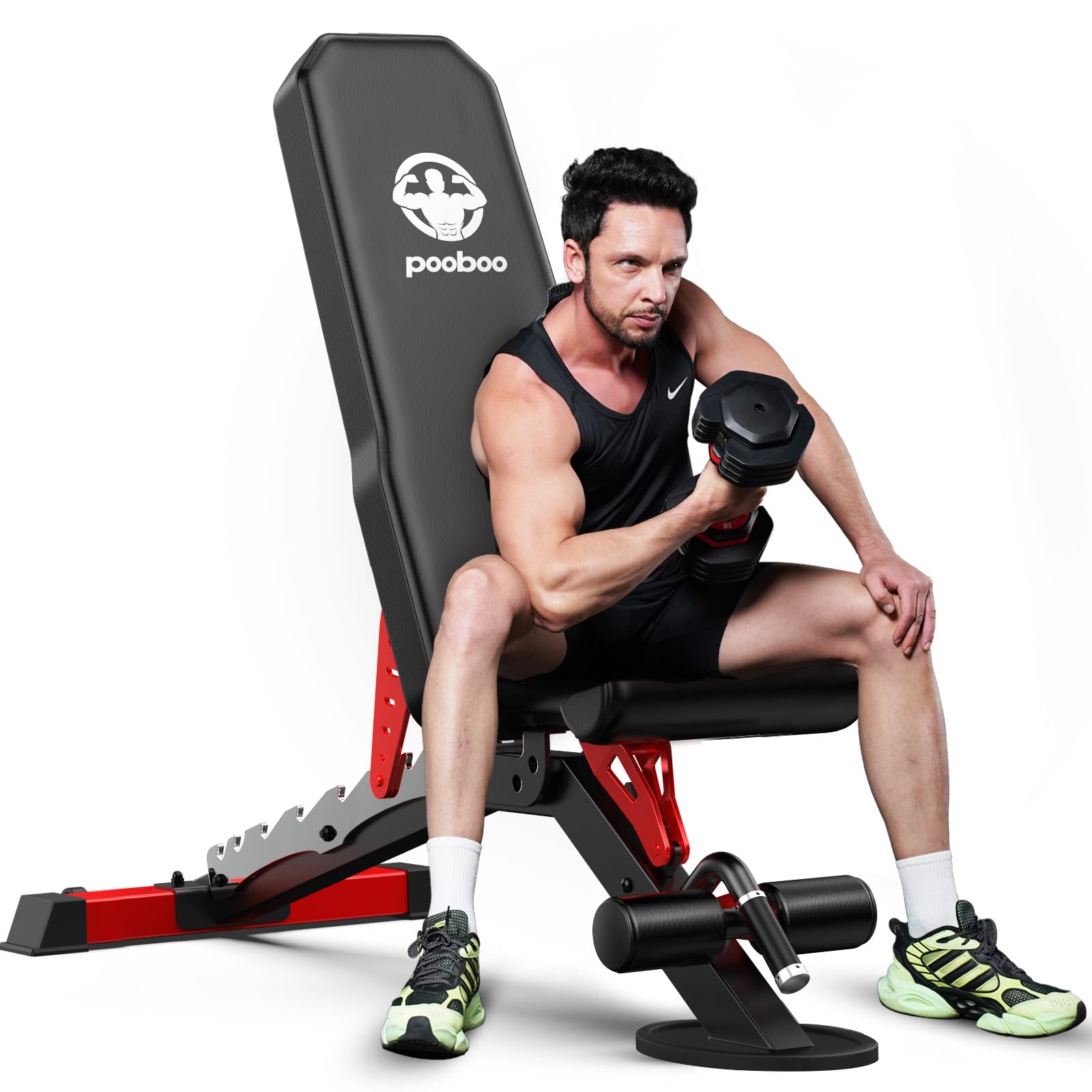
The Pooboo Y-160 uses commercial-grade square steel with a triangular structure that supports up to 1,500 pounds. The main frame uses integral construction rather than bolted segments, which eliminates the wobble you get from multi-piece frames. The bench weighs 49.4 pounds, lighter than the premium options but still stable enough for intermediate weight levels.
Eight backrest positions and three seat settings cover flat, incline, and decline angles, with a C-shaped lock catch that lets you adjust by pushing the backrest. The pad measures 31.5 inches long with 2.5-inch thick soft foam covered in high-grade leather. The seat padding is adequate but some users note the pad density is slightly lower than the backrest section.
Large rubber caps on the rear legs prevent sliding on any floor surface, and the 10 centimeter foam pads on the leg support protect your thighs during decline work. Transportation wheels and a handle at the foot cushion make moving the bench simple despite its weight. Assembly takes around 10 minutes since the unit arrives 96 percent pre-assembled, and a numbered instruction manual guides you through the final steps.
Why it’s great
- Integral main frame construction avoids bolt-induced wobble
- C-shaped lock catch enables hand-free backrest adjustment
- 96 percent pre-assembled for near-instant setup
Good to know
- Seat padding is softer than backrest—may compress faster
- Decline position range has fewer options than incline range
8. Finer Form Decline Ab Bench
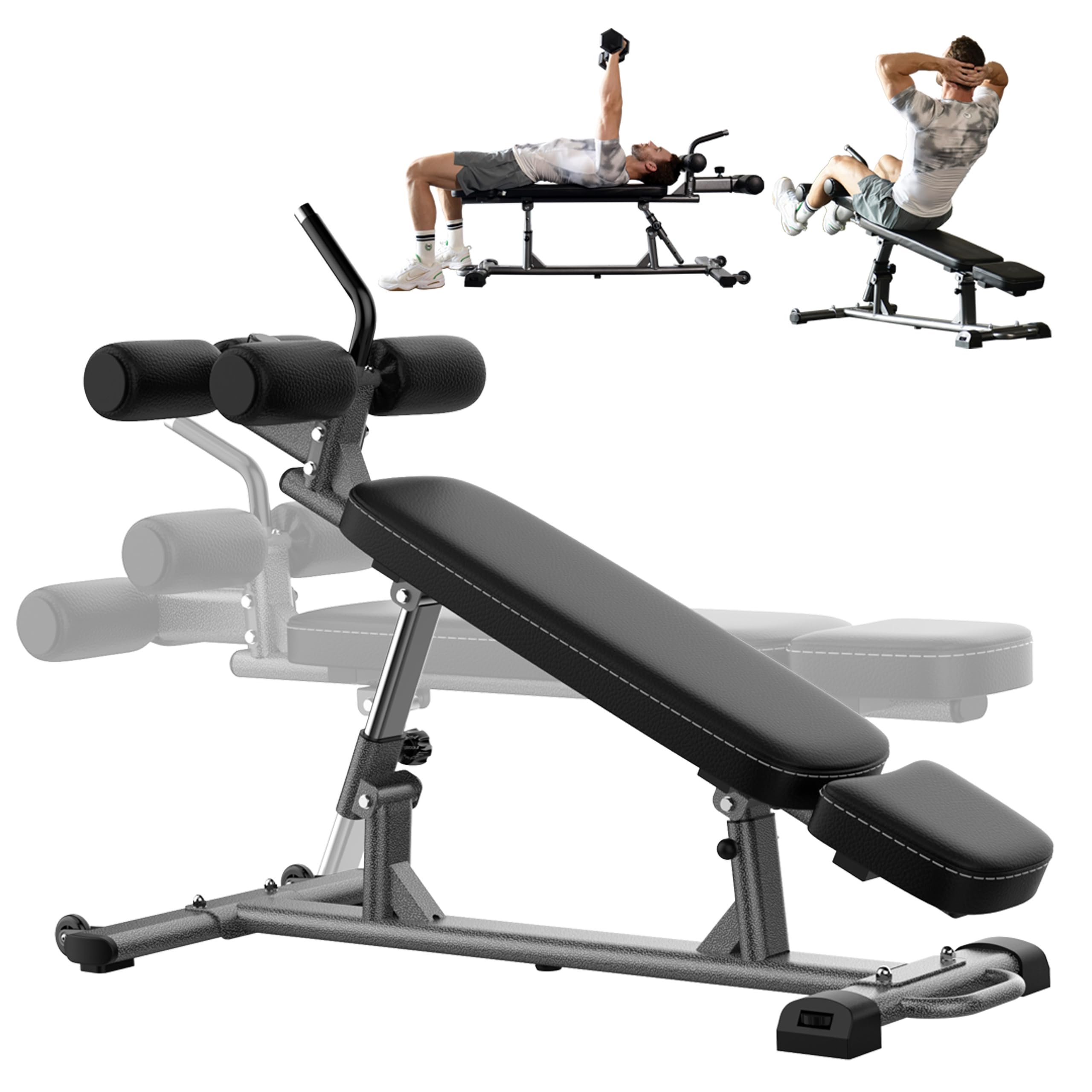
Finer Form designed this bench specifically for decline work, including sit-ups, reverse crunches, and decline dumbbell presses. The heavy-duty steel frame supports 1,100 pounds, which is overkill for ab work but valuable if you also plan to press on it. The adjustable foot roller adapts to different heights and leg lengths, securing your ankles during decline sit-ups without slipping.
The backboard is longer than standard ab benches, providing support for taller users up to 6 feet. The thick padding covers the full length of the board, so your spine is cushioned during every rep. A steel handle at the top end enables reverse crunches and leg lifts, converting the bench into a dedicated core trainer without needing additional attachments.
The bench switches between flat and decline positions by moving the foot roller assembly. Assembly takes about an hour, with all hardware included in the box. The wheels on the rear leg make it simple to reposition the bench during a circuit workout. If your primary goal is ab development with occasional dumbbell pressing, this bench offers a focused design that a general adjustable bench cannot match.
Why it’s great
- Extra-long backboard supports taller users during decline work
- Reverse crunch handle allows targeted core exercises without attachments
- Adjustable foot roller accommodates varied leg lengths securely
Good to know
- Assembly instructions can be unclear—may require trial and error
- Flat position is low—not ideal if you need standard 17-inch bench height for rack work
9. leikefitness Multifunctional Aerobic Deck

The leikefitness deck breaks the traditional bench mold by combining a weight bench, step platform, plyometric box, and ramp into a single plastic-and-steel unit. The alloy steel frame supports up to 330 pounds, which limits heavy barbell work but works well for dumbbell presses and bodyweight exercises. The unit weighs only 21 pounds, making it one of the most portable options for home gyms where equipment must be moved frequently.
Two-level height adjustment combines with three angle locations—flat, incline, and decline—plus four bracket angles for broad positioning. The anti-slip textured rubber top provides a stable surface for step aerobics and box jumps, while rubber grip feet keep the deck from sliding on hard floors. Internal storage holds resistance bands and small dumbbells, reducing clutter.
The deck comes fully assembled, so you can start working out immediately after unboxing. The included resistance band and instruction booklet cover exercises ranging from step-ups to chest presses. This is not the bench for heavy powerlifting, but for home gyms focused on bodyweight training, light dumbbell work, and cardio variety, the leikefitness deck offers a flexible platform that traditional benches cannot match.
Why it’s great
- Multi-function design replaces step, ramp, and bench in one unit
- Fully assembled out of the box with no build time required
- Internal storage keeps bands and small weights organized
Good to know
- 330-pound capacity limits use for heavy barbell pressing
- Plastic frame components may not withstand repeated box jumps over 200 pounds
FAQ
What bench height works best for home gym use with a power rack?
Can an adjustable bench replace a flat bench for serious powerlifting?
How much weight capacity do I realistically need for home training?
Final Thoughts: The Verdict
For most users, the bench for home gym winner is the YOLEO Commercial Adjustable Weight Bench because its three-post frame delivers competition-level stability at a price that undercuts commercial brands, and the 10-year warranty protects your investment. If you want a foldable bench that stands vertically to save space, grab the Rep Nighthawk Adjustable Weight Bench. And for pure flat bench pressing without gap or compromise, nothing beats the Titan Fitness Elite Series Single Post Flat Bench.

Mo Maruf
I created WellFizz to bridge the gap between vague wellness advice and actionable solutions. My mission is simple: to decode the research and give you practical tools you can actually use.
Beyond the data, I am a passionate traveler. I believe that stepping away from the screen to explore new environments is essential for mental clarity and physical vitality.