Our readers keep the lights on and my smoothie glass nicely filled. As an Amazon Associate, I earn from qualifying purchases.
An attic that hits 150°F doesn’t just make your upstairs unbearable—it forces your air conditioner into overdrive, degrades roof shingles, and turns stored belongings into heat-soaked wreckage. A properly sized attic fan is the single mechanical fix that directly attacks this thermal buildup, but picking the wrong CFM rating or installation type can leave you with a noisy appliance that barely moves air.
I’m Mohammad Maruf — the founder and writer behind WellFizz. I’ve spent hundreds of hours analyzing the mechanical specs, customer reliability data, and real-world airflow performance across every meaningful attic fan category to build this precise guide.
Whether you need a gable-mounted workhorse, a solar-powered silent runner, or a smart unit you control from your phone, this guide to the best attic fan breaks down every meaningful spec so you buy the right unit the first time.
How To Choose The Best Attic Fan
Choosing the wrong attic fan means either inadequate airflow that does nothing to lower temperatures, or excessive negative pressure that pulls conditioned air out of your living space and can backdraft combustion appliances. The right choice comes down to understanding three specific variables: your attic’s volume, the physical opening where the fan installs, and whether you need continuous 24/7 ventilation or just daytime solar assistance.
CFM Capacity and Attic Square Footage
The industry standard holds that an attic fan should move enough air to exchange the entire attic volume roughly eight to ten times per hour. Calculate your attic’s cubic footage (square footage times average height), divide by four (to get CFM needed for a 15‑minute air exchange), and purchase a fan that matches that number. A 1,500 sq. ft. attic with an 8‑ft peak averages roughly 4 ft. of height, giving 6,000 cubic feet—requiring a fan around 1,500 CFM. Oversizing to 4,000+ CFM in a tight attic can collapse soffit vents and create negative air pressure inside the home.
Mounting Type: Gable, Wall, or Direct‑Drive Roof
Gable‑mount fans sit inside the attic at the gable end and are the easiest to install and service—they require no roof penetration. Wall‑mount shutter fans install on an exterior wall (often used for sheds, garages, or workshops) and provide high CFM output with automatic louvers. Direct‑drive whole‑house fans mount in the ceiling between the attic and living space; these pull air from the house and push it into the attic, requiring significant attic exhaust venting (typically 6–8 sq. ft. of net free vent area) to function without damaging the roof structure. Choose based on your existing vent openings and how comfortable you are cutting a hole in your roof or wall.
Control Method: Thermostat, Humidistat, or Smart App
A basic thermostat‑only fan turns on above a set temperature (typically 95–105°F) and runs wide open until the temp drops below the setpoint. Humidistat‑equipped fans add moisture sensing—critical in humid climates where mold and rot are concerns. Smart app‑controlled units (like the QuietCool AFG and AC Infinity AIRLIFT models) allow remote temperature and humidity setpoints, scheduled operation, and real‑time data logging. App control is meaningful if you want staging (low speed at moderate heat, high speed at peak heat) rather than a simple on/off binary.
Quick Comparison
On smaller screens, swipe sideways to see the full table.
| Model | Category | Best For | Key Spec | Amazon |
|---|---|---|---|---|
| AC Infinity AIRLIFT T14 | Smart Shutter | App‑controlled temperature and humidity programming | 1513 CFM / 14″ blade / Wi‑Fi | Amazon |
| Quietcool AFG SMT PRO-2.0 | Smart Gable | Plug‑and‑play gable mount with mobile app | 1945 CFM / 2‑speed / 120W | Amazon |
| iLIVING ILG8SF20V-ST | Shutter Wall | 5000 sq. ft. coverage with variable speed thermostat | 3368 CFM / 20″ blade / 980 RPM | Amazon |
| iLiving 24″ Shutter Fan | High‑CFM Shutter | Large garages, shops, and metal buildings | 4244 CFM / 24″ blade / 1/4 HP | Amazon |
| Cool Attic CX24DDWT | Whole House | Houses up to 1,800 sq. ft. with attic access | 2985 CFM / 24″ direct drive / 2‑speed | Amazon |
| VEVOR 24″ Exhaust Fan | Wall Shutter | Budget‑friendly high‑CFM for sheds and workshops | 3320 CFM / 24″ aluminum / 190W | Amazon |
| Air Vent 53315 Gable Fan | Gable Mount | Entry‑level gable ventilation up to 1,500 sq. ft. | 1050 CFM / 14″ plastic blade / 180W | Amazon |
| Amtrak Solar SAA50 | Solar Gable | Zero‑energy daytime ventilation for small spaces | 10″ blade / 50W solar / 12V DC | Amazon |
| Remington Solar Builder Series | Hybrid Solar | Solar with AC backup for 24/7 attic moisture control | 40W solar / 110V adapter / hygrostat + thermostat | Amazon |
In‑Depth Reviews
1. AC Infinity AIRLIFT T14 Shutter Exhaust Fan

The AC Infinity AIRLIFT T14 is the most technically complete attic fan in this lineup because it pairs a dual‑ball bearing EC motor with a full Wi‑Fi climate controller. The 14‑inch aluminum blade moves 1513 CFM at a measured 68 dBA, but the real value is the programmable logic—you can set separate temperature and humidity thresholds, schedule minimum speed operation for constant air turnover, and receive push alerts if conditions exceed your limits. The powder‑coated steel shutters close automatically when the fan is off, blocking cold drafts and pests from entering the attic.
Installation is straightforward for anyone comfortable cutting a wall opening and running power—the unit requires a dedicated circuit but draws only 1.1 amps at full speed. The IP‑44 rating means it handles exposed attic dust and incidental moisture without compromising the motor bearings. The app interface stores historical climate data, which is genuinely useful for confirming your fan is actually reducing peak attic temperatures day over day.
Owners consistently note the AIRLIFT is nearly silent at low speeds and only becomes distinctly audible at the highest setting. The aluminum shutters resist corrosion better than stamped steel alternatives, and the remote control provides quick on/off without opening the app. The only functional gap is the lack of an external temperature probe—the unit reads ambient air at the fan location, not attic intake temp or outdoor temp for differential control.
Why it’s great
- Full Wi‑Fi app with temperature/humidity scheduling and data history
- EC motor provides efficient, variable speed without mechanical hum
- IP‑44 weather resistance with tight‑sealing automatic shutters
Good to know
- Requires separate wiring and a dedicated outlet or junction box in the attic
- No external probe for outdoor temperature differential logic
2. Quietcool AFG SMT PRO-2.0 Smart Attic Fan

The Quietcool AFG SMT PRO-2.0 is a plug‑and‑play gable fan that solves the biggest pain point of attic fan installation—hardwiring. The unit comes with a 20‑foot power cord and a smart control hub that connects to your home Wi‑Fi, allowing you to set temperature and humidity thresholds, choose between low and high speed, and monitor attic conditions from the app. The two‑speed PSC motor delivers up to 1,945 CFM on high while drawing only 120 watts, making it one of the most power‑efficient gable fans available.
At 8.25 inches, the alloy steel blade is noticeably smaller than the physical housing suggests, but the ducted blower design accelerates airflow through a concentrated opening—this means higher static pressure and better performance through long duct runs or restrictive gable louvers. The Fire Safety Sense shut‑off is a notable addition: if the internal sensor detects smoke, the fan automatically powers down to prevent oxygen feed to a potential fire.
Setup time is roughly 20 minutes for the mechanical install and about 10 minutes to pair the app. The controller box mounts near the fan and includes a manual override. Owners in hot climates report staging the low speed at 100°F and high speed at 115°F, effectively keeping attic temperatures below 120°F even during peak summer afternoons. The key complaint is that the mounting keyhole tabs don’t match the included screw heads perfectly, requiring hardware store trip for smaller‑diameter screws.
Why it’s great
- Truly plug‑and‑play with 20‑foot cord—no electrician needed
- Two‑speed operation lets you match airflow to heat load
- Fire Safety Sense shut‑off adds an essential safety layer
Good to know
- Keyhole mounting slots are incompatible with provided screws
- Smart hub requires strong Wi‑Fi signal in the attic space
3. iLIVING 20″ Shutter Exhaust Fan ILG8SF20V-ST

The iLIVING ILG8SF20V-ST hits the sweet spot between raw CFM capacity and practical control, delivering 3,368 CFM from a 20‑inch aluminum blade paired with a Thermospeed controller that adjusts fan speed proportionally to attic temperature rather than just flipping a binary on/off switch. The coverage rating of 5,000 square feet is generous for a residential attic fan—most homes under 3,000 sq. ft. will see aggressive temperature reduction within minutes of the fan kicking on. The 1/5 HP motor runs at 980 RPM and draws 2.2 amps, which is manageable on a standard 15‑amp lighting circuit.
The galvanized steel frame and aluminum shutters are corrosion‑resistant, and the included OSHA‑compliant wire guard on the interior side prevents accidental contact. The thermal control range of 32–130°F is wider than most competitors, allowing use in freezing garages where you want the fan to run for moisture ventilation even in winter. The noise level is measured at under 69 dB, which is conversation‑level—audible in a quiet garage but not intrusive inside the house.
Installation requires cutting a wall opening that matches the 20‑inch shutter dimensions and wiring the controller into a junction box (the power cord is not included). Owners consistently report that the fan drops attic temperatures by 10–15°F within 45 minutes and that the variable speed controller eliminates the annoying “roaring on, dead quiet off” cycling of cheaper thermostat‑only units. A small percentage of units ship with minor blade alignment issues that require balancing with included washers—check blade clearance before full mounting.
Why it’s great
- Variable speed Thermospeed controller removes temperature hysteresis problems
- 3,368 CFM at a price point well below premium competition
- Aluminum shutters and blades resist rust and maintain seal over years
Good to know
- No power cord included—must be wired or cord‑ended separately
- Some units require manual blade balancing for low‑vibration operation
4. iLiving 24″ Wall Mounted Exhaust Fan

When your space—whether a 40‑foot metal building, a large workshop, or a sprawling attic—needs airflow measured in thousands of CFM, the iLiving 24‑inch shutter fan is the brute‑force solution. It moves 4,244 cubic feet per minute using a 1/4 HP motor operating at 1,050 RPM, and the 24‑inch aluminum blade is paired with aluminum gravity‑operated shutters that seal when the fan is off. The coverage area of 6,200 square feet makes this one of the highest‑capacity residential‑adjacent fans available without jumping to commercial industrial equipment.
The galvanized steel frame resists corrosion, and the permanently lubricated, thermally protected motor reduces maintenance frequency. The fan does not include a speed controller or thermostat—it requires the iLIVING ILG8SFSC variable speed controller (sold separately) or a simple wall switch. This is a deliberate trade‑off: the fan itself is a pure mechanical device without electronics that can fail, leaving the control complexity to an external module you can replace without opening the wall.
Owners who installed this in 40×60‑foot shops report that it clears welding smoke and dust within minutes and keeps the space bearable even in Florida summer humidity. The shutters are notably rattly at high speeds—some users add foam weatherstrip tape to the shutter edges to eliminate noise—but the airflow output is consistently praised as far exceeding expectations for the price. The lack of included wiring accessories means you should budget for conduit, a junction box, and potentially a controller before installation.
Why it’s great
- Highest CFM rating in this lineup at 4,244 for large‑space ventilation
- All‑metal construction with galvanized frame and aluminum shutters
- Thermally protected motor is designed for years of daily cycling
Good to know
- Shutters create noticeable rattle at high speed without aftermarket dampening
- Requires separate purchase of speed controller for variable operation
5. Cool Attic CX24DDWT Whole House Fan

The Cool Attic CX24DDWT is a direct‑drive whole‑house fan, meaning it mounts in the ceiling between your living space and the attic rather than on a gable wall. It pulls cool outdoor air in through open windows and pushes hot indoor air into the attic, requiring the attic itself to have sufficient exhaust venting (the manufacturer specifies 6–8 sq. ft. of net free vent area). The 24‑inch plastic blade produces 2,985 CFM on high speed with a re‑engineered bracing system that reduces vibration significantly compared to older tube‑style mounts.
Made in Texas, this fan comes with a powder‑coated finish that resists moisture in the attic environment. The two‑speed motor allows low for quiet evening ventilation (2.25 amps) and high for aggressive daytime cooling (higher amp draw). The rough opening required is 26 x 28 inches, and the outside shutter extends to 27‑3/4 x 29‑3/4 inches—measure your ceiling joist spacing carefully before ordering. The direct‑drive design means fewer moving parts than belt‑drive units, but it also transmits motor vibration more directly into the ceiling structure.
Owners report that the fan drops indoor temperatures by 3–4°F within 15 minutes of operation when used with open windows. The installation requires building a supporting frame in the ceiling, which can be done from below if you have no attic access. The included hardware has been a pain point: stripped screws, missing belts in belt‑drive variants, and loose pulleys have been reported across the customer history, so tighten every fastener before first operation and consider replacing the included switches with a solid‑state triac controller for smoother speed control.
Why it’s great
- Direct‑drive eliminates belt replacement and alignment maintenance
- Re‑engineered bracing minimizes vibration transfer to ceiling
- Made in the USA with domestic motor and assembly
Good to know
- Requires substantial attic exhaust vent area—insufficient vents cause damage
- Some units ship with loose hardware; pre‑install inspection is mandatory
6. VEVOR 24″ Exhaust Fan

At an entry‑level price point, the VEVOR 24‑inch exhaust fan delivers 3,320 CFM of airflow from an all‑metal structure that uses an aluminum blade and aluminum shutters. The 190W motor spins at 1,300 RPM and is fully enclosed with thermal protection, making it suitable for dusty garage or shed environments where debris ingestion is a risk. The galvanized steel frame is rust‑resistant, and the automatic shutters close tightly when the fan is off to prevent backdrafts and insect entry.
This is a basic, no‑frills unit—it has no built‑in thermostat, no speed controller, and no included power plug. You must purchase an external plug or wire it directly into a junction box, and you will need a separate thermostat controller if you want automatic temperature‑based operation. The bare‑bones design keeps the cost low and the reliability high by eliminating electronic components that can fail, but it also means the installation is not truly “out of the box.”
Customer experiences reveal that this fan is surprisingly quiet for its CFM output, with most reviewers describing it as “loud enough to know it’s running but not intrusive.” The louvers close positively and resist wind rattling better than some pricier shutter fans. The most common complaint is the absurdly short power pigtail—it is barely long enough to terminate inside a standard junction box, and many users had to splice in additional wire. The fan works perfectly with an external thermostatic controller, making it a cheap core component for a custom‑built ventilation system.
Why it’s great
- Highest CFM‑per‑dollar ratio in this guide
- Fully enclosed thermally protected motor handles dusty environments
- Gravity shutters seal tightly and resist wind noise
Good to know
- No thermostat, no speed control, and no plug included
- Power pigtail is extremely short—plan for a splice or extend the wire
7. Air Vent Gable Ventilator 53315
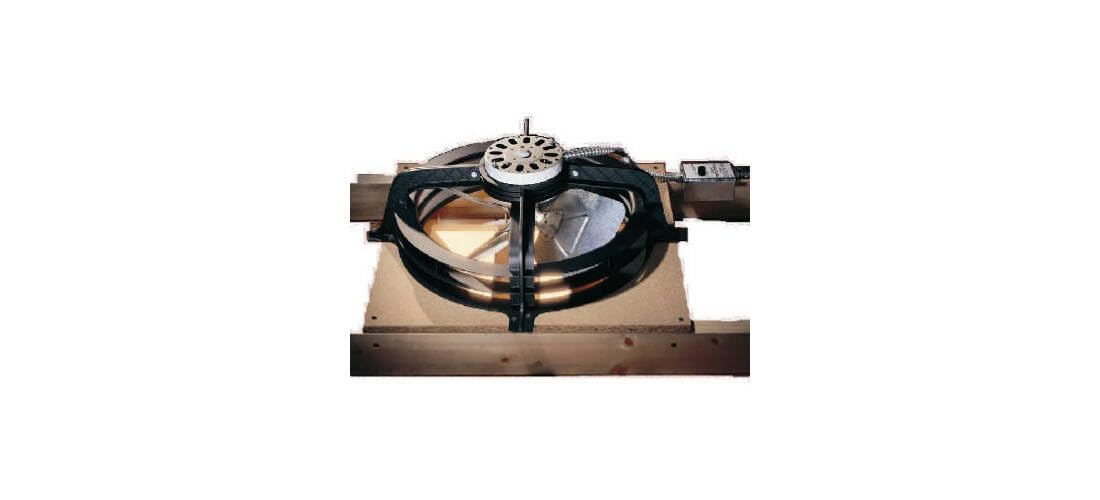
The Air Vent 53315 is a budget‑conscious gable‑mount fan that serves small attics, garages, and workshops up to 1,500 square feet. The 14‑inch plastic blade moves 1,050 CFM from a 1/12 HP motor that draws 3.2 amps—modest numbers by modern standards, but sufficient for focused applications like a two‑car garage attic or a single room workshop. The stainless steel finish on the housing provides corrosion resistance, and the included thermostat provides basic temperature setpoint control.
This fan has an unusual installation flexibility: it is designed for gable vertical mount but several owners have confirmed it works mounted horizontally on a roof incline. The plastic mounting tabs require care—overtightening cracks them—but the unit itself is lightweight and manageable in tight attic spaces. The motor runs reasonably quietly for a non‑variable speed fan, drawing positive feedback from users who need basic heat exhaust without the complexity of app or remote controls.
The primary failure pattern across customer reviews is inconsistent quality control. Several units shipped with misaligned impellers that required manual realignment, and one review noted the motor had narrower shaft bearings than expected compared to older units. The plastic blades are adequate for occasional use but will not survive the same duty cycle as aluminum or steel components. If your application demands continuous cycling through a full summer, the plastic construction and variable QC make this a high‑risk long‑term investment.
Why it’s great
- Very low entry cost for basic gable ventilation
- Lightweight and easy to maneuver inside tight attic spaces
- Works both vertically (gable) and horizontally (roof) in many configurations
Good to know
- Plastic mounting tabs crack easily if overtorqued
- Quality control is inconsistent—check impeller alignment before mounting
8. Amtrak Solar SAA50 Solar Attic Fan
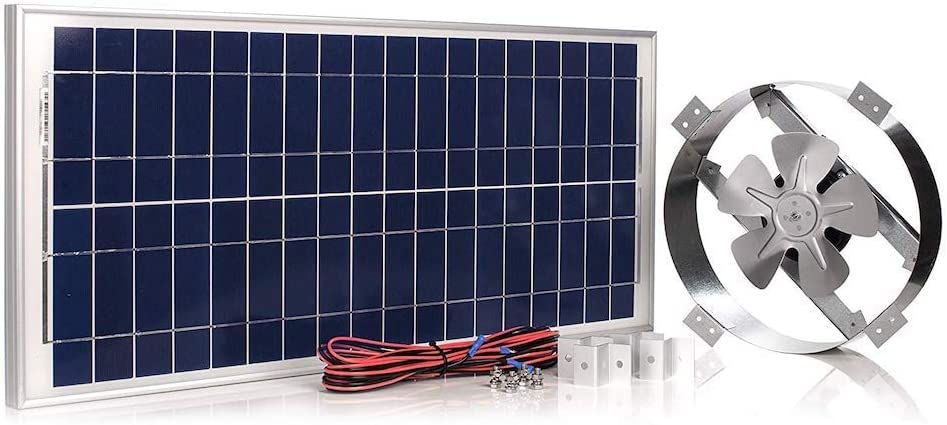
The Amtrak Solar SAA50 is a 50‑watt solar‑powered attic fan designed for zero‑electricity daytime ventilation in spaces up to 2,250 square feet. The 12‑volt DC motor runs a 10‑inch blade inside a 12‑inch galvanized steel housing, and the entire assembly mounts into a gable vent or roof opening. The included 50‑watt solar panel connects with 15 feet of wire, giving you flexibility to place the panel in direct sun even if the fan opening is shaded. The sealed ball‑bearing motor is thermally protected and requires no maintenance.
The critical limitation is that the fan only runs when the solar panel receives direct sunlight. Partial cloud cover slows the blade, and full overcast stops it entirely—meaning this fan provides zero nighttime ventilation. The motor is high‑RPM and small, so the airflow is audible when running at full speed; it is not a “silent” unit despite the solar label. The included hardware is functional but the wire connectors are thin and poorly sealed, requiring careful waterproofing if exposed to weather.
Owners reported garage attic temperature reductions of approximately 20°F during peak sun hours, and greenhouse users saw a 10°F drop in a 10×12 structure. The fan cannot open the type of heavy gravity louvers recommended in the instructions—the airflow force is insufficient—so you should only install this behind existing open louver vents or with lightweight dampers. The panel’s output voltage drops sharply with even partial shading, so a shadow from a branch or nearby structure will significantly reduce performance.
Why it’s great
- Runs entirely on solar—zero operating cost and no wiring to house power
- All‑metal galvanized housing resists corrosion in unconditioned attic spaces
- 15‑foot wire harness gives flexibility for optimal panel placement
Good to know
- Stops completely in overcast conditions or after sunset—no 24/7 coverage
- Cannot open heavy gravity louvers; best used with permanently open vents
9. Remington Solar Builder Series 40W Attic Fan

The Remington Solar Builder Series differentiates itself from other solar attic fans with a hybrid 110V AC adapter that allows the fan to run off household power when solar input is insufficient. This solves the fundamental limitation of pure solar fans—no nighttime operation—by automatically switching from 40W solar panel to AC power when the sun goes down. The brushless DC motor is friction‑free and rated for long service life, and the integrated humidistat and thermostat activate the fan based on either moisture or temperature thresholds, providing 24/7 attic protection.
The extra‑large 22.5‑inch square flashing covers up to a 22‑inch roof opening and is made from heavy steel to prevent leaks—this is a meaningful upgrade over smaller flashing plates that require shingle cutting. The powder‑coated finish resists UV degradation, and the Texas Windstorm certification indicates it passes structural testing for high‑wind regions. The built‑in controls allow you to set temperature and humidity setpoints independently, and the fan runs at a single speed determined by the available solar power or the AC adapter’s constant output.
Customer experience is sharply divided. Supporters report that the fan lowered attic temperatures by 6–7°F and that the hybrid adapter eliminated all concerns about cloudy days. Critics describe a nightmare warranty process: one owner lost two of three units and found that the warranty covers only the defective part (not the full fan or labor), with the company refusing to pay for roof‑level removal and reinstallation. The manufacturer’s customer service responsiveness has been described as poor, and the app interface shows temperature and humidity but does not display whether the fan is actually running—you must visually confirm blade rotation.
Why it’s great
- Hybrid solar/AC design provides 24/7 operation regardless of weather
- Extra‑large 22.5‑inch steel flashing eliminates leak risk on roof installation
- Brushless DC motor is nearly silent and built for long‑term reliability
Good to know
- Warranty covers parts only, not full unit replacement or labor costs
- App lacks an on/off status indicator—no way to confirm operation remotely
FAQ
What CFM do I need for a 2,000 sq. ft. attic with an 8‑foot peak?
Can I install a gable fan horizontally on the roof instead of the gable wall?
Will a solar attic fan work in a shaded attic?
Does an attic fan need its own breaker or can it share a circuit?
Final Thoughts: The Verdict
For most users, the best attic fan winner is the iLIVING 20″ ILG8SF20V-ST because it delivers 3,368 CFM with variable speed thermostat control at a mid‑range price, covering the vast majority of residential attics without the complexity of Wi‑Fi setup. If you want silent, schedule‑based operation with full app visibility, grab the AC Infinity AIRLIFT T14. And for a completely zero‑energy daytime solution with no wiring, nothing beats the Amtrak Solar SAA50 for small shaded spaces where 24/7 coverage isn’t required.

Mo Maruf
I created WellFizz to bridge the gap between vague wellness advice and actionable solutions. My mission is simple: to decode the research and give you practical tools you can actually use.
Beyond the data, I am a passionate traveler. I believe that stepping away from the screen to explore new environments is essential for mental clarity and physical vitality.