Our readers keep the lights on and my smoothie glass nicely filled. As an Amazon Associate, I earn from qualifying purchases.
Spotting a pile of sawdust under a window sill or hearing faint rustling inside a wall is the first sign of a carpenter ant infestation that has already colonized your home’s structure. These wood-destroying insects don’t eat the wood like termites, but they hollow it out for nesting, causing expensive damage over time. A spray-and-hope approach rarely works because it only kills the foraging workers while the queen inside the wall continues producing more.
I’m Mohammad Maruf — the founder and writer behind WellFizz. I analyze pest control formulations, application methods, and active ingredient data to identify which products actually deliver colony elimination versus just cosmetic relief.
This guide breaks down the most effective solutions for targeting and eradicating carpenter ants at the source, so you know exactly which product matches your infestation level. We’ve reviewed concentrates, gels, granules, and bait stations to find the best carpenter ant killer for every scenario.
How To Choose The Best Carpenter Ant Killer
Carpenter ants require a different strategy than sugar ants or pavement ants. They establish satellite colonies inside wood, and the main colony lives outside in a stump, log, or tree. The best approach depends on whether you want to bait the colony, create a soil barrier around your foundation, or target a nest inside the wall directly.
Active Ingredient Selection
Non-repellent ingredients like Indoxacarb or Abamectin are the gold standard for bait products because ants cannot detect them. They feed, return to the colony, and share the poison with the queen and brood, collapsing the colony from within. Contact-kill sprays using pyrethroids like Bifenthrin kill on contact but may cause colony “budding” where surviving ants scatter and create new nests.
Application Method: Bait vs. Barrier
Gel baits and bait stations work best when placed along ant trails, allowing the delayed-action poison to reach the nest. Perimeter soil treatment using concentrated liquids creates a chemical barrier that intercepts ants before they enter the structure. Granules work well for broadcast application around the exterior in garden beds and along the foundation line.
Duration of Protection
Some concentrates provide residual protection lasting up to five years in the soil when applied according to label directions. Bait gels typically need replacement every few weeks as they dry out or become consumed. Bait stations last longer because the formulation stays protected inside the plastic housing, maintaining bait integrity for weeks.
Quick Comparison
On smaller screens, swipe sideways to see the full table.
| Model | Category | Best For | Key Spec | Amazon |
|---|---|---|---|---|
| Advion Ant Gel Bait | Gel Bait | Indoor trail treatment | 0.05% Indoxacarb | Amazon |
| Bonide Termite & Carpenter Ant Killer | Concentrate | Perimeter soil barrier | 5 year residual | Amazon |
| Advion Ant Bait Arena 12ct | Bait Station | Outdoor pet-safe placement | 12 bait stations | Amazon |
| BASF Advance Carpenter Ant Bait Granules | Granules | Broadcast yard treatment | 0.011% Abamectin | Amazon |
| Revenge Termite & Carpenter Ant Killer | Concentrate | Budget perimeter defense | 32 oz concentrate | Amazon |
In‑Depth Reviews
1. Advion Ant Gel Bait
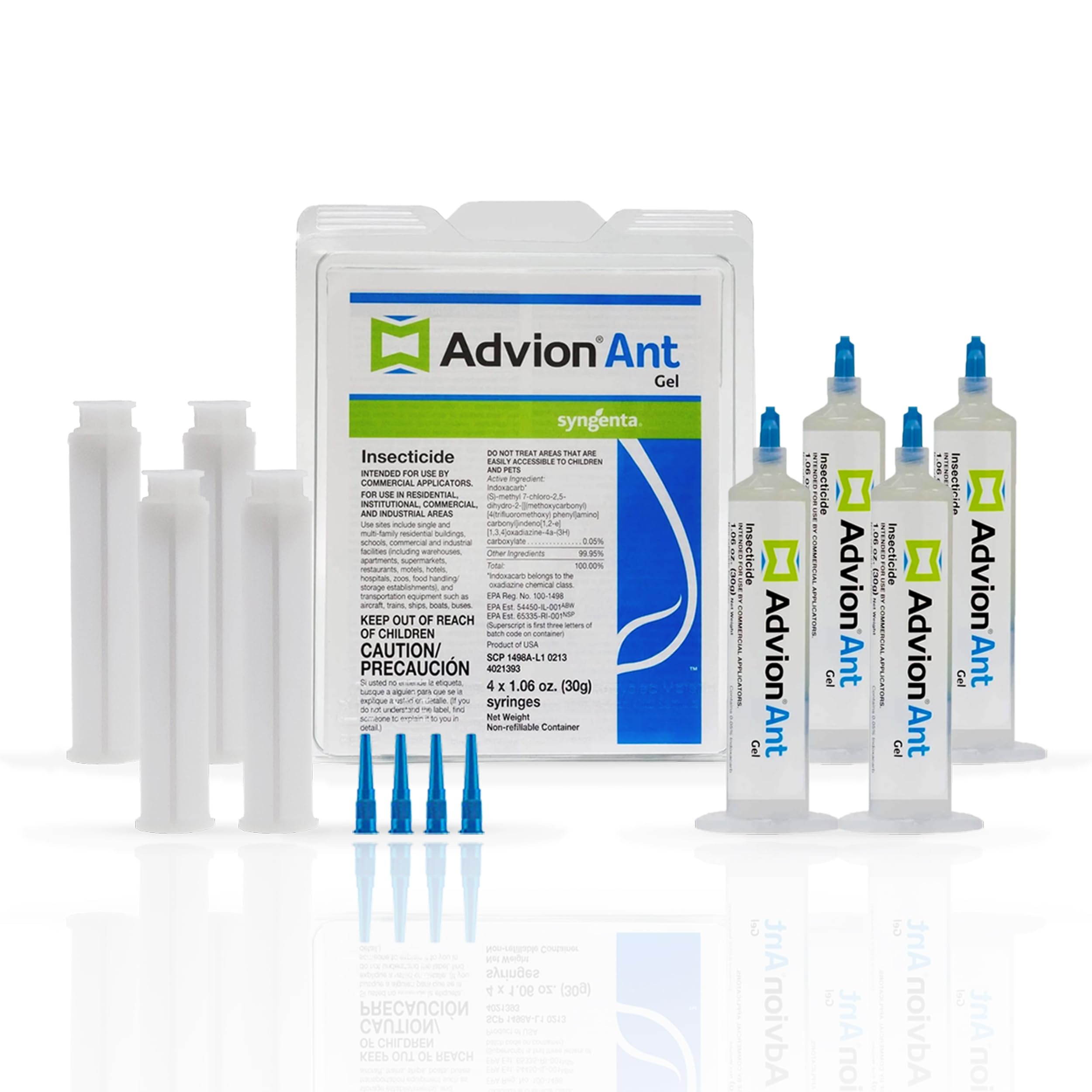
This gel bait from Syngenta uses 0.05% Indoxacarb, a non-repellent active ingredient that ants cannot detect. They consume the gel inside the syringe, return to the colony, and through trophallaxis — food sharing — the poison reaches the queen and any satellite nests. Professional exterminators frequently choose this formulation because it eliminates the entire colony rather than just the visible workers.
Users report ants attacking the gel within minutes of application and a complete absence of activity within two days. The four-pack of 30-gram syringes includes plungers and tips for precise placement along baseboards, behind appliances, and inside wall voids. A single small dab — about the size of a pea — attracts a large number of ants, making each tube last through multiple applications.
The gel remains odorless and effective on surfaces without staining, making it suitable for kitchens and living areas. Placement near moisture sources like under sinks or along pipe chases targets areas where carpenter ants commonly trail. The delayed action ensures the poison spreads through the colony before ants begin dying.
Why it’s great
- Non-repellent formula prevents colony scattering
- Quick knockdown reported within 24-48 hours
- Professional-grade active ingredient
Good to know
- Keep away from children and pets during application
- Gel may dry out over time in hot, dry conditions
2. Bonide Termite & Carpenter Ant Killer

This mid-range concentrate creates a chemical barrier in the soil around your foundation that intercepts carpenter ants and termites before they enter the structure. The dual-action formula provides immediate contact kill when sprayed directly on insects while residual activity continues killing ants as they cross treated soil. When applied as a trench treatment around the foundation, the label claims protection lasting up to five years.
Homeowners with seasonal cabins or wooded properties report using this product annually with consistent results against black ants and termites. The concentrate mixes with water and applies through a sprinkler can or low-pressure sprayer, covering significant linear footage around the home. Each 32-ounce bottle mixes into several gallons of finished solution for broad coverage.
The product targets multiple insect species beyond carpenter ants, including termites, carpenter bees, mosquitoes, ticks, and fleas, making it a versatile perimeter treatment. Users mention that one thorough spring application around the foundation keeps ants from entering the house for the entire warm season, reducing the need for indoor spot treatments.
Why it’s great
- Creates long-lasting soil barrier against re-infestation
- Dual-action contact and residual kill
- Highly concentrated — makes multiple gallons
Good to know
- Requires trenching or drenching around foundation
- Not for indoor use or direct wood treatment
3. Advion Ant Bait Arena 12ct

These ready-to-use bait stations contain the same Indoxacarb active ingredient as the gel but in a protected plastic housing that maintains bait integrity for weeks. The light adhesive backing allows placement on sloped or vertical surfaces near ant trails, soffits, or along fence lines where carpenter ants travel. The compact design protects the bait from rain and debris while keeping the formulation accessible to foraging ants.
Users report a noticeable decrease in ant activity within a week, with the bait drawing ants from a wide area. The stations work well in outdoor locations where gel might wash away or dry out quickly, such as around mailboxes, garden sheds, and tree stumps where main colonies often reside. Each station contains enough bait to attract multiple feeding sessions, allowing the poison to spread through the colony gradually.
The bait has a scent that attracts ants, but multiple users note that dogs and squirrels are also drawn to the smell, requiring placement under protective covers or in locations inaccessible to pets. When placed correctly away from animal traffic, these stations provide consistent, long-lasting bait that outperforms sprays for colony elimination.
Why it’s great
- Weather-resistant housing for outdoor use
- Adhesive backing for versatile placement
- Long-lasting bait integrity
Good to know
- Attracts dogs and small animals — place with care
- Some concrete surfaces may require additional adhesive
4. BASF Advance Carpenter Ant Bait Granules

This granule bait uses 0.011% Abamectin, a delayed-action poison that allows foraging ants to carry the larger grit particles back to the colony. The delayed effect is critical for carpenter ant control because the workers must survive the return trip and share the bait with the queen and brood before dying. Users report seeing ants immediately picking up the granules and carrying them away within the first hour of application.
The 8-ounce bottle covers targeted areas around the foundation line, in garden beds, and near known entry points. The larger grit size is specifically designed to be carried by larger ant species like carpenter ants, making it more effective than fine powders that smaller ants prefer. Sprinkling a light layer along ant trails and active areas provides a targeted approach that reduces waste compared to broadcast spreading.
Multiple users confirm that activity decreases noticeably after three to four days, with dead ants appearing near the application site as the colony collapses. Combining this granule bait with a barrier spray for immediate perimeter protection creates a comprehensive strategy — the granules eliminate the colony while the spray intercepts new foragers entering from outside the treated zone.
Why it’s great
- Larger grit size designed for carpenter ant carrying
- Delayed action allows colony-wide distribution
- Good for targeted spot treatment around entry points
Good to know
- Strong fishy odor attracts dogs and cats
- May need repeated applications for heavy infestations
5. Revenge Termite & Carpenter Ant Killer

This entry-level concentrate offers a cost-effective way to create a perimeter barrier around your home without the premium price tag of professional-grade products. The formula mixes with water and applies through a standard sprayer, creating a chemical barrier in the soil that intercepts carpenter ants and termites. Users compare its effectiveness to more expensive products like Termidor or Taurus, noting similar results at a lower cost.
The 32-ounce bottle treats a significant area around the foundation when mixed according to label directions. Users with landscape rock and wood piles report noticeable reduction in carpenter ant activity overnight after application, with ongoing control lasting through the season. The product targets a wide range of insects including termites, mosquitoes, ticks, and wasps, making it a versatile addition to a pest management routine.
While the residual protection claim of up to five years applies specifically to termite soil treatment under ideal conditions, users find the product effective as an annual spring treatment for ant control around the perimeter. The concentrate format provides excellent value per application, allowing homeowners to treat larger properties without buying multiple bottles of ready-to-use spray.
Why it’s great
- Excellent value for perimeter treatment
- Broad-spectrum insect control beyond just ants
- Concentrate makes multiple gallons of solution
Good to know
- Requires proper mixing and spray equipment
- Soil barrier effectiveness depends on application technique
FAQ
Why should I use bait instead of spray for carpenter ants?
How long does it take for bait to eliminate a carpenter ant colony?
Can I use gel bait and perimeter spray together?
What attracts carpenter ants into my home?
Final Thoughts: The Verdict
For most users, the best carpenter ant killer winner is the Advion Ant Gel Bait because the non-repellent Indoxacarb formulation targets the entire colony through food sharing, providing rapid elimination with professional-grade results. If you want a long-term perimeter barrier that prevents re-infestation from the outside, grab the Bonide Termite & Carpenter Ant Killer. And for broadcast yard treatment around wood piles and tree stumps where satellite colonies establish, nothing beats the BASF Advance Carpenter Ant Bait Granules.

Mo Maruf
I created WellFizz to bridge the gap between vague wellness advice and actionable solutions. My mission is simple: to decode the research and give you practical tools you can actually use.
Beyond the data, I am a passionate traveler. I believe that stepping away from the screen to explore new environments is essential for mental clarity and physical vitality.