Our readers keep the lights on and my smoothie glass nicely filled. As an Amazon Associate, I earn from qualifying purchases.
If you or someone you care for spends long hours in a wheelchair, you already know the enemy isn’t just gravity—it’s the relentless buildup of pressure that turns a simple sit into a source of pain, numbness, and tissue damage. Standard foam cushions compress under weight, concentrating force on the coccyx and ischial tuberosities, which accelerates skin breakdown. An air cushion for wheelchair solves this by using interconnected air cells that dynamically redistribute pressure with every shift in position, keeping blood flowing and bony prominences protected.
I’m Mohammad Maruf — the founder and writer behind WellFizz. I’ve spent over eighty hours cross-referencing medical literature on pressure ulcer prevention with real-world customer feedback on inflatable seat systems, cell counts, valve designs, and pump reliability to find the cushions that genuinely deliver on their therapeutic promises.
After analyzing dozens of models across price tiers, from basic manual-inflate pads to alternating-pressure systems, the best air cushion for wheelchair balances adjustable firmness, durable cell construction, and a washable cover that keeps hygiene simple during daily use.
How To Choose The Best Air Cushion For Wheelchair
Not every inflatable pad is designed for the sustained, daily pressure management a wheelchair user needs. The wrong cushion can shift, leak, or flatten unevenly, creating new pressure points while failing to relieve the old ones. Focus on these four factors to narrow the field to cushions that actively protect tissue health.
Air Cell Design and Cell Count
The number and arrangement of air cells determine how evenly your weight distributes across the cushion surface. More cells—typically 56 to 72—create a finer grid of support that conforms to the body’s contours without bottoming out. Interconnected cells allow air to flow between compartments as you shift, so one area never bears a disproportionate load. Cushions with fewer, larger cells may feel bouncy but offer less precise pressure redistribution.
Firmness Adjustability and Valve Quality
Your ideal firmness depends on your weight, the specific condition causing pain (sciatica, coccydynia, post-surgical sensitivity), and the type of wheelchair seat base. A high-quality valve lets you fine-tune inflation in small increments while holding air reliably over weeks without leaking. Built-in pumps save you the hassle of carrying a separate device, but a manual hand pump can give you finer control if you need to adjust frequently throughout the day.
Cover Material and Hygiene Maintenance
Prolonged contact with any surface traps heat and moisture, accelerating skin maceration and bacterial growth. Look for a breathable, machine-washable cover made from knit polyester or mesh fabric that wicks sweat away from the skin. A removable zippered cover makes daily cleaning fast and prevents the cushion core from absorbing odors or stains. Non-slip backing—whether silicone dots or rubberized grip—keeps the cushion anchored to the wheelchair seat during transfers and weight shifts.
Weight Capacity and Overall Durability
Air cushions vary widely in their maximum load rating. A model rated for 441 pounds or higher indicates reinforced TPU construction that resists punctures and material fatigue. The cushion should maintain its shape under full load without the cells overstretching or the seams separating. For users who rely on their cushion for 12+ hours daily, investing in a thicker cell wall and medical-grade materials reduces the risk of sudden deflation and extends usable life.
Quick Comparison
On smaller screens, swipe sideways to see the full table.
| Model | Category | Best For | Key Spec | Amazon |
|---|---|---|---|---|
| Roho High Profile | Premium | Clinical pressure sore treatment | 4.25” cell height, single compartment | Amazon |
| Vive 5″ Alternating Mattress | Alternating Pressure | Bed-bound, full-time pressure relief | 16 sealed air chambers, 5” deep | Amazon |
| Lunderg Alternating Pad | Alternating Pressure | Recliner and couch use | 136 air cells, 23 dBA pump | Amazon |
| Roho Mosaic | Mid-Range Clinical | Basic skin protection in wheelchairs | Interconnected PVC cells, 3” deep | Amazon |
| Vive Inflatable 72-Cell | Mid-Range | Pressure relief with foam core | 72 air cells + supportive foam core | Amazon |
| ANMSVI 3D Air Cell | Value | Customizable firmness on a budget | 3D air cells, 441 lb capacity | Amazon |
| ANMSVI Built-in Pump | Budget | First-time air cushion buyer | 56 cells, integrated hand pump | Amazon |
In‑Depth Reviews
1. Roho High Profile Cushion

The Roho High Profile is the gold standard in clinical pressure sore management, and the customer evidence backs that reputation without qualification. Users report healing stage 4 pressure ulcers within weeks after trying multiple cushion types that failed, and the 4.25-inch cell height is critical—it provides enough displacement for heavier individuals (around 180 pounds) to truly sit inside the cushion rather than on top of it. The single-compartment design means air flows freely across the entire surface, so no single bony prominence ever bears the full load.
The neoprene cover is flame-resistant, washable, and durable enough for 60+ hours of wheelchair use per week. Repairability sets this apart: if a cell gets punctured, you can patch it instead of replacing the whole cushion, which extends service life significantly. The cushion weighs roughly 3.25 pounds in this size and is easy to transfer between chairs.
One important limitation: this cushion requires a separate inflation bulb, and finding the right air volume takes some trial and error. Over-inflation turns it into a rigid platform; under-inflation lets the user bottom out. Once dialed in, though, it holds air reliably for months. The Roho is also non-returnable due to hygiene regulations, so confirm sizing (18.25 x 16.50 inches) matches your seat pan before purchasing.
Why it’s great
- Proven to heal stage 4 pressure sores where other cushions failed
- 4.25-inch cell height prevents bottoming out for heavier users
- Repairable design extends usable life beyond typical inflatable cushions
Good to know
- Requires manual inflation bulb (not included with all listings)
- Non-returnable due to hygiene policy—measure seat carefully
- Premium investment: single-compartment design lacks alternating pressure automation
2. Vive 5″ Alternating Pressure Mattress Topper
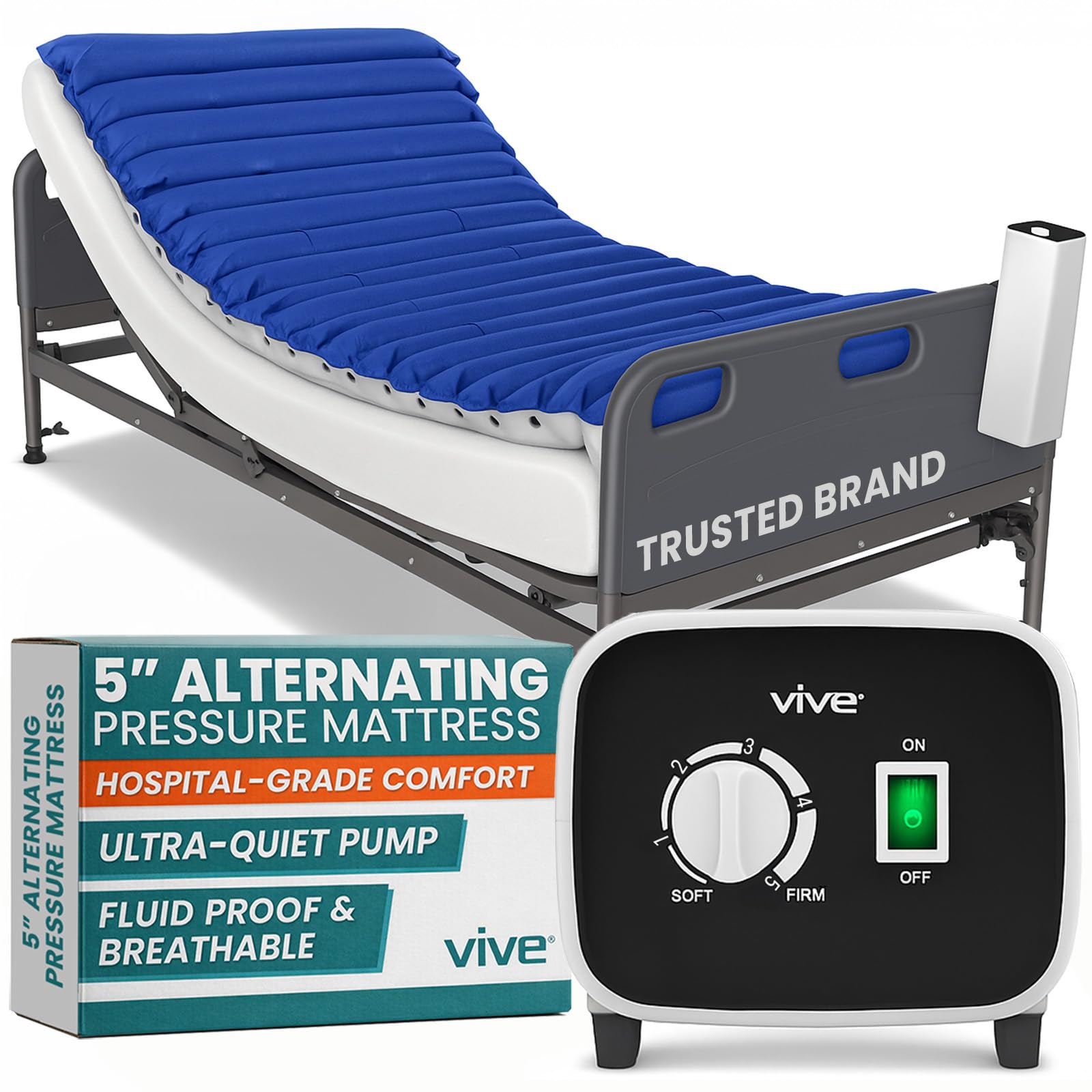
While this is marketed as a mattress overlay, its alternating-pressure mechanism is directly relevant for wheelchair users who spend most of their day in bed and need continuous pressure relief. The 16 sealed air chambers cycle inflation and deflation in a pattern that prevents blood pooling and tissue ischemia, which is exactly the mechanism needed to heal existing bedsores and prevent new ones. Real users report that the bumpy alternating sensation is noticeable at first but becomes undetectable during sleep, and the pump runs at a volume low enough not to disturb rest.
The 5-inch depth provides substantial cushioning for bedridden individuals up to 300 pounds, and the waterproof vinyl cover protects the air cells from incontinence accidents while remaining breathable. The pressure dial on the pump lets you fine-tune firmness from soft to firm, and the pump includes non-marking hooks that attach to the bed frame so it stays out of the way.
Setup requires inserting three CPR plugs into the pump before it functions correctly—some users missed this step and thought the unit was defective. The straps provided for securing the pad to the mattress are minimal and may not keep the pad centered on a narrow hospital bed. If you need alternating pressure specifically for a wheelchair seat rather than a bed, this pad is oversized for that purpose.
Why it’s great
- Alternating pressure cycles actively improve circulation and heal sores
- 5-inch depth offers superior pressure redistribution for 300 lb capacity
- Waterproof vinyl cover protects against accidents and is easy to wipe down
Good to know
- Designed for beds, not wheelchairs—too large for standard seat pans
- Straps may not hold pad in place during sleep movement
- CPR plugs must be installed correctly or pump will trigger low-air alarm
3. Lunderg Alternating Air Pressure Pad for Recliner

For wheelchair users who transition to a recliner or lift chair for part of the day, the Lunderg Alternating Pressure Pad is a targeted solution that bridges the gap between full-bed systems and portable seat cushions. It packs 136 individual air cells into a recliner-sized pad, which is significantly more cells than most wheelchair cushions, creating an exceptionally fine grid for even weight distribution. The pump operates at 23 dBA—quiet enough to run during conversation or television without distraction.
The static mode is a standout feature: it stops the alternating cycle and holds all cells fully inflated, giving the user a stable surface for sleeping or when they simply want a break from the movement. The medical-grade 4-way stretch cover reduces shear forces on the skin, which is critical for users with fragile or already-damaged tissue. Elastic straps anchor the pad to the chair, though some users report the pad shifts during weight shifts on lounge chairs with slick upholstery.
The pad supports up to 300 pounds and includes a patch kit for minor punctures. It is not designed for use on a standard wheelchair seat pan—the dimensions and shape are optimized for recliners and sofas. Users with pressure wounds on the sacrum or coccyx who alternate between wheelchair and recliner during the day will benefit from having this pad on the recliner while the wheelchair cushion handles the mobile hours.
Why it’s great
- 136 air cells create ultra-fine pressure redistribution grid
- Static mode provides stable surface for rest without alternating movement
- 4-way stretch medical-grade cover reduces skin shear forces
Good to know
- Not sized for standard wheelchair seat pans
- Anchoring straps may not prevent sliding on slick lounge upholstery
- Requires access to AC power for pump operation
4. Roho Mosaic PVC Air Cells Cushion

The Roho Mosaic brings the brand’s clinical-grade air cell technology to a more accessible price tier while retaining the interconnected cell design that distributes forces evenly across the cushion surface. At 3 inches deep, it sits lower than the High Profile model, which makes it easier for users to transfer in and out of the wheelchair without the cushion tilting. The PVC construction is durable and resistant to punctures in normal use, and the mesh cover promotes airflow to keep the seating area cool.
Users transitioning from memory foam or gel cushions consistently report that the Mosaic eliminates the hard spots that develop in foam over time. The interconnected cells mean that when you lean to one side, air shifts to the opposite cells, maintaining a balanced pressure distribution. For users at low risk of skin breakdown who still want a therapeutic cushion, this is a reliable middle ground that doesn’t require a pump or electrical outlet.
The cover fits snugly and includes non-slip grip dots, though some users note that the dots stick well to leather or vinyl wheelchair seats but slide slightly on fabric upholstery. The inflation valve is straightforward, but first-time users may need a few attempts to find the right air volume—the cushion comes fully deflated and requires a separate pump. At 2.8 pounds, it’s heavier than some alternatives but still easy to move between chairs.
Why it’s great
- Interconnected PVC cells provide even weight distribution for basic skin protection
- 3-inch depth facilitates easier wheelchair transfers
- Mesh cover enhances breathability and reduces heat buildup
Good to know
- Requires separate pump for inflation (not included)
- Non-slip dots may not grip fabric upholstery effectively
- Not intended for high-risk or existing stage 3-4 pressure ulcers
5. Vive Inflatable Wheelchair Air Seat Cushion
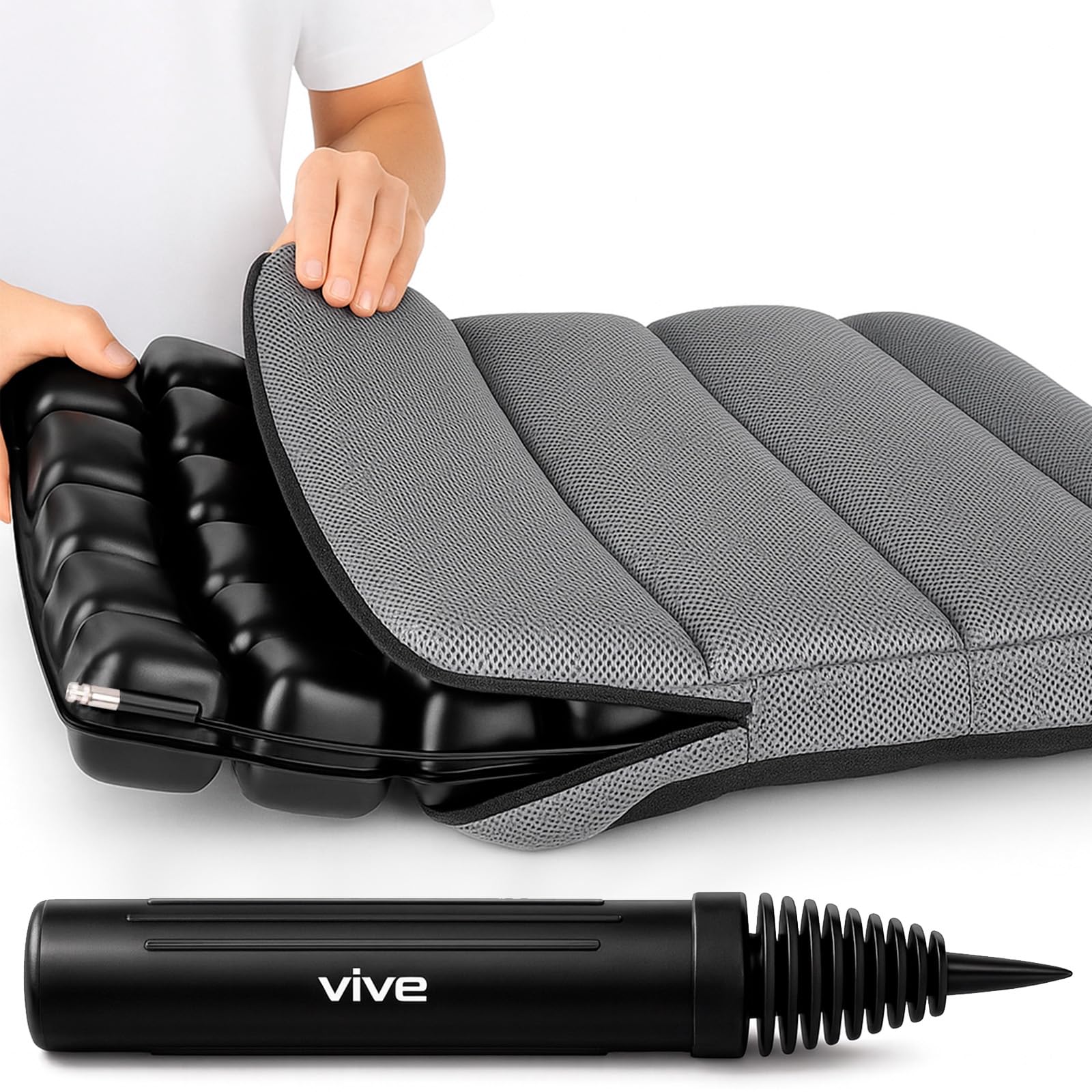
The Vive Inflatable cushion combines 72 individual air cells with a supportive foam core, creating a hybrid that delivers the pressure redistribution of air with the stability of foam. This design prevents the “hammock” sensation some users dislike in pure air cushions, where the edges feel loose or unstable. The 17.5 x 17.5-inch square dimensions fit most standard wheelchair seats, and the integrated carry handle on the mesh cover makes it easy to transport to appointments or on trips.
Users with severe sciatica report noticeable improvements in comfort during long sitting periods, and the included hand pump lets you adjust firmness in seconds without needing a separate device. The stainless steel nozzle holds air reliably—users report needing only occasional top-ups after the initial inflation. The mesh cover is machine washable and allows continuous airflow, reducing the moisture buildup that can contribute to skin maceration.
The textured cover surface can irritate sensitive skin for some users, and the non-slip backing works well on smooth surfaces like vinyl wheelchair seats but slides on fabric-based chairs. The foam core adds some weight and bulk compared to pure air cushions, which means it doesn’t compress as flat for travel. For daily wheelchair use where you want both air cushion benefits and structural stability, this hybrid earns its spot as the most balanced pick.
Why it’s great
- 72 air cells plus foam core prevents hammock effect and adds stability
- Included hand pump with stainless steel nozzle holds air for weeks
- Machine-washable mesh cover with carry handle improves portability
Good to know
- Textured cover may irritate very sensitive skin
- Foam core adds bulk, limiting compression for travel
- Non-slip grip less effective on fabric upholstery surfaces
6. ANMSVI 3D Air Inflatable Seat Cushion
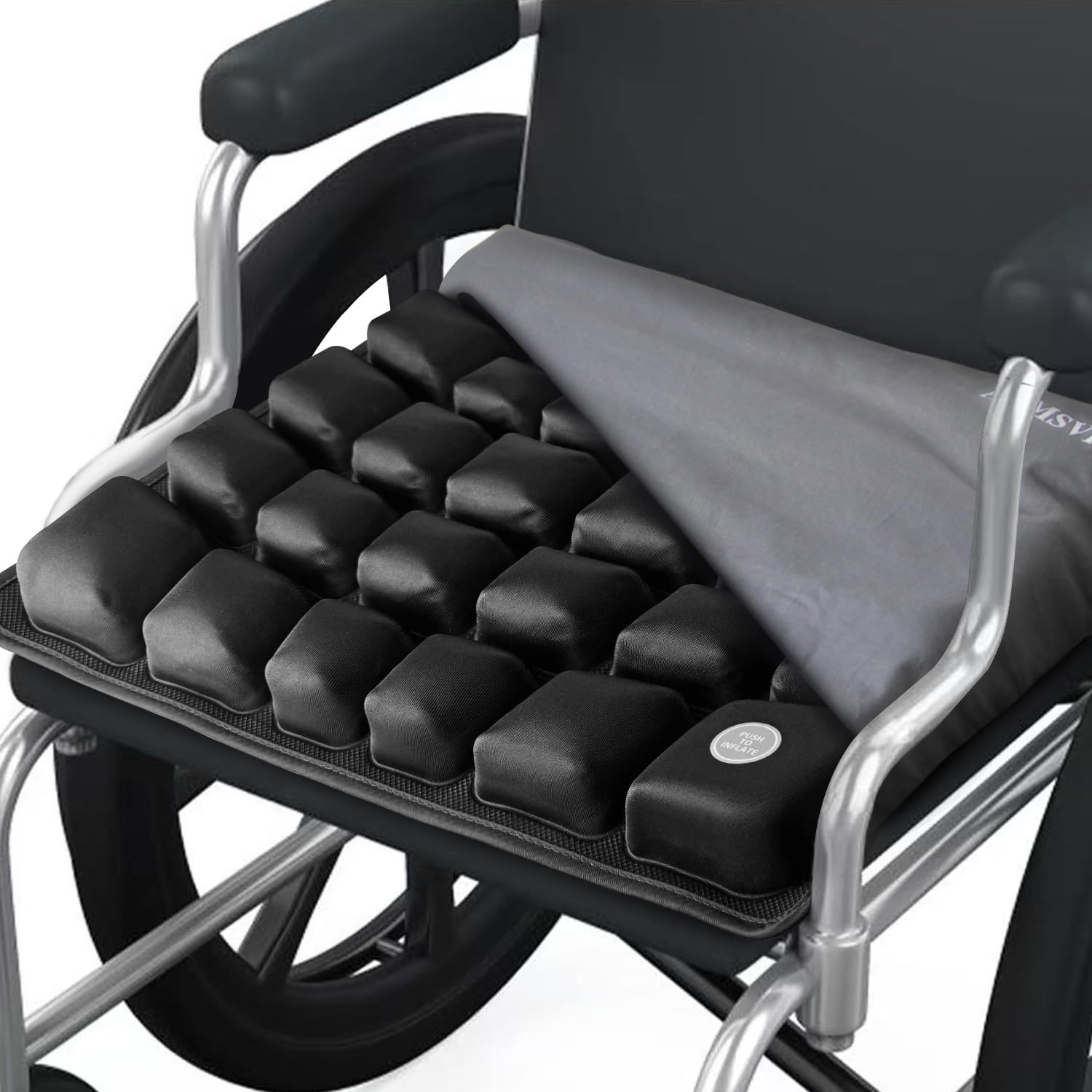
The ANMSVI 3D Air Cell cushion delivers a strong balance of adjustability, capacity, and portability at a mid-range price point. The 3D air cells are designed to prevent the flattening that plagues memory foam cushions, maintaining their contour even after months of daily use. At 2.1 inches thick when inflated, it provides enough lift to offload the coccyx without raising the user too high in the wheelchair seat, which is important for maintaining proper foot placement on the footrests.
User reports highlight its effectiveness during long-haul flights and extended desk sitting, indicating the air cell technology translates well across environments. The knit fabric cover promotes airflow better than solid vinyl or leather alternatives, and the silicone particle backing grips securely on most wheelchair seat surfaces. The 441-pound capacity rating comes from the puncture-resistant TPU material, which is more resilient than standard PVC at a similar weight.
Some users find the cushion too firm even at minimal inflation, particularly those with very low body weight who don’t compress the cells enough to engage the pressure redistribution. The lack of a built-in pump means you need to carry the separate hand pump (or use a straw, which is possible but slow) for adjustments away from home. If you value high weight capacity and a slim profile that won’t interfere with transfer dynamics, this is a solid performer.
Why it’s great
- 3D air cells resist flattening better than memory foam alternatives
- 441 lb capacity with puncture-resistant TPU construction
- Breathable knit cover and silicone grip bottom stay secure
Good to know
- May feel too firm for lighter users even at minimum inflation
- Requires separate pump for inflation adjustments
- Cover fit can be slightly off, leading to wrinkling during use
7. ANMSVI Air Inflatable Seat Cushion with Built-in Pump
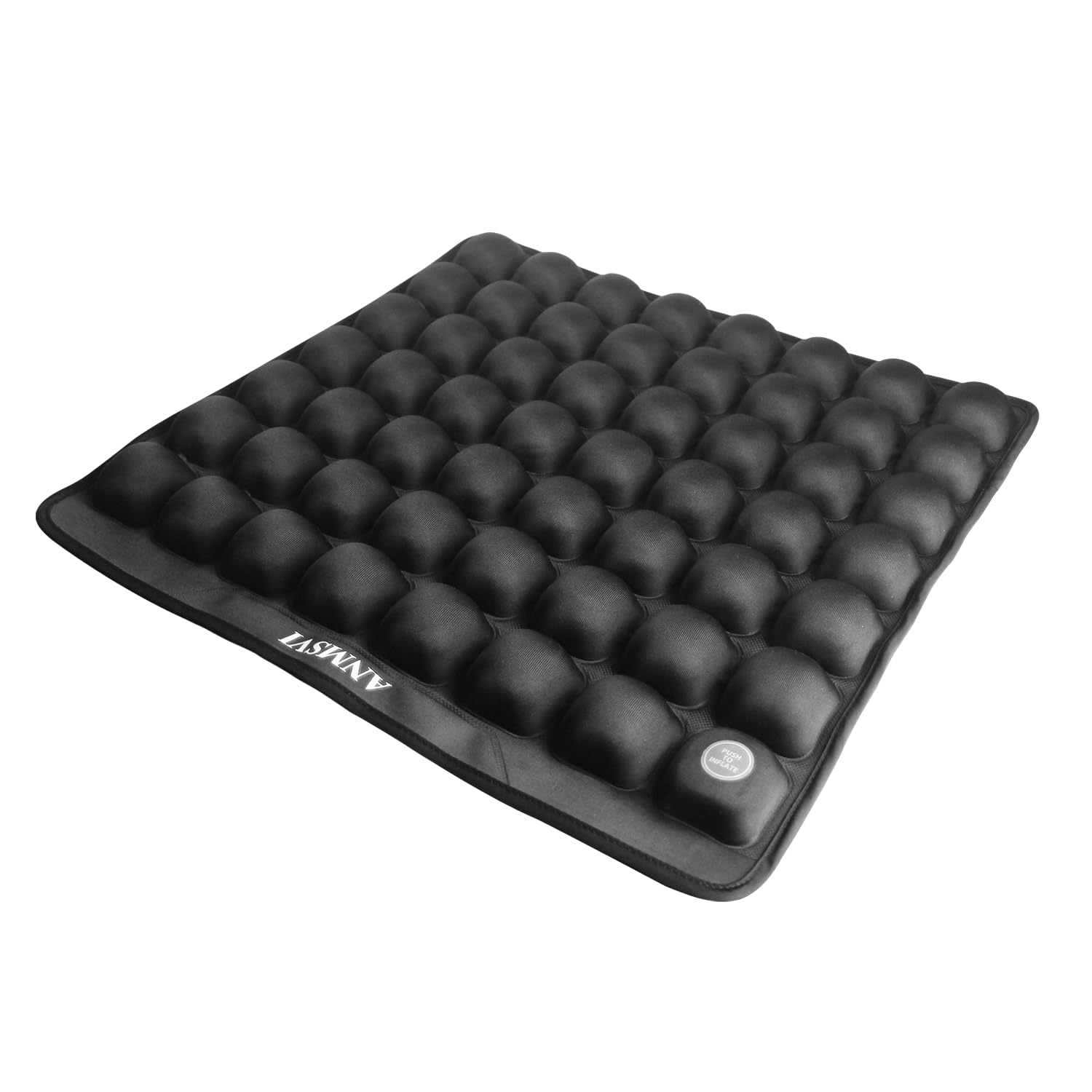
The ANMSVI cushion with a built-in pump is the most accessible entry point into air cushion technology, and the integrated inflation system solves the biggest friction point for new users: losing or forgetting a separate pump. The 56 interconnecting air cells at 30mm height create a responsive surface that shifts support as you move, and users report it holds air for over two years without reinflation. The 441-pound capacity makes it suitable for a wide range of body types without bottoming out.
The low 1.18-inch profile when deflated means it doesn’t raise your seated height significantly, which is beneficial for maintaining proper wheelchair ergonomics. However, that same low profile means less air volume to work with—users who need more than gentle pressure relief may find the cushion too thin to provide the offloading they require. The built-in hand pump is a finger-and-thumb squeeze mechanism that takes about a minute to inflate, though some users reported the process felt slow if they started from completely flat.
The removable grey cover is machine washable, and the TPU bladder is durable against everyday punctures. A couple of users mentioned the instructions are printed in Chinese, which can make initial setup confusing. The cushion does not deflate compactly enough to fit into a standard airline carry-on backpack, so air travelers may need to check it or carry it separately. For a first-time air cushion buyer on a tight budget who wants to test whether air technology works for their pain profile, this model minimizes financial risk.
Why it’s great
- Built-in pump eliminates need for separate inflation device
- 56 air cells provide responsive pressure redistribution
- Holds inflation for years with minimal maintenance
Good to know
- Thin 1.18-inch profile limits pressure offloading capacity
- Instructions may be only in Chinese, causing setup confusion
- Does not deflate flat enough for compact carry-on travel
FAQ
How often should I reinflate my air cushion for wheelchair?
Can an air cushion help heal existing pressure sores?
Final Thoughts: The Verdict
For most users, the best air cushion for wheelchair winner is the Vive Inflatable 72-Cell cushion because it merges the pressure-relieving benefits of air cells with the stability of a foam core, making it suitable for daily wheelchair use without the instability of pure air cushions. If you need clinical-grade pressure sore treatment, grab the Roho High Profile. And for a budget-friendly entry into air cushion technology that simplifies inflation with a built-in pump, the ANMSVI Built-in Pump cushion is a solid starting point.

Mo Maruf
I created WellFizz to bridge the gap between vague wellness advice and actionable solutions. My mission is simple: to decode the research and give you practical tools you can actually use.
Beyond the data, I am a passionate traveler. I believe that stepping away from the screen to explore new environments is essential for mental clarity and physical vitality.