Our readers keep the lights on and my smoothie glass nicely filled. As an Amazon Associate, I earn from qualifying purchases.
Every lap you swim in isolation, pulling through the water without the rhythm of a playlist or the anchor of a podcast, is a wasted chance to make training effortless. The problem is that standard Bluetooth earbuds die the second they hit the water, and even rugged gym buds fail against the pressure of a submerged ear. The solution is a pair of headphones built specifically for the pool — they use bone conduction technology and a local MP3 player to bypass the fact that Bluetooth radio waves cannot travel through water.
I’m Mohammad Maruf — the founder and writer behind WellFizz. I’ve spent hundreds of hours cross-referencing waterproof certifications, battery claims, onboard storage specs, and real user feedback from swimmers, triathletes, and underwater trainers to separate the gear that actually works from the marketing that only looks good on dry land.
Whether you are training for a triathlon or just trying to hear your audiobook during a morning lane session, this review of the best bluetooth swimming headphones breaks down the only seven models that survived my deep-dive research into pool-proof audio.
How To Choose The Best Bluetooth Swimming Headphones
Buying swim headphones is different from buying any other audio device. You cannot rely on star ratings alone, because many positive reviews come from people who never actually took the unit underwater. You need to look past the marketing language and verify three measurable attributes: the waterproof rating, the presence and capacity of onboard MP3 storage, and the driver technology used to transmit sound through water.
Waterproof Rating — IPX8 vs IP68 vs Lower Numbers
IPX8 is the only rating that guarantees the headphones can survive continuous immersion beyond one meter for a specified time — typically one to two hours at two meters of depth. IP68 is a close cousin but sometimes caps immersion depth at 1.5 meters. Lower ratings like IPX5 or IPX7 only handle splashes or brief submersion. For lap swimming, a true IPX8 rating is non-negotiable. Always check the fine print: some brands inflate their rating by testing in fresh water rather than chlorinated pool water.
Onboard Storage — The MP3 Player Requirement
Bluetooth radio signals attenuate rapidly in water. At just a few inches of depth, the connection drops completely. Every swim headphone must include a local MP3 player — usually 8GB or 32GB of flash memory — that stores your music files directly on the device. You load tracks via a magnetic charging cable that acts as a data transfer bridge. Without onboard storage, the headphones are land-only. The difference between 8GB and 32GB is roughly 1,500 songs versus 7,000 songs, but for most swimmers 8GB is sufficient for several playlists and a few audiobooks.
Driver Technology — Bone Conduction vs Air Conduction
Bone conduction drivers vibrate against your cheekbone or temporal bone, sending sound directly to your cochlea while leaving your ear canals open. This is ideal for swimming because it allows you to hear lifeguard whistles and other swimmers, and it prevents the muffled, trapped-water feeling of in-ear buds. Hybrid models now pair bone conduction with an air conduction transducer to boost bass response — a feature worth considering if you listen to bass-heavy music. Pure air conduction (tiny speakers that sit inside the ear) tends to sound thin and loses volume quickly underwater.
Battery Life and Charging
Look for a minimum of eight hours of playback in MP3 mode. Bluetooth mode typically draws more power, so a headphone that advertises eight hours of Bluetooth use may deliver only six hours of MP3 playback. Magnetic charging connectors are strongly preferred because they eliminate the need for a physical port that could corrode or trap water. Avoid any model that uses a rubber flap to cover a USB port — flaps fail over time and compromise the waterproof seal.
Fit and Compatibility with Swim Caps and Goggles
A swim headphone must sit low enough on the skull to fit comfortably under a silicone swim cap without creating pressure points. The neckband should be thin and flexible, and the transducer housings should not interfere with goggle straps. Some models come with adjustable elastic bands for a tighter fit. If you have a smaller head, look for user reviews that specifically mention fit for smaller skulls — many bone conduction bands are sized for average adult heads and will slide backward or lose contact pressure on a smaller cranium.
Quick Comparison
On smaller screens, swipe sideways to see the full table.
| Model | Category | Best For | Key Spec | Amazon |
|---|---|---|---|---|
| PSIER X34-C | Premium | Hybrid bass & waterproof performance | 32GB / IPX8 / Hybrid driver | Amazon |
| MONODEAL | Premium | Small head & tiny ear comfort | 32GB / IP68 / Bluetooth 5.4 | Amazon |
| Opinta Safelight | Mid-Range | Night running visibility | 32GB / IP68 / LED rear light | Amazon |
| MARLALL LiteSurge | Mid-Range | Allergy-free open ear fit | 32GB / IP68 / 20-20kHz range | Amazon |
| RR SPORTS (Beige) | Mid-Range | Secure fit for running & swimming | 32GB / IP68 / Bluetooth 6.0 | Amazon |
| sunvito IPX8 | Budget | Entry-level pool use | 8GB / IPX8 / Bluetooth 5.4 | Amazon |
| SANOTO IPX8 | Budget | Extended MP3 battery life | 8GB / IPX8 / 12hr MP3 mode | Amazon |
In‑Depth Reviews
1. PSIER X34-C Bone Conduction Swimming Headphones
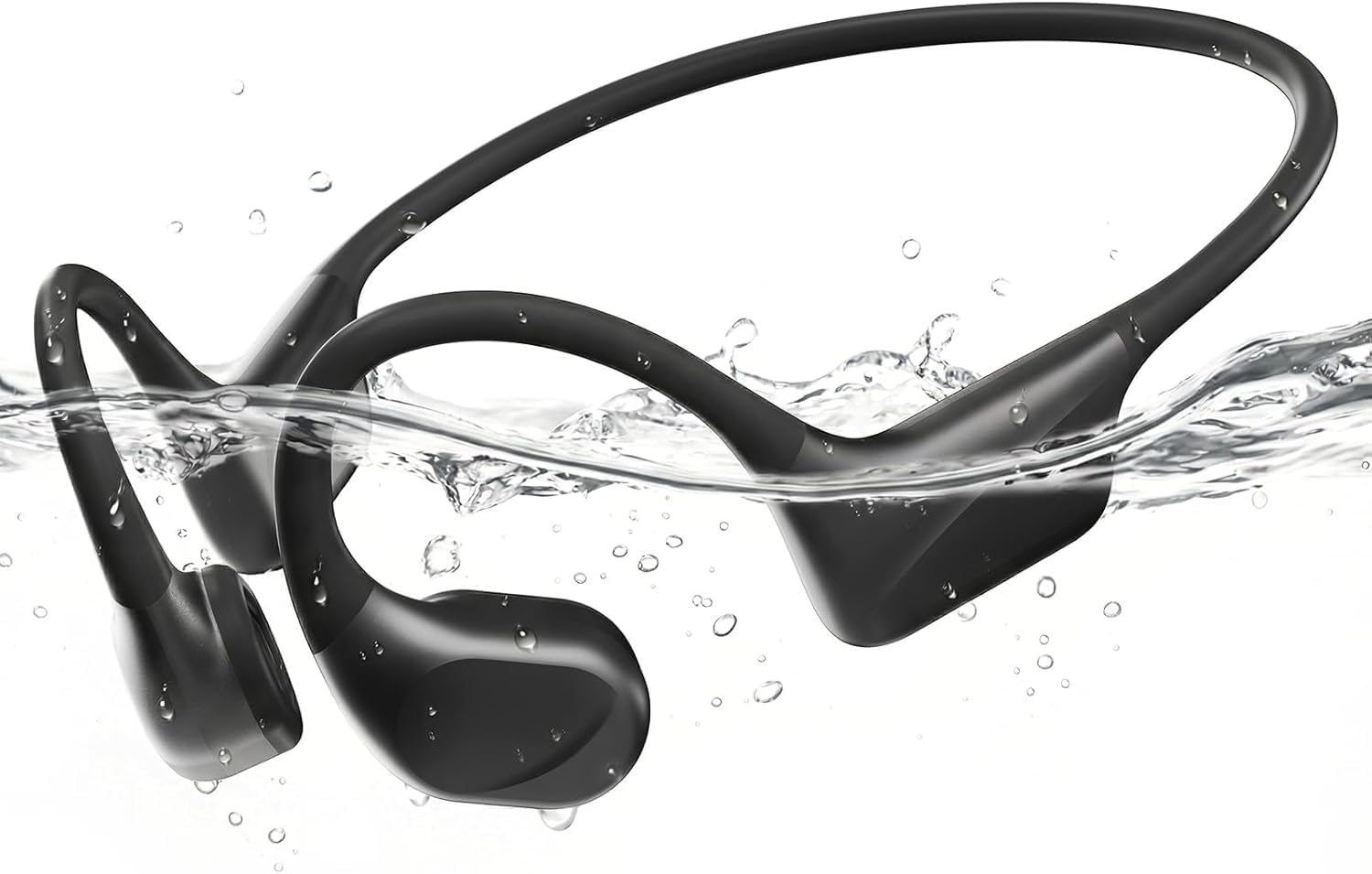
The PSIER X34-C is the only headphone in this list that pairs a bone conduction transducer with an air conduction driver inside the same housing. This hybrid design delivers noticeably deeper bass than standard bone conduction units — a 30% increase in low-end response according to the manufacturer — so your playlist retains punch even when you are submerged at the deep end. The IPX8 rating is certified for immersion up to two meters for one hour, covering every conceivable pool training session.
The onboard 32GB storage holds roughly 8,000 songs, and the Bluetooth 6.0 chip ensures near-zero latency when you switch to land-based streaming. The Boean companion app further lets you customize an EQ curve to your hearing preference. The seamless liquid silicone coating is soft against the skull and integrates easily under a swim cap without shifting.
User reviews consistently praise the fit for sensitive ears and the clarity of calls when used dry. The main concession is that the plastic enclosure feels slightly less premium than the price suggests, and the touch controls can be finicky with wet fingers. Still, no other model in this price tier delivers hybrid driver depth with this level of waterproofing.
Why it’s great
- Hybrid driver produces full bass underwater, unmatched by pure bone conduction models
- 32GB onboard storage with Bluetooth 6.0 for low-latency land use
- IPX8 certification tested at 2-meter submersion for one hour
Good to know
- Plastic enclosure does not feel as sturdy as the price tier suggests
- Touch controls can be unreliable when wet
2. MONODEAL Swimming Headphones IP68

MONODEAL’s entry is distinguished by its extraordinarily low weight — only 24 grams — and by feedback from users with smaller heads and tiny ears. Because bone conduction transducers need to sit flush against the temporal bone to deliver clear audio, any slippage kills sound quality. This model’s flexible neckband maintains consistent pressure on smaller skull geometries where bulkier units like the PSIER can drift backward. The IP68 rating protects against submersion, though the manufacturer explicitly recommends switching to MP3 mode before entering the water.
The 32GB internal memory provides room for thousands of tracks, and the Bluetooth 5.4 chip offers rock-solid connection stability on land up to 10 meters. Battery life is rated at eight hours, and charging via USB (the unit uses a standard port with a protective flap) takes about two hours. The built-in microphone delivers acceptable call clarity for post-swim phone conversations so long as the mic port is dry.
Multiple reviews highlight that the unit never fell off during lap swimming, even during flip turns. The sound quality is described as clear for bone conduction, though bass response is naturally thinner than in-ear alternatives. The protective flap over the charging port is the most likely failure point over time — users should ensure it is fully seated before any pool session.
Why it’s great
- Weighs only 24 grams with a flexible band that fits smaller heads securely
- 32GB memory with Bluetooth 5.4 provides fast pairing and stable connectivity
- Positive user reports of staying in place during flip turns and underwater laps
Good to know
- Rubber flap over charging port may degrade with repeated use, risking water ingress
- Bone conduction bass is naturally limited compared to hybrid or in-ear designs
3. Opinta Safelight Swimming Headphones
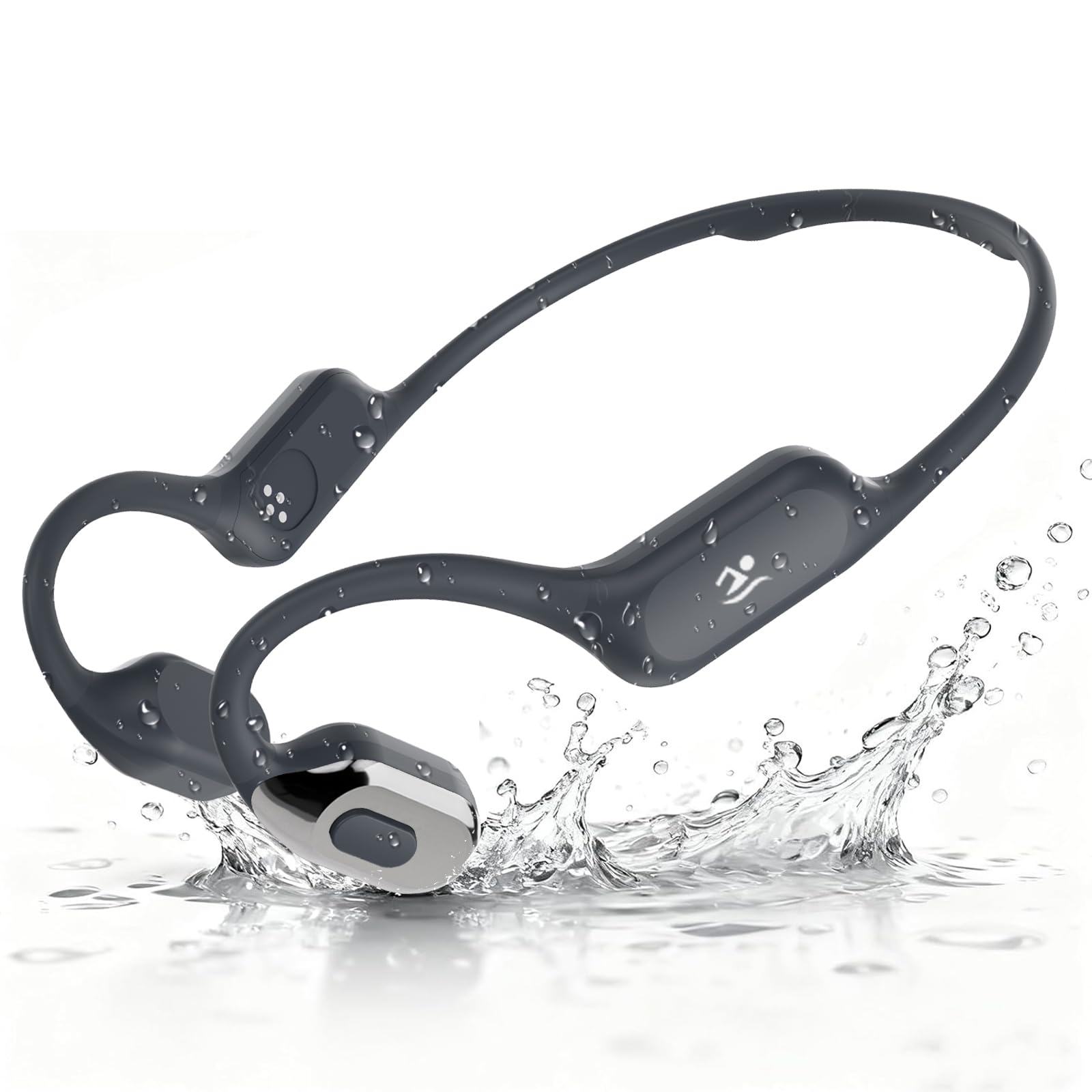
The Opinta Safelight earns its name with integrated LED running lights on both sides of the headband that flash red for nighttime visibility. This is a genuine safety advantage for triathletes who transition from the pool to a pre-dawn run. The IP68 waterproof rating is paired with a 32GB memory module, giving you 5,000 to 7,000 songs of offline storage. The magnetic charging cable doubles as a data transfer line, eliminating the corrosion-prone flap that plagues cheaper designs.
Battery life sits at eight hours of combined playback, requiring about 2.5 hours to fully recharge. The chrome silver finish is more reflective than the standard black or beige options, further enhancing visibility in low-light conditions. The open-ear bone conduction design keeps ear canals free for situational awareness, and the flexible plastic band holds its shape after repeated bending. Touch controls on the side of the neckband respond reliably to finger taps.
User reviews highlight the sturdy build quality and the unexpectedly good sound clarity — several users noted that the volume is louder than other bone conduction models in the same price range. The downside is that the band is designed for average adult heads; users with very small or very large skulls have reported that the transducers lose contact pressure, causing volume drop-off. The LED lights are a welcome addition but add a small amount of weight to the neckband.
Why it’s great
- Integrated red LED tail lights improve safety for night running after swim sessions
- Magnetic charging connector avoids the failure-prone rubber flap design
- 32GB storage and IP68 rating deliver strong value at the mid-range price point
Good to know
- Neckband fit may not maintain full transducer contact for very small or very large heads
- LED lights add minor bulk compared to non-lit models
4. MARLALL LiteSurge Swimming Headphones
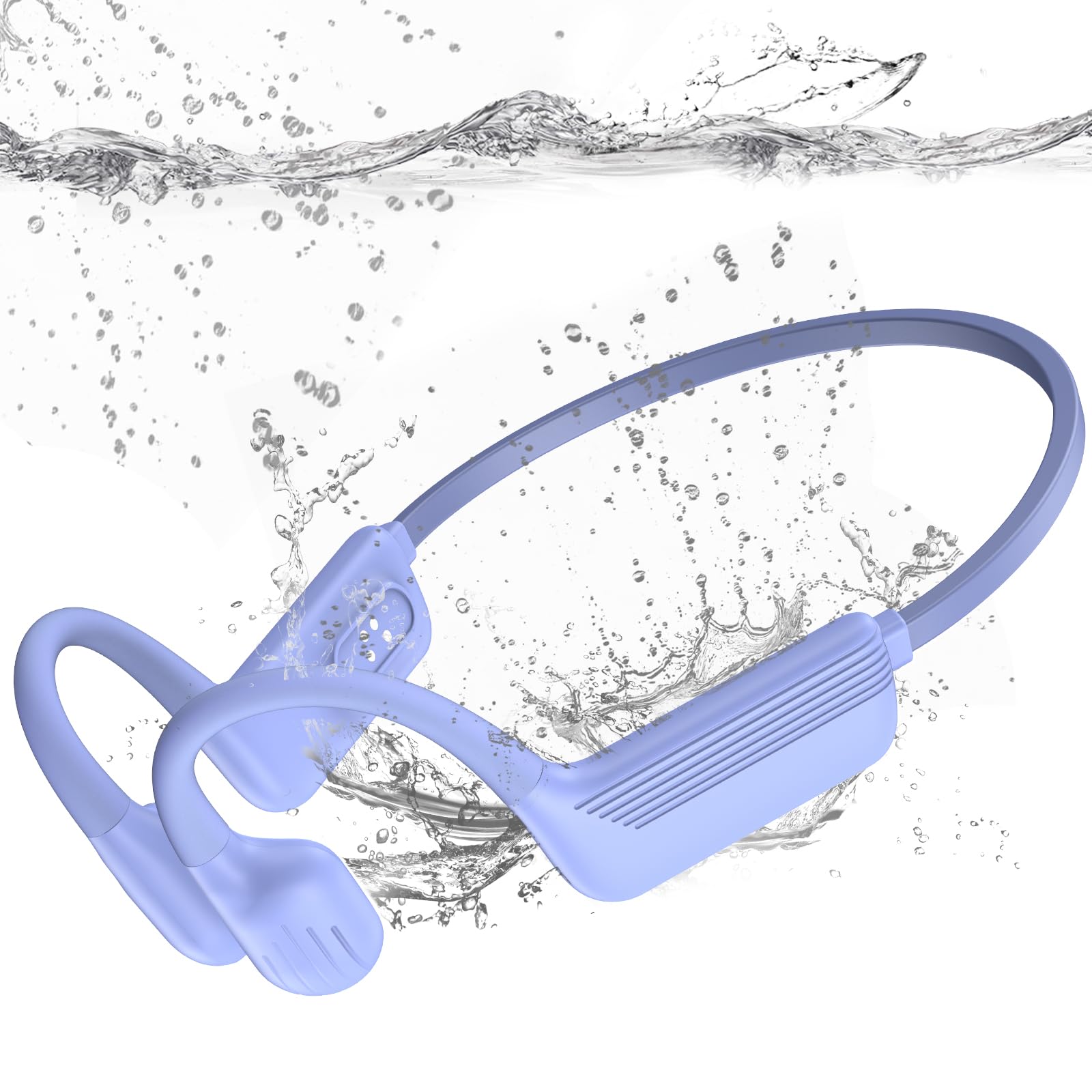
MARLALL’s LiteSurge is built with premium liquid silicone that feels soft against the skin and does not cause the allergic reactions some users experience with hard plastic housings. The IP68 rating is backed by a nano-hydrophobic coating that protects the internal electronics even if a small amount of moisture sneaks past the outer seal. The 32GB internal storage supports MP3, WAV, WMA, and FLAC formats, so you can load lossless audio files without worrying about compressed sound quality underwater.
Bluetooth 5.4 provides a stable connection on land up to 10 meters, and the frequency range spans 20 Hz to 20 kHz — wider than most bone conduction drivers, which typically roll off above 16 kHz. This wider range translates to slightly airier treble and improved vocal clarity for podcasts and audiobooks. The open-ear design prevents the trapped-water pressure that in-ear swimmers experience and allows full awareness of the pool environment.
User reviews specifically mention that the ear canal allergy issues they experienced with silicone and foam earbuds disappeared after switching to this model. The lavender color option is a rare aesthetic choice in a category dominated by black and beige. The main drawback is that the microphone picks up wind noise during dry-land calls, and the MP3 transfer process requires converting Apple Music files to MP3 format using a third-party utility — a step that may frustrate casual users who only stream music.
Why it’s great
- Premium liquid silicone shell prevents allergic reactions common with hard plastics
- Wide 20Hz-20kHz frequency range provides better vocal clarity than typical bone conduction drivers
- 32GB storage with FLAC support for lossless audio underwater
Good to know
- Microphone picks up wind noise during outdoor calls above water
- Transferring Apple Music tracks requires conversion to MP3 using third-party software
5. RR SPORTS Bone Conduction Headphones
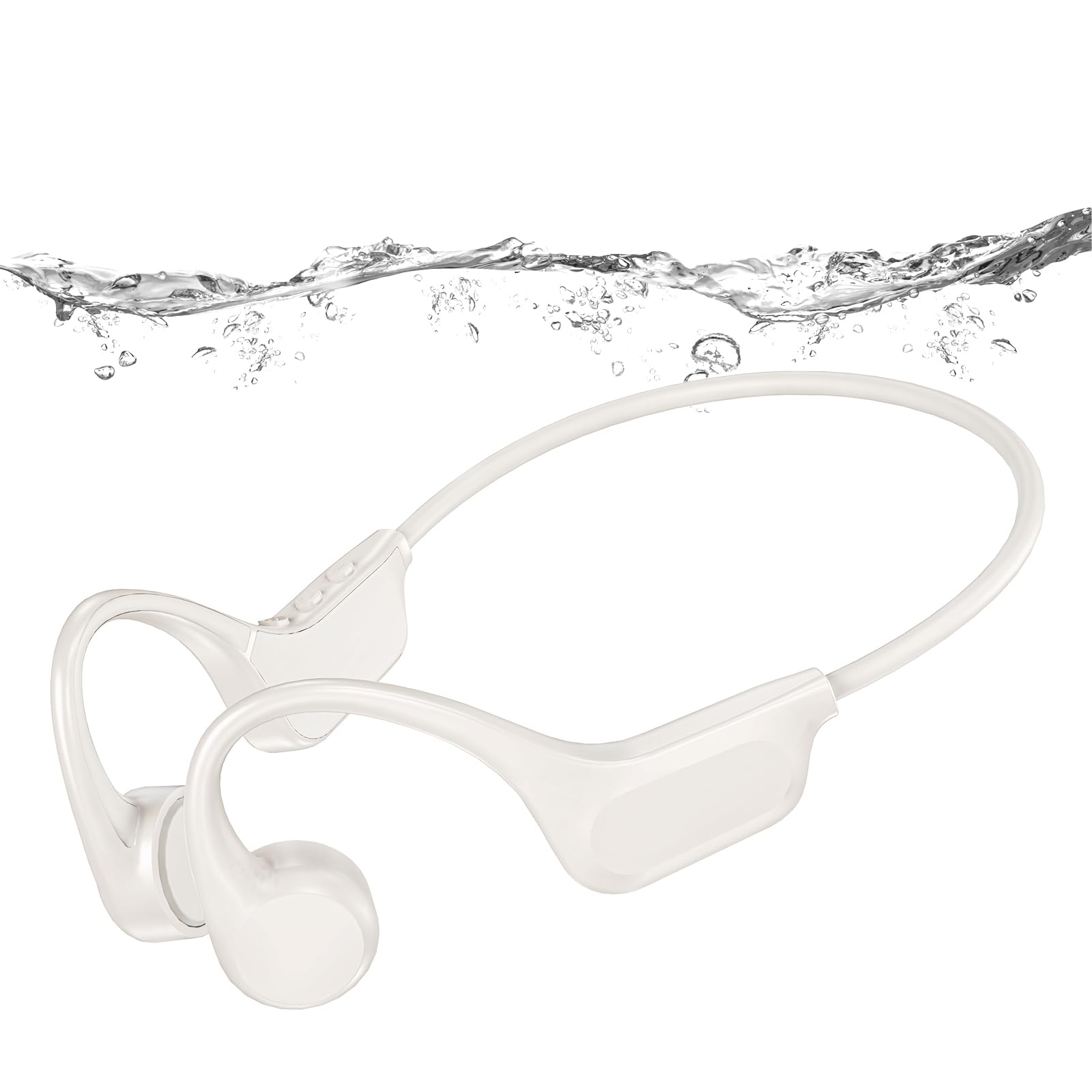
RR SPORTS brings Bluetooth 6.0 to the swim headphone category — a version bump that improves interference resistance in crowded environments like gym pools where multiple Bluetooth devices compete for airtime. The IP68 rating is tested for submersion up to 2 meters, and the manufacturer specifically designed the housing to integrate with swim caps and goggle straps without creating pressure points. The 32GB memory stores about 7,000 tracks in MP3, WMA, WAV, or FLAC formats.
The ultra-soft silicone build weighs almost nothing and wraps around the back of the skull with a spring-like tension that adapts to head movement. This is noticeable during flip turns and explosive starts — the headset stays planted where cheaper models slide forward. The beige color option is a refreshing departure from the black standard, though it shows chlorine staining more readily over time. Touch controls on the side panel allow volume adjustment, track skipping, and mode switching without fumbling for a remote.
User reviews consistently mention the secure fit during running and cycling as well as swimming, making this a multi-sport option for triathletes who do not want to carry multiple headsets. The seven-hour battery life is slightly below the eight-hour average of competitors, but the faster Bluetooth 6.0 pairing time offsets some of that inconvenience. The primary complaint is that the plastic enclosure surrounding the drivers feels less robust than the silicone band.
Why it’s great
- Bluetooth 6.0 chip provides better interference rejection in crowded poolside environments
- Ultra-soft silicone band with spring tension stays locked during flip turns and sprints
- 32GB storage with multi-format support including FLAC for lossless audio
Good to know
- Beige color shows chlorine staining and discoloration faster than darker tones
- Plastic driver enclosures feel less premium than the silicone band
6. SANOTO IPX8 Swimming Headphones
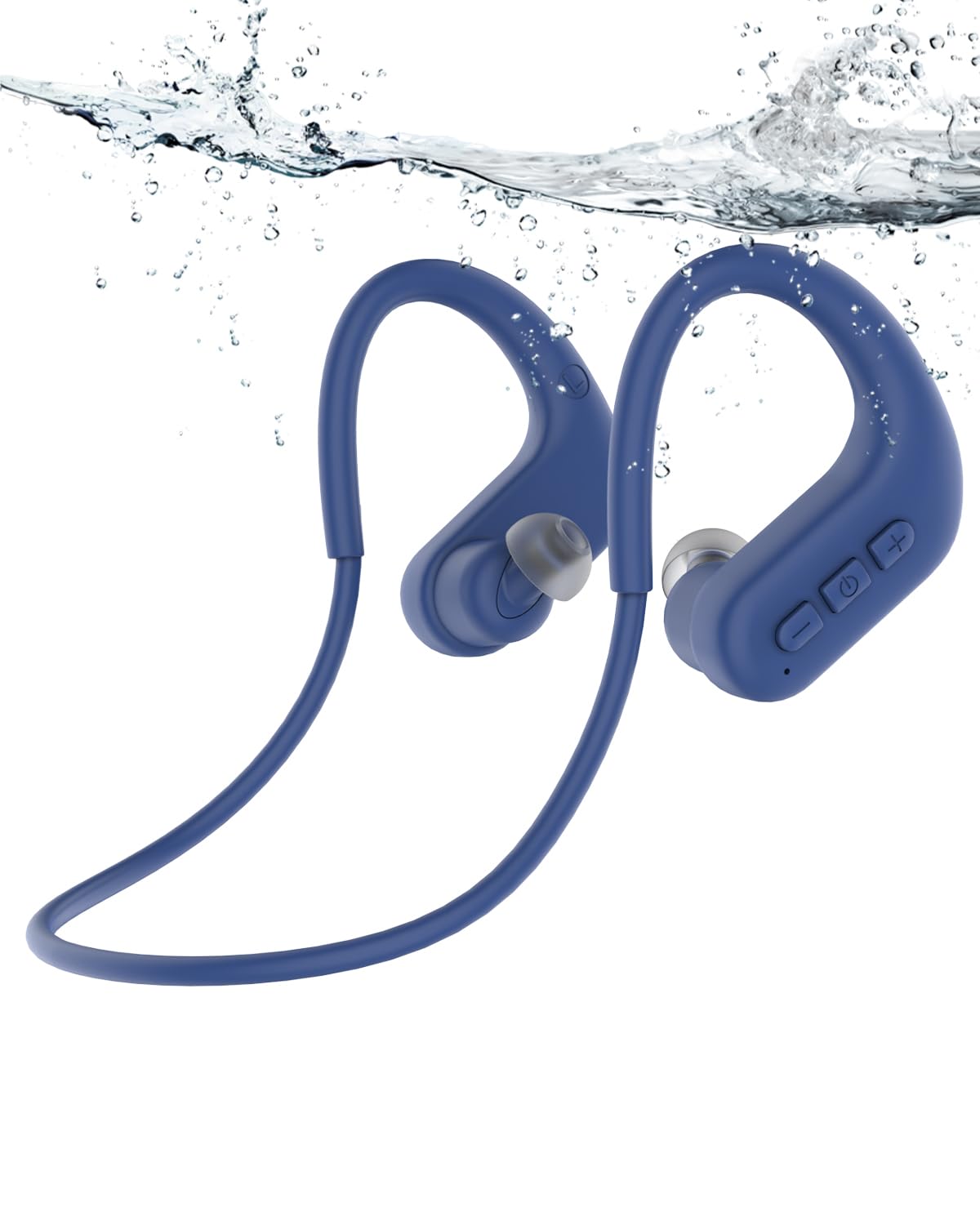
The SANOTO model stands out for its remarkable battery life — 12 hours of continuous playback in MP3 mode, which is 50% longer than the category average. This makes it the best choice for swimmers who log double sessions, drive long distances to the pool, or simply do not want to charge their gear every night. The IPX8 rating allows submersion up to 10 meters for over two hours, which exceeds the requirements of any standard lap training or recreational snorkeling.
The design uses an in-ear bone conduction driver that sits partially inside the ear canal, which serves a dual purpose: it transmits audio through bone vibration while physically blocking water from entering the ear. Users report that this eliminates the need for separate earplugs. Bluetooth 5.4 connectivity is stable on land with a 10-meter range.
User reviews from seasoned swimmers who tested three other brands before settling on the SANOTO praise the in-ear approach for keeping water out of their ears entirely. The secure fit under a swim cap is aided by adjustable elastic straps included in the package. The main concern is that some units arrive with Bluetooth pairing issues that require a factory reset — a quality control inconsistency that the manufacturer addresses through responsive customer service and a lifetime warranty.
Why it’s great
- 12-hour MP3 battery life shatters category average, ideal for double sessions and long trips
- In-ear bone conduction blocks water from entering ear canal, eliminating the need for earplugs
- IPX8 rating tested at 10-meter submersion for over two hours — far beyond pool requirements
Good to know
- 8GB internal storage is smaller than the 32GB found on most competitors
- Occasional Bluetooth pairing issues reported; lifetime warranty covers replacements
7. sunvito IPX8 Swimming Headphones
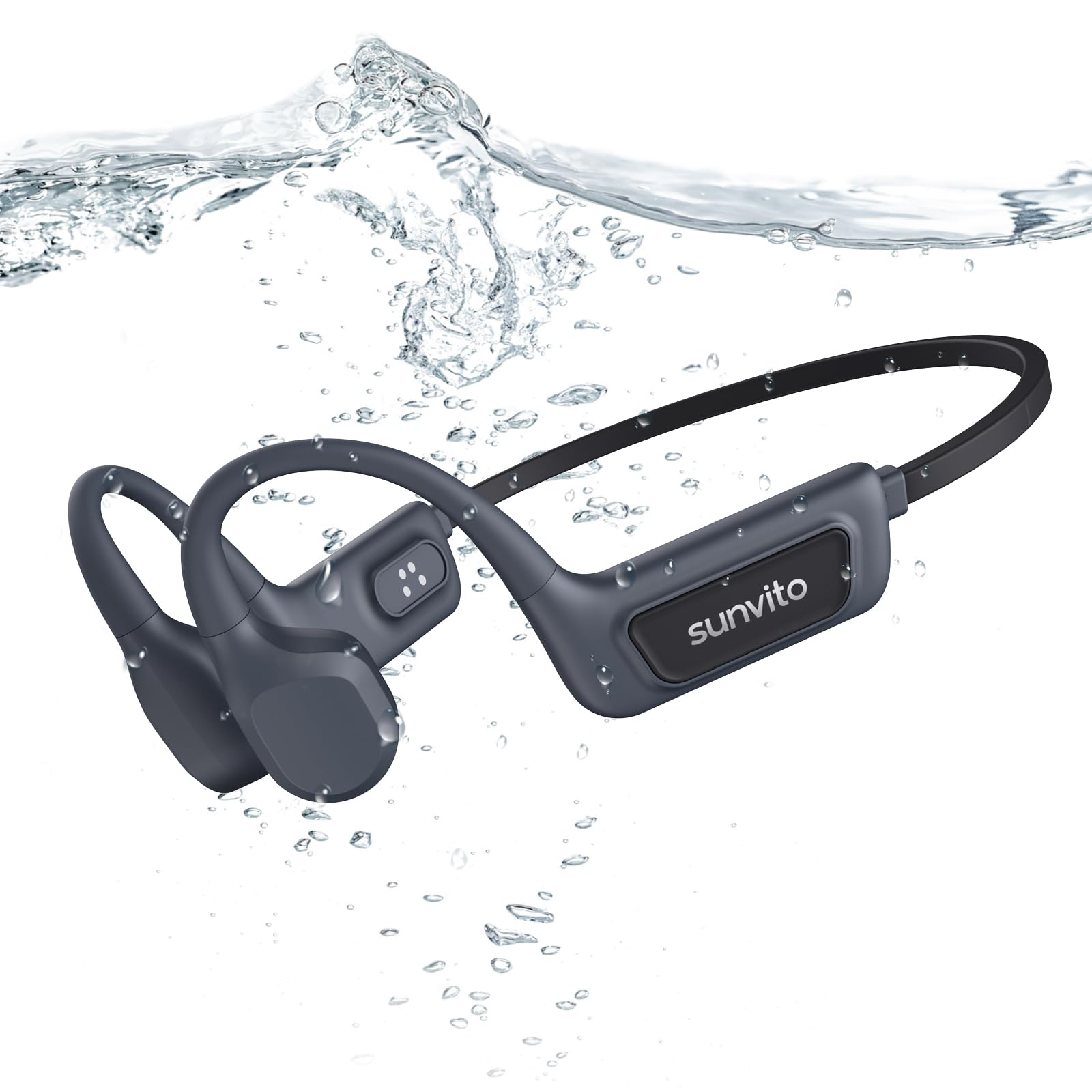
The sunvito headphone is the most affordable true IPX8 swim headphone in this roundup, offering a straightforward feature set at a price that undercuts the competition by a comfortable margin. It uses bone conduction technology with an open-ear form factor and includes 8GB of onboard storage — enough for about 2,500 songs in compressed formats. Bluetooth 5.4 ensures reliable dry-land streaming, and the magnetic charging cable eliminates the corrosion-prone port flap that affects cheaper units.
Battery life is rated at eight hours in MP3 mode, which matches the category average. The IPX8 rating allows submersion for extended pool sessions, though the manufacturer does not specify the exact depth and duration in the product copy. The lightweight build (no specific gram weight listed, but user feedback indicates it feels lighter than the MARLALL and Opinta models) makes it comfortable for users who are sensitive to neckband weight.
User reviews are mixed: several swimmers report clear sound quality and a comfortable fit that mirrors more expensive units, but a notable number of reviewers received non-functional units out of the box. The customer service response time varies, and some buyers report difficulty getting replacements. The band may also be too large for users with smaller heads — multiple complaints mention the transducers sliding backward away from the cheekbones during use. For the price, the sunvito is a viable entry point for casual pool users, but reliability concerns may push serious swimmers toward the more expensive PSIER or MARLALL options.
Why it’s great
- Most affordable IPX8-certified swim headphone with magnetic charging and 8GB storage
- Lightweight build reduces head fatigue during extended training sessions
- Bluetooth 5.4 provides stable land-based streaming up to 10 meters
Good to know
- Inconsistent quality control — some units arrive dead or fail to pair
- Neckband is too large for users with smaller heads, causing transducer slippage
FAQ
Can I use Bluetooth swimming headphones with my phone while I swim?
What is the difference between IPX8 and IP68 waterproof ratings for headphones?
How do I transfer music to swimming headphones?
Will bone conduction headphones work if I have hearing loss?
How long should swim headphones last before the waterproof seal fails?
Final Thoughts: The Verdict
For most swimmers who want the best balance of bass depth, storage capacity, and robust waterproofing, the winner is the PSIER X34-C because its hybrid driver system delivers low-end punch that no pure bone conduction model can match. If you have a smaller head or sensitive ears that reject hard plastic housings, grab the MONODEAL IP68 — its 24-gram frame and flexible band maintain contact pressure where bulkier units slip. And for triathletes who transition from pool to pre-dawn pavement, nothing beats the Opinta Safelight, with its integrated LED running lights and magnetic charging connector that eliminates the flap failure point.

Mo Maruf
I created WellFizz to bridge the gap between vague wellness advice and actionable solutions. My mission is simple: to decode the research and give you practical tools you can actually use.
Beyond the data, I am a passionate traveler. I believe that stepping away from the screen to explore new environments is essential for mental clarity and physical vitality.