Our readers keep the lights on and my smoothie glass nicely filled. As an Amazon Associate, I earn from qualifying purchases.
Choosing the wrong dressing for an open wound can turn a simple healing process into a painful, infection-prone ordeal. The ideal cover must absorb drainage without adhering to the fragile new tissue underneath, creating a sterile barrier that stays put until you choose to remove it.
I’m Mohammad Maruf — the founder and writer behind WellFizz. I’ve spent hundreds of hours analyzing wound care product specifications, comparing absorbency rates, adhesive technologies, and sterile packaging standards to bring clarity to this critical health category.
This guide breaks down the five best options on the market to help you select the right bandage for open wound based on drainage level, wound size, and sensitivity needs.
How To Choose The Best Bandage For Open Wound
Open wounds require a dressing that does more than cover the site. The wrong choice can lead to tissue damage during changes, bacterial invasion, or maceration from trapped moisture. Understanding three key factors will steer you toward the right product.
Selecting the Right Non-Stick Layer
The single biggest complaint with open wound dressings is adhesion to the wound bed. Xeroform petrolatum dressings and non-woven cellulose pads both offer non-stick properties, but they work differently. Petrolatum-based dressings maintain a moist environment ideal for burns and skin grafts, while cellulose pads wick fluid away without clinging to the tissue. For wounds with minimal exudate, a petrolatum dressing like Xeroform prevents the painful tearing of new skin during changes.
Matching Absorbency to Drainage Level
A lightly oozing wound needs a different dressing than a heavily draining surgical site. Abdominal pads (ABD pads) are designed for high-volume drainage, with a thick cellulose core that pulls fluid away from the wound. For moderate drainage, an island dressing with an absorbent center pad and adhesive border offers convenience without bulk. Using an overly absorbent pad on a dry wound can actually desiccate the tissue and slow healing, so match the pad’s capacity to your specific wound’s output.
Size and Coverage Considerations
A dressing must extend at least one inch beyond the wound edges to seal out bacteria effectively. Standard 4×4 inch pads work for small incisions and lacerations, while larger 8×10 inch ABD pads are necessary for abdominal surgeries or wounds covering a broad area. For irregularly shaped wounds, some dressings can be cut to size — others have sealed edges that should remain intact to prevent fluid leakage.
Quick Comparison
On smaller screens, swipe sideways to see the full table.
| Model | Category | Best For | Key Spec | Amazon |
|---|---|---|---|---|
| Carbou Xeroform Petrolatum Dressing | Premium | Burns & Skin Grafts | Petrolatum + Bismuth Tribromophenate | Amazon |
| Carbou Island Dressing | Mid-Range | Moderate Drainage | Polymer Adhesive Substrate | Amazon |
| McKesson ABD Pads | Premium | Heavy Post-Op Drainage | 8×10 Inch Sealed Edge | Amazon |
| CareStock ABD Pads | Mid-Range | Value Bulk Purchase | Lint-Free Cellulose Core | Amazon |
| Medline Sterile Abdominal Pads | Budget-Conscious | Basic Wound Coverage | 5×9 Inch Non-Woven Cellulose | Amazon |
In‑Depth Reviews
1. Carbou Xeroform Petrolatum Dressing 4×4
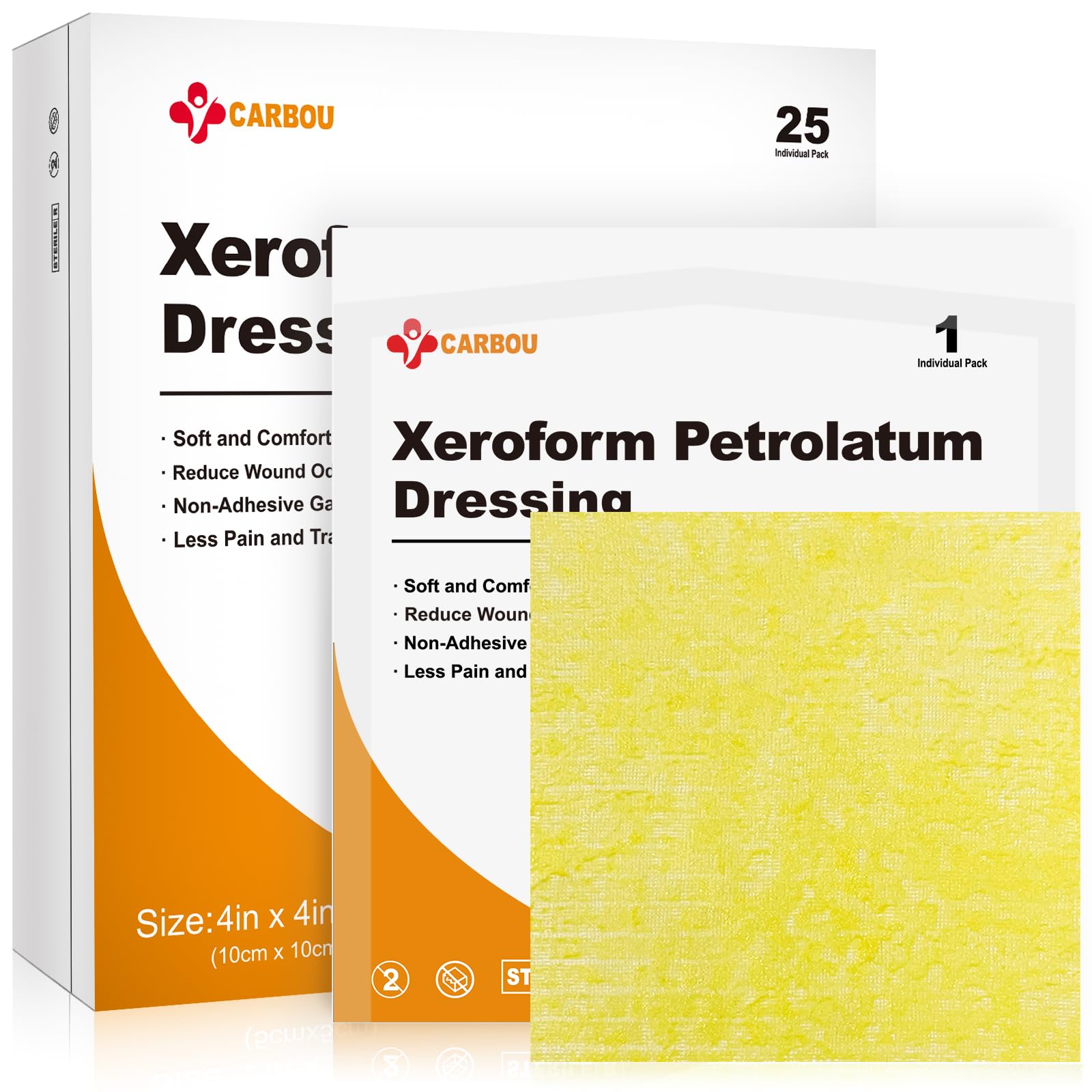
The Carbou Xeroform dressing stands apart because it is impregnated with petrolatum and 3% Bismuth Tribromophenate, a combination that masks wound odor and maintains a moist healing environment. This makes it the go-to choice for burns, skin grafts, and skin-tear-prone elderly patients where adhesion to fragile tissue would be disastrous. The fine mesh construction allows exudate to pass through while the petrolatum layer prevents the dressing from welding itself to the wound bed.
Each pad is individually wrapped and sterile, and because the material can be cut to size without fraying, you can custom-fit it to oddly shaped wounds. The non-adherent design is aggressive — reviewers consistently report zero sticking even on second-degree burns and fresh stitches. The 4×4 inch size is versatile for most medium-sized wounds, though larger areas may require multiple pads in a single change.
One drawback is that the petrolatum coating can dry out faster than hospital-grade versions, typically losing its moisture barrier effect after about 24 hours. Users note that it holds its shape less firmly than institutional brands, but for at-home care, the price per pad and the pain-free removal far outweigh this minor concession.
Why it’s great
- Zero adhesion to healing tissue even on burns
- Can be cut to custom shapes without losing integrity
- Individually sterile wrapped for infection control
Good to know
- Moisture barrier dries faster than hospital xeroform
- Does not hold shape as well under wraps
2. Carbou Island Dressing Bordered Gauze 6×6
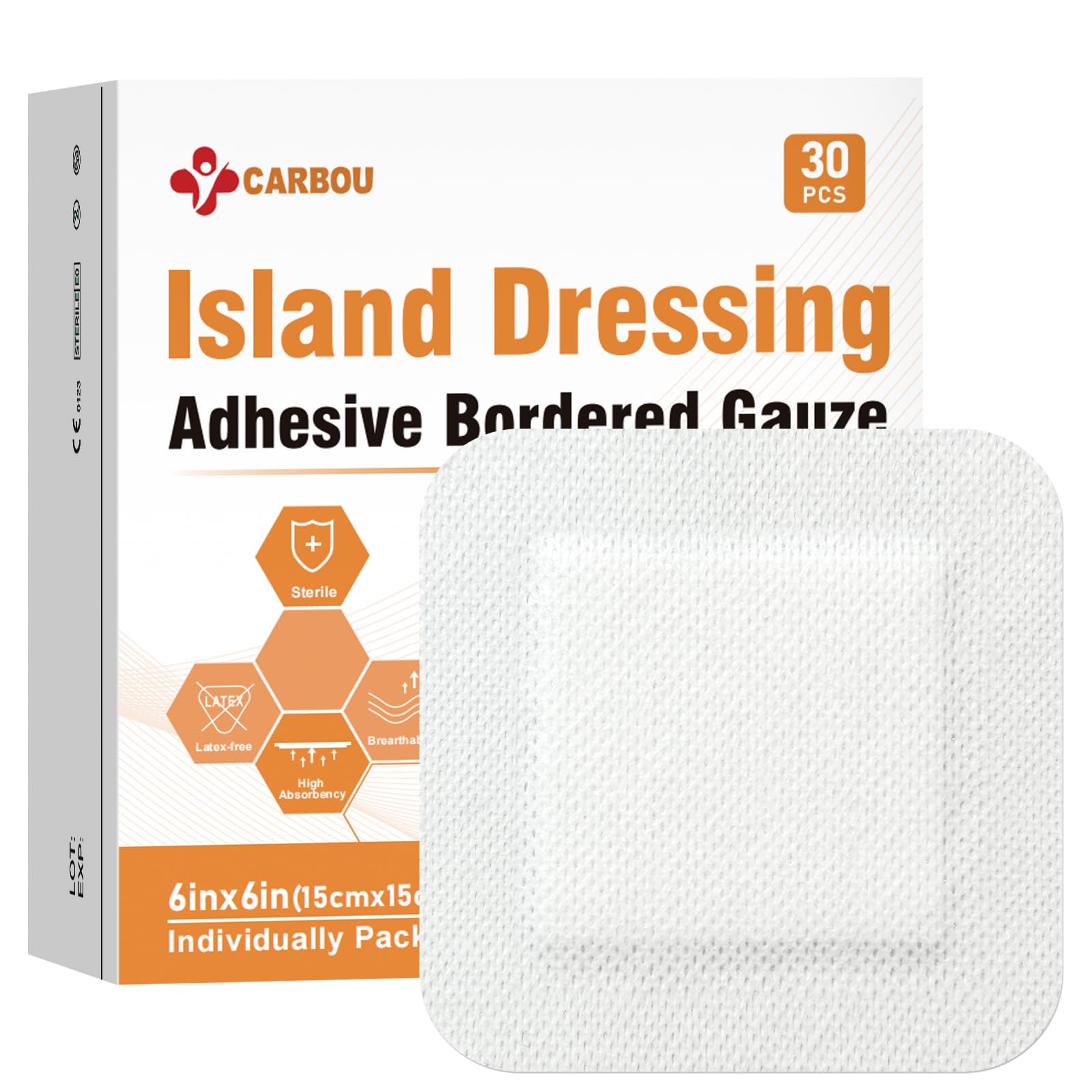
The Carbou Island Dressing eliminates the need for separate gauze and tape by combining an absorbent center pad with a polymer medical adhesive border. The center pad is highly absorbent but non-stick, while the adhesive edges grip the surrounding skin firmly — a feature that matters when dressing wounds on joints or areas that move. The 6×6 inch size provides a generous 4×4 inch absorbent field, suitable for larger cuts, post-surgical incisions, and second-degree burns.
Users report excellent adhesion that stays in place for a full day, even on knees and elbows, which makes it a strong choice for active recovery periods. The adhesive is gentle enough not to cause tearing on removal but tenacious enough that you may need baby oil to break the seal. Every pad is individually sterile wrapped, and the packaging includes a peel-away backing for one-handed application.
The main limitation is that the adhesive border can roll up at the edges over time, especially if the wound is located on a highly mobile area. Some users with very heavy drainage found the center pad saturated before the 24-hour mark, requiring a mid-day change. For moderate to medium drainage, this dressing offers a tape-free, hassle-free seal.
Why it’s great
- Strong adhesive border eliminates need for medical tape
- Non-stick center pad prevents painful removal
- Excellent for wounds on moving joints and knees
Good to know
- Adhesive edges may roll up on highly active areas
- Not ideal for wounds with very heavy drainage
3. McKesson Sterile ABD Pads 8×10
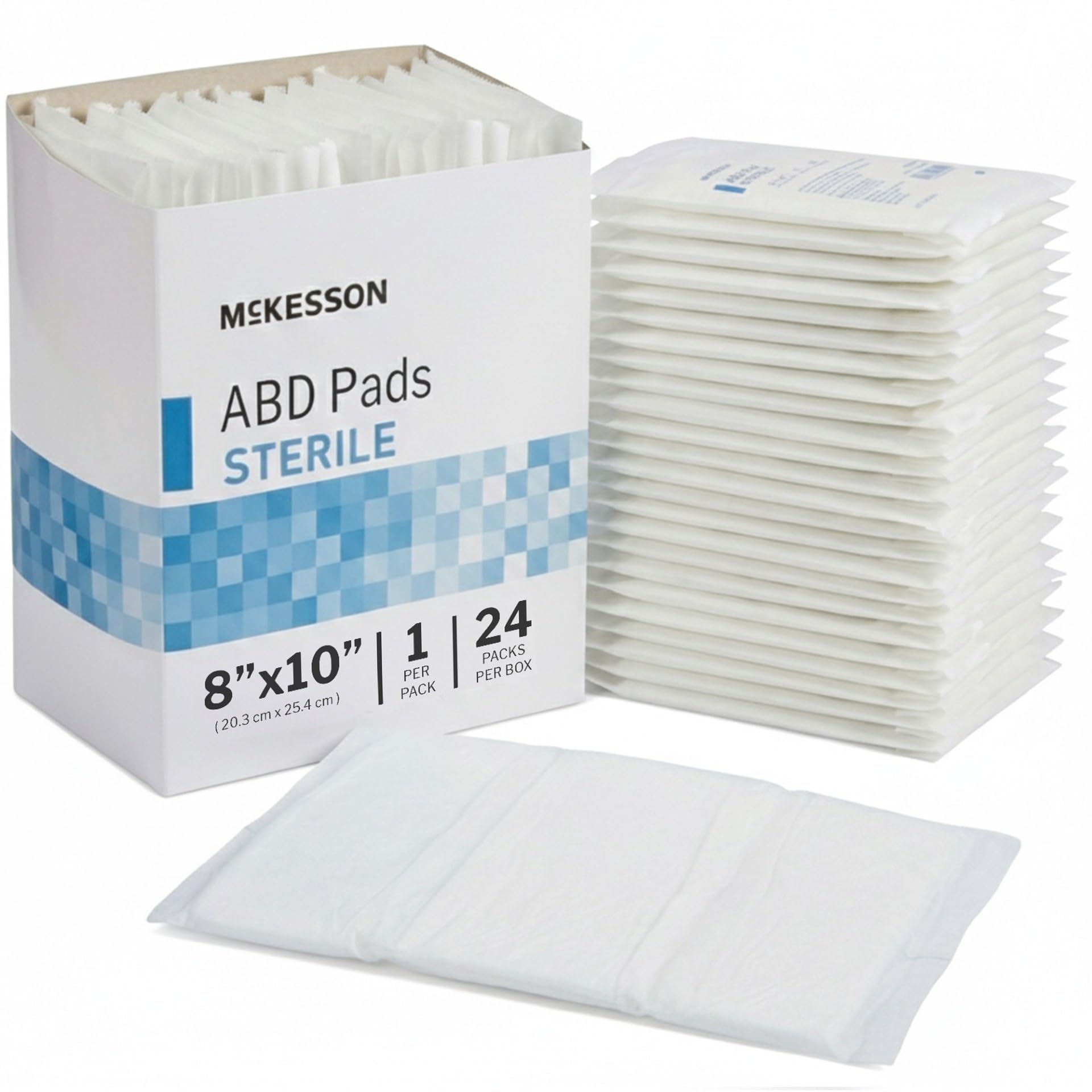
The McKesson ABD pad is built for the heaviest drainage scenarios, such as abdominal surgeries, trauma sites, or infected wounds producing significant exudate. Its 8×10 inch footprint covers a large incision with plenty of overlap, and the sealed edge design prevents fluid from wicking out the sides onto clothing or bedding. The inner cellulose layer pulls fluid away from the wound rapidly, while the soft non-woven outer layer stays lint-free and gentle on healing tissue.
Reviewers with abdominal incisions around 12 inches long confirm that a single pad provides complete coverage with comfortable cushioning under an abdominal binder. Each pad is individually sterile wrapped, which makes them practical for building a home wound care kit. The non-stick performance is reliable — the pad lifts cleanly without pulling at suture lines or delicate granulation tissue.
At 8×10 inches, the pad is substantial, and some users wish for an even longer 10×4 inch option for linear wounds. The absorbency is high enough that a single pad can last a full day for post-op drainage, but for truly heavy output, secondary dressing changes may still be necessary. For the combination of size, sterility, and edge sealing, this is the premium choice for major wounds.
Why it’s great
- Sealed edges prevent side leakage entirely
- Large enough to cover major abdominal incisions
- Non-stick lifting protects sutures and new tissue
Good to know
- Very large size may be excessive for smaller wounds
- No smaller variant available in this line
4. CareStock Abdominal Pads 8×10 48-Pack
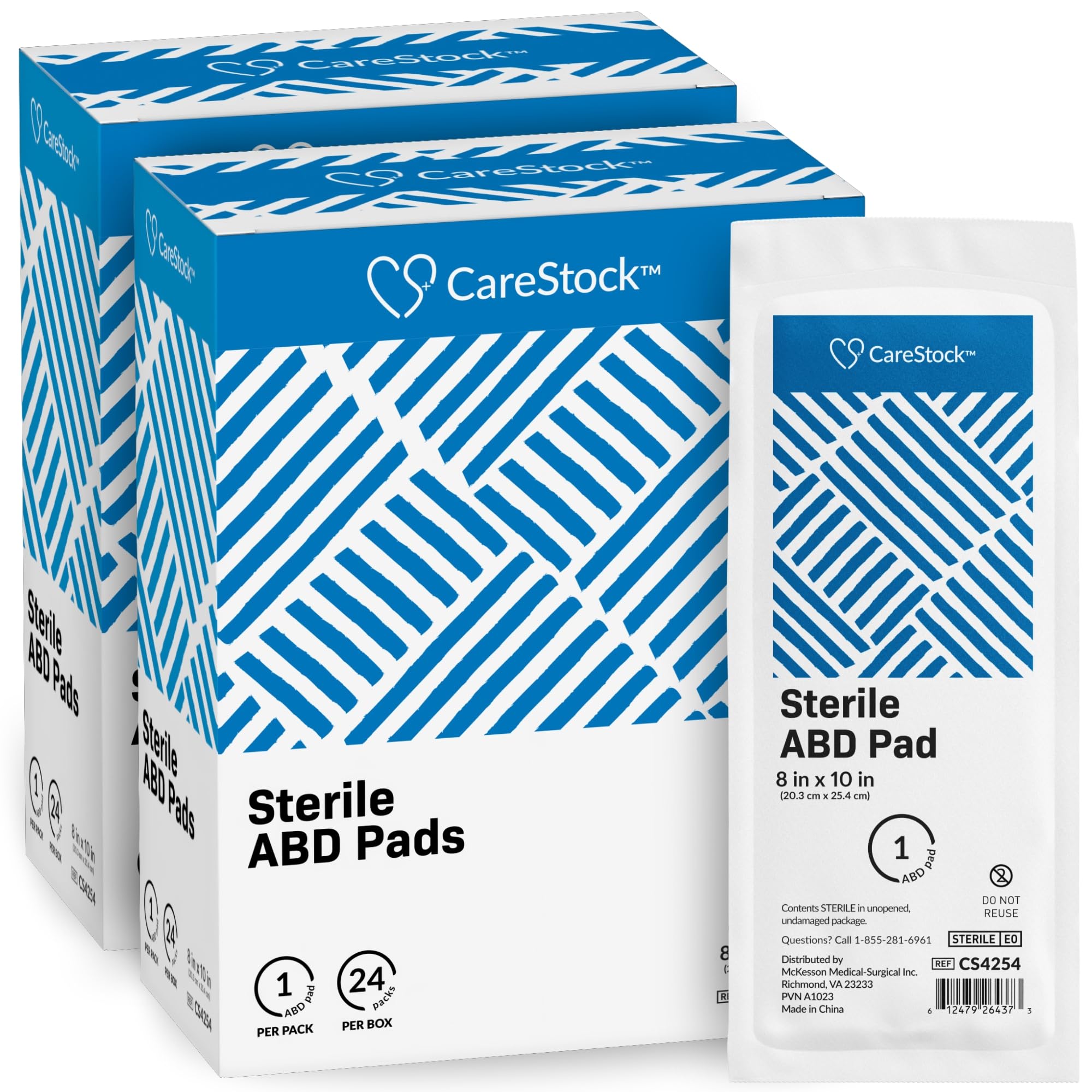
The CareStock ABD pads deliver professional-grade absorbency at a cost that makes them feasible for long-term wound management. The 48-count box provides a generous supply for chronic wounds, pressure ulcers, or post-operative recovery that requires multiple daily changes. The super-absorbent core wicks fluid efficiently, and the lint-free design ensures no fibers contaminate the wound bed during healing.
Reviewers praise the pad’s softness and flexibility — it conforms to body contours without being stiff or bulky, making it comfortable under clothing or bandages. The sealed edges minimize fluid leakage, and the individually wrapped sterile packaging means you can grab a fresh pad without compromising the rest of the box. Users managing pressure ulcers specifically note these pads perform as well as more expensive branded alternatives.
The main trade-off is that the outer non-woven layer, while gentle, is not as durable as some higher-end options. For wounds that require extended wear without disturbance, the pad can begin to lose its shape after several hours. However, for regular changes at a mid-range cost, this pack offers exceptional per-unit value without sacrificing the core features you need for open wound care.
Why it’s great
- 48-count supply ideal for chronic or daily care
- Flexible pad conforms well to body curves
- Matches performance of pricier brand-name ABD pads
Good to know
- Outer layer less durable for extended wear
- Sealed edge not as rigid as hospital-grade options
5. Medline NON21450H Sterile Abdominal Pads 5×9

The Medline Non21450H pads are a straightforward, no-frills option for open wound care when the priority is a sterile barrier without advanced features. The non-woven cellulose construction is highly absorbent and, importantly, does not stick to the wound — the most critical factor for pain-free dressing changes. At 5×9 inches, the pad size sits between a standard 4×4 and a full ABD pad, making it suitable for moderate-sized surgical incisions or draining wounds.
Users coming home from surgery appreciate the cost savings compared to pharmacy prices, with several noting that their caregiver specifically recommended these pads for post-operative hygiene. The pads are individually sterile wrapped, which preserves the rest of the 25-count box for future needs. The material is soft enough for direct wound contact without causing irritation, even on sensitive post-surgical sites.
The limitation is that there is no sealed edge design, so for wounds with very heavy drainage, fluid can seep out the sides and require a secondary absorbent layer. The pad also lacks the flexibility of some competitor options, feeling slightly stiffer when conforming to curved body surfaces. For basic coverage of low-to-moderate drainage wounds at an entry-level cost, these pads deliver exactly what the label promises.
Why it’s great
- Reliable non-stick performance on healing tissue
- Cost-effective alternative to pharmacy pricing
- Individually wrapped for sterile application
Good to know
- No sealed edges for heavy drainage control
- Stiffer pad may not contour as well to body
FAQ
Can I use regular gauze on an open wound?
How often should I change a bandage on an open wound?
What is the difference between an ABD pad and an island dressing?
Final Thoughts: The Verdict
For most users, the bandage for open wound winner is the Carbou Xeroform Petrolatum Dressing because it provides pain-free, non-stick protection that works on burns, grafts, and sensitive skin without pulling during changes. If you need a self-contained dressing with no tape required, grab the Carbou Island Dressing 6×6. And for heavy post-surgical drainage where sealed-edge absorption is non-negotiable, nothing beats the McKesson ABD Pads 8×10.

Mo Maruf
I created WellFizz to bridge the gap between vague wellness advice and actionable solutions. My mission is simple: to decode the research and give you practical tools you can actually use.
Beyond the data, I am a passionate traveler. I believe that stepping away from the screen to explore new environments is essential for mental clarity and physical vitality.