Our readers keep the lights on and my smoothie glass nicely filled. As an Amazon Associate, I earn from qualifying purchases.
The difference between sounding like a hobbyist and a professional often comes down to a piece of gear no bigger than a water bottle. A recording mic sits between your voice and your audience, and its job is to transmit warmth and clarity while filtering out the hum of your computer fan, the rumble of traffic, or the echo of an untreated room. Choosing the right one for a home setup is less about chasing specs and more about matching your room, your content style, and your workflow.
I’m Mohammad Maruf — the founder and writer behind WellFizz. My research for this guide involved cross-referencing frequency response charts, signal-to-noise ratings, pickup pattern designs, and real user workflows across dozens of hours of analysis to find the mics that deliver genuine broadcast-quality audio from a home desk.
Whether you are podcasting, streaming, recording vocals, or hosting virtual meetings, the best at home recording mic will elevate your production value without demanding a soundproof booth or a complex interface setup.
How To Choose The Best At Home Recording Mic
The mic market is flooded with options that look similar on paper but behave radically differently in a real home environment. The key is to understand your room, your interface needs, and the type of content you produce before you compare polar patterns.
Dynamic vs. Condenser Capsules
A dynamic mic captures less ambient noise and is far more forgiving in untreated rooms, making it the smarter choice for gamers, streamers, and solo podcasters who cannot soundproof their space. A condenser mic offers higher sensitivity and a wider frequency range, which is ideal for vocalists, voiceover artists, and musicians who want to capture nuance — but it will also pick up every click, breath, and hum in the room.
Connection and Workflow
USB mics offer true plug-and-play simplicity, giving you professional audio without an audio interface. XLR mics require an interface or mixer but unlock higher sound quality and expandability. Many modern hybrid mics offer both, allowing you to start with USB and upgrade to XLR later without replacing the capsule.
Polar Patterns and Noise Rejection
Cardioid patterns reject sound from the sides and rear, which is essential for a home desk setup. Omnidirectional patterns pick up sound equally from all angles — useful for roundtable discussions but a liability in a noisy room. Bidirectional and stereo patterns are niche tools for specific interview or instrument recording tasks.
Quick Comparison
On smaller screens, swipe sideways to see the full table.
| Model | Category | Best For | Key Spec | Amazon |
|---|---|---|---|---|
| Shure MV7+ | Hybrid Dynamic | Broadcast & Podcast Pro | Auto Level Mode, 16.8M LED | Amazon |
| Audio-Technica AT2020USB-X | Condenser USB | Vocal Recording & Home Studio | 24-Bit / 96 kHz Converter | Amazon |
| Sennheiser Profile | Condenser USB | Simple Software-Free Setup | German Engineered Capsule | Amazon |
| MAONO PD200W | Hybrid Dynamic | Wireless Flexibility | 60m Range, 60h Battery | Amazon |
| FIFINE AmpliGame KS5 | Dynamic + Mixer | All-in-One Gaming Bundle | Integrated Audio Mixer | Amazon |
| Blue Yeti | Condenser USB | Versatile Multi-Pattern Use | 4 Pickup Patterns | Amazon |
| FIFINE AM8PROT | Dynamic XLR/USB | Budget Streamer Starter | XLR/USB, 240 RGB Combos | Amazon |
In‑Depth Reviews
1. Shure MV7+

The Shure MV7+ is the gold standard for home recording mics that need to deliver professional broadcast sound without a dedicated audio engineer. Its dynamic capsule naturally rejects room echo and background hum, and the Auto Level Mode adjusts gain in real time as you move closer or farther from the mic, eliminating the need for constant manual adjustment during long streaming sessions.
The full-color LED touch panel offers 16.8 million color options and a tap-to-mute function that livestreamers will appreciate, while the built-in digital pop filter removes plosives before they hit the recording. Real-time denoising further cleans up the signal, and the integrated reverb effects add studio polish for vocalists and voiceover work without external plugins.
With both USB-C and XLR outputs, the MV7+ can serve as a standalone USB mic for a laptop or connect to an audio interface for a more complex studio chain. The included foam windscreen and 3m USB-C cable cover the essentials, though the XLR cable is sold separately. It is OBS certified and works seamlessly with the Motiv desktop app for deep EQ and compression control.
Why it’s great
- Auto Level Mode maintains consistent volume without manual gain riding
- Real-time denoiser and digital pop filter clean audio at the source
- Dual USB-C and XLR connectivity future-proofs your setup
Good to know
- Premium price reflects the broadcast-grade feature set
- XLR cable not included in the box
- Touch mute button takes a short adjustment period for muscle memory
2. Audio-Technica AT2020USB-X

The Audio-Technica AT2020USB-X brings the legendary AT2020 capsule into a pure USB format with a high-resolution 24-bit, 96 kHz AD converter that captures exceptional detail for vocal recording, voiceover, and home studio work. Its cardioid polar pattern focuses on sound directly in front of the mic and rejects ambient noise from the sides and rear, though as a condenser, it will pick up more room sound than a dynamic mic would.
A soft-touch capacitive mute button on the body allows silent muting with a simple touch, and the two-state LED indicator glows blue when active and red when muted. The built-in headphone jack provides zero-latency monitoring, so you can hear exactly what the mic hears without delay. The included custom desk stand is sturdy and adjustable, and the package also contains both a USB-C to USB-A cable and a USB-A to USB-C adapter for broad device compatibility.
This mic is best suited for users who can control their recording environment — it excels at capturing the nuance of an acoustic instrument or a vocal performance, but it will amplify fan noise, keyboard clicks, and room echo if not positioned carefully. The stainless steel enclosure adds durability and a professional look on any desk.
Why it’s great
- Studio-grade 24-bit/96 kHz conversion captures extreme audio detail
- Capacitive mute button with clear visual feedback
- Includes both USB-C to USB-A cable and adapter for maximum compatibility
Good to know
- Condenser design is sensitive to untreated room noise
- Touch mute lacks a physical click for tactile confirmation
- Desk stand is serviceable but upgrading to a boom arm is recommended
3. Sennheiser Profile

Sennheiser skips the software bloat with the Profile, offering a pure plug-and-play USB-C condenser mic that simply works on Windows, macOS, and Linux without any driver installation. The cardioid capsule delivers a natural, warm vocal character that accentuates body and presence without sounding thin or tinny, a common problem with budget USB mics.
Onboard controls give you direct access to gain, headphone volume, and mix control via physical dials, so you never need to open a menu mid-stream or mid-session. The mute button is tactile and responsive, and the built-in headphone jack provides zero-latency monitoring. The included table stand is compact and stable, though the mic is also compatible with standard boom arms via the threaded mounting point.
The metal housing feels premium and durable, and the overall design is deliberately minimal — no RGB lighting, no unnecessary frills, just clean audio. The 1.2-meter USB-C cable is included, and the mic draws power directly from the USB port. For creators who want great sound without relying on companion apps, the Profile is a strong contender.
Why it’s great
- No software required — fully hardware-controlled audio
- Warm, natural vocal signature from a respected German capsule
- Full metal housing and tactile silent knobs
Good to know
- Condenser design picks up ambient noise in untreated rooms
- Included stand positions the mic low, requires a boom arm for ideal placement
- No XLR output for later expansion to an audio interface
4. MAONO PD200W
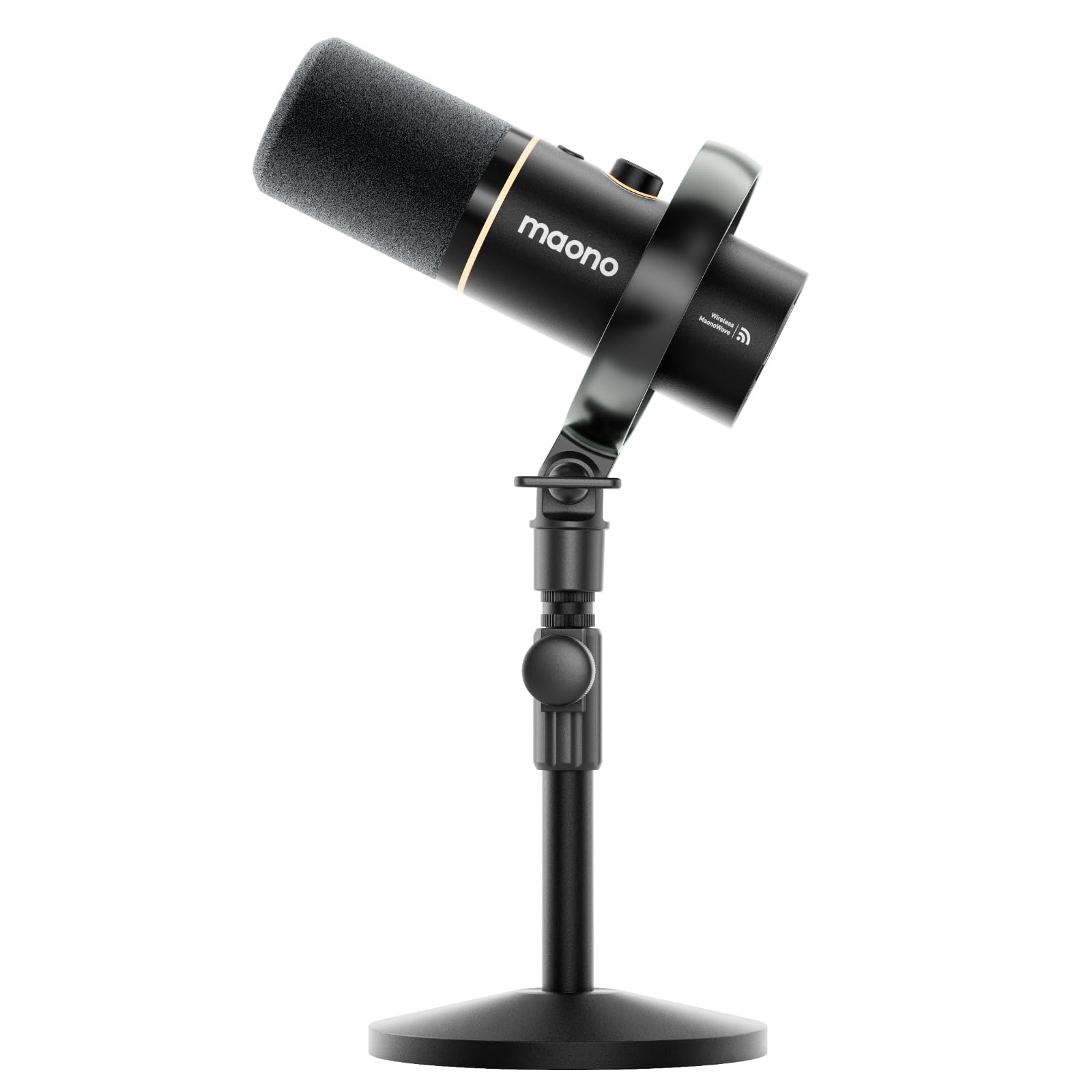
The MAONO PD200W sets itself apart from the pack with three connection modes — wireless, USB, and XLR — giving you freedom of movement that few mics in this tier offer. The wireless mode delivers a stable 60-meter range and up to 60 hours of battery life with RGB off, meaning you can pace around your recording space or move between rooms without losing signal.
The dynamic capsule and cardioid pickup pattern work together to minimize background noise, and the advanced three-stage noise cancellation further cleans the signal in untreated rooms. A single receiver can connect two wireless PD200W mics simultaneously, recording each to its own track for duo podcasts or interviews. The MaonoLink app provides access to four preset modes, full EQ control, and reverb adjustments.
The included desktop stand, USB-C cable, and Type-C receiver cover the essentials out of the box. The metal enclosure feels solid, and the RGB lighting can be customized for aesthetic flair or turned off entirely for professional settings. This mic is ideal for creators who need mobility or record in multiple locations without unplugging several cables.
Why it’s great
- Triple connectivity (wireless, USB, XLR) offers unmatched flexibility
- 60-hour battery life and 60-meter range for untethered recording
- Dual-mic tracking for co-host podcasts with separate audio tracks
Good to know
- Wireless mode requires the included USB receiver — not true Bluetooth
- App control is required for full EQ and reverb customization
- Desktop stand is functional but upgrading to a boom arm improves reach
5. FIFINE AmpliGame KS5

The FIFINE KS5 bundle includes an XLR dynamic microphone and a dedicated audio mixer, giving streamers and podcasters a complete audio control center in one box. The dynamic capsule rejects room noise well, and the cardioid pattern keeps your voice centered even if you move slightly off-axis. The mixer features individual mute controls, a headphone monitoring jack, and a volume fader for fine-tuning the balance between game audio and commentary.
Both the mic and mixer feature customizable RGB lighting with five effect modes, which can be set to static single colors or flowing patterns to match your stream aesthetic. The mixer also includes fun voice changer modes — elder, baby, and robot — that add entertainment value during live streams. Connectivity is handled via USB-C to USB-A/C, and the included XLR cable links the mic to the mixer.
The build quality is predominantly plastic, which keeps the weight down but does not feel as premium as metal-bodied mics. Some users report occasional mixer reboots during extended use. However, for the price of a complete kit that includes both a dynamic XLR mic and a mixer, the KS5 offers excellent value for beginners who want a one-purchase setup.
Why it’s great
- Complete bundle — mic, mixer, cables, and stand included
- Voice changer effects add fun to gaming streams
- RGB lighting syncs between mic and mixer for a unified look
Good to know
- Plastic construction feels less durable than all-metal alternatives
- Some units may experience sporadic mixer power cycling
- XLR features unavailable on the mixer side — only USB controls function
6. Blue Yeti
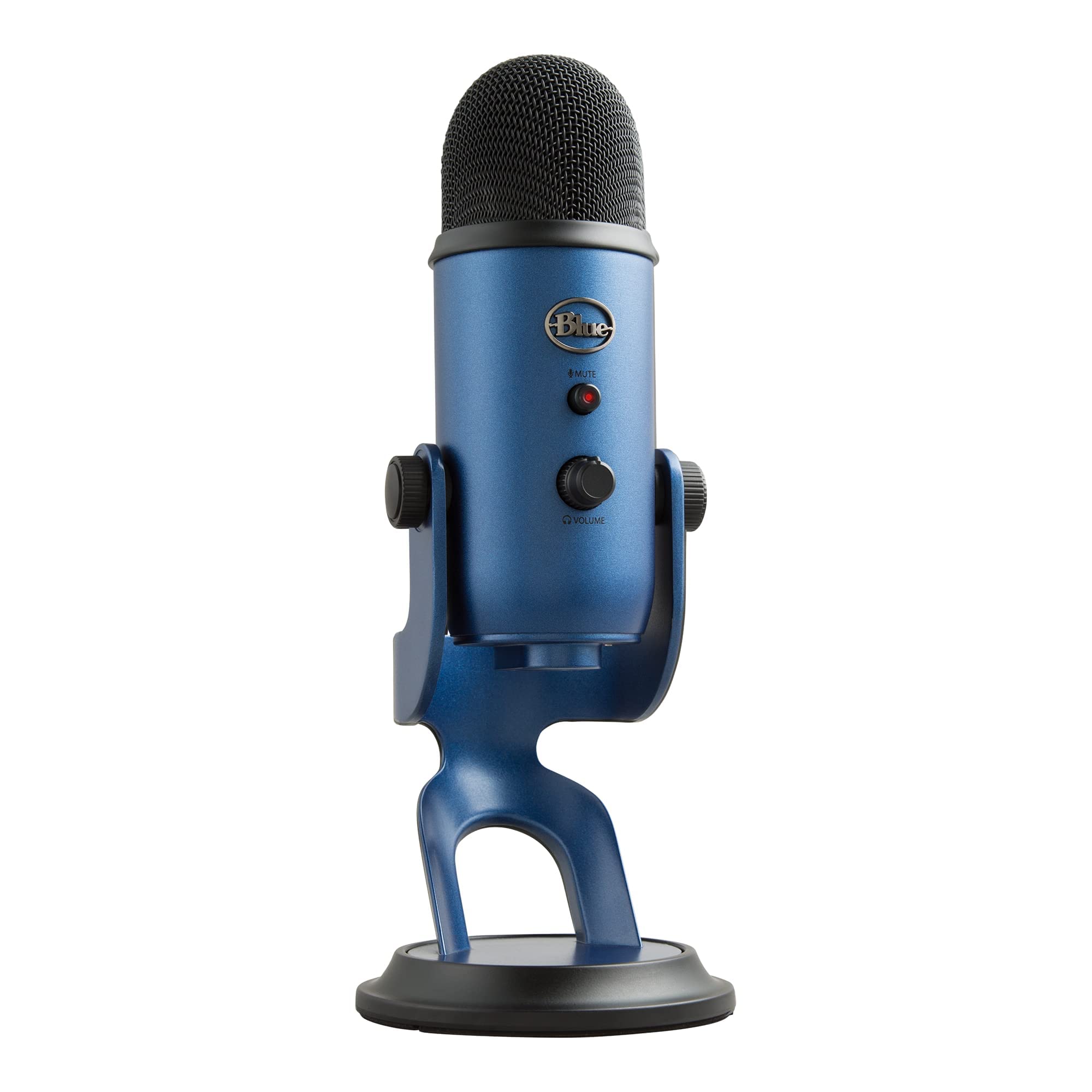
The Blue Yeti is the most recognized USB mic on the market for a reason — its four-pattern versatility lets you switch from cardioid (solo podcasting or streaming) to omnidirectional (roundtable discussions), bidirectional (interview duets), or stereo (instrument recording) without buying multiple mics. The three-capsule array delivers clear, broadcast-quality sound that has powered countless YouTube channels and Twitch streams.
Onboard controls include headphone volume, pattern selection, instant mute, and mic gain, giving you full command of your audio without touching software. The included desktop stand is adjustable, allowing you to tilt the mic toward your mouth for optimal capture. The metal enclosure adds a reassuring weight and durability that cheaper plastic mics lack.
The Yeti is a condenser mic, so it will pick up keyboard clacks, mouse clicks, and room echo unless you manage your recording environment. A shock mount and pop filter are strongly recommended. The Blue VO!CE software provides EQ, compression, and effects, but the mic works perfectly without it. At its price point, the Yeti remains a top choice for creators who need multiple recording formats from a single device.
Why it’s great
- Four pickup patterns replace the need for multiple microphones
- Broadcast-quality sound that is instantly recognizable
- Sturdy metal build and adjustable desktop stand
Good to know
- Condenser design amplifies background noise in untreated rooms
- Requires a shock mount and pop filter for best results
- Bulky footprint takes up significant desk space
7. FIFINE AM8PROT
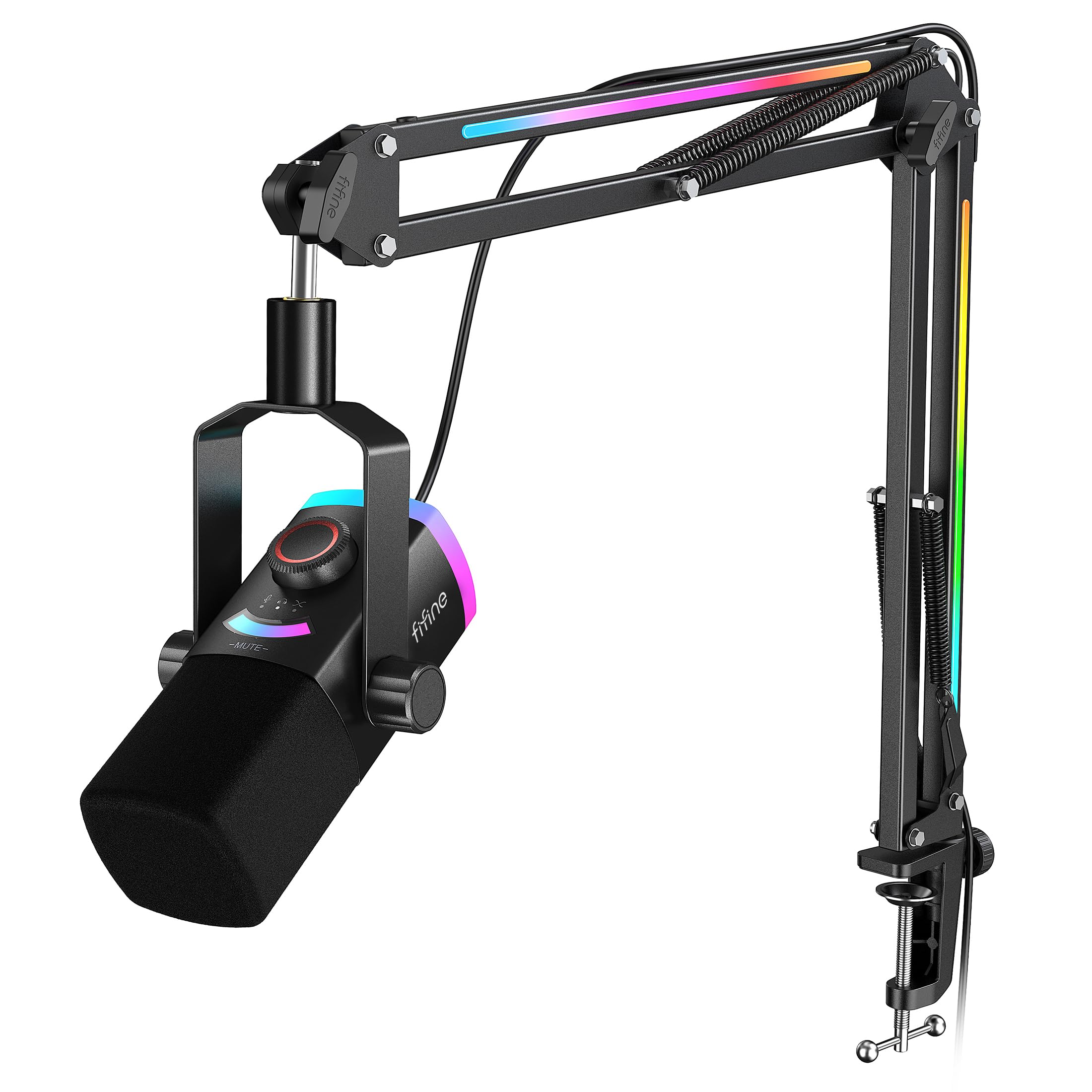
The FIFINE AM8PROT is a budget-friendly dynamic mic that offers both XLR and USB connectivity, making it an excellent entry point for streamers who want broadcast-quality noise rejection without investing in an audio interface. The dynamic capsule with a cardioid pattern and 75 dB SNR effectively reduces background noise from multiple devices running simultaneously — a common pain point for home users with loud PC fans or console cooling systems.
The included RGB boom arm is thicker than previous FIFINE models and features built-in cable management, reducing wobble noise and keeping your desk tidy. The 240+ RGB combo options on both the mic and boom arm can pulse to game soundtracks or stay in static cool tones. The tap-to-mute function with a visible LED panel is a lifesaver during live streams, preventing hot mic moments during intense gameplay.
Plug-and-play USB-A and USB-C compatibility lets you switch between a desktop PC, a PS4/PS5, or a USB-C laptop in seconds. The silent 3-in-1 control knob handles gain, headphone volume, and mix control when using USB mode. The foam windscreen effectively disperses airflow to eliminate plosives. For streamers starting out, this kit delivers strong fundamentals at a very accessible price.
Why it’s great
- Dual XLR/USB connectivity allows easy future upgrades
- Thickened RGB boom arm minimizes desk vibration noise
- Plug-and-play on PC, Mac, and PS4/PS5 without drivers
Good to know
- XLR connection disables RGB and mute functions
- Tap-to-mute sensor can be triggered accidentally
- Software EQ adjustments recommended for optimal vocal tone
FAQ
Do I need an audio interface for a USB microphone?
Why does my condenser mic pick up so much background noise?
What is the best placement for a recording mic at a desk?
Can I use a gaming headset instead of a dedicated recording mic?
Final Thoughts: The Verdict
For most users, the best at home recording mic winner is the Shure MV7+ because it combines a noise-rejecting dynamic capsule, auto leveling, real-time denoising, and dual USB-C/XLR outputs in a single durable package that suits both beginners and professionals. If you want studio-grade detail and plan to treat your room, grab the Audio-Technica AT2020USB-X. And for wireless freedom and mobility, nothing beats the MAONO PD200W.

Mo Maruf
I created WellFizz to bridge the gap between vague wellness advice and actionable solutions. My mission is simple: to decode the research and give you practical tools you can actually use.
Beyond the data, I am a passionate traveler. I believe that stepping away from the screen to explore new environments is essential for mental clarity and physical vitality.