Our readers keep the lights on and my smoothie glass nicely filled. As an Amazon Associate, I earn from qualifying purchases.
The promise of an AI camera is simple: frame the shot, hold the focus, and follow the action without you lifting a finger. But the hardware reality varies wildly — from a 53g magnetic clip-on that tracks your face while you run, to a full-frame hybrid that deciphers a human pose through its electronic viewfinder. The spec that separates a gimmick from a tool is how the camera processes subject data and how fast its motors or algorithms respond to movement.
I’m Mohammad Maruf — the founder and writer behind WellFizz. I’ve spent hundreds of hours combing through technical documentation, firmware changelogs, and user test footage across PTZ broadcast units, mirrorless hybrids, and compact vlogging cameras to see where AI features actually deliver a workflow advantage versus where they remain a spec-sheet checkbox.
This guide breaks down the best AI cameras for creators, streamers, and security-conscious homeowners — spanning gimbal-driven tracking, sensor-based subject recognition, and cross-camera zone handoffs. If you want a best ai camera that genuinely improves your shoot rather than complicating it, the right choice depends on sensor size, motor precision, and the software ecosystem that binds them.
How To Choose The Best AI Camera
Not every AI camera is built for the same use case. A church streaming setup needs quiet, repeatable PTZ presets and live output switching, while a vlogger wants lightweight gimbal stabilization and reliable face lock. Identifying the primary scenario before you compare sensor size or zoom range prevents you from overpaying for features you won’t use.
Tracking Method: PTZ Motors vs. Software Framing
The biggest functional split is how the camera follows a subject. PTZ cameras use physical motors to pan, tilt, and zoom the lens — this gives you tight framing on a distant speaker but introduces mechanical noise and moving parts that can wear over time. Software-based tracking, found in mirrorless bodies like the Sony Alpha series, uses the entire sensor to crop and re-frame the image digitally. Digital tracking is silent and has zero mechanical lag, but it reduces the effective resolution and field of view as you zoom into the crop.
NDI vs. USB for Live Production
If you plan to route video into OBS, vMix, or a hardware switcher, the output protocol matters more than 4K resolution. NDI (Network Device Interface) transmits video over standard Ethernet, allowing you to run long cables without signal degradation and control the camera over the same network. USB cameras like the OBSBOT Tiny 3 are plug-and-play for a single PC but become cumbersome in multi-camera rigs where you need independent control and separate video streams.
Sensor Size and Low-Light AI Performance
AI subject recognition relies on clean image data. A 1/1.28-inch sensor, like the one inside the OBSBOT Tiny 3 or Insta360 GO Ultra, gathers enough light for reliable tracking in a well-lit room, but it will struggle in a dim sanctuary or outdoor twilight. Models with a 1-inch CMOS (Xtra Muse) or APS-C/Full-Frame silicon (Sony Alpha 6700, Alpha 7 V) maintain subject lock in darker environments because the larger pixels provide the AI processor with more signal before noise corrupts the recognition model.
Quick Comparison
On smaller screens, swipe sideways to see the full table.
| Model | Category | Best For | Key Spec | Amazon |
|---|---|---|---|---|
| OBSBOT Tiny 3 | PTZ Webcam | Desktop streaming & conferencing | 1/1.28″ sensor, triple-mic, 4K30/1080p120 | Amazon |
| Xtra Muse | Gimbal Camera | Pocket vlogging on the move | 1″ CMOS, 3-axis gimbal, 4K120fps | Amazon |
| iuZee 20X PTZ | Broadcast PTZ | Church & event live streaming | 1080p60, 20x optical zoom, PoE | Amazon |
| OBSBOT Tail Air | NDI PTZ | Multi-platform wireless streaming | 320° pan, NDI|HX, 4K30, gesture control | Amazon |
| Insta360 GO Ultra | Action Cam | Wearable hands-free POV | 53g, magnetic mount, 4K60, FlowState | Amazon |
| Prisual Gen 5 System | Pro PTZ Bundle | Multi-camera worship production | 30x zoom, dual cameras + controller, 1080p60 | Amazon |
| eufy S4 4-Cam Kit | Security System | Outdoor property surveillance | 4K bullet + 2K PTZ, solar, cross-cam tracking | Amazon |
| Sony Alpha 6700 | Mirrorless Hybrid | Pro photo & video hybrid work | 26MP APS-C, AI AF, 4K120p, S-Log | Amazon |
| FoMaKo K600N Bundle | NDI PTZ Bundle | Multi-camera 4K production | 4K60 NDI|HX3, 20x zoom, Gen 3 AI tracking | Amazon |
| PTZOptics Move 4K | Broadcast PTZ | Education & corporate AV | 30x zoom, NDI|HX, tally light, 4K60 | Amazon |
| Sony Alpha 7 V | Full-Frame Mirrorless | Professional hybrid imaging | 33MP FF, AI AF, 30fps burst, IBIS | Amazon |
In‑Depth Reviews
1. OBSBOT Tiny 3
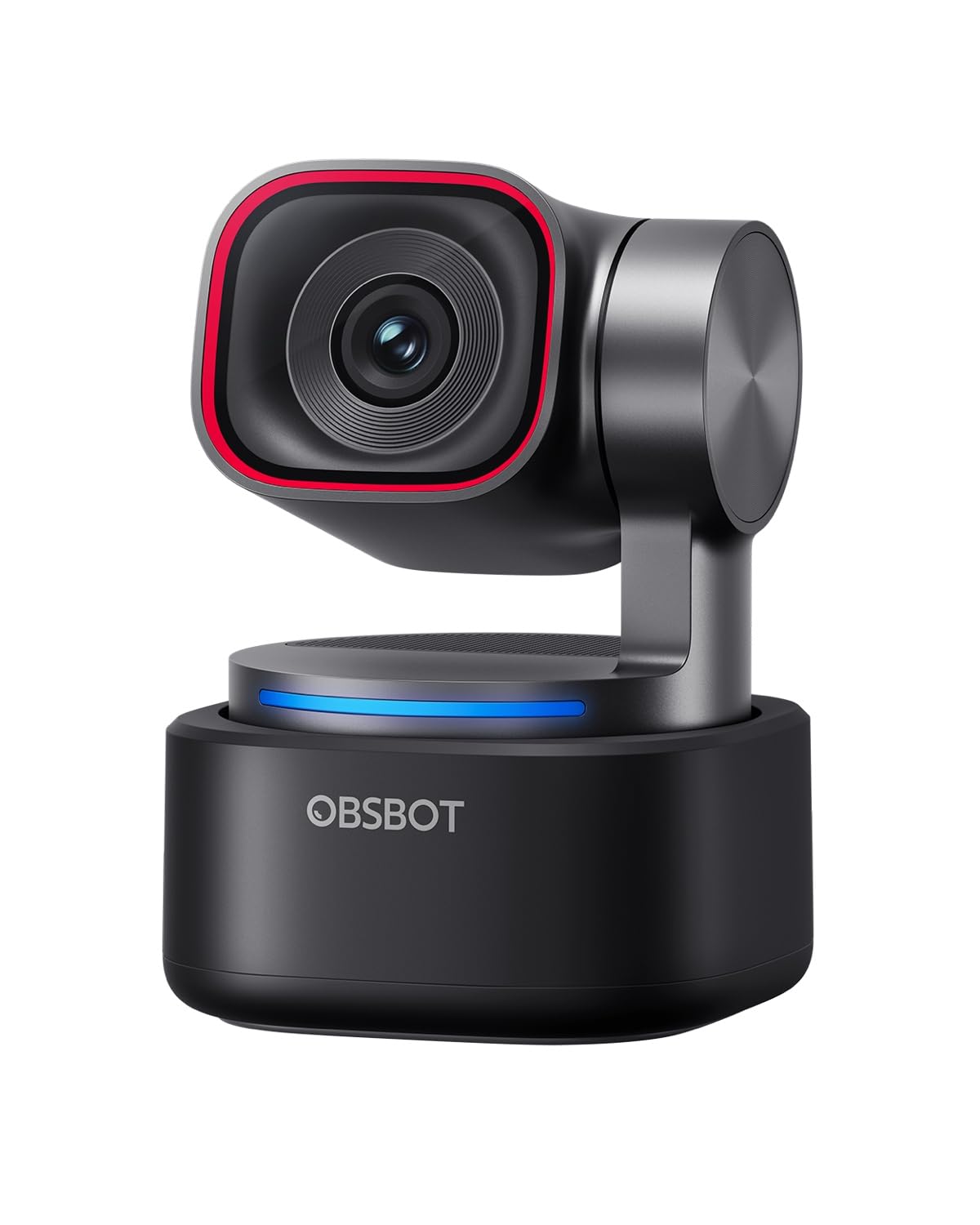
The OBSBOT Tiny 3 packs a 1/1.28-inch CMOS sensor into a body that is 48% smaller than its predecessor, yet delivers 4K video at 30fps or silky 1080p at 120fps for slow-motion capture. Its dual all-pixel PDAF system intelligently switches between phase and contrast detection based on lighting, which means the autofocus stays sticky even when you move from a bright window to a dim corner of the room. The triple-mic array — one omnidirectional and two MEMS directional — powers five audio modes that isolate voice from ambient noise better than any other webcam in its class.
The AI Tracking 2.0 engine identifies over 200 object types, and the PTZ gimbal responds to both voice commands and hand gestures, allowing you to zoom, pan, and set presets without touching the keyboard. The OBSBOT Center software gives you fine control over gamma curves, white balance offset, and even NVIDIA Maxine eye contact correction. Some users report the unit runs warm during extended streaming sessions, and the magnetic mount may require a Velcro strip for extra grip on very wide monitors.
For a desktop PTZ webcam that balances a large sensor, professional audio, and reliable AI tracking, the Tiny 3 is a strong upgrade over last-generation 1080p cameras. It is best suited for streamers, remote presenters, and hybrid workers who need broadcast-quality video from a single USB-C connection without the complexity of a multi-camera switcher.
Why it’s great
- Large 1/1.28″ sensor delivers excellent low-light detail and dynamic range
- Whisper-quiet gimbal motor with accurate AI tracking for humans, groups, and objects
- Professional-grade audio with five specialized noise-reduction modes
Good to know
- When the gimbal acts erratically, disable voice and gesture control to reset it
- The unit can get noticeably warm during long 4K streaming sessions
2. Xtra Muse

The Xtra Muse is a pocket-sized vlogging camera built around a 1-inch CMOS sensor that captures 4K video at 120fps, giving you the ability to slow down action without losing resolution clarity. The integrated 3-axis gimbal stabilizer eliminates the need for an external gimbal rig, so footage from a run or a dance stays locked and level. Its Master Follow mode uses face and object tracking to keep you centered in the frame even as you spin or jump, with a two-inch touchscreen that makes switching between horizontal and vertical orientation seamless.
The 10-bit X-Log color profile records up to one billion colors, which gives you significant latitude in post-production for grading sunrises or high-contrast indoor scenes. Battery life runs just over two hours and can be extended by USB-C power delivery during stationary use. The body accepts standard DJI Pocket 3 accessories, and a recent firmware update even adds support for DJI wireless microphones. A few users note that some settings tips live on TikTok rather than the manual, but the overall learning curve is shallow for a beginner vlogger.
This is a compelling entry-level gimbal camera for anyone who wants 4K stabilization and subject tracking without paying a premium price. It works well for travel vlogs, social media content, and handheld B-roll where a full mirrorless kit would be overkill.
Why it’s great
- Built-in 3-axis gimbal with smooth Master Follow keeps subjects centered during movement
- 1-inch CMOS and 10-bit X-Log color deliver excellent latitude for color grading
- Compact size fits in a pocket and pairs with DJI Pocket 3 accessories
Good to know
- Battery life of roughly two hours may require an external USB power bank for all-day shooting
- Some advanced settings are not covered in the included manual
3. iuZee 20X Optical Zoom PTZ

The iuZee 20X PTZ camera brings professional broadcast features — including 1080p60 output, 2D and 3D noise reduction, and a 69.5-degree ultra-wide-angle lens — to a price point that church AV teams and small event producers can afford. Its AI auto-tracking mode uses image recognition to lock onto a moving subject and automatically pans and tilts the lens to keep the person framed, while Power over Ethernet (PoE) eliminates the need for a separate power cable and simplifies installation on ceilings or walls.
The camera supports simultaneous HDMI, 3G-SDI, USB 3.0, and IP video output, making it compatible with OBS, vMix, and hardware switchers alike. Up to 255 camera presets can be saved, and the gravity sensor automatically flips the image depending on whether the unit is mounted upright or inverted. The remote control is functional but the manual can be confusing, and some users report that the IR receiver placement on the back of the unit is inconvenient for front-facing racks.
For a budget-friendly entry into PTZ production, the iuZee delivers reliable 1080p tracking with zoom reach that covers most sanctuary or classroom settings. It lacks 4K resolution, but the 20x optical lens and solid low-light performance make it a workable solution for houses of worship and corporate training rooms that have not yet upgraded to 4K switching infrastructure.
Why it’s great
- 20x optical zoom with 8x digital zoom provides excellent reach for large rooms
- PoE simplifies wiring by delivering power, video, and control over a single Ethernet cable
- AI auto-tracking accurately follows a single subject across the stage
Good to know
- Limited to 1080p60; no 4K output option
- The remote control layout and user manual require patience to learn
4. OBSBOT Tail Air

The OBSBOT Tail Air packs 4K resolution, NDI|HX support, and a 320-degree horizontal pan range into a body smaller than a cola can. Its upgraded AI tracking adds animal and object recognition alongside the standard human tracking, making it one of the most versatile PTZ units for content creators who film pets, products, or themselves. The camera offers four connectivity options — micro HDMI, USB-C, Ethernet, and wireless — and supports RTMP, RTSP, and VISCA protocols for direct streaming to YouTube, Facebook, or Twitch without a separate capture card.
The companion Obsbot Start app gives you full manual control over ISO, shutter, white balance, and exposure gamma, and you can operate the gimbal via gesture commands, the included remote control, or a Stream Deck. The battery lasts roughly 2.5 hours and the camera can record to a U3 microSD card for standalone operation away from a computer. However, multiple user reports highlight a critical hardware flaw: the internal battery cannot be removed or bypassed, and several units became inoperable after 12–14 months when the battery failed to hold a charge.
When it works, the Tail Air is a powerful streaming tool with excellent tracking performance and flexible output options. But the non-replaceable battery is a major reliability concern for users who expect the camera to serve as a permanent fixture in a streaming or production setup.
Why it’s great
- NDI|HX support enables low-latency streaming over local network without long HDMI cable runs
- AI tracking now recognizes humans, animals, and objects with adjustable sensitivity
- Full manual exposure control via app for precise image tuning
Good to know
- Internal battery is non-replaceable; multiple units have failed after roughly one year
- Firmware updates require a U3 microSD card, and the process is not intuitive
5. Insta360 GO Ultra
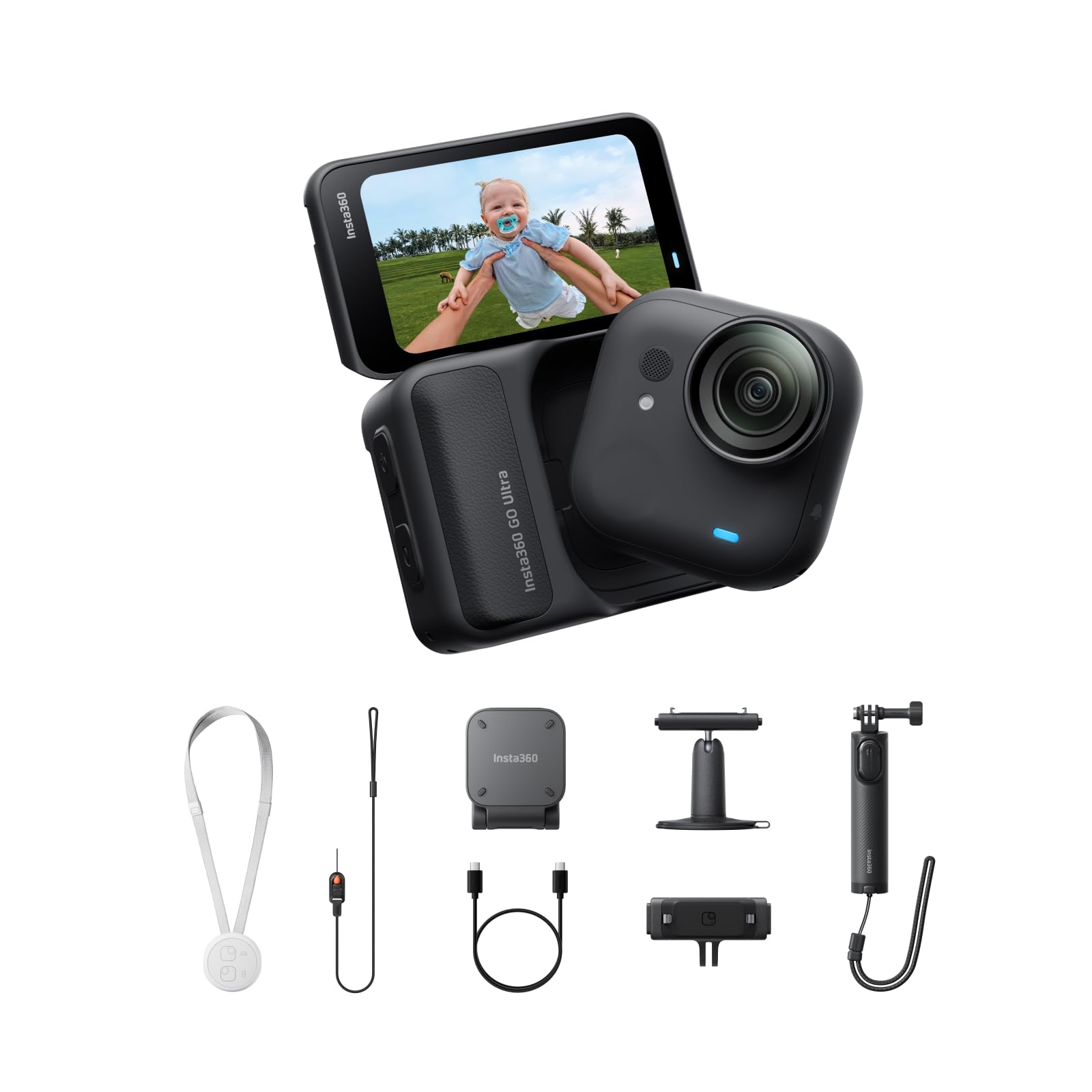
The Insta360 GO Ultra is a 53-gram wearable action camera that uses magnetic mounting to attach to a hat, pendant, or any ferrous surface for hands-free first-person footage. The 1/1.28-inch sensor and 5nm AI chip drive PureVideo Mode for low-light enhancement and 4K Active HDR for high-contrast outdoor scenes. Its FlowState stabilization offers three adjustable levels plus a 360-degree horizon lock that keeps the horizon level even when the camera rotates fully during a run or bike ride.
The Action Pod extends total runtime to 200 minutes and adds a screen for framing, while a separate battery in the standalone camera gives 70 minutes of shooting. Magnetic accessories — including the Easy Clip, Pivot Stand, and Mini Tripod — let you mount the camera in more places than a standard GoPro clamp. The AI-powered auto-editing feature scans your footage and assembles a highlight reel with transitions and music, which is useful for quick social media uploads. Some users report that the 4K Active HDR footage looks best in bright daylight, and the small sensor struggles to maintain texture detail in dim indoor lighting.
For hands-free POV capture during sports, travel, or everyday vlogging, the GO Ultra’s magnetic ecosystem and stabilization are unmatched at this weight class. It is not a replacement for a dedicated action camera with a larger sensor, but it delivers impressive results from a device that clips onto your shirt collar.
Why it’s great
- Extremely lightweight 53g body with magnetic mounting enables unique POV angles
- FlowState stabilization with horizon lock keeps footage level even during full rotation
- AI auto-editing produces ready-to-share highlight clips without manual cutting
Good to know
- Small sensor limits low-light performance compared to 1-inch or APS-C cameras
- MicroSD card sold separately, and the Action Pod is splash-proof but not fully waterproof
6. Prisual Gen 5 PTZ System

The Prisual Gen 5 bundle pairs two 30x optical zoom PTZ cameras with a dedicated PTZ controller, giving churches and production teams a turnkey multi-camera system that supports 3G-SDI, HDMI, USB 3.0, and PoE connectivity. Its Gen-3 AI tracking locks onto a presenter across four preset zones and can switch between full-body and close-up framing automatically, while the synchronous belt drive system keeps pan and tilt movements whisper-quiet — a critical feature for sanctuary environments where mechanical noise would be distracting.
Each camera delivers 1080p60 video with 2D and 3D noise reduction, and the high-SNR CMOS sensor holds detail in the dimly lit corners of a worship space. The metal chassis is rated to last over a decade, contrasting with the plastic housings found on many budget PTZ competitors. Users appreciate the three-year US warranty and the responsive email support team that helps with initial network configuration. The included joystick controller (TEM-JOY1) allows intuitive camera selection and speed adjustment, and the system integrates with OBS, vMix, Stream Deck, and RS-232 control networks.
If you need a reliable multi-camera PTZ system with AI tracking and professional support, the Prisual bundle delivers broadcast-quality results at a fraction of the cost of comparable PTZOptics or Panasonic setups. The only limitation is the 1080p ceiling — there is no 4K output — but for current HD streaming workflows, the image quality and zoom reach are excellent.
Why it’s great
- 30x optical zoom with precision auto-focus remains sharp even at maximum magnification
- Quiet synchronous belt drive prevents mechanical noise during worship services
- Three-year US warranty and responsive tech support reduce deployment risk
Good to know
- Video output is capped at 1080p60; no 4K signal path is available
- Network setup may require a brief HDMI connection for initial DHCP configuration
7. eufy Security eufyCam S4 4-Cam Kit
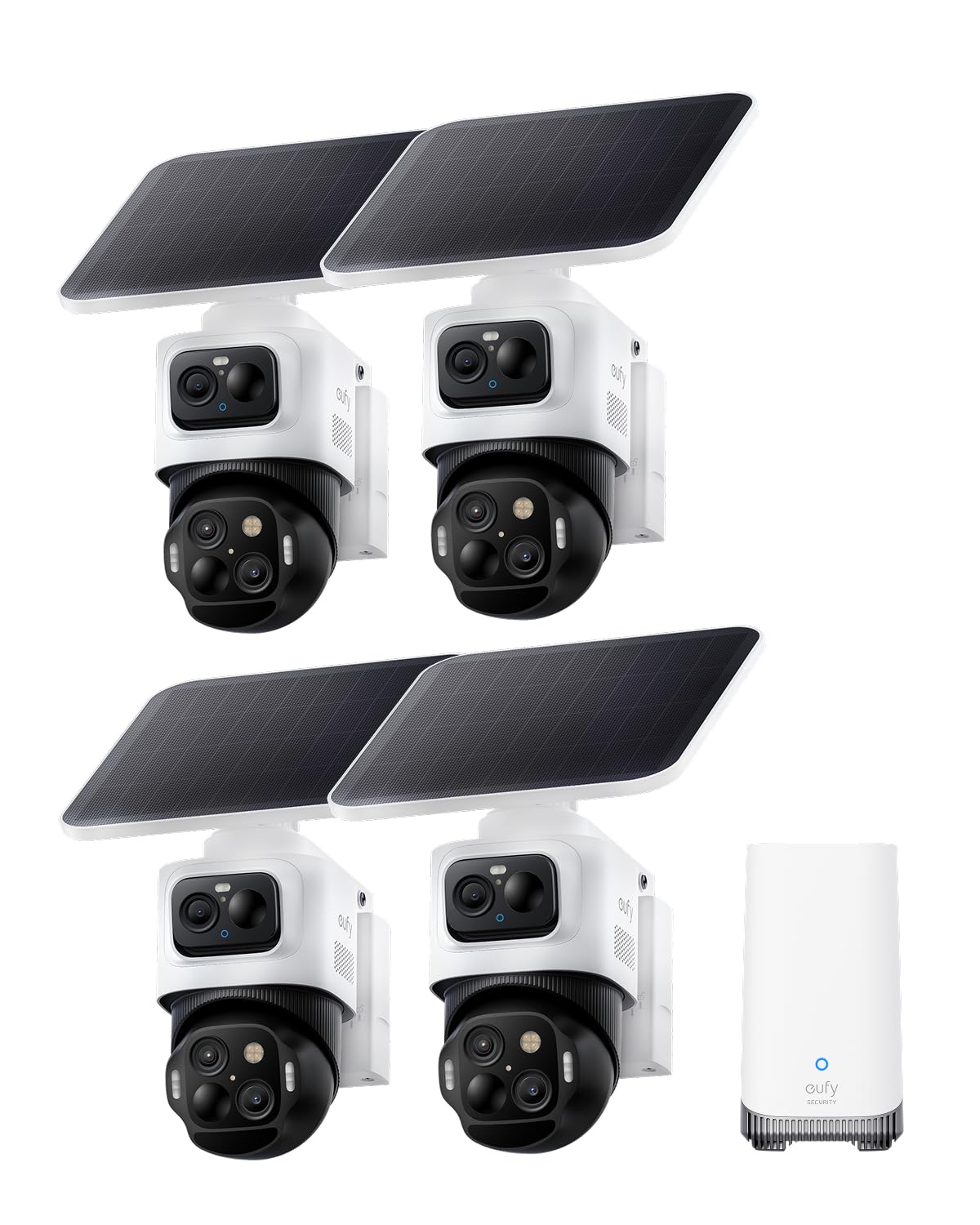
The eufyCam S4 kit contains four cameras, each with a unique twin-lens design: an upper 4K bullet lens provides a 130-degree wide-angle overview, while a lower 2K PTZ lens zooms and tracks a subject independently. This allows you to see both the sweeping context of your driveway and a tight close-up of a delivery person at the same time, without blind spots. The cameras are powered by a 5.5W solar panel with SolarPlus 2.0 technology — just one hour of direct sunlight per day keeps the battery charged year-round, eliminating the need to take cameras down for recharging.
All footage stores locally on the HomeBase S380’s 16GB drive, which is expandable with any 2.5-inch SATA drive, and the system’s BionicMind AI learns familiar faces to reduce false alerts. The cross-camera tracking feature hands off a subject from one camera’s PTZ lens to the next as the person walks across the property, stitching the whole sequence into a single timestamped clip. Radar and PIR sensors work together to minimize false triggers from animals or swaying trees, and a 105 dB siren with red and blue warning lights activates when a threat is detected.
Some users report that the PTZ mechanism has left/right stops — it does not continuously rotate 360 degrees — and that the fixed lens can develop condensation in very cold weather. The plastic housing also raises long-term durability questions in extreme sun or wind. But for a subscription-free 4K solar security system that tracks subjects across a large property, the eufyCam S4 kit is a powerful option that keeps you off the monthly billing cycle.
Why it’s great
- Dual-lens design provides both wide-area context and detailed subject tracking simultaneously
- Cross-camera tracking hands off subjects between cameras as they move across the property
- Forever solar power eliminates battery swaps, and local storage means no monthly fees
Good to know
- PTZ rotation stops at left and right limits — it does not rotate continuously 360 degrees
- Some users report lens condensation in sub-40°F conditions
8. Sony Alpha 6700

The Sony Alpha 6700 features a 26-megapixel APS-C Exmor R back-illuminated CMOS sensor paired with the BIONZ XR processing engine and a dedicated AI processor. This combination delivers Real-time Recognition autofocus that detects and tracks human eyes, animal eyes, and specific vehicles with exceptional accuracy. The 759 phase-detection points cover nearly the entire frame, so even erratically moving subjects — a runner, a dog, a bird in flight — stay locked without the AF system hunting.
The body records 4K video oversampled from a 6K readout at up to 60fps in 4:2:2 10-bit, with a high-frame-rate 4K 120p mode available in a slight crop. In-body stabilization provides 5-axis shake correction, but users note it is not smooth enough to replace a gimbal for handheld cinematic walk shots. The S-Log gamma profile, LUT handling, and 10-bit recording make it a capable hybrid for filmmakers who need to match footage with larger Sony cinema cameras. The main complaint is the menu system, which retains Sony’s complex nested structure that takes time to learn.
The Alpha 6700 is arguably the best APS-C hybrid for AI-powered subject tracking, combining compact dimensions with autofocus performance that rivals full-frame bodies. It works equally well for photo shoots, YouTube talking-heads, and run-and-gun documentary work where fast, accurate focus is non-negotiable.
Why it’s great
- Dedicated AI processor enables precise human pose estimation and animal/vehicle tracking
- 6K oversampled 4K60 video with 4:2:2 10-bit color depth for professional grading
- 759-point phase-detection AF covers nearly the full sensor area for edge-to-edge precision
Good to know
- The menu system is notoriously complex and requires significant time to configure
- In-body stabilization is decent but not gimbal-smooth for handheld walking shots
9. FoMaKo K600N Bundle
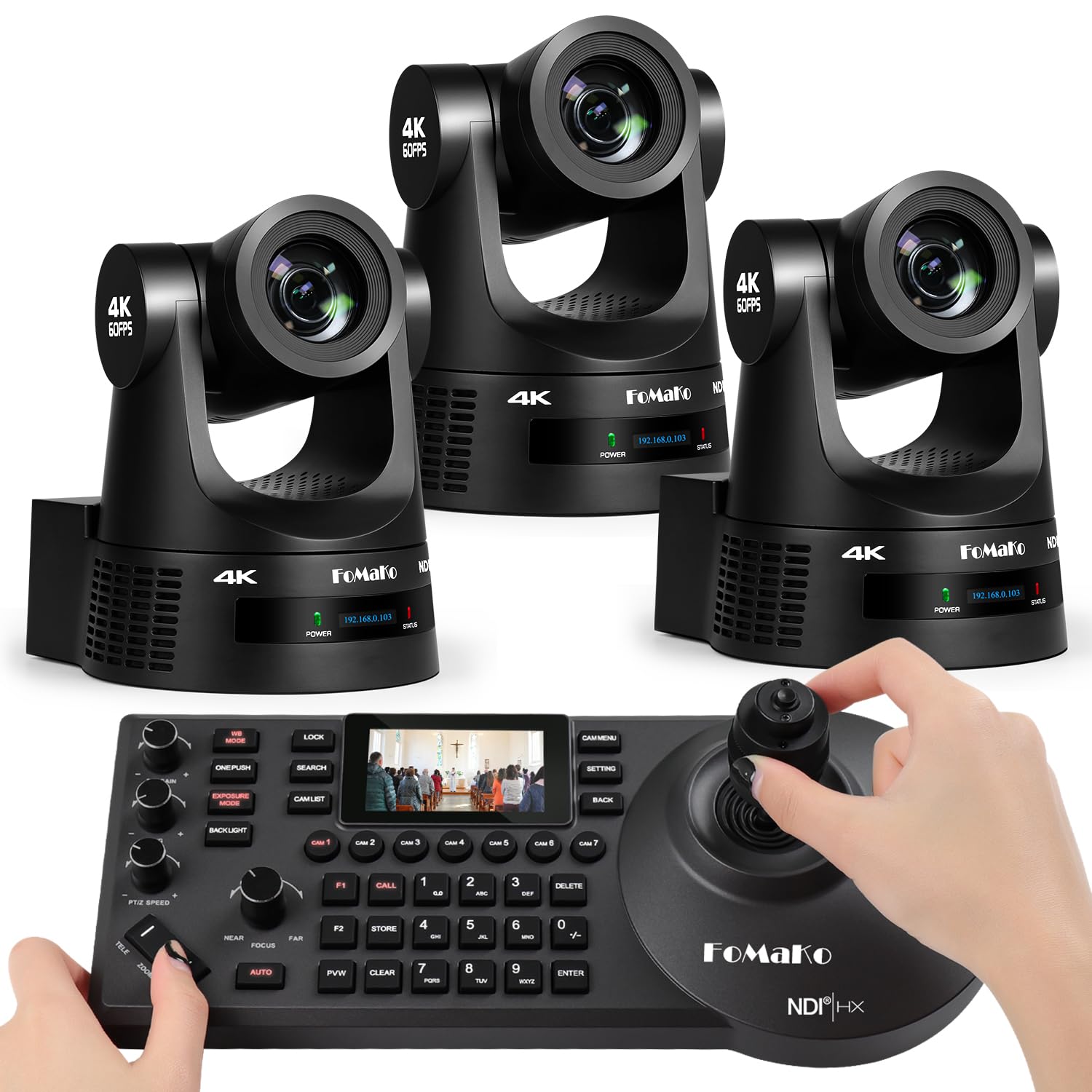
The FoMaKo K600N bundle comes with three 4K PTZ cameras plus the BK203 model, each supporting NDI|HX3 at 4K60 for low-latency network video transmission over standard Ethernet. The 20x optical zoom lenses deliver sharp close-ups at full extension, and the Gen-3 AI auto-tracking system allows customization of tracking sensitivity, figure size, character position, and lost-target behavior. You can choose between real-time tracking (follows the subject immediately) and regional tracking (locks the subject within a defined zone) depending on the shooting scenario.
Output options include HDMI 2.0 (4K60), 3G-SDI (1080p60), USB 3.0 (4K30), and NDI|HX3 (4K60), giving you maximum flexibility when integrating with different switchers or recording setups. The autofocus speed is noticeably faster than competing PTZ cameras in the same bracket, maintaining focus during rapid zoom movements. The included IR remote, wall mounts, and power adapters reduce the number of accessory purchases needed for a basic multi-camera rig. Some users found the initial network configuration tricky — connecting via HDMI to get an IP address is recommended before switching to NDI control.
For a production team that wants 4K NDI workflow across multiple angles without paying the premium of PTZOptics or Panasonic, the FoMaKo bundle provides strong value. The camera picture quality is comparable to higher-priced units, and the manual autofocus and exposure controls give an experienced operator fine-grained command over the look.
Why it’s great
- NDI|HX3 at 4K60 enables multi-camera production over a single network switch
- Gen-3 AI tracking offers adjustable sensitivity and regional tracking zones for complex staging
- Fast autofocus maintains sharpness during zoom movements without hunting
Good to know
- Network setup requires an initial HDMI connection to retrieve the camera IP address
- Included documentation has poor English translations, making advanced configuration harder
10. PTZOptics Move 4K 30x
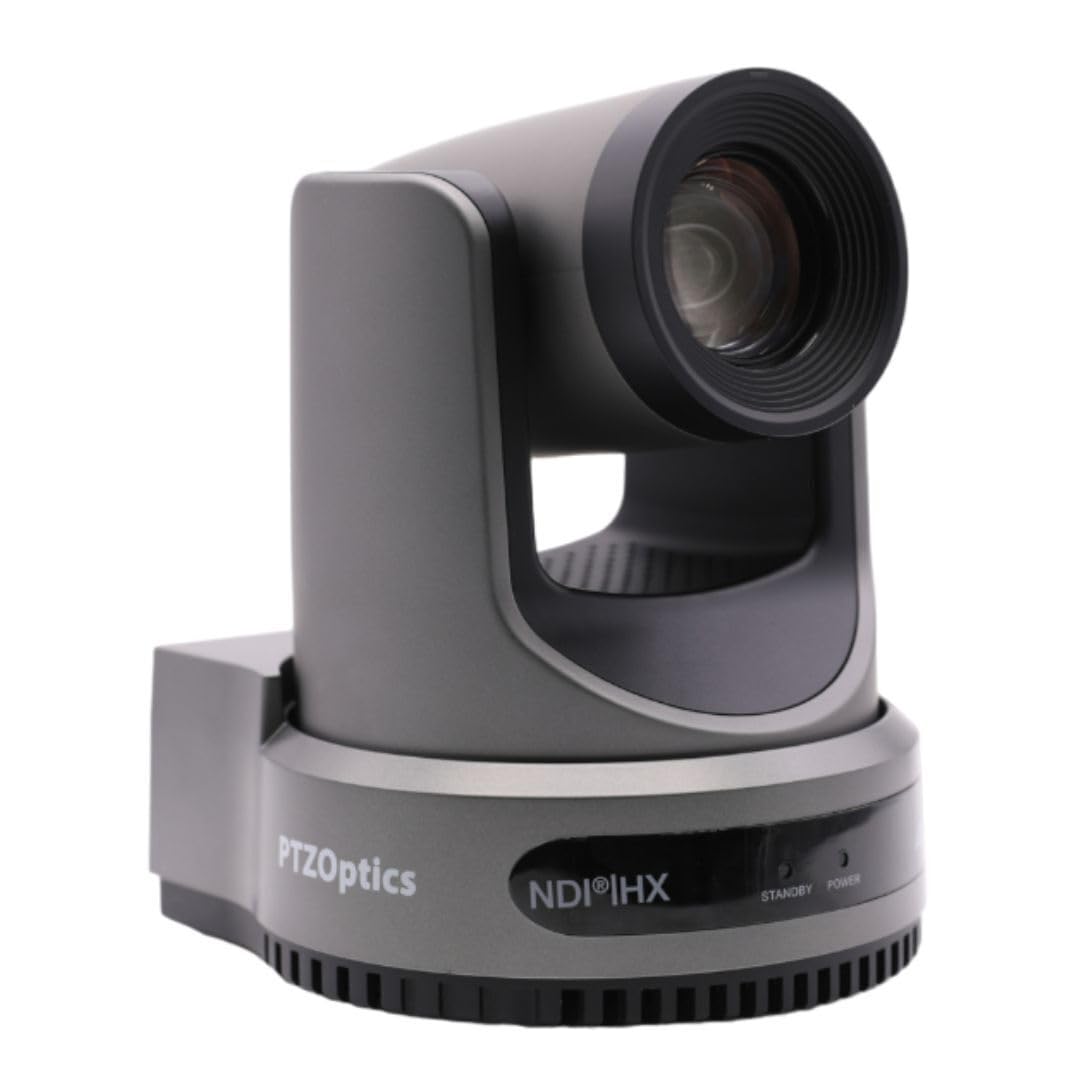
The PTZOptics Move 4K is built around a next-generation Sony UHD CMOS sensor that outputs 4K video at 60fps through simultaneous NDI, HDMI, SDI, and USB connections. The 30x optical zoom lens covers a wide range of shot distances, from a full stage wide shot to a close-up of a speaker’s face from the back of a large auditorium. The built-in tally light indicates live or preview status visually, which helps camera operators and speakers know which camera is active without relying on software overlays.
The Move 4K supports multiple control paths — IR remote, RS-232/485, web UI, PTZ control app, and Stream Deck integration — making it easy to drop into existing AV infrastructure. SETS (Sequential Event Triggering System) allows the camera to automatically switch between presets during a service or lecture without an operator touching the controls. However, some users report that the unit forgets preset positions between power cycles, requiring re-save before each event. The auto-tracking mode can also fail in complex staging with multiple people moving at once, so it is best reserved for manned operation or simple single-speaker scenarios.
The zoom clarity and quiet PTZ motors are its strongest assets, but the inconsistent preset memory is a frustration for automated daily use.
Why it’s great
- 30x optical zoom with Sony UHD sensor delivers sharp 4K60 detail even at maximum magnification
- Simultaneous NDI, HDMI, SDI, and USB outputs offer maximum integration flexibility
- Built-in tally light and SETS automation simplify multi-camera switch workflows
Good to know
- Preset positions may reset after power cycling, requiring re-save before each event
- Auto-tracking can lose the target in crowded or multi-speaker scenarios
11. Sony Alpha 7 V
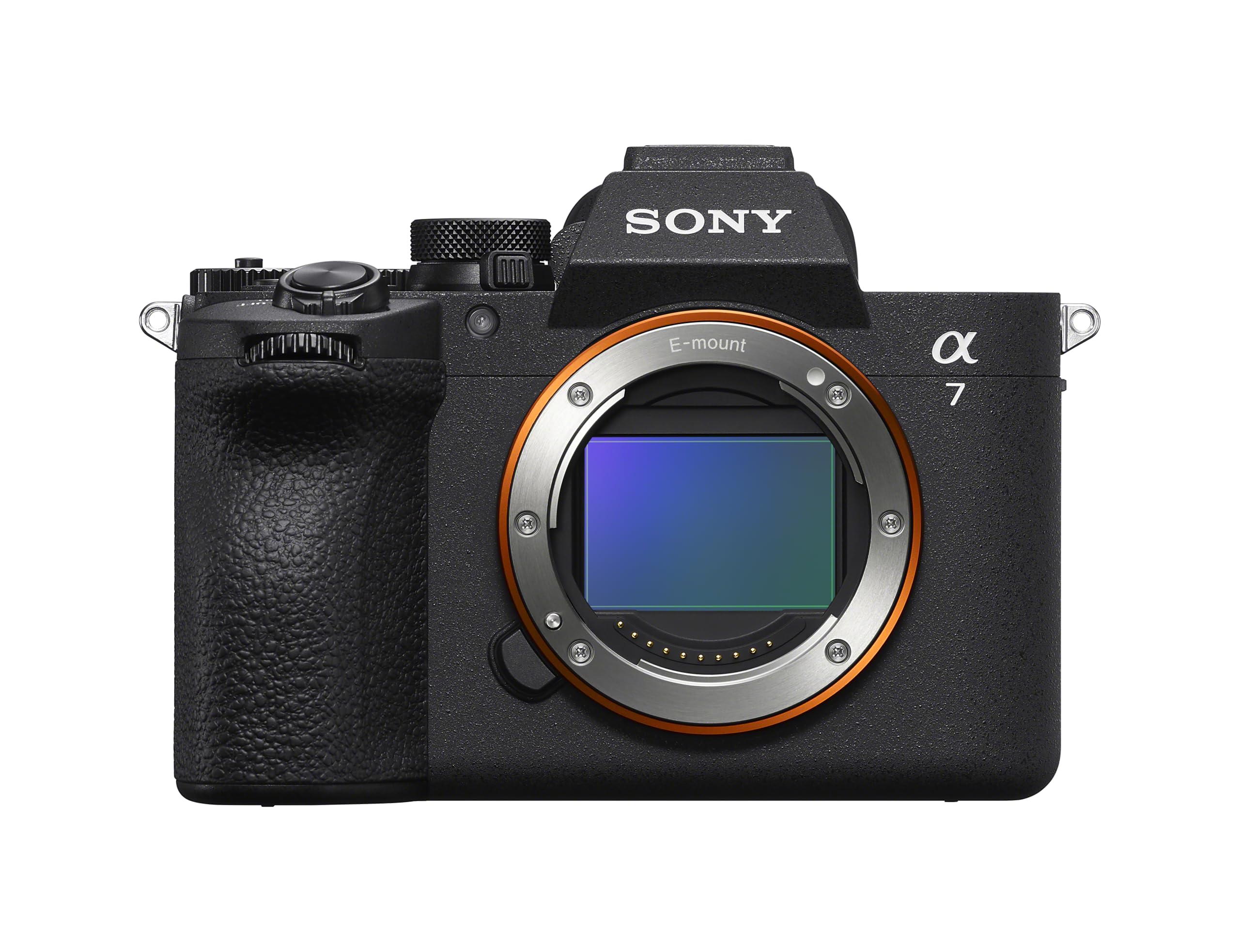
The Sony Alpha 7 V features a partially stacked 33-megapixel Exmor RS CMOS sensor that reads data roughly 4.5 times faster than the A7 IV, enabling blackout-free continuous shooting at 30 frames per second with full AF/AE tracking. The new BIONZ XR2 processor incorporates a dedicated AI engine that improves subject recognition accuracy by approximately 30% over the previous generation, using human pose estimation technology that tracks detailed form and body position rather than just eyes and faces. This allows the camera to maintain reliable subject lock even when the person turns their back, wears a mask, or moves through a crowd.
Video recording reaches 4K 120p in a Super 35mm crop, with improved heat dissipation that extends record times compared to earlier Sony bodies. The 5-axis in-body stabilization delivers up to 7.5 stops of shake correction at the center of the frame, making handheld shooting much more viable in low light. The electronic shutter operates silently at up to 1/16000 second, which is particularly useful for shooting in quiet environments or capturing fast-moving subjects without shutter noise. The main challenges are the steep learning curve for Sony’s deep menu system and the need for multiple batteries if you shoot video for extended periods — the NP-FZ100 is great, but 4K 120p can drain it quickly.
For professional photographers and filmmakers who need full-frame quality, AI-driven autofocus, and high-speed burst capture, the Alpha 7 V sets a new standard for hybrid performance. It is an investment that pays off in consistent subject detection and dynamic range that handles high-contrast scenes without clipping highlights.
Why it’s great
- Partially stacked sensor enables 30fps blackout-free burst shooting with live AF tracking
- AI pose estimation tracks subjects by body and head position even when faces are not visible
- Up to 16 stops of dynamic range and 7.5-stop in-body stabilization for low-light handheld work
Good to know
- Menu system remains deep and non-intuitive for new Sony users
- 4K 120p video mode uses a Super 35mm crop, not the full sensor width
FAQ
Does AI tracking work in complete darkness?
Can I use an NDI camera without a hardware switcher?
Why does my PTZ camera lose tracking when two people cross paths?
Final Thoughts: The Verdict
For most users, the best ai camera winner is the OBSBOT Tiny 3 because its large 1/1.28-inch sensor, whisper-quiet PTZ motor, and triple-mic array deliver professional streaming quality from a single USB-C cable. If you want a pocket-sized vlogging companion with built-in gimbal stabilization, grab the Xtra Muse. And for a multi-camera church or event production system without breaking the bank, nothing beats the Prisual Gen 5 PTZ System — two cameras, a controller, and reliable AI tracking that lets you focus on the message.

Mo Maruf
I created WellFizz to bridge the gap between vague wellness advice and actionable solutions. My mission is simple: to decode the research and give you practical tools you can actually use.
Beyond the data, I am a passionate traveler. I believe that stepping away from the screen to explore new environments is essential for mental clarity and physical vitality.