Our readers keep the lights on and my smoothie glass nicely filled. As an Amazon Associate, I earn from qualifying purchases.
A stone veneer panel that detaches from the wall within months of installation isn’t just an eyesore — it’s a safety hazard and a waste of material. The bond between the backing and the stone is the single point of failure in any veneer project, and choosing the wrong adhesive guarantees cracking, slipping, or outright collapse under temperature shifts or moisture. Most homeowners discover this only after the first freeze-thaw cycle exposes the gap between what the label promised and what the cured joint delivers.
I’m Mohammad Maruf — the founder and writer behind WellFizz. I’ve spent hundreds of hours analyzing manufacturer spec sheets, curing-time chemistry, and adhesion test data across the stone veneer adhesive category to identify which formulas actually withstand real-world conditions.
Whether you’re repairing a fireplace, installing a feature wall, or building an outdoor pizza oven, selecting the right adhesive for stone veneer depends on understanding heat tolerance, substrate compatibility, and cure-time demands that no single product can satisfy for every scenario.
How To Choose The Best Adhesive For Stone Veneer
Stone veneer adhesives fall into distinct chemical families — premixed mastics, dry refractory mortars, two-part acrylics, and polymer-modified concrete bonding agents. Each excels in a specific temperature range, cure timeline, and substrate type. Matching the formulation to your project’s thermal load and moisture exposure separates a permanent bond from a recurring repair.
Heat Tolerance and Firebox Compatibility
A fireplace or pizza oven demands an adhesive rated for continuous high temperatures. Standard construction adhesives degrade and release fumes above 500°F. Refractory mortars with ratings between 2000°F and 2550°F maintain structural integrity while the surrounding stone expands and contracts. Check the sustained temperature rating, not just the peak survival number — many products survive a single hot event but crumble under repeated heating cycles.
Cure Time and Vertical Slip Resistance
Vertical veneer installations require an adhesive that develops green strength fast enough to prevent the stone from sliding before the bond sets. Premixed mastics often allow adjustment time but sag under heavier pieces. Dry mortars and cementitious adhesives provide immediate grab but require precise water ratios. Two-part acrylic systems cure in minutes, which helps on small repairs but punishes hesitation on large panels. Always test a small batch to confirm the working window matches your installation speed.
Substrate Porosity and Bond Mechanism
Concrete, brick, metal, and existing stone each present different porosity levels. A non-porous metal surface like a stove collar requires a cement that mechanically locks into a rough texture or one that contains high-temperature sodium silicate to chemically bond. Porous masonry accepts cementitious adhesives through capillary absorption. Choose a product whose compatible material list explicitly includes your backing surface — generic “masonry” labels often exclude metal or glazed tile.
Freeze-Thaw Durability for Outdoor Use
Outdoor stone veneer exposed to rain and freezing temperatures requires an adhesive that resists water penetration and accommodates thermal movement without cracking. Polymer-modified concrete bonding agents, such as acrylic fortifiers mixed with Portland cement, outperform plain mortar by flexing slightly under stress. Look for explicit freeze-thaw resistance in the spec sheet — products that lack this designation may disintegrate within a single winter.
Quick Comparison
On smaller screens, swipe sideways to see the full table.
| Model | Category | Best For | Key Spec | Amazon |
|---|---|---|---|---|
| Rutland Dry Mix 211 | Dry Mortar | High-heat firebox and forge repairs | 2550°F heat rating, 2-hour cure | Amazon |
| Meeco’s Red Devil 1354 | Sodium Silicate Cement | Furnace, stove, and chimney repairs | 2000°F continuous, 24-hour cure | Amazon |
| SIKA SikaLatex R | Acrylic Fortifier | Outdoor concrete and mortar bonding | 500 psi bond strength, 30-day full cure | Amazon |
| Henry 314 Premixed Mastic | Premixed Mastic | Small indoor projects on concrete | Quart size, fast drying time | Amazon |
| HIMG Stone Adhesive | Two-Part Acrylic | Small crack repairs on countertops | 5-minute cure, 30g syringe | Amazon |
In‑Depth Reviews
1. Rutland Dry Mix 211 Refractory Mortar
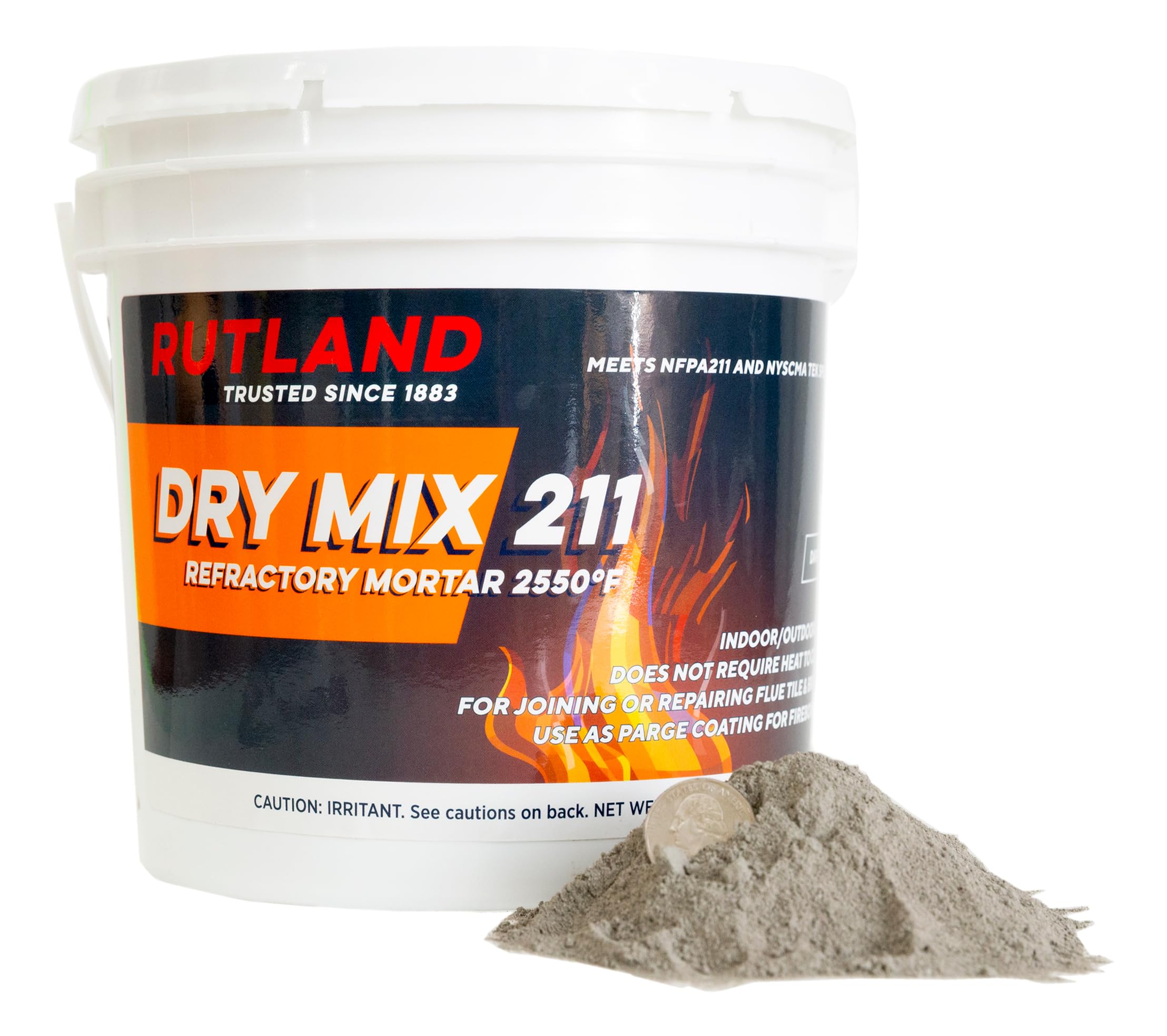
Rutland’s Dry Mix 211 carries the highest continuous heat rating in this roundup at 2550°F, making it the clear choice for forge linings, interior fireplace mortar repair, and pizza oven construction. The dry powder form requires only water to activate, and the resulting paste achieves excellent adhesion to dampened masonry with minimal shrinkage cracking when applied in thick layers. Users report that thin coats develop superficial heat cracks during the first few curing cycles, but thick patches remain intact even under yellow-orange forge heat.
The 10-pound tub provides enough material for multiple repair sessions, though the quantity is generous for single-job buyers who wish a smaller container existed. Cure time is listed at approximately 2 hours with a fan, but many users leave it 24 hours before lighting the first fire to ensure complete crystallization. The mortar sponges off cleanly during application, which helps maintain a professional finish on visible firebox interiors.
One recurring complaint involves shipping delays and inconsistent stock — the product is not always carried by local retailers, so ordering ahead is essential if you’re on a tight project timeline. Despite that logistical friction, the bond strength and heat durability make this the most versatile high-temperature adhesive for stone veneer applications that see direct flame or radiant heat.
Why it’s great
- Highest heat rating in the category at 2550°F
- No heat required to cure; easy water-mix preparation
- Excellent adhesion to dampened masonry surfaces
Good to know
- Thin coats may develop superficial drying cracks
- Large tub size may exceed small-project needs
- Shipping speed is inconsistent from some sellers
2. Meeco’s Red Devil 1354 Gray Furnace Cement
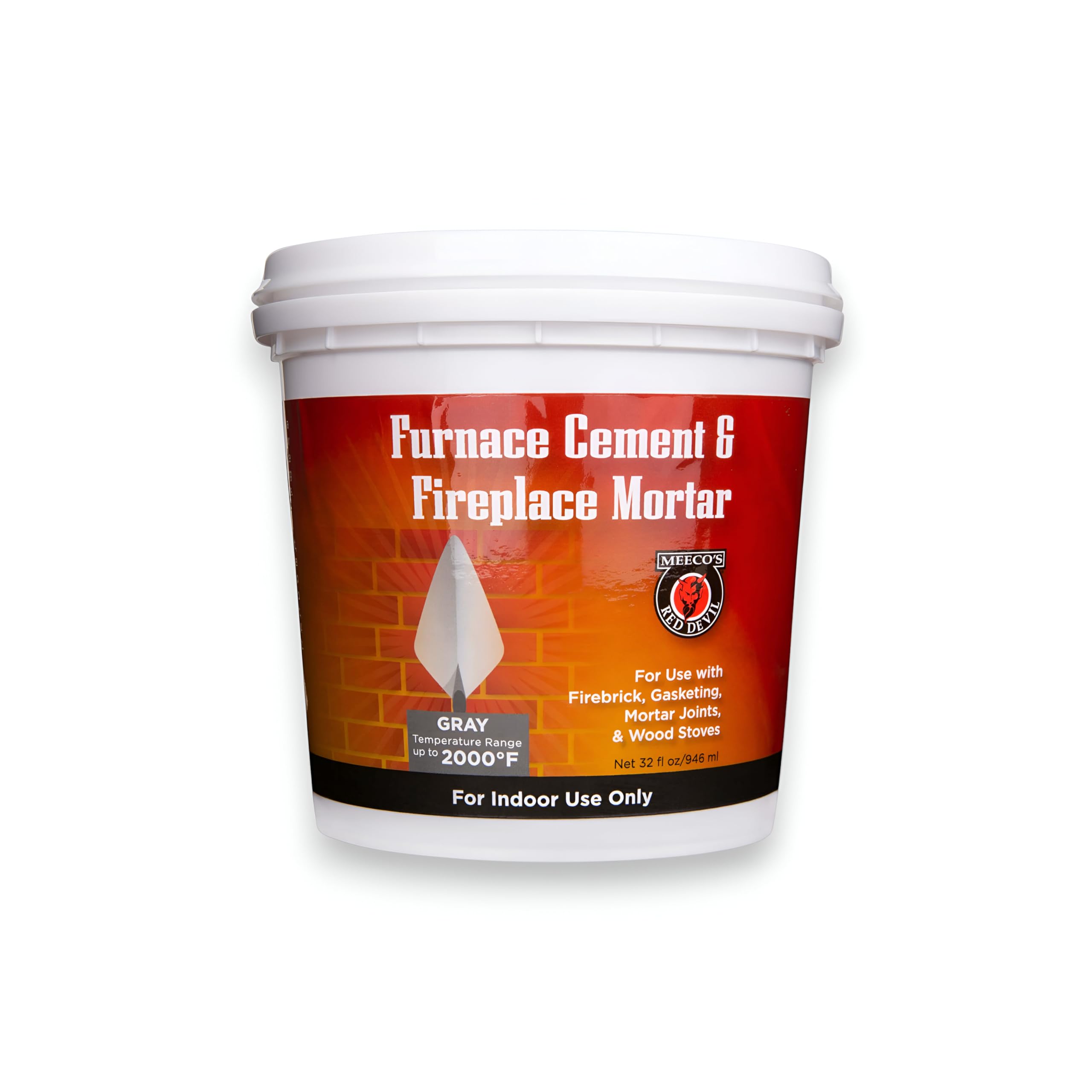
Meeco’s Red Devil 1354 is a ready-to-use sodium-silicate-based paste formulated specifically for high-heat environments including furnaces, wood stoves, and chimney collars. Its putty-like viscosity resists sagging on vertical firebrick surfaces, which matters when patching cracked mortar joints that are too hot or awkward for dry powders. Users report that thin layers applied to cleaned fireboxes and cured for a full week produce rock-solid repairs that survive months of nightly winter fires without cracking.
The 32-ounce tub covers moderate repair areas, and the paste cleans up with soap and water before curing — a practical advantage over cementitious mortars that harden irreversibly within minutes. Full cure requires approximately 24 hours, though the manufacturer and experienced users alike recommend extending the cure to at least a week for maximum heat-cycle durability. The gray color blends naturally with standard firebrick and mortar joints.
Some users note difficulty opening the lid, and the product’s thick consistency requires firm pressure to extrude from the tub. It is not designed for large-area veneer installation — its niche is spot repairs on existing high-heat masonry where continuous temperatures reach 2000°F.
Why it’s great
- Putty-like texture prevents sagging on vertical joints
- Withstands continuous 2000°F without degrading
- Easy soap-and-water cleanup before curing
Good to know
- Lid can be difficult to open without damaging it
- Extended cure time (up to a week) recommended for maximum strength
- Not suitable for large-area stone veneer panel installation
3. SIKA SikaLatex R Concrete Bonding Adhesive

SikaLatex R is an acrylic-polymer liquid designed to be mixed into Portland cement mortar or concrete as a bonding admixture, rather than applied as a standalone adhesive. The resulting fortified mortar achieves a documented 500 psi bond strength and resists freeze-thaw damage that destroys plain mortar within a single winter. This makes it the best choice for outdoor stone veneer installations on concrete foundations, retaining walls, or exposed masonry where moisture and temperature cycling are unavoidable.
The one-gallon container stores well and can be used incrementally, though the manufacturer notes a one-year shelf life. Application is straightforward — brush the liquid onto the cleaned concrete substrate, then top with your mortar patch or stone-setting mix. The liquid does not create a vapor barrier, allowing the substrate to breathe, which reduces internal moisture pressure that can pop veneer stones loose.
The full cure period extends to 30 days for maximum strength, which is significantly longer than mastics or refractory mortars. This product is not a quick fix — it demands patience and is best suited for projects where the bond line must withstand the elements for years rather than hours.
Why it’s great
- 500 psi bond strength when mixed with cement mortar
- Engineered freeze-thaw resistance for outdoor durability
- Does not create a vapor barrier, allowing substrate breathing
Good to know
- Requires 30 days for full cure to maximum strength
- Not a standalone adhesive — must be mixed with mortar
- One-year shelf life; expired product may not bond reliably
4. Henry 314 Premixed Mastic Adhesive

Henry 314 is a premixed liquid mastic in a convenient quart pail, designed for small indoor projects such as attaching stone veneer to concrete plant stands, small backsplash sections, or decorative panels. The ready-to-use consistency eliminates mixing errors, and users consistently praise its ease of application for areas smaller than about two square feet. The beige color blends well with common stone tones.
Drying time is notably fast — users report that the mastic begins to set within minutes, requiring quick placement and minimal repositioning. This works in your favor on small horizontal surfaces but becomes a liability on larger vertical installations where adjustment time matters. The bond strength is described as “very strong” in verified reviews, though the mastic crumbles if disturbed after initial drying, so alignment must be correct on the first attempt.
Packaging quality is a consistent weak point — several units arrived with cracked lids or dried top layers, though manufacturer customer service resolved issues promptly. This is a budget-friendly entry-level mastic best suited for hobbyists or one-day decorative projects, not structural exterior veneer or heat-exposed fireplaces.
Why it’s great
- Premixed and ready to use with no measuring required
- Fast drying time suitable for small projects
- Strong bond on concrete surfaces for decorative stone
Good to know
- Not designed for high-heat or outdoor applications
- Lid damage during shipping is common
- Too fast-drying for large panels or complex alignment
5. HIMG Glue Adhesive for Stone Surfaces

HIMG’s two-part acrylic adhesive comes in a dual-syringe applicator that delivers a clear-to-yellow bond specifically formulated for granite, marble, quartz, and cultured stone. The 5-minute cure time makes it ideal for small repairs such as filling cracks in kitchen countertops or reattaching broken stone trim pieces where clamping is possible. The acrylic formula is non-toxic and odorless, which matters for indoor use in occupied spaces.
The biggest limitation is substrate compatibility — user reviews are sharply divided between those who achieved strong bonds on marble and quartz and those who report complete adhesion failure on certain granite varieties. The product’s spec sheet lists “stone” as a compatible material, but the actual chemical bond depends heavily on the specific mineral composition and surface preparation of the stone. Polished granite surfaces in particular may reject the acrylic bond.
The syringe comes with only two nozzles, and the adhesive volume in a single 30-gram tube will outlast those nozzles, which are not reusable once cured. This product is a specialty tool for small, indoor, non-structural stone repairs and should not be relied upon for veneer panel installation or any application exposed to moisture or heat cycling.
Why it’s great
- Fast 5-minute cure time for quick repairs
- Non-toxic and odorless for indoor use
- Clear bond that does not yellow over time
Good to know
- Bond reliability varies significantly by stone type
- Only two nozzles included; tube outlasts the nozzles
- Not suitable for outdoor, high-heat, or structural veneer
FAQ
Can I use standard construction adhesive for stone veneer on a fireplace?
What is the difference between dry refractory mortar and premixed mastic for stone veneer?
Does stone veneer adhesive need to be freeze-thaw resistant for outdoor use?
Final Thoughts: The Verdict
For most users, the adhesive for stone veneer winner is the Rutland Dry Mix 211 because it delivers the highest heat rating at 2550°F, works for both indoor and outdoor applications, and cures into a rock-solid bond that survives repeated thermal cycling without crumbling. If you need a specialized high-temperature paste for furnace or stove repairs, grab the Meeco’s Red Devil 1354. And for outdoor concrete bonding that must endure freeze-thaw seasons, nothing beats the SIKA SikaLatex R mixed into your mortar.

Mo Maruf
I created WellFizz to bridge the gap between vague wellness advice and actionable solutions. My mission is simple: to decode the research and give you practical tools you can actually use.
Beyond the data, I am a passionate traveler. I believe that stepping away from the screen to explore new environments is essential for mental clarity and physical vitality.