Our readers keep the lights on and my smoothie glass nicely filled. As an Amazon Associate, I earn from qualifying purchases.
Bokeh isn’t just a blur; it’s the quality of the out-of-focus area, the shape of the light, and the separation between your subject and the background. The right lens can transform a flat portrait into an image with depth and atmosphere, turning everyday light into painterly orbs and smooth transitions.
I’m Mohammad Maruf — the founder and writer behind WellFizz. I’ve spent countless hours analyzing lens specifications and real-world sample galleries to understand how aperture blade geometry, optical element design, and focal length influence the character of bokeh in a prime lens.
This guide breaks down nine top-performing lenses to help you find the absolute best bokeh lens for your camera system and your creative vision.
How To Choose The Best Bokeh Lens
Choosing a lens for bokeh goes beyond simply picking the widest aperture. You need to evaluate the optical formula, aperture blade design, and how the lens renders out-of-focus highlights at different distances. Here are the critical factors to consider.
Aperture Blade Count and Shape
The number of blades determines how circular the aperture opening remains when stopped down. Lenses with 9 or 11 rounded blades produce nearly perfect circles, creating smooth, natural bokeh without the polygonal shapes that 5- or 7-blade designs create. The Rollei 85mm F1.8 uses 11 blades for exceptionally round specular highlights, even at narrower apertures.
Focal Length and Subject Distance
Longer focal lengths like 85mm compress the background and produce a shallower depth of field at the same aperture compared to wider lenses like 35mm. The 85mm f/1.8 is a classic portrait length because it offers strong background separation with minimal distortion. A 35mm f/1.4 like the Sony GM creates beautiful bokeh but requires closer subject distance to achieve a similar blur effect.
Optical Coatings and Aberration Control
Multi-coatings such as Canon’s SSC, Nikon’s Nano Crystal, and Sony’s Nano AR II suppress ghosting and flare, which otherwise degrade bokeh quality by washing out contrast. ED and aspherical elements reduce chromatic aberration, keeping out-of-focus edges clean rather than exhibiting green or purple fringing that ruins the blur.
Quick Comparison
On smaller screens, swipe sideways to see the full table.
| Model | Category | Best For | Key Spec | Amazon |
|---|---|---|---|---|
| Canon RF50mm F1.8 STM | Mid-Range | Entry-level full-frame bokeh | 50mm f/1.8 / 7 blades | Amazon |
| Rollei 85mm F1.8 AF | Mid-Range | Budget 85mm portrait | 85mm f/1.8 / 11 blades | Amazon |
| OM System 45mm F1.8 | Mid-Range | Ultra-portable MFT bokeh | 45mm f/1.8 / 7 blades | Amazon |
| Nikon Z 50mm f/1.8 S | Premium | Reference 50mm sharpness | 50mm f/1.8 / 9 blades | Amazon |
| Panasonic Lumix S 85mm F1.8 | Premium | Video-focused 85mm | 85mm f/1.8 / 9 blades | Amazon |
| Sony FE 85mm F1.8 | Premium | Sony E portrait classic | 85mm f/1.8 / 9 blades | Amazon |
| Nikon Z 85mm f/1.8 S | Premium | High-end portrait bokeh | 85mm f/1.8 / 9 blades | Amazon |
| Sigma 50mm F1.4 DG DN | Premium | Fast 50mm with HLA AF | 50mm f/1.4 / 11 blades | Amazon |
| Sony FE 35mm f/1.4 GM | High-End | Wide-angle G Master bokeh | 35mm f/1.4 / 11 blades | Amazon |
In‑Depth Reviews
1. Canon RF50mm F1.8 STM

The Canon RF50mm F1.8 STM is the classic nifty fifty brought to the RF mount, offering a very accessible entry point into creative background blur. Its compact and lightweight design makes it an ideal everyday carry for EOS R series shooters, from the R100 to the R5. The f/1.8 aperture delivers noticeable subject separation, though the 7-blade opening produces slightly less rounded bokeh than 9-blade designs when stopped down.
Optically, the lens delivers solid sharpness in the center wide-open, with good color balance and controlled ghosting thanks to optimized lens coatings. The stepping motor (STM) provides quiet autofocus suitable for both stills and video, and the control ring allows direct adjustment of exposure settings. On APS-C bodies, the 50mm focal length becomes an effective 80mm, which is excellent for portraits but can feel tight for indoor use.
Build quality is primarily plastic, but it feels sturdy enough for regular use at its weight. The RF50mm F1.8 STM is the gateway lens for RF system users wanting to explore bokeh without a substantial investment, though enthusiasts seeking creamier out-of-focus rendering may eventually want to upgrade to a faster or longer prime.
Why it’s great
- Very light at 0.35 lbs, easy to carry daily
- Fast and quiet STM autofocus works well for video
- Sharp center performance at f/1.8 with decent background blur
Good to know
- 7-blade aperture creates less circular bokeh when stopped down
- Plastic construction may not withstand heavy professional use
- On APS-C bodies, the effective focal length can be too tight for some indoor shots
2. Rollei 85mm F1.8 AF
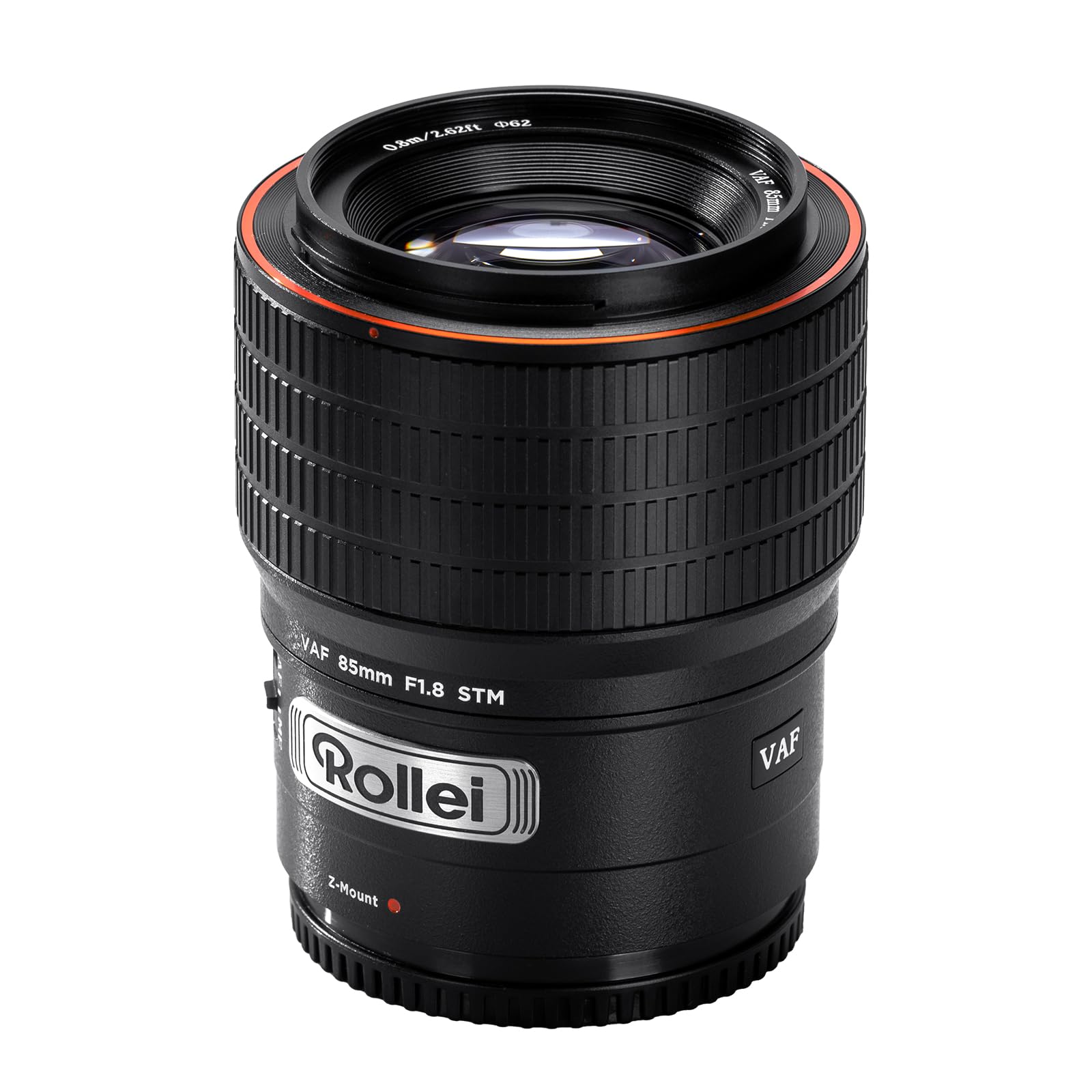
The Rollei 85mm F1.8 AF is a surprising contender in the budget portrait lens space, specifically designed for Nikon Z mount cameras. Its standout feature is the 11-blade circular aperture, which produces exceptionally round and smooth specular highlights — a spec typically found on lenses costing much more. This makes it a serious option for photographers prioritizing bokeh quality above all else at a modest price point.
The lens features a full metal body that feels substantial in the hand, and the HFT-X multi-coating effectively reduces flare and ghosting while preserving contrast. The STM autofocus motor is quiet and supports eye tracking on compatible Z-series bodies, making it suitable for both stills and video. Optical design includes 2 ED and 2 HR elements, delivering sharp results even on high-resolution sensors like the Nikon Z8.
It lacks optical image stabilization, so you’ll rely on your camera’s IBIS for steady handheld shooting. The USB-C firmware port is a modern touch, allowing updates without a proprietary dock. For Nikon Z users on a budget who crave creamy, circular bokeh, the Rollei 85mm F1.8 AF punches well above its weight class.
Why it’s great
- 11-blade aperture creates near-perfect circular bokeh
- Full metal build offers durability and premium feel
- USB-C firmware update port is convenient and future-proof
Good to know
- No built-in image stabilization on the lens
- Relatively new brand in the market, long-term reputation still building
- Slightly heavier than some plastic-bodied competition at 477g
3. OM System Olympus M.Zuiko 45mm F1.8

The Olympus M.Zuiko 45mm F1.8 is a legend in the Micro Four Thirds world, offering a 90mm full-frame equivalent field of view that is ideal for portraiture. Its primary advantage is its vanishingly small size and weight — just 116 grams — making it a lens you can carry anywhere without a second thought. The f/1.8 maximum aperture provides excellent subject separation on the smaller sensor, with creamy bokeh that rivals much larger lenses.
Optical performance is excellent wide open, with sharp center resolution and graceful specular highlights. The bokeh is smooth and free of harsh edges, making it a favorite for portrait and street photographers on the go. The MSC (Movie-Still-Compatible) autofocus drive is silent and fast, working well on both older and newer Olympus/Panasonic bodies.
Build quality is mostly plastic, but it feels solid for its weight class. The minimum focus distance of 0.5m is adequate for close-up portraits. The 37mm filter thread is small but common. For MFT users, this lens remains one of the best value propositions for achieving professional-looking bokeh in an incredibly portable package.
Why it’s great
- Extremely light at 116g, perfect for travel and street photography
- Creamy bokeh with graceful specular highlights wide open
- Silent and fast autofocus suitable for video
Good to know
- Plastic construction, though durable, doesn’t feel premium
- Minimum focus distance could be shorter for macro-style shots
- Equivalent to 90mm, which can be tight for some indoor scenarios
4. Nikon NIKKOR Z 50mm f/1.8 S
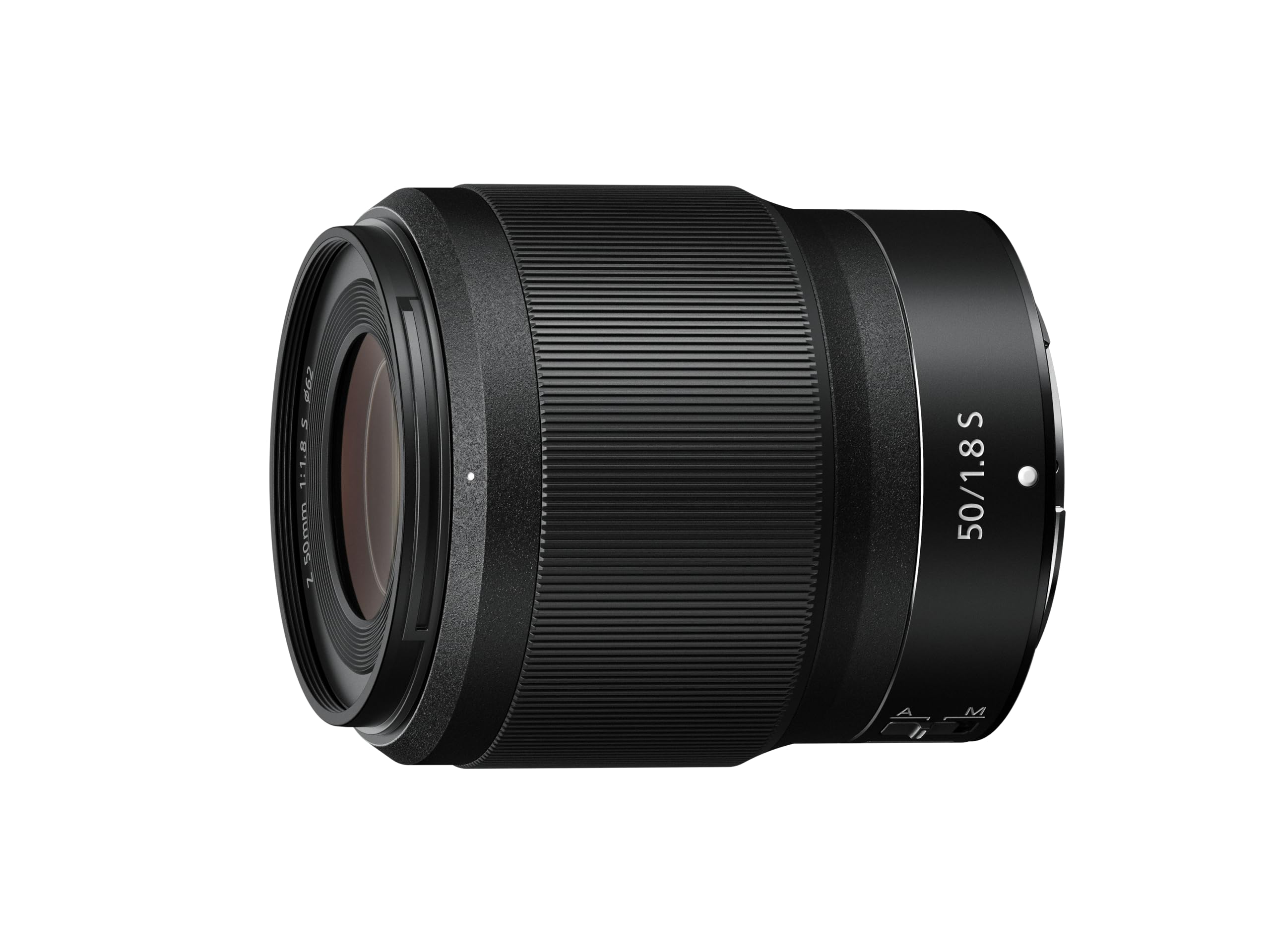
The Nikon Z 50mm f/1.8 S is a masterclass in modern prime lens design, setting a new standard for what an f/1.8 lens can achieve. It delivers extreme sharpness from center to edge even wide open, with virtually zero distortion and exceptional microcontrast that rivals premium optics. The bokeh is smooth and pleasant, though at the edges, it exhibits a slight cat’s eye effect when shooting at close distances.
The 9-blade rounded aperture maintains a circular opening when stopped down, ensuring bokeh retains its natural character. Nano Crystal Coat effectively eliminates ghosting and flare, while the weather-sealed monocoque body feels robust and professional. The silent stepping motor provides fast and precise autofocus, making it ideal for both stills and video work on Z-series cameras.
While it is larger and heavier than typical 50mm f/1.8 lenses, the optical performance justifies the bulk. Some users might prefer the more compact 40mm f/2, but for those seeking the best possible image quality in the nifty fifty category, the Z 50mm f/1.8 S is a clear winner. It represents a premium investment that pays off in spectacular image quality.
Why it’s great
- Exceptional sharpness across the frame, rivaling high-end primes
- Nano Crystal Coat effectively suppresses flare and ghosting
- Weather-sealed construction for reliable use in adverse conditions
Good to know
- Larger and heavier than typical 50mm f/1.8 lenses
- Cat’s eye bokeh at the edges wide open at close distances
- Premium price point compared to entry-level alternatives
5. PANASONIC LUMIX S 85mm F1.8

The Panasonic Lumix S 85mm F1.8 is designed with video creators in mind, featuring suppressed focus breathing that makes it ideal for filmmaking. Combined with the proven 85mm focal length and f/1.8 aperture, it delivers beautiful bokeh with smooth defocus gradation, perfect for subject isolation in both stills and motion. The compact and lightweight design makes it easy to use on gimbals or for all-day handheld shooting.
Optical performance is excellent, with crisp sharpness and beautiful contrast. The 9-blade aperture creates pleasing bokeh, and the lens works seamlessly with all L-Mount full-frame cameras, including the Lumix S5II and S9. The dust/splash/freeze-resistant design allows for field use under challenging weather conditions, adding to its versatility.
Autofocus is fast and quiet, making it suitable for both photo and video. The 67mm filter thread is common across the Lumix S prime lineup, allowing you to share ND or UV filters. The lens also features a “3D pop” that some users describe as having a special quality to the image. This is a strong choice for L-Mount shooters wanting a dedicated portrait lens with excellent video characteristics.
Why it’s great
- Suppressed focus breathing makes it ideal for video work
- Dust/splash/freeze-resistant for reliable field use
- Compact and lightweight, perfect for gimbal use
Good to know
- No optical image stabilization on the lens itself
- L-Mount compatibility limited to L-Mount system cameras
- Some competitors offer wider f/1.4 aperture for deeper bokeh
6. Sony SEL85F18 85mm F1.8

The Sony FE 85mm F1.8 is a favorite among portrait photographers for its sharp rendering and beautiful bokeh at a relatively accessible price point. The 9-blade circular aperture creates smooth, round defocused highlights, while the ED glass element ensures corner-to-corner sharpness with minimal chromatic aberration. At just 0.65 lbs, it is lightweight yet feels solid and well-constructed.
The double linear motor system provides fast, quiet, and precise autofocus, making it excellent for both stills and video. The customizable focus hold button and AF/MF switch offer direct control. Nano AR Coating II effectively reduces reflections and ghosting, maintaining contrast even in challenging light. The lens performs exceptionally well on full-frame bodies like the a7 IV.
It lacks optical image stabilization, so Sony users with IBIS will benefit. The minimum focus distance is not particularly close, so this is strictly a portrait and medium-telephoto lens. For Sony E-mount photographers seeking a high-performing 85mm without the cost of the GM series, this is the sweet spot.
Why it’s great
- Fast and silent double linear motor autofocus
- Excellent sharpness with beautiful bokeh at f/1.8
- Lightweight and well-constructed for its class
Good to know
- No optical image stabilization built into the lens
- Minimal focus distance limits close-up versatility
- Not ideal for APS-C use indoors due to tight effective focal length
7. Nikon NIKKOR Z 85mm f/1.8 S
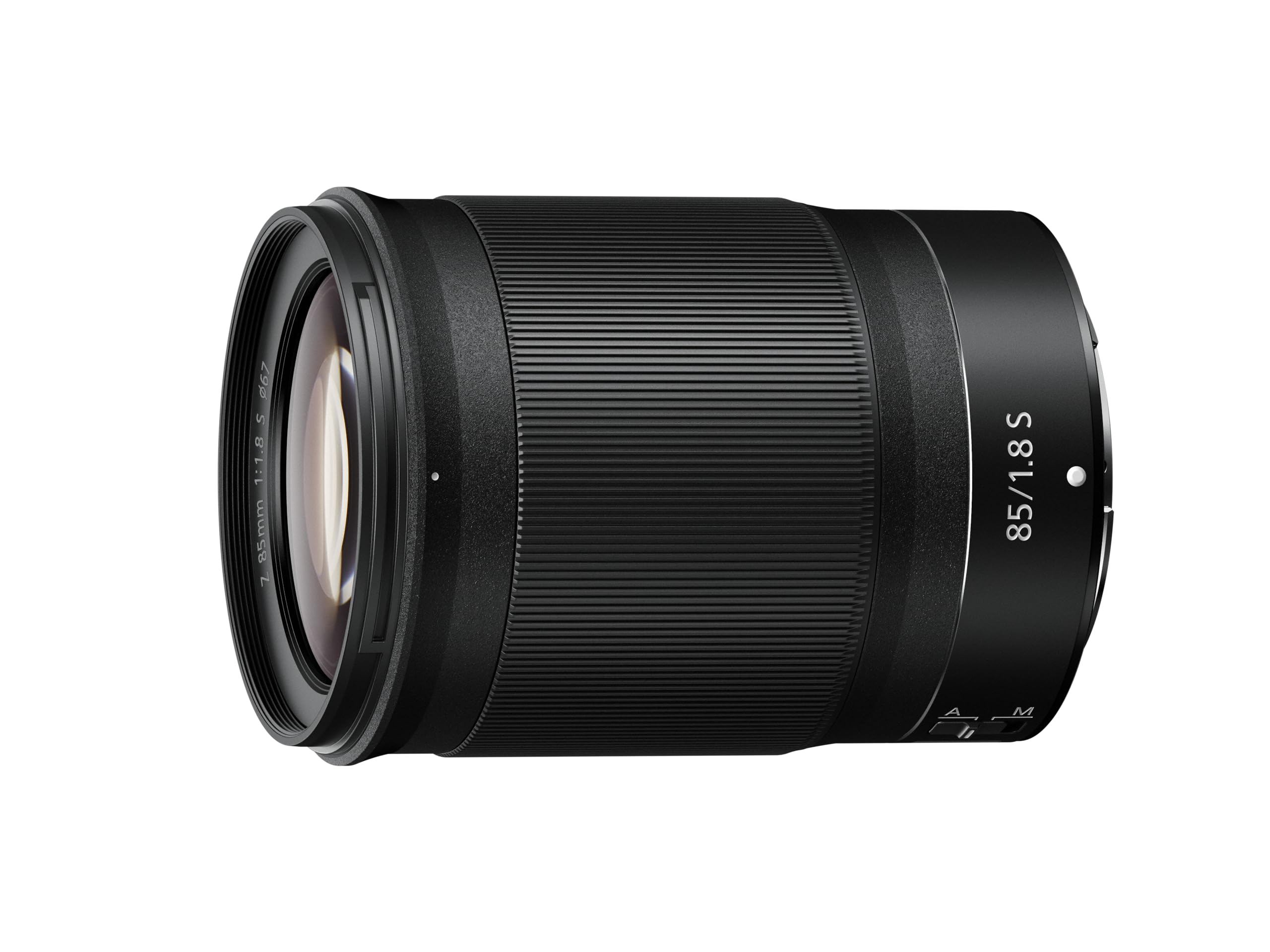
The Nikon Z 85mm f/1.8 S is often described as the best 85mm lens ever made by Nikon, surpassing even the legendary Sigma 85mm f/1.4 Art in sharpness and bokeh quality. The 9-blade diaphragm produces soft, rounded bokeh with a smooth transition zone that is ideal for portraits. The Nano Crystal Coat and 2 ED glass elements deliver lifelike color accuracy and virtually zero chromatic aberration.
Autofocus is fast, accurate, and silent, making it a joy to use for both stills and video. The dust and drip-resistant design is extensively sealed to keep out the elements, and the customizable control ring allows for quick adjustments of aperture or exposure compensation. The lens is compact for an 85mm f/1.8 S-line lens, and the build quality is top-tier.
Some users note a slight cat’s eye effect at the edges wide open when shooting at close distances, but this is common among high-aperture designs and rarely noticeable in real-world portraits. For Nikon Z shooters, this lens is the gold standard for portrait bokeh and represents an investment that will last for years.
Why it’s great
- Superb sharpness and bokeh quality, best in class for 85mm
- Dust and drip-resistant construction for professional use
- Fast and silent autofocus with smooth bokeh transition
Good to know
- Cat’s eye bokeh at edges when shooting wide open at close distances
- Premium price point, though justified by optical performance
- No f/1.2 option for even shallower depth of field
8. Sigma 50mm F1.4 DG DN

The Sigma 50mm F1.4 DG DN is a modern masterpiece designed for full-frame mirrorless cameras, offering a fast f/1.4 aperture in a relatively slim and compact body. The 11-blade aperture is a bokeh powerhouse, producing smooth, circular out-of-focus highlights even at narrower apertures. This makes it a top choice for portrait and event photographers who want maximum background blur without switching to an 85mm.
The HLA (High-response Linear Actuator) autofocus motor is snappy and accurate, ensuring you never miss a moment. The optical design includes Super Multi-Layer Coating to reduce flare and ghosting, while the dust and splash-resistant structure provides peace of mind in variable conditions. The aperture ring with a de-click function is a welcome feature for video shooters.
It is noticeably larger and heavier than the Sony 50mm f/1.2 GM, but it is also very well priced for its performance. Barrel distortion is present but easily correctable in post-production. For Sony E-mount users seeking a fast 50mm with exceptional bokeh, the Sigma is a formidable competitor that delivers professional-level results at a mid-range investment.
Why it’s great
- Beautiful f/1.4 bokeh with 11-blade circular aperture
- Fast and quiet HLA autofocus motor
- Compact and weather-resistant for its fast aperture class
Good to know
- Larger and heavier than the native Sony 1.4 GM
- Barrel distortion is present and requires correction in software
- Premium price point, but cheaper than flagship Sony alternatives
9. Sony FE 35mm f/1.4 GM

The Sony FE 35mm f/1.4 GM represents the pinnacle of wide-angle bokeh, offering the legendary G Master image quality in a compact package. The f/1.4 maximum aperture is exceptionally fast for a 35mm lens, creating stunning depth of field and beautiful bokeh that rivals longer focal lengths. Two XA (Extreme Aspherical) elements ensure stunning resolution and smooth bokeh without the onion-ring effect.
Nano AR Coating II effectively suppresses reflections, flare, and ghosting, maintaining contrast even in backlit situations. The autofocus is fast and snappy, though some video shooters note it can be slightly too quick, causing focus jumps. The dust and moisture-resistant design, along with a fluorine front coating, makes it reliable in various weather conditions.
This lens is remarkably versatile for its speed, fitting easily into a bag and pairing beautifully with bodies like the a7CR. It is ideal for environmental portraits, street photography, and event work where a wider perspective with strong bokeh is needed. For Sony E-mount shooters seeking the best wide-angle bokeh, the 35mm f/1.4 GM is the ultimate choice.
Why it’s great
- Exceptional wide-angle bokeh with fast f/1.4 aperture
- Compact and lightweight for a flagship GM lens
- Nano AR Coating II drastically reduces flare and ghosting
Good to know
- Autofocus can be very fast, potentially causing focus jumps during video
- High-end price point reflects G Master quality
- Bokeh effect is less pronounced than on a dedicated portrait lens like 85mm
FAQ
Does a larger aperture always mean better bokeh?
What is the best focal length for bokeh portraits?
Final Thoughts: The Verdict
For most users, the best bokeh lens winner is the Canon RF50mm F1.8 STM because it delivers excellent background blur at an entry-level price for RF mount users. If you want the creamiest circular bokeh on a budget, grab the Rollei 85mm F1.8 AF with its 11-blade design. And for the ultimate wide-angle bokeh experience, nothing beats the Sony FE 35mm f/1.4 GM.

Mo Maruf
I created WellFizz to bridge the gap between vague wellness advice and actionable solutions. My mission is simple: to decode the research and give you practical tools you can actually use.
Beyond the data, I am a passionate traveler. I believe that stepping away from the screen to explore new environments is essential for mental clarity and physical vitality.