Our readers keep the lights on and my smoothie glass nicely filled. As an Amazon Associate, I earn from qualifying purchases.
A feline diabetes diagnosis changes everything about mealtime. The wrong can of food sends blood glucose spiking, while the right one—high in protein, minimal in carbohydrates—can stabilize your cat’s energy and even push the disease into remission. This isn’t about gourmet flavors; it’s about metabolic chemistry in a pull-top can.
I’m Mohammad Maruf — the founder and writer behind WellFizz. I spent weeks cross-referencing ingredient disclosures, carbohydrate estimates, and feeding trial data to build a guide that cuts through the marketing fluff surrounding diabetic feline diets.
After balancing real-world owner feedback with strict nutritional criteria, I landed on the most reliable options for managing glucose today. This is your clear-eyed, no-nonsense breakdown of the best canned cat food for diabetic cats.
How To Choose The Best Canned Cat Food For Diabetic Cats
Selecting food for a diabetic cat forces you to read beyond the front-label claims. Two numbers matter most: protein percentage and estimated carbohydrate percentage on a dry-matter basis. A food with less than 10 percent carbs (as-fed estimate) gives you the best shot at stable glucose. Texture, protein source, and whether a prescription is required are secondary but non-negotiable filters.
Dry-Matter Carbohydrate Estimation
Cat food labels never list carbs directly. You calculate them: subtract the percentages of crude protein, crude fat, crude fiber, moisture, and ash from 100 percent. For diabetic cats, the goal is a dry-matter carb number under 12 percent. Any food above 15 percent risks a post-meal glucose spike regardless of how “premium” the brand sounds.
Protein Source & Limited Ingredients
A single, novel protein such as rabbit or salmon reduces the risk of food sensitivities that can cause inflammation and erratic glucose. Limited-ingredient diets (fewer than ten components) also make it easier to rule out ingredients that trigger an adverse reaction. Stick with meat-first formulas and avoid those that list starches like potato, tapioca, or pea flour in the first five ingredients.
Wet vs. Dry and Blood Sugar Dynamics
Canned food provides moisture that supports kidney function—critical for diabetic cats prone to dehydration. The thermal processing of wet food also tends to make carbohydrates more digestible, so the carb ceiling is lower than with kibble. Many owners report that switching from dry to wet alone improves blood glucose readings within two weeks.
Quick Comparison
On smaller screens, swipe sideways to see the full table.
| Model | Category | Best For | Key Spec | Amazon |
|---|---|---|---|---|
| Purina Pro Plan Veterinary DM Wet | Veterinary Diet | Aggressive glucose management | Low-carb, high-protein canned formula | Amazon |
| Hill’s m/d GlucoSupport Dry | Veterinary Diet | Kibble-loving diabetic cats | Low-carb dry formula with arginine | Amazon |
| Purina Pro Plan Veterinary DM Dry | Veterinary Diet | Combination feeding with canned DM | St/Ox defense urinary support | Amazon |
| Purina Pro Plan Healthy Metabolism Wet | Weight Control | Overweight diabetic cats on a budget | L-carnitine for fat conversion | Amazon |
| Instinct Limited Ingredient Rabbit Wet | Limited Ingredient | Food sensitivities alongside diabetes | Single novel protein rabbit | Amazon |
| Applaws Fish Variety Wet | Complementary | Topper or treat for picky cats | Limited ingredient, no artificial additives | Amazon |
| Reveal Fish Variety Wet | Complementary | Hydration boost with whole proteins | 100% natural, grain-free broth | Amazon |
In‑Depth Reviews
1. Purina Pro Plan Veterinary Diets DM Dietetic Management Feline Formula Wet Cat Food
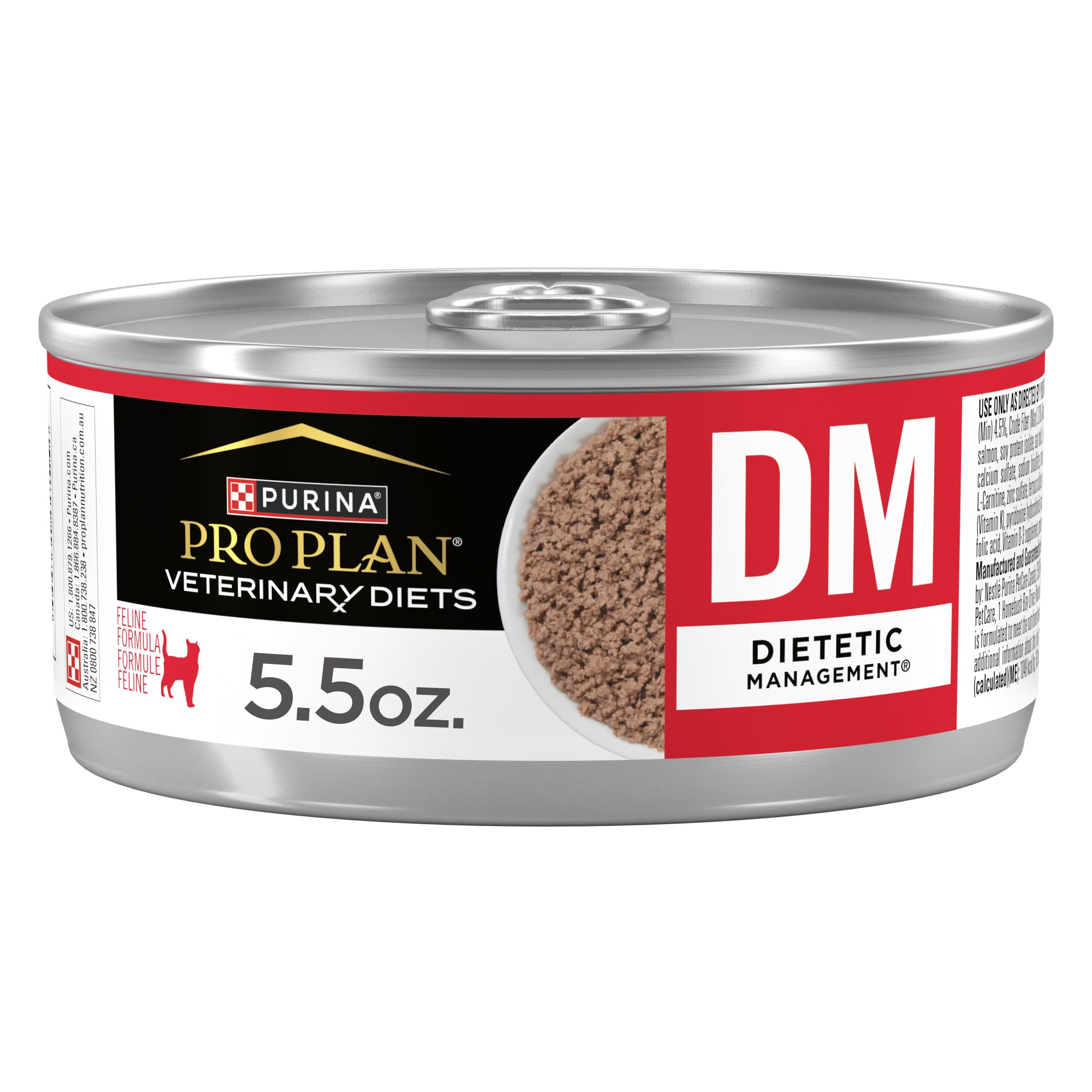
This is the clinical gold standard for diabetic cats. The formula is explicitly high in protein and low in carbohydrates to support stable glucose, and it incorporates St/Ox Defense to reduce the risk of struvite and calcium oxalate crystals—a common comorbidity in diabetic felines. Each 5.5-ounce can provides a dense, ground texture that most cats accept after a brief transition period. Owner reports document cases of diabetes going into remission after five weeks on this diet alone.
Purina’s veterinary line is prescription-only, which adds a step at checkout, but the nutritional profile justifies the requirement. The protein content is high enough to maintain lean body mass even as the cat loses excess weight. The canned format also delivers the moisture diabetic cats need to prevent dehydration and support kidney function.
Cost is the primary friction point—a 24-can case runs into premium territory. However, when you calculate the potential savings on insulin and vet visits, many owners find the investment offsets long-term care expenses. For cats that need aggressive dietary intervention, this is the most proven option available.
Why it’s great
- Clinically proven to lower blood glucose and induce remission in some cats
- High moisture content supports kidney and urinary tract health
- Designed to maintain lean muscle during weight loss
Good to know
- Requires a veterinary prescription for purchase
- High cost per case may strain monthly pet budgets
- Some cats need a slow transition from previous food
2. Hill’s Prescription Diet m/d GlucoSupport Dry Cat Food

Hill’s m/d GlucoSupport is the dry-food counterpart to the company’s therapeutic wet line, and it fills a specific need: cats that absolutely refuse canned food. The kibble is engineered with optimized carbohydrates and added arginine, an amino acid that supports insulin function and glucose metabolism. Multiple owners report measurable decreases in blood sugar readings within weeks of switching to this formula.
The 4-pound bag is compact, but the calorie density means it lasts longer than the bag size suggests. This is a prescription diet, so you will need vet authorization. The kibble texture is small and crunchy, which helps with dental health, but the lack of moisture means you must monitor your cat’s water intake closely—diabetic cats are already at higher risk for dehydration.
Picky cats tend to accept this food readily, which is a relief for owners dealing with a cat that rejects other low-carb options. The price is mid-range for a veterinary diet, and the small bag allows you to test acceptance without a huge financial commitment.
Why it’s great
- Optimized low-carb formula with added arginine for glucose support
- Small kibble size appeals to cats that refuse wet food
- Veterinarian-recommended therapeutic diet
Good to know
- Dry food lacks moisture; requires vigilant water monitoring
- Prescription required, adding a step to ordering
- Cost per pound is higher than standard cat food
3. Purina Pro Plan Veterinary Diets DM Dietetic Management Feline Formula Dry Cat Food
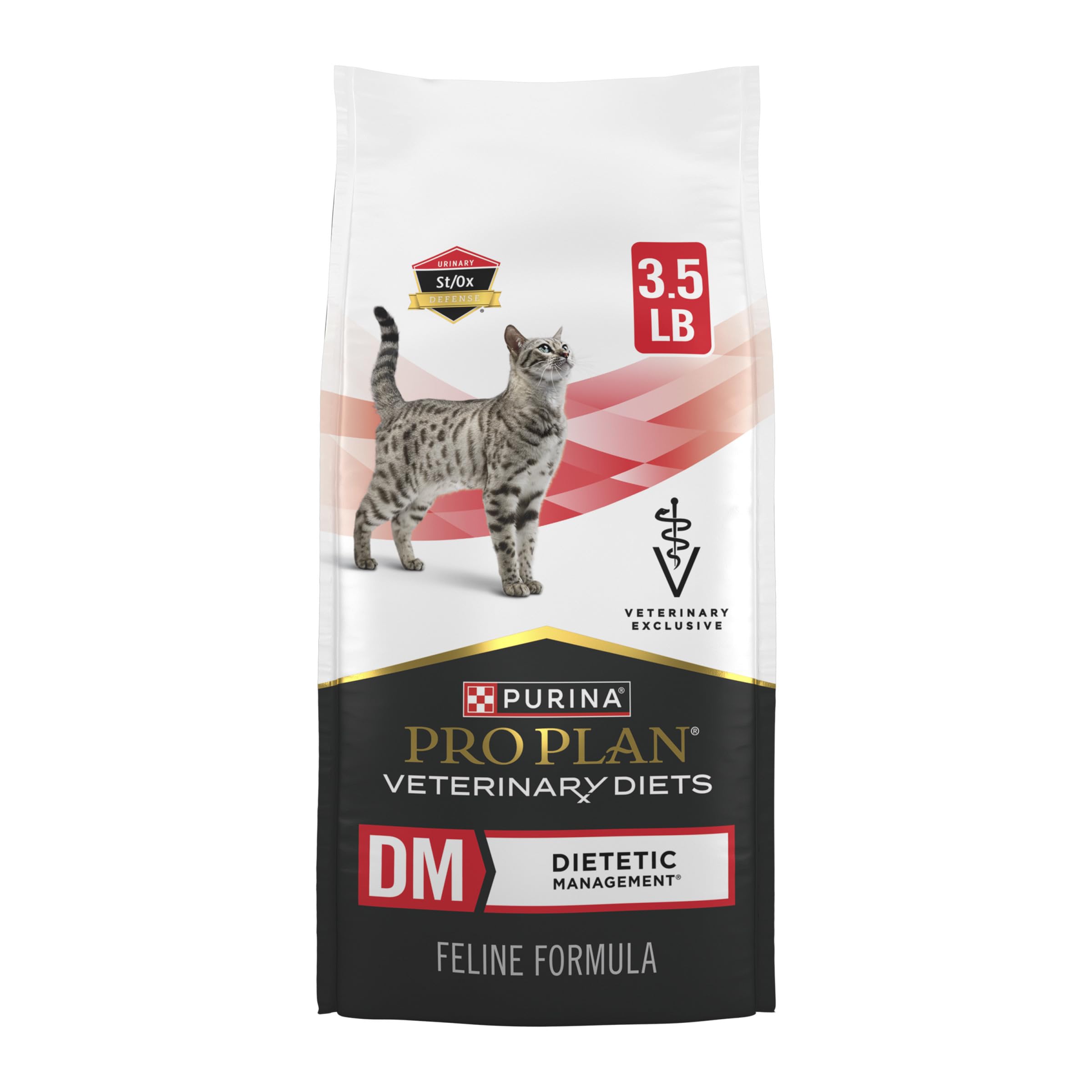
The dry version of Purina’s DM formula serves as an excellent companion to the canned product. It shares the same low-carbohydrate, high-protein framework and adds St/Ox Defense for urinary crystal prevention. Owners of cats that prefer a mix of wet and dry often pair this kibble with the DM canned food, giving the cat texture variety while maintaining consistent blood-glucose support.
This dry formula works well for maintaining lean body mass during weight loss. The 3.5-pound bag is a reasonable entry point, but note that Amazon requires vet verification before shipping—a process that can take 24 to 48 hours. Some users report order delays when placing requests over weekends, so plan ahead.
One advantage over the Hill’s dry option is the slightly smaller carbohydrate fraction, which makes it a tighter choice for cats with particularly labile blood sugar. The taste acceptance is strong; even cats that normally turn up their noses at dietary kibble seem to eat this without complaint.
Why it’s great
- Very low carbohydrate content for a dry food
- St/Ox Defense reduces urinary crystal risk
- Pairs seamlessly with the DM canned formula
Good to know
- Vet prescription needed; delivery can be delayed on weekends
- Dry texture requires active hydration management
- Bag size is relatively small for multi-cat households
4. Purina Pro Plan High Protein Gravy Wet Cat Food, Healthy Metabolism Formula

This is not a prescription diet, but its nutritional profile—high protein (11 percent minimum) and low carbohydrate, with no fillers—makes it a strong over-the-counter option for diabetic cats. The formula includes L-carnitine, which helps the body convert fat into energy rather than storing it, directly supporting weight loss in overweight diabetic cats. The gravy texture with real chicken shreds is highly palatable.
Each 3-ounce can is portioned for a single meal, making it easy to control calorie intake. The 24-pack provides a month’s supply for most cats at a mid-range price point. Multiple owners report that this food helped their diabetic cats lose weight and maintain stable energy between insulin doses. It is also free of artificial colors and preservatives.
The trade-off is that this food is not as carbohydrate-restricted as the veterinary DM formulas, so it is best suited for cats whose diabetes is well-managed with insulin or for those in the early stages where dietary changes alone may be sufficient. If your cat’s glucose is severely labile, the prescription options above are safer.
Why it’s great
- High protein and low carb for a non-prescription food
- L-carnitine supports fat metabolism during weight loss
- Gravy texture appeals to picky eaters
Good to know
- Not as carb-restricted as veterinary DM formulas
- High gravy content means less actual meat per can
- May not be sufficient for cats requiring strict glucose control
5. Instinct Limited Ingredient Diet Rabbit Wet Cat Food
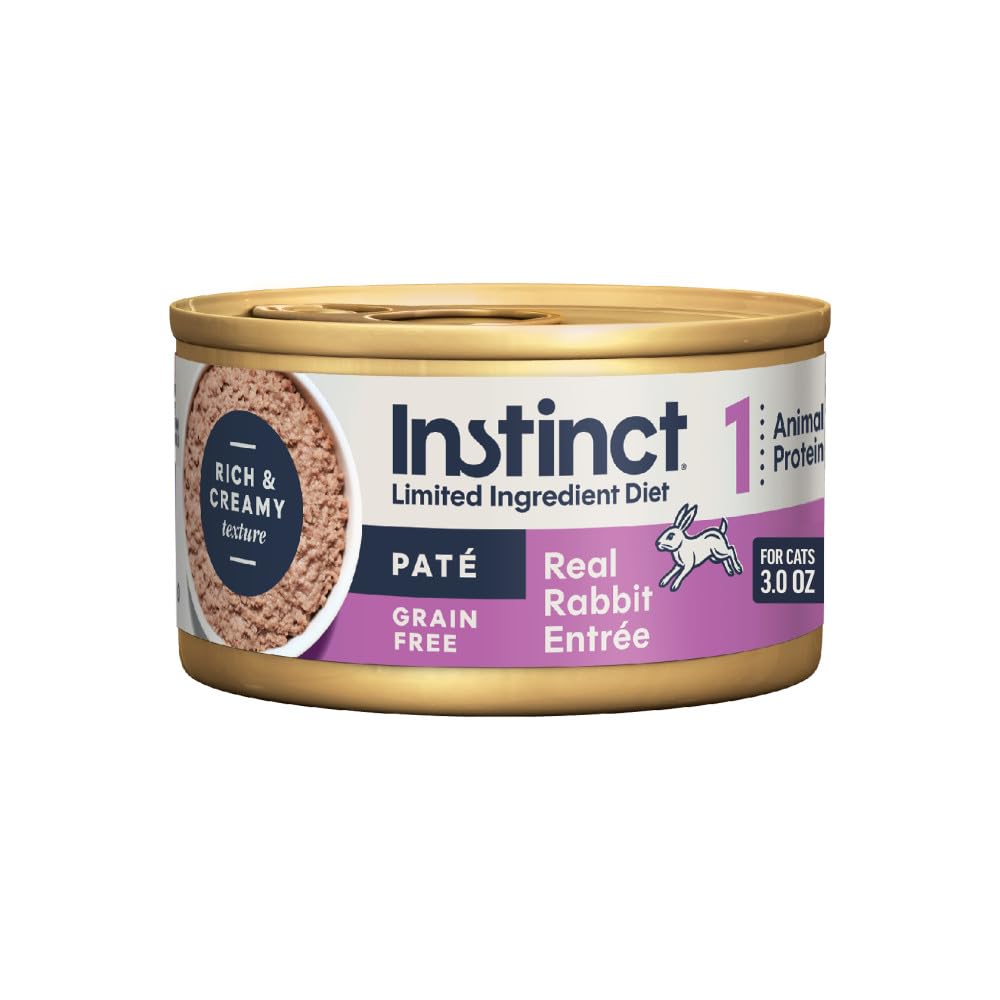
Instinct’s rabbit formula is a specialty pick for diabetic cats that also suffer from food allergies or inflammatory bowel disease. Rabbit is a novel, easily digestible protein, and the ingredient list is stripped down to one protein and one vegetable. There is no grain, dairy, egg, chicken, beef, fish, corn, wheat, soy, or carrageenan—just clean nutrition that reduces the chance of an immune response.
The pate texture is smooth and consistent, and owners report that even cats with chronic vomiting or hair loss see dramatic improvement after switching to this diet. The moisture content supports hydration, which is doubly important for diabetic cats. This food is complete and balanced, not a complementary topper.
The catch is the price: this is the most expensive non-prescription option on the list, and the 24-pack of 3-ounce cans adds up quickly, especially for multi-cat households. Some owners note that the formula contains pea protein, which is a potential concern for cats with legume sensitivities, but most diabetic cats tolerate it well.
Why it’s great
- Single novel protein minimizes allergy and inflammation risks
- High moisture content aids kidney and urinary health
- Complete and balanced nutrition without fillers
Good to know
- Premium pricing may be unsustainable for some budgets
- Contains pea protein, which may be an issue for sensitive cats
- Small can size requires multiple cans per day for larger cats
6. Applaws Fish Variety Pack Wet Cat Food in Broth

Applaws positions itself as a complementary food, meaning it is not nutritionally complete as a standalone diet—but that does not make it useless for diabetic cats. As a topper or treat, this limited-ingredient broth-based food adds moisture and high-quality protein without the artificial colors, flavors, or fillers that can destabilize glucose. The fish variety pack includes multiple flavors to keep a picky cat engaged.
The protein content is excellent, and the ingredient list is refreshingly short. Owners report that cats with sensitive stomachs digest this food easily and that it encourages increased water intake. The flake texture in broth is gentle on the digestive tract and appealing to cats that dislike pate.
Because it is not a complete meal, it should not replace a veterinary-formulated diabetic diet. Use it as a hydration booster mixed into a low-carb base food or as an occasional reward. The 12-pack is entry-level affordable, making it a low-risk way to add moisture without upsetting the primary diet.
Why it’s great
- Minimal ingredients with no artificial additives or fillers
- Broth-based texture encourages hydration
- Variety pack keeps mealtime interesting for picky cats
Good to know
- Not a complete and balanced meal on its own
- Must be used as a topper or supplement to a full diet
- Fish variety may not suit cats with fish allergies
7. Reveal Fish Variety Pack Wet Cat Food in Broth
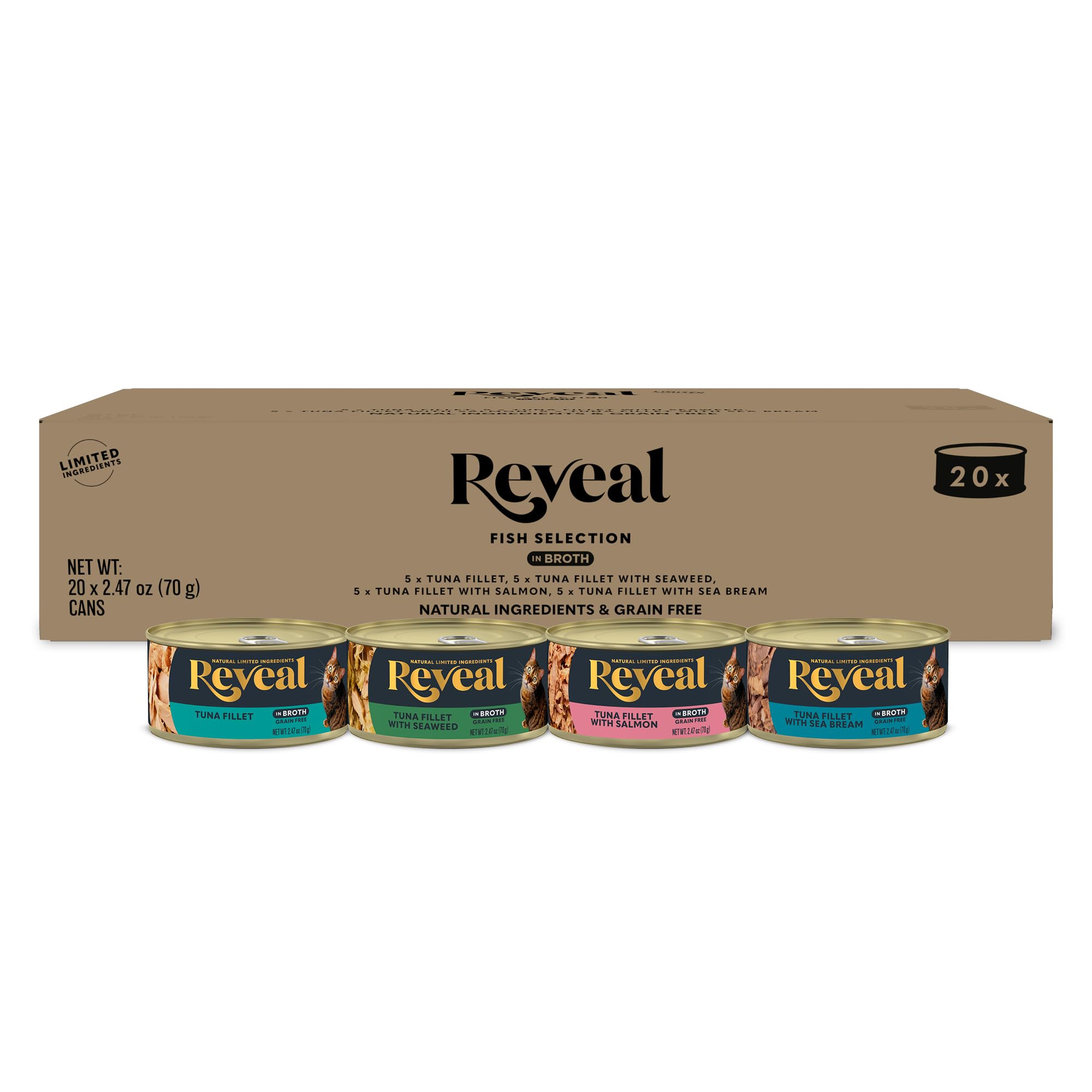
Reveal’s fish variety pack delivers whole, natural ingredients in a hydrating broth with zero grain or filler. Like Applaws, this is a complementary food, but the quality of the protein—real, prime cuts of fish—makes it a standout option for adding moisture and flavor to a primary diabetic diet. The B Corp certification signals a commitment to ingredient sourcing that many conscientious owners appreciate.
The 20-pack offers more variety and a better per-can value than the competitive topper options. Owners consistently report that even the fussiest cats finish every bite, which is critical when every calorie needs to count. The broth texture is light and clean, and the ingredient list is free from artificial colors, flavors, and preservatives.
Because Reveal is not a complete meal, it should be mixed with a low-carb, high-protein base food. Some owners note that the fish smell is stronger than chicken-based alternatives, so if your cat is sensitive to strong odors, start with a single flavor before buying the variety pack. This is a budget-friendly way to drive hydration without sacrificing ingredient quality.
Why it’s great
- 100% natural whole ingredients with no fillers
- High moisture content supports hydration and kidney health
- Excellent palatability for picky eaters
Good to know
- Not a complete diet; must be supplemented with a full formula
- Strong fish smell may be off-putting to some cats
- Flake texture may not appeal to cats that prefer pate
FAQ
Can a diabetic cat eat non-prescription canned food?
How do I calculate carbs in cat food that lacks a label?
Is gravy or pate better for diabetic cats?
Will switching to low-carb wet food cure my cat’s diabetes?
Final Thoughts: The Verdict
For most users, the best canned cat food for diabetic cats winner is the Purina Pro Plan Veterinary DM Wet Food because it offers the tightest carbohydrate control in a palatable format, with documented cases of remission. If you need a dry option because your cat refuses wet food, grab the Hill’s Prescription Diet m/d GlucoSupport. And for a diabetic cat with concurrent food allergies, nothing beats the Instinct Limited Ingredient Rabbit Wet Food.

Mo Maruf
I created WellFizz to bridge the gap between vague wellness advice and actionable solutions. My mission is simple: to decode the research and give you practical tools you can actually use.
Beyond the data, I am a passionate traveler. I believe that stepping away from the screen to explore new environments is essential for mental clarity and physical vitality.