Our readers keep the lights on and my smoothie glass nicely filled. As an Amazon Associate, I earn from qualifying purchases.
Stepping up from a USB mic to an XLR setup is the single biggest leap you can make for audio quality, but the assumption that a dynamic or condenser microphone with a proper analog connection will drain your wallet is simply outdated. The current market is packed with surprisingly capable performers that deliver rich, broadcast-ready sound without forcing you to sacrifice your entire production budget for a single piece of gear.
I’m Mohammad Maruf — the founder and writer behind WellFizz. I’ve spent countless hours analyzing the specs, customer feedback, and real-world performance data of the most compelling affordable XLR microphones on the market to separate the genuine value picks from the overhyped options.
Whether you are starting a podcast, leveling up your livestream, or cutting your first vocal demo, this guide to the best budget xlr microphone options will help you find the perfect match for your voice and setup without breaking the bank.
How To Choose The Best Budget XLR Microphone
Choosing your first (or next) XLR microphone on a budget comes down to understanding three core trade-offs: capsule type, polar pattern, and construction quality. A condenser mic offers shimmering high-end detail and sensitivity, making it ideal for a treated studio space, but it will mercilessly pick up every fan hum and keyboard click in an untreated room. A dynamic mic, by contrast, is far more forgiving of ambient noise, delivering a punchy, focused sound that works brilliantly for live streaming, podcasting, and loud vocal performances. Your recording environment should dictate this choice more than any other single spec.
Polar Pattern: Cardioid vs Supercardioid
For solo vocal or speech applications, a cardioid polar pattern is the industry standard because it picks up sound from the front while rejecting noise from the sides and rear. Supercardioid patterns offer even tighter side rejection, which is a major advantage on a loud stage or in a room with significant echo. However, supercardioid mics have a small rear lobe of sensitivity that can pick up sound directly behind them, so proper positioning matters more. For a home podcaster or streamer working in a normal living space, a well-implemented cardioid or supercardioid dynamic mic is the safest, most flattering choice.
Output Level and Impedance
Dynamic microphones produce a relatively low output signal compared to condensers, which means your audio interface or mixer must have enough clean gain to bring the signal to a usable level. A mic with higher sensitivity (less negative dBV) and lower impedance (under 600 ohms) will generally pair better with budget-friendly interfaces that may have modest preamp gain. Condenser mics require 48V phantom power from your interface, so confirm that your audio gear can supply it before buying a condenser capsule. The impedance mismatch between a high-impedance mic and a low-impedance input can cause significant high-frequency loss, so always check this spec.
Build Quality and Included Accessories
At the budget end, the difference between a mic that lasts two years and one that lasts a decade often comes down to the enclosure material and the quality of the included shock mount or pop filter. An all-metal body with a robust grille is a non-negotiable feature for any microphone that will travel or face daily handling. Some budget-friendly packages include useful extras like a high-quality XLR cable, a mic clip, and a storage pouch, which can save you considerable additional expense. Conversely, a stripped-down mic that forces you to buy a separate shock mount, cable, and windscreen may end up costing as much as a more expensive model that comes fully equipped out of the box.
Quick Comparison
On smaller screens, swipe sideways to see the full table.
| Model | Category | Best For | Key Spec | Amazon |
|---|---|---|---|---|
| RØDE PodMic | Dynamic | Broadcast & Podcasting | Internal shock mount & pop filter | Amazon |
| Blue Ember | Condenser | Detailed Vocal Recording | Custom cardioid condenser capsule | Amazon |
| FIFINE AmpliTank Tank3 | Dynamic | USB/XLR Hybrid Streaming | XLR & USB-C connectivity | Amazon |
| Zoom ZDM-1 | Dynamic | Podcasting with High SPL | Large diaphragm & internal shock mount | Amazon |
| FIFINE AmpliGame AM8 | Dynamic | Gaming & Entry-Level Podcasting | USB/XLR hybrid with RGB lighting | Amazon |
| NEAT Worker Bee II | Condenser | Versatile Studio Recording | 25mm medium diaphragm capsule | Amazon |
| Phenyx Pro PM-26 | Dynamic | Live Vocals & Karaoke | Supercardioid pattern & 16.4 ft cable | Amazon |
In‑Depth Reviews
1. RØDE PodMic Cardioid Dynamic Broadcast Microphone

The RØDE PodMic is the gold standard at the premium end of the budget tier for a reason: it packs a professional-grade internal shock mount and a built-in pop filter directly into its dense, all-metal chassis. Designed and made in Australia, this cardioid dynamic mic delivers the warm, articulate broadcast sound that has made RØDE a household name in podcasting. Its internal suspension system effectively decouples the capsule from the body, meaning you get noticeably less handling noise and stand vibration than with most competitors at this level.
With a hefty weight of over two pounds and an integrated yoke mount that includes both 3/8” and 5/8” threads, the PodMic feels monumentally solid and mounts securely on any standard boom arm without needing an adapter. Its frequency response is voiced specifically for spoken word, with a smooth low-mid presence that gives voices a rich, radio-ready character. The cardioid pattern provides excellent rejection of room reflections, making it a top choice for streamers and podcasters working in untreated spaces.
One practical consideration is that the PodMic’s output level is moderate, so you will need an audio interface or mixer that can deliver around 60dB of clean gain. When paired with a RØDECaster or a quality interface like the Scarlett Solo, the sound is indistinguishable from mics costing three times as much. The white finish adds a stylish, modern look to any desktop setup, though the all-metal construction means it demands a sturdy boom arm capable of handling its weight.
Why it’s great
- Integrated shock mount and pop filter eliminate the need for add-on accessories
- All-metal body with a dense, broadcast-quality feel
- Warm, articulate sound specifically optimized for spoken word
- Dual-thread yoke mount fits any stand without adapters
Good to know
- Requires a boom arm or stand with a high weight capacity
- Needs a significant amount of clean gain from your interface
- On the pricier side of the budget spectrum
2. Blue Ember XLR Condenser Mic

The Blue Ember is a purpose-built XLR condenser that punches well above its weight, featuring a custom-designed cardioid condenser capsule in an ultra-slim, all-metal housing. Unlike typical budget condensers that sound brittle or harsh, the Ember delivers an open, accurate sound with impressive headroom, making it a fantastic choice for vocalists, voice-over artists, and streamers who have a controlled acoustic space. Its long, pencil-like form factor is also ideal for video work, as it stays out of the frame while maintaining a professional appearance.
With a low impedance of 40 ohms and a wide, consistent frequency response, the Ember captures every nuance of a performance with clarity and depth. It requires 48V phantom power and a proper audio interface, but the payoff is a detailed, silky vocal reproduction that is rare to find at this tier. The included mic stand mount is functional, though the mic’s lightweight build means it pairs well with standard boom arms without straining them.
Customer feedback consistently highlights the Ember’s ability to outperform USB condenser mics like the Blue Yeti by a wide margin, with a much more natural and less processed sound. The cardioid pattern does a respectable job of minimizing room ambience, but like all condensers, it will pick up background noise more readily than a dynamic mic. If you have a quiet, treated room and want maximum detail, the Ember is a stellar investment.
Why it’s great
- Custom condenser capsule delivers stunning clarity and detail
- Ultra-slim metal body is perfect for on-camera streaming
- Low self-noise and high headroom for clean recordings
- Competitive price for a pro-level XLR condenser
Good to know
- Requires 48V phantom power and a quiet recording environment
- No internal shock mount or pop filter included
- Needs careful gain staging to avoid clipping
3. FIFINE AmpliTank Tank3 XLR/USB Dynamic Microphone

The FIFINE AmpliTank Tank3 is a forward-thinking hybrid that gives you the flexibility of both USB-C plug-and-play convenience and a traditional XLR connection for upgrading your setup later. Its all-metal body houses a cardioid dynamic capsule that delivers a rounded, rich audio profile with noticeably low self-noise, making it an excellent choice for podcasting and streaming where a clean signal is paramount. The Tank3 also features a silent capacitive mute button and a dedicated headphone jack with volume control, keeping all essential controls at your fingertips.
Unique to its price bracket, the Tank3 includes six transparent windows on its grille that serve both an aesthetic purpose and a practical reminder to speak into the top of the mic for optimal pickup. The frequency response spans 50Hz to 16KHz, with a lower-mid emphasis that adds warmth to vocals without sounding boomy or muddy. Unlike many hybrid mics, the XLR functionality here is fully functional without phantom power, as the Tank3 is a dynamic mic that requires only the signal from your mixer or interface.
Users consistently praise its sturdy build and the convenience of having a physical mute button that works independently of software, a critical feature for live streamers. The switch from USB to XLR is seamless, making this an ideal gateway microphone for beginners who want to start recording immediately but plan to invest in an audio interface later. The included USB cable is generous at 8.2 feet, but you will need to purchase an XLR cable separately.
Why it’s great
- Dual USB-C and XLR connectivity for future-proof upgrading
- Silent mute button and independent volume controls
- All-metal build with a warm, professional sound profile
- No phantom power required for XLR operation
Good to know
- XLR cable and boom arm are sold separately
- Mute button only functions over USB connection
- Audio output is lower than some dedicated XLR dynamics
4. Zoom ZDM-1 Dynamic Microphone

The Zoom ZDM-1 is a large-diaphragm dynamic microphone that offers broadcast-quality sound with a supercardioid polar pattern, making it exceptionally good at isolating the source signal from ambient noise. Its internal shock mount does an admirable job of reducing handling noise, a common weakness among budget dynamics, and its high SPL handling means it can capture loud vocal performances without distortion. This mic is particularly well-suited for podcasting, voice-overs, and even lower-volume acoustic instruments thanks to its smooth, detailed frequency response.
With a sensitivity of -50dB and an impedance rating that pairs well with Zoom’s own recorders and most standard audio interfaces, the ZDM-1 produces a clean, quiet signal without requiring phantom power. The all-metal body and robust grille add a level of durability that inspires confidence during daily use, and its compact size makes it easy to position on a crowded desk. The included stand mount is basic but functional, though many users quickly opt for an aftermarket shock mount for maximum isolation.
Customer reviews frequently describe the ZDM-1’s sound as “shockingly good” for its price, with a darker, more detailed character that rivals more expensive options like the Rode PodMic or Shure MV7x. The main drawbacks are the included foam windscreen, which is underwhelming for plosive control, and the fact that Zoom does not offer a dedicated suspension mount. For vocalists with deeper voices, this mic delivers a crisp, clear tone that cuts through a mix without sounding harsh.
Why it’s great
- Supercardioid pattern offers excellent background noise rejection
- Internal shock mount reduces vibration and handling noise
- High SPL handling captures loud sources without distortion
- All-metal body is sturdy and reliable
Good to know
- Included windscreen is ineffective against plosives
- Needs a high-quality external shock mount for best results
- Sound profile is slightly dark, which may not suit all voices
5. FIFINE AmpliGame AM8 USB/XLR Dynamic Microphone
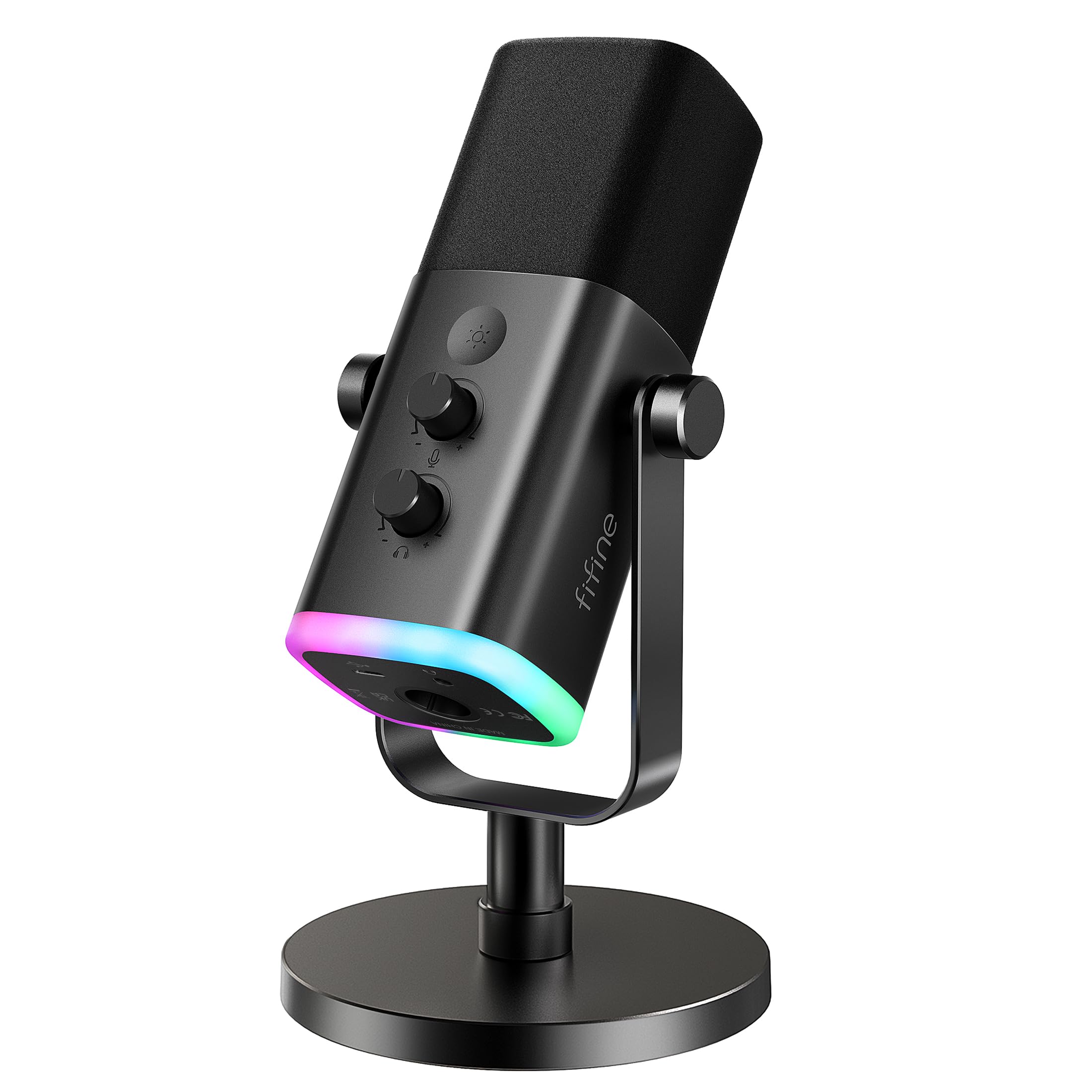
The FIFINE AmpliGame AM8 is a hybrid XLR/USB dynamic microphone designed specifically to bridge the gap between gaming aesthetics and functional audio performance. Its standout feature is a customizable RGB ring with multiple lighting modes, which syncs with your gaming setup while the cardioid dynamic capsule delivers a natural, unintelligible vocal sound that rejects off-axis keyboard and mouse noise. The top-addressing design requires you to speak directly into the end of the mic, and the suggested recording range of 2 to 6 inches helps you achieve consistent levels.
When used over USB, the AM8 offers full control with a tap-to-mute button, an LED mute reminder, a headphone jack with monitoring volume control, and a smooth mic gain knob that allows real-time level adjustments. The RGB and function keys are inactive during XLR operation, but the XLR path still provides a clean, noise-free signal that works well with a standard audio interface. This makes the AM8 a versatile starting point for gamers who want a dedicated mic without committing fully to an XLR-only workflow.
Users consistently note that the AM8’s sound quality is a significant step up from any headset microphone, with clear and professional-grade audio that rivals USB mics costing twice as much. The metal body and included windscreen help reduce electrical hum and plosives, though the plastic base of the included stand feels less premium than the mic itself. The dual 3/8” and 5/8” threads allow for easy mounting on most standard boom arms without an adapter.
Why it’s great
- USB and XLR hybrid connectivity for versatile use
- Customizable RGB lighting adds gaming aesthetic
- Robust noise rejection with cardioid dynamic capsule
- Convenient tap-to-mute and real-time gain control over USB
Good to know
- RGB and function controls are inactive when using XLR
- Included desktop stand is lightweight and less stable
- XLR cable not included in the package
6. NEAT Microphones Worker Bee II

The NEAT Worker Bee II is a medium-diaphragm condenser microphone that brings a level of studio sophistication rarely seen at this entry-level price point. It features a proprietary 25mm capsule with an internal shock mount, combined with custom Class-A discrete electronics that deliver an open, natural, and detailed sonic signature. This is a microphone designed for versatility — it handles vocals, acoustic guitar, percussion, and even guitar amps with a level of nuance that encourages experimentation beyond simple speech capture.
With a cardioid polar pattern that is tight enough to work in untreated rooms, the Worker Bee II also boasts an impressively low self-noise floor, meaning your recordings will have minimal hiss even during quiet passages. The XLR connection provides a balanced output that is immune to interference over long cable runs, making it ideal for a dedicated studio setup. The included stand mount is well-built, and the overall design, while somewhat large and heavy at 1.68 pounds, speaks to the quality of its internal components.
User feedback frequently draws comparisons to condenser mics costing several times as much, with many reviewers noting that the Worker Bee II outperforms the Shure SM7B and Rode NT1 in certain recording scenarios. The main trade-offs are its substantial weight, which requires a premium boom arm like the Rode PSA-1 for safe positioning, and the fact that the included pop filter reportedly adds coloration to the audio. For content creators who want rich, detailed recordings and have a solid boom arm, the Worker Bee II is a phenomenal value.
Why it’s great
- Proprietary 25mm capsule with Class-A electronics for superior clarity
- Very low self-noise floor for clean recordings
- Versatile enough for vocals, instruments, and voice-over work
- Robust internal shock mount reduces vibration noise
Good to know
- Heavy build demands a high-quality, heavy-duty boom arm
- Requires 48V phantom power from your audio interface
- Included pop filter is not recommended for use
7. Phenyx Pro PM-26 Supercardioid Dynamic Mic
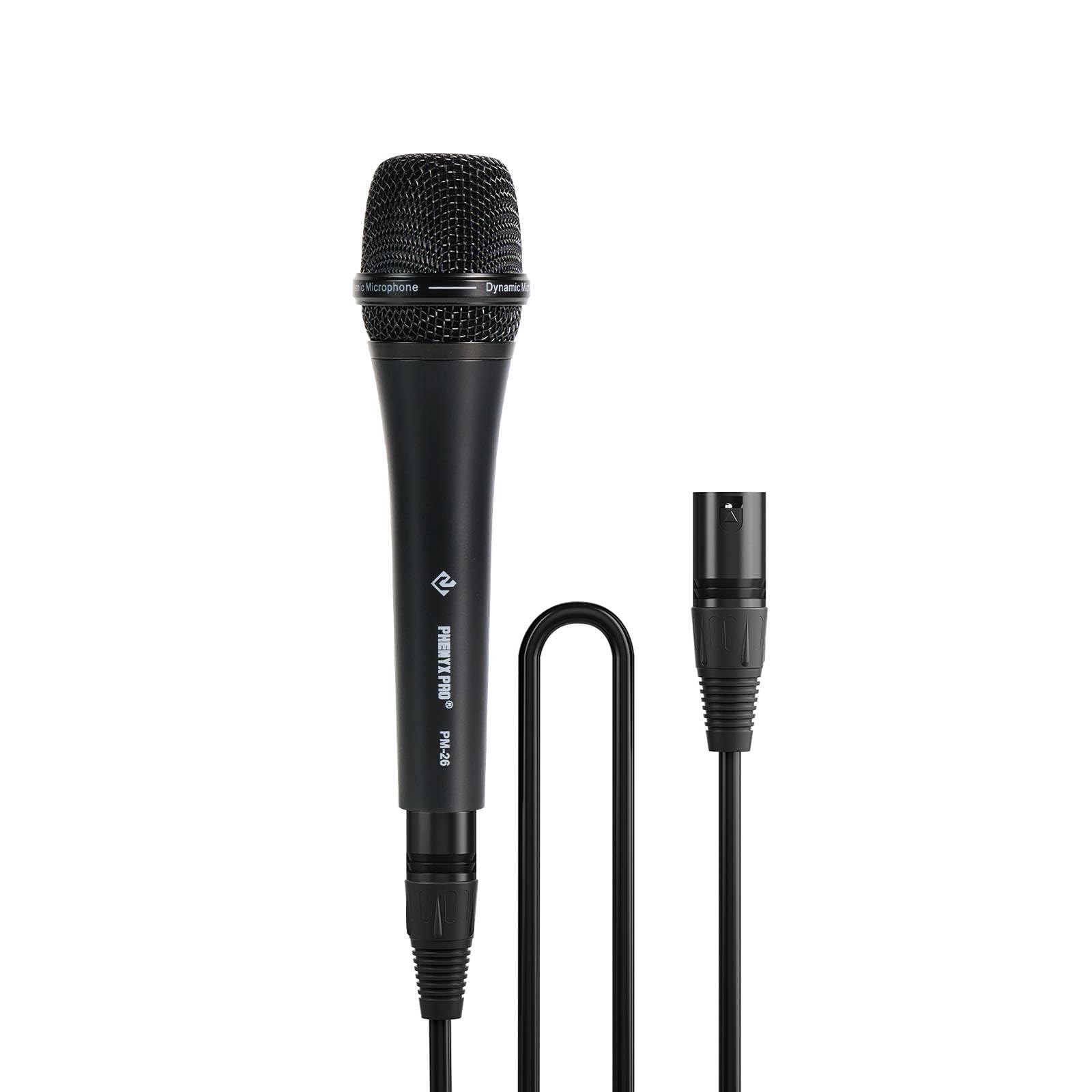
The Phenyx Pro PM-26 is a supercardioid dynamic microphone that comes as a remarkably complete package, including a 16.4-foot XLR cable, a mic clip, a hook-and-loop cable strap, and a premium faux leather storage pouch. This makes it one of the few microphones at this tier that is genuinely ready to use right out of the box, with no additional purchases required. Its specially tuned EQ curve provides warm, full-bodied lows and naturally bright highs, giving vocals a polished, professional character ideal for live singing, karaoke, and public speaking.
The supercardioid polar pattern goes a step beyond standard cardioid by offering even greater rejection of side noise, which is a significant advantage on loud stages or in rooms with high ambient sound. The built-in foam cover inside the grille helps reduce plosives and sibilance, further cleaning up the vocal signal without the need for an external pop filter. With a sensitivity rating of -50±2dB and a low impedance of 580 ohms, the PM-26 delivers a higher output level with less gain required, making it a great match for lower-power mixers and audio interfaces.
Customer reviews are overwhelmingly positive, with many comparing the PM-26 favorably to industry standards like the Shure SM58 and Sennheiser e835 for overall sound quality and feedback rejection. The full-metal construction of both the handle and capsule ensures that the mic will hold up to rigorous daily use. The only notable omission is a mute switch, but for the price and the wealth of included accessories, this is a minor trade-off for a mic that delivers such impressive live vocal performance.
Why it’s great
- Comes with a long XLR cable, clip, and storage pouch
- Supercardioid pattern rejects side noise excellently
- Warm, EQ-tuned vocal sound with built-in plosive reduction
- High output level needs less gain from your interface
Good to know
- No on/off or mute switch on the microphone body
- Best suited for live or amplified vocal use
- Storage pouch is faux leather, not genuine leather
FAQ
Do I need an audio interface for a budget XLR microphone?
Should I get a dynamic or condenser mic for podcasting at home?
What does the signal-to-noise ratio mean on a microphone spec sheet?
Will a cheap XLR cable affect my microphone sound quality?
Final Thoughts: The Verdict
For most users, the best budget xlr microphone winner is the RØDE PodMic because it combines a professional-grade internal shock mount, a built-in pop filter, and a broadcast-voiced dynamic capsule in a tank-like metal body, making it a plug-and-play upgrade that will serve you for years. If you want maximum vocal detail and have a quiet, treated room, grab the Blue Ember for its stunning condenser clarity at a bargain price. And for the beginner who wants immediate USB compatibility with the option to upgrade to XLR later, nothing beats the FIFINE AmpliTank Tank3 for flexibility and value.

Mo Maruf
I created WellFizz to bridge the gap between vague wellness advice and actionable solutions. My mission is simple: to decode the research and give you practical tools you can actually use.
Beyond the data, I am a passionate traveler. I believe that stepping away from the screen to explore new environments is essential for mental clarity and physical vitality.