Our readers keep the lights on and my smoothie glass nicely filled. As an Amazon Associate, I earn from qualifying purchases.
Starting solids is a monumental milestone, and the sheer number of puree options can turn excitement into a stressful guessing game. Between single-ingredient jars, organic blends, and allergen introduction systems, finding the right first foods for your baby’s developing digestive system requires cutting through the marketing noise.
I’m Mohammad Maruf — the founder and writer behind WellFizz. I’ve spent countless hours analyzing ingredient labels, nutritional profiles, and testing standards across dozens of Stage 1 baby food brands to identify which products deliver on safety, texture, and developmental support.
This guide focuses exclusively on starter purees designed for the youngest eaters, cutting through the clutter to help you confidently pick the best baby food stage 1 options that balance clean ingredients with real nutritional value.
How To Choose The Best Baby Food Stage 1
Stage 1 baby food is defined by its smooth, single-ingredient composition, designed for babies who are just learning to swallow purees. The wrong choice can mean unnecessary added sugars, hidden allergens, or textures that frustrate a beginner eater. Focus on three key areas when selecting your starter purees.
Single-Ingredient Purity for Sensitivity Checks
A true Stage 1 puree contains exactly one ingredient, such as banana, pea, or sweet potato. This lets you isolate any adverse reactions your baby might have to a specific food. Multi-ingredient blends, while convenient later, make it impossible to tell whether a rash or gassiness came from the apple or the spinach inside one jar.
Texture Consistency and Packaging Format
Stage 1 purees must be completely smooth with no chunks, seeds, or fibers. Jars offer a classic, spoonable format with a tight seal, while pouches provide portability but require the baby to suck the puree out — a different oral motor skill than spoon-feeding. Consider your baby’s feeding readiness and your daily routine when choosing between glass jars, plastic tubs, and flexible pouches.
Nutritional Profile Beyond the Label
Not all Stage 1 purees are nutritionally equal. Look for options that contain naturally occurring vitamins rather than added synthetic blends. Check for iron and vitamin D content, which are critical for brain development in the first year. Be wary of “no sugar added” claims on fruit purees — that’s standard — but vegetable purees should also avoid hidden starches or fillers that dilute nutritional density.
Quick Comparison
On smaller screens, swipe sideways to see the full table.
| Model | Category | Best For | Key Spec | Amazon |
|---|---|---|---|---|
| Gerber Starter Kit Variety Pack | Variety Pack | First-time parents exploring tastes | 6 flavors in 2oz tubs | Amazon |
| Gerber Organic Banana 10-Pack | Single Fruit | Potassium-rich first fruit | 50% daily value potassium | Amazon |
| Gerber Peas 16-Pack | Single Veggie | Gentle vegetable introduction | 60 peas per tub | Amazon |
| Cerebelly Organic Variety Pack | Premium Pouches | Brain-development focused nutrition | 16 nutrients per pouch | Amazon |
| Ready Set Food! Stage 1 Mix-ins | Allergen System | Early allergen introduction | 3 allergens in 30-day system | Amazon |
In‑Depth Reviews
1. Gerber My First Fruits and Veggies Starter Kit Variety Pack
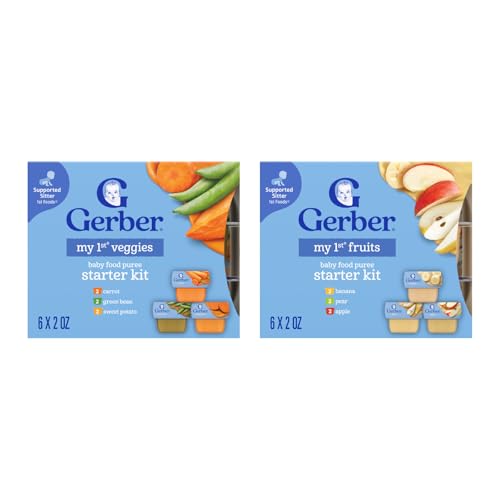
The Gerber Starter Kit is the most practical entry point for families beginning solids, offering six single-ingredient purees in 2-ounce trial-size tubs. Each serving is small enough to minimize waste when testing a new flavor — a critical advantage when your baby rejects or reacts to a particular fruit or vegetable. The kit includes banana, pear, apple, carrot, green bean, and sweet potato, covering both the sweet and savory flavor profiles that help build an accepting palate.
Each 2-ounce tub provides a naturally smooth, spoonable texture that Stage 1 eaters manage well. Parents appreciate the included step-by-step feeding guide and a coupon for the next stage, which reduces the guesswork of knowing when and how to progress. The pull-tab seal is easy to open without a knife, though you will need to transfer any uneaten puree into a separate container for refrigeration since the foil seal does not reseal.
This variety pack is not organic, so parents prioritizing pesticide-free produce may prefer the Gerber Organic Banana or Cerebelly pouches. But for the sheer utility of sampling six different single-ingredient textures at a practical total weight, this starter kit remains the most balanced “first feeding” purchase for budget-conscious families wanting variety without overbuying.
Why it’s great
- Six distinct flavors for early palate exploration
- Small 2-oz portions reduce waste with rejected foods
- Included feeding guide simplifies the Stage 1 timeline
Good to know
- Not organic — conventional farming inputs apply
- Tubs have no resealable lid; needs separate container for leftovers
2. Gerber Stage 1 Baby Food Peas, 16-Pack
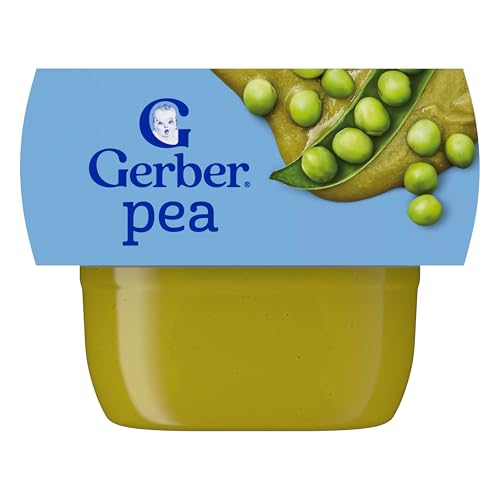
Gerber’s Pea Stage 1 puree is a benchmark vegetable starter for babies transitioning from milk to solids. Each 1-ounce tub contains the equivalent of 60 peas, finely pureed into a smooth, runny consistency that is gentle on a newborn digestive system still building enzyme diversity. The lack of added salt or artificial flavors means the taste is purely pea — slightly earthy but mild enough that most babies accept it without fussing.
The 16-pack format works well for families who plan to use peas as a staple first veggie for several weeks. Several parent reviews note that premature babies and those with sensitive stomachs tolerate this puree well, with no reported gas or reflux issues. The plastic tubs are lightweight and stack neatly in the pantry, though the peel-off foil lid requires careful lifting to avoid tearing mid-open.
One limitation is that the puree contains only pea — no iron or vitamin D fortification — so you will need to pair it with fortified cereal or a protein-rich second course. But for a clean, single-ingredient vegetable starter with no hidden starches or fillers, this pea pack delivers exactly what a Stage 1 diet requires, at a cost per serving that beats most organic pouch alternatives.
Why it’s great
- Single vegetable ingredient for clean sensitivity testing
- High per-unit count reduces per-serving cost
- No added salt, sugars, or artificial preservatives
Good to know
- No added iron or vitamin D fortification
- Foil seal can tear if opened too quickly
3. Cerebelly Organic Baby Food Pouches Variety Pack
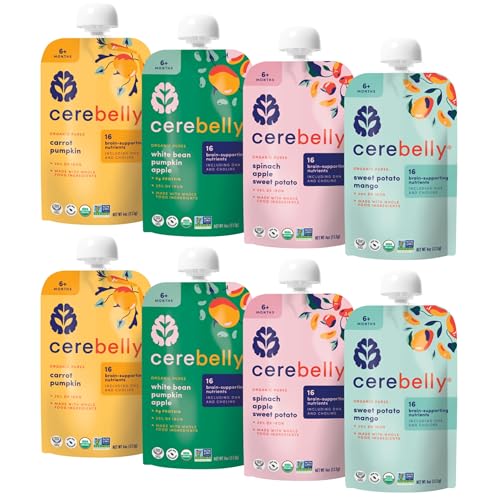
Cerebelly stands apart from every other Stage 1 option by formulating its purees around 16 brain-supporting nutrients, including iron, vitamin D, potassium, and choline — a dramatic leap from the single-nutrient profile of standard jars. Created by a neurosurgeon mom, the brand prioritizes “veggie first” blends, meaning each pouch leads with vegetables before adding fruit for sweetness, avoiding the sugar-forward profile that can create early preference for sweet tastes.
The pouches are shelf-stable and require no refrigeration until opened, making them a practical choice for diaper bags, daycare drop-offs, and travel. Every batch undergoes third-party heavy metal testing and has earned the Clean Label Purity Award, an independent verification that few shelf-stable baby foods can claim. Parents who have switched to Cerebelly specifically cite the heavy metal testing as the deciding factor in switching from mainstream jar brands.
The pouches range from Stage 1 through Stage 3, so this variety pack works well for families who want a single product line that grows with their baby. The texture is smooth enough for Stage 1 eaters, though some babies may need time to adjust to the slightly thicker consistency compared to waterier jarred purees. The per-pouch price sits higher than conventional jars, but the nutrient density and safety testing justify the premium for parents who prioritize transparency and developmental nutrition.
Why it’s great
- Third-party tested for heavy metals — Clean Label Purity Award
- 16 nutrients including iron and vitamin D for brain development
- Shelf-stable pouches travel well without refrigeration
Good to know
- Premium price per pouch vs. traditional jars
- Thicker texture may take a few tries for some babies
4. Gerber Stage 1 Baby Food Organic Banana, 10-Pack
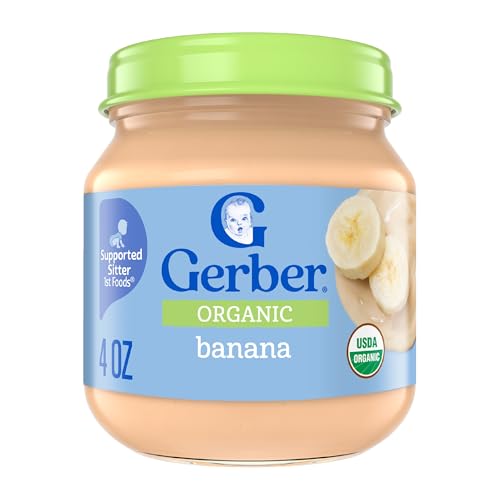
The Gerber Organic Banana puree delivers one of the highest potassium concentrations in the Stage 1 category, with each jar providing 50% of the daily value for infants. Potassium supports muscle function and fluid balance during rapid growth, making banana a smart first fruit choice beyond just its naturally sweet taste. The puree is finely smooth with no lumps or fibers, ideal for babies learning to move puree from front to back of the mouth.
The 10-pack provides a solid two-week supply if rotating other flavors, and the USDA Organic certification addresses the concern about pesticide residues in conventionally grown bananas. Gerber’s quality testing standards remain among the most transparent in the mass-market baby food space, with routine screening for contaminants and nutritional verification. The glass jars preserve flavor better than plastic tubs and can be recycled or repurposed for homemade puree storage.
Banana is a high-sugar fruit compared to vegetables, so this puree should be rotated with lower-sugar options like peas or green beans to avoid training the baby’s palate exclusively toward sweet foods. Some parents also note that banana can be constipating for certain infants, so pairing with a high-fiber vegetable like pear or prune helps maintain digestive regularity. For a reliable, organic, single-ingredient fruit starter, this jar pack covers the essentials without unnecessary additives.
Why it’s great
- USDA Organic with no synthetic pesticides
- 50% daily potassium per serving for muscle development
- Glass jars preserve flavor and are recyclable
Good to know
- Natural sugar content may lead to sweet preference if overused
- Banana can cause constipation in some babies
5. Ready Set Food! Stage 1 Mix-ins, 30-Day Kit

The Ready Set Food! Stage 1 system takes a fundamentally different approach to infant feeding by focusing on early allergen introduction rather than basic nutrition. Each pre-measured packet contains a proprietary blend of organic peanut, egg, and milk powders, designed to be mixed into breast milk, formula, or any Stage 1 puree. The system follows the gradual dosing protocol used in landmark allergy prevention clinical trials, introducing each allergen one at a time before combining them in maintenance doses from day six onward.
Parents who started using this kit at four months report high confidence in the structured 30-day schedule, with several reviews noting zero allergy development by age two. The powders dissolve completely when stirred thoroughly into warm liquid, making them nearly undetectable in a bottle or puree. The real food base — no added sugars or fillers — aligns with Stage 1 feeding guidelines and does not interfere with the texture expectations of a baby learning to eat solids.
The system has a notable limitation: after day five, all three allergens are combined into a single daily packet, meaning if your baby reacts to one allergen, you cannot isolate the trigger without restarting the entire protocol. Some users report peanut powder sediment clogging bottle nipples, particularly size 1 nipples, requiring extra stirring or switching to solids for the peanut stage. The cost is significantly higher than standard purees, but for families with a history of food allergies or severe parental anxiety around anaphylaxis, this structured system provides methodical peace of mind that no single-ingredient jar can offer.
Why it’s great
- Follows clinical trial protocols for gradual allergen introduction
- Pre-measured packets remove dosing guesswork for parents
- Organic, no added sugar, real food ingredients only
Good to know
- After day 5, daily packet combines all three allergens — no isolation option
- Peanut powder can clog bottle nipples; better mixed with solids for some
- Premium cost compared to standard Stage 1 purees
FAQ
Can I feed Stage 1 purees to a 4-month-old?
Should I choose glass jars or plastic pouches for Stage 1?
How do I introduce allergens through Stage 1 food?
Final Thoughts: The Verdict
For most users, the best baby food stage 1 winner is the Gerber Starter Kit Variety Pack because it offers six single-ingredient flavors in practical 2-ounce portions, giving you maximum variety at a low per-serving waste rate. If you want brain-focused nutrition with heavy metal testing, grab the Cerebelly Organic Pouches. And for safe, structured allergen introduction, nothing beats the Ready Set Food! Stage 1 Mix-ins.

Mo Maruf
I created WellFizz to bridge the gap between vague wellness advice and actionable solutions. My mission is simple: to decode the research and give you practical tools you can actually use.
Beyond the data, I am a passionate traveler. I believe that stepping away from the screen to explore new environments is essential for mental clarity and physical vitality.