Our readers keep the lights on and my smoothie glass nicely filled. As an Amazon Associate, I earn from qualifying purchases.
The first camera you pack for a trip should feel like a natural extension of your curiosity, not a heavy burden that complicates your itinerary. A travel photography beginner faces a specific problem: the smartphone in your pocket can capture a decent memory, but it struggles to freeze a moving subject at dusk, pull a distant mountain peak into crisp view, or create that soft, dreamy background blur that separates a snapshot from a story.
I’m Mohammad Maruf — the founder and writer behind WellFizz. I’ve spent hundreds of hours cross-referencing sensor sizes, image stabilization systems, autofocus speeds, and lens flexibility across the most popular beginner-friendly travel cameras on the market.
The challenge is matching the right tool to the way you actually move through the world. This guide breaks down the best options across every weight class and skill level, helping you find the ideal camera for travel photography beginners.
How To Choose The Best Camera For Travel Photography Beginners
Buying your first travel camera is a decision between portability, image quality, and versatility. A few key specifications will determine whether your new gear becomes your everyday companion or collects dust in a drawer.
Sensor Size and Low-Light Performance
The physical size of the sensor is the single biggest predictor of image quality. A larger sensor captures more light, which means less digital noise when shooting at dusk, inside a dimly lit cathedral, or under a canopy of trees. For travel beginners, APS-C sensors (found in mirrorless cameras like the Sony A6100 or OM SYSTEM E-M10 Mark IV) offer the best balance of size and light-gathering ability. Smaller 1-inch sensors are still a major step up from a phone, as seen in compact options like the Sony ZV-1F.
Image Stabilization: In-Body vs. Lens-Based
Shaky hands are the enemy of sharp travel photos. In-Body Image Stabilization (IBIS) shifts the sensor inside the camera to counteract your movement, and it works with any lens you attach. This is a powerful feature found in models like the Panasonic LUMIX G85 and OM SYSTEM E-M10 Mark IV. Lens-based stabilization (OIS) is also effective, but it stops working when you switch to a non-stabilized lens. For a beginner who plans to use the kit lens most of the time, either approach delivers noticeably sharper handheld shots at slower shutter speeds.
Autofocus Speed and Subject Tracking
You do not want to miss a fleeting moment because the camera is hunting for focus. The fastest systems use phase-detection autofocus points spread across a large portion of the sensor. Sony’s Real-time Eye AF for humans and animals, found in the A6100, locks onto a subject’s eye and keeps it sharp even as they move. Contrast-detection systems, while slower, are still perfectly usable for landscapes and posed portraits. For a beginner, reliable eye-detection and continuous tracking are the features that turn frustration into confidence.
Zoom Range and Lens Ecosystem
A versatile zoom range lets you frame a wide landscape and then pull in a distant subject without changing lenses. Superzoom bridge cameras like the Panasonic LUMIX FZ80D offer an incredible 20-1200mm reach in a single body, ideal for wildlife or concert photography. Mirrorless cameras, on the other hand, let you swap lenses over time — starting with a standard zoom and later adding a telephoto or a fast prime. The right choice depends on whether you prefer one-lens simplicity or the flexibility to grow your kit over years of travel.
Quick Comparison
On smaller screens, swipe sideways to see the full table.
| Model | Category | Best For | Key Spec | Amazon |
|---|---|---|---|---|
| OM SYSTEM E-M10 Mark IV | Mirrorless | Everyday travel with a compact kit | 20 MP, 5-Axis IBIS, Flip-Down Selfie Screen | Amazon |
| Nikon Z50 II (Two-Lens Kit) | Mirrorless | Versatile two-lens kit for mixed shooting | 20.9 MP, 4K/60p, 9-Subject AF | Amazon |
| Sony Alpha A6100 | Mirrorless | Fast autofocus for active travel | 24.2 MP, 425 Phase-Det AF, 11fps | Amazon |
| Canon EOS RP (Kit) | Mirrorless | Entry-level full-frame image quality | 26.2 MP, Full-Frame, Vari-Angle Screen | Amazon |
| Sony ZV-1F | Compact | Ultra-wide vlogging and selfies | 1-inch Sensor, 20mm f/2, Directional Mic | Amazon |
| Canon EOS M200 | Mirrorless | Beginner-friendly vlogging on a budget | 24.1 MP, Dual Pixel AF, 180° Touch LCD | Amazon |
| Panasonic LUMIX G85 | Mirrorless | Weather-sealed durability with IBIS | 16 MP, 5-Axis IBIS, 4K, Weather Sealed | Amazon |
| Panasonic LUMIX ZS99 | Compact | Pocket-sized 30x zoom for concerts | 30x Zoom, 24-720mm, Tiltable Touchscreen | Amazon |
| DJI Osmo Pocket 3 | Vlog Camera | Steady 4K video in a pocketable body | 1-inch Sensor, 3-Axis Gimbal, 4K/120fps | Amazon |
| Panasonic LUMIX FZ80D | Superzoom | Extreme telephoto reach for wildlife | 60x Zoom, 20-1200mm, 4K Photo | Amazon |
| Sony Alpha A3000 | Mirrorless | Affordable entry into APS-C sensors | 20.1 MP, APS-C, Eye-Start AF | Amazon |
In‑Depth Reviews
1. OM SYSTEM Olympus E-M10 Mark IV

The OM SYSTEM E-M10 Mark IV is the travel camera that beginner photographers grow into rather than out of. Its 20-megapixel Micro Four Thirds sensor delivers excellent image quality, while the in-body 5-axis image stabilization provides 4.5 stops of shake compensation — enough to shoot sharp handheld shots in a dimly lit piazza at 1/4 of a second. The flip-down screen with a dedicated selfie mode is a rare and thoughtful touch for solo travelers or group portraits at arm’s length.
Paired with the compact 14-42mm EZ pancake kit lens, the entire setup fits inside a jacket pocket. The 121 contrast-detection autofocus points are quick and reliable in good light, and the camera offers extensive manual controls when you feel ready to move beyond auto mode. The built-in flash and 4K video recording round out a genuinely complete package.
The battery life is average for a mirrorless camera, and the wireless app connection can feel slow. Beginners should also note that the 14-42mm kit lens, while impressively small, has a variable aperture that limits light at the telephoto end. Overall, it is the most balanced, confidence-inspiring camera for someone who wants to learn seriously while traveling light.
Why it’s great
- Excellent in-body stabilization for handheld low-light shots
- Compact and lightweight with the pancake lens
- Flip-down screen with automatic selfie mode
- Full manual controls and 4K video
Good to know
- No external battery charger included
- Contrast-detection AF can hunt in very low light
- Kit lens aperture is variable (f/3.5-5.6)
2. Nikon Z50 II (Two-Lens Kit)

Nikon’s Z50 II is a strong contender for the beginner who wants a modern mirrorless system with room to expand. The 20.9-megapixel DX-format sensor captures lifelike colors and impressive dynamic range, and the included two-lens kit (16-50mm and 50-250mm VR) covers everything from wide cityscapes to distant wildlife without an immediate second purchase. The hybrid autofocus system automatically detects and tracks people, dogs, cats, birds, and vehicles, which simplifies one of the trickiest parts of travel photography.
The body is compact and lightweight for an APS-C camera, and the built-in electronic viewfinder is a real asset in bright outdoor light. The 31 built-in Picture Control presets let you experiment with looks straight out of camera, and the Nikon SnapBridge app transfers images to your phone quickly for social sharing. The 4K video at 60p and in-camera slow-motion at 120p in Full HD add serious creative flexibility.
The kit includes only one battery, and the flip-out LCD screen drains it faster than average. Owners recommend buying at least two spare batteries for a full day of shooting. While the kit lenses are good, they are not the sharpest in Nikon’s Z lineup — but for a beginner, the convenience of having two lenses right out of the box is hard to beat.
Why it’s great
- Two-lens kit covers 16-250mm range out of the box
- Excellent hybrid autofocus with subject detection
- Built-in flash and electronic viewfinder
- 4K/60p video and in-camera slow motion
Good to know
- Screen drains battery quickly during video usage
- Only one battery included in the kit
- Kit lenses are decent but not pro-level sharp
3. Sony Alpha A6100

The Sony A6100 boasts the world’s fastest autofocus at 0.02 seconds, with 425 phase-detection points covering 84 percent of the sensor. For a travel beginner photographing active kids, street scenes, or moving animals, this speed translates directly into more keepers. The Real-time Eye AF for humans and animals works seamlessly, locking onto a subject’s eye and tracking them across the frame even during burst shooting at 11 frames per second.
The 24.2-megapixel APS-C sensor delivers sharp, detailed images with excellent dynamic range up to ISO 51200. The 180-degree tiltable touchscreen is ideal for selfies and vlogs, and the microphone input lets you easily upgrade audio for travel videos. The body is one of the lightest in its class, making it easy to carry all day.
The electronic viewfinder is noticeably low-resolution compared to the A6400. The menu system is famously complex, though customizable favorites help. The kit lens is fragile, and there is no in-body image stabilization, so you rely on lens-based stabilization or a tripod for best results in low light.
Why it’s great
- Best-in-class autofocus speed and eye tracking
- Compact and light APS-C body
- 180-degree flip screen for vlogging
- Excellent image quality and high ISO performance
Good to know
- No in-body image stabilization
- Electronic viewfinder is low resolution
- Menu system is complex for beginners
- 16-50mm kit lens feels fragile
4. Canon EOS RP (with RF 24-105mm F4-7.1 IS STM)

The Canon EOS RP is the most affordable way to step into full-frame photography, and that larger sensor brings tangible benefits: noticeably better low-light performance, shallower depth of field, and more detail in shadows compared to smaller sensor cameras. The 26.2-megapixel sensor paired with the RF 24-105mm F4-7.1 IS STM lens provides a very useful zoom range for travel, while the optical image stabilization delivers up to 5 stops of shake correction for handheld shots.
The body is impressively compact for a full-frame camera, and the vari-angle touchscreen makes creative framing easy at awkward angles. The autofocus uses phase-detection with excellent face and eye tracking, and the simple menu system is a welcome relief for beginners who find Sony’s layout overwhelming. The 4K video is heavily cropped and limited, but the 1080p footage is beautiful.
The kit lens has a variable aperture of f/4-7.1 and no AF/MF switch, which means you have to dive into the menu to switch focus modes. The continuous shooting speed is a modest 5 fps, and you will need a spare battery for a full day out. For a beginner prioritizing ultimate image quality over action speed, this is a compelling gateway into the full-frame ecosystem.
Why it’s great
- Full-frame sensor for superior low-light and depth of field
- Compact and lightweight body for its class
- Excellent phase-detection autofocus with eye tracking
- Intuitive menu system
Good to know
- Kit lens lacks AF/MF switch
- 4K video has a heavy crop
- Slow burst rate (5 fps)
- Battery life is average
5. Sony ZV-1F

The Sony ZV-1F is a dedicated vlogging compact built around an ultra-wide 20mm lens and a large 1-inch sensor. The wide focal length captures yourself plus a generous background in a single frame at arm’s length, which is exactly what a solo travel vlogger needs. The fast f/2 lens helps defocus the background when you want separation, and the built-in directional 3-capsule microphone with the included windscreen delivers clear audio without extra gear.
The side-articulating touchscreen lets you monitor your framing while recording yourself, and the Eye-AF and autofocus tracking keep your face sharp as you move around. Product Showcase mode smoothly transitions focus to an object held near the lens. The 4K video output is excellent for a compact, and the camera transfers files easily to your phone via the Imaging Edge Mobile app.
The fixed 20mm lens offers no optical zoom, so you must physically walk closer to your subject. The digital stabilization crops into the frame and does not fully eliminate walking shake. Battery life is roughly 45 minutes of continuous recording, so you will need at least one spare. This is a specialized tool that excels at first-person vlogging but struggles as a general-purpose travel camera for shooting distant subjects.
Why it’s great
- Ultra-wide 20mm lens ideal for selfie-style vlogging
- Large 1-inch sensor for good image quality
- Excellent built-in directional microphone
- Side-articulating touchscreen for self-framing
Good to know
- Fixed lens with no optical zoom
- Digital stabilization is mediocre for walking shots
- Short battery life (~45 minutes recording)
- Not ideal for photographing distant subjects
6. Canon EOS M200

The Canon EOS M200 is one of the most approachable mirrorless cameras for a pure beginner. Its 24.1-megapixel APS-C sensor produces vibrant, high-quality images that far surpass any smartphone, and the Dual Pixel CMOS AF with eye detection locks onto faces quickly and reliably. The EF-M 15-45mm kit lens provides a standard zoom range equivalent to 24-72mm, which covers most general travel and street photography needs.
The 3-inch touchscreen tilts 180 degrees for selfies and vlogging, and the menu system is famously clean and intuitive — a huge plus for someone who has never used a dedicated camera. Built-in Bluetooth and Wi-Fi with auto image transfer make sharing to your phone effortless. The camera is compact enough to slip into a small crossbody bag, and the battery lasts well for a mirrorless camera as long as you are not recording video continuously.
The burst buffer fills up quickly during continuous shooting, which limits action photography. The screen does not tilt downward, making high-angle shots harder. Canon has discontinued the EF-M mount system, so future lens purchases are limited to the existing used market. For a beginner who wants great photos today without worrying about tomorrow’s ecosystem, this is a fantastic value.
Why it’s great
- Excellent image quality from a large APS-C sensor
- User-friendly interface and Dual Pixel AF
- 180-degree flip-up screen for selfies
- Compact and lightweight travel body
Good to know
- EF-M lens mount is a discontinued system
- Slow burst buffer for action shots
- Screen does not tilt down for high angles
- No USB-C charging
7. Panasonic LUMIX G85

The Panasonic LUMIX G85 offers a combination rarely seen at its price point: a weather-sealed magnesium-alloy body paired with class-leading dual image stabilization. The in-body 5-axis stabilization works together with the lens-based stabilization in the 12-60mm kit lens to eliminate handheld shake even in demanding conditions, which is a lifesaver when you are shooting in light rain or near a waterfall. The 16-megapixel Micro Four Thirds sensor omits the low-pass filter, delivering noticeably sharper detail than typical 16 MP sensors.
The camera includes both a high-resolution OLED live viewfinder and a tilt-and-touch 3-inch LCD, so you can compose comfortably in bright sunlight or from low angles. The 4K video quality is excellent, and the 4K Photo mode lets you pull high-resolution stills from video clips — useful for fast-moving travel moments. The intuitive controls and customizable function buttons make it a pleasure to use straight out of the box.
The autofocus is contrast-detection, which struggles in very dim conditions, especially during continuous 4K video. Battery life is below average, so carry extras. The 16-megapixel sensor is on the lower end of resolution, though many users find the image quality more than sufficient for web sharing and moderate prints.
Why it’s great
- Weather-sealed magnesium-alloy body
- Class-leading dual image stabilization (IBIS + OIS)
- High-quality OLED viewfinder
- 4K Photo mode for extracting stills from video
Good to know
- Contrast-detection AF struggles in low light
- 16 MP sensor is lower resolution than competitors
- Battery life is below average
- No headphone jack for video monitoring
8. Panasonic LUMIX TZ/ZS99

The Panasonic LUMIX ZS99 (TZ99 outside the US) is the ultimate pocket companion for travelers who prioritize reach over sensor size. Its Leica DC Vario-Elmar 24-720mm f/3.3-6.4 lens packs a 30x optical zoom into a body that slides into a jeans pocket. You can photograph a wide city square and then zoom in on a distant monument detail without moving a step — a real advantage when you are on a guided tour or stuck at a barrier.
The camera is easy to use in full auto mode but offers manual control for when you want to learn. The tiltable 1,840k-dot touchscreen is bright enough for outdoor use, and the USB-C charging means you can recharge from a power bank while on the move. The built-in Bluetooth 5.0 and a dedicated Send Image button make quick transfers to your phone painless.
The small 1/2.3-inch sensor produces images with noticeable noise above ISO 1600, so low-light performance is poor compared to any camera with a larger sensor. The autofocus can be slow and indecisive in dim conditions, and the menu system is deep and sometimes confusing. Image quality is good for social media sharing but will not hold up to heavy cropping or large prints. This camera is best for daytime concerts, wildlife at a distance, and daylit sightseeing.
Why it’s great
- Incredible 30x zoom (24-720mm) in a pocket-sized body
- USB-C charging from power banks
- Easy smartphone transfer via dedicated button
- Tiltable high-resolution touchscreen
Good to know
- Small sensor struggles in low light above ISO 1600
- Autofocus can be slow in dim conditions
- Menu system is complex
- Image quality not suitable for large prints
9. DJI Osmo Pocket 3 (Vlog Combo)
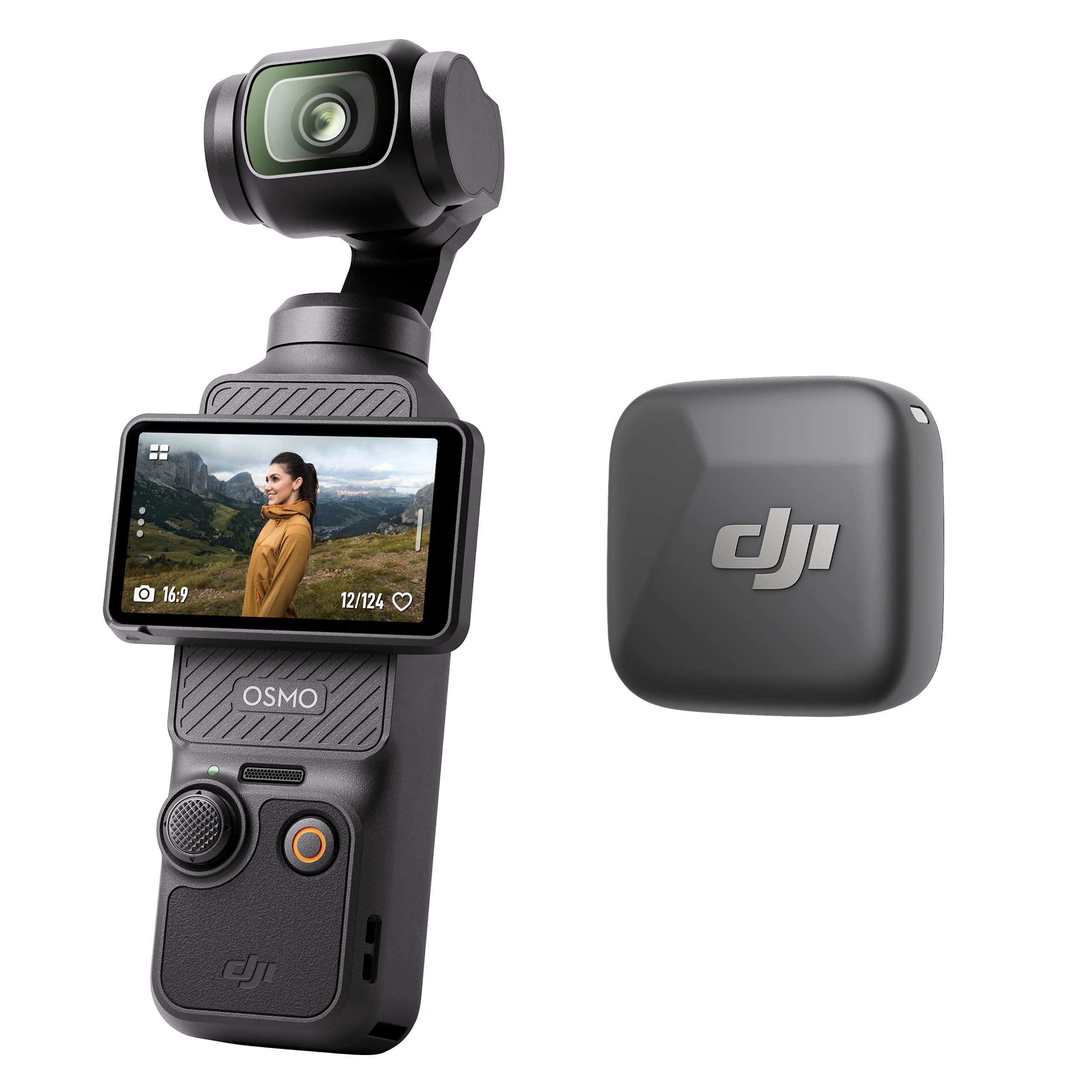
The DJI Osmo Pocket 3 is a dedicated video-first camera that solves the biggest problem for travel vloggers: shaky footage. Its built-in 3-axis mechanical gimbal delivers buttery-smooth video even when you are walking on cobblestones, running to catch a train, or chasing a pet through a park. The 1-inch CMOS sensor records 4K video at up to 120 frames per second, which allows for stunning slow-motion playback and excellent low-light performance in a tiny body.
The 2-inch rotatable touchscreen automatically switches between horizontal and vertical shooting, making it ideal for both YouTube and TikTok content. ActiveTrack 6.0 keeps you centered in the frame even when you set the camera on a table or tripod and move around. The included DJI Mic Mini transmitter in the Vlog Combo delivers high-quality wireless audio, solving the biggest pain point for beginner video creators.
The gimbal is delicate and prone to damage if dropped or roughly handled — not the most travel-durable tool. The fixed wide-angle lens cannot zoom, so you must physically move to change composition. The battery is built-in and non-replaceable, which limits runtime during long shooting days unless you have a power bank. It also lacks interchangeable lens capability, so you cannot grow into new focal lengths over time.
Why it’s great
- Class-leading 3-axis gimbal stabilization
- Excellent 4K/120fps video from a 1-inch sensor
- Included DJI Mic Mini wireless transmitter
- Compact, pocket-friendly form factor
Good to know
- Gimbal is fragile and not travel-rugged
- Fixed wide lens with no zoom capability
- Non-replaceable built-in battery
- No interchangeable lens system for growth
10. Panasonic LUMIX FZ80D

The Panasonic LUMIX FZ80D is a bridge camera that delivers a breathtaking 60x optical zoom, spanning 20mm wide to 1200mm super-telephoto, all in a single fixed-lens body. For a beginner who wants to photograph birds, wildlife, or sports from the stands without buying multiple expensive lenses, this is the most accessible path to extreme reach. The Power Optical Image Stabilizer helps keep the frame steady at the long end, and the 4K Photo mode at 30 fps allows you to freeze action with a press of the shutter.
The 0.39-inch OLED viewfinder and 3-inch touchscreen LCD provide flexible framing options in different lighting conditions. USB-C charging is a modern convenience for travelers, and the camera is lightweight enough to carry on long hikes. The 4K video recording captures decent footage for the travel diary, and the zoom-back function makes it easier to locate a subject you have zoomed in on.
The small 1/2.3-inch sensor produces soft images with noticeable noise above ISO 800, so low-light performance is easily the weakest point. The lens becomes quite dark (f/5.9) at the telephoto end, requiring bright daylight for best results. The autofocus uses contrast detection that is slow and struggles with moving subjects. This camera fills a very specific niche: daytime wildlife and sporting events where zoom distance matters more than ultimate image quality.
Why it’s great
- Extreme 60x zoom reach (20-1200mm) in one lens
- Power OIS helps stabilize the telephoto end
- 4K Photo mode for freezing action
- USB-C charging for travel convenience
Good to know
- Small sensor produces noise above ISO 800
- Lens is dim (f/5.9) at telephoto end
- Contrast-detection AF is slow
- Poor low-light performance overall
11. Sony Alpha A3000

The Sony Alpha A3000 is an entry-level mirrorless camera that places an APS-C sensor into a body design that mimics a traditional DSLR. The 20.1-megapixel Exmor sensor delivers the image quality advantages of a larger sensor — better dynamic range and low-light performance than any compact or phone — at a very accessible price point. The included 18-55mm f/3.5-5.6 OSS lens with optical stabilization covers the standard zoom range well for general travel photography.
The body is comfortable to hold thanks to its deep grip, and the electronic viewfinder provides an alternative to the rear LCD in bright sunlight. The camera shoots Full HD video for basic travel clips and supports interchangeable lenses via the Sony E-mount, so you can add lenses over time. The battery charges via USB and provides decent life for a model of this age.
The electronic viewfinder and LCD are both low-resolution by modern standards, making them look grainy and dated. Autofocus is contrast-detection, which is slow and hunts in low light. The continuous shooting speed and buffer are limited, and the camera lacks modern features like 4K video, high burst rates, and fast subject-tracking. It is a capable but aging option best suited for a very tight budget where sensor size is the priority.
Why it’s great
- APS-C sensor offers true image quality upgrade from phones
- Comfortable, deep grip for handheld stability
- Interchangeable Sony E-mount lens system
- Lowest barrier to entry for a large sensor
Good to know
- Low-resolution electronic viewfinder and LCD
- Slow contrast-detection autofocus
- No 4K video recording
- Aging design and limited burst speed
FAQ
Is a full-frame sensor worth the extra cost for a beginner travel photographer?
What is the most important spec to check for capturing moving subjects while traveling?
Can I use vintage or third-party lenses on these modern mirrorless cameras?
Final Thoughts: The Verdict
For most users, the camera for travel photography beginners winner is the OM SYSTEM E-M10 Mark IV because it offers the best combination of compact size, in-body stabilization, image quality, and user-friendly controls for travel. If you want the fastest autofocus for chasing active subjects, grab the Sony Alpha A6100. And for a beginner who wants extreme zoom range without buying multiple lenses, nothing beats the pocketable reach of the Panasonic LUMIX ZS99.

Mo Maruf
I created WellFizz to bridge the gap between vague wellness advice and actionable solutions. My mission is simple: to decode the research and give you practical tools you can actually use.
Beyond the data, I am a passionate traveler. I believe that stepping away from the screen to explore new environments is essential for mental clarity and physical vitality.