Our readers keep the lights on and my smoothie glass nicely filled. As an Amazon Associate, I earn from qualifying purchases.
A dead phone at the trailhead isn’t just an inconvenience — it can be a genuine safety hazard. Whether you’re navigating by GPS, needing an emergency call, or just capturing the sunset, your power bank is the lifeline that keeps your trip from turning into a survival story. The right one needs to handle rain, drops, dust, and long stretches off the grid without failing.
I’m Mohammad Maruf — the founder and writer behind WellFizz. Every recommendation here comes from cross-referencing real user experiences, certified safety standards, and the measurable specs that matter most when you’re miles from an outlet.
After analyzing dozens of models and thousands of user reports, I’ve narrowed the field to the most reliable options that define the best camping power bank for keeping your gear alive through any backcountry situation.
How To Choose The Best Camping Power Bank
Camping power banks need to survive conditions you’d never expose a standard external battery to. Extreme cold, moisture, dust, and physical knocks are the norm, not the exception. Before you buy, understand the three pillars that separate a true camping companion from a gadget that will let you down at the worst moment.
Ruggedness and Ingress Protection
An IP67 rating means the unit can survive submersion in one meter of water for 30 minutes and is fully dust-tight. IP65 offers protection against jets of water but not submersion. For camping, IP67 is the gold standard — it means your backup battery survives a river crossing, a sudden downpour, or being dropped in a puddle. Look for MIL-STD-810G shock test certification on top of the water rating if you plan to toss the bank into a backpack with gear.
True Capacity vs Rated Capacity
A 50,000mAh rating looks massive on paper, but thermal conversion losses mean you’ll never get that full number into your devices. A quality lithium-polymer or lithium-ion cell should deliver roughly 60-70% of its rated capacity in practice. For weekend trips, 20,000mAh is the sweet spot — it can juice a modern smartphone four to five times before needing a recharge itself. If you’re going for a week or powering larger devices like tablets or laptops, consider capacities above 40,000mAh, but be prepared for the extra weight.
Solar and Hand-Crank Charging as a Backup
Integrated solar panels on camping power banks are slow — expect to leave the bank in direct sunlight for an entire day to get a meaningful percentage of charge. They are not a primary charging source. Hand cranks are even slower, providing emergency trickle juice for a short flashlight or a few minutes of phone call. Both features add weight and bulk. They are worth carrying only if your camping trips often involve multi-day stretches without any access to wall power or a vehicle.
Quick Comparison
On smaller screens, swipe sideways to see the full table.
| Model | Category | Best For | Key Spec | Amazon |
|---|---|---|---|---|
| YBYP 50000mAh | Mid-Range | Extended group trips | 50000mAh / 22.5W PD | Amazon |
| ELECOM NESTOUT 10000mAh | Premium | Hardcore weather exposure | IP67 / MIL-STD-810G | Amazon |
| SOXONO Solar 40000mAh | Mid-Range | Off-grid solar backup | 40000mAh / IP67 / Dual Flashlights | Amazon |
| BLAVOR Solar Hand Crank 20000mAh | Mid-Range | Emergency and survival prep | 20000mAh / Hand Crank / Wireless Charging | Amazon |
| BLASOUL Solar 49800mAh | Mid-Range | Week-long solo trips | 49800mAh / 22.5W / Wireless Charging | Amazon |
| NOBIS 65W 20000mAh | Mid-Range | Laptop charging in the field | 20000mAh / 65W PD Bi-Directional | Amazon |
| ELECOM NESTOUT 5000mAh | Premium | Ultralight and minimalists | 5000mAh / IP67 / 4.9 oz | Amazon |
In‑Depth Reviews
1. YBYP 50000mAh Power Bank
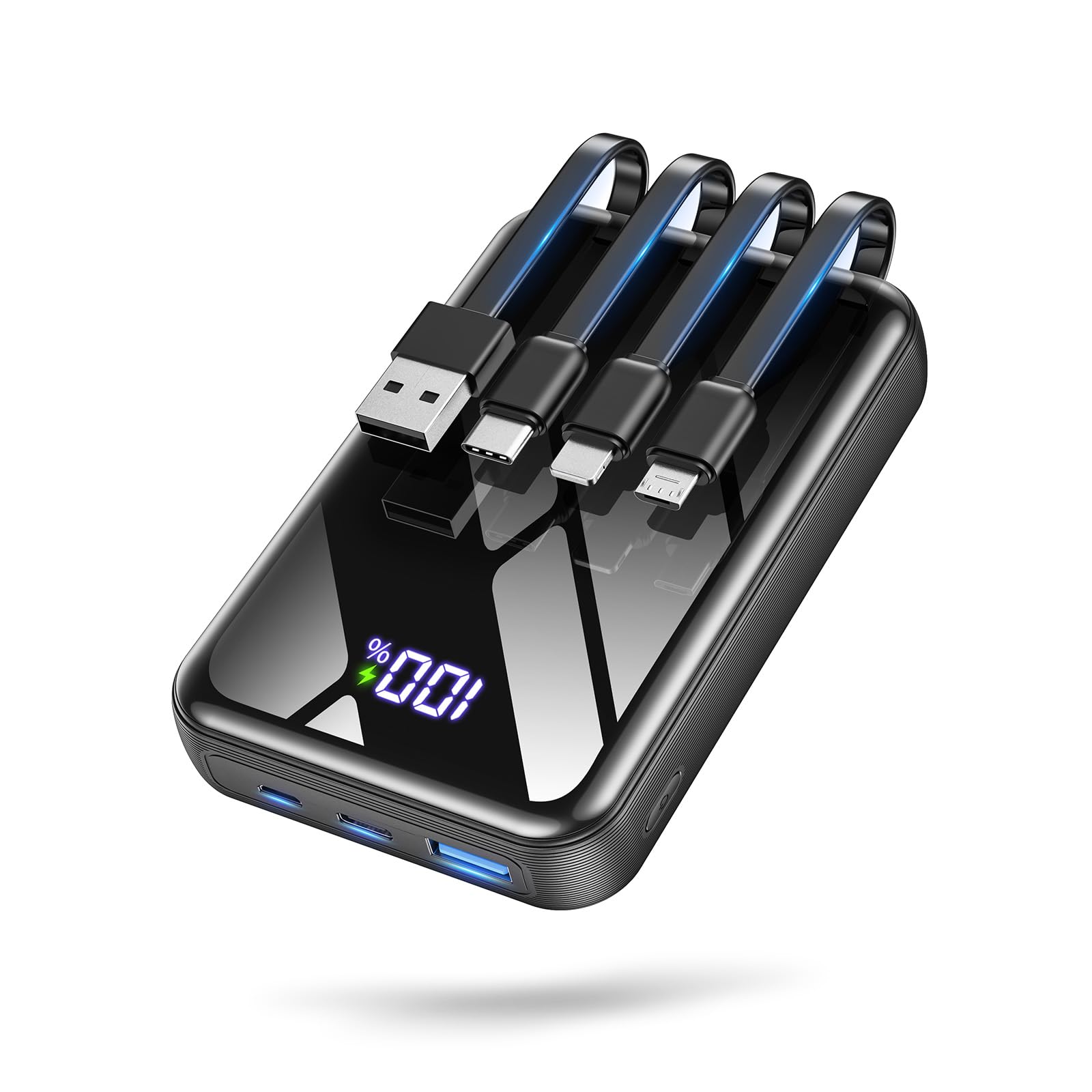
At 50,000mAh, this unit is a behemoth that can charge an iPhone 17 up to nine times and an iPad Pro six times, making it the clear choice for group outings or extended base camps where you’re powering multiple devices. Despite the massive cell capacity, the chassis is surprisingly compact at 4.4 by 2.8 inches and weighs just 0.75 pounds — a major engineering achievement for a camping-oriented battery at this price tier.
The built-in four cables (Lightning, USB-C, USB-A, and Micro-B) mean you never scramble for a cord at dusk, and the fast 22.5W PD output pushes an iPhone 17 to 55 percent in half an hour. An eight-layer safety system and flame-retardant shell add peace of mind when you’re charging inside a tent or next to dry brush.
What seals its spot at the top is the smart LED digital percentage display — you always know exactly how much juice remains, eliminating the anxiety of guessing when you’re miles from an outlet. This is the only power bank you need for a full week off-grid, provided you can handle its solid but not unreasonable weight.
Why it’s great
- Massive 50000mAh capacity ideal for multi-day group trips
- Four built-in cables eliminate the need to pack extras
- LED digital display gives precise battery level at a glance
Good to know
- Not IP-rated for submersion — keep it dry in heavy rain
- Heavier than compact options at 0.75 pounds
2. ELECOM NESTOUT 10000mAh

This is the bank you buy when your gear regularly gets soaked, dropped off a boulder, or buried in a dusty dirtbag. The ELECOM NESTOUT 10000mAh carries both an IP67 waterproofing certification and MIL-STD-810G drop test approval, meaning it survives a one-meter submersion for 30 minutes and a 48-inch free-fall onto concrete. The fuel-bottle design with a silicone cushion around the lithium-ion cells absorbs vibration and shock better than any hard plastic shell.
At 10,280mAh, it’s not a multi-day capacity for a whole crew, but its 20W USB-C PD output will reliably top off a smartphone three to four times. The bottom quarter-20 tripod mount is a clever touch — you can screw it onto a mini tripod or attach NESTOUT’s modular lamp and LED panel for a full campsite lighting system.
Real buyers report this unit surviving -30°F without losing charge retention and surviving kayak capsizes without a single drop of moisture inside. The trade-off is a slower recharge time of about 3.5 hours for the bank itself, and the premium price tag reflects the mil-spec engineering. If your camping involves serious weather, this is the most trustworthy option.
Why it’s great
- IP67 waterproof and dustproof for extreme conditions
- MIL-STD-810G drop test certified for rugged use
- Modular design with tripod mount and accessory system
Good to know
- Modest 10000mAh capacity for a premium price
- Slow self-recharge cycle of over 3.5 hours
3. SOXONO Solar 40000mAh
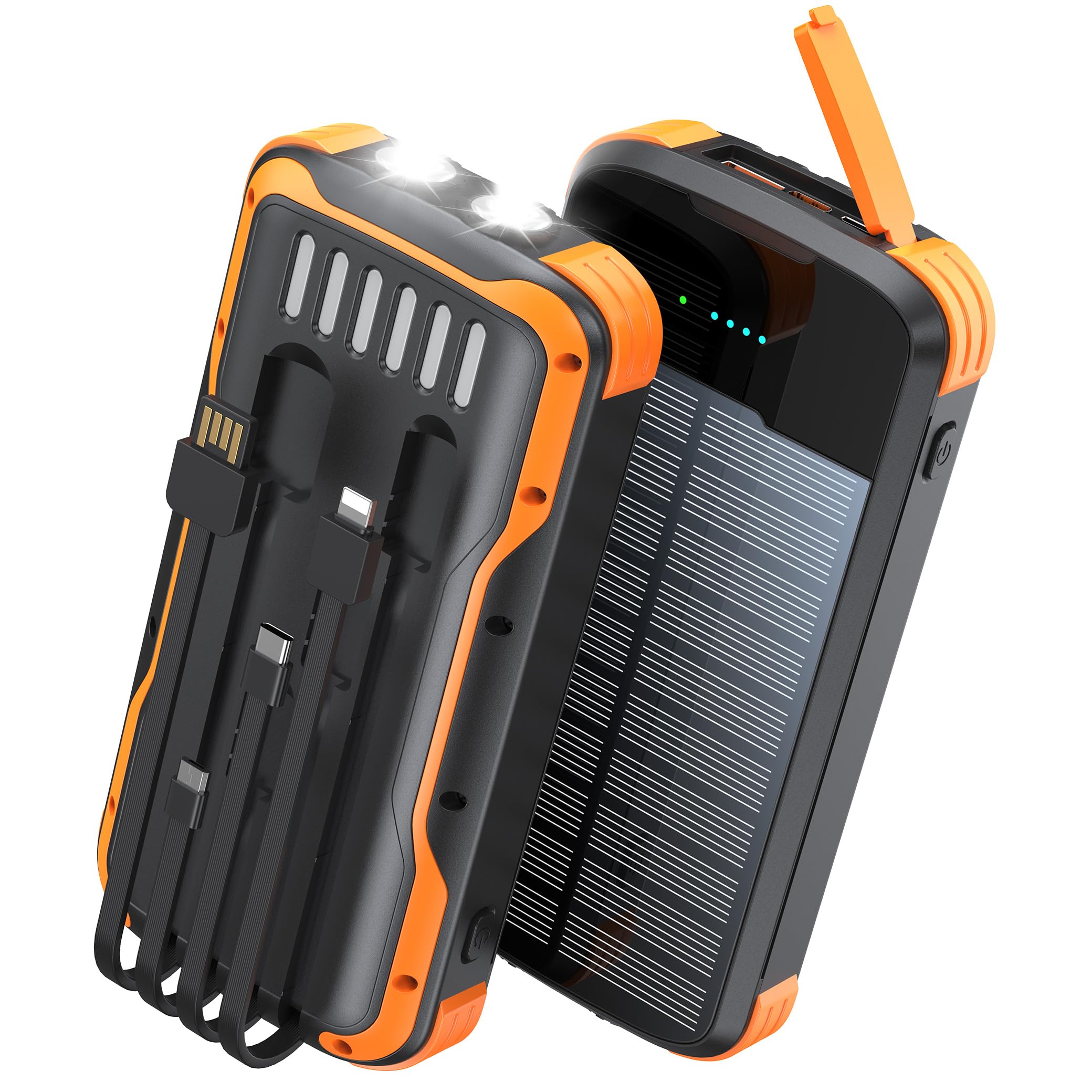
For campers who regularly find themselves without access to a vehicle or a wall outlet for days, the SOXONO’s integrated solar panel and 40,000mAh cell offer a realistic hybrid approach. The ABS shell is chemically and heat-resistant with an IP67 seal, so it handles desert heat, river splashes, and alpine dust without complaint. Two bright flashlights built into the unit can run for up to 30 hours, turning the power bank into an emergency lantern.
The 20W PD output provides iPhone 15 users with a 65 percent charge in 30 minutes, while the four built-in cables (Type-C, iOS, Micro USB, and a USB-A input cable) keep your pack tidy. Buyers report that solar charging is most effective in direct, unobstructed sunlight — expect a full day of sun to yield a substantial recharge, not a quick top-up.
At 1.17 pounds, this is one of the heavier units in its capacity class, and some users note a persistent plasticky smell during the first few charge cycles. But for the price, you get a waterproof, high-capacity bank with true dual charging paths and emergency lighting that could be a literal lifesaver in a lost-hiker scenario.
Why it’s great
- Full IP67 protection on a massive 40000mAh capacity
- Two powerful flashlights with 30-hour continuous runtime
- Solar panel adds off-grid charging capability
Good to know
- Heavy at 1.17 pounds for backpacking
- Solar recharge is slow — not a primary power source
4. BLAVOR Solar Hand Crank 20000mAh
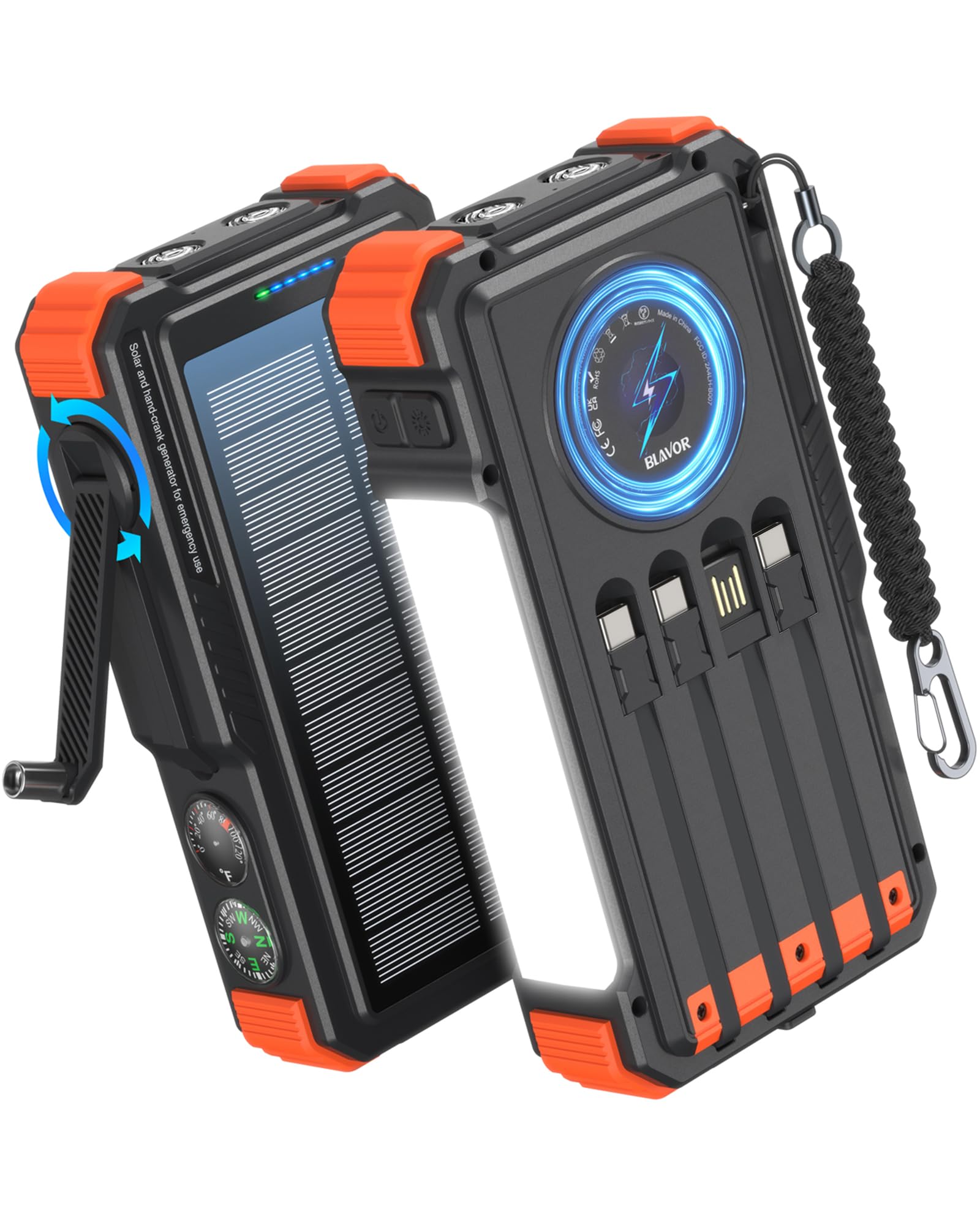
The BLAVOR stands alone in this list as the only power bank with a functional hand crank generator. One minute of cranking gives you about five minutes of emergency flashlight — not enough to recharge a phone, but enough to signal for help or navigate a dark trail at night. Combined with the 20,000mAh cell that can charge an iPhone 17 over four times, this unit is as much a survival tool as it is a power source.
It also adds 15W Qi wireless charging, which is rare in the rugged camping category. Just place a compatible phone on the designated pad for cable-free top-offs. The built-in four cables (two USB-C, one iOS, one USB-A) plus three extra ports allow simultaneous charging of up to seven devices, which is overkill for a solo camper but handy for a group.
The ABS+PC flame-retardant shell with waterproof silicone protection gives it solid weather resistance, and the integrated compass, thermometer, carabiner, and rope add genuine utility for backcountry emergency kits. It’s heavy and bulky — the 20000mAh capacity doesn’t justify this unit’s larger footprint — but feature density makes it a versatile survival companion for car camping and emergency preparedness.
Why it’s great
- Hand crank provides emergency power without the sun
- Wireless charging pad for cable-free convenience
- Includes compass, thermometer, and carabiner
Good to know
- Heavy and bulky relative to its 20000mAh capacity
- Wireless charging requires precise alignment
5. BLASOUL Solar 49800mAh
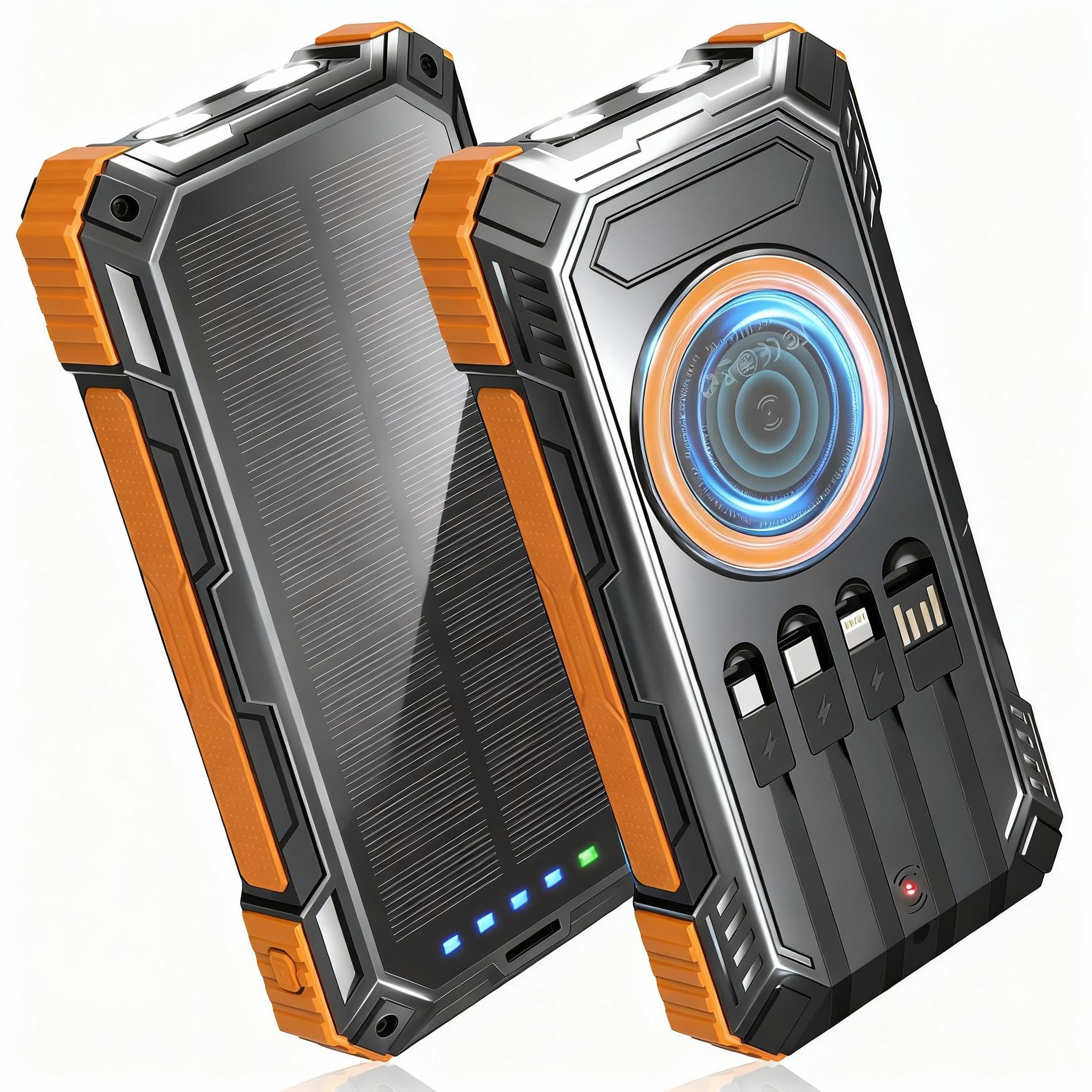
It’s the most capacity you can get in a camping-friendly form without stepping up to industrial-level battery stations. The high-density lithium-polymer battery is paired with both PD 3.0 and QC 3.0 fast charging protocols, delivering 22.5W that takes an iPhone 14 to 60 percent in 30 minutes.
It offers 15W Qi wireless charging on top of the four built-in cables, and the IP65 rating means it’s safe from rain and dust but not submersion. The ultra-bright LED flashlight has three modes — steady, SOS, and strobe — which is a genuine asset for signaling or navigating after dark. A storage bag and carabiner are included in the box, making it ready to clip onto a pack loop.
Buyers consistently report that the solar panel is sensitive enough to produce meaningful charge in direct sunlight, and the dual USB-C and USB-A ports with wireless pad allow you to charge a phone, a watch, and a headlamp simultaneously. The trade-off is a 10-hour self-recharge time via wall power, so you’ll want to leave it plugged in overnight before a trip. At this spec density, it’s an exceptional value for off-grid week-long adventures.
Why it’s great
- Near 50000mAh capacity for extended trips
- Wireless charging plus four built-in cables
- Solar panel and emergency flashlight with SOS mode
Good to know
- Slow 10-hour wall recharge time
- Large and heavy at over a pound
6. NOBIS 65W 20000mAh
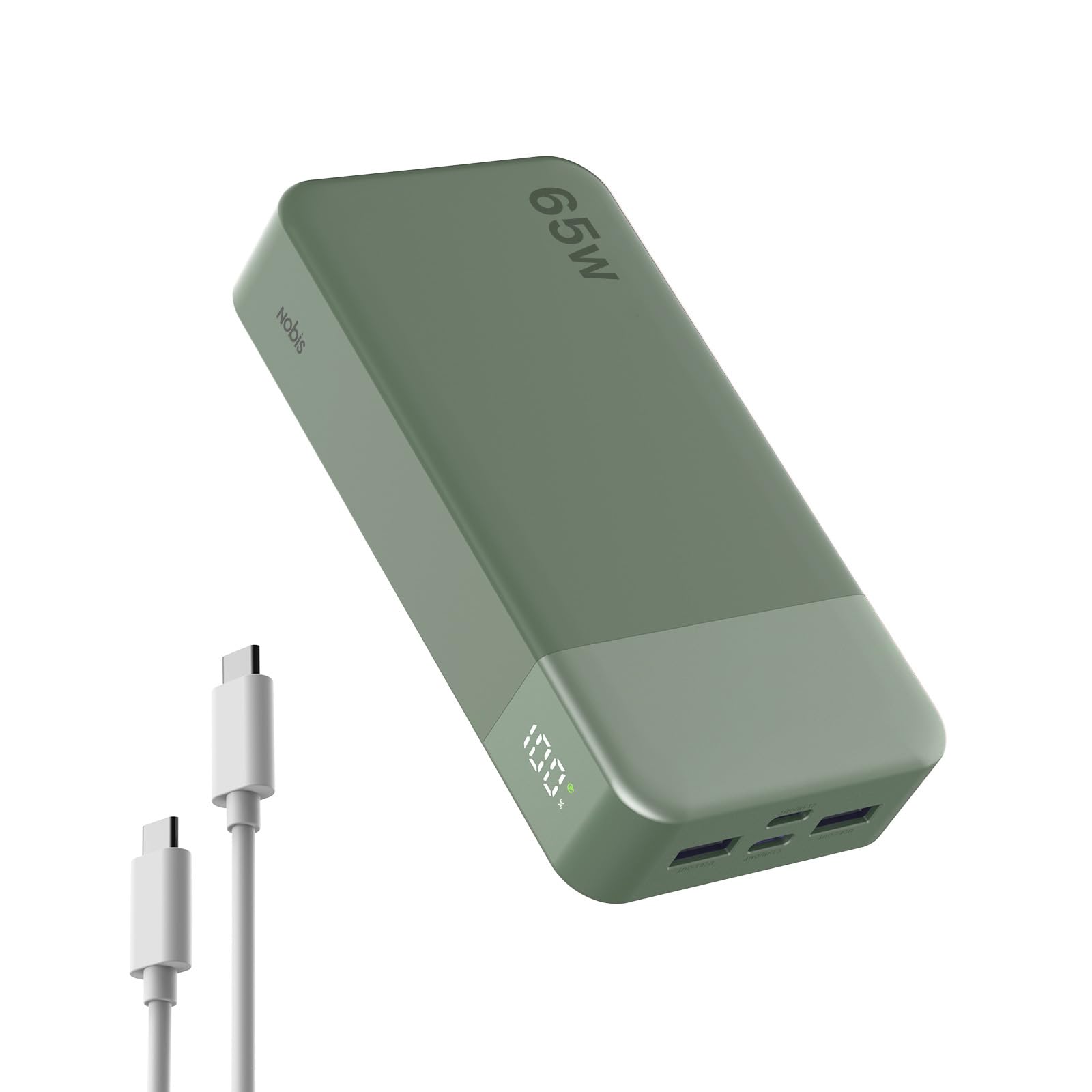
If you’re car camping or working remotely from a campsite and need to keep a laptop alive, the NOBIS is the only 65W PD power bank in this roundup. The bi-directional fast charging means the same high power that tops up your notebook also refills the bank itself rapidly, minimizing downtime. Two USB-C and two USB-A ports allow simultaneous charging of a laptop, two phones, and a tablet from a single device.
At 20,000mAh, it’s not the biggest capacity here, but the 65W PD output is a class above the 20-22.5W competition. A slim profile at 5.4 inches tall and just over 400 grams makes it packable for a day pack. The small current mode is a thoughtful addition — it protects low-power devices like earbuds and smartwatches from a surge that could damage their tiny batteries.
Buyers praise its bright LED percentage gauge and the green color scheme that’s easy to spot inside a dark bag. The lithium-polymer cells maintain stable output even when the bank is down to its last 10 percent, a feature that matters when you’re trying to squeeze out one final charge for navigation. It’s the best choice for digital nomads who refuse to disconnect on a camping weekend.
Why it’s great
- 65W PD output charges laptops at full speed
- Bi-directional fast charging reduces self-refuel time
- Small current mode protects low-power accessories
Good to know
- No IP rating for water or dust resistance
- 20000mAh capacity is average for its price tier
7. ELECOM NESTOUT 5000mAh
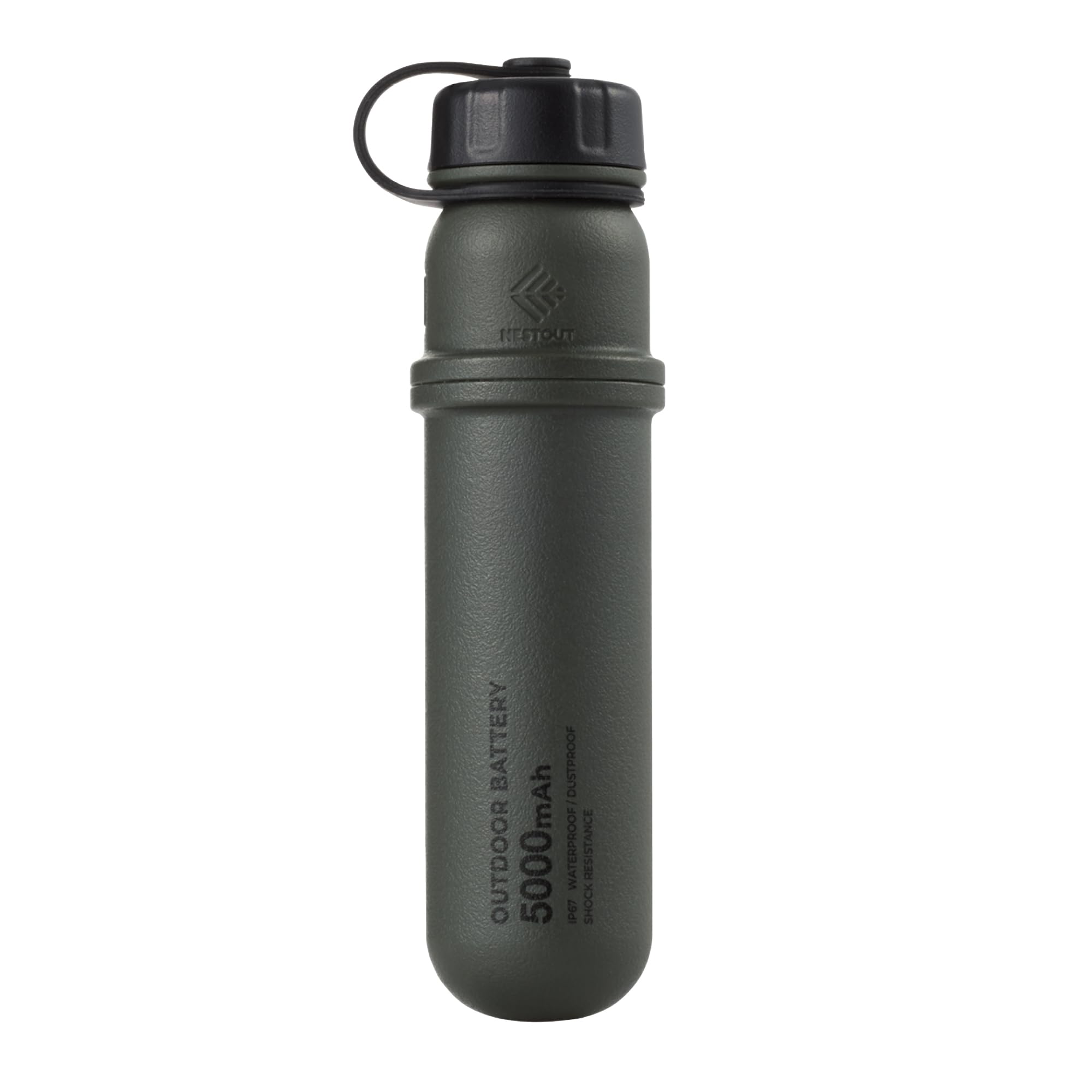
For the ultralight backpacker who counts every gram, the smaller NESTOUT 5000mAh weighs just 4.9 ounces and fits in the palm of your hand. The 5,000mAh capacity is enough for one full smartphone charge plus a partial top-up — not enough for a group, but perfectly matched to a solo overnight mission where every ounce matters. The IP67 seal and MIL-STD-810G drop certification mean this tiny battery will survive a kayak flip or a tumble down a scree slope.
It uses the same fuel-bottle form factor and modular accessory system as its bigger sibling, including the quarter-20 tripod mount bottom. The 15W USB-C PD output is slower than the 20W competition, but for topping off a phone at camp, it’s adequate. Real buyers report this unit surviving -30°F temperature extremes without capacity loss, a feat few smaller batteries can claim.
The trade-off in capacity is significant — you cannot use this as a primary power source for multi-day trips. Some users report that it won’t charge a phone past 50 percent before depleting its own cell, so it’s best treated as a tactical backup for the last mile, not a base camp battery. For its target audience of weight-conscious hikers who need insurance against a dead phone on the summit push, it’s the lightest rugged option available.
Why it’s great
- Extremely light at 4.9 ounces for ultralight packing
- Full IP67 and MIL-STD-810G in a tiny package
- Modular accessory mount for tripods and lamps
Good to know
- 5000mAh capacity covers only one phone charge
- Slower 15W PD output than larger competitors
FAQ
Can I take a 50000mAh camping power bank on a plane?
How accurate are camping power bank capacity ratings?
Is solar charging on a power bank actually useful for camping?
Final Thoughts: The Verdict
For most users, the best camping power bank winner is the YBYP 50000mAh because it delivers the highest capacity with built-in cables and an LED display at a price that undercuts competitors by a wide margin. If you need genuine IP67 weatherproofing and military-grade drop survival, grab the ELECOM NESTOUT 10000mAh. And for ultralight backpackers who refuse to carry extra weight, nothing beats the ELECOM NESTOUT 5000mAh as a portable safety net.

Mo Maruf
I created WellFizz to bridge the gap between vague wellness advice and actionable solutions. My mission is simple: to decode the research and give you practical tools you can actually use.
Beyond the data, I am a passionate traveler. I believe that stepping away from the screen to explore new environments is essential for mental clarity and physical vitality.