Our readers keep the lights on and my smoothie glass nicely filled. As an Amazon Associate, I earn from qualifying purchases.
Finding a processor that delivers serious computing power without draining your wallet is the central challenge of any smart PC build. The market is flooded with options, but the real winners balance core count, clock speed, thermal efficiency, and platform longevity to deliver genuine value over several years of use.
I’m Mohammad Maruf — the founder and writer behind WellFizz. I’ve spent hundreds of hours analyzing processor benchmarks, core architectures, thermal design profiles, and real-world user feedback to separate the chips that justify their price from those that merely look good on paper.
The goal is straightforward: help you zero in on the best affordable processor for your specific workload, whether that means maximizing frame rates, accelerating video renders, or building a silent home office machine.
How To Choose The Best Affordable Processor
Selecting the right chip requires looking past the marketing claims and focusing on three pillars: workload requirements, platform cost, and thermal management. A processor that is a bargain upfront can become expensive if it forces you into a dead-end motherboard socket or requires a high-end cooler to operate within safe temperatures.
Core Count Versus Clock Speed
For gaming, a high boost clock on 6 cores still drives excellent frame rates. For content creation, compiling, or running virtual machines, those extra cores and threads make a real difference in render times and multitasking smoothness. The Ryzen 7 5800X’s 8 cores and 16 threads represent a sweet spot where both gaming and productivity thrive without a premium price tag.
Thermal Design Power (TDP) and Cooling Costs
A chip with a 65W TDP, like the Ryzen 5 5600X, can run quietly on a budget air cooler. Higher-TDP processors such as the Intel Core i7-14700KF demand a robust tower cooler or a liquid AIO to maintain boost clocks under sustained loads. Factor a quality cooler into your total build cost — a cheaper processor that requires an expensive cooler is no bargain.
Platform Longevity and Upgrade Path
The AMD AM4 socket supports generations of Ryzen processors, making an affordable chip today a viable stepping stone to a higher-core-count upgrade later. Intel’s LGA 1700 and newer LGA 1851 platforms offer DDR5 support on premium boards. Consider whether the motherboard you pair now will let you drop in a faster chip in two or three years without replacing the entire foundation of your PC.
Quick Comparison
On smaller screens, swipe sideways to see the full table.
| Model | Category | Best For | Key Spec | Amazon |
|---|---|---|---|---|
| AMD Ryzen 7 5800X | Mid-Range | Gaming & Productivity Combo | 8 Cores / 16 Threads, 4.7 GHz Boost | Amazon |
| AMD Ryzen 5 5600X | Mid-Range | 1080p/1440p Gaming | 6 Cores / 12 Threads, 65W TDP | Amazon |
| Intel Core i5-14600KF | Mid-Range | Hybrid Core Workloads | 14 Cores (6P+8E), 5.3 GHz Boost | Amazon |
| Intel Core Ultra 7 265KF | Mid-Range | Efficient Multitasking | 20 Cores (8P+12E), 5.5 GHz Boost | Amazon |
| Intel Core i7-14700KF | Premium | Heavy Production & Gaming | 20 Cores (8P+12E), 5.6 GHz Boost | Amazon |
| AMD Ryzen 9 5900XT | Premium | Core-Heavy Workstations | 16 Cores / 32 Threads, 4.8 GHz Boost | Amazon |
| Intel Core Ultra 9 285K | Premium | Professional CAD/Rendering | 24 Cores (8P+16E), 5.7 GHz Boost | Amazon |
| Intel Core i7-6700 | Budget | Value Office Build | 4 Cores / 8 Threads, 4.0 GHz Boost | Amazon |
| Dell OptiPlex 5060 (i5-8600) | Budget | Pre-Built Home/Office | 6 Cores, 4.3 GHz Boost, 16GB RAM | Amazon |
In‑Depth Reviews
1. AMD Ryzen 7 5800X

The Ryzen 7 5800X occupies the goldilocks zone of the mid-range: eight cores and sixteen threads that serve both gaming and threaded productivity without stepping into the four-figure price bracket. Real-world Cinebench R23 scores in the 15,000+ multi-core range translate to noticeably faster video encoding and compilation times compared to six-core alternatives.
Thermals are manageable with a quality dual-tower air cooler — expect mid-60s Celsius during gaming and low 80s under Prime95 load. The chip lacks a bundled cooler, so budget for an aftermarket solution. PBO (Precision Boost Overdrive) can push single-core boost clocks toward 5.1 GHz, giving it edge-to-edge performance against newer mid-range competition.
For AM4 users looking to extend their platform’s life, the 5800X represents a practical drop-in upgrade that sidesteps a new motherboard and DDR5 memory investment. It handles AAA gaming at 1440p without bottlenecking a high-tier GPU while chewing through rendering tasks with minimal fuss.
Why it’s great
- Eight cores provide genuine multitasking headroom beyond six-core chips.
- PBO enabled delivers boost clocks rivaling newer models.
- Drops into existing AM4 boards for a cost-effective platform upgrade.
Good to know
- No cooler included; requires at least a mid-range tower cooler.
- Runs warmer than 65W parts; case airflow matters.
- Single-CCD design means no inter-CCD latency, but fewer cores than 5900-series.
2. AMD Ryzen 5 5600X

The Ryzen 5 5600X redefined what an affordable six-core processor can do when it launched, and it remains a compelling pick for budget-conscious gamers. Its 65W TDP means the bundled Wraith Stealth cooler is genuinely usable at stock settings, keeping idle temperatures around 30°C and gaming loads under 65°C in a well-ventilated case.
In gaming benchmarks at 1080p Ultra, the 5600X delivers 90-100 FPS in titles like Cyberpunk 2077 when paired with a capable GPU, and its 4.6 GHz single-core boost keeps frame pacing smooth. The AM4 platform compatibility means you can drop this into a B450 or B550 board with a simple BIOS update, avoiding the cost of a new motherboard.
For users who want a quiet, power-efficient build, the 5600X is a standout. The low power draw translates to less heat output and lower electricity bills over years of daily use. If your workload is primarily gaming with light productivity, this chip delivers the best framerate-per-dollar ratio in the entire affordable segment.
Why it’s great
- 65W TDP runs cool and quiet on the included stock cooler.
- Excellent single-core performance for gaming.
- Wide AM4 motherboard compatibility saves on total build cost.
Good to know
- Six-core limit may feel constrained in heavy multi-threaded rendering.
- Stock cooler can be audible under sustained all-core load.
- Outperformed in multi-core by newer 8-core options at similar price.
3. Intel Core i5-14600KF

The Intel Core i5-14600KF brings hybrid architecture to the affordable market, combining six Performance-cores with eight Efficient-cores for a total of 20 threads. This hybrid design handles background tasks on E-cores while reserving P-cores for gaming and demanding applications, resulting in snappy responsiveness during heavy multitasking scenarios like streaming while gaming.
Its 5.3 GHz max turbo frequency delivers strong single-threaded performance that keeps pace with pricier chips in CPU-bound titles. The “KF” designation means no integrated graphics, so a discrete GPU is mandatory. Pairing it with a B760 motherboard and DDR5 memory unlocks the full potential of its memory controller, reducing load times in game engines.
Thermal management requires attention — a 240mm AIO is the minimum recommendation for sustained all-core workloads. The LGA 1700 platform supports both DDR4 and DDR5, giving builders flexibility to reuse existing memory or invest in a faster future-proofed setup. For a hybrid workload machine, this is a strong value proposition.
Why it’s great
- Hybrid core design efficiently manages multitasking workloads.
- High boost clock keeps gaming performance competitive.
- DDR4 and DDR5 memory support offers flexible build options.
Good to know
- Requires a discrete graphics card; no iGPU included.
- Needs a strong cooler; 240mm AIO recommended for heavy loads.
- Platform requires LGA 1700 motherboard with updated BIOS.
4. Intel Core Ultra 7 265KF

The Core Ultra 7 265KF represents Intel’s latest architectural shift, with 8 P-cores and 12 E-cores optimized for performance-per-watt. Real-world tests show it handling simultaneous gaming, streaming, and encoding without the thermal spikes that plagued earlier hybrid generations. The 5.5 GHz boost clock is genuinely available under single-core loads, making it responsive in both productivity and gaming.
Compatibility requires the Intel 800 series chipset, meaning a new motherboard investment. However, the platform brings native DDR5 support and PCIe 5.0 lanes for future GPU and storage upgrades. Builders pairing it with a Gigabyte or Asus board report stable operation after a simple BIOS update, with no memory instability issues reported.
For users who prioritize a quiet and efficient system, the 265KF idles at low power draw and scales performance smoothly. A good air cooler like the Thermalright Peerless Assassin keeps temps in check during gaming sessions, while the chip’s improved IMC (Integrated Memory Controller) handles high-speed DDR5 kits without fuss.
Why it’s great
- Improved thermal and power efficiency over previous hybrid generations.
- High boost clock benefits both gaming and single-threaded tasks.
- Platform supports modern DDR5 and PCIe 5.0 connectivity.
Good to know
- Requires new LGA 1851 motherboard; not backwards compatible.
- No iGPU; a discrete graphics card is necessary.
- Motherboard BIOS updates may be needed early on for stability.
5. Intel Core i7-14700KF

The Core i7-14700KF is a productivity beast hiding in a gaming processor’s body. With 20 cores and 28 threads, it demolishes video rendering, database operations, and heavy multitasking — users running large business databases report zero lag even with simultaneous POS, inventory, and high-resolution image processing workloads.
Gaming performance is equally impressive, with 5.6 GHz turbo boost providing smooth frame pacing in CPU-intensive titles like Battlefield 6 and Cyberpunk 2077. Paired with an RTX 4080 Super and a 360mm AIO cooler, users report stable temperatures in the 60s during extended gaming sessions and no stuttering or crashes.
The catch is thermal and power demands — this chip draws over 200W under full load, requiring a robust cooling solution and a quality power supply. The LGA 1700 platform with DDR5 support gives it strong memory bandwidth, but building an affordable system around it requires careful component selection to avoid overspending on cooling and board features.
Why it’s great
- 28 threads handle professional workloads with ease.
- Top-tier gaming performance with 5.6 GHz boost clock.
- DDR5 support provides excellent memory bandwidth.
Good to know
- High power draw requires a 360mm AIO or equivalent cooler.
- No iGPU; discrete graphics card mandatory.
- Platform cost adds up with required DDR5 and Z790 board.
6. AMD Ryzen 9 5900XT
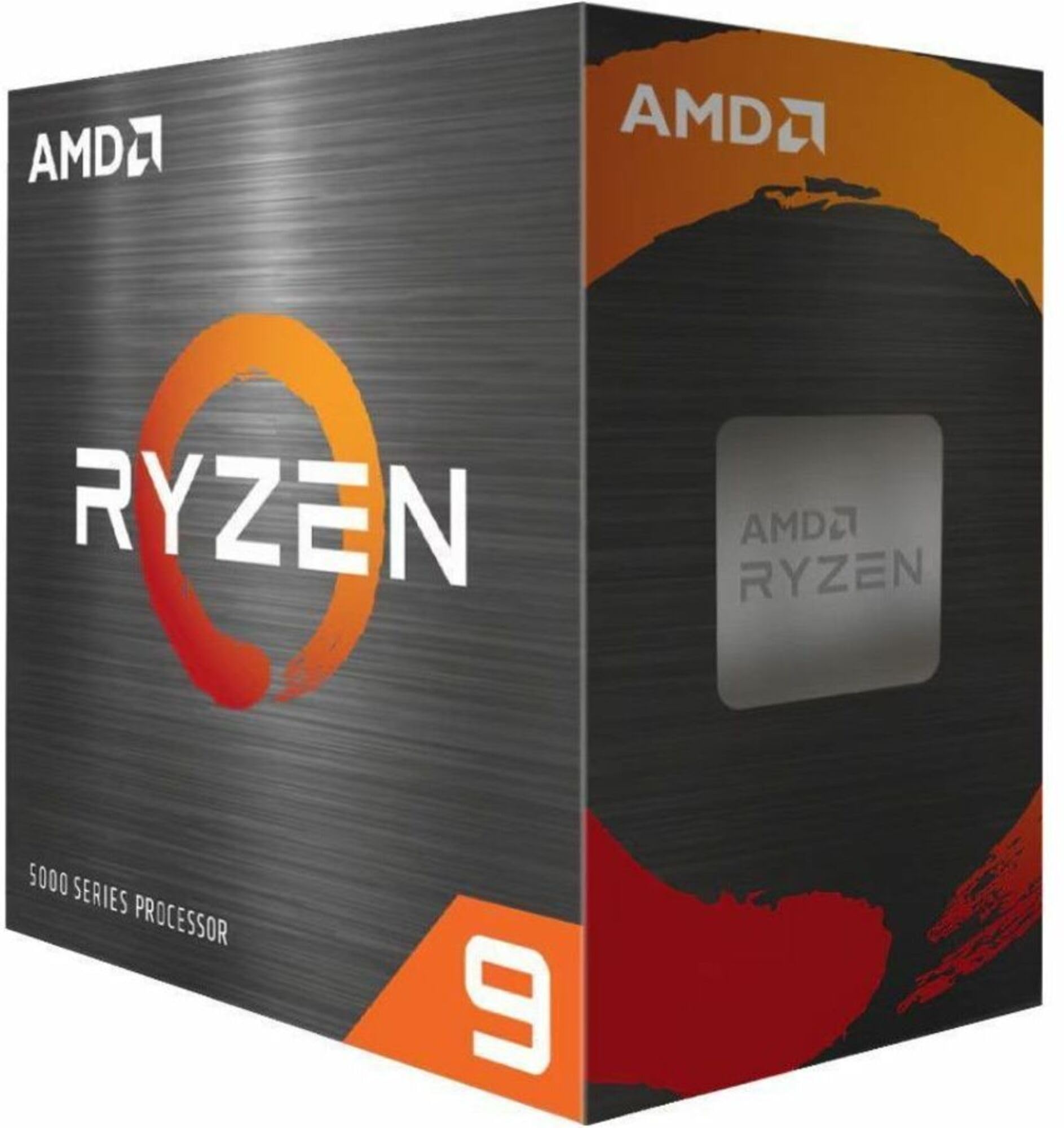
The Ryzen 9 5900XT brings 16 cores and 32 threads to the AM4 platform, offering workstation-level multi-threaded performance at a mid-range price. It excels in content creation tasks like AutoCAD, 3D rendering, and video transcoding, where additional cores directly reduce completion time. For streaming while gaming, the extra cores minimize encoding overhead impacts on frame rates.
Thermal behavior is notably better than the 5950X — users report lower operating temperatures under load, allowing the 5900XT to maintain higher all-core boost clocks. However, it does split its cores across two CCDs, which introduces inter-CCD latency that can slightly reduce gaming performance versus single-CCD chips like the 5800X. Some gamers disable the second CCD for lower latency in competitive titles.
This processor is best suited for users whose workloads scale with core count — video editors, 3D modelers, and software developers. It extends the life of an AM4 build without requiring a motherboard or memory upgrade, representing a strategic play for those who want to maximize performance on an existing platform.
Why it’s great
- 32 threads deliver workstation-class multi-threaded performance.
- Runs cooler than 5950X, maintaining higher sustained boost clocks.
- Drops into existing AM4 boards, saving on platform costs.
Good to know
- Dual-CCD design adds latency that can affect gaming.
- Requires a strong AIO cooler for sustained all-core loads.
- Single-threaded boost may fall short of 5 GHz in practice.
7. Intel Core Ultra 9 285K

The Core Ultra 9 285K is Intel’s flagship for LGA 1851, designed for professionals who need uncompromised multi-threaded performance. In SolidWorks workstations, engineers report stable 24-hour burn-in tests with temperatures staying under 82°C on a 360mm AIO, pulling around 205W under Cinebench 2024 load. The chip’s reliability marks a significant improvement over previous generations that suffered from overheating and voltage issues.
Its 5.7 GHz boost clock drives single-threaded tasks with authority, while the 24 cores (8 P-cores + 16 E-cores) handle parallel workloads like video encoding, 3D rendering, and AI model training without breaking a sweat. The integrated UHD graphics provide display output for systems without a discrete GPU, though a high-end card is recommended for GPU-accelerated workloads.
Platform requirements are the main hurdle — the 285K requires an Intel 800 series chipset motherboard, representing a significant upfront investment. However, for users who need a rock-stable, all-around powerhouse for professional creation and heavy multitasking, this chip justifies its cost through years of reliable performance.
Why it’s great
- 24 cores handle the most demanding professional and creative workloads.
- Improved stability and thermal performance over previous Intel generations.
- Integrated graphics provide backup display capability.
Good to know
- Requires a new LGA 1851 motherboard and DDR5 memory.
- High power draw demands a 360mm AIO for full-load stability.
- Budget-friendly system building around it is challenging.
8. Intel Core i7-6700
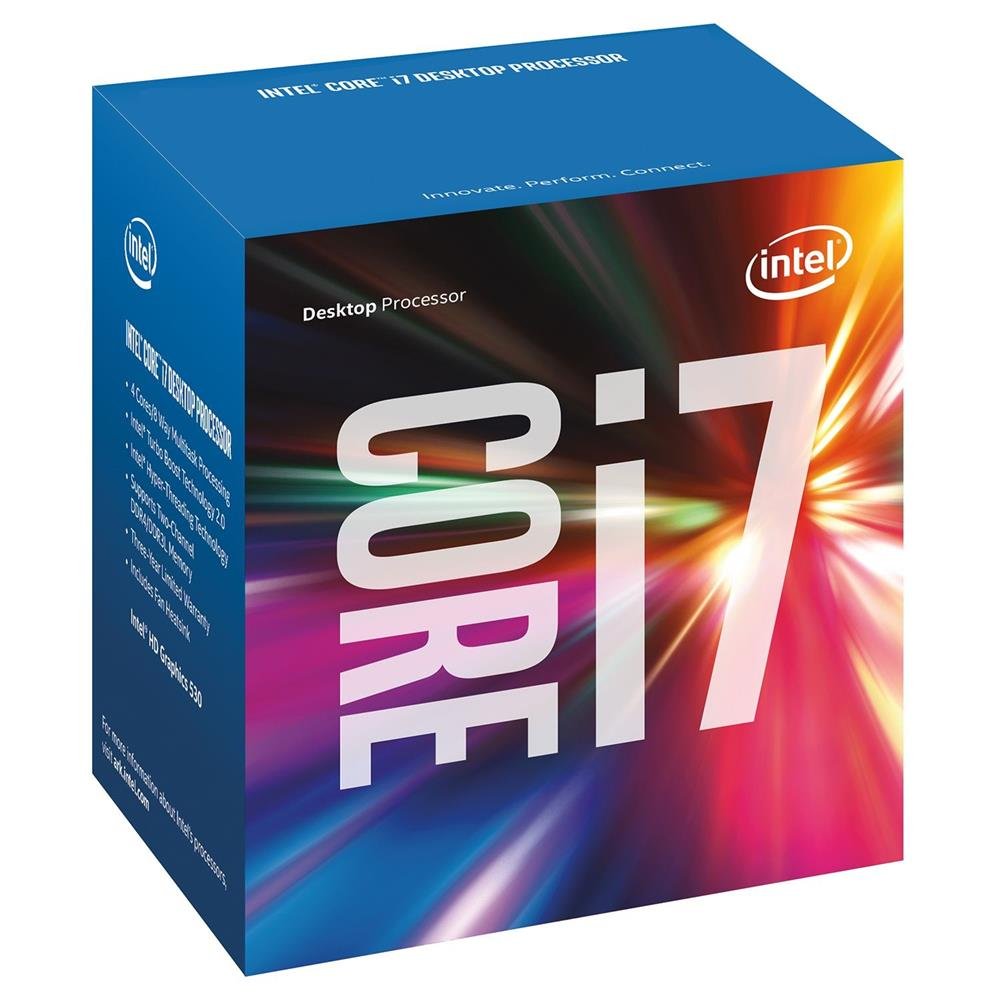
The Intel Core i7-6700 is a 6th-generation Skylake processor that, while dated, still holds utility for ultra-budget builds and legacy office upgrades. Its 4 cores and 8 threads provide adequate performance for basic productivity, web browsing, and older games. The integrated Intel HD 530 graphics mean you can build a functional system without a discrete GPU for media center or office duties.
Thermal efficiency is a strong point — the 65W TDP keeps temperatures low even with the stock cooler, with users reporting idle temperatures around 28-30°C and maximums under 40°C with an aftermarket cooler. This makes it an excellent candidate for silent PC builds where fan noise is a primary concern.
The main limitation is its age — performance lags significantly behind modern entry-level chips, and the LGA 1151 platform offers no meaningful upgrade path. Consider this only if you already own a compatible motherboard or need a low-cost drop-in replacement for an older system. For new builds, modern alternatives provide significantly better performance per watt.
Why it’s great
- Very low power draw and heat output; runs almost silent with a good cooler.
- Integrated graphics eliminate the need for a discrete GPU in basic builds.
- Extremely affordable pathway for upgrading older LGA 1151 systems.
Good to know
- Outdated architecture provides limited gaming and productivity performance.
- No meaningful upgrade path on the LGA 1151 platform.
- Stock cooler is loud under sustained load; aftermarket recommended.
9. Dell OptiPlex 5060 (i5-8600, Renewed)

The Dell OptiPlex 5060 is a complete pre-built system featuring an Intel Core i5-8600 processor with 6 cores and a 4.3 GHz turbo boost. It arrives with Windows 11 pre-installed, 16GB of DDR4 RAM, a 500GB SSD for fast boot times, and a 1TB HDD for mass storage. This is a turnkey solution for users who want immediate productivity without assembling components.
The i5-8600’s Coffee Lake architecture provides enough power for home office tasks, remote learning, media streaming, and light photo editing. The bundled RGB mouse and keyboard combo adds aesthetic appeal, and the inclusion of WiFi and Bluetooth eliminates the need for additional dongles. As a renewed unit, it offers significant savings over an equivalent new system.
Potential drawbacks include the proprietary Dell motherboard limiting upgrade options, and some units may lack HDMI ports — a DisplayPort adapter may be needed for modern monitors. Users report variable experiences with Windows updates on refurbished units, though most find the system works reliably after initial setup. It is a practical choice for non-gamers seeking a complete, affordable desktop.
Why it’s great
- Complete desktop system with Windows 11 pre-installed; no assembly required.
- SSD + HDD combo provides fast boot times and ample storage.
- Includes WiFi, Bluetooth, and peripherals for immediate use.
Good to know
- Refurbished unit; quality control can vary between systems.
- Proprietary motherboard limits future CPU or RAM upgrades.
- May require DisplayPort adapter for HDMI monitor connectivity.
FAQ
Is a 6-core processor enough for modern gaming?
What does “unlocked” mean on an Intel K-series processor?
Should I worry about the LGA 1700 socket’s stability issues?
Can I use DDR4 memory with a modern processor?
Final Thoughts: The Verdict
For most users, the best affordable processor winner is the AMD Ryzen 7 5800X because its eight cores and sixteen threads deliver outstanding gaming performance and genuine productivity headroom without requiring a new motherboard or DDR5 memory. If you want a cooler, quieter build that prioritizes gaming value above all else, grab the AMD Ryzen 5 5600X. And for heavy hybrid workloads where E-cores manage background tasks while P-cores power through games, nothing beats the Intel Core i5-14600KF.

Mo Maruf
I created WellFizz to bridge the gap between vague wellness advice and actionable solutions. My mission is simple: to decode the research and give you practical tools you can actually use.
Beyond the data, I am a passionate traveler. I believe that stepping away from the screen to explore new environments is essential for mental clarity and physical vitality.