Our readers keep the lights on and my smoothie glass nicely filled. As an Amazon Associate, I earn from qualifying purchases.
Stepping up to a 12×50 configuration means accepting a trade-off: the raw reach and low-light punch of a 50mm objective lens against the weight you’ll feel after an hour of glassing. The 12x magnification pulls in fine details at distance, but every hand tremor magnifies alongside the view, making optical stability and build quality the deciding factors between a joy and a chore.
I’m Mohammad Maruf — the founder and writer behind WellFizz. I’ve spent hundreds of hours analyzing optical coatings, prism geometries, and build tolerances to separate the gemstone from the glass.
Whether you’re scanning ridgelines for game or picking out lunar craters, choosing the right pair requires understanding how coatings, prism type, and eye relief interact. This guide breaks down the top contenders for the best 12×50 binoculars on the market today.
How To Choose The Best 12×50 Binoculars
The 12×50 format sits in a sweet spot for serious outdoor enthusiasts who need high magnification without jumping to a spotting scope. But not every pair is built for the same mission. Here are the key specs that separate a capable optic from a frustrating one.
Prism Type and Glass Quality
Choose roof prism for a compact, streamlined body and porro prism for a wider objective spacing that often delivers a deeper sense of depth at the same price. Regardless of prism type, the material matters: BAK-4 prisms produce a round, bright exit pupil, while BK-7 prisms create a clipped, dimmer disc. For 12×50, demand BAK-4.
Coatings and Light Transmission
Fully multi-coated (FMC) optics apply anti-reflective layers to every air-to-glass surface, boosting light transmission by several percentage points over single-coated lenses. That difference becomes critical at dawn, dusk, and under forest canopy. dielectric coatings on the prism surfaces further enhance color fidelity and brightness. Any budget-friendly model without FMC will look noticeably dimmer in low light.
Eye Relief and Exit Pupil
With a 50mm objective and 12x magnification, the exit pupil is fixed at 4.17mm — a comfortable match for most lighting conditions. Eye relief, however, varies widely. Shooters and eyeglass wearers need at least 15mm of eye relief to see the full field. At 11mm, users with glasses will lose peripheral view and may need to press the eyepiece against their lens.
Quick Comparison
On smaller screens, swipe sideways to see the full table.
| Model | Category | Best For | Key Spec | Amazon |
|---|---|---|---|---|
| Celestron Nature DX ED | Premium | ED glass low-light viewing | ED objective lenses, 14.3mm eye relief | Amazon |
| Nikon PROSTAFF 5 | Premium | Lightweight all-weather hiking | Fiberglass-reinforced, 15.5mm eye relief | Amazon |
| Sogries 12×50 ED | Premium | Wide-field tracking of fast subjects | 102m FOV at 1000m, 18mm eye relief | Amazon |
| Bushnell R5 | Premium | Rugged, waterproof hunting | IPX7, dielectric coated prisms | Amazon |
| Nikon ACULON A211 | Mid-Range | Porro prism terrestrial viewing | 58.4° apparent angle, 11.5mm eye relief | Amazon |
| Vortex Triumph HD | Mid-Range | Casual sky and landscape scanning | FMC optics, 16mm eye relief | Amazon |
| Pentax Jupiter 12×50 | Value | Entry-level stargazing on tripod | 50° apparent field, multi-coated lenses | Amazon |
In‑Depth Reviews
1. Celestron Nature DX ED 12×50
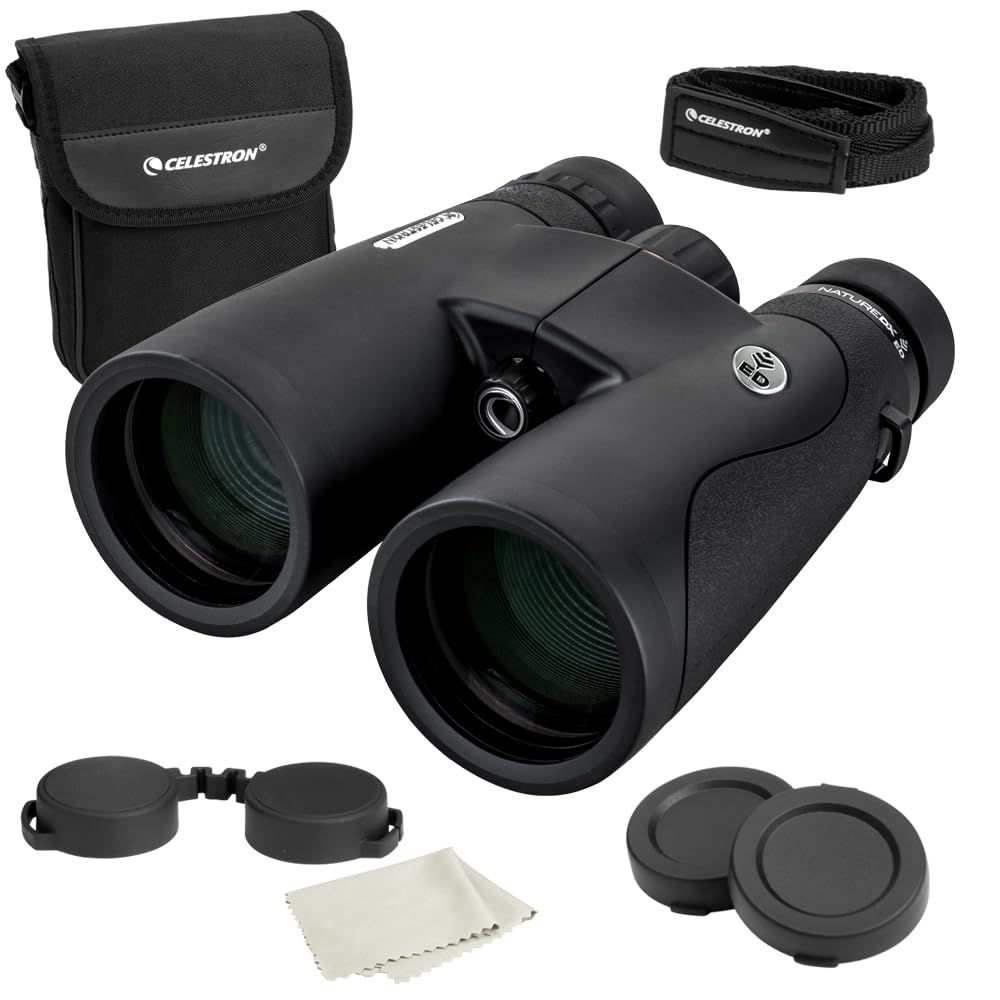
The Celestron Nature DX ED earns its top spot through genuine Extra-low Dispersion glass that virtually eliminates the blue-yellow fringing visible on cheaper 12×50 models. Paired with phase-coated BAK-4 prisms and fully multi-coated lenses, this combination delivers a crisp, true-to-life image that rivals optics costing significantly more. The 14.3mm eye relief and twist-up eyecups accommodate eyeglass wearers far better than the short-relief budget options.
At 896 grams, the Nature DX ED is not the lightest, but its rubber-armored polycarbonate housing feels dense and protective. The nitrogen-purged, O-ring sealed body is fully waterproof and fogproof for use in rain, snow, or humidity. A built-in tripod adapter socket allows stable mounting for astronomy sessions, where the 12×50’s 4.2mm exit pupil and ED glass truly shine on the moon and brighter deep-sky objects.
Where it falls short is the field of view — at 4.8°, tracking fast-moving birds can feel tight compared to wider-angle competitors. The included rainguard and lens caps are functional but not premium. For the optical quality packed into this frame, these are minor compromises that do not detract from its clear performance advantage as an all-around 12×50.
Why it’s great
- ED glass eliminates chromatic aberration
- Phase-coated BAK-4 prisms for bright transmission
- Waterproof, fogproof, tripod-adaptable
Good to know
- Narrow 4.8° field limits fast target acquisition
- Twist-up eyecups do not lock in position
2. Nikon PROSTAFF 5 12×50
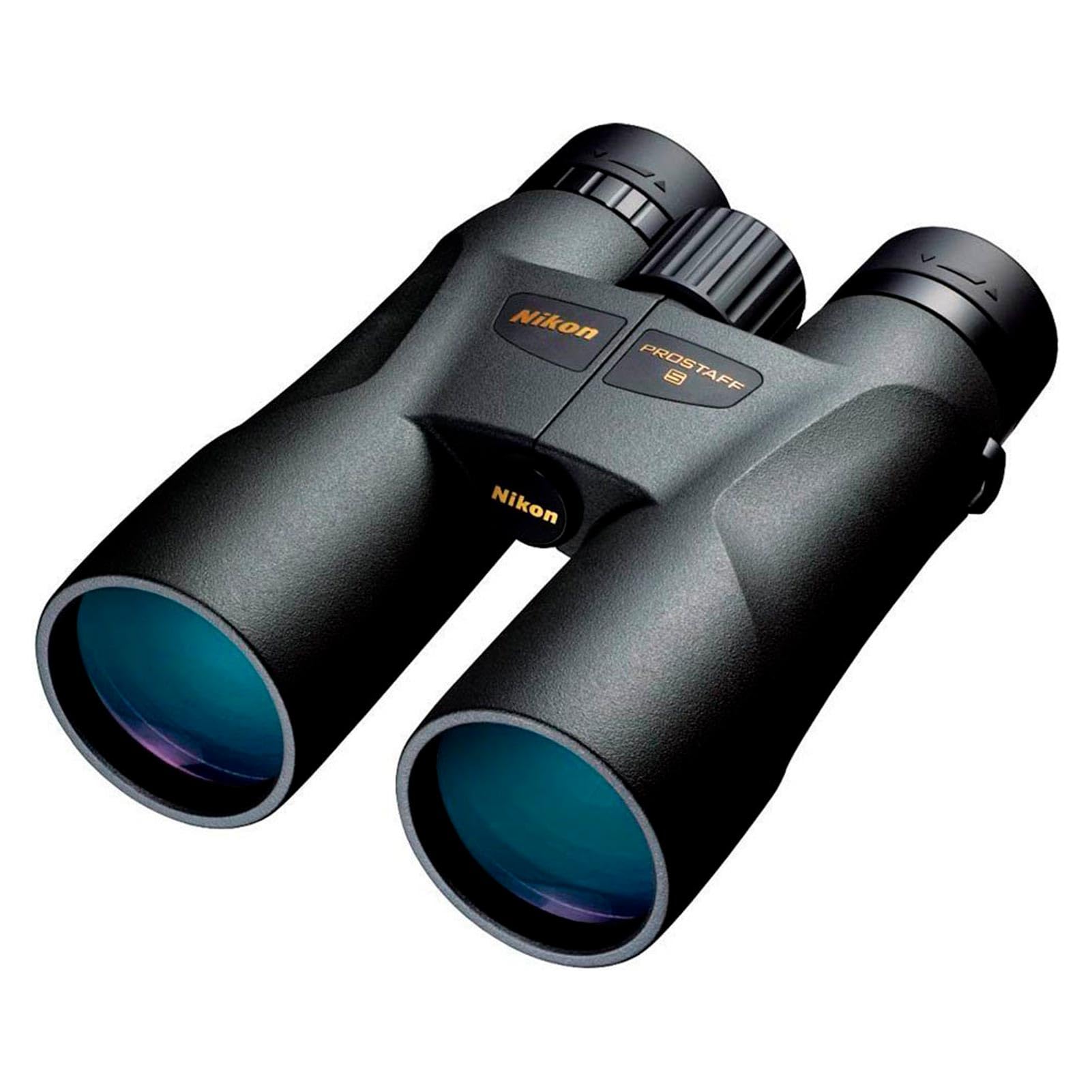
The Nikon PROSTAFF 5 brings a balanced proposition: it weighs just over 500 grams, making it the lightest premium-tier 12×50 in this lineup, yet it does not compromise on weather sealing. Nitrogen-filled and O-ring sealed, these binos resist fogging and internal moisture even through rapid temperature shifts. Multilayer-coated optics deliver bright, neutral color rendition across the full field, with minimal glare even when glassing into the low sun.
With 15.5mm of eye relief and turn-and-slide multi-click rubber eyecups, this is the most comfortable model for extended glassing sessions, especially if you wear glasses. The central focus knob moves with smooth, even tension and shifts focus from a nearby branch to a far ridge in a single turn. Users report consistent performance over multiple years, with no optical degradation or mechanical slop developing.
The PROSTAFF 5 is not equipped with ED glass, so discerning eyes may detect subtle chromatic aberration on high-contrast edges like a white bird against dark foliage. The field of view is also narrower than some competitors. For a lightweight, go-anywhere 12×50 that stays comfortable all day, this is an excellent choice for the hiker or backpacker.
Why it’s great
- Lightweight design ideal for hiking and travel
- Long 15.5mm eye relief for eyeglass wearers
- Nitrogen-filled, fogproof construction
Good to know
- No ED glass; some color fringing on high contrast
- Narrower FOV than premium competition
3. Sogries 12×50 ED Binoculars

Sogries skips the compromise between magnification and field width by offering a generous 102-meter field of view at 1000 meters — the widest in this guide. Combined with ED glass to suppress chromatic aberration and fully multi-coated optics for brightness, this combination makes tracking fast-moving subjects like birds in flight or athletes on a field far easier than with more tunneling optics.
The 18mm eye relief stands as the longest available here, providing a full-field view for eyeglass wearers without any black-ring cutoff. The magnesium alloy chassis wrapped in heavy-duty rubber armor gives a confident, grippy hold even in wet conditions. IPX7 waterproofing means it can survive accidental submersion, and the nitrogen filling prevents internal fogging in humid coastal or rainy environments.
The trade-off is weight: at 750 grams, it is not the lightest 12×50, and the large center focus wheel, while smooth, can feel slightly stiff out of the box. A few users report that the included lens caps fit securely but are difficult to remove quickly. For anyone prioritizing a big, bright field of view and the image clarity of ED glass at a mid-range price, this binocular delivers exceptional value.
Why it’s great
- Widest FOV at 102m for easier subject tracking
- 18mm eye relief best for eyeglass users
- ED glass and IPX7 waterproofing
Good to know
- Heavier than some premium alternatives
- Focus wheel can be stiff initially
4. Bushnell R5 12×50
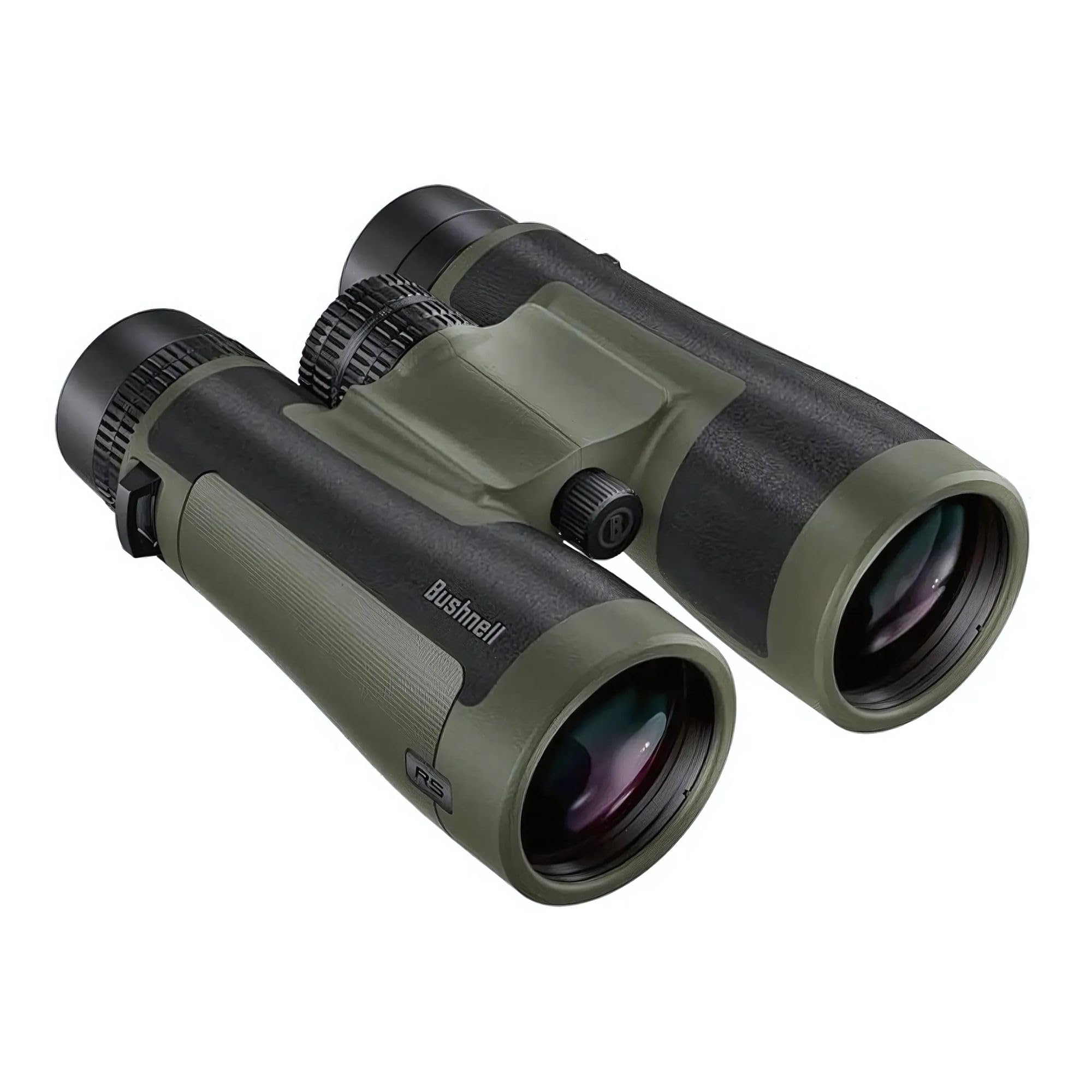
Bushnell targets the R5 series squarely at the hunter, with Phase 3 dielectric coatings on the prisms that maximize light transmission during the critical low-light periods of dawn and dusk. The result is a view that remains vivid when standard multi-coated optics have gone dark. EXO Barrier technology adds a permanent water- and oil-repelling layer to the external lenses, shedding rain and smudges so you glass through weather rather than around it.
The IPX7 waterproof rating means the R5 can handle full submersion, while the shockproof rubber overmold protects against drops and hard use. Bushnell includes a Vault LITE chest harness and a comfort neck strap, saving the buyer from needing an aftermarket carry system. The overall build feels dense and overbuilt, suited for a truck console or hunting pack.
Where the R5 challenges the user is with its fixed-focus design — there is no center focus wheel. The optical path is set at a distance and cannot be adjusted for close-range subjects or user-specific vision differences. This makes the R5 best suited for hunters who glass at a consistent distance and do not need close-focus flexibility. Also, the lens caps are extremely stiff to seat, a frequent minor complaint.
Why it’s great
- Dielectric prism coatings for superior low-light transmission
- IPX7 waterproof and shockproof build
- EXO Barrier repels water, oil, and dust
Good to know
- Fixed-focus design lacks close-range adjustability
- Lens caps are very difficult to seat fully
5. Nikon ACULON A211 12×50

The Nikon ACULON A211 is a porro prism design, which gives it a wider physical stance and often a more immersive depth perception than roof prism alternatives. The aspherical multi-coated eco-glass lenses deliver a bright, sharp image with good contrast, particularly suitable for daytime birding and terrestrial long-range viewing. The 58.4° apparent angle of view feels open and immersive.
At roughly 2 pounds, the ACULON is heavier than many roof prism 12x50s, but the rubber-armored coating provides a secure, non-slip grip that compensates during use. The turn-and-slide rubber eyecups twist up for eyeglass wearers and down for those without, though the 11.5mm eye relief is short for full-frame glasses wearers. The smooth central focus knob operates with light, consistent resistance.
Optically, the ACULON impresses with sharp star clusters and clear lunar detail, making it a staple recommendation for beginner astronomers on a budget. Its achromatic design will show some purple fringing on bright objects, and the 5.2° field of view is narrower than modern ED wide-angle options. For the price, it offers excellent porro prism image quality with a trusted brand warranty.
Why it’s great
- Sharp porro prism image with good depth
- Lightweight feel for a porro design
- Trusted Nikon brand with solid quality control
Good to know
- Short 11.5mm eye relief limits glasses use
- Chromatic aberration visible on bright edges
6. Vortex Triumph HD 12×50
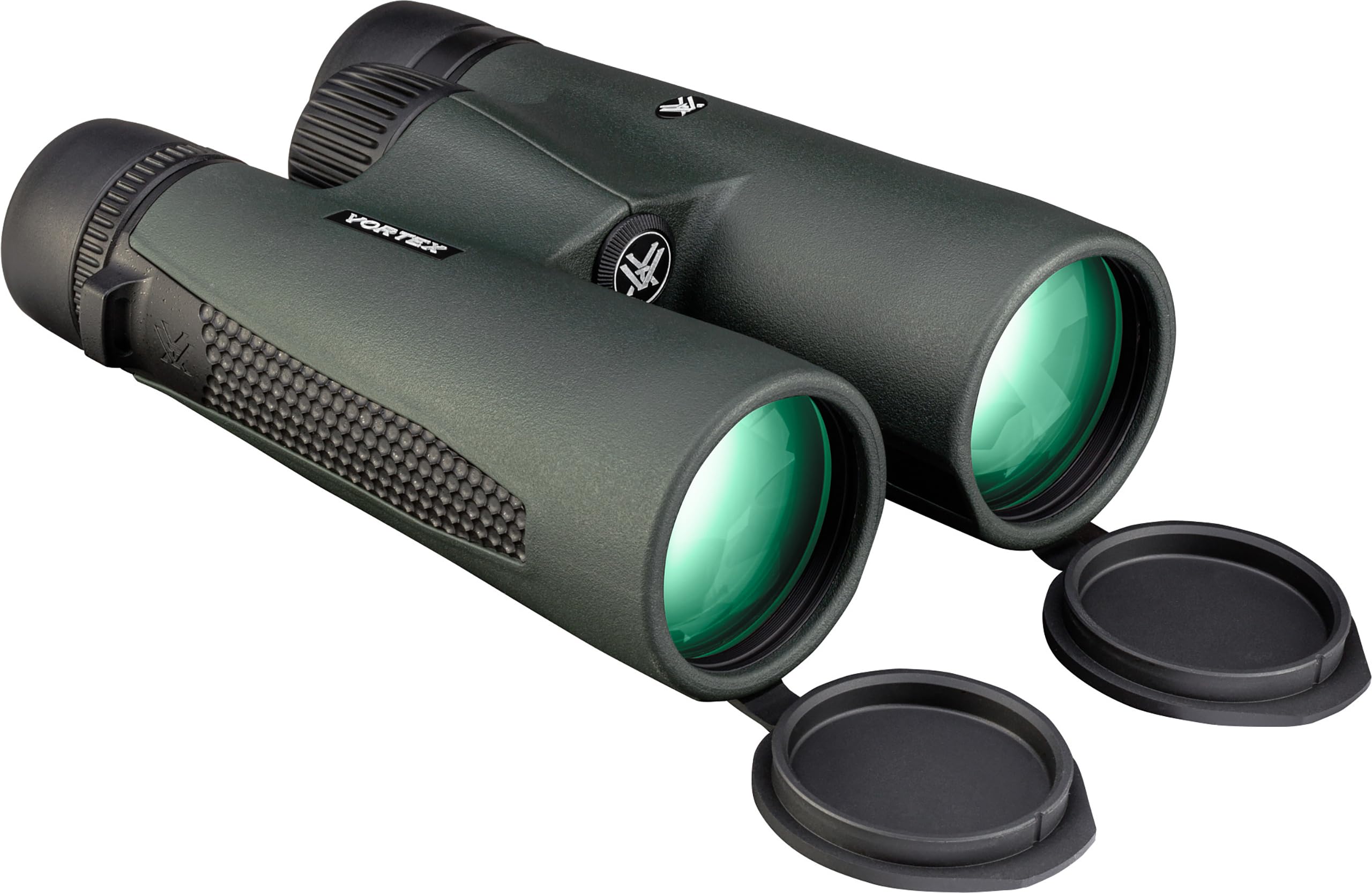
Vortex’s Triumph HD brings fully multi-coated optics and a rugged rubber-armored chassis to the mid-range tier at a competitive price point. The 16mm eye relief provides ample room for eyeglass wearers to see the full field without vignetting, and the center-focus knob adjusts quickly for near-to-far shifts. The 12×50 format delivers a bright exit pupil that works well in both daylight and low-light backyard conditions.
The build is surprisingly tough for the price — a 20-foot drop test by one user resulted in zero optical damage or misalignment. The green rubber armoring provides a secure grip even in wet conditions, and the binocular is tripod-mountable via a standard adapter. The included carrying case is functional, though the included harness system can feel bulky for quick deployment.
Optically, the Triumph HD offers a clear, bright image with good color fidelity for casual use — excellent for scanning tree lines, watching the night sky from a deck, or tracking wildlife to 1–2 miles. It does not employ ED glass, so occasional color fringing may appear in high-contrast scenes. For the buyer who wants a capable, durable 12×50 without investing in premium glass, this is the standout value pick.
Why it’s great
- 16mm eye relief for comfortable glasses viewing
- Rugged, impact-resistant chassis
- Bright, color-accurate image for the price
Good to know
- No ED glass; some chromatic aberration
- Included harness is cumbersome for quick use
7. Pentax Jupiter 12×50

The Pentax Jupiter 12×50 is an entry-level porro prism binocular that prioritizes functional simplicity and large-aperture light gathering over premium features. The multi-coated lenses reduce unwanted reflections and improve light transmission, providing a bright image that outperforms uncoated budget optics. The 50° apparent field of view is modest but adequate for general terrestrial viewing and lunar observation.
The exterior rubber coating provides a firm, slip-resistant hold, which matters given the Jupiter’s heavier frame — you will want both hands on this binocular for extended glassing. The optional TP-3 tripod adapter allows stable mounting, a near-necessity for serious stargazing with this model. The included case, lens caps, and eyepiece covers provide basic protection out of the box.
Optically, the Jupiter delivers sharp focus on the moon and distant objects, but the limited 11mm eye relief means eyeglass wearers will struggle to see the full field. The 50° apparent angle feels narrow compared to wide-field options, and the lack of ED glass means color fringing on bright, high-contrast edges is noticeable. For the beginner who wants a reliable 12×50 for occasional use, especially on a tripod, the Jupiter is a functional, no-frills choice.
Why it’s great
- Large 50mm objective for good light gathering
- Rubber coating provides secure grip
- Compatible with optional tripod adapter
Good to know
- Short 11mm eye relief unsuitable for glasses
- Heavy and best used with tripod
FAQ
Can I use 12×50 binoculars without a tripod?
What is the difference between BAK-4 and BK-7 prisms?
Why does my 12×50 show blue or purple edges on bright objects?
Final Thoughts: The Verdict
For most users, the best 12×50 binoculars winner is the Celestron Nature DX ED because it delivers the genuine optical performance of ED glass — suppressing chromatic aberration and boosting low-light clarity — at a price that undercuts comparable Japanese and European brands. If you want a lightweight, weather-sealed binocular for day-long hikes, grab the Nikon PROSTAFF 5. And for a wide, bright field of view that makes tracking fast-moving subjects easy, nothing beats the Sogries 12×50 ED.

Mo Maruf
I created WellFizz to bridge the gap between vague wellness advice and actionable solutions. My mission is simple: to decode the research and give you practical tools you can actually use.
Beyond the data, I am a passionate traveler. I believe that stepping away from the screen to explore new environments is essential for mental clarity and physical vitality.