Our readers keep the lights on and my smoothie glass nicely filled. As an Amazon Associate, I earn from qualifying purchases.
The difference between a succulent that thrives and one that rots is almost always what’s happening below the surface. Standard potting soil holds moisture like a sponge, which is exactly the opposite of what desert-adapted plants need. A dedicated blend with sharp drainage and minimal organic matter is the single most effective tool for preventing root loss and keeping your echeveria, jade, or barrel cactus firm and compact.
I’m Mohammad Maruf — the founder and writer behind WellFizz. I’ve spent hundreds of hours cross-referencing drainage rates, ingredient ratios, and buyer feedback across the most popular bagged mixes to find the ones that actually deliver the structure arid plants require.
An informed choice now can save you from repotting a mushy, overwatered plant in two months. This guide breaks down the five most reliable formulations so you can confidently select the best cactus and succulent soil for your specific collection.
How To Choose The Best Cactus And Succulent Soil
Not every bag labeled “cactus mix” is actually well-draining. Many commercial blends still lean heavily on peat moss or fine compost that clogs air pockets. Focus on three factors: particle structure, ingredient list, and moisture retention profile.
Particle Size and Aeration
Look for visible chunks of perlite, pumice, lava rock, or coarse sand. A mix that appears powdery or compacted will suffocate roots. The ideal texture feels gritty and falls apart easily when squeezed.
Organic Material Ratio
Some organic matter is necessary for nutrients, but too much creates a moisture trap. Worm castings and compost are fine in small amounts. Avoid mixes where peat moss or bark fines are the first ingredient.
pH Balance
Cacti and succulents prefer a slightly acidic to neutral pH (5.5 to 7.0). Many quality blends are pH-balanced during manufacturing, which supports nutrient uptake and steady growth without burning tender roots.
Quick Comparison
On smaller screens, swipe sideways to see the full table.
| Model | Category | Best For | Key Spec | Amazon |
|---|---|---|---|---|
| Rosy Soil Cactus Soil | Peat-Free | Eco-conscious growers | 4qt, chunky with microbes | Amazon |
| Tinyroots Succulent Soil | Fine Grain | Small succulents & lithops | 2.25qt, bark-based | Amazon |
| Hoffman Organic Cactus Mix | Balanced | General cactus care | 4qt, pH-balanced | Amazon |
| Midwest Hearth Potting Soil | Value | Budget-friendly repotting | 4qt, peat-perlite-vermiculite | Amazon |
| DUSPRO 7-in-1 Mix | Multi-Ingredient | Diverse succulent collections | 1qt, lava rock & worm castings | Amazon |
In‑Depth Reviews
1. Rosy Soil Cactus Soil – Organic Succulent Potting Mix
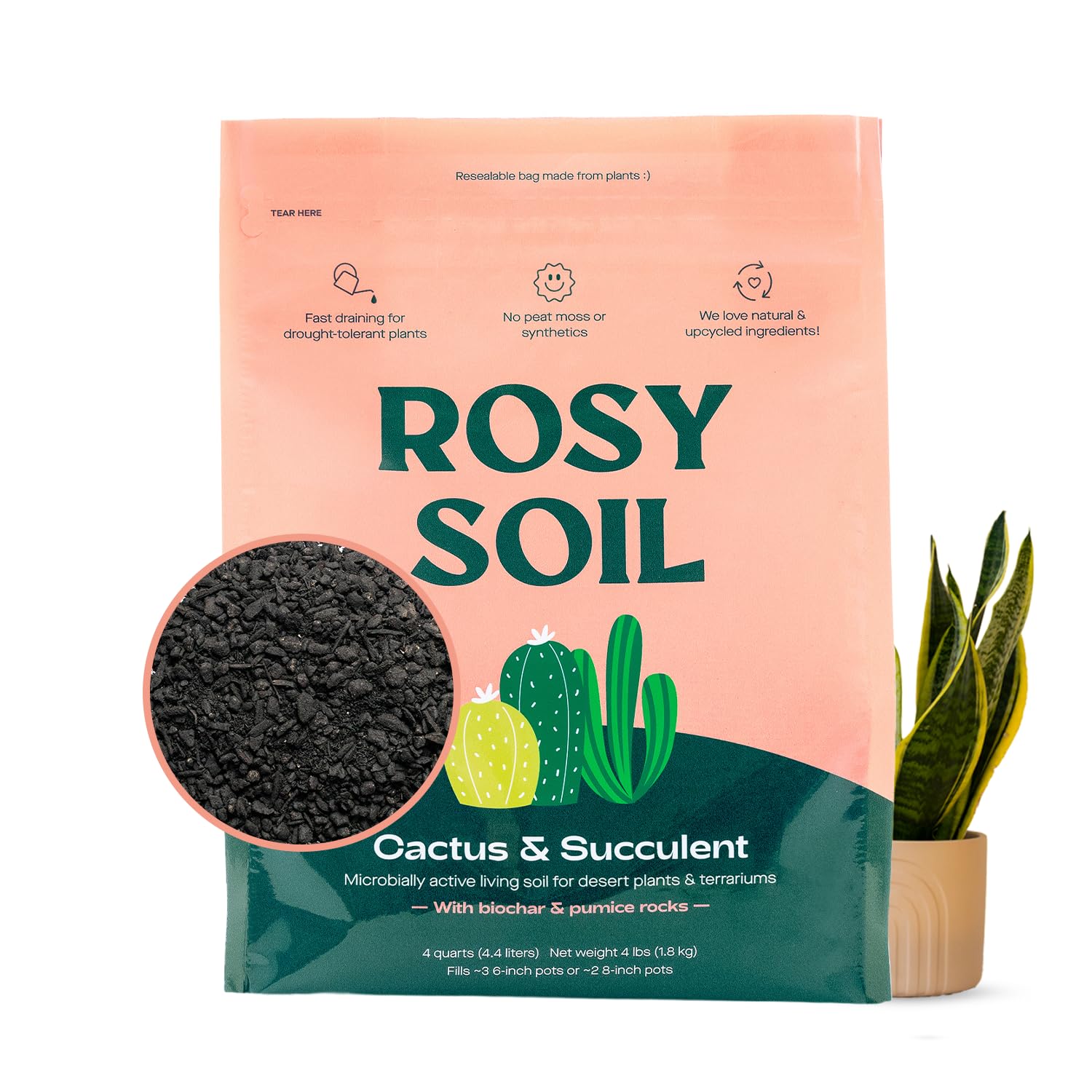
Rosy Soil skips peat entirely in favor of a chunky structure that resists compaction. The bag arrives with beneficial microbes and worm castings already integrated, feeding roots without synthetic additives. Users consistently report zero bug issues across multiple batches — rare for organic soil.
The gritty texture drains quickly enough for desert rose and lithops, yet retains just enough moisture for aloe and jade. Some reviewers add extra perlite or bonsai gravel for older plants, but the base mix works straight from the bag for most common succulents.
Packaging is resealable and printed with planting instructions for beginners. The 4-quart bag fills two to three standard pots. For growers who want an environmentally responsible, ready-to-use formula, this is the strongest contender.
Why it’s great
- Peat-free formula drains freely without soggy patches
- Pre-loaded with beneficial fungi and worm castings
- Plastic-neutral, resealable bag keeps soil fresh
Good to know
- May need additional perlite for very heavy feeders
- Resealable zipper can be tricky to close fully
2. Tinyroots Succulent Soil – Cactus Soil Potting Mix

Tinyroots uses a finer grain than most competitors, making it especially suitable for miniature succulents like lithops and small echeveria. The bark-based formula drains exceptionally well — one reviewer reported it is almost impossible to overwater with this mix. No large perlite chunks means a more uniform texture for delicate root systems.
The 2.25-quart bag is smaller than many alternatives, but the density and drainage justify the premium positioning. Multiple customers who previously struggled with root rot saw immediate improvement after switching. First-time succulent growers appreciate how forgiving the mix is during the learning curve.
Because the particle size is consistent, water flows through evenly without creating dry pockets or saturated zones. For anyone specializing in tiny pots or slow-growing species, this mix removes the guesswork from watering frequency.
Why it’s great
- Uniform fine texture ideal for tiny succulents
- Strong drainage makes overwatering difficult
- Consistent particle size prevents dry pockets
Good to know
- Small 2.25-quart bag goes fast with many pots
- Higher cost per quart than bulk blends
3. Hoffman Organic Cactus and Succulent Soil Mix

Hoffman’s organic mix is a classic choice for a reason. The light, fluffy texture combines peat moss, perlite, and sand into a formula that drains dependably for both desert and jungle cacti. One reviewer found it solved a persistent fungus gnat problem after other blends had failed — likely because the mix lacks the decaying wood chips that attract pests.
The pH-balanced composition encourages bloom development, and many users report seeing flowers on plants that had never bloomed before. It works straight from the bag without amendments for most species, though some hobbyists add extra perlite for heavy drainers like lithops.
At four quarts, the bag offers solid coverage for multiple pots. A small number of bags arrive with minor tears, but the soil quality itself receives consistent praise for preventing root rot and supporting new growth.
Why it’s great
- Light, fluffy texture that drains fast
- pH-balanced to support blooming
- Lacks decaying wood chips that attract gnats
Good to know
- Bag quality can be inconsistent with occasional tears
- Very light particles may blow if placed near a draft
4. Midwest Hearth Cactus & Succulent Potting Soil Mix
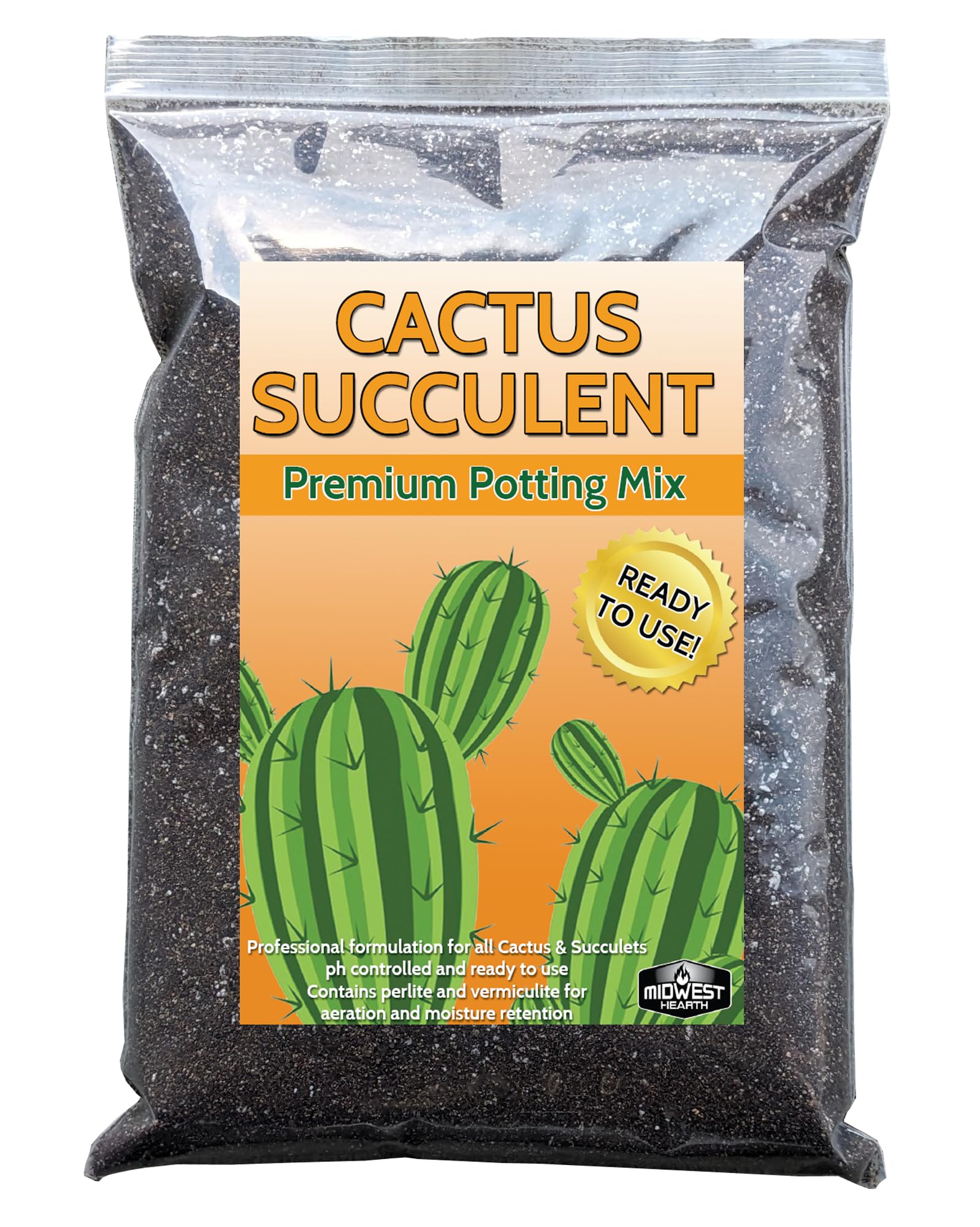
Midwest Hearth delivers a straightforward blend of peat moss, perlite, and vermiculite at a price point that appeals to budget-conscious growers. The formula is ready to use out of the bag and works well for common varieties like aloe, jade, and Christmas cactus. Several reviewers noted happy plants weeks after repotting.
The 4-quart resealable bag is practical for storing leftover soil without spillage. An 8-quart size is also available for larger collections. The mix drains adequately for most desert plants, though the peat content means it retains slightly more moisture than chunky alternatives.
One common observation is that the dry top particles can become airborne near windows or fans, creating a minor mess. Keeping a light layer of pebbles on top mitigates the issue. For straightforward repotting without gimmicks, this mix gets the job done.
Why it’s great
- Affordable and widely available in multiple sizes
- Resealable bag keeps soil usable between uses
- Made in the USA with consistent quality
Good to know
- Peat content holds more moisture than gritty mixes
- Dusty surface particles can blow around near windows
5. DUSPRO Succulents Soil Potting Mix – 7 in 1 Blend
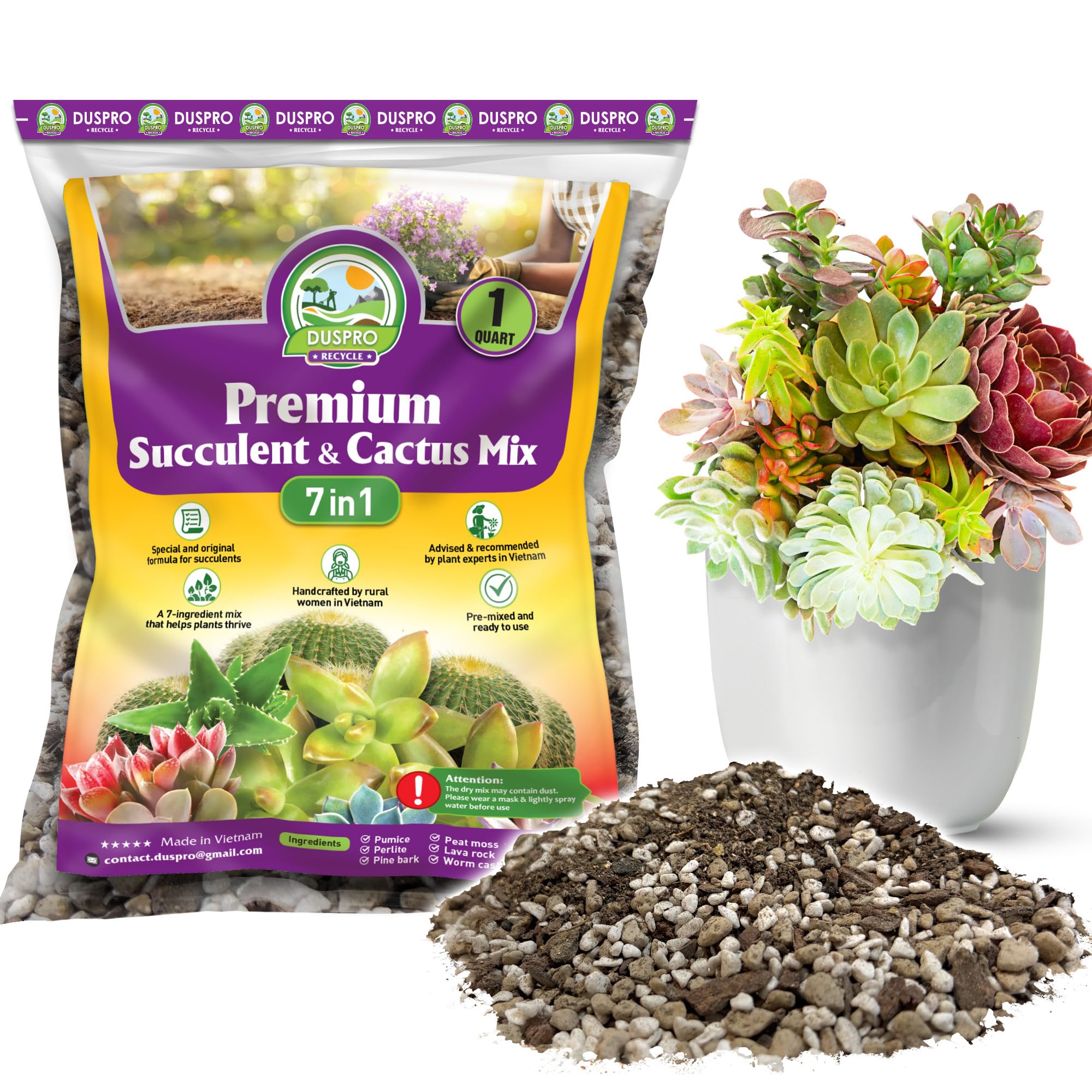
DUSPRO packs seven ingredients — perlite, pumice, lava rock, peat moss, pine bark, worm castings, and vermiculite — into a single bag that aims to cover all bases. The result is a nutrient-dense mix that supports healthy growth without needing immediate fertilizer. A reviewer noted that the blend is less expensive than advertised and produced no gnats.
Because the ingredients are not fully pre-mixed, it is best to dump the bag into a container and stir before use. This ensures the lava rock and worm castings are evenly distributed. The 1-quart size is compact, so it sells for a higher per-quart cost than bulk alternatives.
For small projects or someone with just a few pots, the trial size works well. The inclusion of worm castings gives a natural nutrient boost that shows in leaf color and root development. Just be prepared to remix the bag before potting.
Why it’s great
- Seven-ingredient blend provides diverse drainage and nutrition
- Worm castings boost growth without synthetic chemicals
- Pumice and lava rock improve aeration
Good to know
- Ingredients settle during shipping — needs mixing before use
- Small 1-quart bag has a higher cost per quart
FAQ
Can I use regular potting soil for succulents?
How often should I repot my succulents with fresh soil?
Should I add extra perlite to my cactus soil?
Final Thoughts: The Verdict
For most users, the best cactus and succulent soil winner is the Rosy Soil Cactus Soil because it combines a chunky, peat-free texture with pre-loaded microbes and worm castings — delivering drainage and nutrition in one bag. If you want a uniform fine grain for tiny succulents, grab the Tinyroots Succulent Soil. And for a budget-friendly option that still drains reliably, nothing beats the Hoffman Organic Cactus Mix.

Mo Maruf
I created WellFizz to bridge the gap between vague wellness advice and actionable solutions. My mission is simple: to decode the research and give you practical tools you can actually use.
Beyond the data, I am a passionate traveler. I believe that stepping away from the screen to explore new environments is essential for mental clarity and physical vitality.