Our readers keep the lights on and my smoothie glass nicely filled. As an Amazon Associate, I earn from qualifying purchases.
Calcium citrate is the form of calcium that actually dissolves and gets absorbed regardless of stomach acid levels, making it the go-to choice for anyone with a sensitive stomach, low acid production, or a need to take supplements between meals. The wrong calcium supplement can leave you bloated, constipated, or fighting with unabsorbed rock dust settling in your gut.
I’m Mohammad Maruf — the founder and writer behind WellFizz. I spend my days analyzing supplement chemistry, bioavailability pathways, and third-party lab results so you can make decisions backed by real data rather than marketing fluff.
This guide breaks down the five strongest contenders on the market right now, comparing absorption rates, serving sizes, and ingredient synergy to help you find the best calcium citrate supplement for your specific bone health needs.
How To Choose The Best Calcium Citrate Supplement
Not all calcium citrate supplements deliver the same results. The form of citrate, the presence of synergistic nutrients, the serving size required per dose, and the manufacturing standards all separate an effective supplement from one that ends up in the bottom of your medicine cabinet.
Servings Per Bottle vs. Daily Elemental Calcium Target
Most adults need 1000–1200 mg of elemental calcium daily. Check whether a “1200 mg” label refers to the weight of the calcium citrate compound or the actual elemental calcium amount. A supplement requiring four tablets per serving can work, but only if the bottle contains enough tablets to sustain a full month without reordering every three weeks.
Co-Factors That Drive Absorption
Vitamin D3 is non-negotiable — it directly controls how much calcium your intestines absorb. Vitamin K2 directs calcium into bone tissue instead of arteries. Magnesium and zinc round out the bone matrix and support muscle function. A supplement that pairs calcium citrate with these co-factors eliminates the need for separate bottles and reduces supplement fatigue.
Form: Tablets, Capsules, Powder, or Gummies
Tablets are efficient but can be large and require a full glass of water. Capsules are easier to swallow but may contain fewer mg per capsule. Powders mix into drinks and allow flexible dosing, but they require a shaker bottle and taste adjustment. Gummies taste good and are easy to take, but they often contain added sugar and fewer elemental mg per serving, meaning more gummies per dose.
Manufacturing Standards and Allergen Purity
GMP compliance and FDA-registered facilities ensure batch-to-batch consistency. For anyone with food allergies, a formula free from gluten, soy, dairy, eggs, nuts, fish, and shellfish removes guesswork. Third-party testing adds an extra layer of verification that the label matches the bottle.
Quick Comparison
On smaller screens, swipe sideways to see the full table.
| Model | Category | Best For | Key Spec | Amazon |
|---|---|---|---|---|
| Rainbow Light Calcium Citrate Mini Tablets | Tablets | Gentle daily maintenance with whole-food nutrients | 800 mg elemental calcium per 4-tablet serving | Amazon |
| Thorne Calcium (DiCalcium Malate) | Capsules | Highest bioavailability in a concentrated capsule | 200 mg elemental calcium per 1 capsule | Amazon |
| NutraHarmony Calcium 1200 mg with D3+K2 | Tablets | High-dose slow-release with D3, K2, and magnesium | 1200 mg blend per 2-tablet serving | Amazon |
| Nutricost Calcium Citrate Powder | Powder | Budget-friendly flexible dosing for bariatric or smoothie users | 650 mg elemental calcium per scoop (147 servings) | Amazon |
| LUCNVEM Calcium Citrate Gummies | Gummies | Great taste with D3, K2, magnesium, and zinc | 1200 mg calcium citrate blend per 2-gummy serving | Amazon |
In‑Depth Reviews
1. Rainbow Light Calcium Citrate Mini Tablets
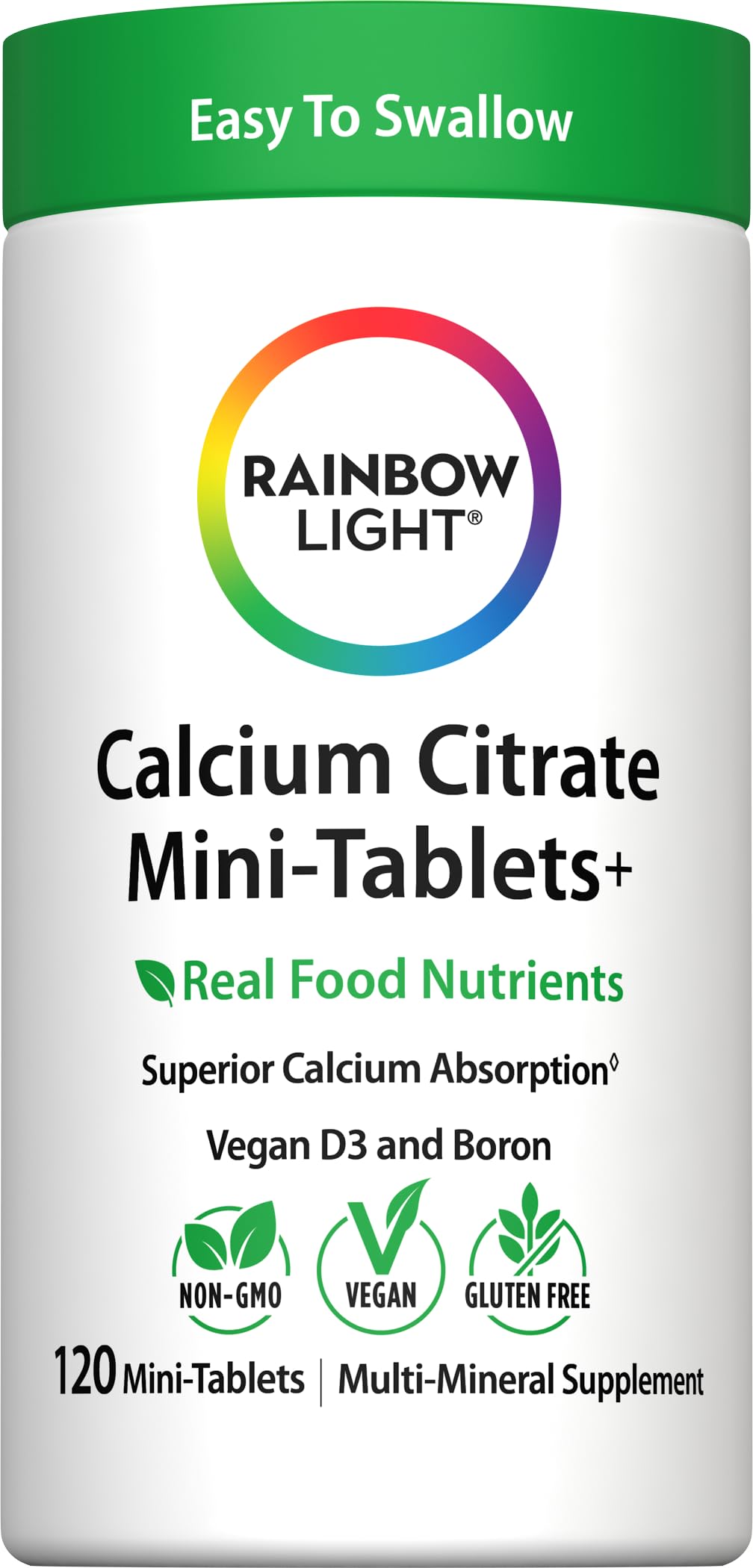
Rainbow Light hits the sweet spot between potency and gentleness. Each four-tablet serving delivers 800 mg of elemental calcium from citrate plus 800 IU of vitamin D3, boron, and spirulina — a whole-food nutrient profile that reduces the likelihood of gastric cramping. The “mini” tablet size is noticeably smaller than standard calcium tablets, which multiple reviewers confirm makes them easier to swallow without the gag reflex that plagues larger supplements.
The magnesium-free formulation is intentional — it allows people who already get enough magnesium from their diet to avoid over-supplementation. The bottle is made from 100% recycled material (excluding colorant), which appeals to environmentally conscious buyers. With 120 tablets per bottle, one serving per day lasts exactly 30 days before you need to reorder.
One caveat worth noting: despite being called “mini tablets,” they are not chewable. Some customers expected a chewable texture and were disappointed. Additionally, the tablets are dry and require a full glass of liquid to swallow all four at once. However, for anyone prioritizing stomach comfort, vegetarian-certified ingredients, and a trusted brand history dating back to 1981, this is the most balanced pick on the list.
Why it’s great
- Gentle on the stomach with no reported heartburn or bloating
- Includes vitamin D3, boron, and spirulina for enhanced absorption
- Free from magnesium for those with high-magnesium diets
- Allergy-friendly: no wheat, milk, tree nuts, peanuts, soy, eggs, fish, or shellfish
Good to know
- Not chewable despite being labeled as mini tablets
- Requires four tablets per serving, which may feel like a lot
- Some users reported tablets are larger than expected for “minis”
2. Thorne Calcium (Formerly DiCalcium Malate)
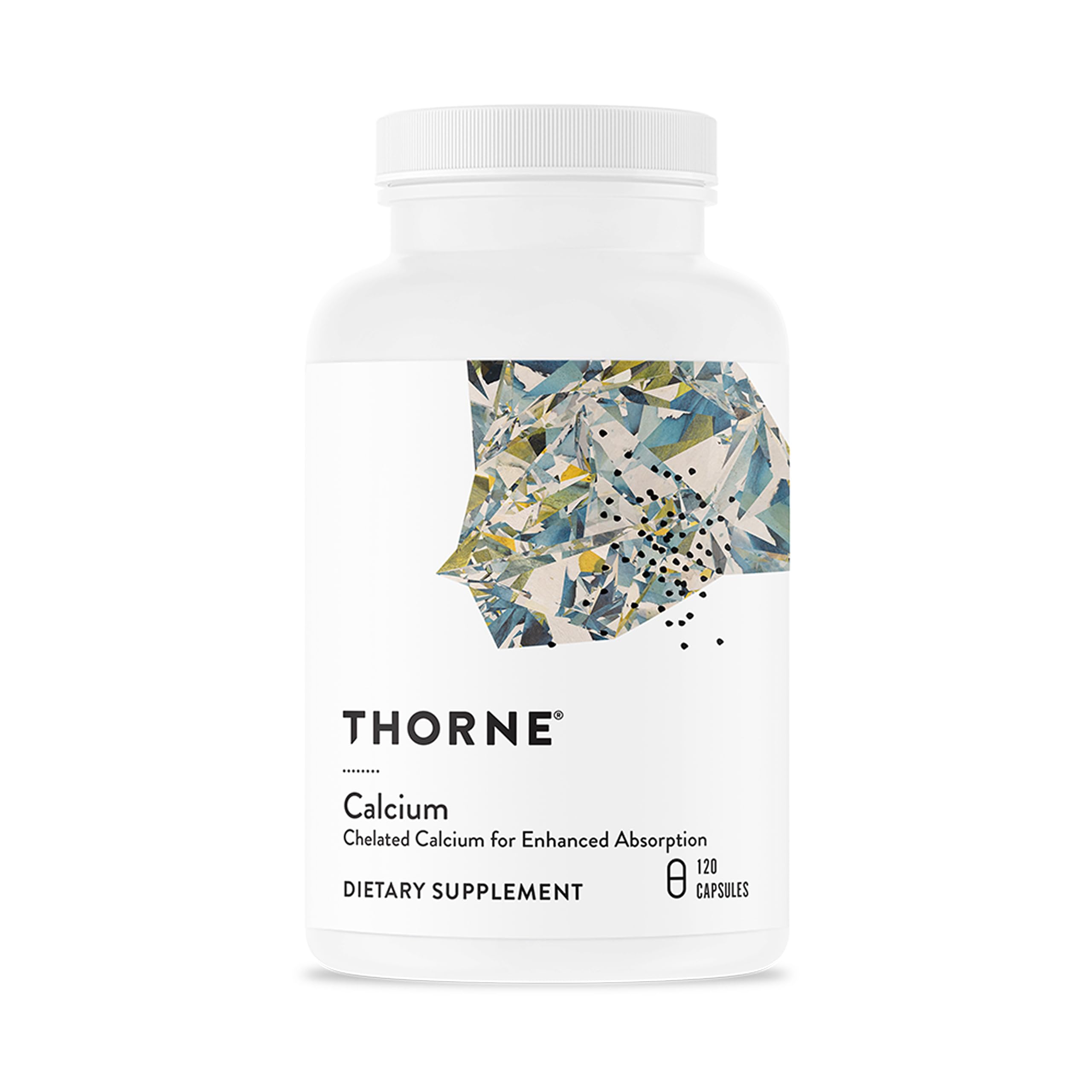
Thorne uses DiCalcium Malate (DimaCal), a chelated form of calcium that is chemically bonded to malic acid for significantly better absorption than standard calcium citrate or carbonate. Each capsule delivers 200 mg of elemental calcium, which means a full 1200 mg daily target requires six capsules — a high capsule count, but the absorption efficiency compensates because more of that calcium actually reaches your bones rather than passing through unabsorbed.
Thorne is the #1 recommended clinical brand by healthcare practitioners according to the 2023 Health-Care Practitioner Seller Survey, and they are a proud partner of U.S. National Teams. Every batch is made with the purest possible ingredients and is free from gluten, eggs, tree nuts, peanuts, soy, dairy, shellfish, and fish. Multiple customers reported improved lab values after switching, with zero stomach upset — a critical metric for anyone with a sensitive digestive system.
The capsule size is relatively small and easy to swallow, and the calcium malate has a faint, bland taste that can be sprinkled onto food if you prefer to open the capsules. The main drawback is the cost per serving compared to other options. Thorne’s premium price reflects their clinical-grade sourcing, but if you need a budget-friendly option for long-term use, there are more economical choices further down this list.
Why it’s great
- Chelated DimaCal form offers superior absorption over standard citrate
- Trusted by professional sports teams and healthcare practitioners
- Free from the top eight allergens
- Easy-to-swallow capsules with no aftertaste
Good to know
- Requires 4–6 capsules daily to reach the standard 800–1200 mg target
- Higher per-serving cost compared to tablet or powder alternatives
- No added vitamin D3 or K2 — must be taken separately
3. NutraHarmony Calcium 1200 mg with Vitamin D3+K2
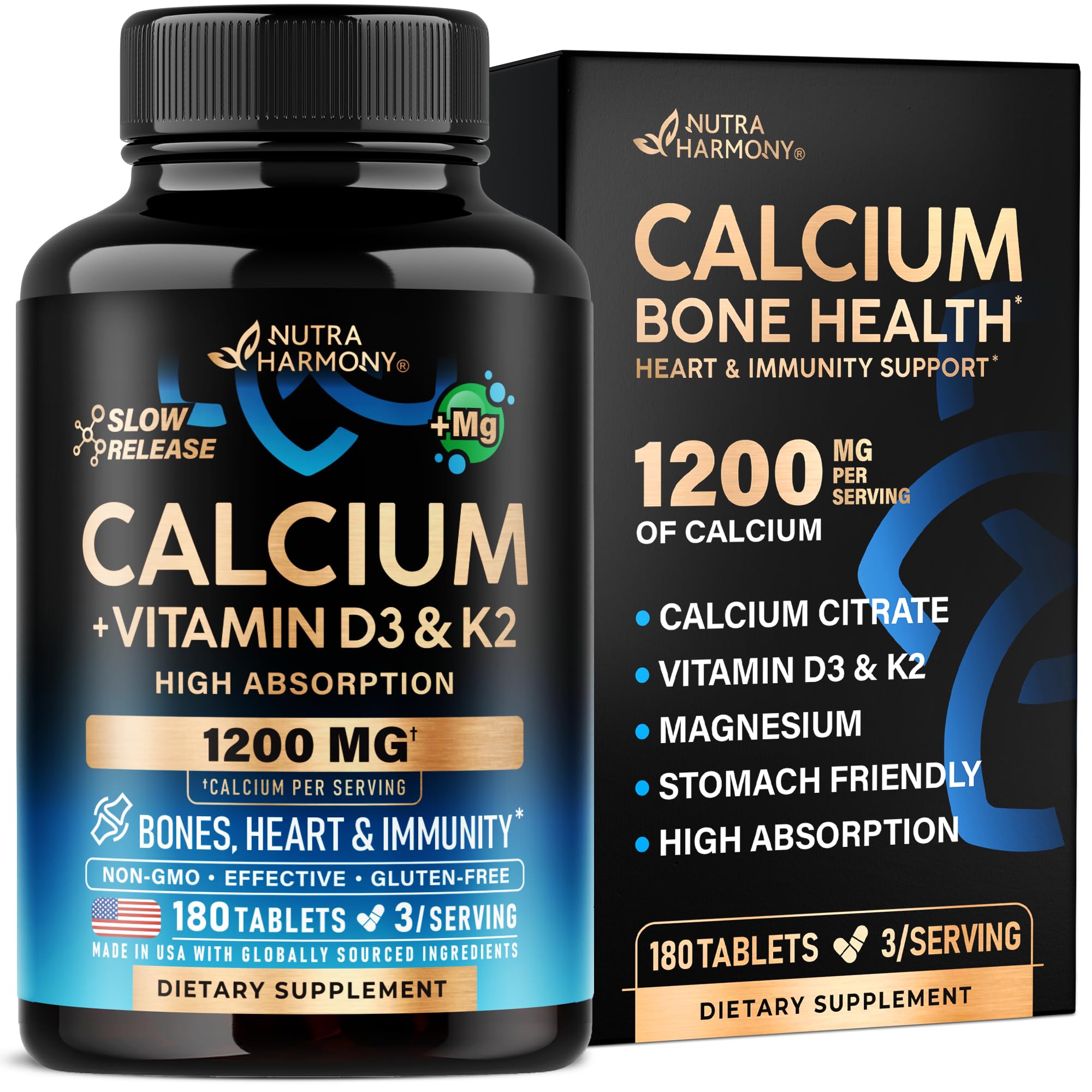
NutraHarmony combines calcium citrate (for bioavailability) with calcium carbonate (for higher elemental content per serving) in a single 1200 mg blend. Each two-tablet serving provides a substantial dose plus vitamin D3 and K2, which together ensure the calcium is absorbed and then directed to bone tissue rather than calcifying in arteries. The slow-release technology spreads absorption over several hours, reducing the peak load on your system and minimizing the risk of stomach discomfort.
Customer reviews highlight that the tablets are not overly large and are easy to swallow, with no gastric issues reported even among those who previously struggled with calcium carbonate. The addition of black pepper extract (piperine) further enhances nutrient bioavailability. Manufactured in the USA in a GMP-compliant facility, this supplement offers a comprehensive bone-support stack in one bottle.
The trade-off is that the label does not specify the exact ratio of citrate to carbonate, which matters if you have very low stomach acid or take proton pump inhibitors — pure citrate would be the safer choice in that case. But for most people, this hybrid approach delivers a high total dose with good absorption and added convenience from the D3+K2 inclusion.
Why it’s great
- Combines citrate and carbonate for both bioavailability and high elemental content
- Includes vitamin D3, K2, magnesium, and black pepper for maximal absorption
- Slow-release technology reduces gastric discomfort
- Made in the USA with GMP manufacturing standards
Good to know
- Exact ratio of citrate to carbonate not disclosed on the label
- Two tablets per serving may still feel large for some users
- Contains magnesium, which may not suit everyone
4. LUCNVEM Calcium Citrate Gummies
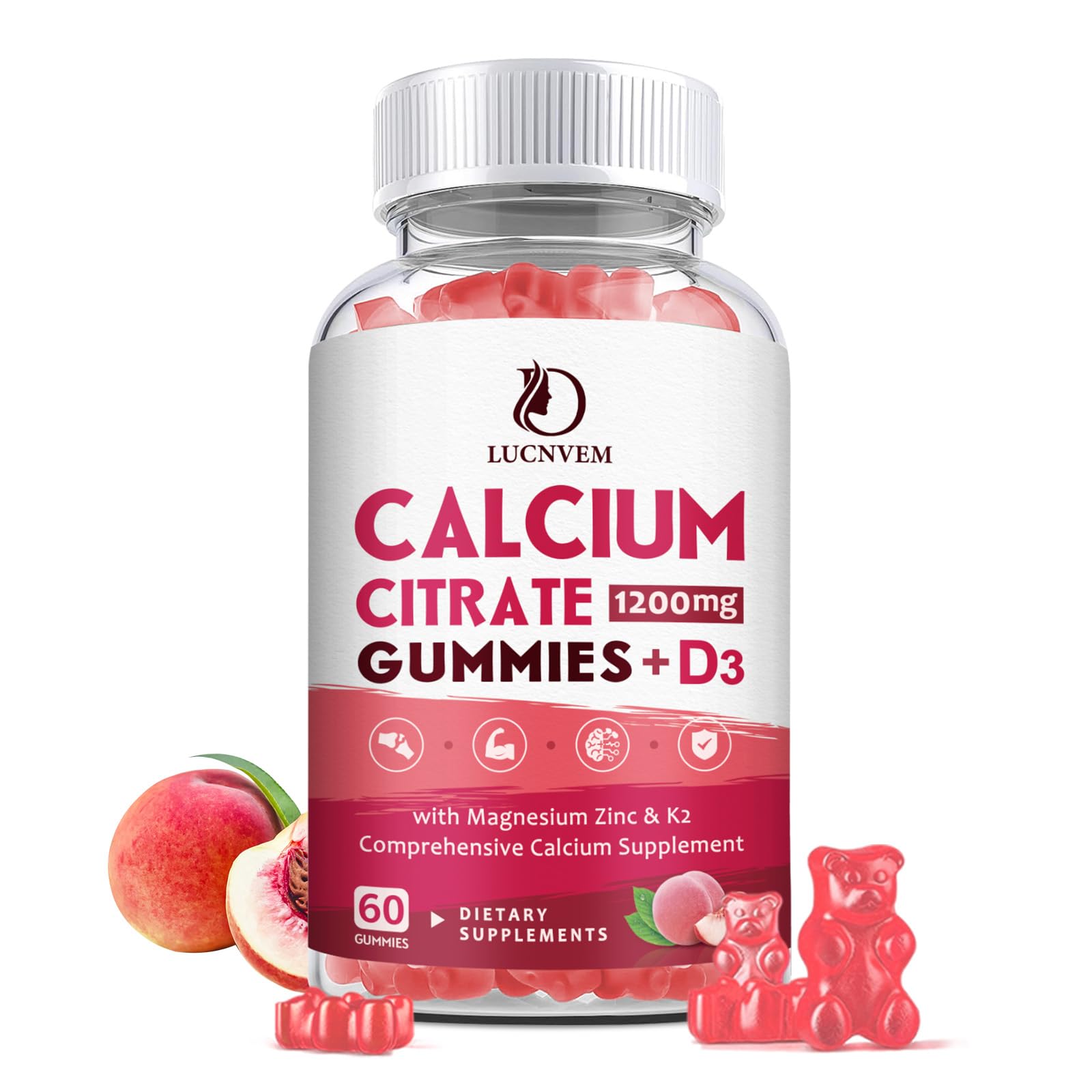
LUCNVEM tackles the biggest barrier to supplement compliance — taste and texture — with a natural white peach gummy that customers consistently describe as “delicious” and “much better than caramel or chocolate versions.” Each two-gummy serving delivers 1200 mg of calcium citrate plus 400 mg of magnesium glycinate, 10 mg of zinc, 1000 IU of vitamin D3, and 120 mcg of vitamin K2 — a complete bone-support stack that eliminates the need for multiple bottles.
The gummies are non-sticky and non-bitter, and they do not cling to teeth like some competing gummy brands. The inclusion of magnesium glycinate (a highly absorbable form) and zinc further supports bone matrix formation and muscle function. For anyone who dreads swallowing pills, this is the most palatable entry point into consistent calcium supplementation.
The primary downside is a packaging design issue: gummies tend to stick together inside the jar, and the jar opening is relatively narrow, making it difficult to extract individual gummies without them clumping. Customers recommend storing the bottle in the refrigerator to keep them separate. Additionally, each gummy contains added sugar, which is something to consider if you monitor your sugar intake closely.
Why it’s great
- Excellent taste that makes daily compliance effortless
- Comprehensive formula with D3, K2, magnesium glycinate, and zinc
- Only two gummies per serving for 1200 mg of calcium citrate blend
- No stomach upset or bitter aftertaste
Good to know
- Gummies stick together; storing in the fridge helps but is an extra step
- Jar opening is narrow, making removal difficult
- Contains added sugar (check label for your dietary needs)
5. Nutricost Calcium Citrate Powder

Nutricost’s unflavored calcium citrate powder is the most cost-effective option on this list when calculated per serving. A single 500-gram bottle provides approximately 147 servings at 650 mg of elemental calcium per scoop, making it last nearly five months if you take one scoop daily. The powder has no added fillers, is non-GMO, gluten-free, and manufactured in a GMP-compliant, FDA-registered facility.
This format is especially popular among bariatric surgery patients who need pure calcium citrate without the binders and fillers found in tablets. The powder dissolves reasonably well in coffee, tea, smoothies, and protein shakes — most customers report no noticeable flavor change. A few users noted a slight grittiness when mixed with milk, but a blender bottle solves that issue effectively.
The biggest quality concern reported across multiple reviews is inconsistent fill levels between bottles. Some customers received bottles only half full, though the weight on the label (500 grams) was correct — the powder simply settles differently during shipping. If you prefer the convenience of pre-measured doses and don’t mind mixing your supplement into a drink, this powder offers the best long-term value. If you want grab-and-go convenience, a tablet or gummy format will serve you better.
Why it’s great
- Extremely low cost per serving — over 147 servings per bottle
- Pure calcium citrate with no fillers, sweeteners, or artificial ingredients
- Unflavored — mixes easily into coffee, tea, smoothies, or protein shakes
- Ideal for bariatric patients and anyone who cannot swallow pills
Good to know
- Inconsistent bottle fill levels reported by multiple customers
- Powder does not fully dissolve; some grittiness remains without a blender bottle
- No added vitamin D3 or K2 — must be supplemented separately
FAQ
How many mg of calcium citrate should I take per day?
Can I take calcium citrate gummies if I have a sensitive stomach?
Is calcium citrate better than calcium carbonate for bone density?
Do I need vitamin D3 with my calcium citrate supplement?
Final Thoughts: The Verdict
For most users, the best calcium citrate supplement winner is the Rainbow Light Calcium Citrate Mini Tablets because it balances a clinically effective 800 mg elemental dose, whole-food co-factors, stomach-friendly formulation, and a trusted brand history at a reasonable cost per serving. If you want the highest possible absorption in the most concentrated capsule form, grab the Thorne Calcium (DiCalcium Malate). And for a budget-friendly, flexible option that fits into a smoothie or coffee routine, nothing beats the Nutricost Calcium Citrate Powder.

Mo Maruf
I created WellFizz to bridge the gap between vague wellness advice and actionable solutions. My mission is simple: to decode the research and give you practical tools you can actually use.
Beyond the data, I am a passionate traveler. I believe that stepping away from the screen to explore new environments is essential for mental clarity and physical vitality.