Our readers keep the lights on and my smoothie glass nicely filled. As an Amazon Associate, I earn from qualifying purchases.
Sleeping in a sweltering tent after a long hike isn’t just uncomfortable—it’s physically draining. The right camping air conditioner turns your tent into a true sanctuary, dropping the temperature enough to actually recover for the next day’s adventure, without needing a noisy generator running all night.
I’m Mohammad Maruf — the founder and writer behind WellFizz. I’ve spent hundreds of hours digging through BTU ratings, compressor types, noise decibel claims, and real-world power consumption data so you don’t have to guess which unit will survive a weekend off-grid.
After analyzing over two dozen models, I’ve narrowed the field down to the nine contenders that matter. Whether you need something compact for a tent or powerful enough for an RV, this guide to the best camping air conditioner will help you make a smart, informed choice.
How To Choose The Best Camping Air Conditioner
Picking a camping AC is fundamentally different than buying one for your home. You have to weigh cooling power against portability, power source limitations, and the reality of venting hot air out of a nylon tent rather than a sealed window. Skip any of these considerations and you might end up with a unit that either drains your battery in an hour or can’t drop the temp below 80°F.
BTU Ratings and the Camping Reality Check
Manufacturers rate BTUs using ASHRAE standards, but those numbers are measured in a controlled indoor environment. For camping, the SACC (Seasonally Adjusted Cooling Capacity) rating is far more honest—it reflects real-world performance. A unit advertising 8,000 BTU ASHRAE might deliver only 5,000 BTU SACC. For a tent under 100 square feet, look for an SACC of at least 3,500 BTU. For a small RV or camper, you’ll want upwards of 6,000 BTU to overcome the heat soak from thin walls.
Power Source Compatibility
This is the single biggest mistake campers make. Standard 110V AC units are useless unless you have shore power or a generator. If you’re running on batteries and solar, you need a 12V DC unit or an appliance with very low constant watt draw (under 400 watts). Check the startup surge—many compressors spike to twice their running wattage. Your battery bank or inverter generator must handle that peak without tripping.
Physical Size and Venting
Camping ACs come in two physical camps: units designed to sit outside the tent (with dual hoses running in) and units placed inside that exhaust hot air through a window kit. The outside-placed models save interior space and are quieter because the compressor noise stays outside. Inside units are easier to set up but eat up floor space and require a venting slot. Measure your tent’s dimensions and entry points before committing to a style.
Quick Comparison
On smaller screens, swipe sideways to see the full table.
| Model | Category | Best For | Key Spec | Amazon |
|---|---|---|---|---|
| BougeRV PC35 | Compact Camping AC | Tent & Van Life Cooling | 3,500 BTU / App Control | Amazon |
| OUTOHOME 5200BTU | Dual-Hose Camping | Tent & Truck Cabin Cooling | 5,200 BTU / 400W Draw | Amazon |
| BAYKUL 6800/7500 | Heating & Cooling | 4-Season Camping & Small RVs | 6,800 Cool / 7,500 Heat BTU | Amazon |
| COWSAR 8000 BTU | Home / Large Tent | 450 Sq Ft Space Cooling | 8,000 BTU / 4 Modes | Amazon |
| Air Choice 10000 | Mid-Range Portable | Bedroom / Small Cabin Cooling | 10,000 BTU / Sleep Mode | Amazon |
| GarveeTech 14000 | Large Room Unit | Big Tents & RVs (Shore Power) | 14,000 BTU / Swivel Casters | Amazon |
| VACOOR 14000 | Energy-Efficient Large | Upstairs Rooms & Large Tents | 14,000 BTU / CEER 7.8 | Amazon |
| Contrymod 10K 12V | RV Rooftop Inverter | Off-Grid RV Cooling | 10,000 BTU / 300-900W | Amazon |
| Outequip 10K 12V | RV Rooftop w/ Heater | Off-Grid RV w/ Heat Backup | 10,000 BTU / 4,500 Heat | Amazon |
In‑Depth Reviews
1. BougeRV PC35 Portable Air Conditioner
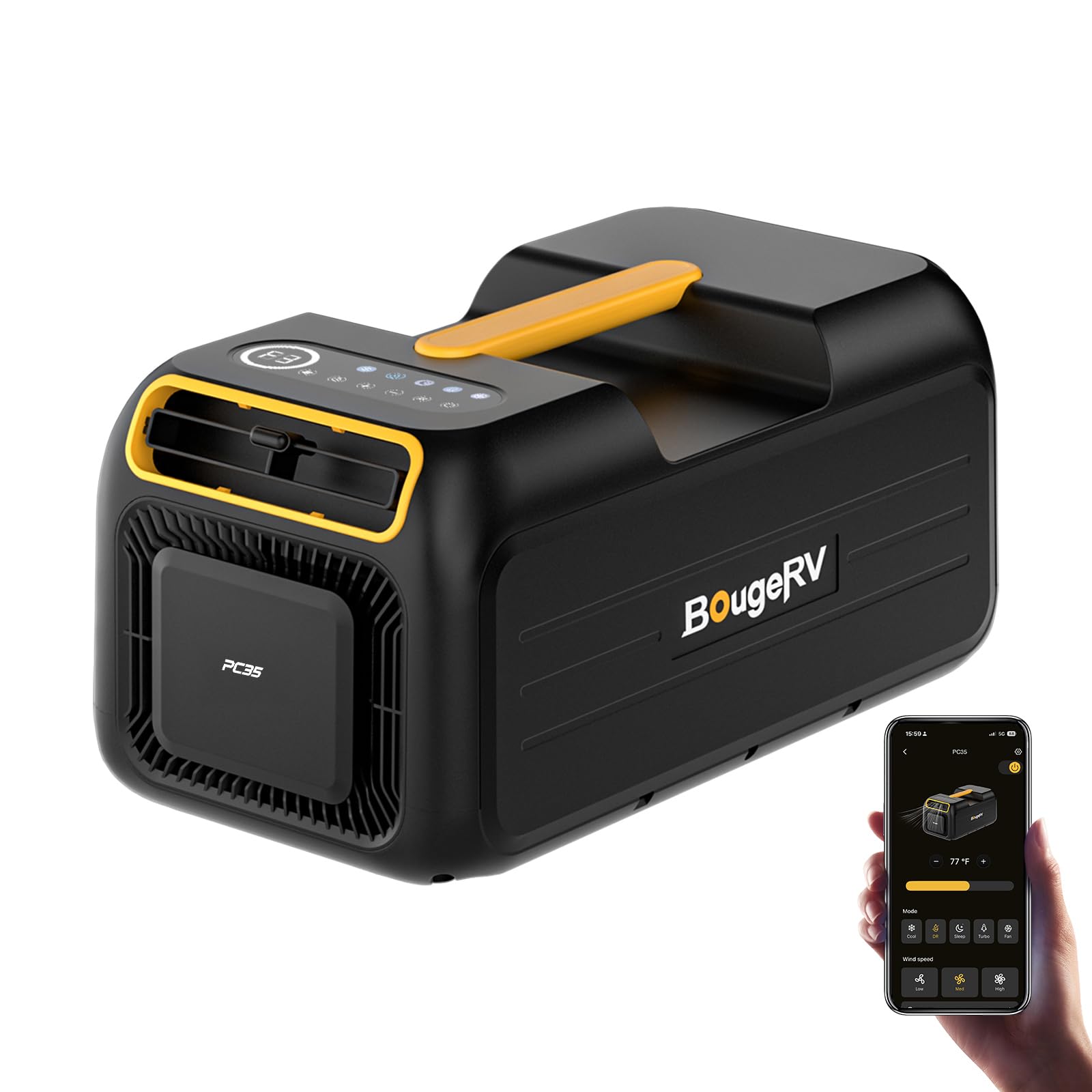
The BougeRV PC35 is tailor-made for the camping crowd. With a 3,500 BTU capacity and the ability to drop the temperature by 18°F in 15 minutes on strong mode, it handles tents up to roughly 65 square feet with authority. The 5-in-1 functionality—cooling, dehumidifying, fan, high power, and sleep mode—gives you precise control over your comfort without unnecessary complexity.
What sets this unit apart is the convenience of app control within a 33-foot range. You can adjust the temperature, timer, and modes from your sleeping bag without fumbling for a remote. The ergonomic handle and 34-pound weight make it manageable for one person to carry from the vehicle to the campsite, and the included exhaust ducts mean you can set it up quickly.
Power consumption is reasonable for a camping AC: it draws enough to run on a quality solar generator like a Jackery 3600. Some users report the compressor can struggle in extreme ambient heat above 105°F, but for typical summer camping conditions, it delivers consistent, quiet cooling. The build quality feels solid, and the 2-year tech support adds peace of mind for outdoor gear that takes a beating.
Why it’s great
- Rapid 18°F temperature drop in 15 minutes
- Convenient smartphone app control from 33 feet away
- Lightweight and portable at 34 pounds with ergonomic handle
Good to know
- Compressor may shut down in extreme heat above 105°F
- Venting setup requires a bit of tinkering for tent use
2. OUTOHOME 5200BTU Portable Tent Air Conditioner
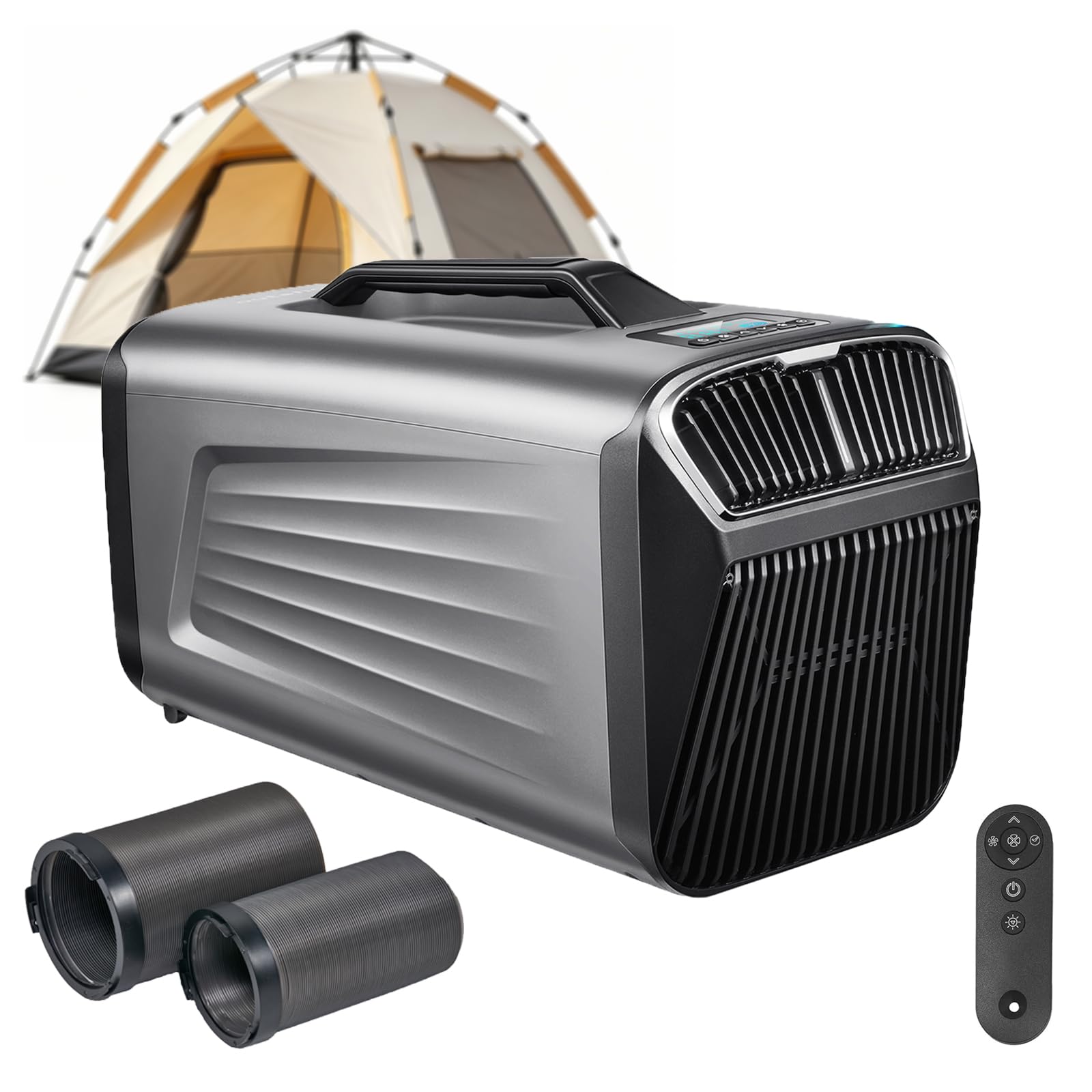
The OUTOHOME 5200BTU strikes a rare balance: serious cooling power in a footprint that barely sips power. Drawing under 400 watts per hour, this unit can run for extended periods on a modest battery bank, making it a strong candidate for off-grid setups in tents, truck cabs, or van life conversions. The GMCC high-end compressor delivers an 18°F drop in just 5 minutes, which is genuinely fast for a camping AC.
Its dual-hose design is a subtle but critical advantage. Instead of sucking cooled interior air out to cool the compressor (the weakness of single-hose units), the OUTOHOME pulls outside air for heat exchange, preserving its cooling efficiency. This design also means you can place the unit outside your tent and run the hoses in, saving precious floor space and keeping compressor noise external.
The drainage-free operation in low-humidity conditions eliminates the midnight panic of a full water tank. At 31 pounds with a streamlined handle, it’s easy to carry one-handed. The metallic spray finish looks sharp, but the real win is the energy efficiency that lets you cool all night without draining your solar reserves.
Why it’s great
- Dual-hose design for superior efficiency in tents
- Ultra-low 400W power draw ideal for battery/solar
- Quiet sleep mode at 46-50 dB won’t disrupt sleep
Good to know
- Requires an inverter generator for voltage-sensitive setups
- Some units report inconsistent cooling in extreme humidity over 70%
3. BAYKUL Portable Camping Air Conditioner
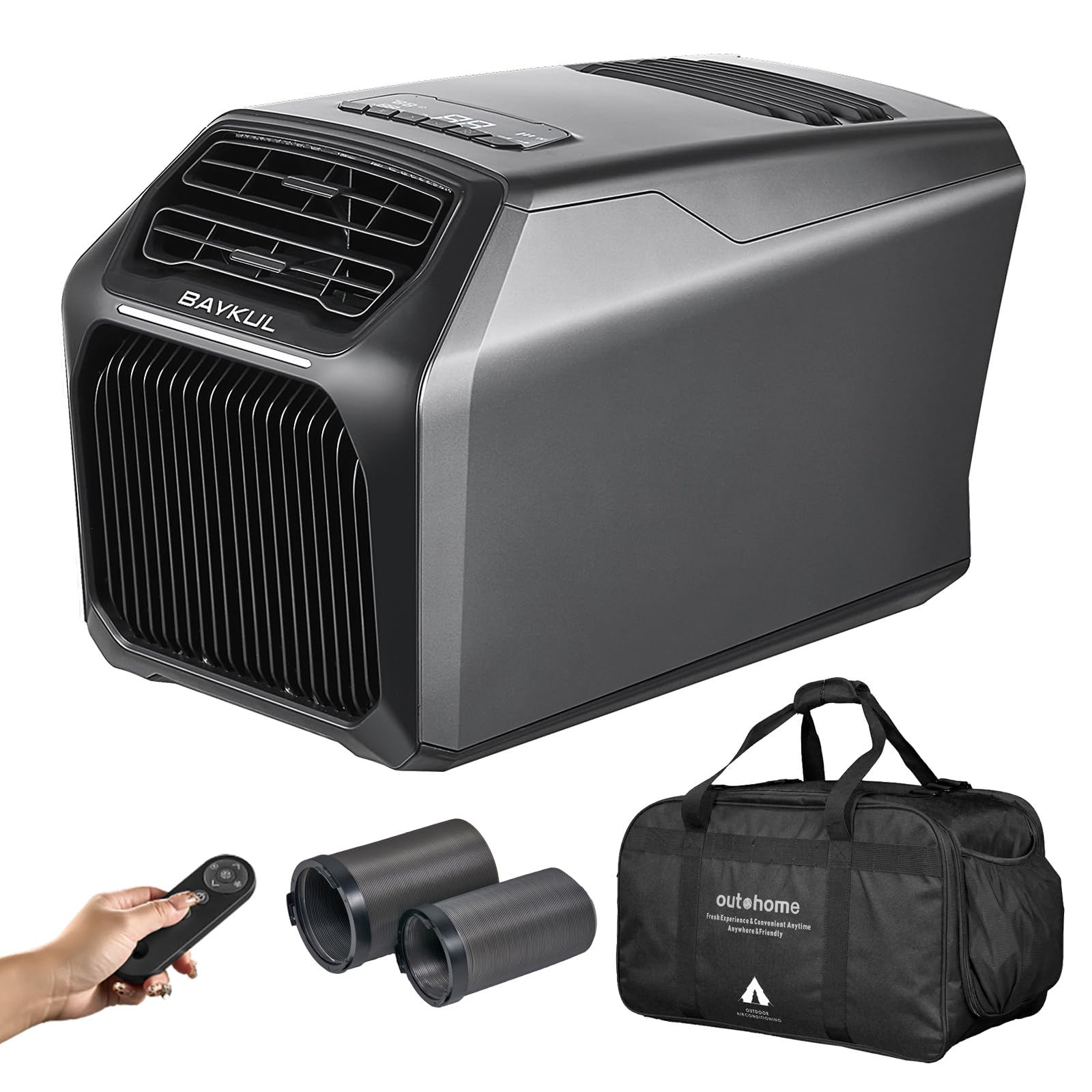
The BAYKUL is the only unit on this list that handles both summer heat and chilly mountain nights, with 6,800 BTU cooling and 7,500 BTU heating in one compact package. This dual-function capability makes it a legitimate 4-season camping companion. Switch modes on the RF remote (which works through walls) to warm up the tent at dawn and cool it back down by midday.
What’s genuinely impressive is the power economy. With an average draw of only 550 watts and an inverter compressor that adjusts output intelligently, it can run off a small generator or a decent solar setup. The 6-in-1 functionality (cooling, heating, fan, dehumidifier, sleep mode, timer) covers every weather scenario without needing multiple devices. At 30 pounds and packed with a carrying bag, it’s designed for one-handed trips from the car.
Noise levels hover around 46 dB, which is whisper-quiet for a unit this capable. The eco-friendly R-32 refrigerant is a modern touch that boosts performance in a smaller chassis. A few users reported a rattling noise from the fan assembly upon arrival, so inspect the unit immediately after delivery. When it works—which it does for the vast majority—it transforms a canvas tent into a climate-controlled room.
Why it’s great
- Heating and cooling in one portable unit for year-round use
- Inverter compressor adjusts power draw for efficiency
- Compact 30-pound design with included carry bag
Good to know
- Occasional fan assembly rattle reported in some units
- Temperature display defaults to Celsius
4. COWSAR 8000 BTU Portable Air Conditioner

The COWSAR 8000 BTU is a solid entry-level option for campers who have access to shore power or a robust generator. It’s designed to cool up to 450 square feet, which is overkill for most tents but gives you headroom if you’re cooling a large cabin tent or an RV with thin walls. The 4-mode system—cool, dehumidifier, fan, and sleep—gives you flexibility without a steep learning curve.
Its washable double-layer filter is a practical touch for dusty campsites. Cleaning it every two weeks keeps the airflow strong and the unit efficient. The LED display and remote control work from up to 20 feet away, so you don’t have to crawl out of your sleeping bag to tweak the temperature. Noise levels at 52 dB are reasonable for a portable AC; it’s audible but not disruptive enough to ruin a conversation or keep a determined sleeper awake.
Assembly is straightforward with the included sliding window kit, and the 360-degree wheels make it easy to reposition inside a cabin tent. The floor footprint is significant—this isn’t a unit you’ll tuck into a corner of a backpacking tent. It’s bulky, and some users find the space it consumes frustrating. But if you have the room and the power, it delivers consistent cooling that outpaces smaller camping-specific units at a fraction of the cost.
Why it’s great
- Powerful 8,000 BTU cooling for large tents and RVs
- Washable double-layer filter for dusty conditions
- Affordable entry price for shore-power setups
Good to know
- Bulky design eats up floor space inside a tent
- Fan noise at 52 dB is noticeable during quiet hours
5. Air Choice 10000 BTU Portable Air Conditioner
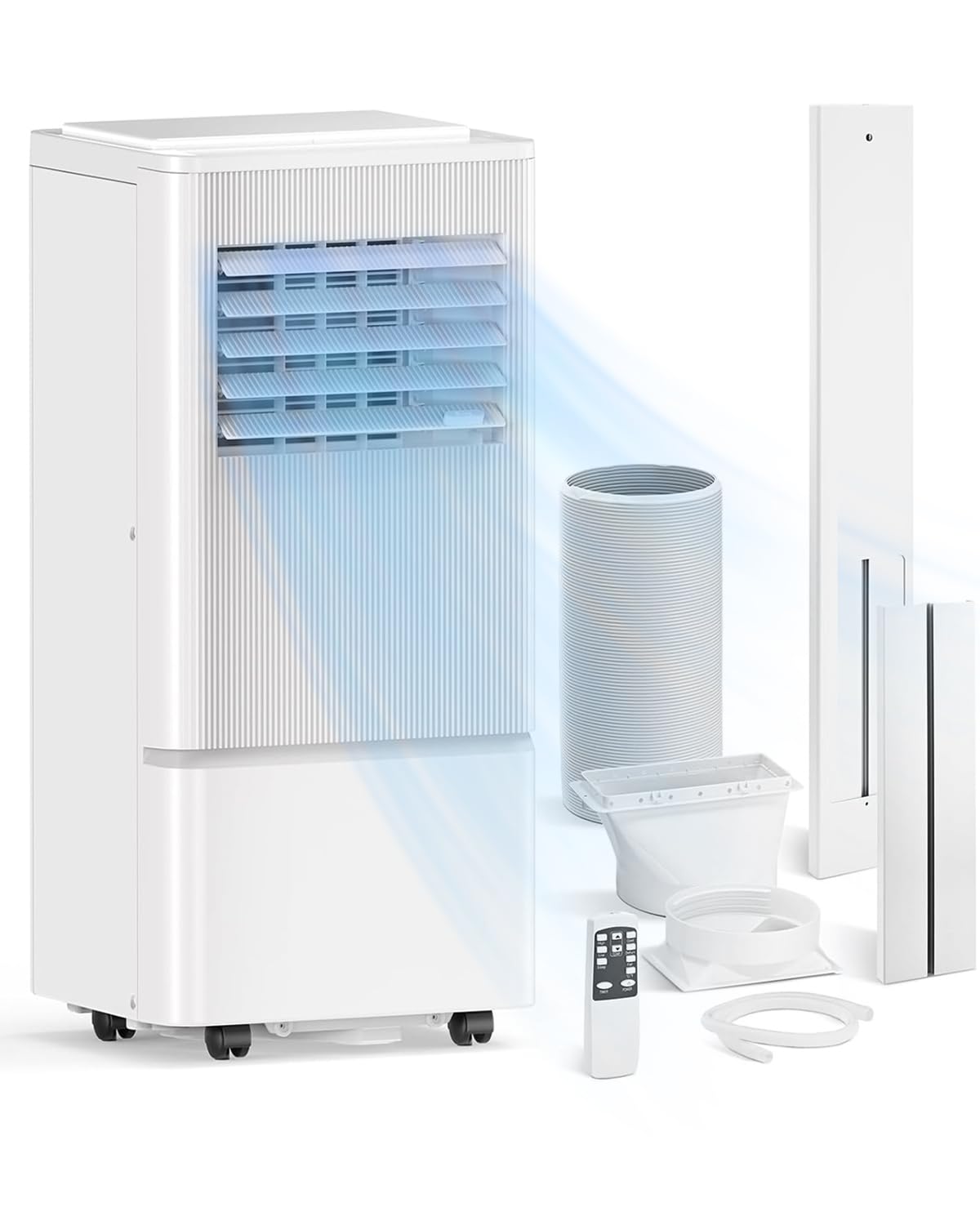
The Air Choice 10,000 BTU model is built around the promise of restful sleep, and it delivers. In sleep mode, the unit drops to 53 dB, which is barely louder than a whisper in a quiet room. The 24-hour programmable timer lets you schedule the AC to run precisely when you need it—cool the tent before bed, then shut off after a few hours to conserve generator fuel.
With an ASHRAE rating of 10,000 BTU and an optimal coverage of about 300 square feet, this unit handles larger RVs and cabin tents with ease. The 4-in-1 functionality adds a dehumidifier mode that removes moisture on humid nights, and the 2-speed fan circulates air even when the compressor cycles off. The self-evaporating design reduces the frequency of manual drainage, which is a hidden convenience when you’re already camping.
Installation is user-friendly with the adjustable window kit that fits both short and long sliding windows. The creamy white finish blends into most interiors, and the built-in wheels make repositioning simple. Some users note that the noise at full power is typical for a portable AC of this size, but the sleep mode genuinely earns its reputation for being unobtrusive. For the price, it’s a capable performer that prioritizes comfort without breaking the bank.
Why it’s great
- Very quiet sleep mode at 53 dB for undisturbed rest
- Self-evaporating design cuts down on manual draining
- Versatile 24-hour timer for energy management
Good to know
- Noise at full fan speed is typical for its class
- Optimal coverage is closer to 300 sq ft, not 450
6. GarveeTech 14000 BTU Portable Air Conditioner
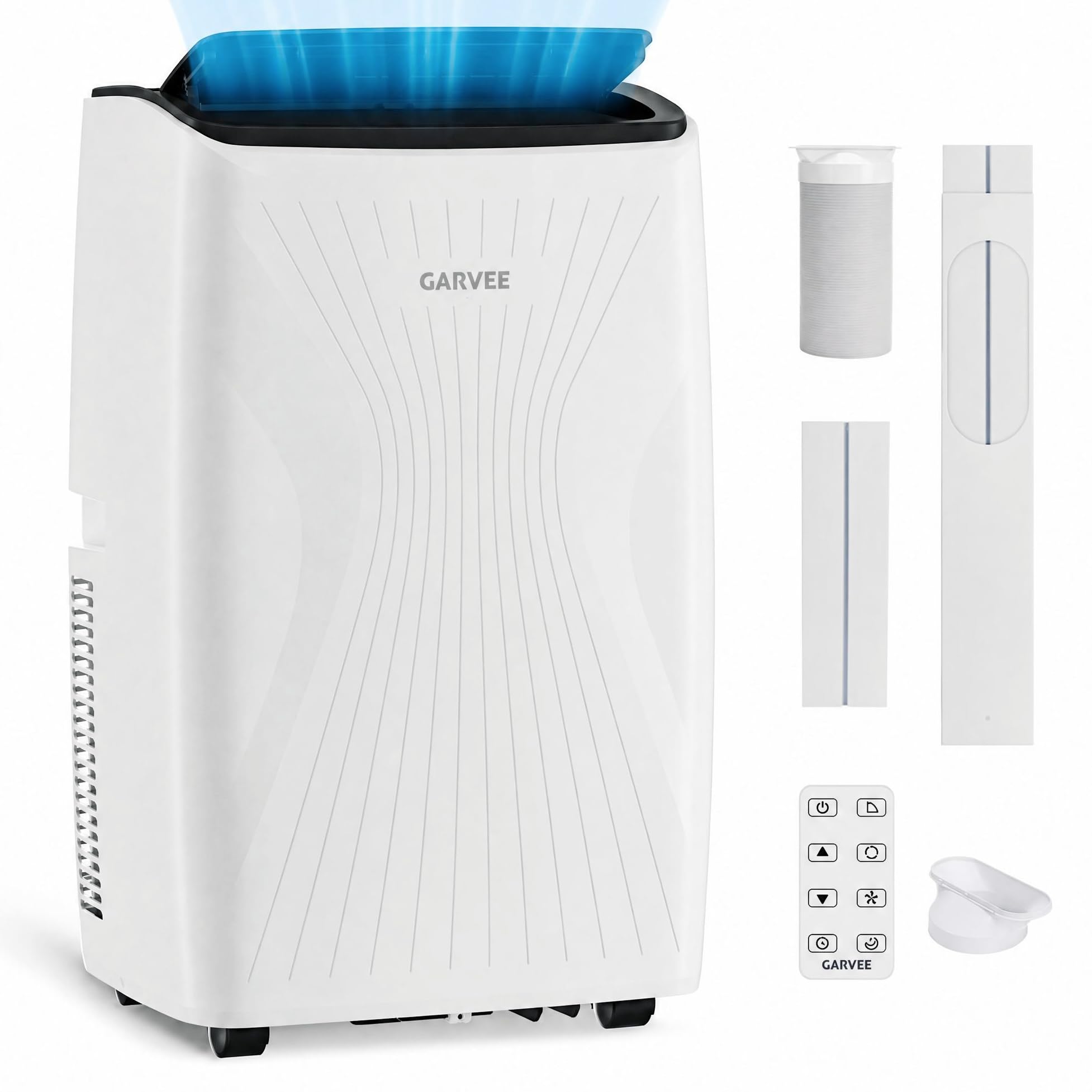
The GarveeTech 14,000 BTU is a beast designed for serious cooling where you have access to shore power. If you’re setting up a large base camp tent or an RV with a 30-amp hookup, this unit will keep the interior frosty even when the mercury pushes past 95°F. The 4-way swing and adjustable louvers distribute cool air evenly, preventing hot spots in sprawling shelters.
It excels at dehumidification, pulling up to 60 pints of moisture per day—a hidden hero for damp campsites or coastal trips where humidity makes the heat feel unbearable. The LED display and remote control give you full command from across the tent, and the 24-hour timer lets you set it to start cooling before you return from a day hike. The built-in memory function saves your preferred settings, so you don’t have to reprogram it after a power cycle.
At 75 pounds with dimensions of 17x13x28 inches, this is not a unit you casually carry. The four 360-degree swivel casters and hidden handles help roll it around a campsite, but lifting it into a vehicle requires two people. Noise hits about 54 dB, which is on par for a unit this powerful—expect a steady hum. Make sure your tent has a robust window or vent opening to fit the exhaust hose; it’s not subtle, but the cooling power is undeniable.
Why it’s great
- Massive 14,000 BTU cooling for large spaces over 700 sq ft
- Powerful dehumidifier removes 60 pints of moisture daily
- 4-way swing ensures even air distribution
Good to know
- Very heavy at 75 pounds; requires two people to move
- Single-hose design is less efficient than dual-hose alternatives
7. VACOOR 14000 BTU Portable Air Conditioner
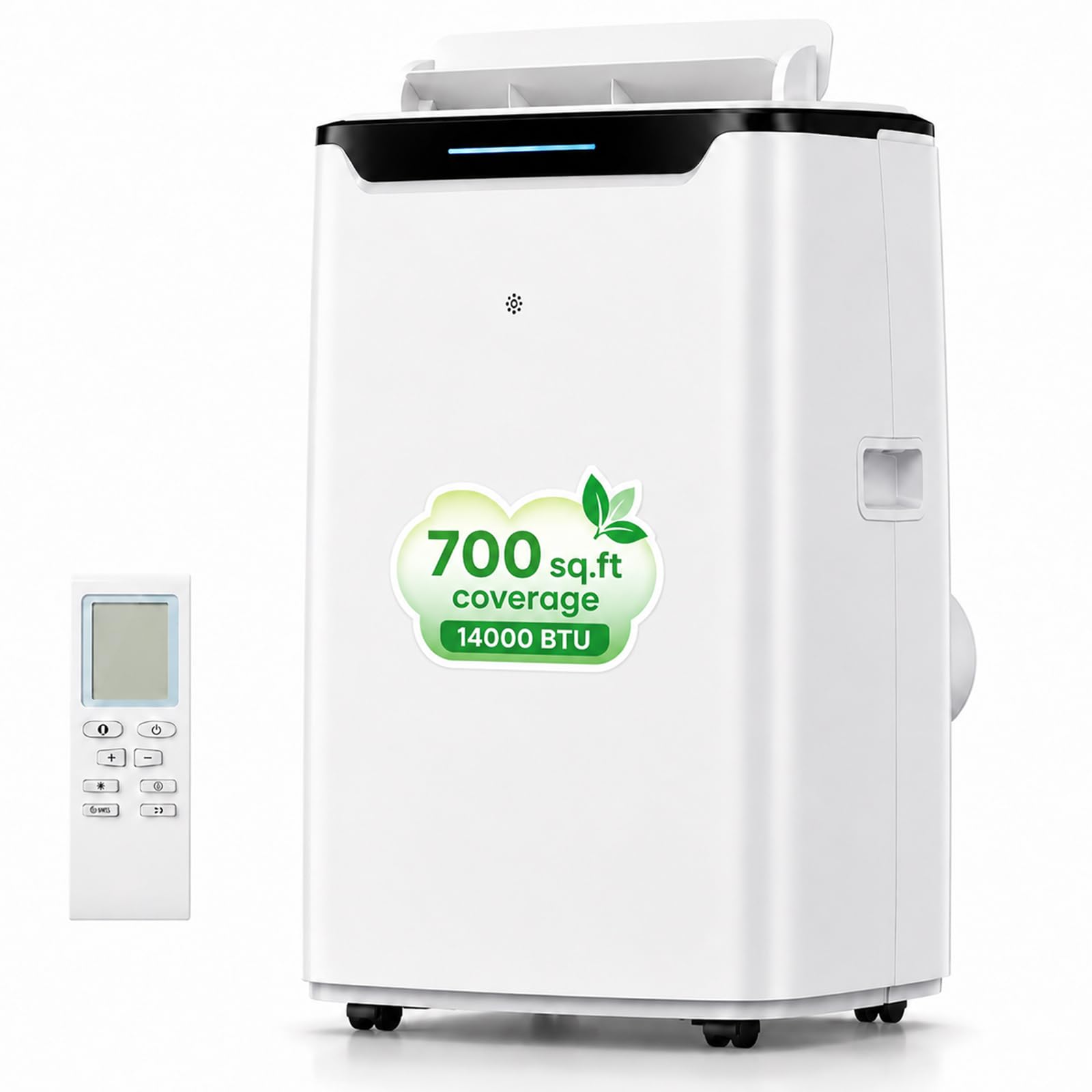
The VACOOR 14,000 BTU stands out for its emphasis on energy efficiency. With a CEER rating of 7.8, it significantly undercuts the power consumption of typical portable ACs in this BTU class. That higher efficiency translates into lower generator fuel consumption or longer run times on a battery backup—critical factors when you’re camping without unlimited grid power.
Its upward full-width vent design is a practical innovation. Instead of blowing cold air directly at your feet (which is wasted when you’re sleeping on a cot), it aims the airflow toward the ceiling, allowing it to naturally circulate downward as it cools. Combined with 235 CFM of airflow, this creates a more uniform temperature across the entire tent or RV interior. The 45-90 degree adjustable louvers let you fine-tune the direction for your specific layout.
Sleep mode brings noise down to 50 dB, which is competitive with smaller units despite the massive BTU output. The dehumidifier pulls up to 50 liters per day, making sticky campground nights manageable. It includes a child lock, which is a thoughtful safety feature if you’re camping with kids. The window kit fits most standard openings without drilling, and the removable washable filter simplifies maintenance. It’s heavy at 70 pounds, but the wheels and side handles make it workable for a campsite setup.
Why it’s great
- High CEER 7.8 efficiency saves generator fuel
- Upward airflow design improves temperature distribution
- Sleep mode operates at a quiet 50 dB
Good to know
- Heavy unit at 70 pounds; needs two people for transport
- Window kit may not fit all tent vent openings without adapters
8. Contrymod 12V DC RV Air Conditioner
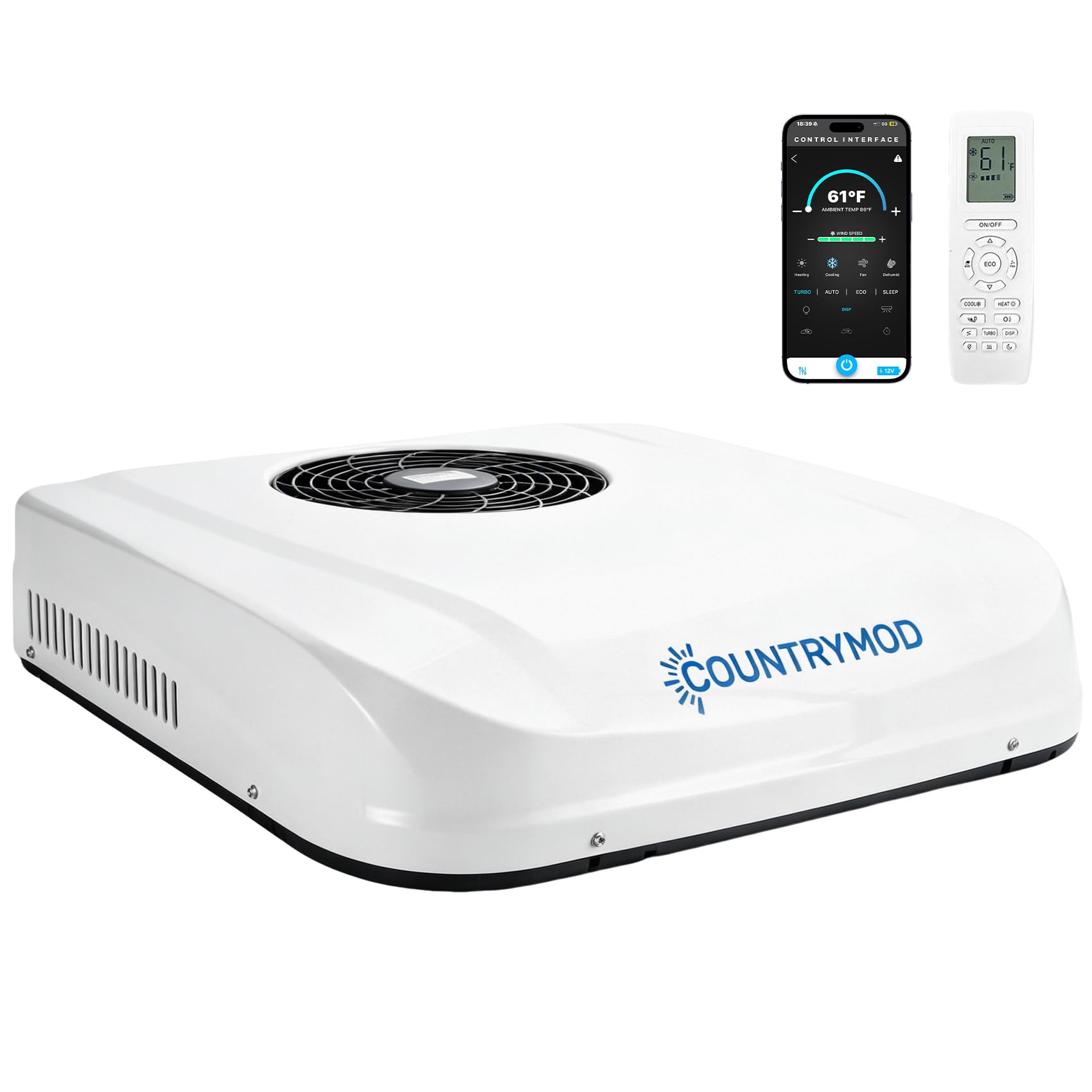
The Contrymod 12V DC unit redefines what’s possible for off-grid RV cooling. Running directly on 12-volt battery power with a variable frequency inverter, it draws only 300-900 watts—roughly one-third to one-fifth the power of a standard rooftop AC. In eco mode, that translates to up to 10 hours of continuous cooling from a moderately sized lithium battery bank. For van dwellers and RVers who rely on solar, this is a transformative option.
The 10,000 BTU output is honest and effective. Users report cooling a 100-square-foot RV from 113°F down to 80°F during peak heat, with overnight temps dropping to 72°F. The horizontal compressor design reduces vibration and lowers the unit’s center of gravity, which adds stability during travel and reduces noise inside the cabin. Sleep mode drops to an incredibly quiet 44-45 dB—barely perceptible.
Installation fits a standard 14×14-inch roof vent, and the ductless design means no major roof modifications. A few users note the instructions are sparse, and thicker RV roofs may require longer mounting bolts. The customer support team is responsive, with reports of quick replacements for faulty components. For serious boondockers, this unit bridges the gap between luxury and energy independence.
Why it’s great
- Ultra-low 300-900W draw enables all-night off-grid cooling
- Near-silent 44 dB sleep mode for undisturbed rest
- Efficient inverter technology with variable speed compressor
Good to know
- Thick RV roofs may need longer mounting hardware
- Installation instructions could be clearer
9. Outequip 12V 10000 BTU RV Air Conditioner
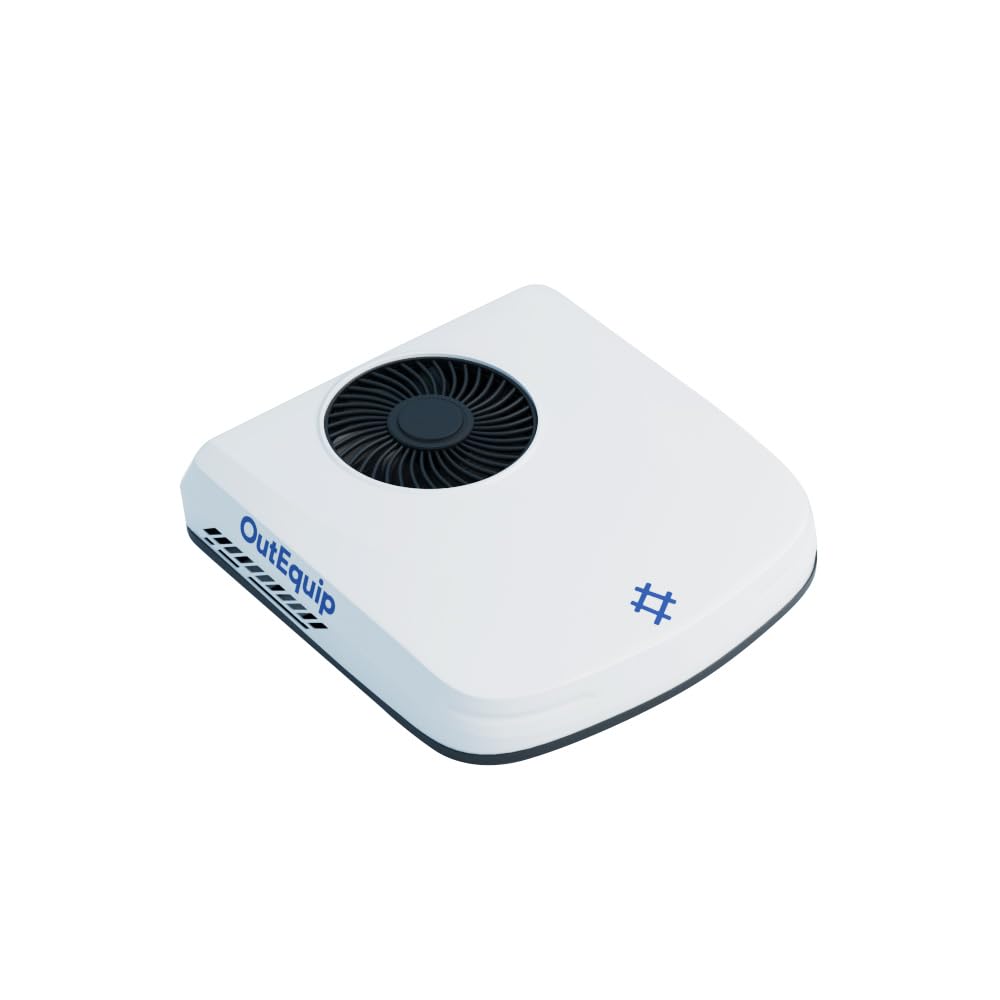
The Outequip 12V unit pairs serious cooling with a built-in 4,500 BTU PTC heater, making it the closest thing to a year-round climate solution for an RV roof. The heater won’t handle arctic conditions, but it takes the morning chill off a van or camper in spring and fall without needing a separate propane furnace running. The variable-speed inverter compressor draws as little as 200-300 watts in eco mode, which is remarkable for a 10,000 BTU unit.
Build quality is a priority here. The UV-stabilized ABS housing, EPDM foam gasket, and zinc-coated condenser are all designed to endure road vibration, sun exposure, and rain without degrading. At just 43 pounds with a low-profile 6-inch height, it’s one of the lightest and sleekest rooftop units available—important for vehicles with clearance concerns or weight limits. The brushless copper motor fans keep noise around 40 dB, which is library-quiet.
Installation is manageable for a confident DIYer, though the included screws can be difficult to remove if you need to adjust the mounting. Customer support is responsive and has swapped units for different voltage configurations gratis. The multiple modes—eco, sleep, turbo—give you granular control over power use versus cooling speed. For off-grid RVers who want one unit that handles both hot afternoons and cool nights, this is a compelling choice.
Why it’s great
- Integrated PTC heater handles morning chill without extra propane
- Ultra-low 200-300W eco mode for extended off-grid use
- Lightweight 43-pound design with low 6-inch profile
Good to know
- Lid screws can be difficult to remove during installation
- Heater not sufficient for extreme cold or large spaces
FAQ
Can I run a camping air conditioner off a portable power station?
What’s the difference between a tent air conditioner and a portable room AC?
Do I need a window for a camping air conditioner in a tent?
How much noise is too much for sleeping in a tent?
Will a camping air conditioner work in high humidity?
Final Thoughts: The Verdict
For most campers, the best camping air conditioner winner is the BougeRV PC35 because it balances compact size, rapid 18°F temperature drop, and app-based control in a package that runs on portable solar generators. If you want camping-specific efficiency and the ability to place the compressor outside your tent, grab the OUTOHOME 5200BTU. And for year-round campers who need both cooling and heat in a single lightweight unit, nothing beats the BAYKUL 6800/7500.

Mo Maruf
I created WellFizz to bridge the gap between vague wellness advice and actionable solutions. My mission is simple: to decode the research and give you practical tools you can actually use.
Beyond the data, I am a passionate traveler. I believe that stepping away from the screen to explore new environments is essential for mental clarity and physical vitality.