Our readers keep the lights on and my smoothie glass nicely filled. As an Amazon Associate, I earn from qualifying purchases.
After a broken ankle, the moment your cast or post-op boot comes off feels both freeing and terrifying. The muscles are weak, the ligaments have been through trauma, and the slightest misstep can send a jolt of fear through your whole body. Finding the right ankle support during this vulnerable phase isn’t about choosing the cheapest wrap—it’s about finding a device that marries rigid immobilization with the right flexibility to let you rebuild your gait without risking a re-fracture.
I’m Mohammad Maruf — the founder and writer behind WellFizz. I have spent hundreds of hours analyzing orthopedic braces, medical-grade stabilizers, and post-surgical recovery gear, cross-referencing clinical specs with thousands of user recovery stories to find what actually works for the fragile ankle phase.
Whether you need a lace-up stabilizer for physiotherapy or a full walking boot for those first cautious steps, this guide breaks down the best options for a safe return to motion. Here is my analysis of the best ankle support after broken ankle for a confident and steady recovery.
How To Choose The Best Ankle Support After Broken Ankle
Selecting the correct support for a recently healed fracture is different from choosing one for a simple sprain. The bone needs controlled loading, the soft tissues need compression, and the joint needs proprioceptive feedback to rebuild your natural walking pattern. Focus on these three areas to avoid a setback.
Support Level vs. Mobility Phase
In the first weeks after the cast or boot comes off, rigid immobilization is still your friend. Look for a brace with removable rigid splints or a post-op walking boot with a rocker sole. As you transition to the strengthening phase, a lace-up brace with figure-8 straps offers a middle ground; it limits dangerous inversion and eversion while letting you walk more naturally.
Heel Counter and Strap Configuration
Post-fracture, your heel is often the last part to feel stable. A supportive heel counter (the cup at the back of the brace) prevents the foot from sliding inside the brace, which can torque the healing joint. Straps crossing behind the heel or using a figure-8 pattern lock the heel in place. Avoid simple sleeves that provide only general compression without heel control—they offer little against rotational stress.
Material Breathability and Fit
You will wear this support for hours each day during recovery. Neoprene and nylon blends hold their shape but can trap heat. Look for ventilated padding or moisture-wicking knits, especially if you plan to wear the brace inside a closed shoe. Also, check if the brace fits your current footwear—some post-op boots are bulky and require you to size up your shoe or wear a wider one during the day.
Quick Comparison
On smaller screens, swipe sideways to see the full table.
| Model | Category | Best For | Key Spec | Amazon |
|---|---|---|---|---|
| Bauerfeind MalleoTrain | Compression Knit | Light activity & swelling control | Viscoelastic massage pads | Amazon |
| Brace Direct CAM Walker | Post-Op Boot | Early weight-bearing walks | Low-profile rocker sole | Amazon |
| Med Spec ASO | Lace-Up Stabilizer | Daily walking & hiking | Figure-8 strapping | Amazon |
| McDavid Bio-Logix 4197 | Hinged Brace | Construction & active work | Flex-link hinge design | Amazon |
| Ossur FormFit | Sports Stabilizer | Return to sports & cutting | Figure-8 strapping | Amazon |
| Honarry Walking Boot | Inflatable Boot | Customizable compression | Inflatable airbag support | Amazon |
| AGPTEK Lace-Up Brace | Light Brace | Daily comfort & mild support | Removable aluminum splints | Amazon |
In‑Depth Reviews
1. Bauerfeind MalleoTrain Ankle Support

The Bauerfeind MalleoTrain sits at the top of the post-fracture support chain because of its medical-grade compression knit and the anatomically contoured viscoelastic pads that sit directly over your inner and outer malleoli. These pads massage the joint during movement, actively reducing swelling while improving proprioception—a critical function after a fracture when your brain has lost trust in the joint. The pull-on design is easy to get into without bending or twisting, and the thin profile fits inside most shoes without adding bulk.
Many users transitioning out of a walking boot report that the targeted compression from the pads makes a noticeable difference in stabilizing the joint during stairs and side-stepping movements. The knit material is breathable, moisture-wicking, and machine-washable, so you can wear it for hours without the sweaty, itchy feeling common with neoprene braces. The size chart is accurate, but those between sizes often prefer the smaller fit for firmer compression, provided they are not overly sensitive to pressure.
For a recent fracture, this brace is best used during the late-stage rehab phase when you need joint awareness and swelling control, not total immobilization. It is a premium medical device made in Germany, and that investment translates directly into comfort and durability. If you plan to wear the brace for daily walking and light activity, this is the most comfortable and effective choice on the market.
Why it’s great
- Targeted malleolar pads reduce swelling and improve gait.
- Breathable, washable knit with no itch or heat buildup.
- Low-profile design fits into regular shoes and boots.
Good to know
- High price point vs. simpler lace-up braces.
- Not designed for rigid immobilization during early weight-bearing.
- Requires accurate sizing; a poor fit reduces compression benefit.
2. Brace Direct CAM Walker Fracture Boot
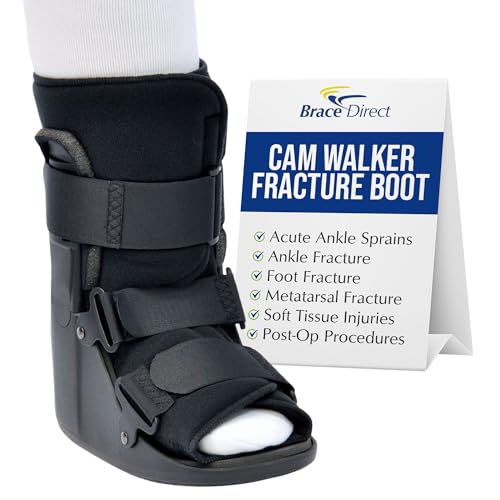
The Brace Direct CAM Walker is a doctor-recommended post-op boot built for the critical early weeks when your foot needs full immobilization and a controlled gait. The low-profile rocker bottom enables a natural heel-to-toe walking motion without forcing the ankle joint into painful positions, which is essential after a fracture when the foot is still sensitive to impact. The open-toe ventilation keeps the foot cool, and the adjustable hook-and-loop straps accommodate bandages or swelling changes during the day.
Users recovering from stress fractures, dislocations, and post-surgical healing report that the boot provides a sturdiness that matches hospital-grade units at a fraction of the out-of-pocket cost. The medial and lateral support pads lock the foot in place, preventing the twisting motions that can disturb a healing bone. The boot is slightly bulkier than a simple brace, so walking in wider shoes or using it primarily indoors is common, but the stability it provides during the first weight-bearing days is unmatched.
One consideration is the middle strap placement; some users find it sits too low for optimal upper ankle stability, and the footbed can cause arch ache after prolonged standing. Adding a small orthotic insert often resolves this. Overall, this boot is a solid, value-conscious alternative to hospital rentals for anyone in the early post-cast phase.
Why it’s great
- Rocker sole promotes natural gait during early walking.
- Adjustable straps accommodate swelling and bandage changes.
- Sturdy polymer shell provides hospital-grade immobilization.
Good to know
- Bulky fit requires careful shoe selection for outdoor use.
- Footbed can cause arch fatigue over long standing periods.
- Middle strap placement limits upper ankle stability for some users.
3. Med Spec ASO Ankle Stabilizer
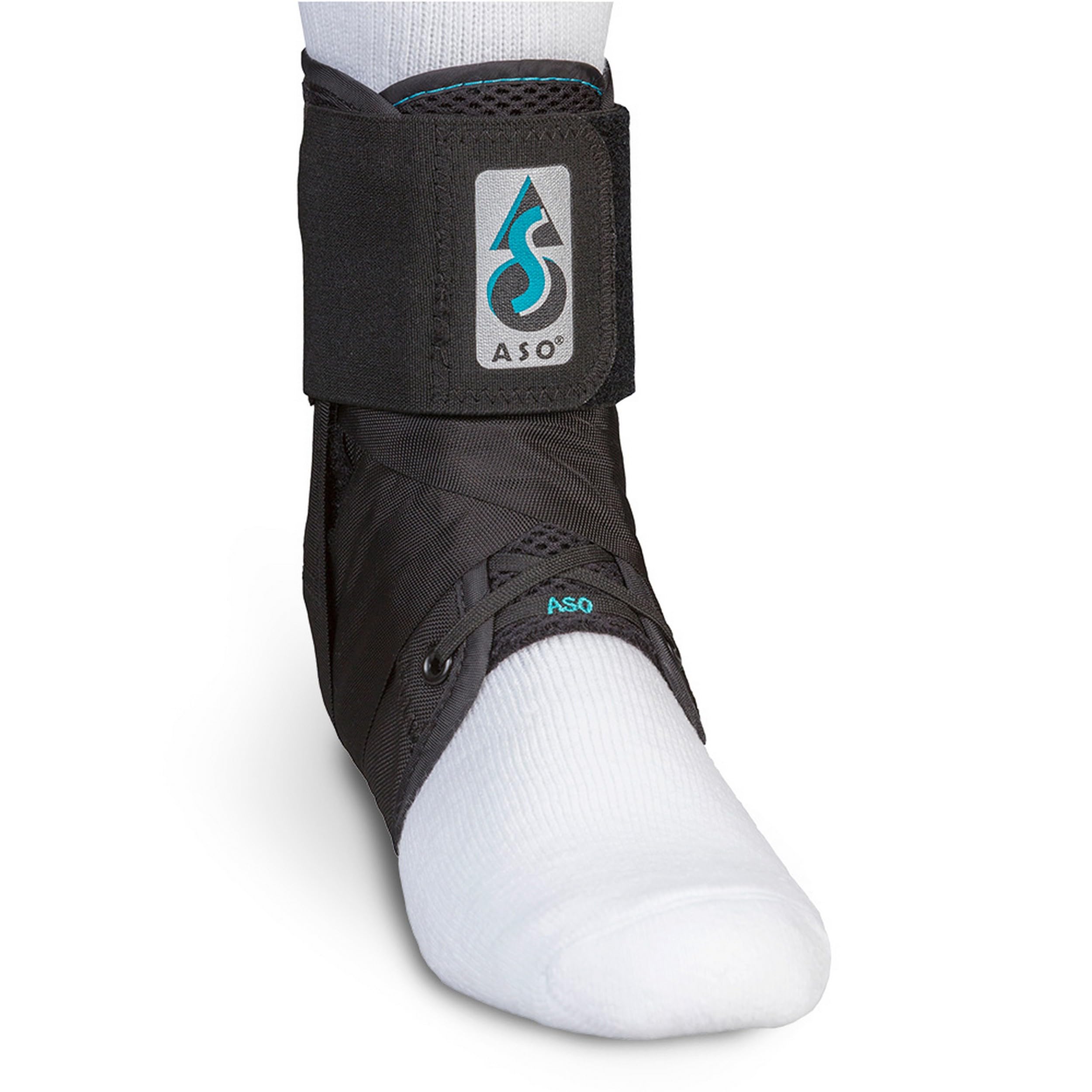
The Med Spec ASO is widely trusted by athletic trainers and orthopedic specialists for post-fracture recovery because of its dual-layer stabilization system. The built-in lace-up cinches the brace around your foot and ankle, and the additional figure-8 straps cross over the front of the ankle to lock out dangerous inversion and eversion. This is the brace you reach for when you are ready to transition from the boot into a walking shoe but still need serious protection against that sideways roll that can reinjure a healing bone.
The CoolFlex padding and tongue keep the brace breathable, and the durable nylon construction resists stretching even after months of daily use. Users recovering from peroneal tendonitis alongside a fracture report that the adjustable compression allows them to loosen the brace for walking and tighten it for hiking or gym sessions. The sizing is critical, and the brand recommends measuring your ankle circumference rather than going by shoe size alone, as a swollen post-fracture ankle can mislead size selection.
This brace does limit heel rise to about one-third of normal range, which mimics the protective effect of athletic tape without the hassle of re-taping daily. If you are looking for a brace that you can wear for months during the strengthening phase and later for sports, the ASO is the ideal mid-range investment. It fits under most running shoes but may feel tight in narrow sneakers.
Why it’s great
- Figure-8 straps provide maximum inversion/eversion resistance.
- Breathable padding with durable, stretch-resistant nylon.
- Adjustable compression for recovery progression from walking to hiking.
Good to know
- Requires assist to put on; laces and straps take time to dial in.
- Not suitable for slip-on shoes; works best in lace-up sneakers.
- Higher profile than knit sleeves; may feel bulky in narrow footwear.
4. McDavid Bio-Logix 4197 Ankle Brace
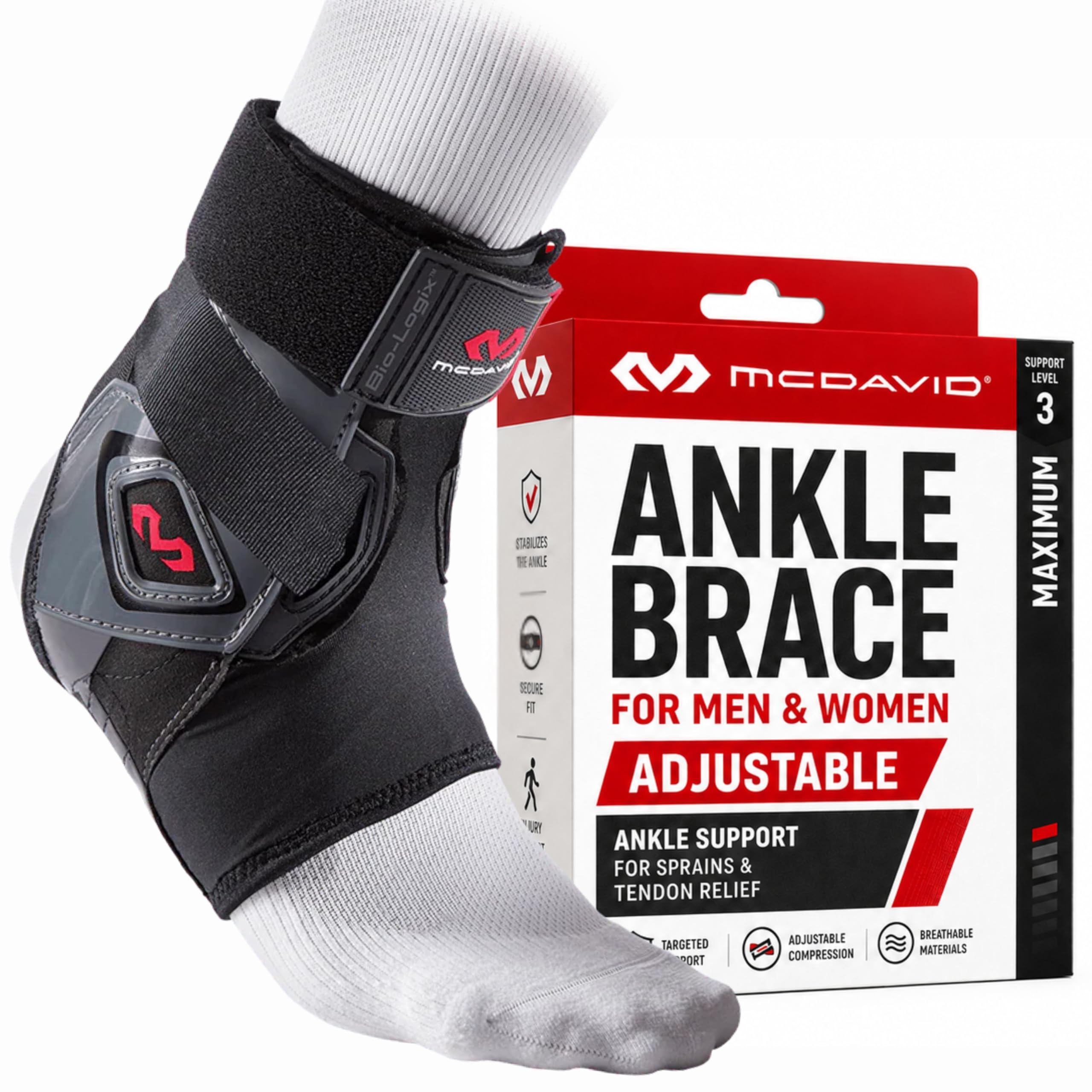
The McDavid Bio-Logix 4197 is designed for people who cannot afford to stop moving after a fracture. Its flex-link hinge design offers a level of lateral support that surpasses basic lace-up wraps, providing a mechanical stop against excessive ankle roll without completely locking out movement. This is a competition-grade brace, and it shows in the build quality: contoured plastic splints padded with memory foam, multiple anchor straps that let you dial in the fit from the calf to the arch, and a neoprene-spandex blend that grips the foot without slipping.
One user working construction daily after breaking their talus bone reported that the brace allowed them to climb ladders and walk on uneven surfaces all day without the aching, throbbing sensation they experienced without support. The hinge design is low-profile enough to fit inside work boots, though the strap system can feel bulky if not carefully arranged. The anatomically specific left/right design means you cannot swap sides, which actually improves the fit along the natural contour of your ankle.
However, for anyone returning to physical labor, soccer, or basketball after a fracture, the McDavid provides a level of protection that simple sleeves cannot match.
Why it’s great
- Hinge provides mechanical lateral protection without blocking ankle motion.
- Contoured memory foam pads reduce chafing during heavy activity.
- Anatomically specific left/right design improves fit and stability.
Good to know
- Thicker build may feel bulky inside narrow work boots.
- Straps can tighten the sock more than the splint for some users.
- Higher price point compared to basic lace-up braces.
5. Ossur FormFit Ankle Brace

The Ossur FormFit is a favorite among basketball players and soccer athletes for good reason: the figure-8 strapping provides excellent inversion and eversion control while the lightweight material feels almost invisible once laced in. For a post-fracture patient looking to return to cutting sports, this brace offers the right balance of security and mobility. The quick lace-up system is intuitive, and the brace’s slim profile means you only need a half-size larger shoe rather than a full size up.
Users coming off ankle fractures and severe sprains report that the FormFit dramatically reduces the fear of re-injury during pivoting movements. The brace handles odor well even after sweaty practices, and the durability is tested over three to four years of regular play. It is also effective for conditions like rheumatoid arthritis, where the joint needs stable support throughout the day without circulation being cut off.
One note for post-fracture buyers: the brace is designed more for active prevention than for early-stage immobilization. If you are still in the first weeks of walking again, you may prefer a full boot or heavier brace. But once your bone has healed and you need to rebuild strength and confidence in sport-specific movements, the FormFit is a top-tier choice.
Why it’s great
- Excellent lateral control without cutting off circulation.
- Lightweight and low-profile; fits into most athletic shoes.
- Long lifespan with good odor management over years of use.
Good to know
- Best suited for active sports; less ideal for early stage post-cast.
- May require a half-size larger shoe for best fit.
- Limited cushioning compared to padded braces.
6. Honarry Walking Boot
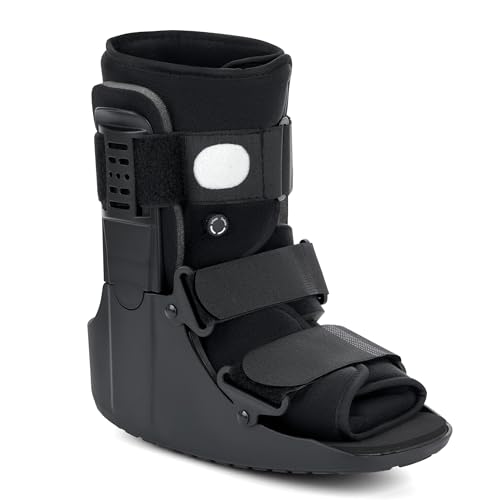
The Honarry Walking Boot introduces an inflatable airbag that sits around the ankle, allowing you to pump up the compression to exactly the level you need. This is a unique feature for a post-fracture boot, as traditional walking boots use only rigid shells and foam liners. The ability to adjust the air pressure gives you control over how tightly the boot holds your foot and ankle, which can be a game-changer when swelling fluctuates day-to-day during early recovery. The rigid plastic shell is ultra-lightweight yet durable, and the three-point adjustable hook-and-loop straps add another layer of personalized compression.
Users recovering from stress fractures, ankle sprains, and soft tissue injuries report that the boot provides excellent protection for walking, standing, and light housework without the pain of bearing direct weight on the injured foot. The breathable cushioning insole conforms well to the foot contour, and the anti-slip sole gives confidence on smooth floors. The boot is also significantly more affordable than hospital rentals, which makes it a strong budget-conscious alternative for early-stage recovery.
The main drawback is sizing accuracy. A women’s size 7.5 foot had a medium boot that left two inches of space at the toe, so measuring carefully before buying is critical. Additionally, like all full walking boots, it is heavy and bulky—not something you want to wear on a long walk outside. But for controlled indoor recovery during the first weeks of weight-bearing, the inflatable option adds a unique level of comfort.
Why it’s great
- Adjustable airbag provides personalized compression control.
- Ultra-lightweight shell reduces fatigue during walking.
- Very affordable compared to hospital-grade alternatives.
Good to know
- Sizing runs large; measure carefully before ordering.
- Heavy and bulky for outdoor or extended use.
- Airbag system adds complexity that may fail over time.
7. AGPTEK Lace-Up Ankle Brace
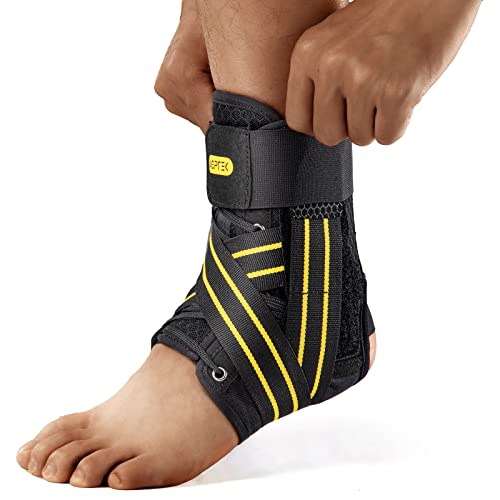
The AGPTEK brace takes a no-frills approach: a cross-lace-up design with lightweight aluminum splints that are removable once you no longer need rigid support. This versatility makes it an interesting option for the post-fracture timeline. You can wear it with the splints in during the cautious walking phase, then take them out once your bone has consolidated, converting the brace into a simple sports wrap for light activity. The polyester and nylon material is breathable and sweat-free, and the Velcro closure saves time compared to traditional lacing.
Users who have tried doctor-provided braces often note that the AGPTEK offers better quality and comfort than the standard hospital-issue version, with adjustable straps that actually reach the right spots on the foot. The brace works well for Achilles tendonitis, plantar fasciitis, and general sprains beyond just fracture recovery, so it can serve multiple purposes over time. The medium size is a good match for women’s size 10W, and the yellow color option makes it easy to find in a gym bag.
The trade-off is that the aluminum splints, while lightweight, do not provide the same grade of rigid immobilization as a full post-op boot or a medical-grade CAM walker. This brace is best used during the advanced rehab stage when you are already walking without a boot and need protection against accidental twists. For the first few weeks of weight-bearing, consider a walking boot instead. The price point makes it an affordable addition to a recovery kit.
Why it’s great
- Removable splints allow the brace to serve multiple recovery phases.
- Breathable, sweat-free material for all-day wear.
- Better comfort and fit than some doctor-provided braces.
Good to know
- Aluminum splints lack the immobilization strength of a full boot.
- Sizing runs small for wider feet; check reviews before ordering.
- Not suitable for early weight-bearing after a fracture.
FAQ
Should I wear an ankle brace to sleep after a broken ankle?
How long should I wear a rigid boot before switching to a lace-up brace?
What does the figure-8 strap actually prevent after a fracture?
Final Thoughts: The Verdict
For most users, the best ankle support after broken ankle winner is the Med Spec ASO because it offers the ideal balance of rigid lateral protection and adjustable comfort for the long rehab phase after a boot comes off. If you want lightweight, medical-grade compression for swelling control during daily activity, grab the Bauerfeind MalleoTrain. And for early weight-bearing walks where immobilization is still critical, nothing beats the Brace Direct CAM Walker for its rocker sole support and adjustability.

Mo Maruf
I created WellFizz to bridge the gap between vague wellness advice and actionable solutions. My mission is simple: to decode the research and give you practical tools you can actually use.
Beyond the data, I am a passionate traveler. I believe that stepping away from the screen to explore new environments is essential for mental clarity and physical vitality.