Our readers keep the lights on and my smoothie glass nicely filled. As an Amazon Associate, I earn from qualifying purchases.
A persistent drip around your chimney base means one thing: the sealant at the flashing joint has failed. Standard hardware-store caulk can’t handle the extreme temperature swings or the UV exposure that a roof junction endures day after day. You need a material specifically formulated to bond with metal, masonry, and roofing while staying flexible from subzero winter nights to blistering summer afternoons.
I’m Mohammad Maruf — the founder and writer behind WellFizz. I’ve spent hundreds of hours analyzing sealant chemistry, reading real-user field reports, and comparing thermal ratings, adhesion specs, and cure behaviors across dozens of high-heat products to build this guide around what actually works at a chimney flashing junction.
Whether you are resealing an existing joint or installing a new boot, choosing the right compound determines whether your repair lasts one season or ten. This guide breaks down the top contenders for the best caulk for chimney flashing so you can stop chasing leaks and get back to enjoying a dry, safe home.
How To Choose The Best Caulk For Chimney Flashing
A chimney flashing sealant lives at the intersection of extreme heat, direct rain, and constant movement from thermal expansion. Choosing the wrong chemistry leads to cracks, gaps, and water intrusion that damages your roof deck and chimney structure. Focus on three core properties that determine real-world performance at this specific junction.
Temperature Rating & Continuous Heat Tolerance
The sealant must survive the conductive heat radiating from the flue and the summer sun baking the roof surface. Look for a continuous service rating of at least 400°F to 500°F for standard wood-burning or gas appliances. For pellet stoves or high-efficiency units that push extreme exhaust temperatures, a rating above 800°F provides a safer margin. The advertised maximum spike rating (often 1000°F+) is less important than the continuous rating, because the flashing joint stays hot for hours during a burn.
Adhesion to Metal, Masonry & Roofing Materials
Chimney flashing typically involves lead, aluminum, galvanized steel, or copper against brick, stone, or concrete. A sealant that bonds aggressively to both metal and masonry without needing a primer saves time and improves reliability. Check for specified adhesion to these surfaces in the product data — generic silicone often fails on oily metals or porous stone without mechanical grip.
Flexibility & UV Resistance
The roof structure moves independently from the chimney, creating shear stress at the flashing joint. A rigid sealant cracks under this movement. Choose a formulation that remains flexible after full cure, typically a high-temp silicone or a siliconized latex. UV resistance is equally critical because the flashing seam is exposed to direct sunlight year-round — materials that degrade under UV lose adhesion and become brittle within a single season.
Quick Comparison
On smaller screens, swipe sideways to see the full table.
| Model | Category | Best For | Key Spec | Amazon |
|---|---|---|---|---|
| Kraken Bond Fireplace Sealant | Premium Silicone | Extreme heat & fire-rated applications | 2732°F max rating | Amazon |
| Rutland High Heat Silicone | Mid-Range Silicone | Fireplace inserts & general flashing | 500°F continuous rating | Amazon |
| Red Devil Extreme Temp HVAC/R | Mid-Range Rubber | Cold-weather & HVAC flashing seals | 400°F / -60°F range | Amazon |
| Rutland 800°F Latex Sealant | Premium Latex | Stove pipe joints & easy clean-up | 800°F continuous rating | Amazon |
| GE Silicone 2 Advanced Metal | Budget Silicone | General metal bonding & non-flue gaps | Metallic gray finish | Amazon |
In‑Depth Reviews
1. Kraken Bond High Temperature Fireplace Sealant 2732°F
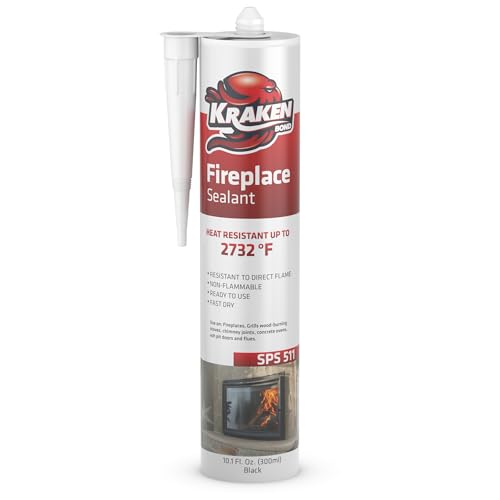
Kraken Bond brings the highest extreme-temperature resilience in this group with a stated maximum of 2732°F, backed by a Class-A fire rating. That rating means this sealant is engineered for direct contact with the hottest zones — fireplace inserts, chimney liners, and furnace walls — where lesser silicones would burn away. The formulation remains flexible after full cure, so it handles the expansion and contraction of metal flashing without cracking.
The 10.1-ounce cartridge applies like a standard caulk but cleans up with water when uncured, which simplifies tooling and wiping excess from brick or stone. Users who sealed wood stove joints and firebox penetrations report it held tight through repeated burns at temperatures approaching 2200°F. It adheres reliably to brick, concrete, stone, and metal without needing a separate primer.
Full cure takes roughly four hours, faster than many high-temp silicones that require 24 hours. The low-odor, low-VOC formula makes indoor application around a fireplace more comfortable than acetoxy-cure alternatives. If you want a single sealant that covers everything from flashing to internal flue joints, this is the most capable option on the list.
Why it’s great
- Highest temperature tolerance in its class at 2732°F
- Class-A fire rated for direct chimney and flue contact
- Low odor and cleans up with water before curing
Good to know
- Slightly higher price point than standard silicones
- Black color limits versatility if a gray finish is preferred
2. Rutland High Heat Silicone Sealant 500°F
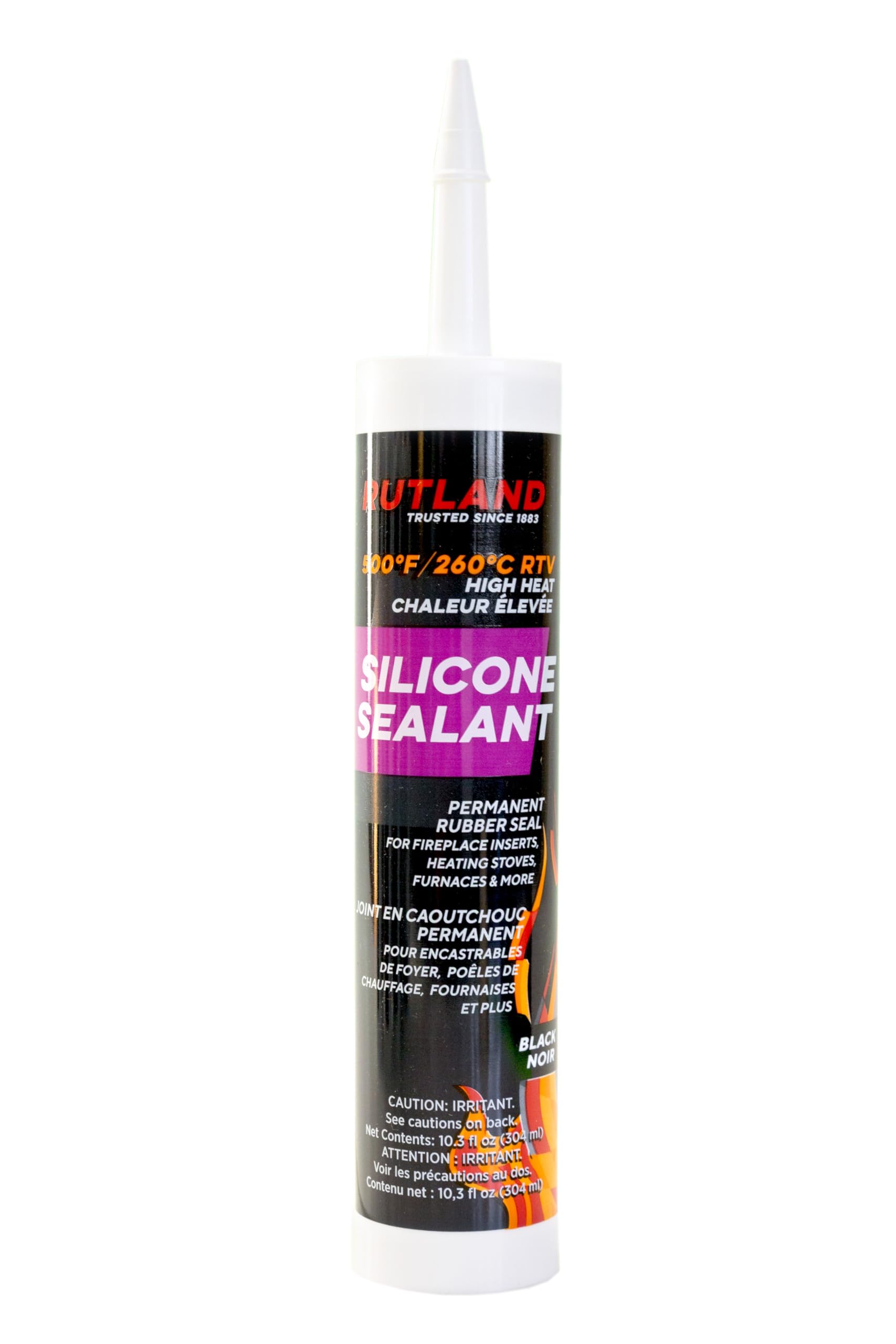
Rutland’s 500°F RTV silicone is a long-standing favorite for fireplace and flashing repairs because it balances thermal performance with a reasonable cost per tube. The black formula is specifically designed to adhere to metal, masonry, wood, ceramic, glass, and plastic — exactly the surface mix you encounter around a chimney flashing junction. It meets ASTM C92-86, a standard for high-temperature sealant integrity.
The acetoxy cure system produces a flexible, watertight seal that resists UV degradation and remains elastic from freezing winter conditions up to its 500°F continuous ceiling. Users consistently report it holds up on fireplace inserts, solar panel frames, and stove pipe joints without cracking or shrinking. The 10.3-ounce cartridge gives you enough material for several flashing seams.
One drawback is the strong vinegar-like odor during curing, which requires good ventilation during application. The black color matches dark flashing and stove components well, but may stand out against lighter aluminum or galvanized steel. For the price-to-performance ratio, this is a reliable workhorse that has proven itself across thousands of installations.
Why it’s great
- Proven adhesion to metal, masonry, glass, and plastic
- Flexible seal that handles thermal cycling well
- Affordable price for a high-temperature silicone
Good to know
- Strong vinegar odor during cure requires ventilation
- Black color may not blend with all flashing materials
3. Red Devil 089650 Extreme Temperature HVAC/R Silicone Sealant

Red Devil engineers this aluminum-colored sealant specifically for HVAC and refrigeration applications, giving it a remarkable temperature range of -60°F to 400°F. That cold-weather performance is unique among standard high-heat silicones — it remains flexible when applied in sub-freezing conditions, a real advantage for winter flashing repairs when you cannot wait for warmer weather. The rubber-based formulation delivers a tensile strength of 500 PSI, meaning it resists tearing under mechanical stress.
The tube bonds aggressively to metal, aluminum, concrete, glass, fiberglass, vinyl, and plastic, so it works across flashing materials and the surrounding roof substrate. Users report it holds up on metal roofs, refrigerator containers, and general HVAC duct sealing without cracking, shrinking, or peeling. The permanent-flexibility design ensures the joint can move slightly without breaking the seal.
The 280-milliliter cartridge is slightly smaller than a standard 10-ounce tube, so factor that into coverage estimates for larger flashing runs. The aluminum color blends well with galvanized steel and aluminum flashing but stands out against dark masonry. If you frequently work in cold climates or need a sealant that can be applied below 40°F, this is your best option.
Why it’s great
- Works down to -60°F for cold-weather application
- 500 PSI tensile strength resists tearing
- Good adhesion to multiple roofing and metal surfaces
Good to know
- Surface recommendation listed as tile may cause confusion
- Smaller cartridge volume than standard tubes
4. Rutland 800°F Flexible Latex Sealant
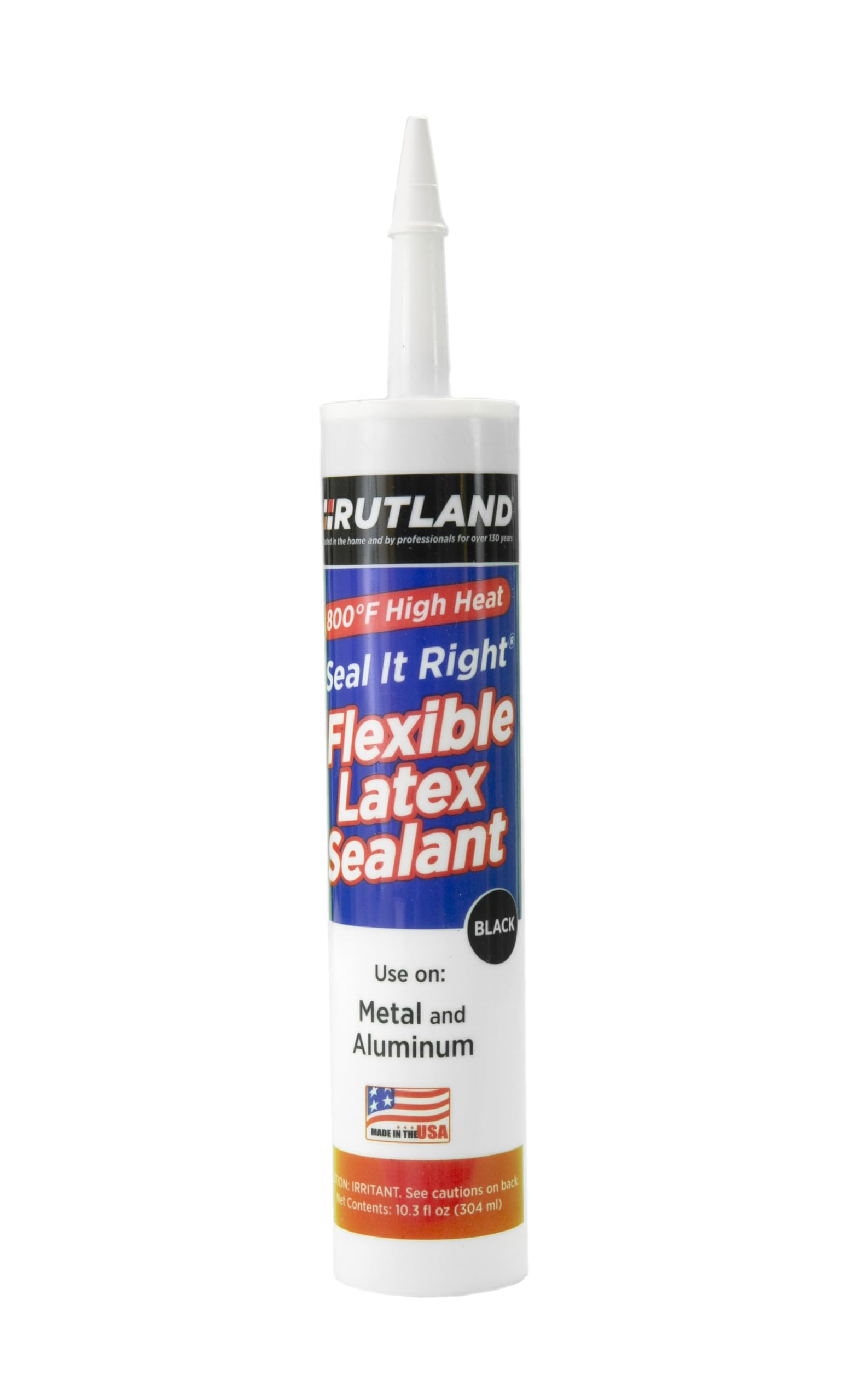
Rutland’s 800°F rated latex sealant offers a unique formulation that combines high heat tolerance with easy water-based cleanup — no solvents needed. This is a siliconized latex, so it retains flexibility after curing but does not produce the strong acetic acid smell typical of silicone. It is specifically recommended for direct-vent appliances, gas systems, pellet stoves, and metal flues, making it a strong candidate for chimney flashing where the sealant contacts the flue pipe.
Coverage is approximately 6 feet with a 1/2‑inch bead, so one cartridge handles a typical flashing perimeter. Users who applied it to wood stove pipe joints note that it seals smoke leaks effectively and cleans off fingers and tools with a damp rag. The black color matches dark stove pipes and flashing boots seamlessly. It also allows for easy disassembly later — the sealant releases cleanly for inspections or pipe swaps, unlike permanent silicone bonds.
The trade-off is that latex-based sealants can be less durable under constant UV exposure compared to pure silicone, so this is best used where the flashing joint is partially shaded or covered by a counterflashing. Some users report that heavy expansion cycles can cause hairline cracks over multiple seasons, requiring a touch-up bead. For applications where future removal is a priority, this is the most serviceable choice.
Why it’s great
- 800°F continuous rating for high-heat flues
- Cleans up with water, no solvents required
- Easy to remove for future inspections or repairs
Good to know
- May develop hairline cracks under extreme expansion cycles
- Less UV resistant than pure silicone for exposed locations
5. GE Silicone 2 Advanced Metal (Momentive)
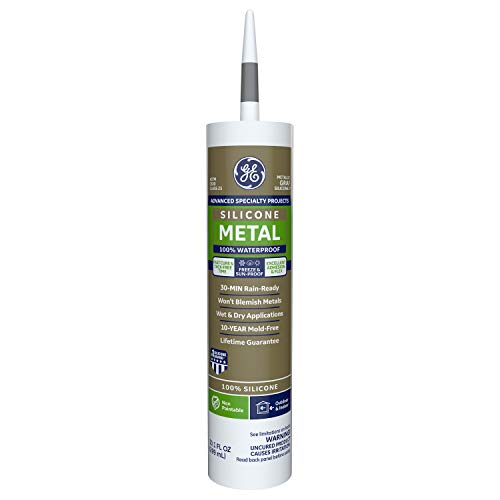
GE’s Silicone 2 in metallic gray is the most budget-friendly entry here, but its utility around chimney flashing is limited to areas that stay below 400°F. It uses a blend formulation designed for general metal bonding — it sticks well to metal, glass, wood, and plastic and creates a watertight, mold-resistant seal. The 9.8-ounce tube is standard size, and the metallic gray color blends nicely with stainless steel, aluminum, and galvanized flashing.
Users report easy application and strong adhesion on metal roofing, concrete, and kitchen sink installations. The fast 30-minute full cure time sets it apart from slower high-temp silicones, so you can seal a drip edge or counterflashing gap and move on quickly. It also resists mildew, which matters in damp roof environments.
The major caveat is that this is not rated for continuous high heat. It works fine for the outer edge of flashing where temperatures stay moderate, but it will degrade if applied directly against a hot flue pipe or within the primary heat zone of a fireplace chase. Check the manufacture date when purchasing, as some users received tubes near their expiration date. For a non-critical seal on the cool side of a flashing boot, this is a perfectly capable, affordable solution.
Why it’s great
- Very fast 30-minute full cure time
- Metallic gray color blends with galvanized and steel flashing
- Cost-effective for low-heat flashing edge repairs
Good to know
- Not rated for continuous high-heat contact near flues
- Some tubes may be near expiration date at purchase
FAQ
Can I use regular silicone caulk on chimney flashing?
How do I prepare the flashing surface before applying sealant?
Final Thoughts: The Verdict
For most users, the best caulk for chimney flashing winner is the Kraken Bond Fireplace Sealant because it offers the highest temperature tolerance plus a Class-A fire rating, covering everything from flashing joints to internal flue seals. If you want a proven mid-range option with a lower cost per tube, grab the Rutland High Heat Silicone. And for cold-weather application or HVAC-specific jobs where you need flexibility down to -60°F, nothing beats the Red Devil Extreme Temperature Sealant.

Mo Maruf
I created WellFizz to bridge the gap between vague wellness advice and actionable solutions. My mission is simple: to decode the research and give you practical tools you can actually use.
Beyond the data, I am a passionate traveler. I believe that stepping away from the screen to explore new environments is essential for mental clarity and physical vitality.