Our readers keep the lights on and my smoothie glass nicely filled. As an Amazon Associate, I earn from qualifying purchases.
A backyard tent transforms your outdoor space into a versatile room for sleepovers, afternoon shade, or pest-free dining. But choosing the wrong one means fighting zippers, dealing with sagging poles, or waking up to a wet floor after a light drizzle. The market is flooded with options that promise quick setup but deliver frustration—from flimsy mesh that tears to frames that buckle in a breeze. A smart buy starts with knowing which construction details actually hold up over time.
I’m Mohammad Maruf — the founder and writer behind WellFizz. I’ve spent countless hours analyzing the specifications, material grades, and real-world feedback on backyard tents to separate the durable builds from the disposable ones.
This guide breaks down the seven strongest contenders in the best backyard tent category based on frame rigidity, water resistance, ventilation design, and practical room layout.
How To Choose The Best Backyard Tent
A backyard tent serves a different purpose than a wilderness backpacking shelter. You prioritize roominess, easy setup, and protection from sun and bugs over ultralight weight. Identifying the right balance of frame strength, floor size, and ventilation ensures you get a structure that lasts for years of weekend use.
Frame Material and Pole Construction
The frame dictates how well your tent holds up against wind and repeated assembly. Steel poles offer superior strength and rigidity, especially for larger floor plans, but add significant weight. Fiberglass poles are lighter and more affordable but can splinter under stress or warp over time. For a backyard tent that stays stationary for long periods, steel or heavy-duty alloy steel provides the best long-term stability. Look for reinforced joints and full truss structures on larger canopy-style tents to prevent sway.
Fabric, Waterproofing, and Floor Quality
Polyester (often 150D to 420D) is the standard for tent bodies and rainflies. The waterproof rating, measured in millimeters (mm) of hydrostatic head, indicates how much water pressure the fabric can resist before leaking. A rating of 1000mm or higher with fully taped seams is the minimum for reliable rain protection. Tub-style polyethylene floors with a thick denier (like the 1200mm found on premium models) prevent moisture wicking from wet ground. Blackout fabric is a valuable addition for backyard use, keeping the interior significantly darker and cooler during daytime naps.
Floor Area, Capacity, and Standing Height
Listed “person capacity” is a rough guideline—divide it by two for realistic comfort with gear. Measure the actual floor area in square feet. A tent at least 140 square feet comfortably fits two queen air mattresses with walking space. Center height matters more than you think: an 80-inch or taller ceiling allows most adults to stand upright, which makes changing clothes and moving around far less frustrating. Straight-wall cabin designs maximize usable floor space compared to dome tents with sloped sides.
Ventilation and Insect Protection
Mesh walls are non-negotiable for a backyard tent used in warm weather. Look for tents with multiple large mesh panels, a mesh ceiling, and at least two doors for cross-breeze airflow. Ground vents help reduce condensation when the tent is fully closed during rain. Built-in mosquito netting on canopy-style tents or screen rooms provides dedicated bug-free lounging. A rainfly that can be left partially open over the mesh roof balances weather protection with airflow.
Quick Comparison
On smaller screens, swipe sideways to see the full table.
| Model | Category | Best For | Key Spec | Amazon |
|---|---|---|---|---|
| Coleman Skylodge 19×10 | Premium Cabin | Large families needing a screened porch | 190 sq ft, 35 mph wind tested | Amazon |
| COBIZI 10×30 Canopy | Premium Canopy | Large outdoor events with full coverage | 300 sq ft, 32mm steel frame | Amazon |
| CORE 12 Person Cabin | Premium Cabin | Straight-wall cabin with room divider | 176 sq ft, 86 in center height | Amazon |
| EVER ADVANCED Blackout 14×10 | Mid-Range Cabin | Blackout sleep for daytime use | 140 sq ft, 84 in center height | Amazon |
| Coleman 14×10 Instant | Mid-Range Instant | 60-second setup with screened porch | 140 sq ft, WeatherTec system | Amazon |
| Portal 14×8 with Porch | Mid-Range Porch | Compact 2-room with attached porch | 112 sq ft, 80 in center height | Amazon |
| EVER ADVANCED 12×10 Screen House | Budget Screen Tent | Budget-friendly bug-free shelter | 120 sq ft, 85 in center height | Amazon |
In‑Depth Reviews
1. Coleman Skylodge 19×10 Camping Tent

The Coleman Skylodge delivers a massive 190-square-foot footprint that fits four queen air mattresses with generous walk-around space, supported by a frame that has been tested to withstand up to 35 mph winds. The integrated 5-by-10-foot screened porch adds a protected area for gear storage or bug-free lounging, making this feel more like a portable cabin than a tent. Color-coded poles and sleeves simplify the setup process, though the sheer size means you will want a second person to help raise the structure.
WeatherTec technology includes welded corners, inverted seams, and taped seams on both the rainfly and tent body, which collectively create a reliable barrier against water intrusion. Multiple reviewer accounts confirm the tent remained bone-dry inside during severe thunderstorms with sustained heavy rain. The front red-marked corner orients the rainfly, and the ground vent adds extra airflow when the tent is fully closed during wet weather.
Mesh storage pockets and an E-port for extension cord access make daily use convenient, but the floor material is thinner than older Coleman models—several users noted punctures from sharp rocks, which can be mitigated with a separate footprint tarp. Packing the tent back into the carry bag is a tight fit, especially for the pole set, and some users reported the bag seam tearing upon first repack. For families who value room and storm protection over portability, this is the strongest all-around choice.
Why it’s great
- Massive interior with separate screened porch
- Certified wind resistance to 35 mph with full seam taping
- Color-coded poles for intuitive setup
Good to know
- Floor fabric is lighter gauge and prone to punctures
- Very heavy and difficult to repack into carry bag
- Setup requires two people due to size and sail-like sidewalls
2. COBIZI 10×30 Canopy Tent
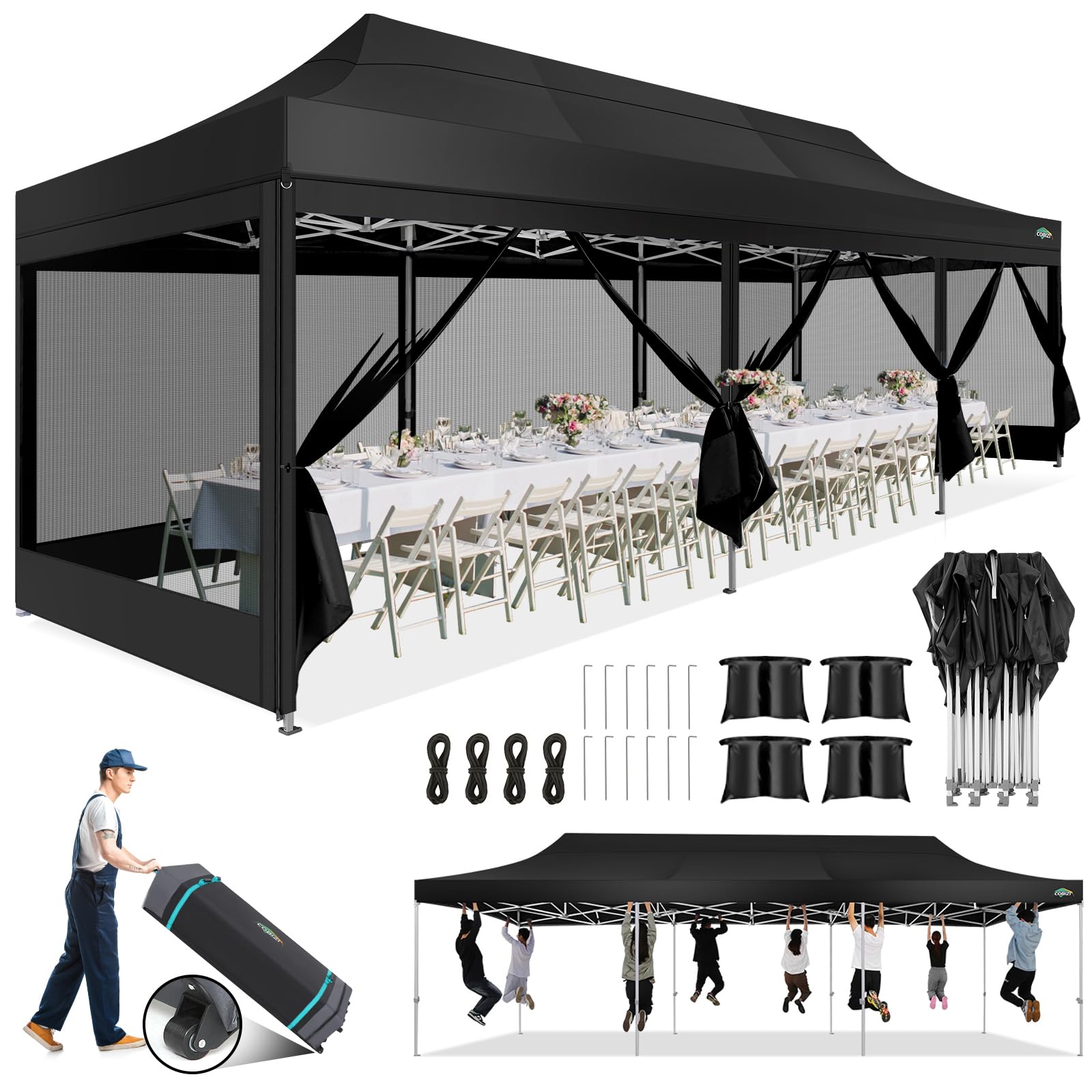
The COBIZI 10×30 canopy tent occupies an entirely different category from standard camping tents—it is a heavy-duty event shelter with 300 square feet of coverage, built on a 32mm-diameter alloy steel frame with a full truss structure. The three adjustable height settings (88, 92, and 96 inches) allow for flexible clearance, and the thumb-latch system provides an audible click when each leg is locked. This is not a quick-snap pop-up; it requires 3-4 people about 15-20 minutes for assembly, but the resulting structure feels solid and commercial-grade.
Water resistance comes from a 420D Oxford fabric top cover with PU coating and upgraded seam tapes, while eight removable mesh sidewalls provide full mosquito protection without sacrificing ventilation. One verified review noted the tent survived an EF-0 tornado with only two bent bars that were easily straightened, which speaks to the frame’s structural integrity. The sidewalls unzip at multiple points for pass-through access, and the included wheeled roller bag makes transport manageable despite the 142-pound total weight.
The canopy is best suited for long-term backyard setups, large parties, or market stalls where permanent-level coverage is needed. It is not designed for quick weekend camping trips or car camping where setup speed and compact storage are priorities. Some users reported that the zipper quality on the mesh sidewalls could feel less robust than the main frame, and the instructions are minimal—but the component count (1 top, 8 sidewalls, stakes, ropes) is straightforward once you understand how the truss joints lock.
Why it’s great
- Massive 300 sq ft coverage with commercial-grade steel frame
- Full mosquito netting with 8 removable mesh sidewalls
- Survived extreme wind events per verified reviewer accounts
Good to know
- Very heavy (142 lbs) and requires multiple people for setup
- Not a quick pop-up; 15-20 min assembly time
- Sidewall zipper quality feels less durable than the frame
3. CORE 12 Person Cabin Tent

The CORE 12 Person Cabin Tent prioritizes usable interior volume through its nearly straight-wall design, providing 176 square feet of floor space with an 86-inch center height that allows most adults to stand upright in the center. The shape eliminates the sloping walls common to dome tents, which means queen air mattresses can be pushed closer to the edges without losing headroom. Four queen air beds fit comfortably, making this a legitimate option for large families or groups where everyone needs their own sleeping surface.
H2O Block Technology uses 1200mm fabric on the rainfly, fully taped seams, and sealed zippered window covers to provide dependable rain protection. Multiple long-term reviews confirm the tent stayed completely dry through four consecutive days of rain when paired with a ground tarp. The included room divider creates two separate sleeping areas, and interior storage pockets keep essentials organized. The steel frame poles are durable and have held up well in strong winds according to users who camped at exposed sites like Pennsic.
The tent’s weight is significant, and the included stakes are basic steel that bend easily in hard or dry ground—reviewers recommend upgrading to L-bolts for a secure pitch. The front doors do not unzip at the top, which some users found inconvenient for creating an awning-like opening. The back zipper can fail under rough use, and the internal divider loops tore when children hung on them. These are durability concerns around high-stress points, but the main structure and waterproofing have proven reliable over multiple seasons.
Why it’s great
- Straight-wall design maximizes usable floor space and standing room
- Proven waterproofing with 1200mm fabric and fully taped seams
- Room divider provides privacy for separate sleeping zones
Good to know
- Heavy tent that requires assistance for setup
- Included stakes are weak; upgrade recommended
- Front door zipper design limits airflow options
4. EVER ADVANCED Blackout 14×10 Cabin Tent
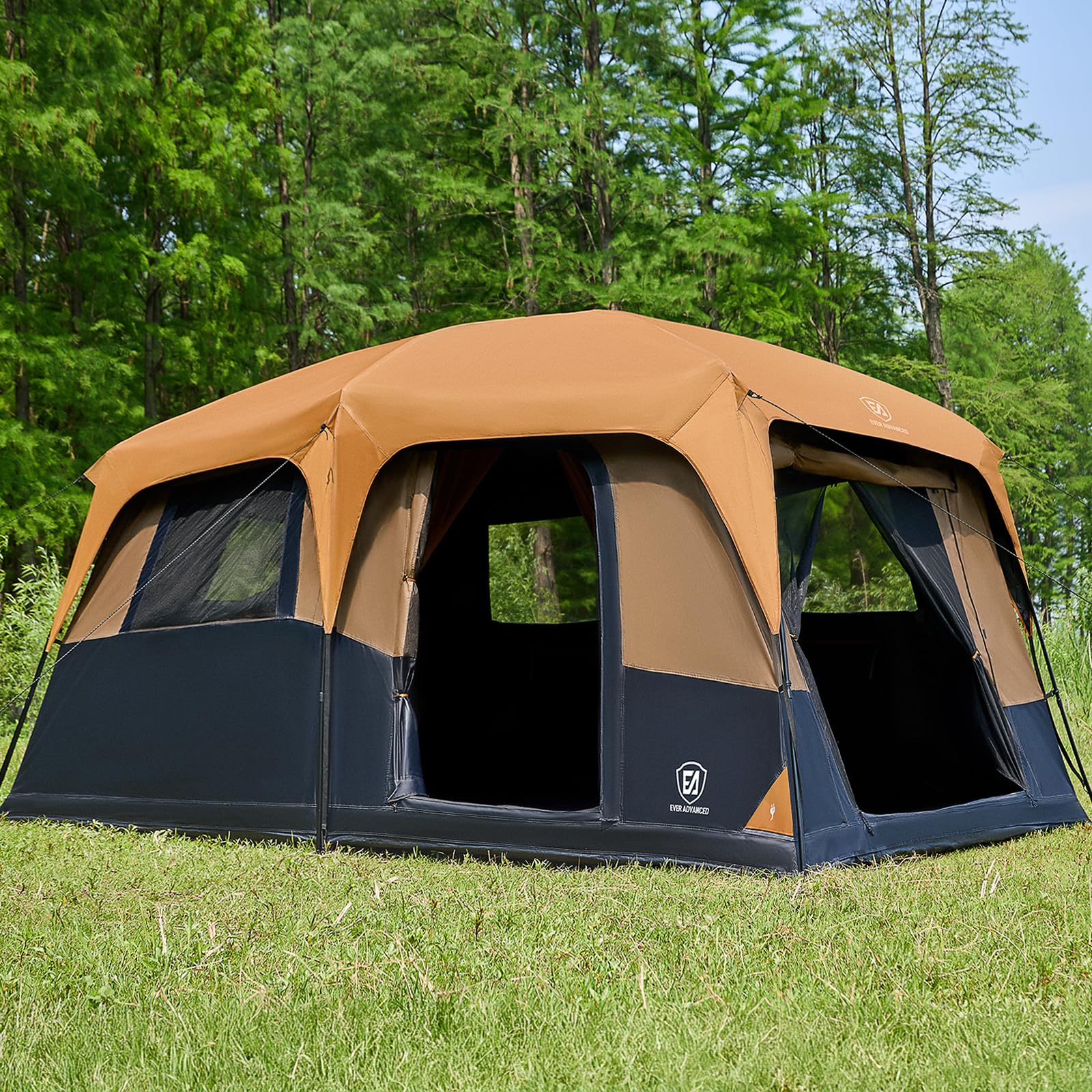
The EVER ADVANCED Blackout 14×10 Cabin Tent uses Dark Rest Technology to create an interior that stays substantially darker and cooler during daytime hours—a feature valuable for parents with young children who nap during daylight or families who enjoy sleeping past sunrise. At 140 square feet with an 84-inch center height, the tent easily accommodates three queen air mattresses. The blackout fabric, combined with a UV-resistant outer layer, also reduces heat buildup inside the tent on sunny afternoons.
Ventilation is handled by four large zippered mesh roll-up windows, overhead net windows, and two doors. The side door can be flipped into an awning position to provide additional shaded area outside the tent. A removable room divider splits the interior into two private sections, with a zippered opening for cross-traffic. Multiple user reviews confirm the tent stayed completely dry through several days of heavy rain, though some noted moisture condensation on the walls from humidity—a common issue with sealed blackout fabrics.
The setup time is quick: one reviewer reported a 2-minute assembly without the rainfly, and 5 minutes with it fully attached. The tub floor is made from thick polyethylene that resists punctures. However, the zipper quality is noticeably lower than premium brands like Kelty or Marmot, and the blackout fabric retains more heat than mesh-heavy designs, meaning a fan is necessary in warm climates. The included carry bag is large and features end hubs for easier packing, which helps offset the tent’s considerable weight.
Why it’s great
- Effective blackout fabric keeps tent dark and cooler for daytime sleep
- Very fast setup with thick tub-style waterproof floor
- Side door converts to awning for added outdoor shade
Good to know
- Zipper quality is not on par with premium outdoor brands
- Blackout fabric retains interior heat; fan recommended for warm weather
- Heavy tent; not designed for backpacking or long carries
5. Coleman 14×10 Instant Camping Tent

The Coleman 14×10 Instant Tent is engineered for speed: pre-attached poles allow one person to set up the main structure in under 60 seconds, with another 2-3 minutes to stake it down and attach the rainfly. At 140 square feet with a 6-foot-7 center height, this tent fits three queen air mattresses comfortably. The integrated screened porch adds about 35% more usable space than a standard 6-person dome tent, providing a dedicated bug-free zone for gear storage or seating.
The WeatherTec system includes welded corners and inverted seams that channel water away from the interior. The included rainfly adds another layer of protection, though it is sold separately in some markets. Reflective Illumiline guy lines improve visibility at night, and the E-port allows extension cord access for power. The ground vent helps reduce condensation, and the room divider offers privacy for multi-family use. Verified reviews consistently praise the speed of setup and takedown, with one user reporting the tent survived the harsh environment of Burning Man without structural damage.
Durability is the main concern with this model. Multiple reports describe metal roof connectors breaking on the first night of use without any apparent cause. Coleman has replaced affected tents under warranty, but the failure rate of these connector tabs is higher than expected. The tent is also large and heavy, and the rainfly is an additional purchase for some configurations. For campers who prioritize instant setup and brand support, this tent offers unmatched convenience, but the structural reliability of the pole connectors should be carefully inspected before each trip.
Why it’s great
- True 60-second setup with pre-attached poles
- Screened porch adds significant bug-free living space
- WeatherTec system with welded corners for reliable rain protection
Good to know
- Metal roof connectors have a history of breaking on first use
- Rainfly is a separate purchase in some markets
- Heavy and bulky; not for long-distance transport
6. Portal 14×8 Family Camping Tent with Porch
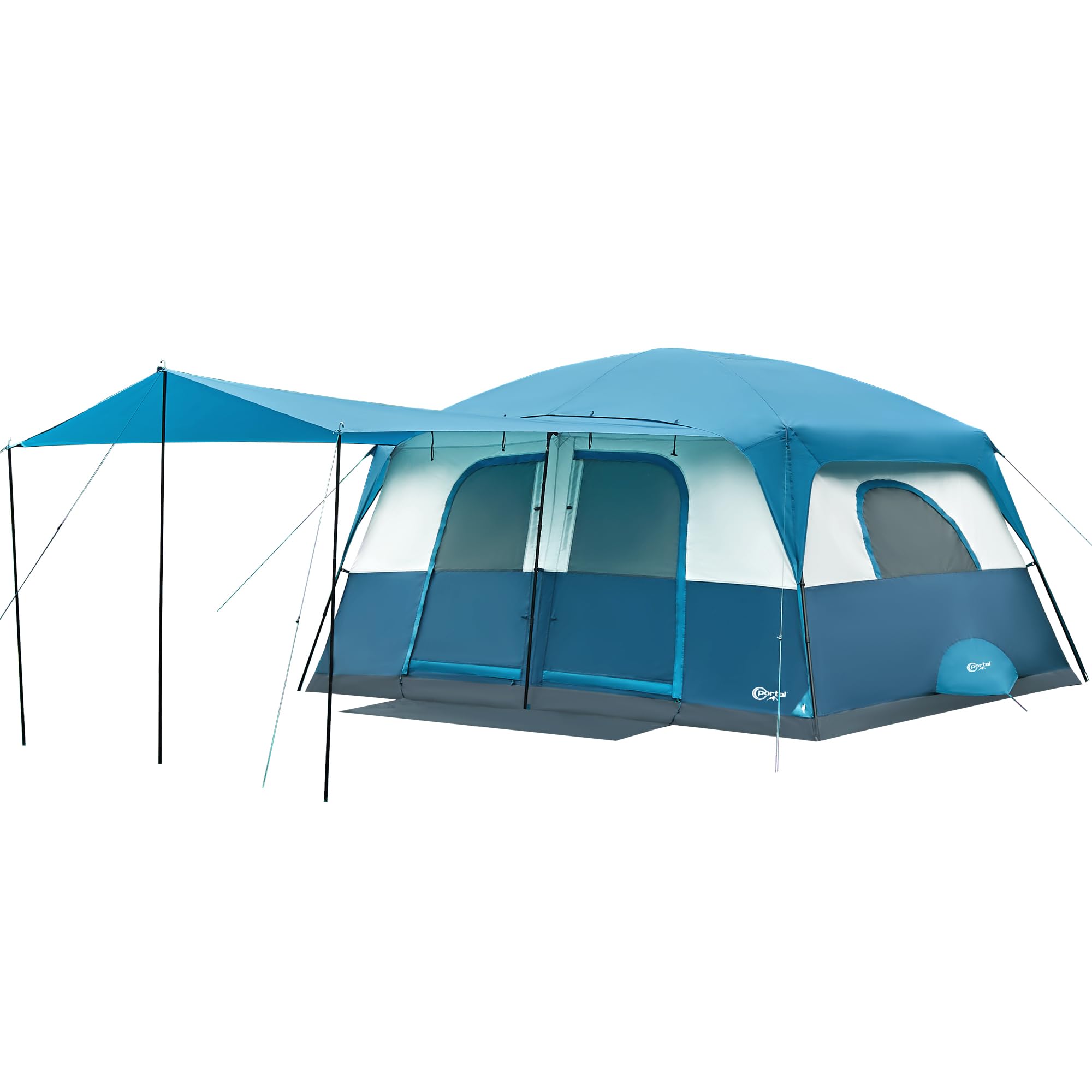
The Portal 14×8 Tent uses a 2-room design with a separate 14-by-7-foot attached porch, creating 112 square feet of interior floor space plus additional sheltered area. The 80-inch center height provides comfortable standing room for most adults. The porch functions as a mudroom, gear storage area, or shaded seating zone, effectively expanding the usable space beyond the main tent body. Two D-shaped doors, six mesh windows, two ground vents, and a mesh ceiling deliver excellent cross-ventilation that minimizes condensation buildup.
The PU-coated waterproof exterior uses fiberglass and steel poles with fully taped seams for rain protection. One reviewer reported that the tent withstood 24 mph gusts on a cliffside campsite without structural failure. The floor material is quiet and feels more substantial than budget alternatives. Included camper-friendly features like two E-ports, wall storage pockets, a gear loft, carabiner clips, and a mud mat show thoughtful design for extended family camping. Setup is manageable for two people in about 10 minutes, and the carry bag is reasonably sized.
Quality control is inconsistent. Several verified buyers received tents with missing parts (stakes, rainfly, awning, mud mat) or with manufacturing defects like ripped pole connector tabs. In most cases, Portal’s customer support resolved the issues by shipping replacement parts or a whole new tent, but the initial unboxing disappointment is a recurring theme. The porch poles are reportedly too short for effective rain runoff, requiring DIY customization. The tent bag handles also show signs of early wear. When everything is present and intact, this tent offers excellent value for a two-room layout.
Why it’s great
- Attached porch creates functional mudroom or extra living space
- Excellent ventilation with mesh ceiling and six windows
- Thoughtful details like E-ports, gear loft, and mud mat
Good to know
- Frequent quality control issues with missing or damaged parts
- Porch pole length is inadequate for proper rain runoff
- Tent bag handles prone to tearing with regular use
7. EVER ADVANCED 12×10 Screen House Tent

The EVER ADVANCED 12×10 Screen House focuses on providing a bug-free, ventilated shelter rather than a fully enclosed sleeping tent. At 120 square feet with an 85-inch center height, it comfortably fits a picnic table plus 2-3 chairs, making it ideal for backyard dining or as a covered hangout space during outdoor events. The six full mesh wall panels deliver 360-degree ventilation while keeping insects out, and the two large entrance doors with double side zippers allow easy access from either side.
The frame uses high-strength fiberglass roof poles and side steel poles, creating a hybrid structure that balances weight and stability. One reviewer reported the tent staying leak-free after 12 hours of continuous rain, with long mesh skirting that could be anchored with rocks to seal the bottom edge. Setup is manageable for two people in under 5 minutes once the technique is learned, though solo setup can take up to 45 minutes on the first attempt. The packed size is a compact 28.3 x 8.3 x 8.3 inches, making it easier to store than full cabin tents.
The screen house is not designed for privacy or weatherproof sleeping—it is a canopy shelter that blocks sun and bugs but lets rain blow in from the sides if not staked low. The mesh material does not provide UV protection for those with sensitive skin, and the interior lacks hooks or loops for hanging lights. The fiberglass poles are more flexible than steel, which helps in windy conditions but can feel less reassuring during assembly. For budget-conscious buyers who need a dedicated bug shield for daytime backyard use, this is a practical and affordable solution.
Why it’s great
- Lightweight and packs down smaller than cabin tents
- Full 360-degree mesh ventilation keeps bugs out effectively
- Easy 5-minute setup with two people once technique is learned
Good to know
- Not waterproof; rain can blow through side mesh
- No built-in loops or hooks for hanging lights
- Fiberglass roof poles feel less rigid than all-steel frames
FAQ
Can I leave my backyard tent set up all season?
How do I prevent condensation inside a backyard tent?
What size backyard tent do I need for two queen air mattresses?
Final Thoughts: The Verdict
For most users, the best backyard tent winner is the Coleman Skylodge 19×10 because it combines a massive interior footprint with a screened porch, proven wind resistance, and the most comprehensive weather sealing in its class. If you want full event-level coverage with insect netting, grab the COBIZI 10×30 Canopy. And for a budget-friendly bug-free shelter for daytime backyard hangs, nothing beats the EVER ADVANCED 12×10 Screen House.

Mo Maruf
I created WellFizz to bridge the gap between vague wellness advice and actionable solutions. My mission is simple: to decode the research and give you practical tools you can actually use.
Beyond the data, I am a passionate traveler. I believe that stepping away from the screen to explore new environments is essential for mental clarity and physical vitality.