Our readers keep the lights on and my smoothie glass nicely filled. As an Amazon Associate, I earn from qualifying purchases.
Dragging yourself out of a tent after a night of tossing on a flat, deflated pad is a surefire way to ruin a morning hike. The cold ground saps your warmth, and every rock feels like it’s aiming for your pressure points. You need a barrier that delivers genuine spinal alignment and thermal protection, not just a thin sheet of foam.
I’m Mohammad Maruf — the founder and writer behind WellFizz. I’ve spent hundreds of hours cross-referencing technical specifications, poring through verified customer experiences, and analyzing real-world performance data across dozens of models to isolate what makes a camping pad worth its weight in your pack.
This guide breaks down the critical metrics — from R-value and thickness to foam density and packed size — so you can confidently choose the best camping pad for your specific sleep style and trip type.
How To Choose The Best Camping Pad
A great camping pad balances three opposing forces: comfort (thickness and support), warmth (R-value), and portability (packed size and weight). The wrong choice compromises your sleep quality or makes your pack unbearable.
R-Value and Ground Temperature
R-value measures thermal resistance — how well the pad insulates you from the cold ground. A pad rated 2.0 is fine for summer, 3.0-4.0 works for three-season use, and anything above 5.0 is necessary for winter camping. Don’t rely on thickness alone; a thick air pad without proper insulation can still feel cold.
Construction: Air, Foam, or Hybrid
Air pads are lightweight and pack small but risk punctures. Closed-cell foam pads are indestructible and cheap but bulky and thin. Self-inflating hybrids combine foam cores with air chambers — offering comfort, insulation, and decent packability. The choice depends on whether you prioritize weight savings or reliability.
Thickness and Support
Side sleepers need at least 3 inches to avoid hitting the ground at the hip. Back sleepers can manage with 2 inches. Foam density (measured in D — higher is firmer and more durable) determines long-term sag. A 50D foam core will outlast a 19D core by years without flattening.
Quick Comparison
On smaller screens, swipe sideways to see the full table.
| Model | Category | Best For | Key Spec | Amazon |
|---|---|---|---|---|
| Hikenture Self-Inflating Pad | Hybrid Foam/Air | 4-Season Car Camping | R-Value 9.5 | Amazon |
| Acacia Self Inflating Pad | Y-Shaped Foam Hybrid | Bed-like Comfort, Car Camping | 4.3″ Thickness | Amazon |
| Sea to Summit Camp SI Mat | Self-Inflating Foam | Backpacking & 4-Season | 4.2 R-Value | Amazon |
| Wevelel Memory Sleeping Pad | Memory Foam Hybrid | Luxury Car Camping & Guests | 50D Foam Density | Amazon |
| NEMO Switchback Foam Pad | Closed-Cell Foam | Ultralight & Durability | 14 oz Weight | Amazon |
| GDREAMT Inflatable Pad | Air Mattress | Budget Backpacking | 4″ Thickness | Amazon |
| VALEHOWL Ultralight Pad | Air Chamber | Ultralight Backpacking | 2.7″ Thickness | Amazon |
In‑Depth Reviews
1. Hikenture Self Inflating Sleeping Pad

The Hikenture crushes the camping pad brief by delivering a 4-inch thick, self-inflating foam hybrid with an R-value of 9.5 — meaning you can sleep warm in sub-freezing conditions without an additional insulator. Its 80 x 28-inch footprint gives generous space for taller users, and the patented two-way valve eliminates the common frustration of air sucking back in during deflation. The pump sack makes top-off inflation effortless.
The polyester top fabric is quiet during movement, a welcome change from crinkly inflatable pads. At 6.5 pounds, it’s too heavy for ultralight backpacking, but for car camping, RV trips, or guest bedding, the trade-off for this level of insulation and support is well worth it. Multiple users confirm it stays inflated over months of use with no detectable leaks.
What sets this apart from cheaper hybrids is the consistent density of the foam core — it doesn’t bottom out under 200+ pound sleepers, and the 4-inch loft keeps hips and shoulders off the ground even for aggressive side sleepers. The integrated one-way deflation valve also speeds up packing significantly compared to traditional rolled foam pads.
Why it’s great
- Industry-leading R-Value of 9.5 handles true winter camping
- Wide 28″ design fits restless sleepers without shoulder pinch
- Fast self-inflation with pump sack for precision air adjustment
Good to know
- Heavy at 6.5 lbs — not suited for backpacking
- Packs larger than pure air pads, even when deflated
2. Acacia 4″ Thick Self Inflating Sleeping Pad
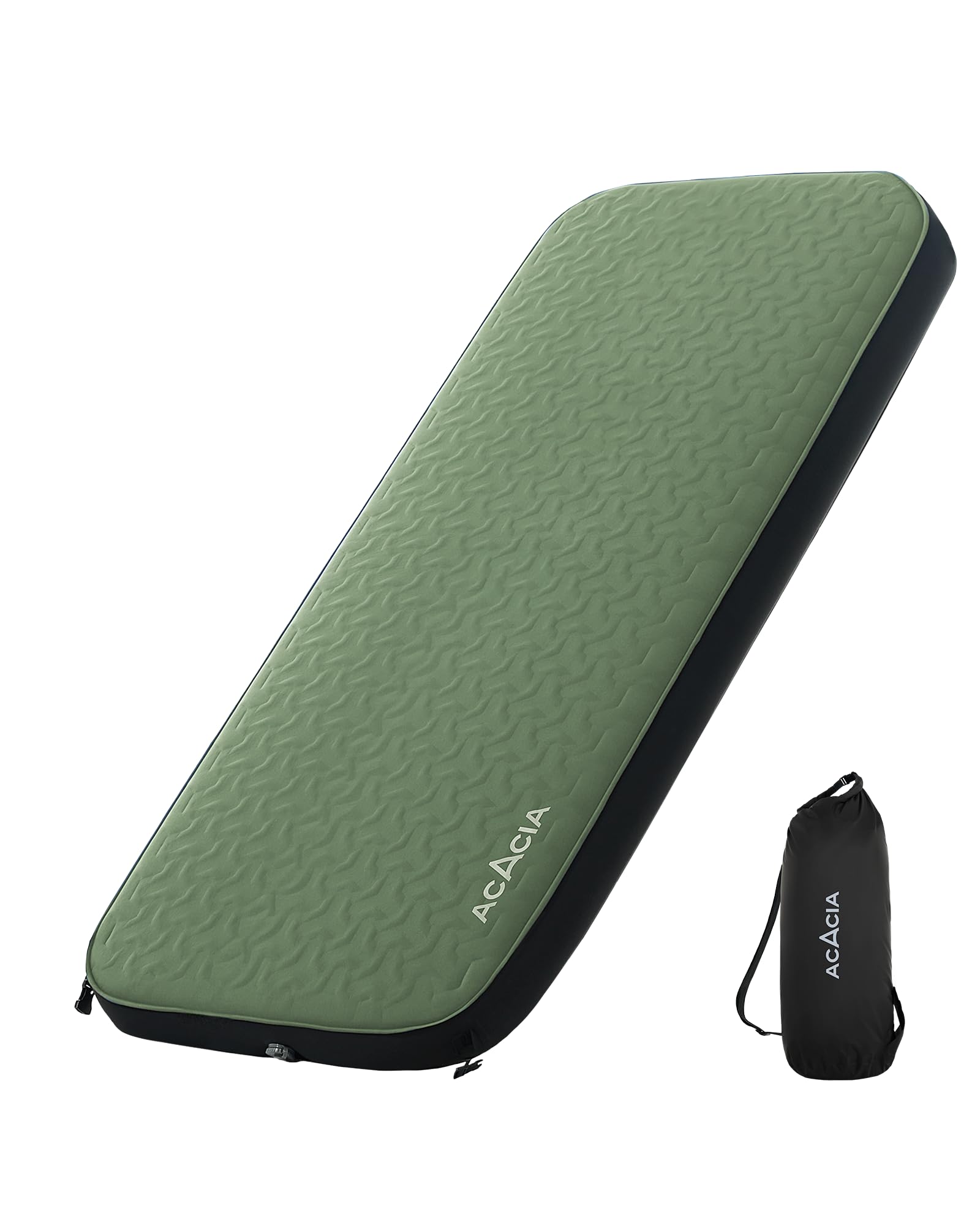
Acacia’s Y-shaped telescopic foam structure is a genuine innovation that reduces packed bulk by up to 60% compared to traditional self-inflating pads, while still offering 4.3 inches of plush support. The 79 x 28-inch surface is among the largest in this roundup, and the adjustable firmness via the included pump sack lets you dial in the exact feel — from soft plush to firm support.
The 30D elastic fabric with TPU coating is noticeably more rugged than entry-level nylon, and heat-molded seams virtually eliminate leak points. With an R-value of 6.0, it handles three-season camping with confidence and extends into mild winter trips. The side buckles let you connect two pads for a couple’s setup, which is a thoughtful touch for car campers.
Where this pad truly shines is the noiseless polyester surface — it’s dead quiet during movement, a huge plus for light sleepers sharing a tent. The only real downsides are the learning curve for the inflation bag and a packed size that still demands car camping storage space. Owners with back issues consistently report zero morning stiffness after using this pad.
Why it’s great
- Y-shaped foam core reduces packed size dramatically for a self-inflater
- Dead-quiet surface with no crinkle noise during sleep
- Adjustable firmness via pump sack gives custom comfort
Good to know
- Bulky when packed — best for car or basecamp use
- Initial setup requires practice with the inflation bag
3. Sea to Summit Camp Self-Inflating Foam Sleeping Mat

Sea to Summit’s Camp SI Mat is a time-tested workhorse that balances weight, warmth, and durability for backpackers who refuse to compromise. At just 2.3 pounds and packing down to 6.5 x 13 inches, it’s light enough for multi-day trips while still offering a 4.2 R-value that keeps you warm from spring through fall. The vertical coring technique channels warmth while reducing bulk — a smart engineering detail.
The 75D polyester face fabric is remarkably tough; owners report years of use without punctures or abrasions, even when used directly on rocky ground. The multi-function reversible valve handles inflation, one-way deflation, and fine-tuning of air pressure without losing progress — a small but crucial design win that prevents frustration during pack-up.
At 1.5 inches thick, it’s thinner than modern air pads, so side sleepers may want to pair it with a secondary pad for extra hip clearance. But for back sleepers and stomach sleepers, the foam core distributes weight evenly without the air-shifting sensation that plagues pure inflatables. The included PillowLock patches are a nice bonus if you use a Sea to Summit pillow.
Why it’s great
- Exceptional build quality with 75D polyester that resists punctures
- Lightweight at 2.3 lbs for a self-inflating foam pad
- Reliable 4.2 R-value for three-season warmth
Good to know
- Only 1.5″ thick — side sleepers may want extra padding
- Inflation takes 15-20 minutes on first use
4. Wevelel Memory Sleeping Pad

The Wevelel stands out by using 50D memory foam — a density leap above the 19D foam found in most budget pads. This higher density means it returns to shape faster after compression and resists permanent sagging over repeated use. The 3.1-inch thickness combined with the foam’s slow-recovery nature creates a pressure-relieving sleep surface that mimics a memory foam mattress at home.
The 77 x 27-inch size supports up to 800 pounds, making it one of the highest weight capacities available. Self-inflation is quick thanks to the high-resilience foam — the brand claims 30 seconds, and real-world users confirm 3-5 minutes with the foot pump stage. The dual-use valve design prevents air from sneaking back in during deflation, solving a common headache with foam hybrids.
The 50D stretch knit fabric is skin-friendly and completely silent — no crinkling, no rustling. The built-in pillow is a nice idea but several users find it too low for comfortable neck support. At 6.6 pounds, this is strictly for car camping, RV life, or guest bedding. The R-value of 9.5 matches the Hikenture, so winter campers get serious warmth here too.
Why it’s great
- Premium 50D memory foam prevents sagging and extends lifespan
- Silent, skin-friendly knit fabric with zero crinkle noise
- High R-Value of 9.5 for true four-season use
Good to know
- Heavy at 6.6 lbs — not backpack-friendly
- Built-in pillow height is too low for some sleepers
5. NEMO Equipment Switchback Foam Sleeping Pad
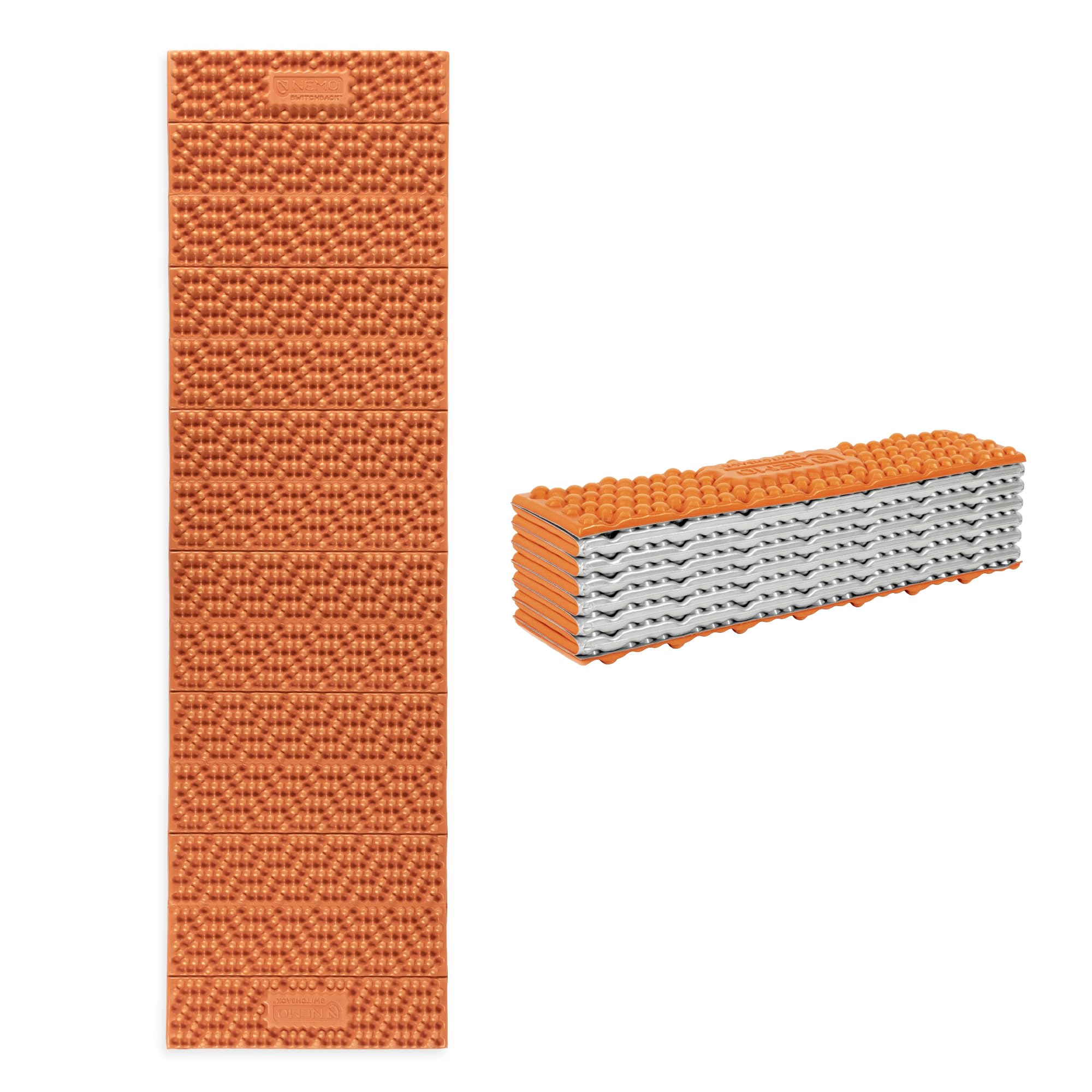
The NEMO Switchback is the gold standard for closed-cell foam pads. Its hexagonal nesting pattern creates taller, wider nodes that trap more air for warmth and cushioning compared to traditional egg-crate foam pads. At just 14 ounces, it’s featherlight and attaches easily to the outside of any pack. The dual-density Axiotomic foam uses a soft layer for comfort and a firm layer for support — a clever combo in a 0.75-inch thickness.
The metallized thermal reflective film bounces body heat back, boosting the R-value to 2.0, which is adequate for summer and mild shoulder-season use. Many owners pair it with an inflatable pad in winter to boost insulation and protect against punctures. It’s also a superb sit pad during breaks, and the folded size is manageable when strapped to a pack’s daisy chain.
Durability is exceptional — closed-cell foam doesn’t puncture or leak. Users report years of abuse without failure. However, it’s far less comfortable than air or hybrid pads: side sleepers will feel the ground through it, and the 20-inch width is narrow for broad-shouldered folks. It’s a specialist tool for weight-conscious hikers who value reliability over luxury.
Why it’s great
- Ultralight at 14 oz — perfect for gram-counting backpackers
- Indestructible closed-cell foam that never punctures or leaks
- Dual-density foam balances comfort and support
Good to know
- Thin profile offers less cushion than air or hybrid pads
- Bulkier when packed despite being light
6. GDREAMT Inflatable Camping Sleeping Pad

The GDREAMT pad delivers surprisingly good features at an entry-level price point: a built-in foot pump inflates the 4-inch thick air chamber in about three minutes, and the 50D nylon with TPU coating offers decent puncture resistance for the money. The hexagon air cells provide ergonomic support that distributes weight better than simple baffle designs, and the integrated pillow adds convenience.
At 2.44 pounds and packing to the size of a water bottle, it’s genuinely backpackable. The deflation valve is designed with a double valve to prevent air sneaking back in — a nice touch that makes packing less frustrating. The 75 x 27-inch surface gives ample room for most sleepers, and the included repair kit offers peace of mind for rocky campsites.
Where it falls short of pricier pads is material refinement. The nylon can feel crinkly during movement, and some users report the foot pump creates a vacuum seal against the tent floor, making inflation harder. The 4-inch thickness is generous, but the medium firmness may feel too soft for heavy sleepers who prefer a firmer surface. It’s a solid pick for casual car campers or first-time buyers on a budget.
Why it’s great
- Built-in foot pump eliminates need for separate inflation gear
- Good 4-inch thickness for hip and shoulder comfort
- Compact pack size and lightweight for backpacking
Good to know
- Foot pump can create suction on tent floors
- Nylon fabric is crinkly — not the quietest option
7. VALEHOWL Ultralight Camping Sleeping Pad
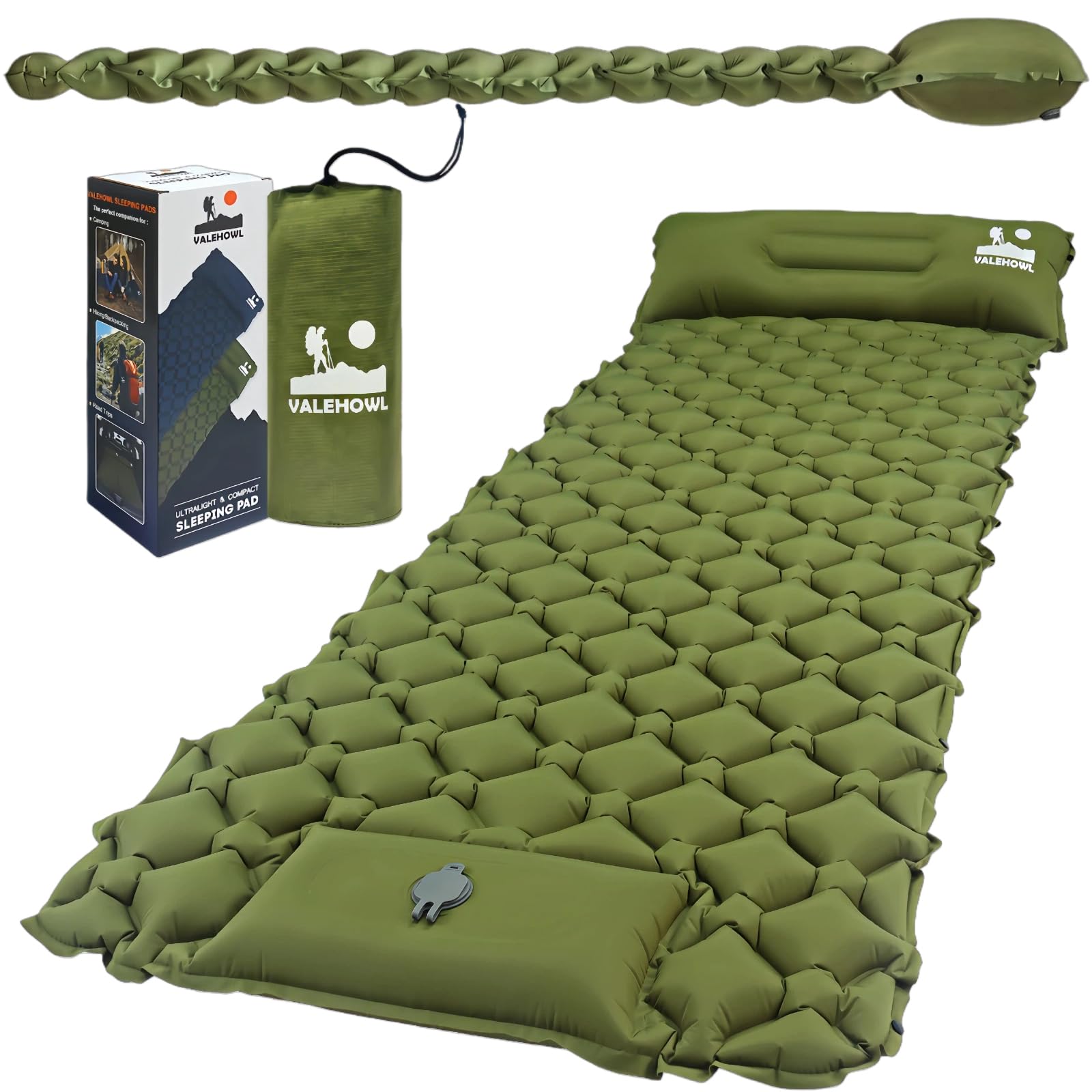
The VALEHOWL focuses on extreme portability — at 1.8 pounds and packing smaller than a football, it’s one of the lightest self-inflating options available. The built-in foot pump inflates the honeycomb air chamber in roughly 40 seconds, saving breath and energy after a long hike. The 40D nylon outer layer with TPU coating is reasonably abrasion-resistant for a lightweight pad.
The 75 x 25-inch size fits users up to 6’3″ comfortably, and the integrated ergonomic pillow provides decent neck support even if its position feels slightly fixed for some. The R-value of 3.0 makes it a solid three-season pad — warm enough for spring through fall but not adequate for winter camping. The side snap buttons let you connect two pads together for a double-wide setup.
The main compromises come in durability and comfort. The material is thinner than heavier alternatives, and several users note that the valves require careful hand-seating to prevent overnight air loss — a minor hassle once you know the trick. The 2.7-inch thickness works for back sleepers but side sleepers may feel pressure points more than on thicker pads. For the weight-conscious hiker prioritizing pack space, this is a capable middle-ground pick.
Why it’s great
- Extremely lightweight at 1.8 lbs — ideal for backpacking
- Fast 40-second inflation via built-in foot pump
- Snap buttons allow connecting two pads for couple setups
Good to know
- Valves need careful manual sealing to prevent air loss
- 2.7″ thickness may not be enough for side sleepers
FAQ
How thick should a camping pad be for side sleepers?
Can I use a self-inflating pad for winter camping without an extra layer?
Why does my inflatable pad lose air overnight even without a puncture?
Final Thoughts: The Verdict
For most users, the best camping pad winner is the Hikenture Self Inflating Pad because it pairs a 4-inch thick, supportive foam core with an exceptional R-value of 9.5, making it a year-round solution for car campers and overlanders. If you want true backpacking versatility, grab the Sea to Summit Camp SI Mat. And for ultralight purists who refuse to carry an extra pound, nothing beats the NEMO Switchback for reliability and weight savings.

Mo Maruf
I created WellFizz to bridge the gap between vague wellness advice and actionable solutions. My mission is simple: to decode the research and give you practical tools you can actually use.
Beyond the data, I am a passionate traveler. I believe that stepping away from the screen to explore new environments is essential for mental clarity and physical vitality.