Our readers keep the lights on and my smoothie glass nicely filled. As an Amazon Associate, I earn from qualifying purchases.
A strewn gravel path after a downpour or a flagstone that wobbles with every step—these are the frustrations that a specialized adhesive solves. Unlike generic glues that fail under UV, moisture, or sheer weight, a purpose-built formula locks stone against stone in a bond that holds up to the elements.
I’m Mohammad Maruf — the founder and writer behind WellFizz. I’ve spent hundreds of hours cross-referencing datasheets, viscosity ratings, cure times, and real-world user stress tests to find the adhesives that actually deliver on their claims for stone and rock applications.
This guide breaks down the top performers across landscaping, aquascaping, and masonry repairs so you can pick the right bond for your project. The best adhesive for rocks depends on whether you are locking down loose gravel, building a reef structure, or repairing a concrete step.
How To Choose The Best Adhesive For Rocks
Not all rock adhesives share the same chemistry. A clear construction glue designed for non-porous surfaces behaves nothing like a thick, high-viscosity gravel binder meant to lock pea stone in place. You need to match the adhesive type to the weight of the stone, the exposure to weather, and whether the bond needs to be invisible or structural.
Project Scale vs. Cure Time
A small repair—like reattaching a slate paver to concrete—needs a fast-setting epoxy paste that can handle vertical or overhead application. A large landscape area, on the other hand, demands a liquid binder you can dilute and spray across hundreds of square feet, even if it takes 24 hours to reach full strength. Choose fast-cure for point fixes and slow-cure for broad area stabilization.
Weather Resistance & UV Stability
Outdoor rock adhesives must withstand rain, freeze-thaw cycles, and direct sunlight without crumbling or yellowing. Water-based polyurethane formulas typically pass this test because they remain flexible after curing, allowing the stone bed to shift slightly with ground movement. Epoxy putties used underwater in aquariums must be reef-safe and non-toxic, a different standard than a landscape binder.
Viscosity & Application Method
Thin liquids soak into mulch and gravel but can run off vertical surfaces. Thick pastes stay put on a wall or overhead repair but cannot penetrate a layer of pea gravel. Consider how you will apply the product—caulk gun, sprayer, or hand-mixed putty—and whether you need the adhesive to flow into gaps or cling exactly where you place it.
Quick Comparison
On smaller screens, swipe sideways to see the full table.
| Model | Category | Best For | Key Spec | Amazon |
|---|---|---|---|---|
| Teexpert Rock Glue | Gravel Binder | Large landscape coverage | 10,000 mPas viscosity | Amazon |
| Mulch Bond Rock Glue | Landscape Binder | Slopes and walkways | 12-month weather resistance | Amazon |
| PC-Masonry Epoxy Paste | Masonry Epoxy | Vertical concrete repair | Non-sagging paste form | Amazon |
| Oceans Wonders Epoxy Putty | Aquascaping Putty | Reef-safe rock bonding | 5-minute set time | Amazon |
| Loctite Power Grab Crystal Clear | Construction Glue | Clear bond on finished surfaces | 24-hour full cure | Amazon |
In‑Depth Reviews
1. Teexpert 1 Gallon Rock Glue for Landscaping
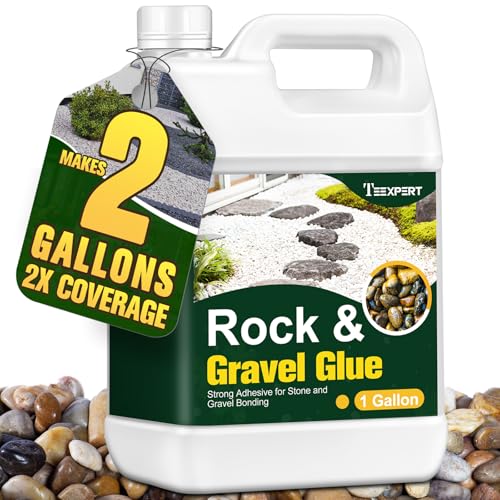
Teexpert’s formula operates at a honey-thick 10,000 mPas viscosity, meaning each drop carries five times more binding particles than standard landscape glues. When diluted at a 1:1 ratio with water and applied through a garden sprayer, a single gallon covers up to 280 square feet of pea gravel, river rock, or crushed granite. The liquid dries clear with a glossy finish that holds stones firmly in place for about a year.
The bond survives rain and leaf blowers without scattering gravel, and the water-based chemistry stays non-toxic and odorless around pets and plants. Two coats applied 24 hours apart on a dry day yield the strongest result, and the included nitrile gloves make handling straightforward. Users report that mixed product should be used promptly—any leftover concentrate can solidify if left too long in the bottle.
This is the right choice for anyone resurfacing a large patio, lining a driveway edge, or stabilizing a long slope path. The high concentration makes it cost-effective for big jobs, and the clear finish means the adhesive disappears into the stone bed. Just avoid applying on wet rock or in rainy conditions, as moisture prevents proper cure.
Why it’s great
- High 10,000 mPas viscosity locks heavy gravel securely
- Covers up to 280 sq ft per gallon when diluted
- Clear, glossy finish does not discolor stones
Good to know
- Mixed concentrate can solidify if not used immediately
- Needs two coats for maximum hold on high-traffic areas
2. Mulch Bond Rock Glue by Shabebe
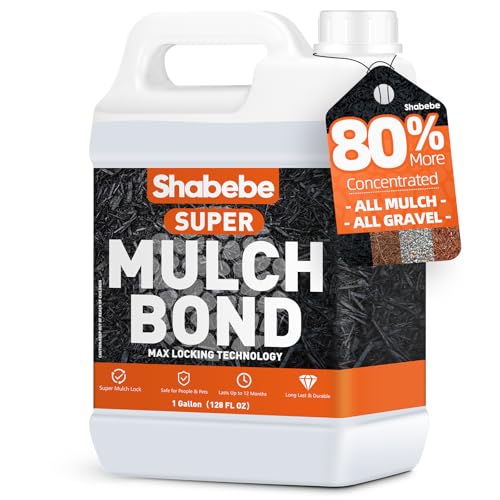
Shabebe’s Mulch Bond is an 80-percent-concentrated water-based adhesive designed to anchor mulch, wood chips, sand, and decorative gravel so they resist wind and heavy rain. The liquid sprays on easily through a standard garden sprayer after dilution and dries clear within 12 to 24 hours, leaving a water-permeable layer that allows drainage while locking surface stones together.
Users report that a single application holds up for roughly 12 months, even through freeze-thaw cycles, and that the bond survives leaf blower use without scattering debris. The formula is non-toxic and safe for pets, which matters for families using it around play areas or front-yard pathways. Some users found that the first coat left a very faint blue tint that disappeared after a second application—so two coats deliver the cleanest result.
This product excels on slopes and uneven terrain where erosion is a constant problem. The 12-month durability means you can skip yearly mulching, but the gallon size performs best on smaller to medium-sized landscape beds rather than enormous commercial-scale areas. Proper weather timing matters: apply it on a calm, dry day and let it cure undisturbed for the strongest bond.
Why it’s great
- Withstands rain and leaf blowers without loosening stones
- Non-toxic formula safe for pets and plants
- Dries clear and maintains a professional look
Good to know
- May need two coats for full coverage on loose gravel
- Best applied in dry weather for optimal cure
3. PC Products PC-Masonry Epoxy Adhesive Paste
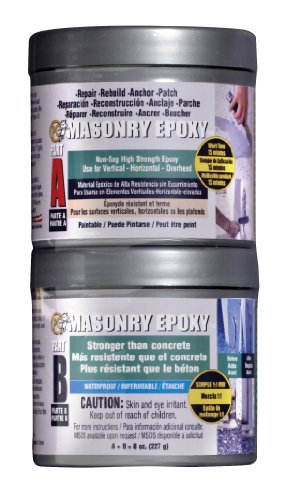
PC-Masonry is a two-part epoxy paste specifically formulated for concrete and masonry repair—not for loose gravel or decorative stone. Its thick, dough-like consistency means it stays put on vertical walls and overhead surfaces without sagging, curing to a dense gray finish that can be painted, stained, or machined. The working temperature range of 35 to 115 degrees Fahrenheit makes it usable year-round in most climates.
Users have successfully bonded thin slate pavers to concrete, repaired pool tile steps that remained submerged for months, and filled spalling concrete on foundation walls. The paste sets in about three hours and fully hardens overnight, resisting moisture even when applied to damp surfaces. Because the consistency is stiff, mixing the two parts thoroughly takes some elbow grease, but that same thickness ensures the epoxy stays exactly where you put it.
This is not a landscape binder—it is a structural epoxy for fixing broken concrete steps, reattaching stone veneer, or filling cracks in masonry walls. The 8-ounce can is a small quantity suited for a handful of targeted repairs. Overestimating how much you need is easy; for larger patches, buy multiple units.
Why it’s great
- Non-sagging paste works on vertical and overhead surfaces
- Resists moisture and bonds to wet concrete
- Can be painted, stained, or drilled after cure
Good to know
- Thick consistency requires effort to mix fully
- Small 8-oz can limits scope of repairs
4. Oceans Wonders Coralline Purple Reef Safe Epoxy Putty

Oceans Wonders formulates this epoxy putty for live rock and coral in both freshwater and marine aquariums, using a purple pigment that mimics natural coralline algae. The two-part putty kneads easily by hand, activates within seconds, and hardens in about five minutes with a full cure in 45 minutes. Once set, the bond holds securely even underwater, making it ideal for building stable rock structures and attaching coral frags to plugs.
The putty has a pungent smell when first mixed, which fades as it cures, and it sticks to fingers easily unless you wear disposable gloves. Users emphasize kneading it with dry hands, because moisture or heat can make the putty crumble before it sets. Over weeks of submersion, the surface can develop a slight dustiness if scrubbed, but the structural integrity of the bond remains intact even after months in saltwater.
This is a niche product for aquarists, not for general landscaping. The 2-ounce stick is small—enough for perhaps three or four rock-to-rock connections—so you will need multiple sticks for a large aquascape. If you are keeping reef inhabitants, the non-toxic formula is safe, but the strong odor during mixing is worth noting for indoor use.
Why it’s great
- Reef-safe formula safe for coral and fish
- Quick 5-minute set and full cure in under an hour
- Purple color blends naturally with coralline-covered rock
Good to know
- Strong odor during mixing; use in ventilated area
- Very small stick size for the price
5. Loctite Power Grab Ultimate Crystal Clear Construction Adhesive
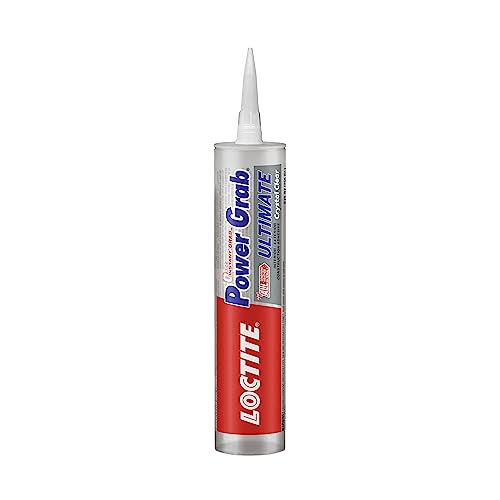
Loctite Power Grab Ultimate Crystal Clear is a construction-grade adhesive designed to bond non-porous surfaces invisibly. Unlike the other products in this list, it is a general-purpose construction glue rather than a dedicated rock binder. Its clear formula and low odor make it a strong candidate for indoor stone projects—think attaching decorative ceiling tiles, mounting slate backsplashes, or repairing stone features on finished furniture—where visual discretion matters.
The grab adhesive provides quick initial tack that reduces the need for bracing, and it cleans up with mineral spirits before curing. The cured bond is weatherproof and waterproof within a temperature range of 0°F to 140°F, so it can handle outdoor use on stone veneer or small masonry accents. However, it is not formulated for loose gravel or large-scale landscape stabilization, and some users report it stays tacky in near-freezing conditions.
For small-scale rock bonding that must remain invisible—like adhering a thin stone veneer to a finished wall or securing a paver over polished concrete—the crystal-clear finish is unmatched. But for heavy structural loads, gravel binding, or underwater use, a dedicated epoxy paste or landscape binder is a better fit.
Why it’s great
- Dries completely clear for invisible bonds on finished surfaces
- Strong initial tack reduces need for clamps or braces
- Weatherproof and waterproof after full 24-hour cure
Good to know
- Not designed for loose gravel or large-area landscape use
- Cure slows significantly in temperatures below freezing
FAQ
Can I use a regular construction glue for outdoor stone paths?
Will an epoxy putty bond rocks together underwater in an aquarium?
How long does landscape rock glue last before needing reapplication?
Final Thoughts: The Verdict
For most users, the adhesive for rocks winner is the Teexpert Rock Glue because it balances high viscosity, broad coverage, and a clear, weather-resistant finish that holds up to a full year of outdoor exposure. If you need a structural repair on a vertical concrete step or masonry wall, the PC-Masonry Epoxy Paste delivers a non-sagging bond that can be painted and machined. And for an invisible bond on a decorative stone accent or finished surface, the Loctite Power Grab Crystal Clear offers a clear finish that blends into the material completely.

Mo Maruf
I created WellFizz to bridge the gap between vague wellness advice and actionable solutions. My mission is simple: to decode the research and give you practical tools you can actually use.
Beyond the data, I am a passionate traveler. I believe that stepping away from the screen to explore new environments is essential for mental clarity and physical vitality.