Our readers keep the lights on and my smoothie glass nicely filled. As an Amazon Associate, I earn from qualifying purchases.
The 4K projector market is a minefield of marketing spin, where “compatible” often means “upscaled” and contrast ratios are quoted with creative math. Whether you are building a dedicated home theater or upgrading your living room for cinematic game nights, the difference between a muddy, pixelated image and a truly immersive 4K experience comes down to understanding the core technology inside the box, not just the number on the spec sheet. Laser light sources, pixel-shifting engines, and HDR tone mapping separate the contenders from the pretenders.
I’m Mohammad Maruf — the founder and writer behind WellFizz. I’ve spent hundreds of hours dissecting the technical specifications, reading deep into user experiences across dozens of models, and cross-referencing lumens, contrast ratios, and input lag numbers to find the projectors that actually deliver on their 4K promise for the price.
From budget-friendly LED options to premium laser beasts, this guide cuts through the noise to help you find the best 4k projector that matches your space, your content, and your expectations without wasting a cent.
How To Choose The Best 4K Projector
Choosing a 4K projector means understanding the trade-offs between brightness, contrast, color technology, and physical placement in your room. A projector that looks stunning in a dark, dedicated theater may be unwatchable in a living room with windows. The following factors will help you match the right machine to your specific setup.
Light Source: Laser vs LED vs Lamp
Laser projectors dominate the premium and mid-range tiers for a reason. They offer instant on/off, consistent brightness over a lifespan of 20,000 to 30,000 hours, and superior color volume, especially with RGB triple laser setups that cover 100% of the BT.2020 color space. Traditional lamp-based projectors (like those using UHP bulbs) are cheaper upfront but require bulb replacements every 3,000 to 5,000 hours and generate more heat and fan noise. LED hybrid systems, like the Nebula Cosmos 4K SE, offer a good balance between cost and longevity but typically max out around 1,800 ANSI lumens, making them best for darker rooms.
Resolution: Native 4K vs Pixel-Shifting
Native 4K projectors (like the Sony VPL-XW5000ES) have a physical 3840 x 2160 panel, delivering unmatched sharpness and detail without any processing artifacts. Most projectors in the mid-range, including the BenQ TK700 and Epson 5050UB, use pixel-shifting technology. This rapidly shifts a lower-resolution panel diagonally to create a 4K-like image. The best pixel-shifting implementations — especially Epson’s 4K PRO-UHD and Sony’s SXRD — are incredibly convincing and often indistinguishable from native 4K at normal viewing distances, but the cheapest implementations can introduce softness or motion artifacts.
Brightness and HDR Performance
Measured in lumens, brightness is critical for HDR impact. A projector needs sufficient headroom to display specular highlights (like sun reflections or explosions) without crushing shadow detail. A minimum of 2,000 ANSI or ISO lumens is ideal for a light-controlled room with a 100-120 inch screen. For rooms with ambient light, 3,000 lumens or more is advisable. However, raw lumens alone don’t tell the story — look for projectors with good HDR tone mapping (like the XGIMI HORIZON 20 or Valerion VisionMaster Pro2) that can dynamically adjust the brightness curve on a scene-by-scene basis, preserving highlight detail without washing out the image.
Quick Comparison
On smaller screens, swipe sideways to see the full table.
| Model | Category | Best For | Key Spec | Amazon |
|---|---|---|---|---|
| XGIMI HORIZON 20 | Premium Lifestyle | Versatile home entertainment & gaming | 3200 ISO Lumens, RGB Triple Laser | Amazon |
| Valerion VisionMaster Pro2 | Premium Home Theater | Cinematic depth & competitive gaming | 15000:1 Contrast, 3000 ISO Lumens | Amazon |
| BenQ TK710STi | Mid-Range Gaming | Short-throw competitive play | 3200 ANSI Lumens, 4ms Response | Amazon |
| BenQ TK700 | Mid-Range Gaming | Bright room gaming & movies | 3200 Lumens, 16ms @ 4K | Amazon |
| Hisense C2 | Premium Lifestyle | Portable gimbal setup & vibrant color | 2000 ANSI Lumens, 110% BT.2020 | Amazon |
| NEBULA Cosmos 4K SE | Mid-Range Portable | All-in-one Google TV & portability | 1800 ANSI Lumens, LED+Laser | Amazon |
| NexiGo Aurora Pro MKII | Premium UST | Ultra-short throw cinematic immersion | 2400 Lumens, 30000:1 Contrast | Amazon |
| Epson 5050UB | Premium Home Theater | Dedicated dark theater with deep blacks | 2600 Lumens, 1000000:1 Dynamic | Amazon |
| Hisense PX3-PRO | Premium UST | Ultra-short throw with Dolby Vision | 3000 Lumens, 3000:1 Contrast | Amazon |
| Epson LS11000 | High-End Home Theater | 3LCD color accuracy & 120Hz gaming | 2500 Lumens, 4K PRO-UHD | Amazon |
| Sony VPL-XW5000ES | High-End Native 4K | Reference-level native 4K picture quality | 2000 Lumens, Native SXRD 4K | Amazon |
In‑Depth Reviews
1. XGIMI HORIZON 20
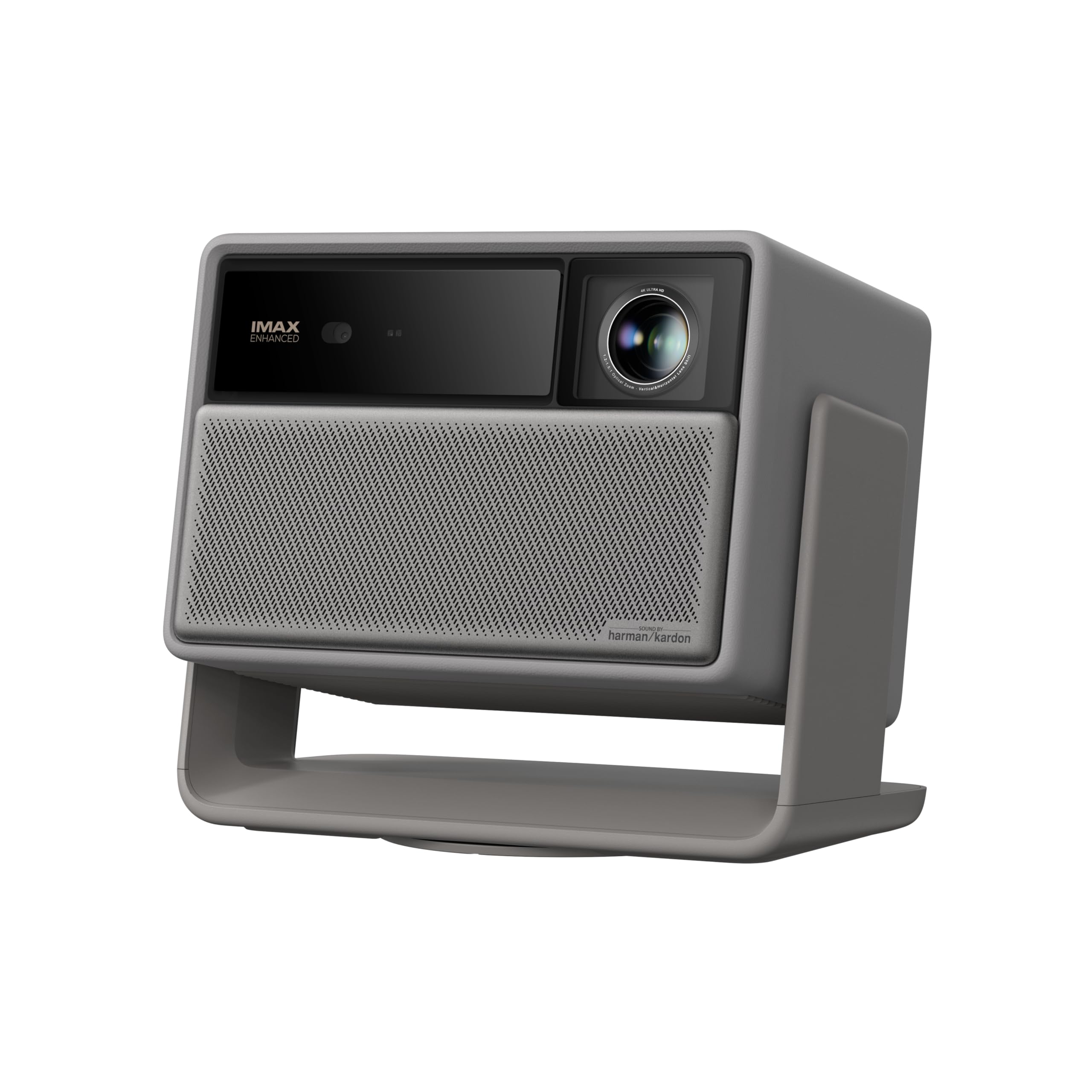
The XGIMI HORIZON 20 is a true category leader, combining a powerful RGB triple laser engine with a comprehensive feature set that covers movies, gaming, and everyday streaming. Its 3200 ISO lumens of brightness (roughly equivalent to 3600+ ANSI lumens) make it one of the brightest lifestyle projectors available, delivering a vibrant, punchy image even with some ambient light. The 100,000:1 contrast ratio provides real depth, and support for IMAX Enhanced, Dolby Vision, HDR10+, and Filmmaker Mode means it handles every content format with precision.
Setup is remarkably simple thanks to the integrated Google TV with licensed Netflix, eliminating the need for an external dongle. The mechanical lens shift paired with optical zoom gives you flexible placement options without sacrificing image clarity — a major advantage over fixed-lens competitors. Gamers will appreciate the 240Hz refresh rate at 1080p with a 1ms input lag, making fast-paced shooters feel responsive on a massive screen.
The built-in Harman Kardon speakers are serviceable for casual viewing but lack the bass and clarity needed for a truly immersive audio experience — a dedicated soundbar or surround system is recommended for critical movie nights. Some users noted a very brief color separation on white text during fast panning shots, though this is a minor quirk in an otherwise stellar performance. The 4.9 kg weight is portable enough for moving between rooms, though it’s not a true travel projector.
Why it’s great
- Outstanding brightness with RGB triple laser for vivid HDR
- Mechanical lens shift and optical zoom for flexible placement
- Pro-level gaming with 240Hz and 1ms input lag
Good to know
- Built-in audio is adequate but not theater-grade
- Minor color separation on high-contrast text during motion
- No built-in casting app; requires separate download
2. Valerion VisionMaster Pro2

The Valerion VisionMaster Pro2 targets the home theater enthusiast who demands reference-level black levels and color accuracy without breaking the bank. Its DLP RGB triple laser engine produces a stunning 15,000:1 native contrast ratio, which, combined with Enhanced Black Level (EBL) technology, delivers deep, inky blacks that are rare in this price range. The 3000 ISO lumens brightness ensures that HDR content has real punch, and the HDR10+ with dynamic tone mapping optimizes every scene in real-time, eliminating the washed-out look that plagues lesser projectors.
The OpticFlex Lens System offers a 0.9-1.5x optical zoom, giving you significant placement flexibility without digital cropping. The AI Super Resolution upscaling is a practical feature for older content, adding genuine sharpness without introducing artifacts. Gaming is a strong point, with a 4ms input lag at 1080p and 240Hz refresh rate, along with customizable modes for FPS, RPG, and RCG. The built-in Google TV with AirPlay 2, Chromecast, and voice control (Alexa, Google Home, Apple HomeKit) covers all smart home bases.
Setting up the VisionMaster Pro2 for peak performance requires care: proper physical alignment, a high-quality screen, and calibrated picture settings are essential to unlock its full potential. The fan noise is audible during quiet scenes but is not intrusive. Some users reported a slight light spill around the edges of the screen, which may be mitigated with a properly sized screen and physical masking. The 128GB of internal storage is generous for app installations, ensuring a snappy, lag-free interface.
Why it’s great
- Exceptional native contrast ratio for deep black levels
- Robust HDR tone mapping with dynamic metadata support
- Excellent gaming performance with low input lag
Good to know
- Requires careful physical alignment and calibration
- Fan noise is audible during quiet passages
- Slight light spill on screen edges possible
3. BenQ TK710STi

The BenQ TK710STi is built for the competitive gamer who needs a big screen in a small room. Its short-throw lens can project a 100-inch image from just 6.5 feet away, making it ideal for apartments, bedrooms, or golf simulators where space is at a premium. The 3200 ANSI lumen laser light source is incredibly bright, ensuring that fast-paced games remain clear and colorful even with some ambient light filtering in. The 4ms response time at 1080p and 240Hz refresh rate are genuinely impressive, eliminating ghosting and motion blur in competitive shooters and racing titles.
The integrated Android TV with Google certification provides a seamless streaming experience with Netflix, Prime Video, and YouTube built-in, no external stick required. The 600,000:1 dynamic contrast ratio is a marketing number, but the laser’s ability to modulate its output delivers decent black levels for a short-throw projector. The built-in speakers are basic and best replaced with a gaming headset or external sound system for any serious gaming session.
Quality control has been a talking point among users. A number of early units shipped with focus uniformity issues, where one corner of the image was noticeably softer than the rest. Later production units have improved, but the soft corner issue persists for some. Additionally, the fan noise is notably louder than average, especially in high-brightness modes, which can be distracting during quiet story-driven games. The connection handshake with gaming consoles can also be finicky, occasionally requiring a reboot to get the correct HDR signal.
Why it’s great
- Excellent short throw for tight spaces
- Ultra-low 4ms input lag for competitive gaming
- Very bright 3200 ANSI lumens laser light source
Good to know
- Potential for soft corners on some units
- Fan noise is noticeably loud
- HDMI handshake issues with some sources
4. BenQ TK700

The BenQ TK700 is a dedicated gaming projector that doesn’t sacrifice movie quality. With 3200 ANSI lumens of brightness, it’s one of the most usable daytime projectors for living rooms, maintaining a clear and vibrant image even with blinds partially open. The 16ms input lag at native 4K is excellent for console gaming, and the HDR Game Mode keeps response times snappy while preserving highlight detail. The 10,000:1 contrast ratio provides decent black levels, though it can’t match the depth of laser-based competitors.
Color accuracy is strong out of the box, with good skin tones and vibrant hues. The Dolby Atmos 5W chamber speaker is a surprising upgrade over typical tiny speakers, delivering clear dialogue and enough volume for small to medium rooms. The standard throw lens projects a 100-inch image from about 8.2 feet, making it suitable for most living rooms. The auto keystone correction is a welcome convenience, but engaging it disables the fast gaming mode, so stick with manual keystone for the lowest lag.
Long-term reliability has been a concern for some users, with reports of dead pixels appearing after several years of use. The manual for audio settings is frustratingly sparse, and the menu system feels dated compared to Google TV-based competitors. For the price, it’s a solid entry-level step into high-quality projection for gaming, but buyers should consider an extended warranty for peace of mind.
Why it’s great
- Very bright for ambient light gaming and movies
- Low input lag for responsive console play
- Good out-of-box color accuracy
Good to know
- Long-term reliability concerns with dead pixels
- Menu system is clunky and outdated
- Fast gaming mode disables keystone correction
5. Hisense C2

The Hisense C2 redefines portability and flexibility with its unique gimbal design, offering 360° horizontal rotation and 135° vertical tilt. This allows you to project onto walls, ceilings, or any surface without needing a dedicated stand or ceiling mount. The pure triple-color laser engine delivers an astonishing 110% of the BT.2020 color gamut, producing incredibly rich and accurate colors that rival high-end TVs. The 2000 ANSI lumens of brightness ensure that those vibrant colors remain punchy even in rooms with some ambient light.
Gamers will appreciate the 240Hz refresh rate with 12ms input lag and Auto Low Latency Mode, making it a capable companion for fast-paced titles. The built-in JBL speakers with DTS Virtual:X are genuinely impressive for a portable projector, delivering deep bass and clear dialogue that can fill a medium-sized room. The Dolby Vision support adds another layer of HDR performance, bringing out subtle shadows and bright highlights in film scenes.
The C2’s throw ratio requires more distance to fill a large screen compared to short-throw projectors; you’ll need more depth in your room to achieve a 100-inch image. The VIDAA OS is responsive but includes some static banner ads, which can be slightly annoying. Some users report minor laser speckle on certain surfaces, though this is largely eliminated with a matte white screen. The ability to digitally zoom the image down to 50% without repositioning is a neat trick for quick size adjustments.
Why it’s great
- Unique gimbal mount for ceiling and wall projection
- Exceptional color gamut with triple laser
- Impressive built-in JBL speakers
Good to know
- Requires more throw distance for large images
- VIDAA OS has static banner ads
- Minor laser speckle on some surfaces
6. NEBULA Cosmos 4K SE

The NEBULA Cosmos 4K SE is the best option for those who want a full-featured 4K projector that is easy to move around the house or even take on trips. Its HybridBeam technology combines LED and laser light sources to deliver 1800 ANSI lumens of brightness, which is sufficient for a dark or dimly lit room with a screen up to 120 inches. The NebulaMaster image engine does a commendable job of enhancing contrast and grayscale, producing a clean, sharp image that punches above its weight class.
The integration of Google TV with 4K Netflix support means you have a full streaming platform out of the box, no external device needed. The IEA 4.0 intelligent setup handles autofocus, keystone correction, obstacle avoidance, and screen fit automatically, making first-time setup a breeze. The built-in speakers from Anker are a highlight, offering surprisingly robust sound quality with good clarity for a projector in this range, with Dolby Audio support rounding out the package.
The maximum brightness of 1800 ANSI lumens means it struggles in bright rooms; you’ll need good light control for the best picture. The auto keystone, while convenient, is not perfectly accurate and often requires manual fine-tuning. Some users reported a delay when using external Bluetooth headphones, making it less ideal for solo late-night viewing. The light bleed effect when the image is digitally reduced is noticeable but not a deal-breaker for most casual setups.
Why it’s great
- Full Google TV with native Netflix in 4K
- Excellent built-in Anker speakers with Dolby Audio
- Portable and easy to set up with auto features
Good to know
- Brightness limited for daylight viewing
- Auto keystone needs manual fine-tuning
- Bluetooth audio delay reported by some users
7. NexiGo Aurora Pro MKII

The NexiGo Aurora Pro MKII redefines the ultra-short throw (UST) category with its advanced ALPD 5.0 laser engine and Scene Adapt Engine (SAE) that combines a dynamic iris and dynamic laser dimming. This technology delivers a contrast ratio exceeding 30,000:1, producing remarkably deep blacks and bright highlights that are usually only found in far more expensive UST models. The 0.21:1 throw ratio means you can place it just inches from the wall to produce a 150-inch image, making it perfect for living rooms where ceiling mounting is not an option.
Color performance is exceptional, covering 107% of the BT.2020 color gamut with a ΔE≈1 color accuracy rating. Support for Dolby Vision, HDR10+, and 3D content ensures broad compatibility with modern sources. Gamers will appreciate the ultra-low input lag of 4.2ms to 8ms at 4K 120Hz, making it a viable screen for competitive play. The 60W built-in speakers with Dolby Atmos are powerful enough to fill a medium-sized room without an external soundbar, though audiophiles will still prefer a dedicated system.
The primary concern revolves around reliability. Some users report that the projector overheats and shuts down after extended use, typically in warmer climates or poorly ventilated AV cabinets. The fan noise under such conditions becomes very loud. The motion sensor that activates the screen blanking can be overly sensitive, causing the image to flicker off if someone walks nearby. The remote control has been criticized for being directional and not as responsive as competitors. These issues are not universal but warrant consideration, especially for a premium purchase.
Why it’s great
- Superb ultra-short throw placement flexibility
- Impressive 30,000:1 contrast with dynamic iris
- Lowest input lag in UST class for gaming
Good to know
- Potential overheating and shutdown issues
- Overly sensitive motion sensor can disrupt viewing
- Remote control can be unresponsive
8. Epson Home Cinema 5050UB

The Epson Home Cinema 5050UB remains a benchmark in the mid-premium home theater space, thanks to its 3LCD technology and excellent black level performance. Unlike DLP projectors, the 3LCD design eliminates the “rainbow effect” that some viewers find distracting, and it displays 100% of the RGB color signal for every frame, resulting in rich, accurate colors. The dynamic contrast ratio of up to 1,000,000:1 is achieved through an auto-iris, which effectively deepens blacks in dark scenes while maintaining bright highlights in brighter scenes.
The motorized lens with memory is a killer feature for those with a 2.35:1 CinemaScope screen. You can save different lens positions for 16:9 and 2.35:1 content and switch between them at the push of a button. The 4K PRO-UHD pixel-shifting technology produces a sharp, detailed 4K image that rivals many native 4K projectors at twice the price. Full 10-bit HDR color processing accepts 100% of the HDR source information, delivering smooth tonal transitions without banding. The real-time 12-bit analog-to-digital video processing helps eliminate compression artifacts from streaming sources.
The 5050UB is a large, heavy unit weighing 25 pounds, requiring a sturdy ceiling mount. The pixel-shifting engine, while excellent, is not true native 4K, and the HDMI handshake can be slow, taking up to 15 seconds to lock onto a 4K HDR signal. Some users have reported a defective blue dot on near-black images, though replacement units are typically flawless. The lens memory can drift slightly over time, requiring occasional recalibration. For a dedicated dark theater room, it’s one of the best values for achieving deep, cinematic blacks.
Why it’s great
- Excellent black levels with dynamic iris and 3LCD
- Motorized lens memory for scope screens
- No rainbow effect; natural color reproduction
Good to know
- Large and heavy, requires sturdy mount
- Not native 4K; uses high-quality pixel-shifting
- Lengthy HDMI handshake process
9. Hisense PX3-PRO

The Hisense PX3-PRO sits at the top of the UST food chain, delivering an immersive home theater experience with minimal setup. Its TriChroma pure triple laser light source covers 110% of the BT.2020 color gamut with a ΔE≈0.9 color accuracy, producing some of the most natural and lifelike colors available in any projector. The 3000 lumens of brightness ensure the image remains vivid and detailed even in rooms with ambient light, making it a practical living room replacement for a large TV. Support for Dolby Vision, Dolby Atmos, and IMAX Enhanced means you get the full cinematic package.
The 4K AI upscaler is effective at sharpening lower-resolution content, making older movies and TV shows look surprisingly crisp on a 150-inch screen. The 240Hz high refresh rate ensures ultra-smooth motion for sports and gaming. The Harman Kardon speakers provide clear, loud audio that is a cut above typical built-in options, though a dedicated sound system is still recommended for the best experience. The Google TV interface is snappy and provides access to all major streaming apps.
The auto keystone and alignment system is a weak point. It requires you to take a photo of a grid pattern displayed on the screen using your phone and upload it to a website, which is cumbersome and not always accurate. Some users report a slight rainbow effect on DLP projectors, though this is less pronounced than on single-chip DLP units. The active 3D support is a welcome addition for those with 3D content libraries. Overall, it is one of the best UST projectors for those who prioritize color accuracy and brightness over absolute contrast ratio.
Why it’s great
- Stunning color accuracy with TriChroma laser
- Bright enough for well-lit living rooms
- Excellent DCI-P3 / BT.2020 coverage
Good to know
- Auto keystone setup process is clunky
- Slight rainbow effect possible for sensitive viewers
- Minor eARC handshake issue with stereo signals
10. Epson LS11000

The Epson LS11000 represents the next generation of 3LCD home theater projectors, combining the color accuracy and no-rainbow benefits of 3-chip LCD with a powerful laser light source. Its 4K PRO-UHD technology uses a precision shift glass plate to display an 8.29-million-pixel 3840 x 2160 image that is exceptionally sharp and free of color artifacts. The 2500 lumens of color and white brightness ensure consistent performance, and the dynamic contrast ratio exceeding 1,200,000:1 — achieved through laser dimming — delivers satisfying black levels for a non-iris system.
The inclusion of HDMI 2.1 is a standout feature, enabling 4K 120Hz input for smooth gaming on compatible consoles and PCs. The motorized lens with generous vertical and horizontal lens shift, zoom, and focus makes installation a breeze, allowing precise image placement without digital keystone correction. The Epson Cinema Lens is designed with multi-element precision glass for excellent edge-to-edge focus uniformity, which is crucial for larger screens. The support for HDR10+ and HLG ensures wide HDR compatibility.
At a price point that rivals more feature-packed laser competitors, the LS11000 is expensive relative to its pure spec sheet. Some users feel that the pixel-shifting image, while excellent, does not match the clarity of native 4K panels. The 1-year warranty is disappointing for a product in this price range, with Epson offering refurbished replacements rather than new units. Some users have reported occasional “snow” on the screen during startup after extended use, requiring a hard reboot. An extended warranty is highly recommended.
Why it’s great
- Outstanding color accuracy with 3LCD and no rainbow
- HDMI 2.1 with 4K 120Hz for gaming
- Excellent lens shift and focus for flexible placement
Good to know
- High price for a pixel-shifting projector
- Short 1-year warranty with refurbished replacements
- Occasional start-up snow/signal issues reported
11. Sony VPL-XW5000ES

The Sony VPL-XW5000ES is the gold standard for native 4K projection in the enthusiast space. Unlike pixel-shifting projectors, its SXRD panel has a physical 3840 x 2160 pixels, delivering unmatched sharpness, clarity, and detail that is immediately apparent on screens larger than 120 inches. The laser light source, combined with Sony’s flagship X1 Ultimate for projector processor, performs sophisticated 10-bit HDR color processing and TRILUMINOS PRO color mapping, resulting in a billion colors that are both accurate and naturally vibrant.
The Wide Dynamic Range Optics achieve a 95% DCI-P3 wide color gamut and 2000 lumens of brightness. While 2000 lumens may seem low compared to competitors, Sony’s tone mapping and processing are so refined that HDR content looks more impactful and realistic than on many brighter but less accurate projectors. The Motionflow technology ensures smooth, judder-free motion for fast-paced content. The compact design is about 30% lighter and 20% smaller than previous Sony models, making installation easier. The laser light source provides up to 20,000 hours of maintenance-free operation.
The 2000 lumens brightness is a genuine limitation for rooms with any ambient light; this projector demands a light-controlled or dark theater environment to shine. The lack of digital keystone correction means the projector must be perfectly aligned physically — the lens shift is manual and not motorized, which can be fiddly. The startup time is slow, taking around a minute to reach full brightness. The input lag, while acceptable for casual gaming at under 21ms at 4K 60Hz, is too high for competitive play. It is heavy at 28 pounds and requires a sturdy, well-balanced mount.
Why it’s great
- True native 4K with unmatched sharpness and detail
- Superb image processing with Sony’s X1 Ultimate chip
- Silent operation with long-lasting laser light source
Good to know
- Requires a fully dark room due to 2000 lumen brightness
- No digital keystone; requires precise physical alignment
- Higher input lag than gaming-oriented competitors
FAQ
What is the difference between native 4K and pixel-shifting 4K?
Is a laser projector worth the extra cost over a lamp-based model?
How many lumens do I need for a living room with windows?
Can I use a 4K projector for competitive gaming?
Final Thoughts: The Verdict
For most users looking for the best 4k projector, the winner is the XGIMI HORIZON 20 because it delivers a near-perfect balance of stunning RGB triple laser brightness, versatile placement with optical zoom and lens shift, and pro-level gaming performance, all wrapped in a user-friendly package with built-in Google TV. If you want the deepest cinematic blacks and the flexibility of a motorized lens for a scope screen, grab the Epson Home Cinema 5050UB. And for those who need a portable, all-in-one solution that can project on walls and ceilings with vibrant colors, nothing beats the Hisense C2.

Mo Maruf
I created WellFizz to bridge the gap between vague wellness advice and actionable solutions. My mission is simple: to decode the research and give you practical tools you can actually use.
Beyond the data, I am a passionate traveler. I believe that stepping away from the screen to explore new environments is essential for mental clarity and physical vitality.