Our readers keep the lights on and my smoothie glass nicely filled. As an Amazon Associate, I earn from qualifying purchases.
Finding a breast pump electric that actually empties you, stays quiet enough not to wake the baby, and fits into your day without tethering you to a wall outlet can feel like an impossible search. Every brand claims hospital-strength suction, but the real difference comes down to motor consistency, flange fit, and whether the pump maintains vacuum under load session after session.
I’m Mohammad Maruf — the founder and writer behind WellFizz. After spending many hours analyzing user feedback, comparing suction curves, battery real-world lifespans, and ease-of-cleaning across dozens of models, I’ve narrowed down the wearable and portable options that actually deliver on their promises.
This guide breaks down the top contenders across budget-friendly to premium tiers, with a focus on suction strength, comfort, and real-world durability so you can confidently choose the best breast pump electric for your nursing journey.
How To Choose The Best Breast Pump Electric
The right breast pump electric depends on how often you pump, whether you need to move around, and how your body responds to suction rhythm. These factors matter more than brand names or app features.
Suction strength and expression patterns
Measured in mmHg, suction strength ranges from around 150 mmHg in basic portables up to 300 mmHg in hospital-performance models. Higher suction does not automatically mean better output — many mothers respond better to a pump that mimics a baby’s natural suck-swallow rhythm rather than raw power. Look for pumps with at least two distinct phases: a faster, lighter stimulation phase and a slower, deeper expression phase.
Flange fit is non-negotiable
A poorly fitted flange causes nipple friction, reduced milk flow, and clogged ducts. Most pumps include 24mm and 21mm inserts, but smaller diameters like 19mm and 17mm are critical for many mothers. If the pump doesn’t offer multiple flange options or a sizing guide, consider it incomplete. Your nipple should move freely inside the tunnel without rubbing the walls.
Wearable versus traditional motor units
Wearable pumps drop into your bra and allow full mobility, but their motors are typically less powerful than a traditional unit’s, and their collection cups are limited to around 5 oz per side. Traditional pumps like the Spectra S1 and Medela Swing Maxi offer stronger, more consistent suction and larger capacity but require tubing and a separate collection bottle — limiting movement slightly but providing hospital-grade reliability.
Closed-system design matters
A closed-system pump uses a barrier to prevent milk from entering the tubing and motor. This keeps the pump sanitary, extends motor life, and makes it safe to share or resell. Open-system designs risk mold growth in the tubing and require meticulous cleaning after every use. All premium and mid-range pumps on this list use a closed system.
Quick Comparison
On smaller screens, swipe sideways to see the full table.
| Model | Category | Best For | Key Spec | Amazon |
|---|---|---|---|---|
| Spectra S1 Plus Premier | Traditional | Exclusive pumping & supply building | 300 mmHg suction, rechargeable | Amazon |
| Medela Sonata Smart | Traditional | Hospital-grade alternative | Touchscreen, responsive technology | Amazon |
| Medela Swing Maxi Double | Traditional | On-the-go portability | 2-Phase Expression, Bluetooth | Amazon |
| Lansinoh Discreet Duo | Wearable | Balanced suction & discretion | 45 dB noise, 100-min battery | Amazon |
| Momcozy M6 Mobile Style | Wearable | Hands-free multi-tasking | 295 mmHg, DoubleFit flange | Amazon |
| Eufy E20 Heated | Wearable | Clog prevention & comfort | HeatFlow to 95°F, 300 mmHg | Amazon |
| Paruu P16 Hands Free | Wearable | Budget-friendly entry | 309 mmHg, 120-min battery | Amazon |
In‑Depth Reviews
1. Spectra S1 Plus Premier Rechargeable Breast Pump

The Spectra S1 remains the gold standard for mothers who need reliable, consistent milk removal. Its 300 mmHg suction combined with Natural Nursing Technology cycles through stimulation and expression phases automatically, mimicking a baby’s breastfeeding pattern more effectively than most wearables. The massaging let-down mode is especially helpful for mothers with slow let-down reflex or low supply concerns. It accommodates single or double pumping via a Y-connector, and the back-lit LCD with timer makes session tracking effortless.
What sets the S1 apart is its rechargeable battery — it runs cord-free for several full sessions, and the motor holds its vacuum strength even as the battery drains. Users consistently report that it empties them more thoroughly than any wearable they have tried, making it a go-to for exclusive pumpers. The included 24mm and 28mm flanges are on the larger side, so ordering a 20mm or 19mm flange insert separately is common for better fit.
Cleaning is straightforward: the backflow protector prevents milk from reaching the tubing, and all parts that contact milk are dishwasher-safe on the top rack. The built-in nightlight is a small but genuinely useful detail for middle-of-the-night sessions. The premium tote bag has a laptop compartment, making it easy to bring to work without looking like you are carrying medical equipment.
Why it’s great
- Consistent 300 mmHg vacuum that empties thoroughly
- Rechargeable battery allows full mobility away from a wall outlet
- Closed system with backflow protector keeps motor and tubing dry and sanitary
Good to know
- Included flanges (24mm and 28mm) run large — most users need smaller inserts
- Motor unit is bulkier than wearables, requiring tubing and a carrying bag
2. Medela Sonata Smart Breast Pump
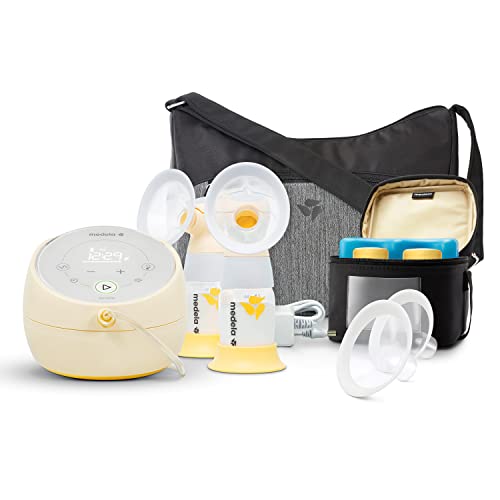
The Medela Sonata brings Medela’s hospital-grade Symphony technology into a home-friendly, rechargeable package. Its responsive vacuum technology adjusts suction in real-time based on your milk flow — if flow slows, the pump reduces vacuum to maintain comfort without interrupting expression. The touchscreen interface is intuitive and responsive, and the built-in timer with auto shut-off after 30 minutes prevents over-pumping. Weighing under 2.5 pounds with an integrated handle, it is designed to move between rooms easily.
Users consistently compare the Sonata’s output favorably to the Symphony, with many reporting identical or near-identical milk volumes. The Flex breast shields feature a softer rim that compresses gently, reducing the need for aggressive alignment. The pump includes two flange sizes (24mm and 21mm typically), and smaller sizes are available separately. Battery life covers roughly two full pumping sessions, which is adequate for daily commuting but may require charging mid-day for exclusive pumpers.
The closed-system design with overflow protection prevents milk from entering the tubing, and cleaning takes about five minutes with only four parts that contact milk. The companion app tracks session duration and volume but is optional — the pump works perfectly without it. Some users report occasional glitches with the power cord connection, but these are rare and generally resolved by resetting the unit. For mothers who want the closest thing to a hospital pump at home, the Sonata is a strong contender.
Why it’s great
- Responsive vacuum technology adjusts suction to real-time flow changes
- Most comfortable breast shield design with soft, flexible rim
- Very quiet motor — does not wake a sleeping baby in the same room
Good to know
- Battery covers about two sessions — limited for all-day exclusive pumping
- Some units experience power cord connection glitches over time
3. Medela Swing Maxi Double Electric

The Medela Swing Maxi strikes a strong balance between portability and performance. It uses the same 2-Phase Expression technology found in Medela’s hospital-grade pumps, cycling through a fast stimulation phase and a slower expression phase to mimic natural nursing. The pump supports both single and double pumping, and the built-in rechargeable battery delivers up to 90 minutes of use per charge, which translates to roughly three full sessions. USB-C charging means you can top it off from a laptop or car charger.
What makes the Swing Maxi stand out is its size — it slips easily into a robe pocket or the included carry bag, making it one of the most travel-friendly traditional pumps. The Flex breast shields require less precision in placement than standard rigid flanges, which reduces nipple friction for many users. The Bluetooth connectivity syncs session data to the Medela app automatically, though the pump works perfectly without it. The closed system with overflow protection keeps tubing dry.
In terms of output, users generally report a modest increase in milk volume compared to single pumping, and the rhythmic suction feels gentler than many wearables. The pump is slightly louder at higher suction levels, but remains discreet enough for use in a shared office. Parts are interchangeable with other Medela pumps, so replacement bottles and tubing are widely available. For mothers who pump primarily at work or while traveling, the Swing Maxi offers the most portable traditional motor available without sacrificing suction quality.
Why it’s great
- Extremely compact design that fits in a pocket or small bag
- USB-C charging allows easy recharging from any device charger
- Flex shields are more forgiving of flange alignment issues
Good to know
- Motor can be louder at higher suction levels
- Battery capacity diminishes noticeably after several months of daily use
4. Lansinoh Discreet Duo Wearable Breast Pump
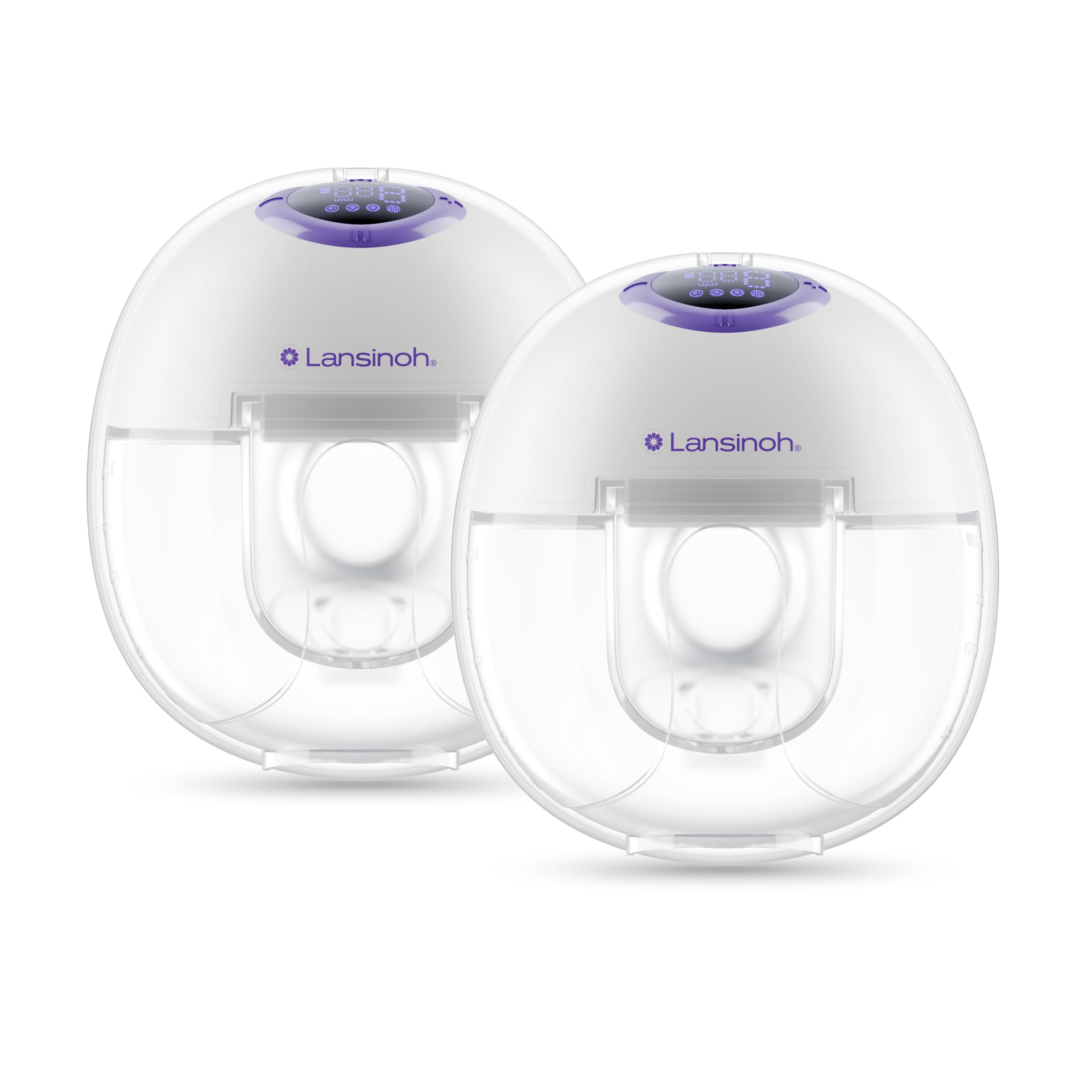
The Lansinoh Discreet Duo delivers hospital-strength suction (up to 280 mmHg) in a wearable, in-bra form factor that rivals more expensive competitors. It offers four pumping modes — stimulation, expression, combination, and a dedicated massage mode — each with nine intensity levels, giving you 36 possible settings to fine-tune your comfort. The pump operates at under 45 dB, which is genuinely quiet enough for phone calls or pumping in a meeting without drawing attention. Battery life reaches about 100 minutes per charge, covering three to four sessions.
What users consistently praise is the close-system design that prevents milk from entering the motor, combined with silicone flanges that feel gentle even at higher suction levels. The pump includes 24mm and 21mm flanges, and Lansinoh sells 17mm and 19mm inserts separately — a crucial option for mothers with smaller nipples. The LED display shows mode, level, and battery, and the auto shut-off after 20 minutes prevents over-pumping. The collection cups hold up to 5 oz each, which is standard for wearables.
Cleaning is easier than most wearables because the valve and diaphragm assembly comes apart without tools and dries quickly. The leak-resistant design holds up well during normal movement, but bending over or leaning forward can cause spillage if the cup is above half full. Some users note that the pump is not truly discreet in silhouette — it adds noticeable bulk under a tight shirt — but for a wearable that actually empties to the level of a traditional pump, the trade-off is acceptable.
Why it’s great
- Suction strength and rhythm rival traditional plug-in pumps
- Very quiet operation at under 45 dB
- Available flange sizes down to 17mm for better fit
Good to know
- Adds noticeable bulk under clothing — not fully invisible
- Charger location prevents using the pump while it is plugged in
5. Momcozy M6 Mobile Style Wearable

The Momcozy M6 is engineered around an Ideal Rhythm developed through over 1,000 trials to maximize milk output while maintaining comfort. The second-generation motor delivers up to 295 mmHg of suction across three modes — stimulation, expression, and a mixed mode — with nine adjustable levels. The DoubleFit flange uses a soft inner silicone seal and a firmer outer ring to maintain contact with the breast even during movement, reducing the need to readjust during a session.
What users appreciate most is the stand-up milk bowl design, which allows you to pour milk into a storage bag or bottle without tipping the cup sideways and risking a spill. The pump fits into a standard nursing bra and blends well under loose clothing, though it is slightly heavier than some competitors at around 200 grams per side. The battery holds enough charge for three to four full sessions, and the motor maintains consistent suction even as the charge level drops. Users frequently compare the M6’s output favorably to the Spectra S1, noting that it drains equally well.
The silicone cups and flanges are BPA-free and easy to clean, though the number of small parts means drying takes a bit longer. A tight-fitting pumping bra is essential — with a loose bra, the pump can shift and break the seal, reducing suction efficiency. The M6 does not require WiFi or app connectivity, which some mothers prefer for simplicity. For mothers who want a wearable that matches the output of a traditional pump, the Momcozy M6 delivers consistently.
Why it’s great
- DoubleFit flange maintains seal during movement and bending
- Stand-up milk bowl design makes pouring spill-free
- Consistent motor output equals many traditional pumps
Good to know
- Requires a tight pumping bra to maintain suction quality
- Multiple small parts extend cleaning and drying time
6. Eufy E20 Heated Wearable Breast Pump
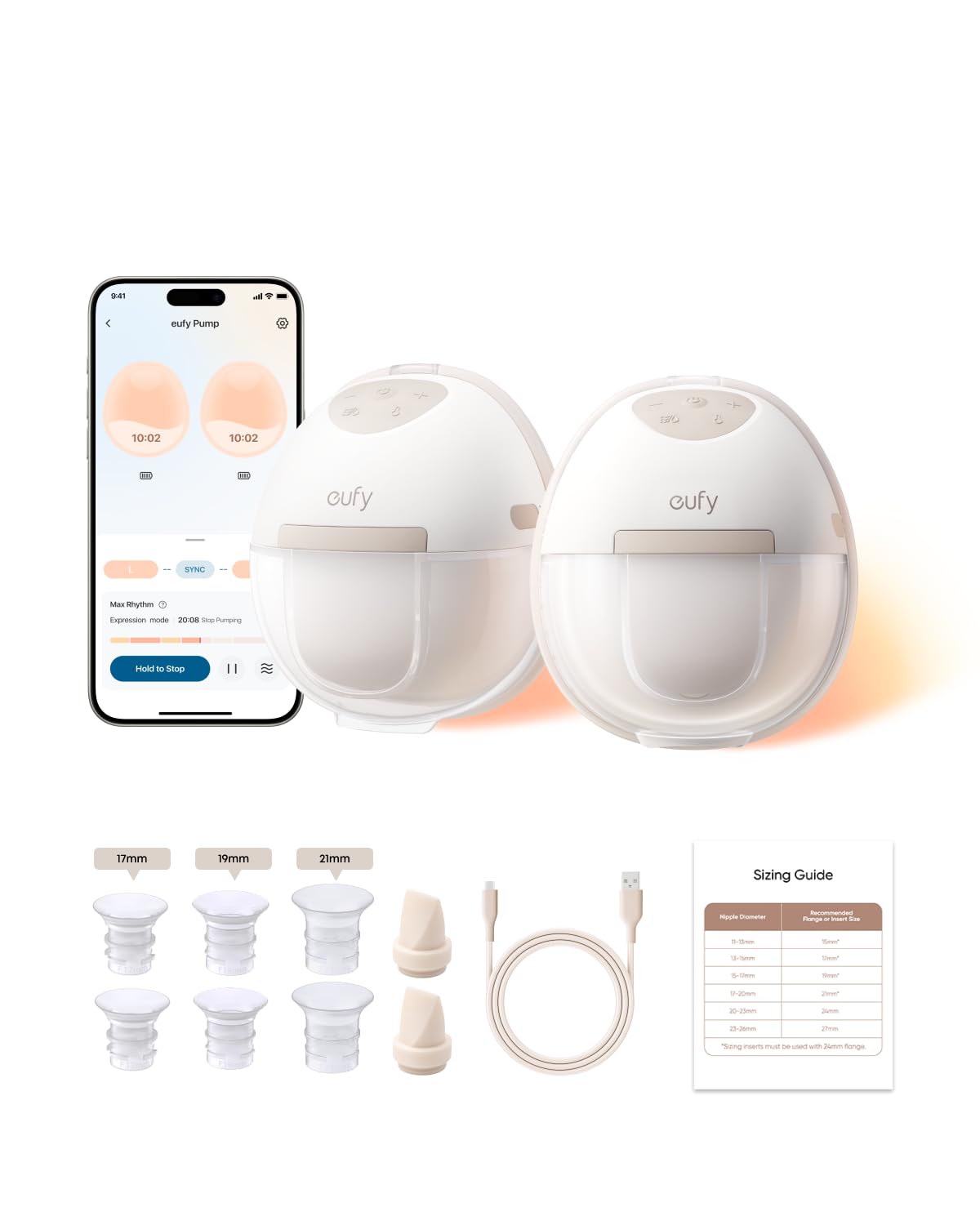
The Eufy E20 brings a genuinely new feature to the wearable pump category: integrated heating. Its HeatFlow technology warms the pump flange to 95°F before and during pumping, which helps stimulate milk flow and reduce the risk of clogged ducts. In user testing with over 300 mothers, the heating feature led to 30 percent more milk output on average. The pump reaches operating temperature in about 30 seconds and offers three heat levels so you can dial in what feels best.
Beyond the heating, the Eufy E20 delivers strong 300 mmHg suction with four preset pumping rhythms developed with lactation experts, plus the ability to create custom patterns through the companion app. The app also logs session volume and duration, and allows you to adjust suction and heat without reaching into your bra. The pump uses a 105-degree ergonomic curvature to follow the breast shape, and all skin-contact parts are BPA-free medical-grade silicone. The double-seal closure system prevents leaks even when the cups are full.
The motor operates at a claimed 46 dB, which is quiet enough for discreet use in shared spaces. Battery life is approximately five 30-minute sessions with heat on; without heat, the battery stretches further. The pump comes with 17mm, 19mm, and 21mm flange inserts, covering a wider range of sizes than most competitors. Assembly requires careful attention to the valve alignment — if not seated correctly, the pump may lose seal and produce lower suction. Overall, the E20 is the strongest option for mothers prone to clogged ducts or those who find cold flanges uncomfortable.
Why it’s great
- Integrated heating reduces clog risk and increases let-down speed
- App allows custom rhythm creation and session logging
- Three flange sizes included (17mm, 19mm, 21mm)
Good to know
- Bulky profile makes it hard to lay down or wear the baby at the same time
- Proper valve alignment is critical to prevent suction loss
7. Paruu P16 Hands Free Wearable Breast Pump
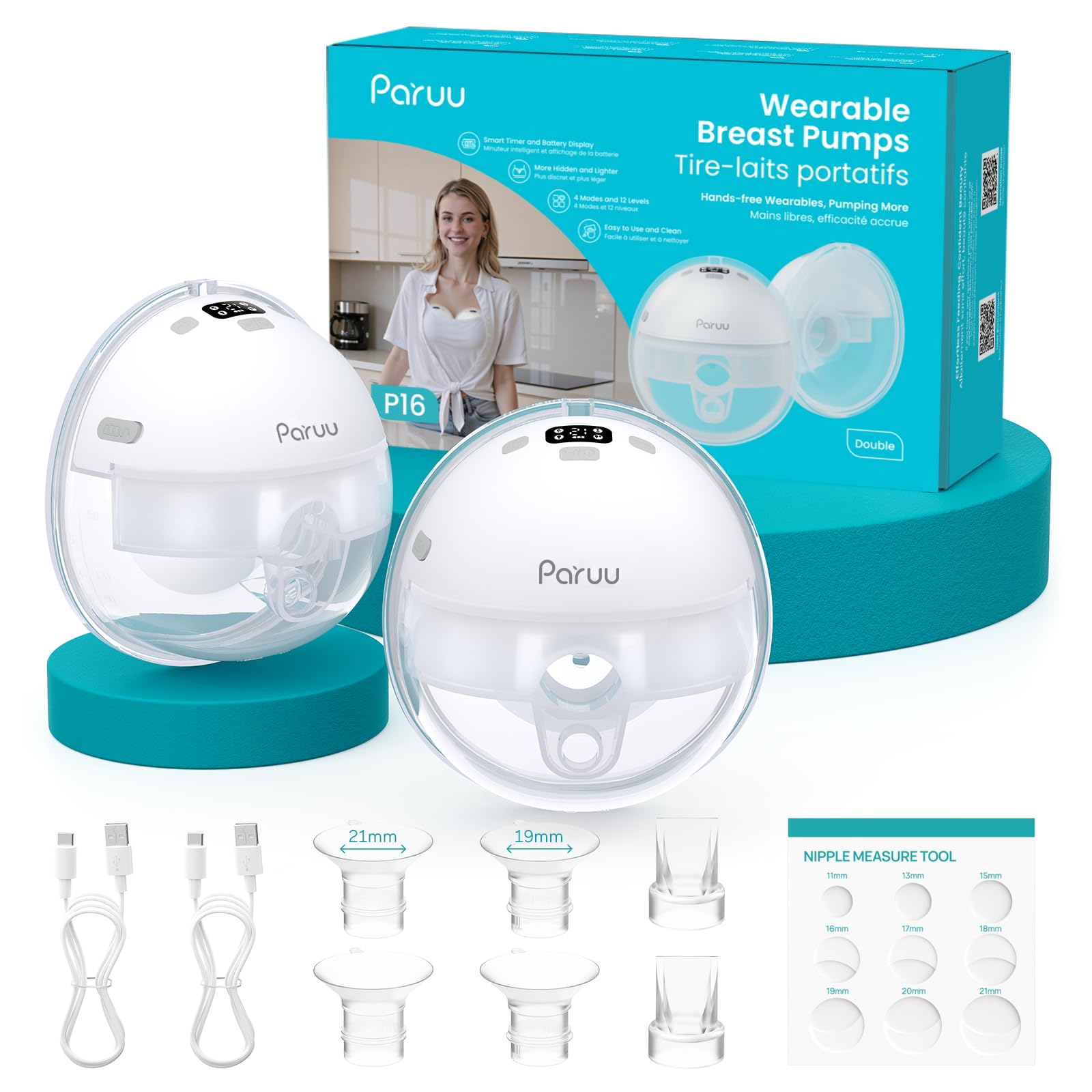
The Paruu P16 punches well above its tier, delivering a maximum 309 mmHg suction — the highest raw number on this list — in a lightweight, wearable form. Each pump weighs only 240 grams and fits snugly into a nursing bra, making it one of the more discreet options for pumping in public or at a desk. It offers four modes and twelve intensity levels, with an LED screen that shows battery percentage, session time, mode, and suction level. The 120-minute battery life covers four to five sessions per charge.
For a budget-friendly entry point, the Paruu includes three flange inserts — 19mm, 21mm, and 24mm — plus a nipple measurement card, which is rare at this price. The motor operates at or below 60 dB, which is audible but not disruptive in a quiet room. Users report that the pump empties them effectively in about 7 to 10 minutes, which is competitive with much more expensive wearables. The automatic shut-off after 30 minutes prevents battery drain if you fall asleep during a late-night session.
Where the Paruu shows its price is in build quality — some users note that the motor can run hot during extended use, and the included valve and diaphragm set may need replacement sooner than premium brands. The collection cup holds a maximum of 150 ml (about 5 oz), which is standard but may require mid-session emptying for heavy producers. Cleaning is straightforward, but the parts are not interchangeable with other systems. For mothers on a tighter budget who need a functional wearable, the P16 offers surprising performance without the premium price tag.
Why it’s great
- 309 mmHg suction is among the highest in any wearable
- Three flange sizes and measurement card included
- Long 120-minute battery life covers multiple sessions
Good to know
- Motor can get hot during extended pumping sessions
- Collection cup capacity limited to 5 oz per side
FAQ
What flange size do I need for an electric breast pump?
Should I buy a wearable or a traditional breast pump?
Why does my pump lose suction over time?
Can I use a breast pump with different flange sizes?
Final Thoughts: The Verdict
For most users, the best breast pump electric winner is the Spectra S1 Plus Premier because it combines hospital-strong 300 mmHg suction with a rechargeable battery, closed-system hygiene, and proven reliability across thousands of mothers. If you need the ultimate portability and clog prevention, grab the Eufy E20 Heated for its unique heating feature and app-driven customization. And for budget-friendly hands-free pumping, the Paruu P16 offers surprising suction power and a long battery life at a fraction of the cost.

Mo Maruf
I created WellFizz to bridge the gap between vague wellness advice and actionable solutions. My mission is simple: to decode the research and give you practical tools you can actually use.
Beyond the data, I am a passionate traveler. I believe that stepping away from the screen to explore new environments is essential for mental clarity and physical vitality.