Our readers keep the lights on and my smoothie glass nicely filled. As an Amazon Associate, I earn from qualifying purchases.
Selecting your first camera for nature photography means choosing a tool that can handle erratic wildlife, unpredictable light, and the need for portability on the trail. The wrong pick leaves you with blurry birds, frustrating menus, or a kit too heavy to carry beyond the first mile. This guide cuts through the noise to find the body and lens combination that actually works for a beginner heading outdoors.
I’m Mohammad Maruf — the founder and writer behind WellFizz. I’ve spent hundreds of hours analyzing market data and cross-referencing real-world user results to isolate the hardware features that actually matter for entry-level nature shooters.
Whether you are tracking deer at dawn or capturing a macro shot of a dewdrop, the camera for beginner nature photography must balance autofocus speed, weather sealing, and lens versatility without overwhelming you with complex controls.
How To Choose The Best Camera For Beginner Nature Photography
Nature photography demands gear that can lock focus on a fast-moving bird, handle a sudden rain shower, and still be comfortable to carry all day. Below are the specific specs you need to prioritize as a beginner.
Autofocus System: Points and Tracking
The number of autofocus points and the type of tracking algorithms determine how often you get a sharp shot of a moving subject. Phase-detection systems found on Sony and Canon bodies offer extremely fast lock-on. Animal eye-tracking is a non-negotiable feature for wildlife beginners — it lets the camera handle focus while you compose the frame.
Weather Sealing and Build Quality
A camera that cannot handle light rain or dust will limit your shooting days. Look for models with rubber gaskets around battery doors and lens mounts. The OM SYSTEM OM-5 Mark II and Nikon D7500 are examples of bodies that offer genuine weather resistance at a mid-range price point, allowing you to shoot in misty forests or dusty trails without worry.
Kit Lens Focal Range and Aperture
The included kit lens often defines your early experience. A zoom range starting at 12mm or 18mm gives you wide-angle landscapes, while extending to 60mm or 140mm lets you capture closer wildlife shots. An aperture of f/3.5-5.6 is standard, but a constant f/4 lens (like the one on the OM-5 Mark II kit) maintains brightness across the zoom range and is a significant upgrade for low-light forest conditions.
Quick Comparison
On smaller screens, swipe sideways to see the full table.
| Model | Category | Best For | Key Spec | Amazon |
|---|---|---|---|---|
| OM SYSTEM OM-1 Mark II | Premium MFT | Wildlife & Extreme Weather | 1053 AF Points, IP53 | Amazon |
| Sony Alpha a6100 | Entry-Level APS-C | Fast Autofocus on a Budget | 425 Phase-Detect Points | Amazon |
| Nikon D7500 | Prosumer DSLR | Robust Build & Lens Zoom | 18-140mm Kit Lens | Amazon |
| Panasonic LUMIX S5II | Full-Frame | Hybrid Stills & Video | 24.2MP Full-Frame | Amazon |
| OM SYSTEM OM-5 Mark II | Travel MFT | Lightweight Hikes | 7.5 Stop Sync IS | Amazon |
| Sony Alpha a6400 | Mid-Range APS-C | Action & Wildlife | 0.02 sec AF, 11fps | Amazon |
| Panasonic LUMIX G85 | Value MFT | Budget IBIS | 5-Axis In-Body IS | Amazon |
| Canon EOS R100 | Entry Mirrorless | Simple Controls | 6.5 fps Shooting | Amazon |
| Fujifilm X100VI | Fixed Lens | Everyday Walkaround | 40.2MP, 23mm f/2 | Amazon |
| Nikon Z 6II | Full-Frame | Low Light Landscape | 24.5MP BSI Sensor | Amazon |
| Canon EOS Rebel T7 Bundle | DSLR Bundle | Telephoto Reach | 500mm Preset Lens | Amazon |
In‑Depth Reviews
1. OM SYSTEM OM-1 Mark II

The OM-1 Mark II is the definitive companion for the beginner who intends to shoot in rain, snow, or dust without hesitation. Its IP53-rated body and 20MP Stacked BSI Live MOS sensor deliver clean files up to ISO 10000, and the Cross Quad Pixel AF system with 1053 points covers the entire frame — making it nearly impossible to miss a flying bird or a bounding deer. In-camera computational features like Live ND and Focus Stacking eliminate the need for post-processing software for common nature scenarios.
The 5-axis IBIS rated at 8 stops allows handheld telephoto shots at shutter speeds that would normally demand a tripod. When paired with the M.Zuiko 12-40mm f/2.8 PRO or the 100-400mm, the system remains roughly half the weight of a full-frame equivalent. Battery life is exceptional at roughly 4000 shots per charge, meaning a full day in the field rarely requires a swap.
Where it falls short is the 20MP resolution, which limits the ability to crop aggressively compared to higher-megapixel full-frame sensors. The complex menu system also has a learning curve, although the dedicated computational button puts the most useful nature tools one press away. For a beginner willing to learn the interface, this is the most capable weather-sealed system available at this tier.
Why it’s great
- IP53 weather sealing handles any nature environment
- Over 1000 cross-type AF points for reliable subject tracking
- In-body stabilization eliminates need for tripod in many scenarios
Good to know
- 20MP sensor limits heavy cropping of distant subjects
- Menu system is complex for absolute beginners
2. Sony Alpha a6100

The a6100 packs Sony’s class-leading 0.02-second autofocus into an affordable APS-C body. The 425 phase-detection points cover 84% of the sensor, and Real-Time Eye AF for animals locks onto birds and mammals with remarkable accuracy — a feature usually reserved for cameras costing twice as much. The 24.2MP Exmor sensor delivers excellent dynamic range for landscape shots, and the 180-degree tiltable touchscreen makes low-angle flower and insect photography easy.
At 11fps continuous shooting, you can capture a burst of wing flaps or a fox pouncing. The lightweight body (396g with battery) is ideal for long hikes. But the kit lens (16-50mm) is mediocre in low light and lackluster in sharpness — most buyers should budget for a Sigma 18-50mm f/2.8 or a telephoto zoom for serious nature work.
Battery life is adequate for a day of casual shooting but will require a spare for heavy bursts. The single UHS-I card slot is slow for clearing a full buffer, and the menu system is cluttered. For the price, the autofocus performance alone makes this the strongest entry point into Sony’s E-mount system for nature photography.
Why it’s great
- Industry-leading 0.02s AF with animal eye tracking
- Compact and lightweight for extended hikes
- Uses the same sensor as higher-tier Sony APS-C bodies
Good to know
- Kit lens is soft and slow for nature work
- Single card slot and cluttered menu navigation
3. Nikon D7500

The D7500 is a prosumer DSLR that offers the most versatile kit lens in this guide — the 18-140mm f/3.5-5.6 covers wide-angle landscapes through mid-telephoto wildlife shots. The 51-point AF system with 15 cross-type sensors and group-area AF provides reliable tracking for moving subjects, and the 8fps burst rate is sufficient for capturing sequences of running animals. The 20.9MP sensor is based on the award-winning D500, delivering clean images up to ISO 12800.
The optical viewfinder provides a lag-free experience that many nature shooters prefer for tracking fast action, and the 3.2-inch tilting touchscreen works well for ground-level macro composition. The body is weather-sealed against light rain and dust, a feature absent from many entry-level cameras. Battery life is class-leading at roughly 950 shots per charge, which translates to multiple days in the field.
The optical viewfinder lacks live exposure preview, 4K video at 30fps has a 1.5x crop, and the single UHS-I card slot is slower than modern mirrorless alternatives. The D7500 is a dated design but remains a rugged, long-lasting tool for beginners who prioritize reach and battery endurance.
Why it’s great
- Kit zoom lens covers 18-140mm for flexible framing
- Rugged weather-sealed body built for field use
- Exceptional battery life for all-day shooting
Good to know
- Dated DSLR design lacks live exposure preview in viewfinder
- 4K video has a significant crop factor
4. Panasonic LUMIX S5II
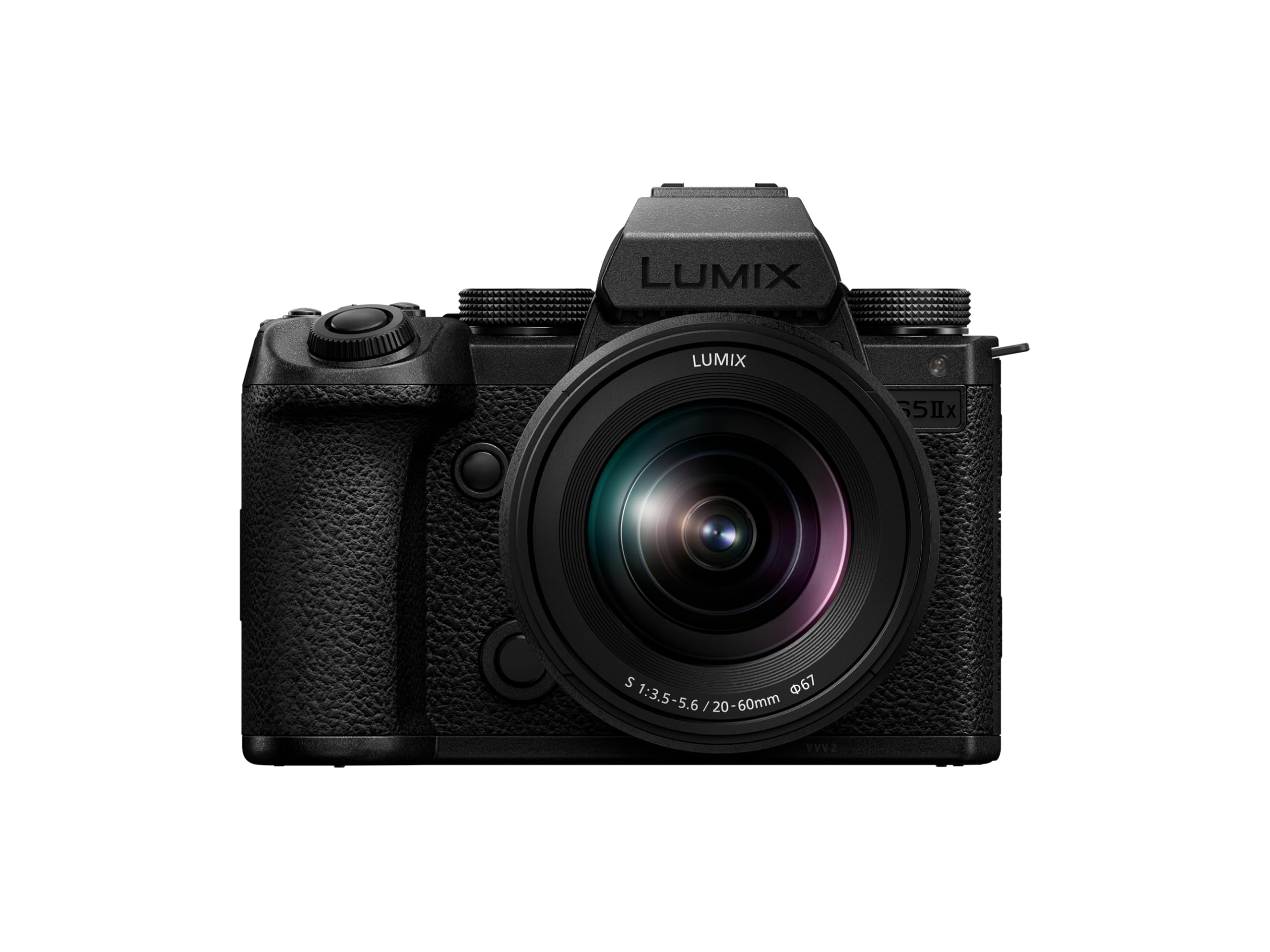
The S5II marks Panasonic’s transition to Phase Hybrid Autofocus, solving the historical weakness of contrast-detect systems. The 779 phase-detection points and advanced subject detection lock onto animals and birds with speed and reliability that rivals Sony and Canon. The 24.2MP full-frame sensor delivers spectacular dynamic range for sunrise landscapes, and the 14+ stop V-Log/V-Gamut capture allows serious video grading for nature documentaries later in your journey.
Active I.S. technology smooths walking shots and handheld telephoto footage, making it a powerful hybrid for both stills and 4K 60p video. The built-in fan enables unlimited recording without overheating — a critical feature for time-lapses of cloud formations or long interviews in the field. The 20-60mm kit lens offers a useful wide-to-standard range, and the L-mount compatibility opens up sharp Sigma and Leica glass.
Battery life is the weakest link, with roughly 370 shots per charge under normal use. You will need at least two spare batteries for a full day of nature shooting. The body is also heavier (740g with battery) than APS-C rivals. For the beginner who wants one camera that handles both stunning landscapes and professional video, this is the most future-proof option.
Why it’s great
- Full-frame sensor offers best dynamic range for landscapes
- Unlimited 4K 60p recording with no overheating
- Phase hybrid AF solves Panasonic’s traditional focus weakness
Good to know
- Battery life demands at least two spares for a full day
- Body is heavier than APS-C alternatives
5. OM SYSTEM OM-5 Mark II
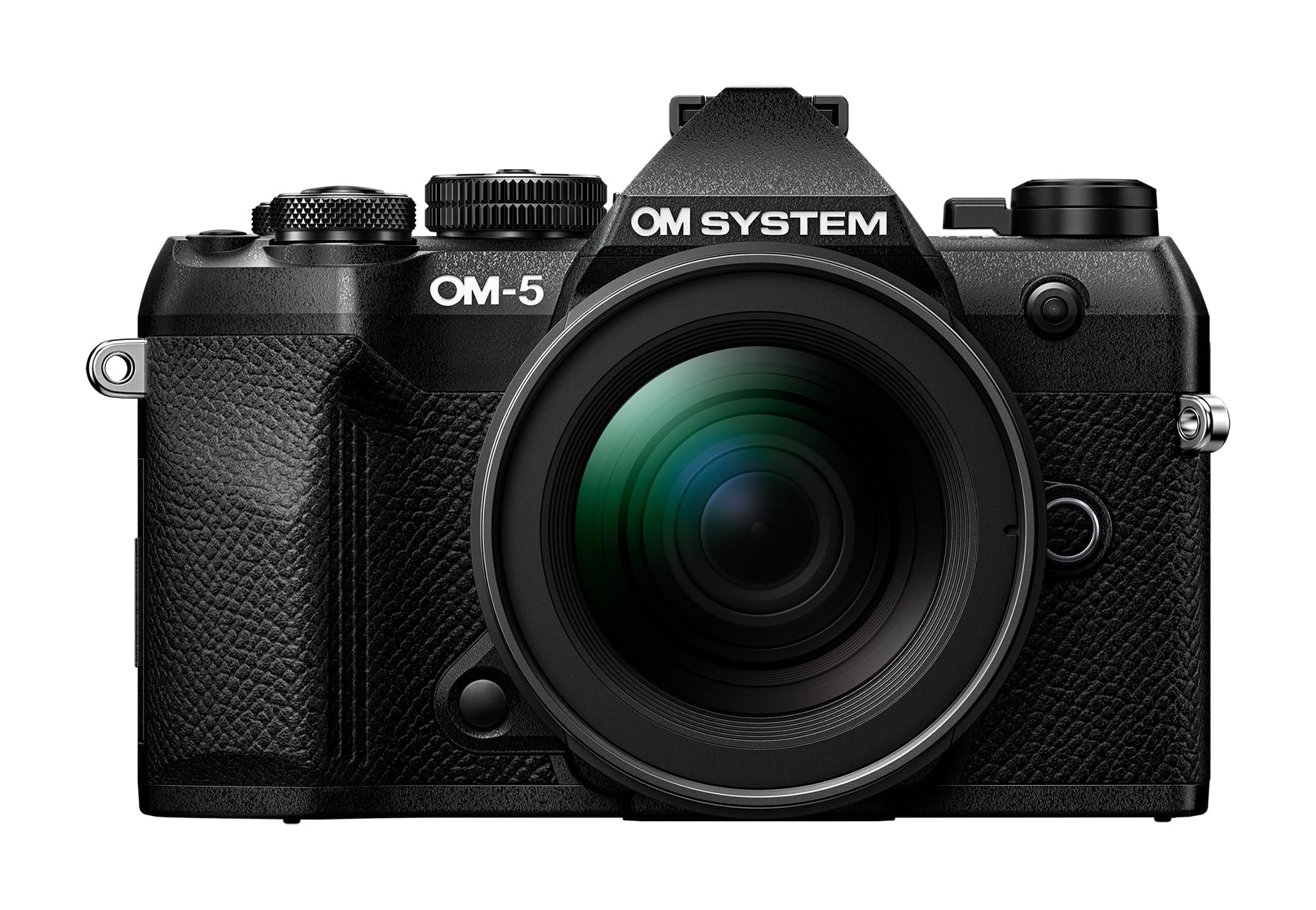
The OM-5 Mark II is a compact, weather-sealed Micro Four Thirds camera built for the trail. At roughly 414g with the 12-45mm f/4 PRO kit lens, it disappears into a hiking pack. The 5-axis IBIS offers up to 7.5 stops of stabilization with Sync IS lenses, allowing sharp handheld shots at shutter speeds that would force a full-frame shooter to deploy a tripod. The computational photography button provides direct access to Live ND, focus stacking, and high-res shot modes.
The 20MP sensor with a 121-point hybrid AF system is fast and accurate in good light, and the IP53-rated body shrugs off rain and dust. The f/4 constant aperture kit lens is sharper than typical collapsible zooms and maintains brightness throughout the 12-45mm range. It also unlocks 4K video with no recording time limit for quick capture of river flows or animal behavior.
The small battery yields only roughly 340 shots, and the 20MP sensor struggles with cropping in low contrast scenes. The grip is small and may feel cramped with large lenses. For the beginner whose priority is a go-anywhere, lightweight system for day hikes, the OM-5 Mark II is the most agile choice.
Why it’s great
- Extremely lightweight and weather-sealed for hiking
- World-leading IBIS eliminates tripod for many shots
- Constant f/4 kit lens is optically excellent
Good to know
- Small battery requires spares for long days
- 20MP sensor limits cropping ability
6. Sony Alpha a6400

The a6400 inherits the same 0.02-second autofocus speed as the a6100 but adds a more robust 850-point phase-detection array and advanced Real-Time Tracking that works reliably for fast-moving wildlife. The 24.2MP APS-C sensor produces sharp, colorful images with excellent dynamic range, and the 11fps continuous shooting with AE/AF tracking ensures you capture the decisive moment. The 180-degree flip-up touchscreen is useful for low-angle flower shots and vlogging in the field.
The magnesium-alloy body feels more durable than the a6100’s polycarbonate frame, and the inclusion of a mic input makes it suitable for nature videography with external audio. The camera supports 4K video at up to 30fps with full pixel readout and no pixel binning, delivering high-quality footage. The compact size (359g body only) makes it easy to pair with a long telephoto lens without breaking your shoulder.
The a6400 lacks in-body image stabilization, meaning you must rely on lens-based stabilization for sharp handheld shots at long focal lengths. The touchscreen functionality is limited — you cannot navigate the menu by touch. The battery life is average at roughly 410 shots, so budget for spares. For the beginner focused on fast action and animal tracking, this is the best autofocus system in the APS-C class.
Why it’s great
- 850 AF points with Real-Time Tracking for animals
- Robust magnesium-alloy build for field durability
- Sharp 4K video with full pixel readout
Good to know
- No in-body stabilization requires OSS lenses
- Limited touchscreen functionality and average battery life
7. Panasonic LUMIX G85

The G85 is the most affordable camera in this guide to feature 5-axis in-body image stabilization, a game-changer for handheld nature shots in low light. The 16MP Micro Four Thirds sensor has no low-pass filter, which resolves fine detail comparable to higher-resolution sensors in good light. The 12-60mm Power O.I.S. kit lens provides a versatile 24-120mm equivalent zoom range, covering wide landscapes to modest wildlife reach.
The body is splash-proof and dust-proof with a magnesium-alloy front plate, offering durability that exceeds its price point. The electronic viewfinder (2360K dots) is bright and clear, and the 3-inch tilt-and-touch LCD works well for composition at awkward angles. The 4K Photo mode allows you to extract 8MP stills from 4K video at 30fps, giving a second chance to capture fast action you missed during live shooting.
The 16MP sensor struggles in deep shade compared to larger APS-C sensors, and autofocus in low light can hunt during 4K video recording. Overall, the G85 offers an unbeatable combination of stabilization and weather sealing at an entry-level price, making it a smart start for budget-conscious outdoor photographers.
Why it’s great
- 5-axis IBIS reduces blur in handheld low-light shots
- Weather-sealed body for use in damp conditions
- Versatile 12-60mm kit lens covers wide to mid-telephoto
Good to know
- 16MP sensor limits cropping and high-ISO performance
- Autofocus can struggle in low light for video
8. Canon EOS R100

The R100 is Canon’s most affordable entry into the RF mirrorless system, combining a 24.1MP APS-C sensor with the company’s reliable Dual Pixel CMOS AF. The 143 zone AF system covers a wide area and includes human and animal face/eye detection, making it easy to lock focus on a deer or a bird perched on a branch. The DIGIC 8 processor enables 6.5fps continuous shooting, fast enough for slow-moving wildlife and transitional landscape light.
The body is the smallest and lightest in the EOS R series at 356g with battery, which is a major advantage for packing light on day trips. The 18-45mm kit lens (29-72mm equivalent) is a decent walkaround zoom but lacks the reach necessary for serious wildlife work. You will likely want to add an RF-S 55-210mm for nature subjects. Wi-Fi and Bluetooth allow quick transfers to your phone for sharing on the trail.
The R100 lacks in-body stabilization, so you need stabilized RF lenses for sharp handheld results. It also lacks a touchscreen, relying on physical buttons for menu navigation. The 4K video is limited to 24fps, and the UHS-I card slot feels slow for burst shooting. For the beginner who prioritizes compact size and Canon’s intuitive interface, the R100 is a solid start but requires lens upgrades.
Why it’s great
- Smallest and lightest EOS R body for ultimate portability
- Canon Dual Pixel CMOS AF with animal detection
- Excellent image quality from the 24.1MP sensor
Good to know
- No in-body stabilization and no touchscreen
- Kit lens lacks telephoto reach for wildlife
9. Fujifilm X100VI

The X100VI is a niche choice for the nature photographer who values the ritual of a fixed-lens camera and the distinct film-simulation look. The 40.2MP X-Trans CMOS 5 HR sensor is the highest resolution in this guide, allowing extensive cropping into distant details. The 23mm f/2 lens (35mm equivalent) is optically superb for landscapes, forest scenes, and candid environmental portraits of hikers. The newly added 6-stop in-body stabilization is a major upgrade for handheld low-light work.
The built-in 4-stop ND filter allows wide-aperture shooting in bright sunlight, useful for blurring creek water or creating dreamy forest backgrounds. The 20 film simulations, including REALA ACE, produce JPEGs that often need no editing — a massive time saver for beginners. The hybrid viewfinder lets you switch between optical and electronic preview, which is unique and engaging for composition. The camera is compact enough to slide into a jacket pocket, making it the ultimate everyday carry for spontaneous nature encounters.
The fixed 23mm lens cannot zoom, meaning you must physically move closer or further from your subject — a limitation for wildlife and distant birds. The price is premium, placing it above many interchangeable lens alternatives. It is a specialist tool for the beginner who wants to master composition within a single focal length while enjoying class-leading JPEG colors.
Why it’s great
- 40.2MP allows extensive cropping of far subjects
- Built-in ND filter and film simulations reduce editing work
- Pocketable size for spontaneous nature shooting
Good to know
- Fixed 35mm equivalent lens cannot zoom for wildlife
- Premium price for a fixed-lens camera
10. Nikon Z 6II

The Z 6II is a full-frame mirrorless camera that excels in the low-light conditions of dawn and dusk nature photography. Its 24.5MP BSI sensor delivers exceptional dynamic range and noise control up to ISO 51200, allowing you to shoot at twilight without a tripod. The 273-point phase-detection AF system with improved subject tracking is reliable for stationary animals and slow-moving nature subjects, and the 14fps continuous shooting is fast enough for light action.
The 5-axis in-body stabilization provides up to 5 stops of correction, and the large Z-mount accepts sharp Nikkor Z glass like the 24-70mm f/4 S or the 14-30mm f/4 S for landscapes. Dual card slots (CFexpress/XQD plus UHS-II SD) offer backup flexibility for long trips. The camera supports 4K UHD 60p with full pixel readout, and the USB-C port enables constant power for extended time-lapse sessions.
The Z 6II’s AF tracking can lose subjects in complex backgrounds, and Nikon’s Z lens lineup for wildlife telephoto (e.g., 100-400mm) is more expensive than F-mount equivalents. The screen does not flip forward, making self-filming awkward. For the beginner who prioritizes landscape and low-light performance over action tracking, this is a premium full-frame entry point that will grow with your skill level.
Why it’s great
- Excellent low-light performance for dawn/dusk shooting
- Full-frame IBIS for sharp handheld landscapes
- Dual card slots for backup peace of mind
Good to know
- AF tracking can drop fast-moving subjects
- Telephoto Z lenses are expensive compared to F-mount
11. Canon EOS Rebel T7 Bundle
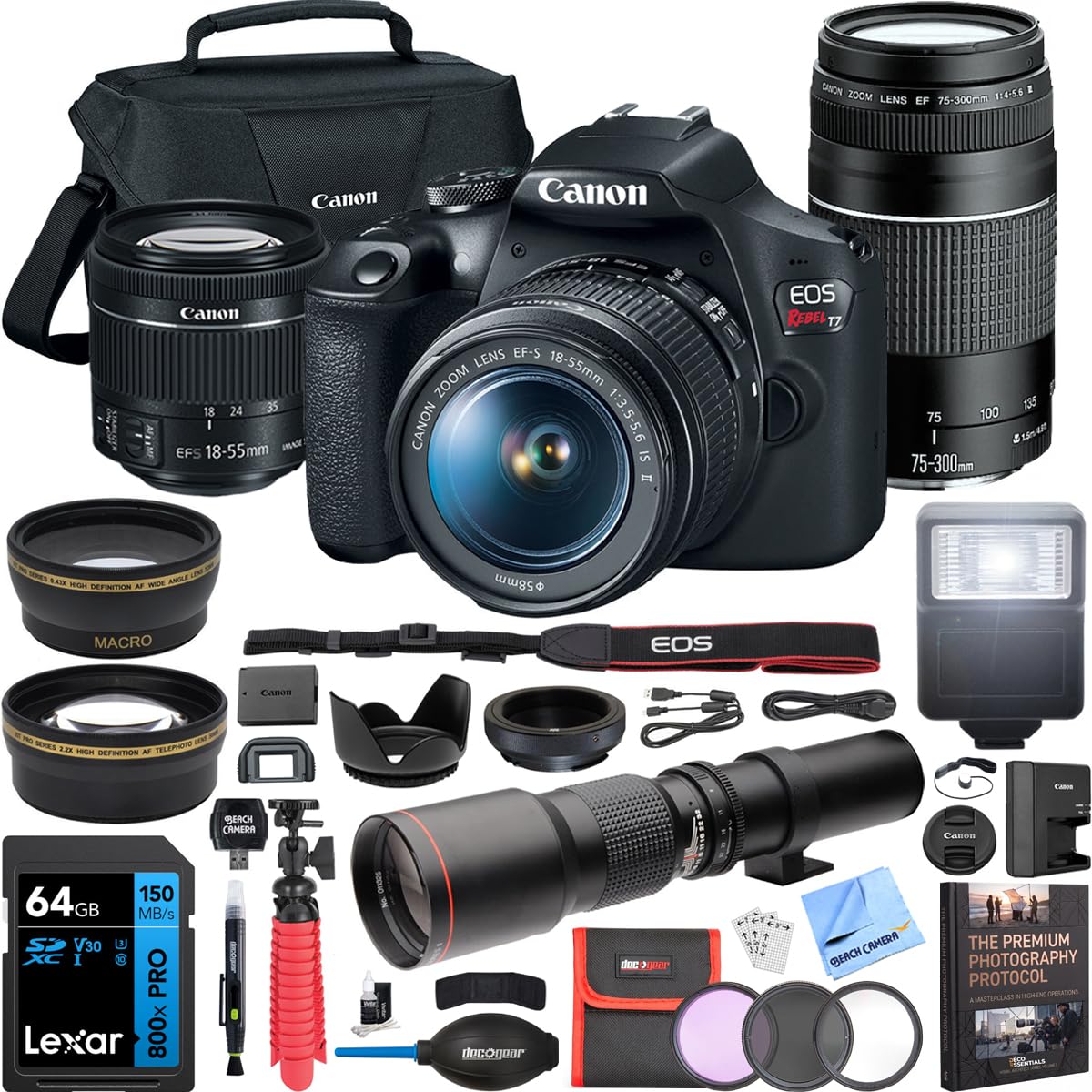
The Rebel T7 bundle is the value king for the beginner who wants maximum reach at minimum cost. The kit includes the camera body with 24.1MP APS-C sensor, an EF-S 18-55mm lens for landscapes, an EF 75-300mm lens for wildlife, and a 500mm preset telephoto lens for extreme long-range shooting — all in one box. The 9-point AF system with AI Servo AF is basic but functional for slow-moving subjects like grazing deer or perched birds. The DIGIC 4+ image processor delivers adequate image quality for online sharing and small prints.
The bundle also includes a camera bag, 64GB memory card, tripod, flash, filter kit, and a variety of accessories that eliminate the need to buy anything else to start shooting. The optical viewfinder provides a clear, lag-free view that is excellent for tracking birds against the sky. Wi-Fi and NFC enable easy sharing to your phone for quick social media updates.
The 500mm preset lens is manual focus-only and very soft, requiring bright sunlight and a tripod for sharpest results. The Rebel T7 captures only 3fps, which is too slow for fast action like birds in flight. The battery life has been reported to drain quickly, and the included accessories vary in quality. For a beginner on the tightest budget who wants to experiment with multiple focal lengths, this bundle provides the most hardware per dollar.
Why it’s great
- Unbeatable value with 18-55mm, 75-300mm, and 500mm lenses
- Full accessory kit included for instant shooting
- Optical viewfinder is clear for tracking slow wildlife
Good to know
- 3fps burst rate is too slow for fast action
- 500mm preset lens is soft and manual focus-only
FAQ
Do I need a 500mm lens as a beginner nature photographer?
Is Micro Four Thirds good enough for nature photography?
What is the advantage of animal eye tracking for wildlife beginners?
Final Thoughts: The Verdict
For most users, the camera for beginner nature photography winner is the OM SYSTEM OM-1 Mark II because it combines world-class weather sealing, the most reliable autofocus points on the market, and computational tools that make nature photography easier right out of the box. If you want the absolute fastest autofocus for moving animals, grab the Sony Alpha a6400. And for the best value with a versatile kit lens that covers landscapes to wildlife, nothing beats the Nikon D7500.

Mo Maruf
I created WellFizz to bridge the gap between vague wellness advice and actionable solutions. My mission is simple: to decode the research and give you practical tools you can actually use.
Beyond the data, I am a passionate traveler. I believe that stepping away from the screen to explore new environments is essential for mental clarity and physical vitality.