Our readers keep the lights on and my smoothie glass nicely filled. As an Amazon Associate, I earn from qualifying purchases.
Few things unsettle a homeowner like the scratching, rustling, and unmistakable ammonia smell of bats roosting in an attic or behind a gable vent. The challenge is bats are creatures of habit—once they choose a roost, they return nightly, leaving behind guano that can damage insulation and pose health risks. A repellent that actually breaks that pattern must either overwhelm their sensitive echolocation with ultrasonic frequencies or flood their olfactory system with a scent they instinctively avoid.
I’m Mohammad Maruf — the founder and writer behind WellFizz. I’ve spent hundreds of hours analyzing ultrasonic frequency specs, essential oil concentration ratios, and real-user outcomes across dozens of bat control products to separate what genuinely repels bats from what merely smells good to humans.
Whether you need a plug-and-play sonic remedy for a finished attic or a plant-based spray to seal off entry points before exclusion, this guide breaks down the five most effective options currently available. The following analysis will help you identify the best bat repellent for your specific roosting scenario and property type.
How To Choose The Best Bat Repellent
Bat repellents fall into two distinct technology camps—scent-based sprays that rely on strong essential oils and ultrasonic devices that emit high-frequency sound waves. Choosing between them depends on whether your bat problem is in an enclosed attic, an open porch, or along exterior eaves. Before buying, consider how the repellent will be applied, how often it needs reapplication, and whether it can work alongside exclusion techniques like sealing cracks and installing one-way valves.
Scent Strength and Plant-Based Formulas
Sprays that combine peppermint and cinnamon essential oils are the most common natural deterrents because bats find these smells overwhelming, not merely unpleasant. The key variable is concentration—a stronger ratio of active essential oils means fewer reapplications and a more persistent repellent barrier. Look for sprays that list specific essential oils (not just “natural fragrance”) and that are labeled for use on wood, vinyl, and brick surfaces without staining.
Ultrasonic Coverage and Frequency Variability
Ultrasonic devices must cover the roost’s entire volume with sound waves that bats cannot habituate to. The most effective units use dual speakers and sweep through multiple frequencies so bats never get used to a single tone. Coverage ratings like “7000 sq. ft.” refer to open areas—actual effective range drops significantly when walls, insulation, or obstructions block the sound. For attic installations, a unit that can be mounted overhead near the roost site performs far better than one placed on a shelf across the room.
Quick Comparison
On smaller screens, swipe sideways to see the full table.
| Model | Category | Best For | Key Spec | Amazon |
|---|---|---|---|---|
| Briidea Ultrasonic Bat Away | Ultrasonic Device | Enclosed attics & garages | 7000 sq. ft. open-area coverage | Amazon |
| Donaldson Farms Bat Repellent Spray | Essential Oil Spray | Barns, eaves & entry points | Plant-based cinnamon & mint oils | Amazon |
| Colton’s Naturals Bat Repellent Spray | Essential Oil Spray | Porch & gable vent sealing prep | Plant-derived formula 16 oz | Amazon |
| Kate’s Home & Garden Peppermint Oil Spray | Essential Oil Spray | Multi-pest + bat perimeter defense | 32 oz bottle, 3000 sprays | Amazon |
| Smart Grower Peppermint Oil Spray | Essential Oil Spray | Entryway & garden perimeter | Extra strength pure peppermint | Amazon |
In‑Depth Reviews
1. Briidea Ultrasonic Bat Away System

The Briidea device takes a fundamentally different approach from sprays—it uses dual speakers that project two ultrasonic sound streams at frequencies bats cannot tolerate. Unlike scent-based repellents that fade with time, this unit operates continuously, and because it sweeps through variable frequencies, bats cannot habituate to a single tone. Users who placed it in finished attics and garage drop ceilings reported that scratching sounds stopped within two to three weeks, and guano accumulation ceased entirely.
The unit covers up to 7000 sq. ft. in open areas, though real-world attic performance depends on how many walls and obstructions block the sound waves. Installation is straightforward: you can screw-mount it overhead or use the included nano-marker hook sticker to attach it directly to a wall. Some users noted that the unit’s build quality is modest—a few reported speaker rattle from adhesive issues—but the overall success rate in eliminating established bat colonies is the highest in this lineup.
Briidea recommends running the device continuously for 16 to 20 days before expecting obvious results. This patience requirement is critical—bats that have roosted for years may take the full three weeks to abandon the site entirely. For severe infestations, combining this ultrasonic unit with a one-way exclusion valve and sealing entry points provides the most reliable long-term solution.
Why it’s great
- Variable-frequency ultrasonic sweeps prevent bat habituation
- 7000 sq. ft. open-area coverage handles large attic volumes
- Chemical-free, safe for humans and pets
Good to know
- Requires 16–20 days of continuous use for full effect
- Build quality may need reinforcement with silicone adhesive
- Effectiveness drops with heavy wall obstructions
2. Donaldson Farms Bat Repellent Spray
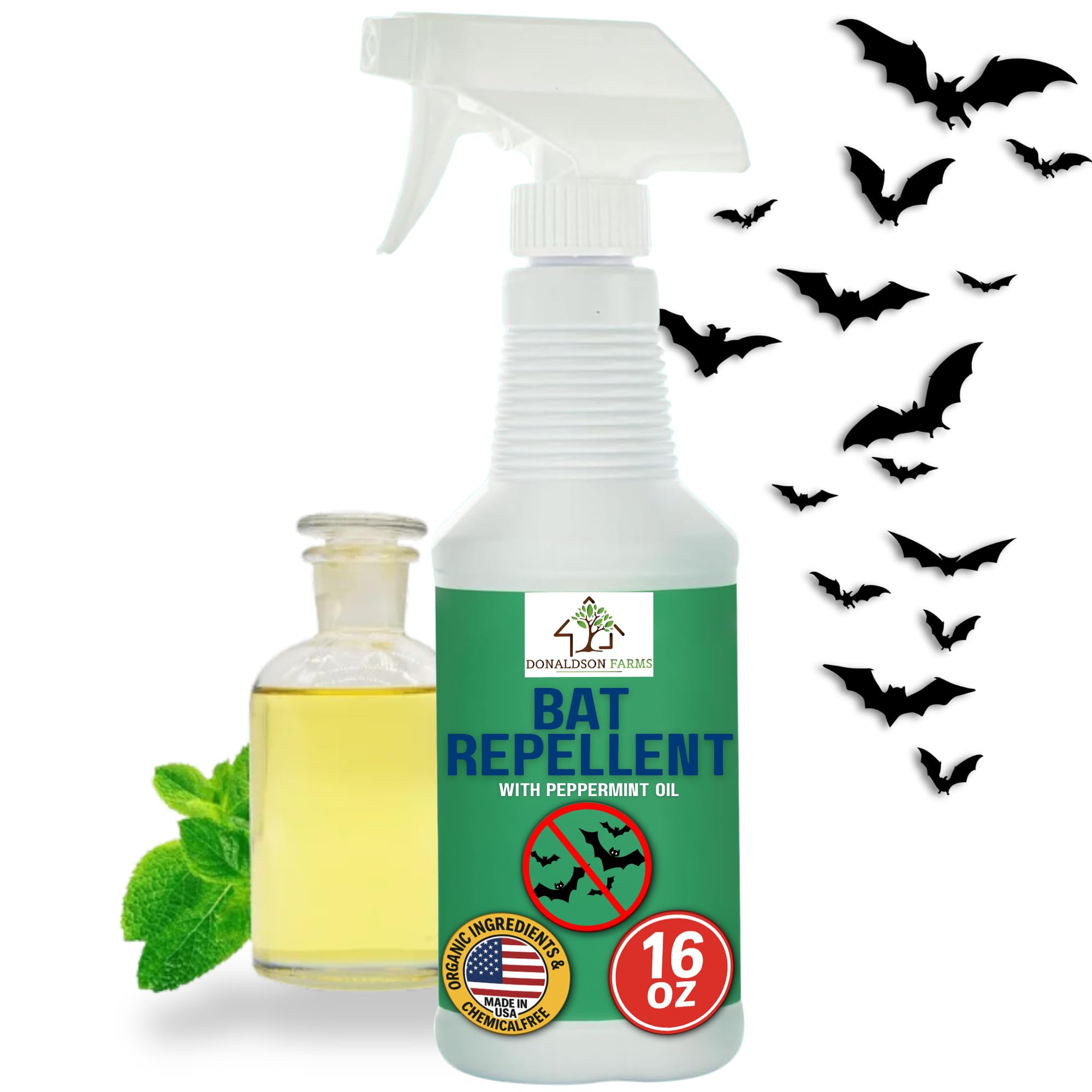
Donaldson Farms formulated their 16-ounce spray using plant-based ingredients—primarily cinnamon and mint essential oils—to create a scent barrier that bats find deeply unpleasant. What sets this spray apart is the concentration feedback from users: several reviewers reported that after spraying entry points in the early evening, bats vacated the immediate area almost immediately, with one counting 24 bats exiting after a single application. This suggests the oil blend is potent enough to disrupt roosting behavior on contact.
The spray is designed for both indoor and outdoor use, which makes it practical for attics, barn eaves, and exterior gable vents. The instructions emphasize spraying around entry points and reapplying after heavy rain or every two weeks. Because the formula is plant-based, it does not stain wood or vinyl surfaces, and it is safe around pets once the spray has dried—though bats may still attempt to return if the scent fades.
Not every user saw instant results. Some needed multiple applications over several days before noticing a reduction in bat activity, and a small minority reported no change at all. This variability is common with scent-based repellents, as bat sensitivity to essential oils can differ between colonies. Used as part of a broader exclusion plan—spraying before sealing entry points—the Donaldson Farms spray performs reliably for most homeowners.
Why it’s great
- Plant-based cinnamon and mint blend works on contact for many colonies
- Safe for indoor attic use without staining surfaces
- Multiple users report immediate bat evacuation
Good to know
- Results vary between bat colonies; some require repeated applications
- Scent may be overpowering for sensitive individuals initially
- Reapplication needed every two weeks or after rain
3. Colton’s Naturals Bat Repellent Spray
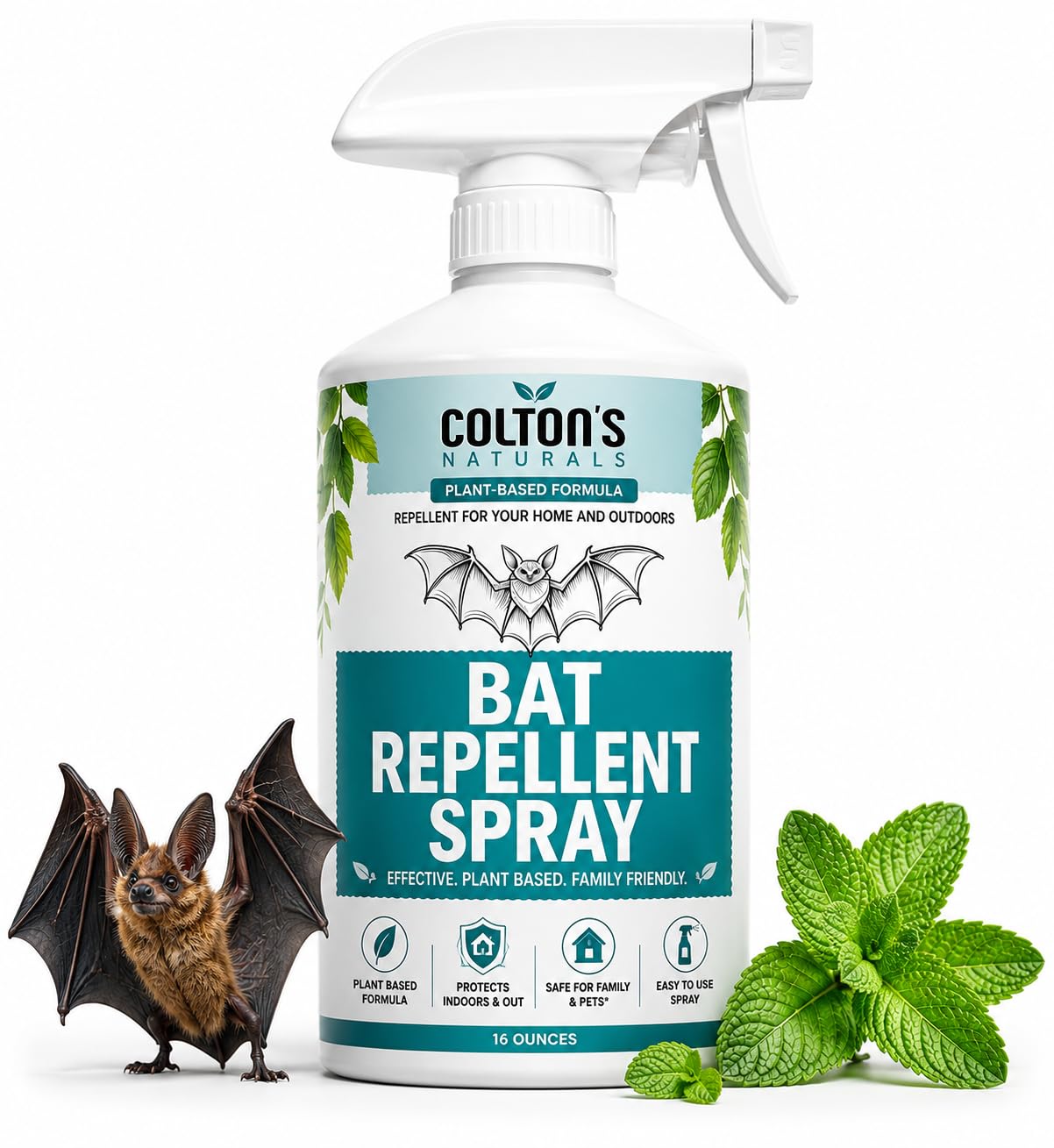
Colton’s Naturals markets their bat repellent spray as a plant-derived deterrent with a strong mint and cinnamon scent profile. The formula is designed to be sprayed around attics, barns, homes, and outdoor areas, with the manufacturer emphasizing that it works without harming bats. Among these five products, it is the most accessible option for those who want to try a spray before investing in a more expensive ultrasonic device.
Users who had success with this spray often combined it with physical deterrents like motion-sensor LED lights or one-way exclusion screens. One reviewer who sprayed it heavily for several days ultimately paired it with light and manual intervention to clear a covered porch of bat guano. Another user reported it worked well to drive bats out of a gable vent so that the opening could be sealed permanently—a best-practice technique that excludes bats for good.
The critical downside is inconsistency. Multiple users found the spray completely ineffective, even after heavy and repeated application. The strong initial scent dissipates within days, and in warm or humid conditions it may need reapplication every 48 hours to maintain a repelling effect. For mild infestations or as a temporary deterrent during exclusion work, it can be a helpful tool, but it should not be relied upon as a standalone solution against established colonies.
Why it’s great
- Affordable entry point for bat repellent sprays
- Strong mint/cinnamon scent deters bats on initial application
- Useful for clearing vent areas before sealing
Good to know
- Inconsistent results—some users saw no change at all
- Scent dissipates quickly in hot or humid weather
- Requires frequent reapplication for ongoing protection
4. Kate’s Home & Garden Peppermint Oil Spray
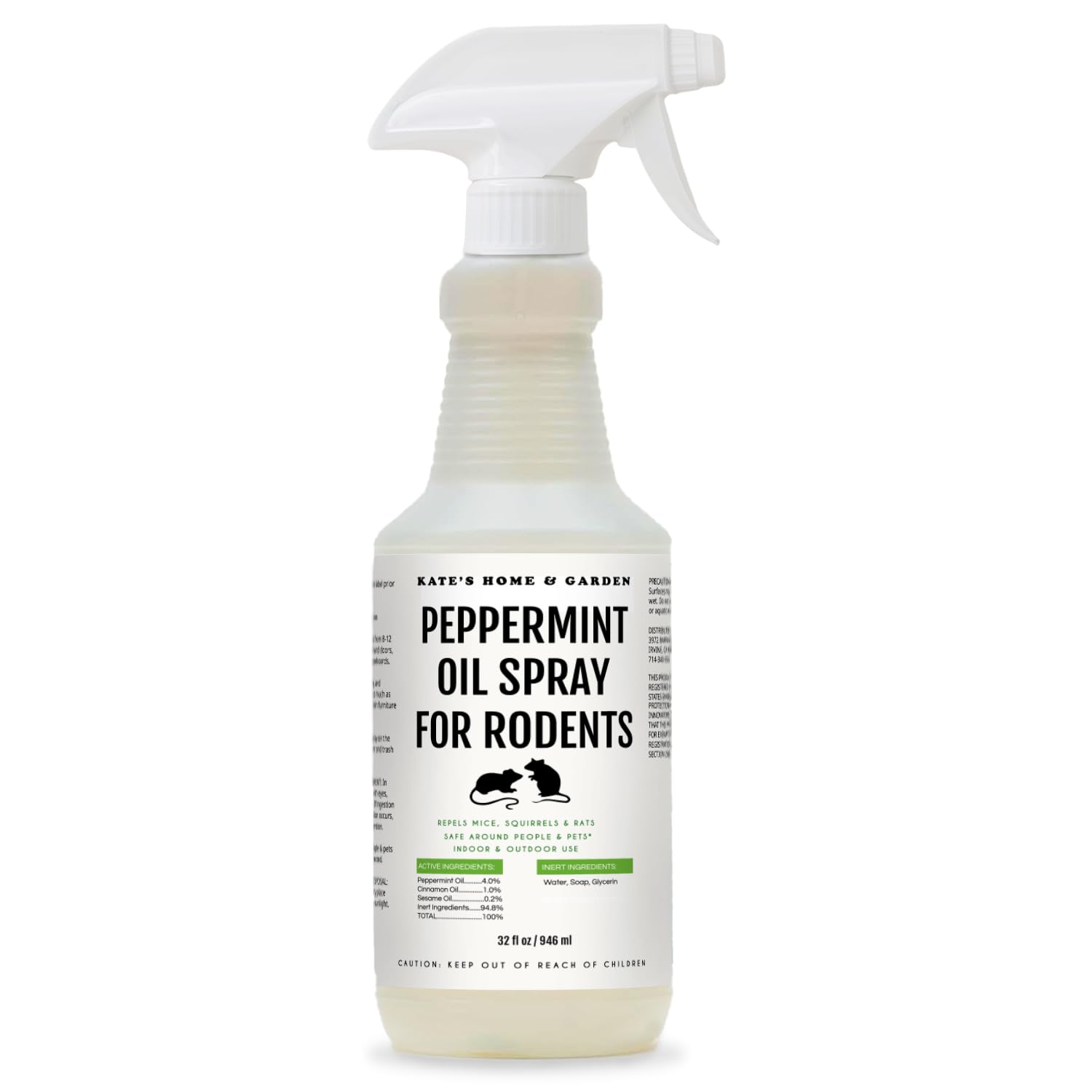
Kate’s Home & Garden takes a multi-pest approach, packing a 32-ounce bottle with a peppermint oil concentrate blended with cinnamon oil. The larger volume—up to 3,000 sprays per bottle—means you can cover more ground without buying refills every few weeks. The formula is marketed as safe around children and pets, and many users found it pleasant enough to use indoors without feeling overwhelmed by artificial chemical smells.
One distinct advantage of this spray is its usefulness outside the bat problem: it repels squirrels, rats, mice, chipmunks, and even spiders. Homeowners dealing with multiple pest species appreciate that a single product can handle entry-point spraying for various animals. Users reported that perimeter spraying around yard access points kept rats from entering specific areas, and that squirrels stopped chewing on wood fences after application.
The primary drawback is application consistency. Some users received the product and found it failed to deter mice or squirrels from bird feeders entirely, suggesting that the concentration may vary between batches or that certain animals are less sensitive to the oil blend. Additionally, delivery times have been problematic—one reviewer noted a nearly month-long wait. For those who need a bat repellent quickly, the shipping delay is a genuine concern.
Why it’s great
- Large 32-ounce bottle provides up to 3,000 sprays
- Effective against multiple pest species beyond bats
- Pleasant peppermint scent, safe around children and pets
Good to know
- Effectiveness varies; some users report no pest deterrence
- Shipping delays reported; not ideal for urgent needs
- May need frequent reapplication in high-heat conditions
5. Smart Grower Peppermint Oil Spray
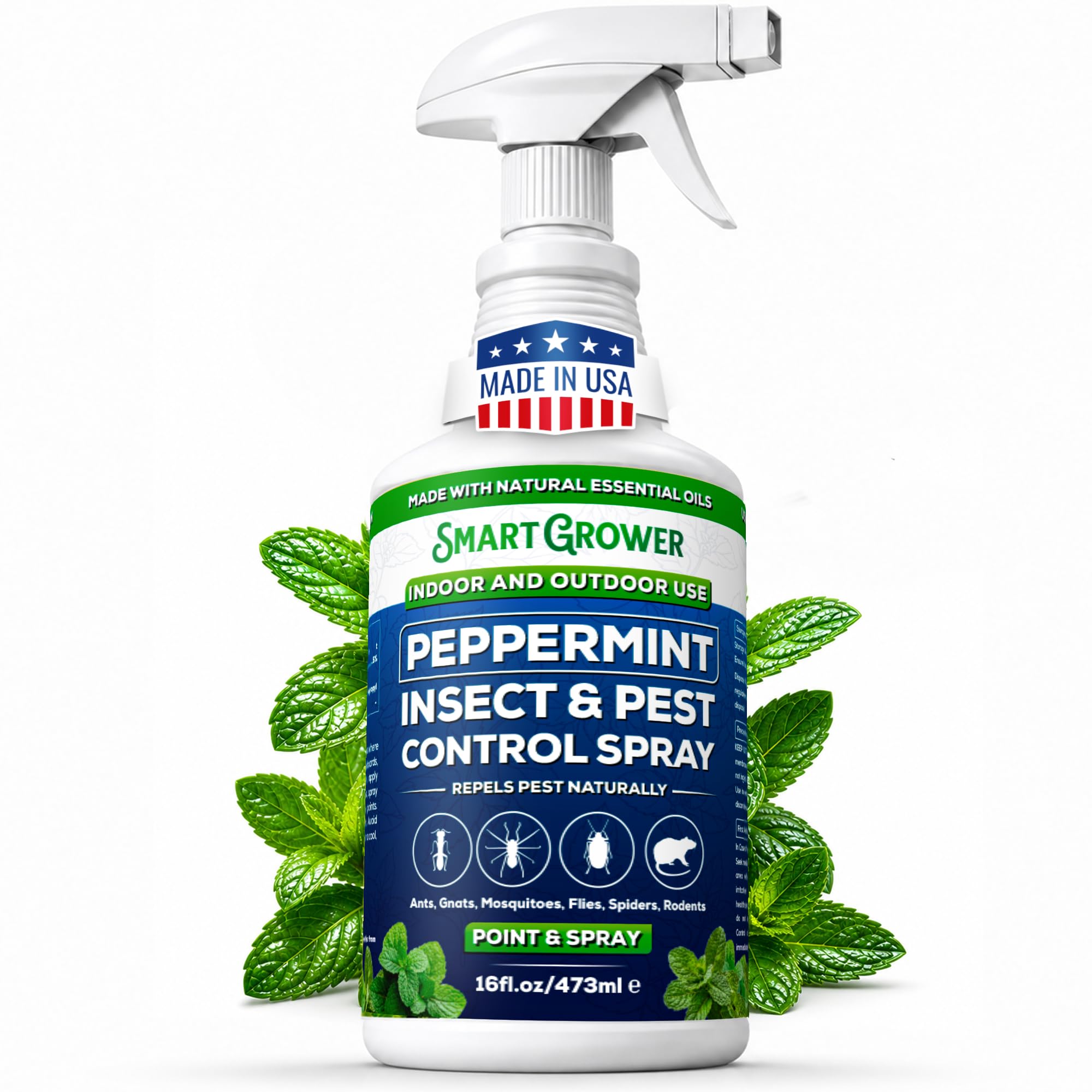
Smart Grower’s peppermint oil spray touts an extra-strength formula made from 100% pure peppermint essential oil with no synthetic pesticides. The “extra strength” claim is supported by user reports that the spray effectively reduced spiders, ants, aphids, gnats, and mosquitoes after a few applications. While the product is primarily marketed as a broad-spectrum pest repellent, several users applied it around entry points and found it reduced bat activity as a secondary benefit.
One practical advantage is the bottle’s ergonomic sprayer, though a few users noted the bottle can warp when stored in direct heat—requiring the nozzle to be secured after cooling. The scent is strong but pleasant, which makes it more appealing for indoor use than chemical-laden alternatives. Dog owners in particular appreciated that their pets avoided the sprayed areas, adding a layer of safety.
The main limitation for bat control is the product’s design intent: it repels insects and rodents, but bat-specific scent profiles (like cinnamon-heavy blends) are absent. Bats appear less bothered by pure peppermint alone compared to peppermint-and-cinnamon combos. As a result, this spray works best as a perimeter defense for general pest management rather than a dedicated bat repellent. For homes with mild bat curiosity near entryways, it may help, but colonies already roosting will likely ignore it.
Why it’s great
- 100% pure peppermint oil with no synthetic pesticides
- Effective against a wide range of insects and rodents
- Pleasant, non-toxic scent safe around dogs
Good to know
- Pure peppermint alone is less effective against bats than cinnamon blends
- Bottle may warp in high heat; nozzle needs cooling before securing
- Not a dedicated bat repellent; best for general pest perimeter defense
FAQ
Can ultrasonic bat repellents harm pets or children?
How often should I reapply a bat repellent spray for it to work?
Will bat repellent alone solve a bat infestation permanently?
Final Thoughts: The Verdict
For most users, the best bat repellent winner is the Briidea Ultrasonic Bat Away System because it delivers continuous, chemical-free protection that bats cannot adapt to, covering large attic volumes without requiring weekly maintenance. If you prefer a plant-based spray for treating specific entry points before sealing, grab the Donaldson Farms Bat Repellent Spray—it has the strongest user-reported success rate for immediate evacuation. And for a budget-friendly option that works reasonably well when combined with exclusion methods, the Colton’s Naturals Bat Repellent Spray offers a practical first step for homeowners with mild bat activity around gable vents and porch eaves.

Mo Maruf
I created WellFizz to bridge the gap between vague wellness advice and actionable solutions. My mission is simple: to decode the research and give you practical tools you can actually use.
Beyond the data, I am a passionate traveler. I believe that stepping away from the screen to explore new environments is essential for mental clarity and physical vitality.