Our readers keep the lights on and my smoothie glass nicely filled. As an Amazon Associate, I earn from qualifying purchases.
Park WiFi can be a gamble—spotty signal, slow speeds, and often unsecured. When your camper depends on a stable connection for remote work, streaming, or navigating your next stop, you need a dedicated solution that brings reliable internet to your rig, wherever you park.
I’m Mohammad Maruf — the founder and writer behind WellFizz. I’ve spent many hours analyzing network hardware specifications, evaluating signal performance in remote scenarios, and sifting through real user experiences to find the gear that truly delivers for life on the road.
After thorough research into mobile networking gear, this guide breaks down the top seven picks for the best camper wifi to keep you connected, secure, and streaming no matter where you roam.
How To Choose The Best Camper WiFi
Choosing the right camper WiFi setup depends on where you travel, how many devices you need to connect, and whether you have access to public Wi-Fi or need your own cellular or satellite connection. Focus on three core elements: connection source, security features, and device capacity.
Connection Source: Repeater, Cellular, or Satellite
A travel router that repeats public park Wi-Fi is the most budget-friendly option—it picks up the park’s signal and creates a private, secure network inside your camper for all your devices. Cellular hotspots give you your own independent internet through 4G LTE or 5G towers, ideal for boondocking or parks with poor Wi-Fi. Satellite internet like Starlink is the ultimate off-grid solution, working where no cell towers reach, but it comes with higher upfront costs and requires a clear sky view.
Security and VPN Support
Public Wi-Fi at campgrounds is notoriously unsecure. A camper router with built-in VPN client and server support (OpenVPN or WireGuard) encrypts all your traffic, protecting passwords and personal data from snoopers. Look for models that also support captive portal authentication—this lets you log into hotel or park Wi-Fi once through the router, so every device stays connected without individual logins.
Speed and Device Capacity
Check the data transfer rate (measured in Mbps) and the number of simultaneous devices supported. A router rated for AX3000 or BE3600 speeds can handle 4K streaming and video calls on multiple devices. The device count matters—some budget routers handle 10-15 devices, while premium models support 90-120. If you travel with multiple phones, laptops, tablets, and smart TVs, don’t skimp on device capacity.
Quick Comparison
On smaller screens, swipe sideways to see the full table.
| Model | Category | Best For | Key Spec | Amazon |
|---|---|---|---|---|
| TP-Link Roam 7 BE3600 | Travel Router | Future-proof Wi-Fi 7 speeds | Up to 90 devices, 3600 Mbps | Amazon |
| GL.iNet Beryl 7 (MT3600BE) | Travel Router | OpenWrt customization & VPN speed | 1100 Mbps WireGuard VPN | Amazon |
| TravlFi Journey1 LTE | Cellular Hotspot | No-contract cellular data plans | 150 Mbps LTE, eSIM | Amazon |
| TP-Link Roam 6 AX3000 | Travel Router | Balanced Wi-Fi 6 performance | 2.5G WAN port, USB 3.0 | Amazon |
| Cudy TR3000 | Travel Router | Affordable Wi-Fi 6 with ZeroTier | 2.5Gbps WAN, 150Mbps OpenVPN | Amazon |
| STARLINK Mini Kit | Satellite | Off-grid internet anywhere | Satellite coverage, portable | Amazon |
| GL.iNet Spitz AX (X3000) | Cellular Gateway | 5G failover & detachable antennas | Dual-SIM 5G, OpenWrt | Amazon |
In‑Depth Reviews
1. TP-Link Roam 7 BE3600 Wi-Fi 7 Portable Travel Router

The Roam 7 is built on Wi-Fi 7 technology, delivering up to 2882 Mbps on the 5 GHz band and 688 Mbps on the 2.4 GHz band. That throughput handles multiple 4K streams, video conferencing, and large file uploads simultaneously inside your camper. It supports up to 90 devices, so every phone, tablet, laptop, and smart TV stays connected without bottlenecking.
Its Multi-Link Operation (MLO) combines frequency bands for lower latency and more stable connections—critical when the park Wi-Fi is congested. The captive portal authentication via the Tether app lets you log into hotel or RV park Wi-Fi once, then the Roam 7 shares that connection securely with all your devices. No more logging in on each phone.
VPN support includes OpenVPN and WireGuard for both client and server, encrypting all traffic on public networks. The USB-C power input works with standard adapters or a power bank, giving you flexible power options at a campsite with limited outlets. It has a 2.5 Gbps WAN port and a 1 Gbps LAN port for wired connections when you need maximum stability.
Why it’s great
- Wi-Fi 7 speeds handle heavy streaming and remote work
- One-step captive portal login for all devices
- USB-C powered, works with power banks
Good to know
- Does not support OpenWrt for custom firmware
- Plastic chassis can get warm under sustained load
2. GL.iNet GL-MT3600BE Beryl 7 Portable Travel Router
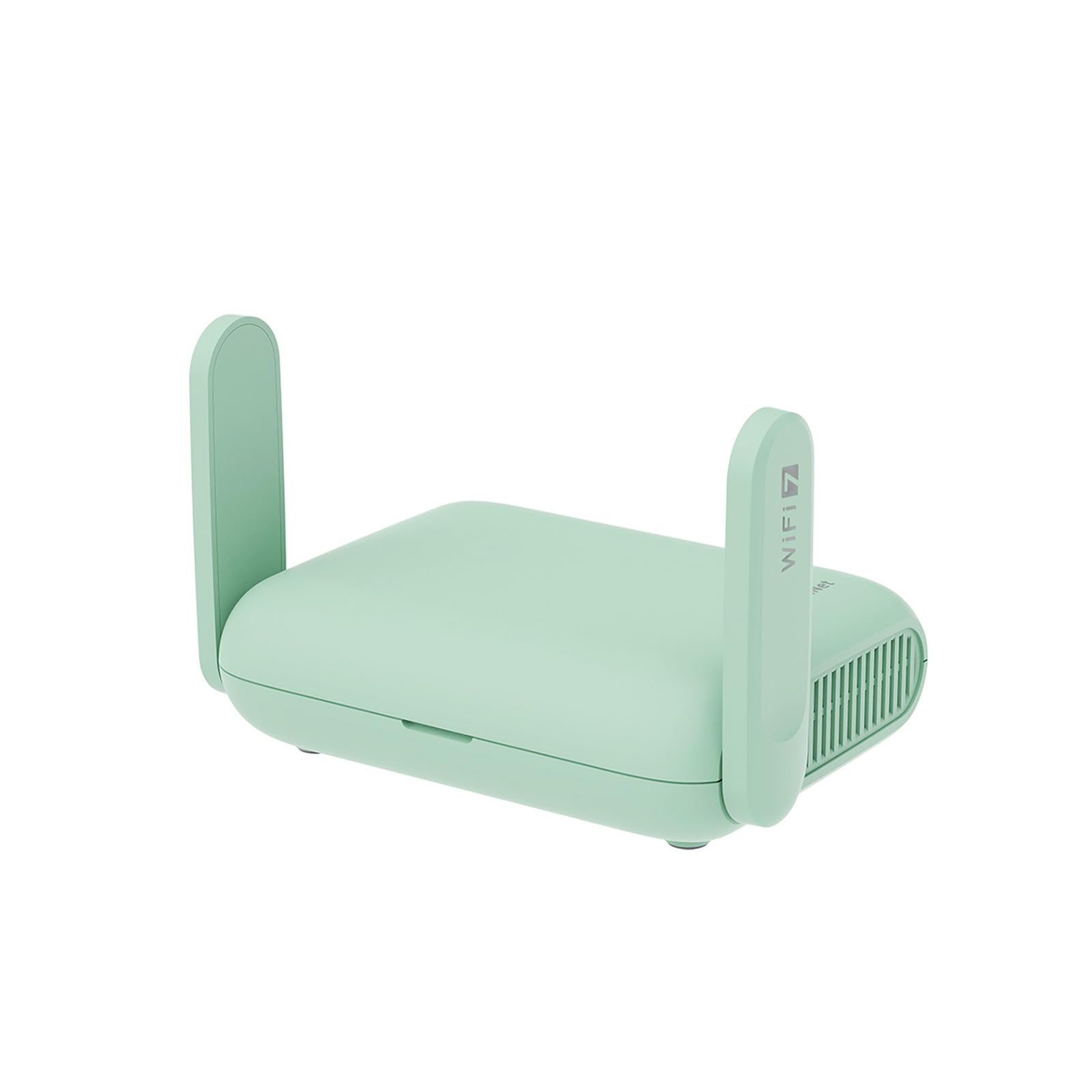
Beryl 7 runs on OpenWrt 21.02 firmware, giving you full control over network settings, plugins, and security policies. With 512MB of storage, you can install ad-blockers like AdGuard Home, advanced firewall rules, and custom VPN configurations. That makes it a powerful choice for campers who want to tailor their network to specific needs, like blocking bandwidth-hogging services or securing IoT devices.
It hits VPN speeds of 1100 Mbps on WireGuard and 1000 Mbps on OpenVPN-DCO—well above most travel routers. The physical toggle switch lets you flip between AdGuard or VPN modes instantly without diving into the admin panel. It supports up to 120 devices simultaneously, making it one of the highest-capacity portable routers on this list.
Hardware includes dual 2.5 Gbps Ethernet ports (one WAN, one LAN) and a USB 3.0 port for sharing storage or a cellular modem. The compact mint-green design fits easily in a glove box or console. It also supports VPN cascading, so you can run a VPN client and server at the same time, enabling remote access to devices back home while you’re on the road.
Why it’s great
- Extremely fast WireGuard VPN speeds
- OpenWrt with 512MB storage for custom plugins
- Physical toggle for quick VPN/AdGuard switching
Good to know
- Setup requires some networking knowledge for full customization
- Signal strength can be impacted by crowded campground Wi-Fi
3. TravlFi Journey1 LTE RV WiFi Hotspot

The Journey1 is a standalone LTE hotspot that creates its own internet connection using cellular networks—no need to rely on campground Wi-Fi. It uses eSIM technology, so there’s no physical SIM card to swap. You simply choose a data plan from 2 GB up to unlimited, pay month-to-month, and pause service when you’re not traveling. This pay-as-you-go model is ideal for seasonal campers who don’t want a year-round bill.
Coverage comes from major U.S. cellular networks, giving you internet access in most areas with cell service. Users report consistent speeds for streaming YouTube and Prime Video, and the device supports multiple devices without major slowdown. The lightweight, pocket-sized design includes a carabiner for easy attachment to a bag or hook inside the camper.
Battery life is solid for a full day of use, and the included carrying case protects it during travel. It’s not a router—it’s a dedicated hotspot that provides your own private Wi-Fi network without depending on park infrastructure. If you camp in areas with decent cell reception, this is a simple, contract-free way to stay online.
Why it’s great
- No contracts, pause and resume monthly plans
- eSIM technology—no physical SIM needed
- Reliable speeds for streaming and browsing
Good to know
- Requires cellular tower coverage—no service in deep dead zones
- Data plan costs can add up for heavy users
4. TP-Link Roam 6 AX3000 Dual-Band Wi-Fi 6 Travel Router

The Roam 6 delivers fast Wi-Fi 6 speeds with up to 2402 Mbps on the 5 GHz band and 574 Mbps on the 2.4 GHz band. It operates in three modes: Router Mode for Ethernet or USB tethering, Hotspot Mode for secure public Wi-Fi access, and AP/RE Mode for extending existing coverage. This versatility makes it a strong middle-ground option for campers who connect to both park Wi-Fi and a tethered phone.
Its 2.5 Gbps WAN/LAN port allows wired speeds that exceed typical campground internet, so your network won’t be the bottleneck. The USB 3.0 port and microSD card slot (up to 512GB) support media sharing—useful for backing up trip photos or streaming local files without buffering. The Tether app handles setup and captive portal logins with one-touch authentication.
The Roam 6 supports OpenVPN and WireGuard for both VPN client and server, securing all traffic on public networks. It includes eco, power, and balance modes to manage power consumption based on usage. The compact, black chassis fits neatly into a small bag or drawer, and it’s USB-C powered for flexible charging.
Why it’s great
- Multi-Gigabit WAN port for wired speed
- USB 3.0 and microSD for local media sharing
- Three operating modes for different campsite setups
Good to know
- Captive portal setup can be finicky on some networks
- No OpenWrt support for advanced customization
5. Cudy TR3000 Pocket-Sized Wi-Fi 6 Travel Router

The Cudy TR3000 is an entry-level Wi-Fi 6 travel router that covers the essentials without breaking the bank. It uses a 1.3GHz dual-core ARM Cortex-A53 CPU to deliver AX3000 speeds—up to 2402 Mbps on 5 GHz and 574 Mbps on 2.4 GHz. The WISP mode with captive portal support lets you connect to campground or hotel Wi-Fi and rebroadcast it as a private network, securing all your devices behind one login.
Built-in VPN support includes PPTP, L2TP, OpenVPN, WireGuard, IPsec, and ZeroTier. ZeroTier is a standout feature for this price tier—it allows you to create a private mesh network that links your camper, home devices, and portable gadgets for remote access to printers or storage. Users report OpenVPN speeds around 150 Mbps and WireGuard up to 300 Mbps, which is respectable for a budget unit.
The hardware includes one 2.5 Gbps WAN port and one 1 Gbps LAN port, plus a USB 3.0 port for connecting storage or a modem. Setup is handled through a web interface or the Cudy app. It’s compact enough to slip into a pocket, and the blue LED indicators give clear status at a glance. For campers on a tighter budget who still want Wi-Fi 6 and VPN capability, this is a solid entry point.
Why it’s great
- Very affordable Wi-Fi 6 travel router
- ZeroTier VPN for private mesh networking
- 2.5 Gbps WAN port at a budget price
Good to know
- Setup can be technically challenging for VPN configurations
- Hardware aging compared to newer Wi-Fi 7 models
6. STARLINK Mini Kit – 4th Gen Satellite Internet
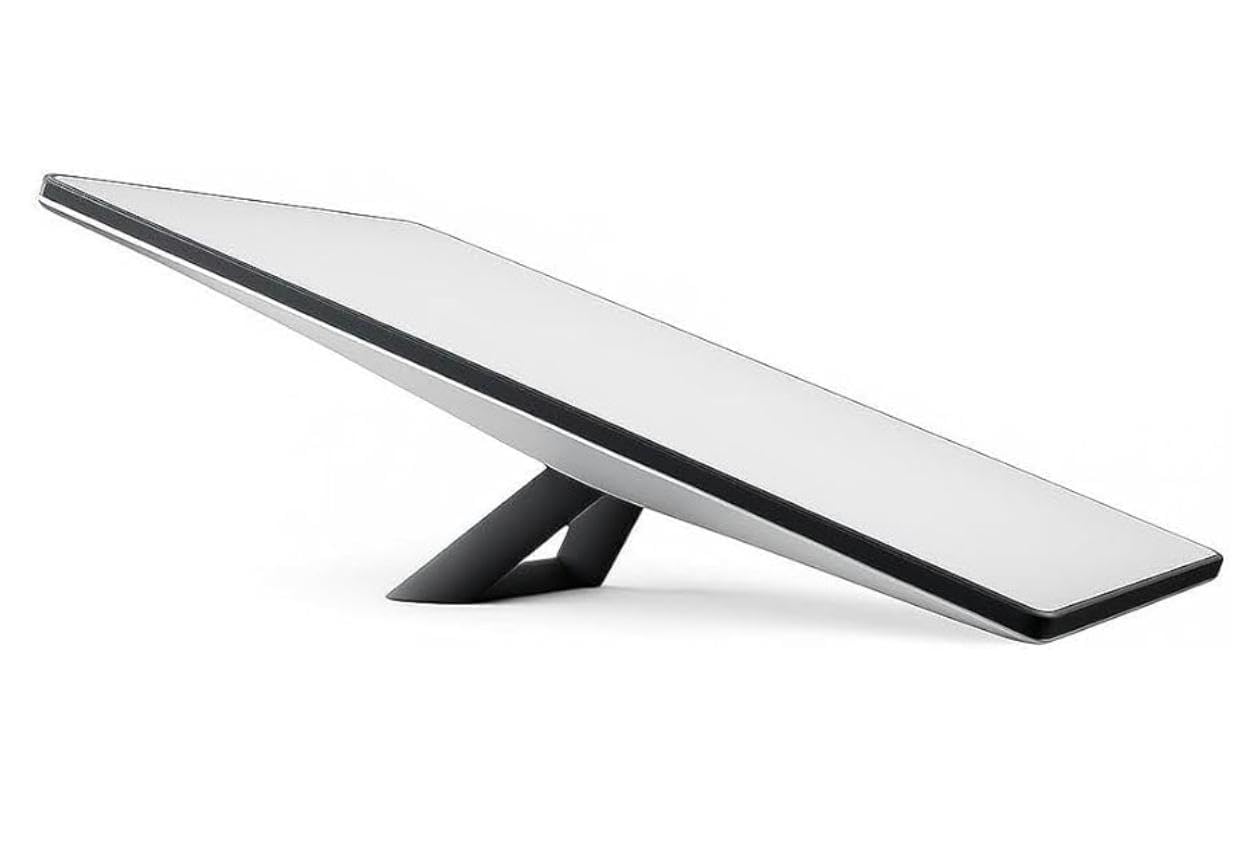
The Starlink Mini brings satellite internet to campers who venture far from cellular towers. This 4th Gen hardware combines the antenna and Wi-Fi router into a single, compact unit that measures just 7 by 4 by 9 inches. Setup involves placing the unit with a clear view of the sky, pointing it north in the northern hemisphere, and activating a service plan through the Starlink app. Users report getting online within minutes.
It operates on Starlink’s low-earth-orbit satellite constellation, providing high-speed internet in remote national parks, boondocking sites, and off-grid locations where no cell service exists. The service is pay-as-you-go—you can subscribe for a month when traveling and pause it when the camper is parked at home. Speeds support streaming, video calls, and browsing, with users praising its reliability during rainstorms.
The Mini is designed to be lightweight and truly portable, fitting easily inside a camper cabinet or tote. It includes a built-in Wi-Fi router, eliminating the need for separate networking gear. One thing to note is the ongoing service cost—after the initial hardware investment, you’ll pay a monthly fee for data, with various plan tiers from limited GB to unlimited roaming.
Why it’s great
- Works where cell towers have no signal
- Quick and simple setup process
- Pay-as-you-go service, pause when not camping
Good to know
- Requires clear, unobstructed view of the sky
- Monthly service fee adds to overall cost
7. GL.iNet GL-X3000 Spitz AX 5G Cellular Gateway

The Spitz AX is a full 5G cellular gateway with dual-SIM slots, letting you insert two different carrier SIM cards (like AT&T and T-Mobile) and automatically failover to the strongest connection. This is critical for campers who travel across regions with varying carrier coverage—your internet stays active as you move without manual SIM swaps. It’s certified by AT&T and T-Mobile for IoT use, ensuring compatibility.
Six detachable antennas give you the option to mount external or dome antennas on your RV roof for better signal reception in weak areas. The router supports Wi-Fi 6 with speeds up to 2402 Mbps on the 5 GHz band and 574 Mbps on the 2.4 GHz band. Multi-WAN technology lets you combine Ethernet, repeater, cellular, and tethering connections, with load-balancing to distribute bandwidth across them.
It runs on OpenWrt-based firmware, offering over 5,000 plugins for advanced network management. VPN support includes OpenVPN and WireGuard with speeds up to 150 Mbps and 300 Mbps respectively. The USB-C input powers the unit from a power bank or 12V system, perfect for off-grid RV setups. For campers who demand the most robust, carrier-agnostic cellular internet, this is the top-tier choice.
Why it’s great
- Dual-SIM with automatic carrier failover
- Detachable antennas for roof-mount signal boost
- Multi-WAN with load balancing
Good to know
- Higher price point than most travel routers
- Setup can be complex for non-technical users
FAQ
Can I use a travel router with campground Wi-Fi that has a login page?
What is the difference between a travel router and a cellular hotspot?
Do I need a VPN for my camper WiFi?
Final Thoughts: The Verdict
For most users, the best camper wifi winner is the TP-Link Roam 7 BE3600 because it combines future-proof Wi-Fi 7 speeds, support for up to 90 devices, and easy captive portal handling in a compact package. If you want deep customization and blazing WireGuard VPN speeds, grab the GL.iNet Beryl 7. And for off-grid adventures where cell towers don’t reach, nothing beats the STARLINK Mini Kit.

Mo Maruf
I created WellFizz to bridge the gap between vague wellness advice and actionable solutions. My mission is simple: to decode the research and give you practical tools you can actually use.
Beyond the data, I am a passionate traveler. I believe that stepping away from the screen to explore new environments is essential for mental clarity and physical vitality.