Our readers keep the lights on and my smoothie glass nicely filled. As an Amazon Associate, I earn from qualifying purchases.
A water heater in a hard-water home is under constant assault. Calcium deposits and aggressive minerals strip away the protective lining from the inside out, turning a high-efficiency tank into a rust bucket in just a few years. The single component standing between you and a costly replacement is a sacrificial anode rod — and not all rods handle hard water equally. Choosing the wrong one means fouled water, premature failure, or the return of that unmistakable sulfur smell.
I’m Mohammad Maruf — the founder and writer behind WellFizz. I’ve spent countless hours digging through material science data on corrosion protection and cross-referencing real-world user experiences to separate the rods that actually perform in severe water conditions from those that just fill the hole.
This guide examines seven of the best options on the market today and breaks down exactly why material type matters more than length when you are searching for the best anode rod for hard water.
How To Choose The Best Anode Rod For Hard Water
Hard water accelerates the corrosion process inside your tank, meaning your anode rod works twice as hard. Selecting the right material, length, and type (sacrificial versus powered) has a direct impact on water quality, odor, and how often you will be swapping rods. Focus on these three categories-splitting factors.
Material Science: Magnesium vs. Aluminum vs. Titanium
Magnesium offers the highest electrochemical potential, making it the most aggressive sacrificial metal. It protects the bare steel of your tank better than any other material, but it reacts strongly with hard water sulfates, often producing hydrogen sulfide gas — the rotten egg smell. Aluminum-zinc alloys are less reactive and therefore much better at suppressing sulfur odor, but they provide less overall corrosion protection and can flake into white sediment that clogs fixtures. Powered titanium rods use a low-voltage current to repel corrosion without sacrificing any metal; they last decades, completely eliminate sulfur odor, and are the only truly set-and-forget solution for severe hard water zones.
Length and Flexibility: Clearance Dictates Everything
Most residential water heaters sit in basements or utility closets with less than four feet of overhead clearance. A solid rod simply will not fit without tilting or disconnecting the entire unit. Flexible rods segmented into four links solve this precisely — each segment is under 12 inches, so installation requires barely a foot of headroom. If your heater is in an open area, a solid rod costs less and is simpler to torque out later. Always measure your tank’s total height and your ceiling clearance before ordering.
Powered vs. Sacrificial: Lifetime vs. Maintenance
A standard sacrificial rod must be inspected annually and replaced every one to three years in a hard water system. A powered anode rod costs more upfront but eliminates all maintenance because the titanium cathode never corrodes. Powered rods also actively descale the tank interior and improve heating efficiency. The trade-off is the need for a nearby 110V outlet and a higher initial buy-in. For anyone who dreads wrestling a seized rod out of a 50-gallon tank, the powered option is worth every penny.
Quick Comparison
On smaller screens, swipe sideways to see the full table.
| Model | Category | Best For | Key Spec | Amazon |
|---|---|---|---|---|
| Podoy Powered Anode Rod | Powered/Titanium | Set-and-forget hard water protection | Titanium, 9.4″, 30-80 Gal | Amazon |
| Briidea Powered Anode Rod | Powered/Titanium | Large tanks with persistent sulfur | Titanium, 12.3″, 40-89 Gal | Amazon |
| Podoy 32″ Magnesium Rod | Sacrificial/Solid | Maximum corrosion protection | Solid magnesium, 32″, 0.84″ dia | Amazon |
| Eastman 42″ Flex Magnesium | Sacrificial/Flexible | Tight-space magnesium replacement | Flex magnesium, 42″, S/S nipple | Amazon |
| Kelaro 44″ Flex Magnesium | Sacrificial/Flexible | Value mid-range flexible rod | Flex magnesium, 44″, 3/4″ NPT | Amazon |
| Eau 44″ Al-Zinc Rod + Kit | Sacrificial/Flexible | Sulfur smell elimination on a budget | Aluminum-Zinc alloy, 44″ flex | Amazon |
| Suburban 232768 Aluminum Rod | Sacrificial/Solid | OEM replacement for Suburban heaters | Aluminum, 9″, 3/4″ x 9″ | Amazon |
In‑Depth Reviews
1. Podoy Powered Anode Rod (Titanium)
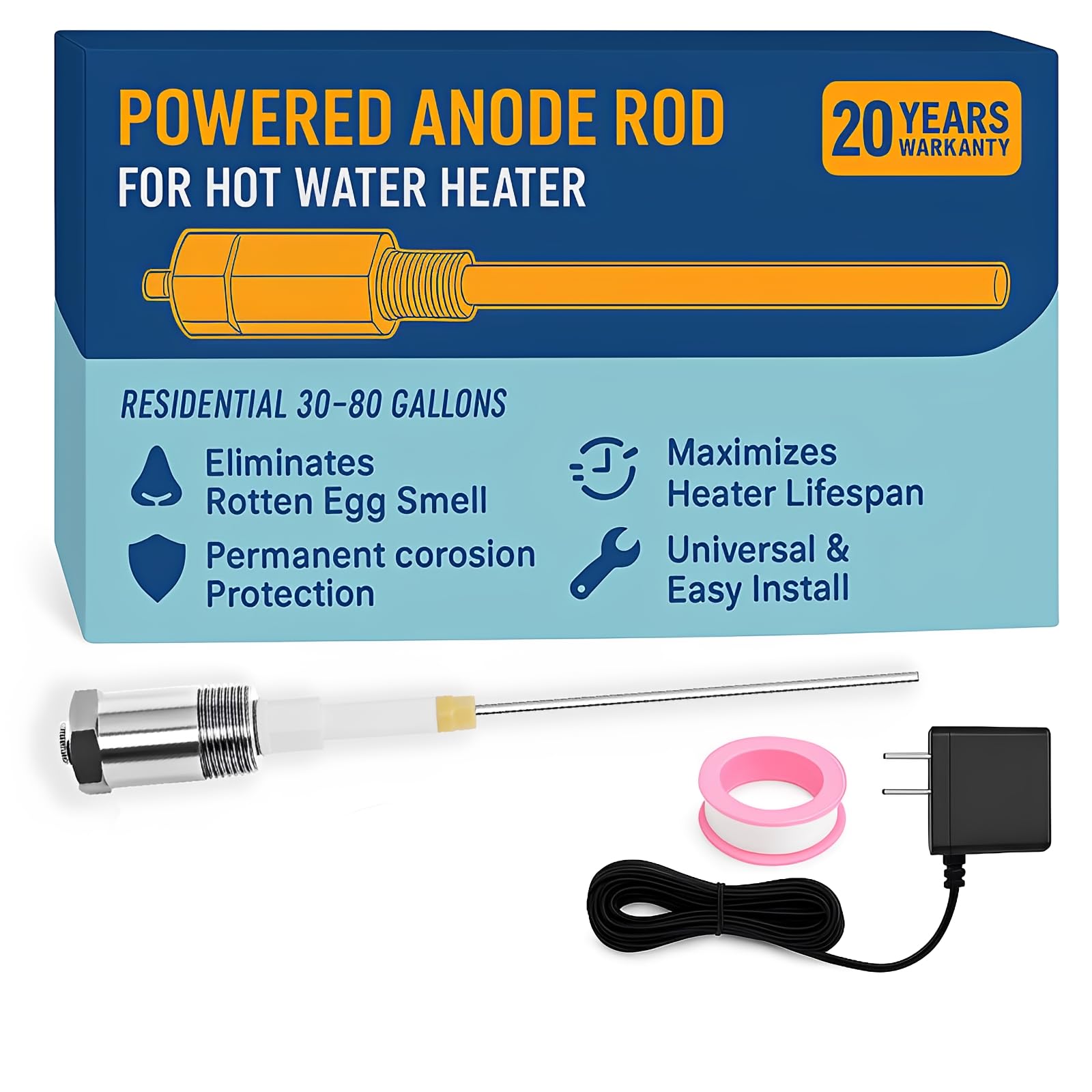
The Podoy powered rod shifts the entire paradigm from sacrificial consumption to active electronic protection. Instead of a metal bar that slowly dissolves, a titanium cathode and low-voltage DC current repel corrosive ions directly. Users report complete elimination of sulfur odor within 24 hours, and the rod itself never needs replacement — the titanium core is virtually inert even in the most aggressive hard water. The 9.4-inch length fits gas and electric tanks from 30 to 80 gallons, and the 3/4-inch NPT thread mates with standard heater ports.
Installation is straightforward for anyone comfortable with a 1-1/16-inch socket, though the kit does not include a wrench or ratchet. The segmented body eases handling in tight utility closets, and the included Teflon tape is adequate for a leak-free seal. One omission worth noting: there is no indicator light on the rod itself, only on the AC adapter, so confirming operation at a glance is not possible.
For hard water homes where magnesium rods last barely 18 months before disintegrating, this powered unit pays for itself in avoided replacement labor alone. The slight investment jump over a sacrificial rod is recouped within two years, after which the protection is essentially free. It is the smartest long-term choice for any homeowner with moderate mechanical skills.
Why it’s great
- Eliminates sulfur smell within 24 hours of installation
- Titanium cathode lasts the life of the water heater
- Compatible with water softeners and high mineral content
Good to know
- Requires a nearby 110V outlet for the power supply
- No operation indicator on the rod itself
2. Briidea Powered Anode Rod (Titanium)

The Briidea powered rod is the capacity king of this roundup, officially rated for tanks from 40 up to 89 gallons. It uses a similar titanium cathode and ruthenium-iridium coating to deliver active corrosion protection without sacrificing any metal into the water supply. The stainless steel 3/4-inch NPT fitting resists rust at the thread point, and the HDPE plastic shroud reduces scale buildup on the body. A green LED on the AC adapter confirms the unit is powered and functioning.
Installation is reported at around 30 minutes for most DIYers, though the short five-foot power cord is a limitation — you may need an extension cord if your outlet is not directly above the heater. Users who paired it with an impact wrench for removing the old rod had no trouble, but hand-tightening the new unit is preferred to avoid stripping the titanium threads. Some buyers noted the instructions are sparse, but the process is intuitive enough for anyone with basic tool familiarity.
The true strength of the Briidea lies in its sulfur odor suppression. Multiple reviews from homes on well water confirm the rotten egg smell vanished within an hour of powering on. For owners of 75- or 80-gallon tanks who have tried every sacrificial rod on the market without success, this is the terminal solution.
Why it’s great
- Handles up to 89-gallon tanks — best for large households
- Green LED confirms system is actively protecting
- Titanium rod will not corrode or shed debris
Good to know
- Power cord is only 5 feet — may need an extension
- Installation instructions are minimal
3. Podoy 32″ Magnesium Anode Rod
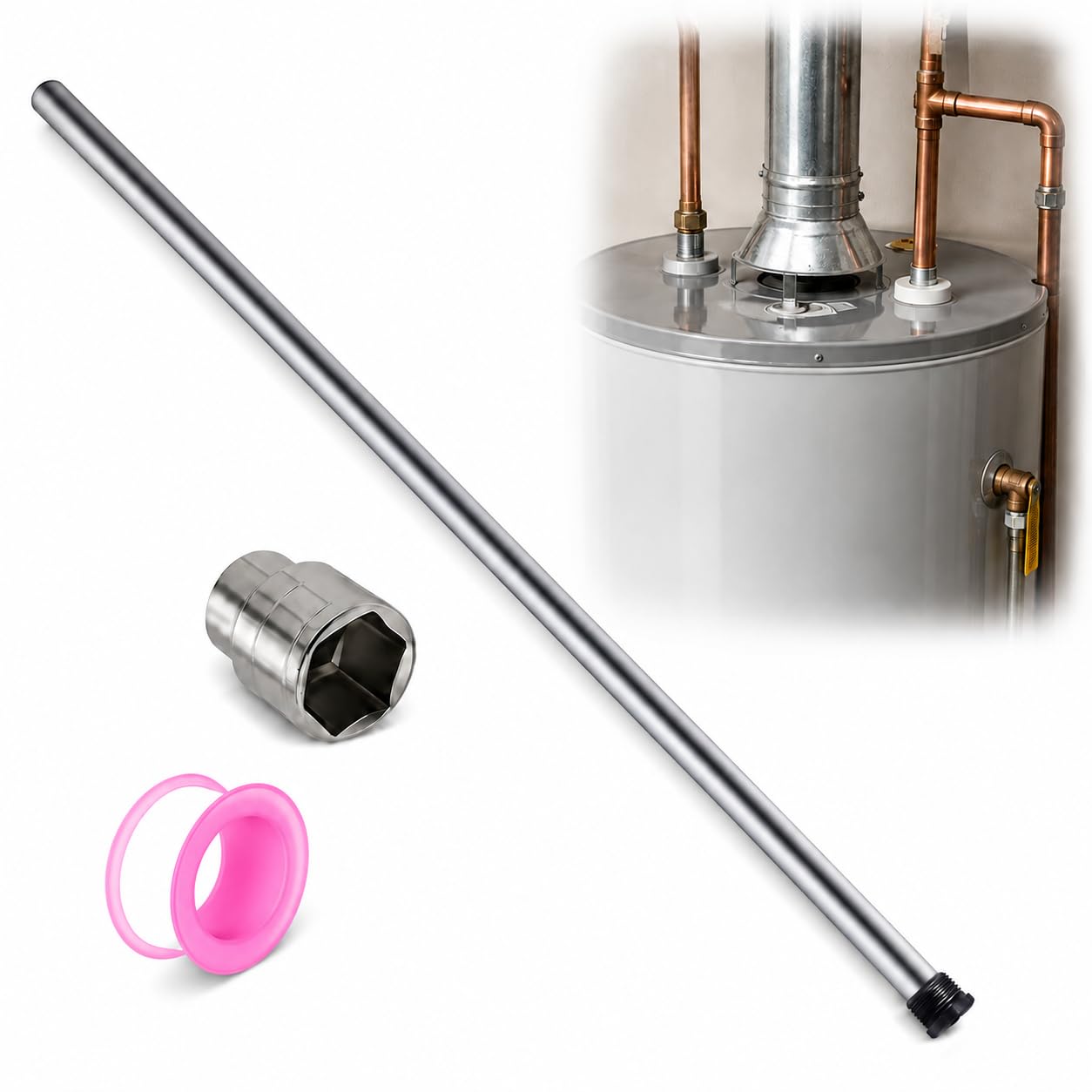
For homeowners who prefer the sacrificial approach and want maximum corrosion protection, the Podoy 32-inch solid magnesium rod is a standout pick. Solid magnesium offers the highest galvanic potential of any commonly available rod material, meaning it will protect the tank steel more aggressively than aluminum or zinc alloys. The 0.84-inch diameter body fills the typical 3/4-inch port snugly, and the hex plug accepts standard 1-1/16-inch sockets for easy torque. Users report straightforward 10-minute swaps on Rheem, A.O. Smith, and GE tanks.
This is a solid rod, not a flexible segmented unit, so you need at least 34 inches of overhead clearance to install it without tilting the water heater. The manufacturer recommends replacement every one to two years in hard water conditions, and the magnesium composition means you may notice a sulfur smell if your water chemistry is sulfate-heavy. The kit does not include a socket or Teflon tape, so budget for those separately. The warranty is six months, but build quality reviews are consistently positive.
Where this rod shines is raw protection. In a basement with plenty of headroom, the Podoy 32-inch magnesium rod will extend tank life by two to three years compared to a generic aluminum replacement. If you want the strongest sacrificial defense money can buy and you can accommodate the length, this is it.
Why it’s great
- Solid magnesium provides the highest corrosion protection
- Fits 95% of residential gas/electric tanks
- Easy trim-to-fit with a hacksaw for exact sizing
Good to know
- Solid rod requires significant overhead clearance
- May create sulfur smell in sulfate-rich water
4. Eastman 42″ Flexible Magnesium Anode Rod
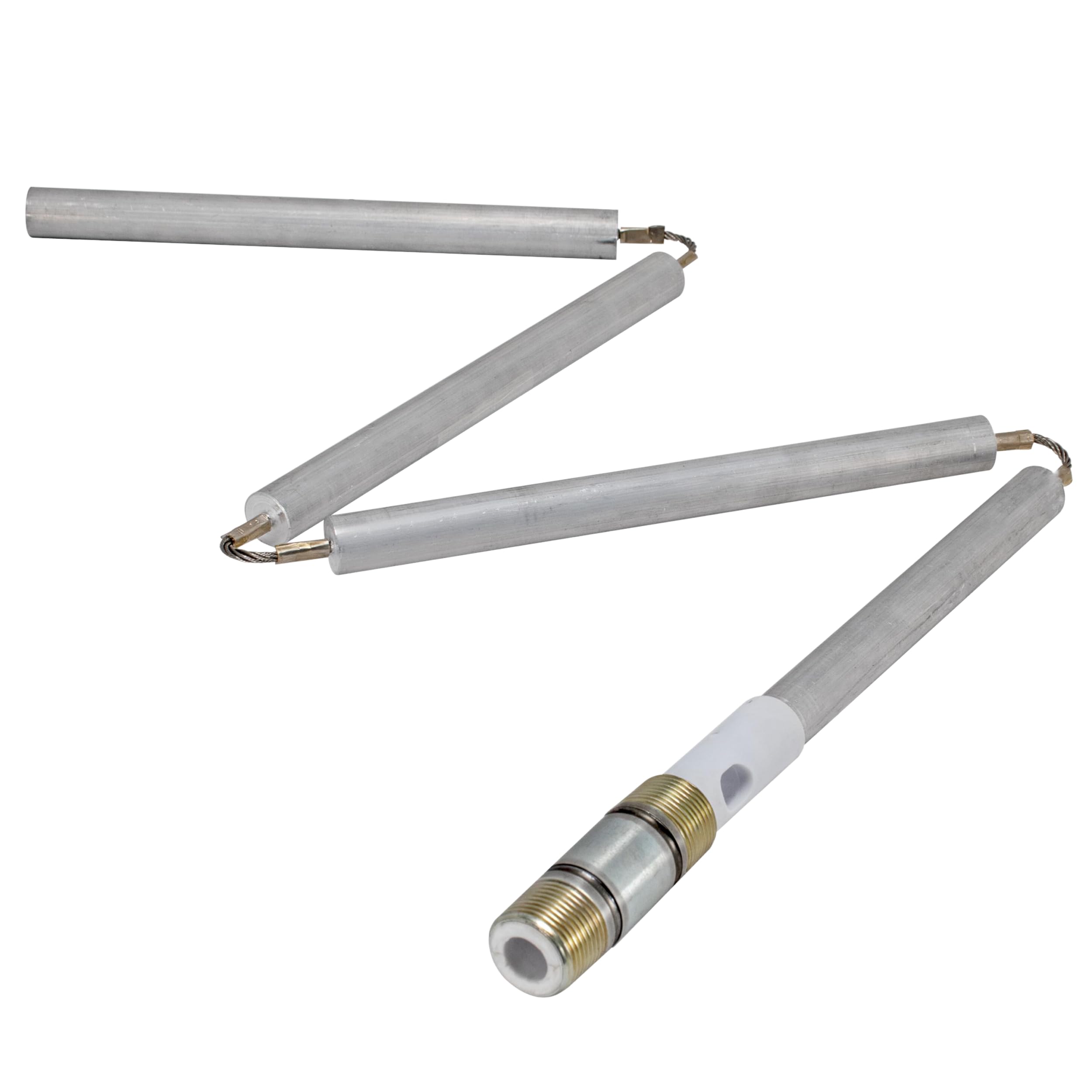
Eastman brings a premium flexible magnesium rod to the table with a stainless steel 3/4-inch NPT nipple that resists corrosion at the connection point — a common failure area on budget rods. The four magnesium segments, each 5/8-inch in diameter, are linked by a carbon steel cable, allowing the assembly to fold and snake into tanks with as little as 12 inches of overhead clearance. The chrome finish on the top fitting gives a clean look, though the rod itself will be hidden inside the tank.
Installation on Bradford White, Rheem, and State tanks is consistently reported as seamless. The included components are the rod only — no socket or thread tape — but the stainless nipple makes hand-tightening smoother than steel-to-steel connections. One important note: this rod does not include a heat trap, so if your heater relies on that integrated feature, you will need to reuse your existing one. Replacement intervals of two to four years are typical, depending on water hardness.
The Eastman 60286 is a well-engineered middle ground for people who want magnesium’s aggressive protection but lack the ceiling height for a solid rod. The stainless nipple adds genuine longevity where other flexible rods suffer thread corrosion first.
Why it’s great
- Stainless steel nipple resists thread corrosion
- Flexible design installs in tight 12-inch clearance
- Fits Bradford White and other major brands
Good to know
- Does not include a heat trap
- No socket or thread tape in the box
5. Kelaro 44″ Flexible Magnesium Anode Rod

The Kelaro 44-inch flexible magnesium rod is the most popular mid-range option in this category, and for good reason. It offers the protective benefits of magnesium in a segmented form that folds down to less than 12 inches per section, making it installable in virtually any residential utility closet. The 3/4-inch NPT thread is universally compatible with A.O. Smith, Rheem, Kenmore, GE, Reliance, Richmond, and State water heaters — essentially every major brand except some narrow-port models.
Users in Florida and other hard water regions report that the rod lasts approximately two years before showing 100% depletion, which aligns with the expected sacrificial rate in aggressive water. The package does not include a socket or Teflon tape, but the rod itself is well-packaged and the carbon steel cable linking the segments feels durable. Some buyers noted that the included instructions are clear, and the thread engagement starts smoothly without cross-threading.
For anyone needing a flexible magnesium rod at a reasonable entry price, the Kelaro delivers exactly what is advertised. It does not have the stainless nipple of the Eastman, but at its price point, it is the best value flexible rod on the market.
Why it’s great
- Excellent price-to-performance ratio for flexible magnesium
- 44-inch length fits tall tanks without waste
- Universal 3/4-inch NPT thread
Good to know
- No socket or Teflon tape included
- Expected 2-year lifespan in hard water
6. Eau 44″ Aluminum-Zinc Anode Rod + Kit

The Eau rod is built around a single mission: kill the rotten egg smell. Its specially formulated aluminum-zinc alloy is less reactive than pure magnesium, which means it produces far less hydrogen sulfide gas when reacting with sulfates in hard water. The 44-inch flexible design breaks into four segments under 12 inches each, and the kit includes both Teflon sealing tape and a 27mm chrome socket — a complete DIY package that removes guesswork from the installation.
Reviews confirm the rod eliminates sulfur odors within days, even in cases where repeated well-water treatments with bleach or hydrogen peroxide failed entirely. The trade-off is that aluminum-zinc is less protective than magnesium; it will sacrifice itself more slowly, but it also offers less electrochemical pull to keep the tank steel safe. Users should inspect the rod annually and replace it at 50% depletion. Some buyers noted the included socket is a 6-point design that prevents rounding on the hex plug, a thoughtful detail.
For the budget-conscious homeowner whose primary complaint is stinky hot water, the Eau kit is the most effective and affordable solution. It will not protect the tank as aggressively as a magnesium rod, but it will silence the sulfur smell completely.
Why it’s great
- Aluminum-zinc alloy eliminates sulfur odor permanently
- Complete kit includes socket and Teflon tape
- Flexible segments install in tight spaces
Good to know
- Less corrosion protection than pure magnesium rods
- Requires annual inspection and replacement every 2 years
7. Suburban 232768 Aluminum Anode Rod

The Suburban 232768 is a short, solid aluminum rod designed specifically as an OEM replacement for Suburban RV and small residential water heaters. At just 9 inches long with a 3/4-inch thread diameter, it is not a universal hard water solution — it is a direct-fit part for a specific application. The aluminum composition means it will not generate sulfur odor, but it also offers less corrosion protection than a magnesium equivalent of the same size.
Reviews from Suburban SW10DE and similar model owners confirm it fits correctly and lasts approximately four years in moderate water conditions. The rod is made in China, which is standard for this price tier, but some users noted the threads felt rough on arrival — a light application of pipe dope or Teflon tape resolved any sealing concerns. A 1-1/16-inch socket and a long ratchet extension are required for removal; no O-ring is included, so sealant is mandatory.
This rod only makes sense if you own a Suburban-brand water heater and need a drop-in replacement. For standard residential tanks, the 9-inch length is far too short to protect the entire tank interior. It is an excellent budget part for its narrow niche, but not a general recommendation for hard water homes.
Why it’s great
- Cheapest reliable OEM replacement for Suburban heaters
- Aluminum composition prevents sulfur smell
- Compact size stores easily as a spare
Good to know
- Only 9 inches — too short for standard 40+ gallon tanks
- Threads can be rough; sealant recommended
FAQ
How often should I replace an anode rod in a hard water home?
Will a magnesium anode rod make my water smell like rotten eggs?
Can I use an aluminum anode rod if I have a water softener?
Do I need a flexible rod for a water heater in a basement?
How does a powered anode rod work without corroding?
Final Thoughts: The Verdict
For most users, the best anode rod for hard water winner is the Podoy Powered Anode Rod because it provides lifetime protection, instant sulfur odor elimination, and zero maintenance — the only real set-and-forget solution for aggressive water conditions. If you want the raw sacrificial power of magnesium and have the ceiling height, grab the Podoy 32″ Magnesium Rod. And for the budget-conscious homeowner fighting sulfur smell in a tight closet, nothing beats the Eau 44″ Aluminum-Zinc Kit for value and odor control.

Mo Maruf
I created WellFizz to bridge the gap between vague wellness advice and actionable solutions. My mission is simple: to decode the research and give you practical tools you can actually use.
Beyond the data, I am a passionate traveler. I believe that stepping away from the screen to explore new environments is essential for mental clarity and physical vitality.