Our readers keep the lights on and my smoothie glass nicely filled. As an Amazon Associate, I earn from qualifying purchases.
Standard window air conditioners are designed for double-hung windows that slide up and down. If your home has casement windows—those that crank open sideways—you know the struggle: the typical vertical AC unit simply won’t fit without blocking the crank mechanism or leaving massive gaps around the sides. That’s where a purpose-built casement window air conditioner becomes a necessity, not a luxury.
I’m Mohammad Maruf — the founder and writer behind WellFizz. I have spent years analyzing the HVAC market, comparing compressor technologies, BTU ratings, and noise-output figures to separate genuinely capable home-cooling systems from the loud, inefficient alternatives that flood the market.
To help you make a confident purchase, this guide breaks down the performance, build quality, and real-world fit of the top models to identify the best casement window air conditioner for your specific room size and window dimensions.
How To Choose The Best Casement Window Air Conditioner
Selecting the right unit for your casement window involves more than just picking the highest BTU number. You must verify the physical dimensions of your window opening, the orientation of the slider or crank mechanism, and the specific installation bracket that comes in the box. A mismatch in any of these areas can turn a promising purchase into a frustrating return.
Window Orientation and Chassis Shape
Casement windows require an AC chassis that is taller than it is wide. Standard window units are wide and short, which blocks the crank handle and leaves unfilled gaps. Look for units labeled specifically for “casement” or “slider” windows, and verify the minimum and maximum window width range in the product specs—most casement ACs require a width between 14.5 and 16.5 inches.
BTU Capacity vs. Room Size
A 10,000 BTU unit is generally sufficient for rooms up to 450 square feet, while an 8,000 BTU unit works well for spaces around 350 square feet. Oversizing can lead to short cycling and poor humidity removal, while undersizing will leave you sweating on the hottest days. Measure your room length times width and match that square footage to the manufacturer’s recommended coverage area.
Noise Level (dBA) and Inverter Compressors
If the AC will live in a bedroom or home office, pay close attention to the decibel rating. Inverter units like the Midea U-shape and the Windmill WhisperTech operate as low as 32 dBA—quieter than a typical conversation. Standard on/off compressors often run at 50-55 dBA, which can be disruptive during sleep. Inverter technology also varies the compressor speed continuously, reducing the harsh start-stop noise that conventional units make.
Quick Comparison
On smaller screens, swipe sideways to see the full table.
| Model | Category | Best For | Key Spec | Amazon |
|---|---|---|---|---|
| Midea 8,000 BTU U Shaped | Inverter | Ultra-quiet rooms | 32 dBA Noise Level | Amazon |
| Windmill 12,000 BTU | Smart Inverter | Large rooms & app control | 12,000 BTU / 550 Sq Ft | Amazon |
| Perfect Aire 10,000 BTU | Slider/Crank | Follow Me remote comfort | 10,000 BTU / 450 Sq Ft | Amazon |
| Friedrich Chill Premier 8,000 | Heat Pump | Year-round use | 4,200 BTU Heating | Amazon |
| Zafro 14,000 BTU | High Capacity | Large rooms up to 700 sq ft | 14,000 BTU | Amazon |
| Midea Arctic King 10,000 | Mid-Range | Budget-friendly casement cooling | 10,000 BTU / 350 Sq Ft | Amazon |
| Durastar 10,000 BTU | Entry Level | Basic cooling on a budget | 10,000 BTU / 450 Sq Ft | Amazon |
| Keystone 8,000 BTU | Compact Slider | Tight casement windows | 15.5″ Min Window Width | Amazon |
| Friedrich Chill Premier 18,000 | High Performance | Very large rooms & efficiency | 18,000 BTU / 230v | Amazon |
In‑Depth Reviews
1. Midea 8,000 BTU U Shaped Smart Inverter
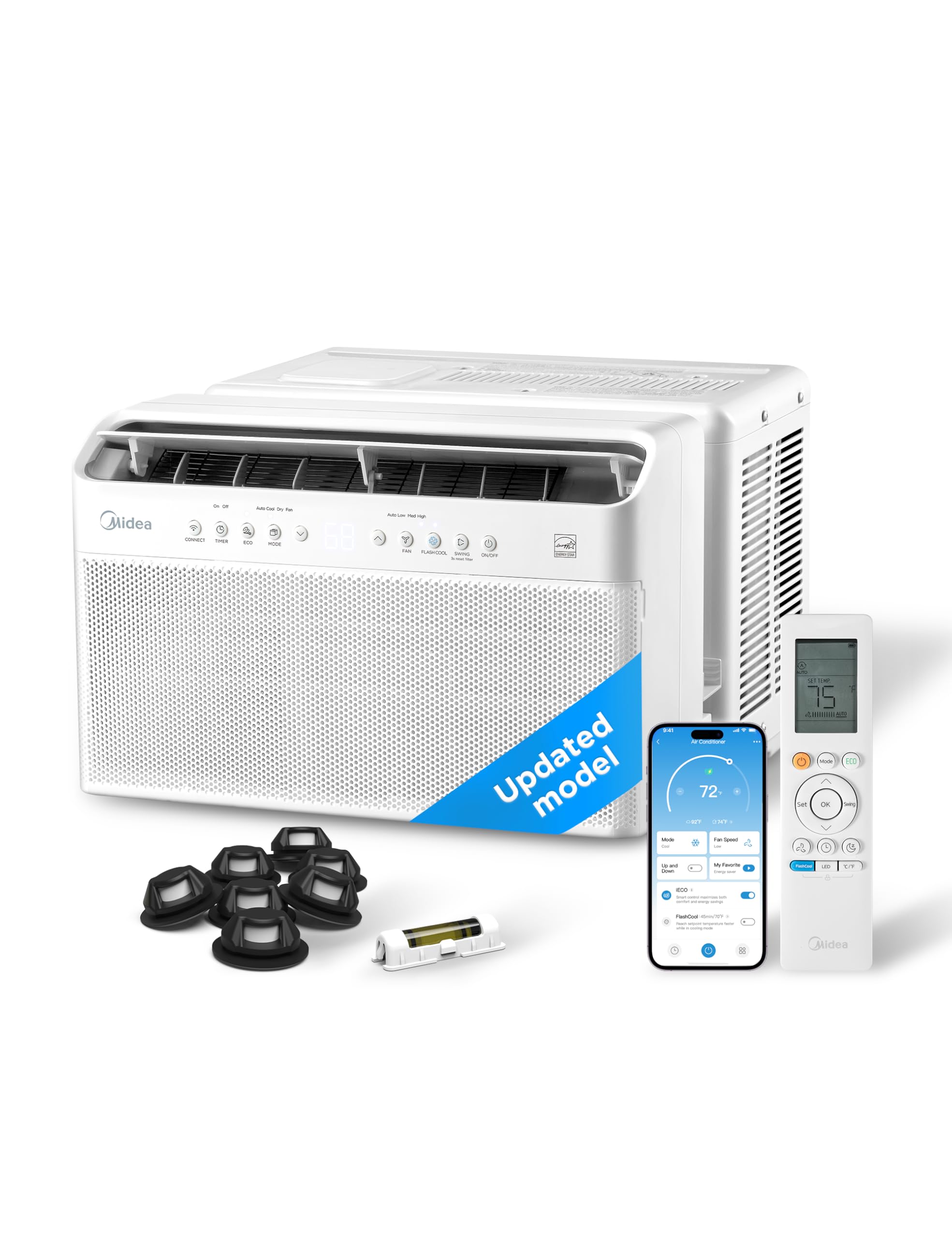
The U-shape design is the standout feature here—it literally uses your window sill to block street noise from entering the room. At just 32 dBA, this Midea operates ten times quieter than a traditional window unit, making it a solid choice for bedrooms and nurseries. The DC Inverter technology continuously varies the compressor speed, which not only reduces noise but also cuts energy consumption by over 37% compared to conventional on/off units.
Installation requires a single-hung or double-hung window between 22 and 36 inches wide with a minimum height of 13.75 inches. The included quick-snap bracket makes the process straightforward, and the U-shape allows you to open the window for fresh air when the unit is installed. SmartHome app support plus Alexa and Google Assistant voice control round out the package nicely.
Some customers have reported receiving older recalled units with scratched packaging, so inspect the manufacture date immediately upon arrival. The updated model has resolved drainage issues reported in earlier versions. For a medium-sized room up to 350 square feet, this is the quietest, most efficient casement-friendly unit on the market.
Why it’s great
- Extremely quiet 32 dBA operation is ideal for sleep
- Open-window flexibility lets in fresh air
- Inverter technology saves over 35% on energy bills
Good to know
- U-shape only fits double-hung windows, not traditional casement
- Some customers received pre-recall stock
2. Windmill 12,000 BTU Smart Inverter

Windmill has built a reputation on design and ease of use, and this 12,000 BTU unit is their flagship casement-compatible model. It covers rooms up to 550 square feet, making it one of the few high-BTU options that still fits a slider window opening. The WhisperTech dual-intake system pulls air from the front and bottom, which improves efficiency and delivers cool air at a 45° angle rather than blasting it straight ahead.
Setup is genuinely tool-free—the pre-assembled install kit clicks into place without a screwdriver. The app control is among the best in class, offering scheduling, temperature readouts, and voice commands via Alexa or Google Assistant. Dual-filtration with a washable mesh plus an optional activated carbon filter helps keep indoor air fresher than standard units.
Several users reported reliability issues after a few months of use, including compressor rattles and complete unit failure. While the design and initial performance are excellent, the long-term durability appears inconsistent. If you prioritize app integration and quiet operation for a large room, this unit delivers—just keep the warranty information handy.
Why it’s great
- No-tool installation saves significant setup time
- 550 sq ft coverage fills large living spaces
- Ultra-quiet 45° air delivery reduces drafts
Good to know
- Reliability concerns reported after several months
- Carbon filter is an optional extra purchase
3. Perfect Aire 10,000 BTU Casement
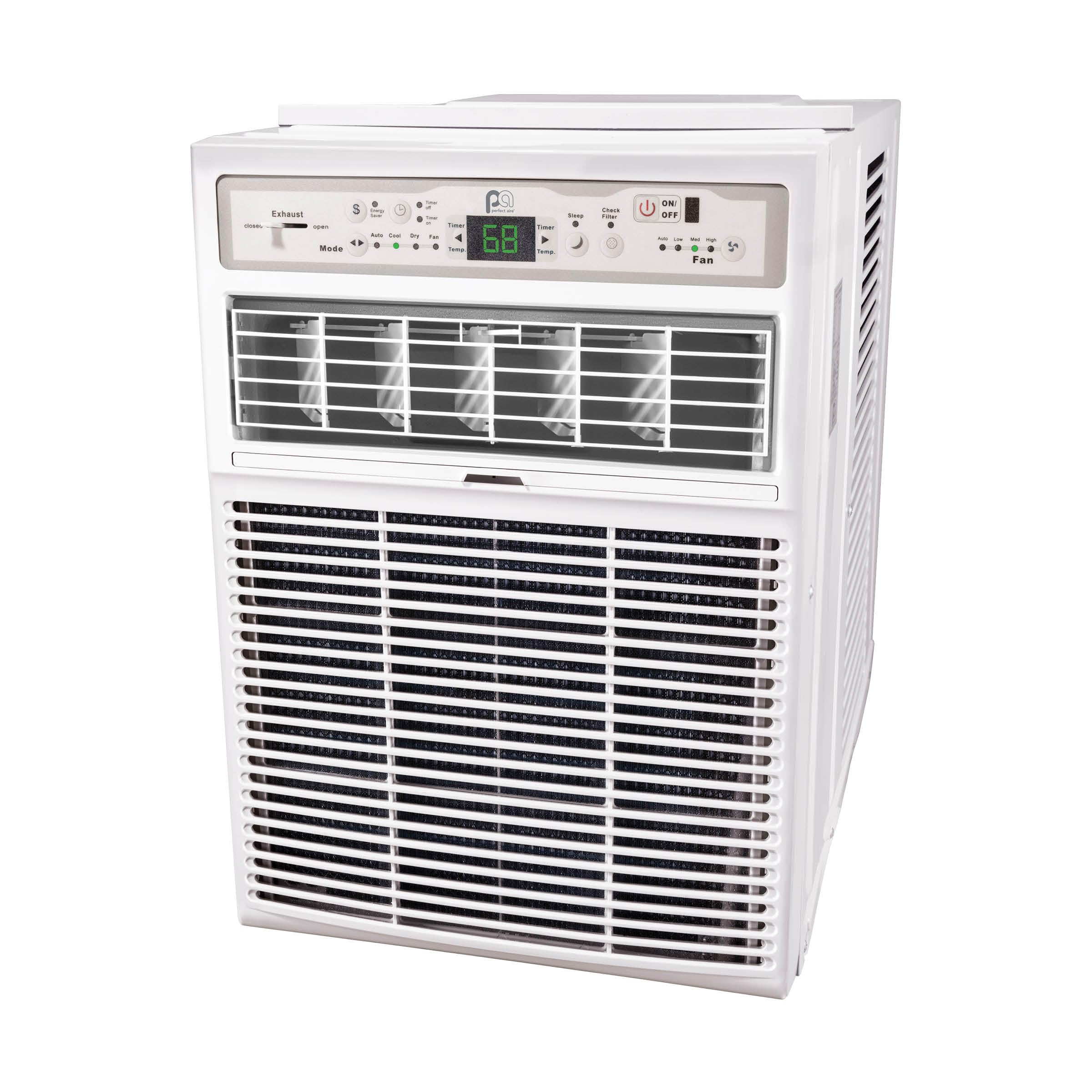
Perfect Aire tackles the widest range of casement window types by including expandable accordion panels, a top rail, and foam seal strips that accommodate both horizontal sliding and crank-out casement windows. The 10,000 BTU output covers up to 450 square feet, and the adjustable thermostat allows a set-point range from 68°F to 86°F. The “Follow Me” remote functions as a portable thermostat—it reads the temperature from wherever you place the remote, not from the unit itself, which eliminates hot and cold spots.
The three cooling speeds and three fan speeds give you granular control over airflow, and the Sleep mode gradually raises the temperature overnight to prevent overcooling. Installation requires the unit to sit upright for a full 24 hours before first use, otherwise the compressor may struggle to start. The 26-foot remote range means you can adjust settings from across the room without getting up.
Some units arrive with minor cosmetic damage from shipping, and the compressor may shut down temporarily if outdoor temperatures exceed 100°F, which is a concern in desert climates. For moderate climate regions, this unit offers the most comprehensive installation kit and the Smart Remote feature that genuinely improves comfort control.
Why it’s great
- Follow Me remote works as a room thermostat
- Fits both sliding and crank-out casement windows
- Sleep mode intelligently adjusts temperature overnight
Good to know
- Must stand upright 24 hours before first use
- Compressor may fail in extreme heat above 100°F
4. Friedrich Chill Premier 8,000 BTU with Heat

Friedrich is a heavyweight in the AC industry, and the Chill Premier 8,000 BTU model stands out because it includes a 4,200 BTU electric heat strip—making it a true 3-in-1 unit for cooling, heating, and fan-only circulation. The slide-out chassis design is ideal for more permanent installations where you may need to access the interior for maintenance or cleaning without removing the entire window bracket.
The unit features Wi-Fi connectivity via the Friedrich Go app, voice control through Alexa and Google Home, and an eight-way adjustable airflow command that directs air precisely where you want it. The heavy-duty insulation and stiffened sheet metal casing keep the operating noise 25% quieter than comparable non-inverter units. The EER rating of 11.0 is solid for a unit that also produces heat.
On the downside, the Wi-Fi setup has been widely panned as unreliable, and the remote control is basic compared to competitors. The unit is also not Energy Star certified, which is surprising for a brand at this price tier. For those who need a single unit to handle both summer and winter in a room up to 350 square feet, the Friedrich delivers robust build quality if you can tolerate the finicky smart features.
Why it’s great
- Integrated electric heater provides winter warmth
- Slide-out chassis simplifies maintenance access
- Runs 25% quieter than standard window units
Good to know
- Wi-Fi connectivity has a high failure rate
- Not Energy Star certified despite premium pricing
5. Zafro 14,000 BTU 3-in-1 Window AC
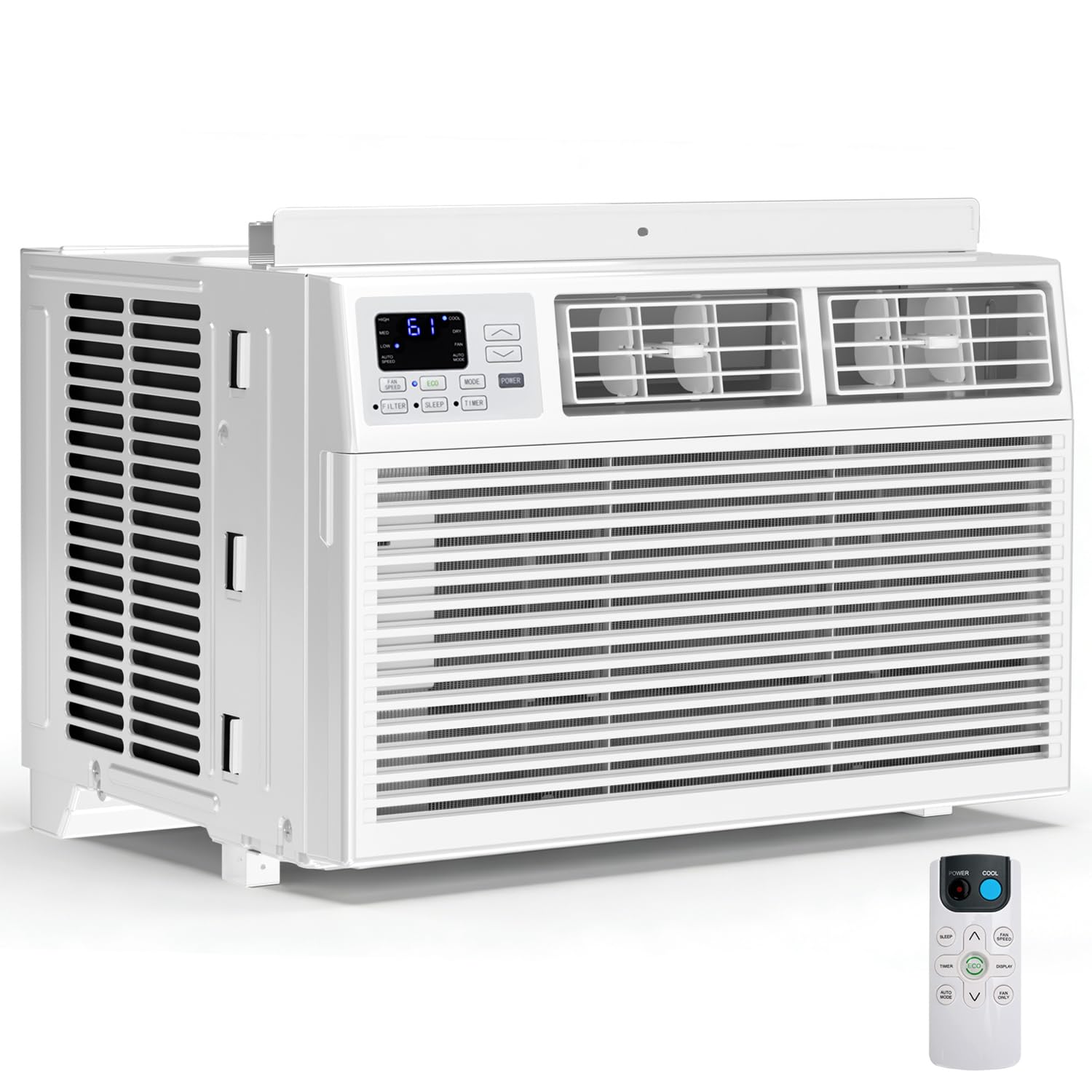
When you need to cool a large open-plan area up to 700 square feet, this Zafro unit brings the raw BTU power to handle the job. The 3-in-1 design includes a dehumidifier capable of extracting 105 pints of moisture daily, which is a game-changer for humid climates. The unit operates at 50-55 dBA on higher fan settings, which is comparable to a fan on medium speed—not silent, but far from disruptive.
The 4-way directional louvers allow you to steer airflow exactly where it’s needed, and the ECO mode shuts off the compressor once the target temperature is reached, cycling back on only when the room drifts out of range. The included mounting kit is user-friendly, and the slide-out washable filter makes routine cleaning hassle-free. The 24-hour programmable timer is a nice touch for scheduling cooling around your daily routine.
At 69.45 pounds, this is a heavy unit that requires two people for safe installation. Some users note that the vents lack full range of motion, and the Dry mode can overcool the room without a temperature adjustment setting. For pure cooling capacity in a casement-compatible form factor, the Zafro delivers the most BTUs per dollar, but the weight and vent limitations are worth considering.
Why it’s great
- Massive 14,000 BTU output for large rooms
- 105-pint dehumidifier handles extreme humidity
- ECO mode reduces compressor cycling
Good to know
- Very heavy at 69 lbs, two-person install required
- Dry mode lacks adjustable temperature setting
6. Keystone 8,000 BTU Slider AC
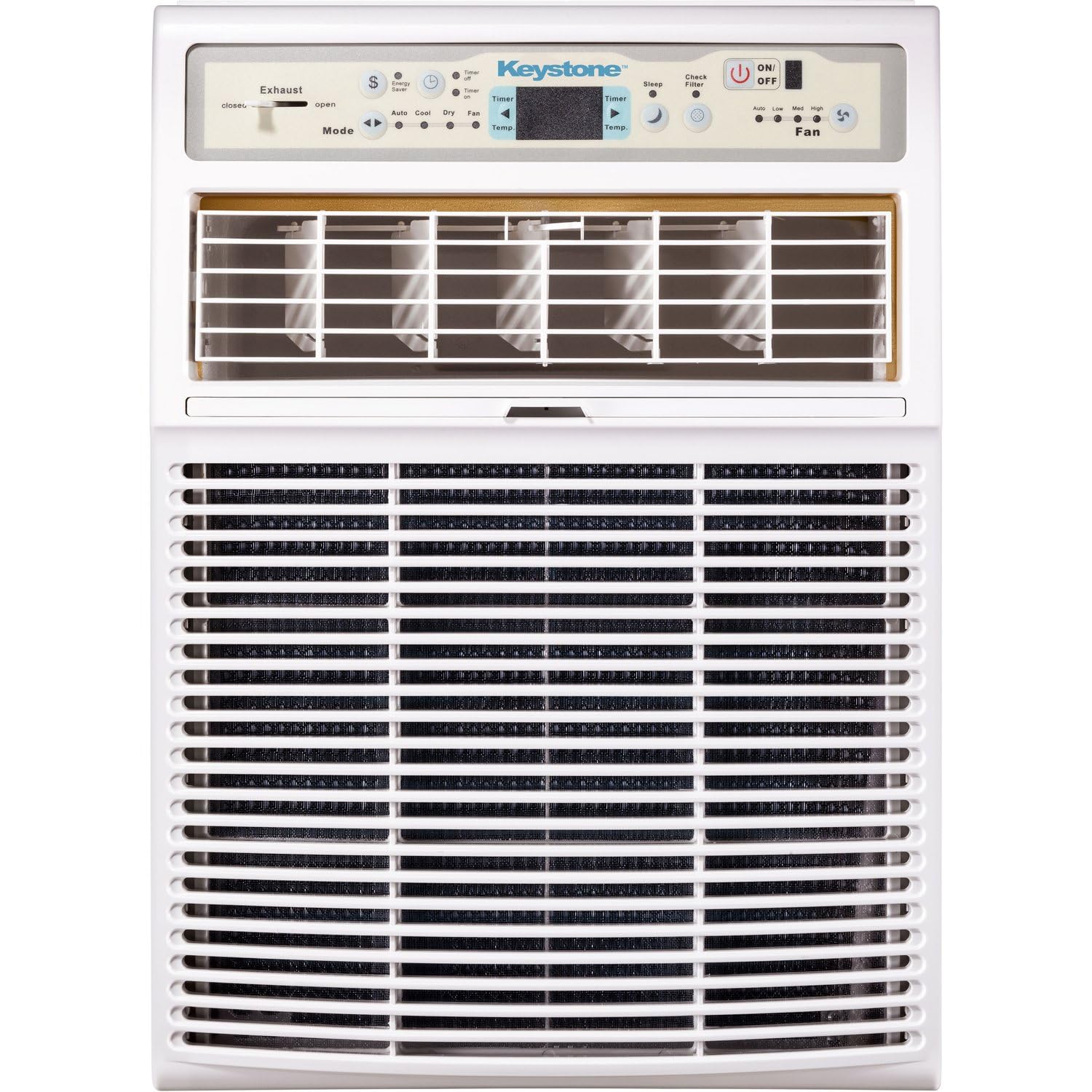
For homeowners with particularly narrow casement windows, the Keystone 8,000 BTU unit is one of the few models that fits openings as small as 14.5 inches wide. The minimum window height requirement of 21.3 inches is also relatively accommodating. Despite the compact footprint, it still handles rooms up to 350 square feet and includes a built-in dehumidifier that removes 0.9 liters of moisture per hour.
The removable chassis design is versatile—you can install the unit in a window or through an exterior wall, which is useful for apartments with unusual layouts. The four-way adjustable louvers give you control over airflow direction, and the Energy Saver and Sleep modes help keep electricity bills in check. Customers with small double-hung windows have also found this unit fits where standard ACs won’t.
Packaging quality is a recurring concern; many units arrive with damaged styrofoam or loose parts, suggesting poor handling during shipping. The instruction manual is also notably unclear, and the control panel layout is not intuitive without reading the manual first. For the price point, this is a functional solution for tight casement windows, but be prepared for a slightly frustrating unboxing experience.
Why it’s great
- Fits extremely narrow 14.5-inch casement windows
- Removable chassis supports wall installation too
- Energy Saver mode reduces power consumption
Good to know
- Often arrives with damaged packaging or loose parts
- Control panel labeling is hard to decipher
7. Midea Arctic King 10,000 BTU Casement

The Arctic King is Midea’s more affordable casement-specific line, offering 10,000 BTUs of cooling for rooms up to 350 square feet. The side casement design is purpose-built for horizontal sliding windows, and the included heavy-duty adjustable bracket is a nice value-add that competitors often sell separately. The packaging is excellent, with high-density foam protecting the unit during transit.
The remote control provides precise temperature and fan speed adjustment from across the room, and the 24-hour on/off timer lets you schedule cooling around your work or sleep schedule. Sleep Mode gradually adjusts the temperature to keep you comfortable overnight without wasting energy. Customers consistently report that the unit cools effectively and quickly, with powerful airflow that can be felt 12 feet away.
Noise levels are higher than inverter units, which is expected at this price tier. Some users describe the unit as noisy compared to premium alternatives. There are also isolated reports of black mold accumulation over time, which may be related to improper drainage angle during installation. For budget-conscious buyers who need a straightforward casement AC, the Arctic King delivers solid performance if you can tolerate the noise and pay attention to the installation tilt.
Why it’s great
- Includes heavy-duty adjustable bracket at no extra cost
- Fast, powerful cooling reaches across the room
- 24-hour timer allows flexible scheduling
Good to know
- Audible operation compared to inverter models
- Risk of mold if drainage angle is incorrect
8. Durastar 10,000 BTU Casement
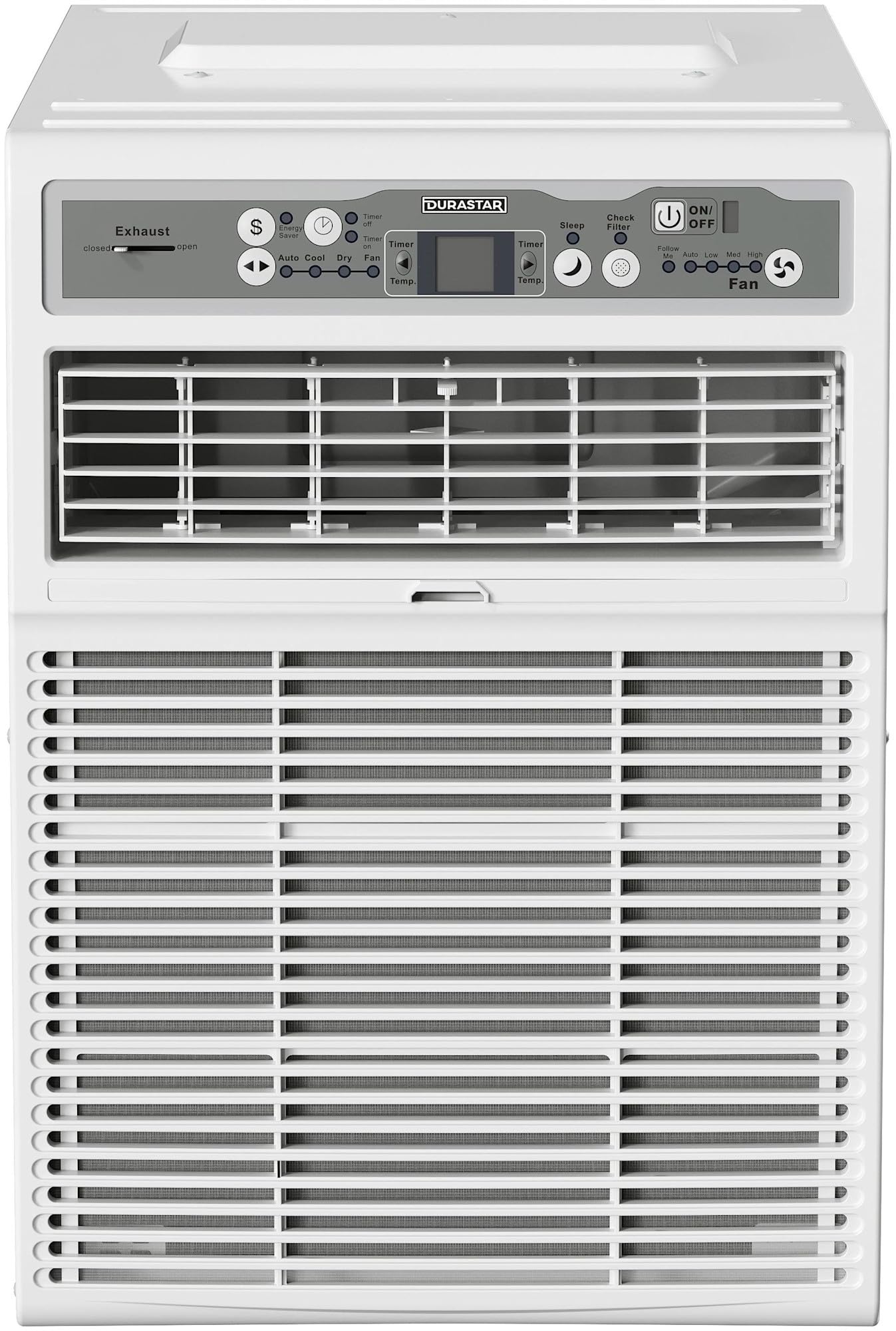
The Durastar 10,000 BTU is engineered specifically for vertical, left-to-right sliding casement windows and will not fit windows that slide up and down. It covers spaces from 400 to 450 square feet with three fan speeds—324, 294, and 265 CFM—giving you flexibility in airflow intensity. The digital display and touch controls feel modern, and the remote has a 16-foot range for convenient operation.
Energy Efficiency Ratio comes in at 10.4, which is respectable for a non-inverter unit, and the Energy Saver mode helps lower your usage further. The Sleep Mode gradually raises the temperature overnight to prevent overcooling. The dehumidifier function is a nice bonus for damp climates, and the unit is relatively easy to install if your window dimensions match the specifications.
Durability is a major question mark with this model. Multiple customer reports indicate compressor failure within 8-12 months of purchase, and the packaging is frequently damaged during shipping, with some units arriving with missing bracket pieces or obvious signs of prior return. The noise level is also above average, which may be a dealbreaker for light sleepers. Proceed with caution and consider an extended warranty if you choose this option.
Why it’s great
- Digital touch controls are user-friendly
- Three CFM fan speeds offer airflow flexibility
- 10.4 EER is decent for non-inverter class
Good to know
- Compressor failures reported within the first year
- Often arrives with damaged packaging or missing parts
9. Friedrich Chill Premier Inverter 18,000 BTU

This is the heavy hitter for those who need serious cooling power in a casement or wall installation. With 18,000 BTUs and a 230/208-volt power requirement, this unit demands a dedicated circuit but delivers enough cooling for large open-concept spaces, home additions, or sunrooms. The inverter compressor technology provides variable speed operation, which results in whisper-quiet performance and superior energy efficiency compared to traditional units.
The Energy Star certification confirms the unit meets strict efficiency guidelines, and the rotary scroll compressor is known for long-term reliability in Friedrich’s premium line. Installation is straightforward for anyone familiar with through-wall or casement setups, and the unit is lighter than the 18,000 BTU output suggests at 1.5 tons of capacity. The activated carbon filter helps reduce odors in addition to capturing dust.
The biggest risk here is receiving a defective unit—some customers report units that fail completely within the first 30 minutes of operation, and the return process for a nearly 85-pound appliance is expensive and inconvenient. The 230-volt requirement also limits where this unit can be installed, as most standard household outlets are 115 volts. For those with the proper electrical setup who need extreme cooling power, the performance is top-tier, but quality control is inconsistent.
Why it’s great
- Massive 18,000 BTU output for very large rooms
- Inverter technology keeps noise levels exceptionally low
- Energy Star certified for long-term savings
Good to know
- Requires 230/208-volt dedicated circuit
- Higher rate of DOA units reported by buyers
FAQ
Can I install a casement AC in a double-hung window?
How do I measure my casement window for an AC?
Why are casement window ACs more expensive than standard units?
Do casement ACs require professional installation?
What is the advantage of an inverter compressor in a casement AC?
Final Thoughts: The Verdict
For most users, the best casement window air conditioner winner is the Midea 8,000 BTU U Shaped Smart Inverter because its unique U-shape design and inverter technology deliver whisper-quiet cooling at just 32 dBA while saving over 35% on energy. If you need to cover a larger room with smart app control, grab the Windmill 12,000 BTU Smart Inverter. And for year-round use with integrated heating and premium build quality, nothing beats the Friedrich Chill Premier 8,000 BTU with Heat.

Mo Maruf
I created WellFizz to bridge the gap between vague wellness advice and actionable solutions. My mission is simple: to decode the research and give you practical tools you can actually use.
Beyond the data, I am a passionate traveler. I believe that stepping away from the screen to explore new environments is essential for mental clarity and physical vitality.