Our readers keep the lights on and my smoothie glass nicely filled. As an Amazon Associate, I earn from qualifying purchases.
Few upgrades deliver more immediate satisfaction than swapping your ISP’s rental box for a cable router modem that puts you in control. The difference isn’t just in your monthly bill — it’s in the solid, uninterrupted throughput you feel the moment a 4K stream loads without a pause or a game lobby connects without the spin wheel. Eliminating that rental fee is just the bonus; the real win is predictable, low-latency performance across every device in your home.
I’m Mohammad Maruf — the founder and writer behind WellFizz. I’ve spent years combing through DOCSIS channel-bonding specs, Wi‑Fi 6 modulation rates, and real‑world user throughput reports to separate hardware that performs reliably from boxes that frustrate.
This guide walks through nine carefully tested models — from DOCSIS 3.0 workhorses to Wi‑Fi 6E mesh systems — to help you find the best cable router modem that matches your internet plan, home size, and tolerance for setup complexity.
How To Choose The Best Cable Router Modem
A cable router modem is a two‑in‑one device that combines the cable modem (which talks to your ISP) with the wireless router (which distributes Wi‑Fi through your home). Choosing the right one means understanding four critical layers: DOCSIS generation, channel bonding, Wi‑Fi standard, and ISP approval list. Ignore any one of these and you risk buying a box that either underperforms or won’t activate on your network.
DOCSIS Generation Determines Your Speed Ceiling
DOCSIS 3.0 has been the workhorse for years, supporting download speeds up to about 1 Gbps using 32 downstream channels. DOCSIS 3.1 is the modern standard, offering faster multi‑gigabit support (up to 10 Gbps downstream), improved latency, and better noise handling. If your internet plan delivers more than 300 Mbps, a DOCSIS 3.1 modem is the smart investment. For plans under 300 Mbps, a high‑quality DOCSIS 3.0 unit like a 24×8 channel modem still performs beautifully.
Channel Bonding — More Isn’t Always Better
Channel bonding refers to how many downstream (download) and upstream (upload) channels the modem can lock onto simultaneously. A 32×8 DOCSIS 3.0 modem is overkill for a 200 Mbps plan but essential for gigabit tiers. A 16×4 DOCSIS 3.0 modem handles up to roughly 375 Mbps comfortably. The key is matching the bonding number to your actual speed tier — buying 32 bonded channels for a 100 Mbps plan doesn’t improve throughput.
Wi‑Fi Standard Affects Coverage and Client Support
Wi‑Fi 5 (AC) is still adequate for homes with a handful of devices and modest streaming needs. Wi‑Fi 6 (AX) brings OFDMA, better efficiency under load, and stronger coverage in dense environments. Wi‑Fi 6E opens the 6 GHz band for even faster, cleaner connections with compatible clients. If you have multiple gamers, streamers, or smart‑home devices, a Wi‑Fi 6 or 6E router inside the combo is worth the premium.
ISP Compatibility Is Non‑Negotiable
Not every modem works with every provider. Xfinity, Spectrum, and Cox maintain approved modem lists that change over time. Always verify the exact model number against your ISP’s current compatibility page before purchasing. Buying a modem that isn’t on the approved list risks activation failure or reduced performance. The models in this guide are all widely certified, but double‑checking saves a headache.
Quick Comparison
On smaller screens, swipe sideways to see the full table.
| Model | Category | Best For | Key Spec | Amazon |
|---|---|---|---|---|
| Motorola MG8725 | DOCSIS 3.1 / Wi‑Fi 6 | Multi‑Gig Plans & LLD Gaming | Low Latency DOCSIS certified | Amazon |
| NETGEAR CAX80 | DOCSIS 3.1 / Wi‑Fi 6 | AX6000 Speed & 2.5GbE Port | 2.5 Gbps Multi‑Gig LAN port | Amazon |
| TP‑Link Deco XE75 Pro | Wi‑Fi 6E Mesh | Large Home + 6 GHz Band | Tri‑band up to 5,400 Mbps | Amazon |
| TP‑Link Deco X55 | Wi‑Fi 6 Mesh | Whole‑Home Coverage (6,500 sq ft) | 3‑pack, covers 6,500 sq ft | Amazon |
| NETGEAR Nighthawk CAX30 | DOCSIS 3.1 / Wi‑Fi 6 | 2,500 sq ft & WPA3 Security | AX2700 dual‑band Wi‑Fi 6 | Amazon |
| Motorola MG7700 | DOCSIS 3.0 / Wi‑Fi 5 | Plans Up to 800 Mbps | 24×8 channel bonding | Amazon |
| Motorola MG7540 | DOCSIS 3.0 / Wi‑Fi 5 | Plans Up to 375 Mbps | 16×4 channel bonding | Amazon |
| ARRIS G34‑RB | DOCSIS 3.1 / Wi‑Fi 6 | Mid‑Range Plans + Wi‑Fi 6 | DOCSIS 3.1 + AX3000 | Amazon |
| Arris SBG8300‑RB | DOCSIS 3.1 / Wi‑Fi 5 | DOCSIS 3.1 at Entry‑Level Cost | 4 OFDM channels + AC2350 | Amazon |
In‑Depth Reviews
1. Motorola MG8725 — Wi‑Fi 6 + Multi‑Gig Cable Modem

The Motorola MG8725 is the first cable modem‑router combo to earn CableLabs’ Low Latency DOCSIS (LLD) certification, making it a future‑ready choice for gamers and video‑conference users who notice every millisecond of jitter. Its DOCSIS 3.1 modem handles multi‑gigabit plans and includes a 2.5 Gig Ethernet port alongside three Gigabit ports, letting you maximize wired throughput without a separate switch. The AX6000 4×4 Wi‑Fi 6 router employs Power Boost and Range Boost amplifiers — the same technology found in Motorola’s dedicated routers — to push strong coverage across a 2,500‑plus‑square‑foot home.
Setup via the motosync app is straightforward for most users, though a small number of buyers report the app failing on Windows 11 or Android during initial configuration — the manual browser‑based setup works as a fallback and takes only a few extra minutes. Once running, the MG8725 delivers consistent speeds matching a gigabit fiber plan, with low latency during gaming sessions and smooth 4K streaming across multiple devices. The unit runs warm during heavy throughput, so a well‑ventilated spot on a shelf is recommended rather than a closed cabinet.
Where this combo stands apart is LLD readiness: once cable providers enable the required firmware update, the MG8725 will offer dramatically reduced round‑trip times compared to standard DOCSIS 3.1 modems. That forward‑looking hardware makes it a smarter long‑term investment than older DOCSIS 3.1 models, even if the premium price requires a budget stretch. For users who prioritize low‑latency gaming and multi‑gigabit wired connections, this is the most future‑proof single‑box option available today.
Why it’s great
- Low Latency DOCSIS certification for ultra‑responsive gaming
- 2.5 Gig Ethernet port plus three Gigabit LAN ports for wired performance
- AX6000 4×4 Wi‑Fi 6 delivers strong coverage and device capacity
- Backward compatible with DOCSIS 3.0 networks
Good to know
- Some users report motosync app glitches during initial setup
- Wi‑Fi range can be inconsistent in homes over 2,800 sq ft
- Bright front panel LEDs may require dimming or covering near a bedroom
2. NETGEAR Nighthawk CAX80 — AX6000 Wi‑Fi 6 Cable Modem Router

The NETGEAR Nighthawk CAX80 is a beast of a combo designed for cable plans up to 6 Gbps, with a DOCSIS 3.1 modem and a dual‑band AX6000 Wi‑Fi 6 router in one chassis. It includes four Gigabit Ethernet ports plus a 2.5 Multi‑Gig LAN port that supports port aggregation — so you can combine two ports to achieve up to 2 Gbps wired speeds for a gaming PC or NAS. The CAX80 covers up to 2,500 square feet and handles 30 concurrent devices without breaking a sweat, making it a strong pick for homes with heavy gaming, streaming, and remote‑work traffic.
Setup is handled through the Nighthawk app, which most users find intuitive and fast. The renewed unit sometimes requires a phone call to the ISP to complete activation — a common friction point with DOCSIS 3.1 modems — but once provisioned, the connection is rock‑solid. Users report stable throughput at 800 Mbps‑plus on gigabit plans, with no random drops or reboots after the initial configuration. The unit does run warm, and the vertical stand helps with passive cooling, but it still needs clearance on all sides.
Beyond raw speed, the CAX80 includes WPA3 wireless security, automatic firmware updates, and NETGEAR Armor for additional network protection. The 2.5 Gig port is forward‑looking: providers like Xfinity are already rolling out 2 Gbps tiers, and this modem handles them natively. For buyers who want the fastest possible DOCSIS 3.1 combo without moving to a separate mesh system, the CAX80 is the definitive high‑end pick.
Why it’s great
- 2.5 Multi‑Gig LAN port supports port aggregation up to 2 Gbps
- AX6000 Wi‑Fi 6 handles 30 devices with low latency
- WPA3 security and automatic firmware updates
- Compatible with gigabit and multi‑gig cable plans
Good to know
- Renewed units may require ISP phone support for activation
- Runs warm — needs open shelf placement
- No built‑in telephony support for voice bundles
3. TP‑Link Deco XE75 Pro — AXE5400 Tri‑Band Wi‑Fi 6E Mesh

The TP‑Link Deco XE75 Pro is a standalone Wi‑Fi 6E mesh router (not a modem combo), but it earns a place here because many buyers who need the best cable router modem setup pair it with a separate DOCSIS 3.1 modem for ultimate performance. The XE75 Pro brings a 2.5 Gbps WAN port and two Gigabit LAN ports, plus true tri‑band speeds up to 5,400 Mbps using the pristine 6 GHz band. That 6 GHz channel is exclusive to Wi‑Fi 6E clients, eliminating interference from older devices and delivering stunning throughput for compatible laptops, phones, and streaming hardware.
Coverage is rated at 2,900 square feet per unit, but real‑world users in 1,800‑2,000 square foot homes report strong signals throughout — including backyard and garage coverage — with speeds averaging 475‑485 Mbps on a 400 Mbps plan. The Deco app simplifies setup to under 10 minutes, and AI‑Driven Mesh intelligently learns your network environment to optimize band steering. The HomeShield security suite adds IoT device identification and basic parental controls at no extra cost.
Where the XE75 Pro truly shines is in multi‑gigabit internet plans: the 2.5 GbE WAN port ensures you won’t bottleneck a 1 Gbps+ connection, and wired Ethernet backhaul (using the two Gigabit ports per unit) provides fast, stable node‑to‑node links. If you pair this with a high‑end DOCSIS 3.1 modem like the Motorola MG8725, you get a future‑proof system that handles the fastest cable tiers available today. For homes with Wi‑Fi 6E devices and a desire for mesh‑wide seamless coverage, this is the gold standard.
Why it’s great
- 6 GHz band eliminates legacy interference for clean high‑speed connections
- 2.5 GbE WAN port supports multi‑gig internet plans
- AI‑Driven Mesh optimizes band steering automatically
- Easy Deco app setup, works with Alexa
Good to know
- Requires a separate cable modem — not a combo unit
- Coverage varies significantly by home construction (concrete walls reduce range)
- No DHCP per device, limited advanced GUI controls
4. TP‑Link Deco X55 — AX3000 Wi‑Fi 6 Mesh (3‑Pack)

The TP‑Link Deco X55 is a Wi‑Fi 6 mesh system that trades the 6 GHz band for broad, affordable coverage across up to 6,500 square feet. Each of the three satellites packs three Gigabit Ethernet ports (nine total in the 3‑pack), giving you plenty of wired connections for smart TVs, game consoles, and PCs without needing a separate switch. The AX3000 speed — 2,402 Mbps on 5 GHz and 574 Mbps on 2.4 GHz — is ample for 4K streaming, gaming, and video conferencing across 150 connected devices.
Real‑world performance in a 4,200 square foot home with 74 devices shows strong, stable coverage with no dropouts, with users reporting speed improvements from 260 Mbps to 490 Mbps after upgrading from older AC mesh systems. The AI‑Driven Mesh adapts band assignment based on traffic, and wired Ethernet backhaul is supported for peak reliability. The Deco app provides clear setup in under 15 minutes, and basic HomeShield security is included.
Where the X55 falls short for some is its reliance on a separate cable modem — it is a router only, so you need a DOCSIS 3.0 or 3.1 modem to connect to your ISP. That two‑box approach gives you upgrade flexibility (swap the modem without replacing the mesh) but adds a step during initial setup. For anyone with a cable internet plan up to 1 Gbps and a home larger than 2,500 square feet, the X55 3‑pack paired with a mid‑range DOCSIS 3.1 modem delivers outstanding coverage and price-to‑performance ratio.
Why it’s great
- Three Gigabit ports per satellite for extensive wired connections
- Covers up to 6,500 sq ft with three units
- AI‑Driven Mesh optimizes performance automatically
- Supports wired Ethernet backhaul for maximum speed
Good to know
- Requires a separate cable modem
- No 6 GHz band — maxes out at 5 GHz
- LAN ports become unresponsive if internet disconnects
5. NETGEAR Nighthawk CAX30 — AX2700 DOCSIS 3.1 Combo

The NETGEAR Nighthawk CAX30 is a DOCSIS 3.1 modem‑router combo that balances high‑speed throughput with a compact, space‑saving design. Its AX2700 dual‑band Wi‑Fi 6 delivers up to 2.7 Gbps aggregate speed and covers up to 2,500 square feet with support for 25 concurrent devices. Four Gigabit Ethernet ports with port aggregation allow wired bonding for up to 2 Gbps throughput, and a USB 3.0 port adds storage‑sharing flexibility. The CAX30 is certified for Xfinity (up to 800 Mbps), Spectrum, and Cox (up to 1 Gbps), making it a versatile choice across the three largest U.S. cable providers.
Setup via the Nighthawk app is smooth for most users, with many reporting that the unit delivered full ISP‑provisioned speeds (around 800 Mbps on an Xfinity gigabit plan) within minutes of activation. The dual‑band Wi‑Fi 6 maintains low latency during gaming and streaming, and the range is strong enough to cover a standard two‑story house plus a detached garage. The unit runs warm during extended use — ventilation is recommended but not a deal‑breaker.
Where the CAX30 compromises is in raw speed ceiling: it’s AX2700, not AX6000, so homes with multi‑gigabit internet plans or more than 25 devices will feel the ceiling. The renewed model occasionally arrives with minor cosmetic scuffs, but functionality is consistently solid. For households on gigabit or sub‑gigabit cable plans that want the simplicity of a single‑box DOCSIS 3.1 upgrade without paying for unused overhead, the CAX30 is a compelling mid‑range pick.
Why it’s great
- DOCSIS 3.1 modem delivers ISP‑provisioned speeds reliably
- Strong coverage for 2,500 sq ft plus detached structures
- Port aggregation supports up to 2 Gbps wired speeds
- Nighthawk app simplifies setup and management
Good to know
- AX2700 is capped compared to higher‑end AX6000 models
- Not certified for all gigabit‑plus tiers (check ISP approval list)
- Renewed units may have minor cosmetic imperfections
6. Motorola MG7700 — DOCSIS 3.0 + AC1900 Power Boost

The Motorola MG7700 has been a reliable mid‑range workhorse for years, pairing a 24×8 DOCSIS 3.0 modem with an AC1900 dual‑band Wi‑Fi 5 router that uses Power Boost amplifiers to push signals to the legal limit. This modem handles cable plans up to 800 Mbps, but its sweet spot is plans between 300 and 650 Mbps where DOCSIS 3.0 bonding is still efficient and Wi‑Fi 5 performance is more than adequate. The four Gigabit Ethernet ports provide fast wired connections, and the AnyBeam beamforming technology focuses Wi‑Fi on connected devices for better range.
Real‑world users consistently report strong performance in homes up to 2,400 square feet, with stable connections for 20‑plus devices including security cameras, streaming sticks, and gaming consoles. The setup process with Comcast Xfinity takes about 15‑20 minutes, and once activated, the MG7700 runs cool and requires very few reboots. Some long‑term users report the 5 GHz band failing after 5+ years, but the modem and 2.4 GHz radio continue working — a reasonable lifespan for the price tier.
Where the MG7700 shows its age is in Wi‑Fi 6 support: it’s AC1900, so it lacks OFDMA and the efficiency gains of newer standards. Homes with many Wi‑Fi 6 clients won’t see the same multi‑device performance as a Wi‑Fi 6 combo. For users on 300‑650 Mbps cable plans who want a proven, cool‑running, and affordable upgrade from ISP rental gear, the MG7700 remains a solid value — especially if you can find a refurbished unit at a discount.
Why it’s great
- Power Boost amplifiers for stronger signal range
- 24×8 DOCSIS 3.0 handles 800 Mbps cable plans
- Runs cool and stays stable for years with minimal reboots
- Four Gigabit Ethernet ports for wired devices
Good to know
- Wi‑Fi 5 (AC1900) lacks Wi‑Fi 6 efficiency
- 5 GHz band may fail after 5+ years in some units
- No USB port for storage sharing
7. Motorola MG7540 — DOCSIS 3.0 + AC1600

The Motorola MG7540 is an entry‑level DOCSIS 3.0 combo designed for cable plans up to 375 Mbps, with a 16×4 channel bonding modem and an AC1600 dual‑band Wi‑Fi 5 router. It’s a straightforward, no‑frills replacement for ISP rental gear that eliminates the monthly fee while delivering stable, sufficient performance for smaller households. The vertical, space‑saving design includes four Gigabit Ethernet ports and internal antennas that provide reliable coverage in homes up to 1,300 square feet.
Setup is simple: plug in, call or use the ISP’s activation portal (works seamlessly with Xfinity, Spectrum, and Cox), and you’re online in about 10 minutes. Users consistently report strong 5 GHz speeds — some seeing 116 Mbps on a 100 Mbps plan — and reliable 2.4 GHz connections for IoT devices. The unit runs cool and includes surge protection circuits, adding peace of mind for long‑term use. The 16×4 bonding limits the speed ceiling, but for plans under 375 Mbps, it’s more than adequate.
Where the MG7540 shows its limitations is in larger homes or heavy multi‑device environments. The AC1600 Wi‑Fi can feel congested with more than 10‑15 active devices, and the lack of Wi‑Fi 6 means no OFDMA or Target Wake Time for smart home traffic. For users on budget‑friendly cable plans who want a simple, reliable, and affordable box that pays for itself within a year, the MG7540 is a smart entry‑level choice — just make sure your internet plan doesn’t exceed its 375 Mbps sweet spot.
Why it’s great
- 16×4 DOCSIS 3.0 is perfect for plans up to 375 Mbps
- Simple plug‑and‑play setup with major ISPs
- Runs cool, includes surge protection, vertical design saves space
- Four Gigabit Ethernet ports for wired connections
Good to know
- AC1600 Wi‑Fi 5 may feel congested above 15 devices
- No Wi‑Fi 6 or 6E support
- Wi‑Fi range is weaker than the MG7700 in larger homes
8. ARRIS G34‑RB — DOCSIS 3.1 + AX3000 (Renewed)
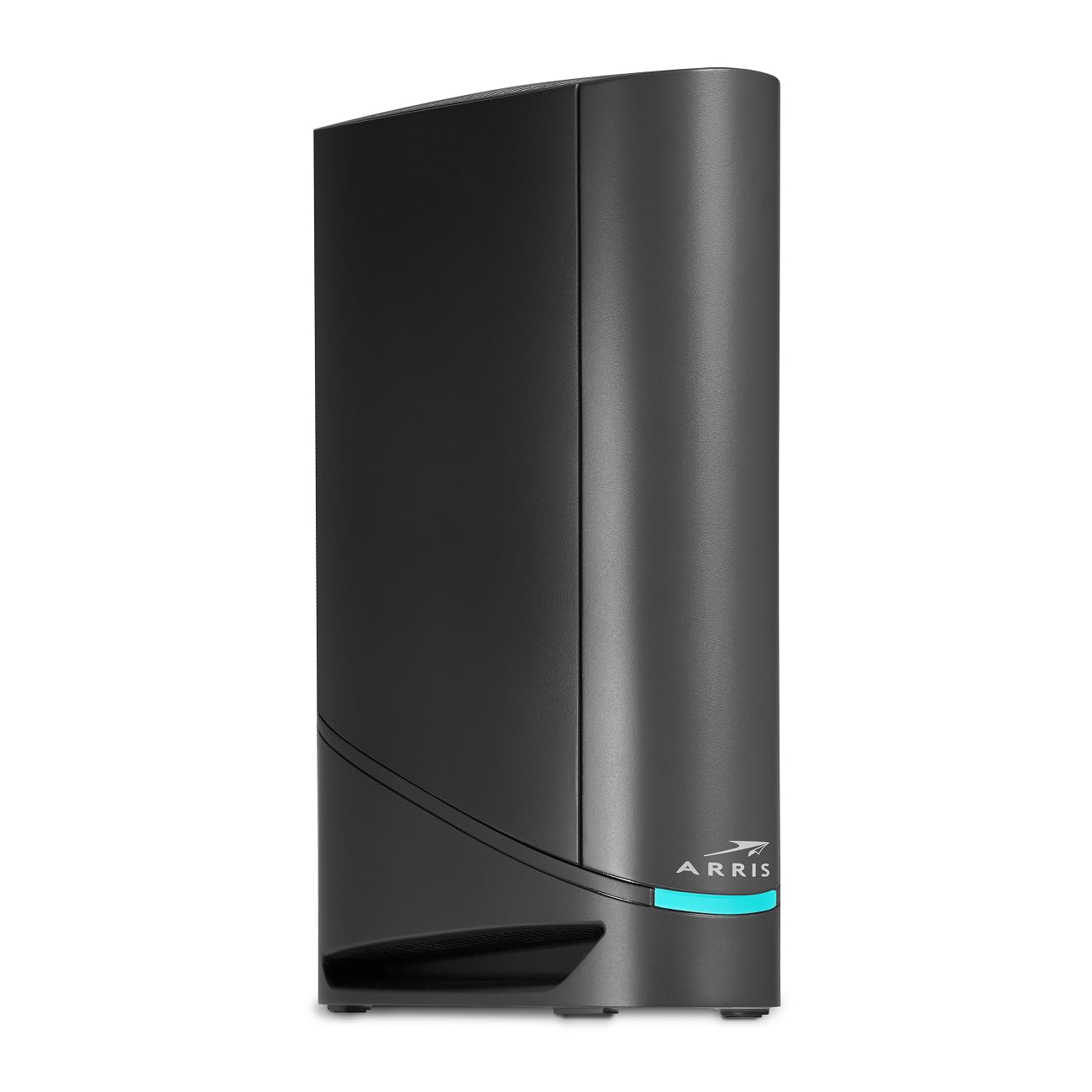
The ARRIS G34‑RB brings DOCSIS 3.1 modem technology and AX3000 dual‑band Wi‑Fi 6 together in a renewed package that strips away the rental fee without stripping your wallet. The modem supports gigabit cable plans (1 Gbps downstream, 1,800 Mbps upstream theoretical) and the AX3000 router handles 30‑plus devices with Wi‑Fi 6 efficiency. The four Gigabit Ethernet ports offer ample wired connectivity for gaming consoles, PCs, and streaming boxes, and the dual‑band Wi‑Fi 6 provides smoother performance in congested neighborhoods.
Real‑world experiences with this unit are mixed but instructive: many users report a smooth setup with Xfinity and strong range improvements over older DOCSIS 3.0 gear, with upload speeds doubling to around 100 Mbps. The band‑sharing technology extends coverage to roughly 2,500 square feet in wood‑frame homes. However, a notable minority experiences persistent Wi‑Fi drops every 20 minutes, requiring a power cycle that takes 5‑10 minutes to recover. This appears to be a firmware or hardware lottery — some units are flawless, others are unstable.
The web interface also has a quirk: the login page is hidden behind an HTTPS security warning, which can confuse less technical users during manual configuration. For buyers willing to work through the small risk of intermittent stability, the G34‑RB offers DOCSIS 3.1 + Wi‑Fi 6 at a very accessible price point. The renewed status means you get a warranty, but the performance inconsistency means it’s best suited for users who are comfortable with potential troubleshooting.
Why it’s great
- DOCSIS 3.1 + AX3000 Wi‑Fi 6 at an accessible renewed price
- Strong upload performance (up to 100 Mbps in some cases)
- Four Gigabit Ethernet ports for wired expansion
Good to know
- Intermittent Wi‑Fi drops reported by some users
- Web interface login hidden behind HTTPS warning
- Renewed unit — check warranty coverage before purchase
9. Arris SBG8300‑RB — DOCSIS 3.1 + AC2350 (Renewed)

The Arris SBG8300‑RB is the most affordable way to get DOCSIS 3.1 modem technology into your home, pairing a 4‑OFDM‑channel modem with an AC2350 dual‑band Wi‑Fi 5 router. The modem side supports gigabit cable plans from Xfinity, Spectrum, and Cox, and the Wi‑Fi 5 AC2350 router handles moderate device loads (15‑20 devices) with beamforming for decent signal shaping. The four Gigabit Ethernet ports provide wired connectivity, and the renewed pricing makes it an attractive entry point for users who want the latency and security benefits of DOCSIS 3.1 without paying for Wi‑Fi 6.
Setup is straightforward with most ISPs: users report easy Xfinity and Spectrum activation, though a common quirk is a MAC address mismatch between the QR code on the box and the sticker on the unit — always use the sticker’s MAC when registering. The DOCSIS 3.1 modem noticeably reduces buffering and delay compared to older DOCSIS 3.0 modems, and the 2.4 GHz band handles printer and IoT connections reliably once configured. Some users find the lack of a physical WPS button frustrating when pairing wireless printers or cameras.
Where the SBG8300‑RB shows its age is the Wi‑Fi 5 wireless stage: with AC2350, it lacks the OFDMA and multi‑user efficiency of Wi‑Fi 6, and homes with more than 20 active devices will feel congestion. The unit also requires two different apps for full management (one for setup, one for advanced controls), which adds friction. For budget‑conscious buyers who prioritize a modern DOCSIS 3.1 modem over Wi‑Fi standard and are comfortable with a slightly dated wireless stage, the SBG8300‑RB is a pragmatic entry‑level choice.
Why it’s great
- DOCSIS 3.1 modem at a budget‑friendly price point
- Reduces buffering and latency vs DOCSIS 3.0
- Four Gigabit Ethernet ports, works with major cable providers
- Refurbished looks like new and includes warranty
Good to know
- Wi‑Fi 5 (AC2350) lacks modern multi‑device efficiency
- No physical WPS button for simple device pairing
- MAC address mismatch between box QR and unit sticker is common
- Requires two separate apps for full feature access
FAQ
Will any cable router modem work with my Xfinity or Spectrum plan?
What’s the real difference between a modem‑router combo and a separate modem plus mesh system?
How often should I reboot my cable router modem for stable performance?
Final Thoughts: The Verdict
For most users, the best cable router modem winner is the Motorola MG8725 because it combines Low Latency DOCSIS certification, a 2.5 Gig Ethernet port, and AX6000 Wi‑Fi 6 in a single future‑ready package. If you want the blazing speed of a 6 GHz mesh and have a separate modem, grab the TP‑Link Deco XE75 Pro. And for budget‑friendly gigabit performance, nothing beats the Motorola MG7700 for value on cable plans up to 800 Mbps.

Mo Maruf
I created WellFizz to bridge the gap between vague wellness advice and actionable solutions. My mission is simple: to decode the research and give you practical tools you can actually use.
Beyond the data, I am a passionate traveler. I believe that stepping away from the screen to explore new environments is essential for mental clarity and physical vitality.