Our readers keep the lights on and my smoothie glass nicely filled. As an Amazon Associate, I earn from qualifying purchases.
Rosemary oil is one of the most potent natural stimulants for hair follicles, but applying it directly to your scalp can cause irritation and waste the concentrate. The right carrier oil doesn’t just dilute the rosemary — it delivers the active compounds deeper into the hair shaft and balances your scalp’s natural sebum production. Choosing a cold-pressed, unrefined base that matches your hair type is the difference between frizz and fullness.
I’m Mohammad Maruf — the founder and writer behind WellFizz. My research focuses on analyzing extraction methods, fatty acid profiles, and certification standards for natural hair care oils to separate genuine formulations from marketing filler.
The following five carriers were selected based on their absorption rates, purity levels, and compatibility with rosemary essential oil, making this the definitive guide to the best carrier oil for rosemary oil for hair growth for any hair type or budget.
How To Choose The Best Carrier Oil For Rosemary Oil For Hair Growth
Not every oil works as a carrier for rosemary. The best bases are cold-pressed, unrefined, and free from hexane solvents. They should also mimic the scalp’s natural lipid layer to prevent clogged follicles while allowing the rosemary’s active compounds — like ursolic acid and carnosic acid — to penetrate effectively. Here are the three most critical factors to evaluate.
Absorption Rate and Comedogenic Rating
A low comedogenic rating (0-2 on a scale of 0-5) means the oil won’t block pores. Jojoba oil scores a perfect 0 because its molecular structure closely resembles human sebum, making it ideal for fine or acne-prone scalps. Fractionated coconut oil also scores low, while castor oil sits higher on the scale — it’s thicker and better suited for dry or coarse hair types that need more occlusion.
Fatty Acid Profile and Sterol Content
Oils rich in linoleic acid (like grapeseed and sweet almond) provide anti-inflammatory support for the scalp, which is essential when rosemary is used for stimulating blood flow. Oils high in oleic acid (like avocado) deliver deeper moisture but are heavier. The presence of phytosterols in jojoba and avocado oils helps repair the scalp barrier, creating a healthier environment for new growth.
Purity and Processing Method
Cold-pressed extraction preserves heat-sensitive antioxidants and vitamins that support hair follicles. Hexane-extracted oils lack these compounds and can introduce trace chemical residues. USDA Organic certification provides third-party verification that the oil is free from synthetic pesticides. For a carrier oil to work properly with rosemary, it must be 100% pure with no added fragrances, silicones, or mineral oils.
Quick Comparison
On smaller screens, swipe sideways to see the full table.
| Model | Category | Best For | Key Spec | Amazon |
|---|---|---|---|---|
| Ella & Eden Organic Jojoba Oil | Mid-Range | All hair types, daily scalp massage | USDA Certified, 4 fl oz dropper | Amazon |
| Nature’s Oil Castor Oil | Mid-Range | Thinning hair, coarse textures | 15 oz bottle, hexane-free | Amazon |
| Natural Riches Rosemary Oil Blend | Mid-Range | Pre-mixed convenience, anti-dandruff | 8 fl oz, infused with Biotin & Vitamin E | Amazon |
| Viva Naturals Organic Fractionated Coconut Oil | Premium | Lightweight moisture, fine hair | 16 fl oz, USDA Organic, liquid at room temp | Amazon |
| Plant Guru Carrier Oil Variety Set | Premium | Experimenting with different bases | 4 oils x 4 oz, cold-pressed | Amazon |
In‑Depth Reviews
1. Ella & Eden Organic Jojoba Oil

This jojoba oil earns the top spot because its molecular structure is nearly identical to human sebum, allowing rosemary oil to penetrate the follicle without triggering excess oil production. The 4-ounce glass dropper bottle preserves the integrity of the cold-pressed, hexane-free liquid, and the USDA Organic certification guarantees no synthetic pesticides touched the jojoba seeds. Users report that a few drops spread easily across the scalp and absorb within minutes, leaving no greasy film.
Unlike heavier oils that sit on top of the hair shaft, this carrier sinks into the cuticle and carries the rosemary compounds directly to the root. The non-comedogenic rating of 0 means it won’t clog pores even with daily application, which is critical for anyone using rosemary to stimulate growth on an already oily scalp. Customer reviews consistently mention that it works as an excellent base for mixing rosemary, lavender, and peppermint essential oils.
The main tradeoff is the bottle size — at 4 fluid ounces, heavy users who apply generously to long hair may need to reorder more frequently than with larger formats. The dropper dispenses well but the glass bottle requires careful handling in the shower. Still, for a pure, certified organic jojoba oil that balances the scalp’s microbiome while delivering rosemary’s growth-boosting properties, this is the gold standard.
Why it’s great
- Zero comedogenic rating makes it safe for acne-prone scalps
- Absorbs quickly without weighing down fine hair
- Certified organic and hexane-free with a glass dropper bottle
Good to know
- 4 oz size may require frequent repurchase for daily full-head applications
- Glass bottle can break if dropped on tile surfaces
2. Nature’s Oil Castor Oil

Castor oil’s claim to fame is its high ricinoleic acid content, which has documented anti-inflammatory properties that soothe the scalp and improve circulation when combined with rosemary oil. This 15-ounce bottle from Nature’s Oil is cold-pressed and hexane-free, giving you a thick, viscous carrier that stays on the scalp longer than lighter oils — ideal for overnight treatments. Users with curly, coarse, or thinning hair report that this base helps rosemary work deeper into the follicle over extended contact periods.
Because castor oil is significantly heavier than jojoba or fractionated coconut oil, it functions more as a deep conditioning treatment than a daily leave-in. Mixing it with rosemary essential oil at a ratio of 1 drop of rosemary per tablespoon of castor oil creates a potent serum for the hairline and crown. Several reviews note that the oil helped reduce frizz and breakage without the greasiness they experienced with cheaper coconut oil alternatives.
The main limitation is the texture — castor oil is sticky and requires thorough shampooing to remove residue, which means it’s not ideal for fine hair or daily use. The 15-ounce value size is excellent for cost-conscious buyers, but the lack of a pump or dropper in the standard bottle makes dispensing messy. If you have thick or chemically processed hair and want a rich carrier that maximizes rosemary’s contact time, this is the right choice.
Why it’s great
- High ricinoleic acid content supports scalp circulation and follicle strength
- Large 15 oz bottle provides excellent value for frequent treatments
- Cold-pressed and hexane-free with no added fillers
Good to know
- Thick, sticky texture requires multiple shampoo rinses to remove completely
- Not suitable for daily use on fine or oily hair types
3. Natural Riches Rosemary Oil Blend
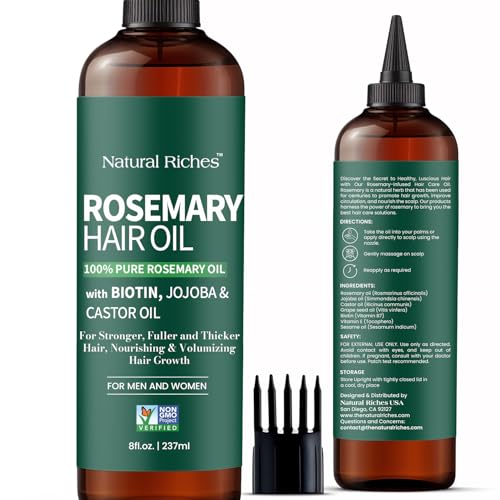
This product blurs the line between carrier and treatment: it already contains rosemary oil blended with jojoba and castor oils, plus added biotin and Vitamin E. For beginners who want a ready-to-use formula rather than mixing their own drops, this 8-ounce bottle skips the guesswork entirely. The base oils (jojoba and castor) provide both the lightweight absorption of jojoba and the occlusive hold of castor, creating a dual-action carrier that works on medium to thick hair textures.
The inclusion of biotin is notable because it supports keratin infrastructure at the follicle level, while the Vitamin E acts as a natural preservative and antioxidant. Customer feedback highlights that the mild, woody rosemary scent washes out cleanly and that the blend helps reduce shedding when applied to the scalp before shampooing. The texture is thicker than pure jojoba but thinner than pure castor, striking a manageable middle ground for most users.
The downside is that you lose control over the ratio of carrier to essential oil — this is a fixed formulation with biotin and Vitamin E that may not suit all scalps. Some reviewers noted that the thick texture requires warming in your palms before application. If you prefer to customize your blend with exact rosemary concentrations, a pure carrier oil is better. But for convenience and a balanced formula that’s ready to massage in immediately, this is a strong contender.
Why it’s great
- Pre-mixed with biotin and Vitamin E for added follicle support
- Combination of jojoba and castor provides balanced absorption and hold
- Mild scent washes out cleanly without residue
Good to know
- Fixed formula doesn’t allow customization of rosemary-to-carrier ratio
- Thick texture may need warming before application on fine hair
4. Viva Naturals Organic Fractionated Coconut Oil

Fractionated coconut oil is a premium carrier choice because it remains liquid at room temperature indefinitely — no warming required — and has a molecular structure that absorbs rapidly without clogging pores. Viva Naturals’ version is USDA Organic and hexane-free, with a neutral scent that won’t compete with the herbaceous aroma of rosemary essential oil. This makes it an excellent base for anyone who wants to apply rosemary oil in the morning without a heavy, slick feeling lasting through the day.
The 16-ounce bottle is the largest single-carrier option on this list, providing good value for weekly scalp treatments. Unlike virgin coconut oil, which solidifies below 76°F and can feel waxy, the fractionated version stays silky and spreads easily through both fine and medium hair. Reviews confirm that mixing a few drops of rosemary into this coconut oil creates a lightweight serum that hydrates the scalp without making hair look greasy, and it works well as a leave-in conditioner for the ends.
The primary tradeoff is that fractionated coconut oil lacks some of the antioxidants and medium-chain triglycerides found in virgin coconut oil because the fractionation process removes long-chain fatty acids. It’s still an effective carrier, but if you want the full nutritional profile of unrefined coconut oil for your scalp, you may prefer a virgin option. For a fast-absorbing, non-staining base that lets rosemary do its work without interference, this is a top-tier choice.
Why it’s great
- Stays liquid at room temperature with no greasy residue
- Large 16 oz bottle offers excellent value for daily use
- Neutral scent allows rosemary’s aroma to dominate the blend
Good to know
- Fractionation process removes some beneficial long-chain fatty acids
- Not as deeply moisturizing as virgin coconut oil for very dry scalps
5. Plant Guru Carrier Oil Variety Set

This set from Plant Guru includes 4-ounce bottles of cold-pressed sweet almond, avocado, fractionated coconut, and grapeseed oils — giving you four distinct fatty acid profiles to test with rosemary oil. Sweet almond oil provides high linoleic acid for soothing scalp inflammation, while avocado oil delivers deeper moisture through its oleic acid content. Grapeseed oil is the lightest of the four and absorbs almost instantly, making it a good option for daytime wear under rosemary treatment.
For someone new to carrier oils, this variety pack removes the guesswork of buying four separate bottles. You can compare how each base interacts with rosemary essential oil on your specific hair type — for example, using avocado oil on weekends for an intensive mask and grapeseed oil for quick morning scalp massages. Customer reviews consistently praise the purity of each oil and note that they blend well without separating, even when combined in custom recipes for roller bottles.
The cost per ounce is higher than buying a single large bottle of one oil, and the 4-ounce size means you’ll finish each bottle faster if you settle on a favorite. The packaging lacks built-in pumps or droppers, so transferring to smaller bottles is recommended for easier application. If you already know you prefer jojoba or castor oil exclusively, this variety set adds unnecessary complexity. But for anyone who wants to dial in their perfect rosemary carrier by comparing multiple bases side by side, this is the most practical approach.
Why it’s great
- Four different cold-pressed oils let you test absorption and moisture levels
- Blends well with rosemary essential oil without separation
- Great for creating custom roller bottle blends for different hair needs
Good to know
- 4 oz each means smaller volume per bottle compared to single-oil options
- No pump or dropper included — plan to transfer to dispensing bottles
FAQ
What is the best carrier oil ratio when mixing rosemary essential oil?
Can I use olive oil as a carrier for rosemary oil on my hair?
Should I apply the carrier oil before or after shampooing when using rosemary?
Final Thoughts: The Verdict
For most users, the best carrier oil for rosemary oil for hair growth winner is the Ella & Eden Organic Jojoba Oil because its sebum-mimicking structure delivers rosemary to the follicle without clogging pores or leaving residue. If you have thick, coarse hair that needs deep occlusion, grab the Nature’s Oil Castor Oil. And for lightweight daily use on fine or oily hair, nothing beats the Viva Naturals Organic Fractionated Coconut Oil.

Mo Maruf
I created WellFizz to bridge the gap between vague wellness advice and actionable solutions. My mission is simple: to decode the research and give you practical tools you can actually use.
Beyond the data, I am a passionate traveler. I believe that stepping away from the screen to explore new environments is essential for mental clarity and physical vitality.