Our readers keep the lights on and my smoothie glass nicely filled. As an Amazon Associate, I earn from qualifying purchases.
Winter work demands a boot that refuses to compromise on warmth, traction, and safety. The wrong pair means frozen toes, wet socks, and a day spent fighting the elements instead of the job. Choosing a boot that balances heavy-duty insulation with all-day mobility is the single biggest decision you’ll make for your cold-weather gear.
I’m Mohammad Maruf — the founder and writer behind WellFizz. I’ve spent years analyzing construction, oil field, and outdoor work gear, parsing load-bearing specs, insulation ratings, and slip-resistance data so you don’t have to guess.
Whether you’re standing on frozen concrete, trudging through wet snow, or working a 12-hour shift in subzero temperatures, finding the right boots for winter work changes everything about how your day feels and how long your gear lasts.
How To Choose The Best Boots For Winter Work
Selecting the right winter work boot means more than checking a box for “warm.” You need to evaluate insulation density, waterproofing method, safety-toe type, and outsole grip — all relative to your specific work environment.
Insulation Weight and Material
Insulation is measured in grams (400g, 800g, 1200g, etc.). Heavier insulation packs more warmth but also adds bulk and can lead to sweating if you’re active indoors. For moderate cold with movement, 400g–800g works well. For static work or extreme subzero conditions, 1200g or more is the right target.
Waterproofing Membrane vs. Coating
A sealed waterproof membrane (like those found in quality neoprene or laminated constructions) keeps moisture out even when you’re standing in slush. Simple water-resistant coatings fail quickly under repeated wet contact. Look for full waterproof ratings, not just “resistant” labels.
Safety Toe and Sole Construction
Steel toes offer the highest impact protection but conduct cold. Alloy and composite toes reduce weight and insulate better but may not meet every jobsite standard. The outsole should feature deep lugs for snow, mud, and ice. A puncture-resistant shank adds protection against hidden debris.
Quick Comparison
On smaller screens, swipe sideways to see the full table.
| Model | Category | Best For | Key Spec | Amazon |
|---|---|---|---|---|
| Thorogood 1957 Series 8″ | Work Boot | All-day comfort on concrete | 8″ height, steel toe, slip-resistant | Amazon |
| Irish Setter Two Harbors 11″ | Wellington Boot | Oil rig and wet worksites | 11″ height, steel toe, waterproof | Amazon |
| Wolverine W03238 Durashock | Work Boot | Long-lasting leather durability | 8″ height, alloy toe, Durashock sole | Amazon |
| Rocky Blizzard Stalker | Insulated Boot | Extreme cold and ice fishing | 1200g insulation, waterproof | Amazon |
| Timberland PRO Gridworks Wedge | Work Boot | Alloy safety toe comfort | 6″ height, alloy toe, waterproof | Amazon |
| KEEN Revel 4 Mid | Hiking Boot | Snowy hikes and snowshoeing | Polar insulation, waterproof | Amazon |
| Carhartt RugFlx 8″ Soft Toe | Work Boot | Lightweight daily winter work | 8″ height, waterproof, soft toe | Amazon |
| Hunthor Rubber Work Boots | Wellington Boot | Wet and cold seafood/farm work | Steel toe, 6mm neoprene, puncture-proof | Amazon |
| TIDEWE Work Boots | Wellington Boot | Budget-friendly wet worksites | Steel toe, puncture-proof, neoprene | Amazon |
In‑Depth Reviews
1. Thorogood 1957 Series 8” Waterproof Steel Toe Work Boots

The Thorogood 1957 Series delivers a premium experience out of the box with full-grain leather, a triple-stitched upper, and a shock-absorbing polyurethane footbed. Multiple reviewers report zero break-in soreness even during 12-hour shifts on concrete floors, which is rare for a steel-toe leather boot in this category. The slip-resistant heel outsole provides reliable traction on wet and slick surfaces.
Build quality stands out: the leather holds up to rock quarry and lumber mill abuse, with many users reporting nearly two years of heavy use before needing a replacement. The 8-inch shaft offers solid ankle support for uneven terrain, and the waterproof membrane keeps feet dry in snow and rain. The removable footbed allows for custom orthotics if needed.
The main consideration is sizing — some users found the normal width runs narrow and recommend a wide width or sizing down a half step. The black armor coating on the toe adds durability but can show wear over time if not conditioned. For all-day comfort and top-tier construction, this is the benchmark in the premium tier.
Why it’s great
- Zero break-in period for a steel-toe leather boot
- Triple-stitched upper and full-grain leather for extended durability
- Excellent slip resistance on concrete and wet surfaces
Good to know
- Normal width runs narrow; wide size recommended for most
- Insole cushioning could be thicker given the price point
2. Irish Setter Two Harbors 11″ Waterproof Steel Toe Work Boot

With an 11-inch shaft and steel safety toe, the Irish Setter Two Harbors is built for the harshest wet environments — oil rigs, chemical plants, and deep snow. Users report the waterproofing holds up against constant immersion, and the outsoles resist melting on hot surfaces where other boots fail. The boot fits wide feet comfortably and requires no break-in.
Durability is exceptional: multiple reviews mention this being the third pair purchased because earlier pairs lasted years of daily oil-field abuse. The insulation keeps feet warm in Wyoming winters while the anti-slip sole maintains grip on slick metal grating. The pull-on design with top strap makes donning and doffing easy even with thick gloves.
Sizing runs large — expect to go down a half size from your normal work boot size, especially if you plan to wear heavy wool socks. The calf circumference is relatively narrow, so users with thicker calves may find the fit restrictive. For extreme wet and cold worksites, this boot is a proven survivor.
Why it’s great
- Proven durability on oil rigs and in extreme cold (Wyoming winters)
- Waterproof membrane holds up to constant water immersion
- No break-in period needed; comfortable from first wear
Good to know
- Narrow calf opening may not accommodate thicker legs
- Sizing runs large; half size down recommended
3. Wolverine W03238 Durashock Boot

The Wolverine Durashock boot is a classic workhorse with an alloy toe for lighter weight than steel, combined with a shock-absorbing Durashock outsole that reduces impact on hard surfaces. Users consistently praise the soft leather and out-of-the-box comfort, with some reporting the boot lasted over a year of daily construction wear before significant wear appeared.
Compared to other boots in this roundup, the Durashock runs true to size and fits like a traditional work boot. The full-grain leather upper resists abrasion, and the alloy toe meets safety standards without the cold-conducting issues of steel. Many buyers repurchase the exact same model, citing it as the longest-lasting work boot they’ve owned.
The main durability pattern: while the sole holds up well, some users experienced stitching failure on the upper before the outsole wore out. Regular conditioning of the leather extends the lifespan significantly. For those who value a comfortable, lightweight alloy toe boot for general winter construction work, this is a proven option.
Why it’s great
- Alloy toe reduces weight and cold conduction vs. steel
- Durashock outsole provides excellent shock absorption on hard floors
- Soft leather requires minimal break-in
Good to know
- Stitching on upper may fail before the sole wears out
- Not as heavily insulated as dedicated winter boots
4. Rocky Blizzard Stalker Waterproof 1200G Insulated Boot

The Rocky Blizzard Stalker is purpose-built for extreme cold with 1200 grams of insulation — one of the highest warmth ratings in this review. Users report wearing these in temperatures as low as -6°F with no cold feet, and the boot maintains comfort during ice fishing and frozen concrete work. The waterproof construction keeps feet dry in slush and shallow water.
Traction is solid on light snow and loose surfaces, though the outsole is less aggressive than some competitors on sheet ice. The boot runs large by about a half to full size, which works well for layering thick wool socks. Multiple reviewers note the boot is lighter than its rugged appearance suggests, reducing fatigue over long days.
A known weak point is the bootlace hooks — several users reported them breaking after a few wears, which may require a field repair or replacement lacing method. The 8-inch height provides decent ankle support but is not as tall as the Irish Setter. For stationary work in subzero conditions, the Blizzard Stalker delivers unmatched warmth.
Why it’s great
- 1200g insulation keeps feet warm in subzero temperatures
- Lighter than comparable heavily-insulated boots
- Waterproof construction handles slush and shallow water
Good to know
- Bootlace hooks prone to breaking
- Sizing runs large; half to full size down recommended
5. Timberland PRO Gridworks Wedge 6″ Alloy Safety Toe Waterproof Work Boot
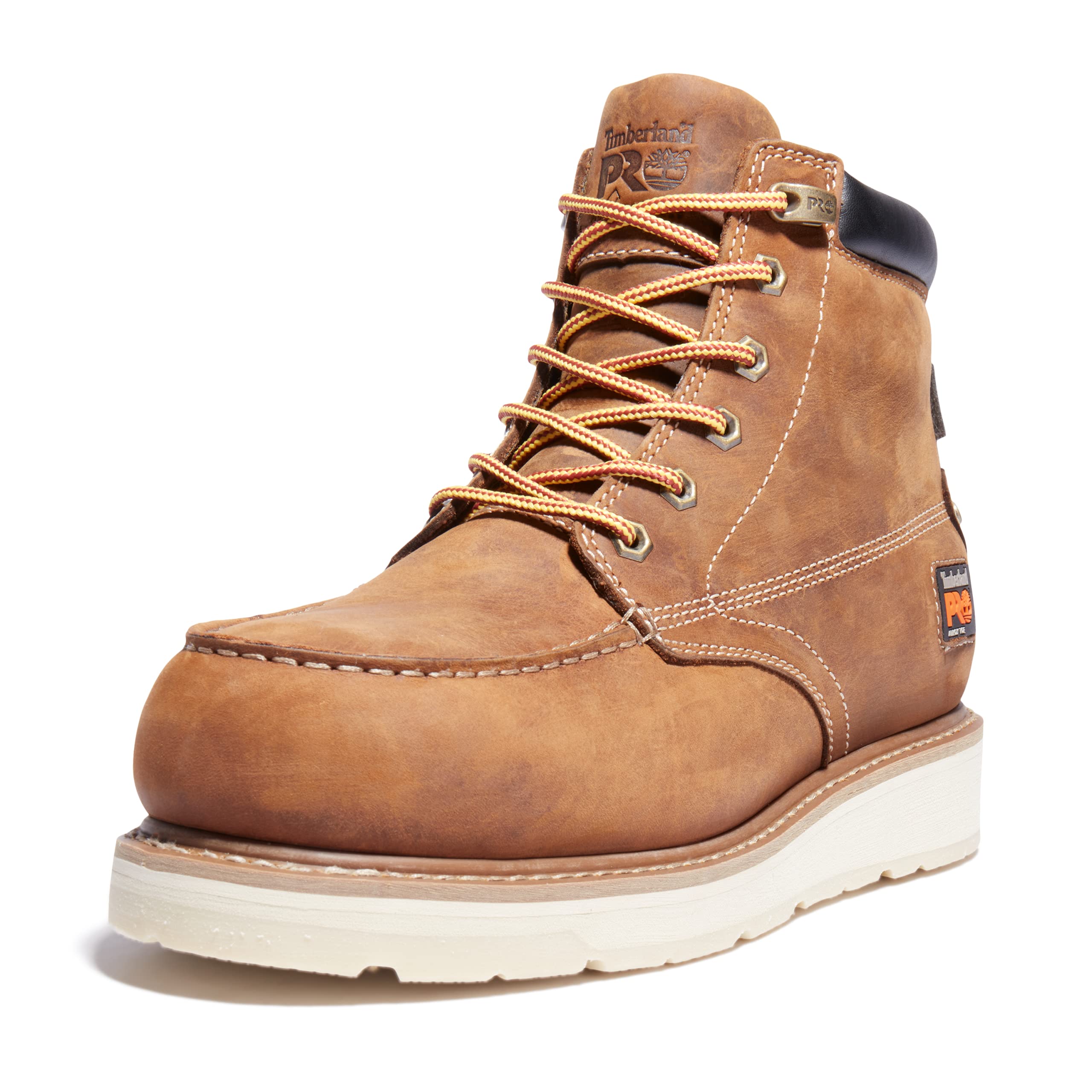
Timberland PRO’s Gridworks Wedge boot combines a low-profile 6-inch height with an alloy safety toe and waterproof construction. The wedge sole design provides a stable platform for standing on ladders and flat surfaces, and users report the boot is comfortable enough to wear all day from the very first shift. The wide fit accommodates thicker socks without pinching.
Longevity is a strong suit: several reviewers noted this boot lasted over two years with only a few insert changes, and the sole held up well despite daily wear. The leather upper resists scuffs, and regular waxing helps maintain the waterproof seal. The alloy toe keeps the boot lighter than steel toe alternatives, reducing leg fatigue.
The 6-inch height offers less ankle coverage than 8-inch or 11-inch boots, so it’s less suitable for deep snow or mud. Some users found the toe box snug if they prefer extra room. For shop, warehouse, and light winter construction work where ankle mobility matters, this is a top choice.
Why it’s great
- Wedge sole provides excellent stability for ladder and flat-surface work
- Alloy toe reduces weight and cold conduction
- Proven durability of 2+ years with minimal maintenance
Good to know
- 6-inch height provides limited ankle coverage in deep snow
- Some users find the toe box slightly snug
6. KEEN Revel 4 Mid Height Polar Insulated Waterproof
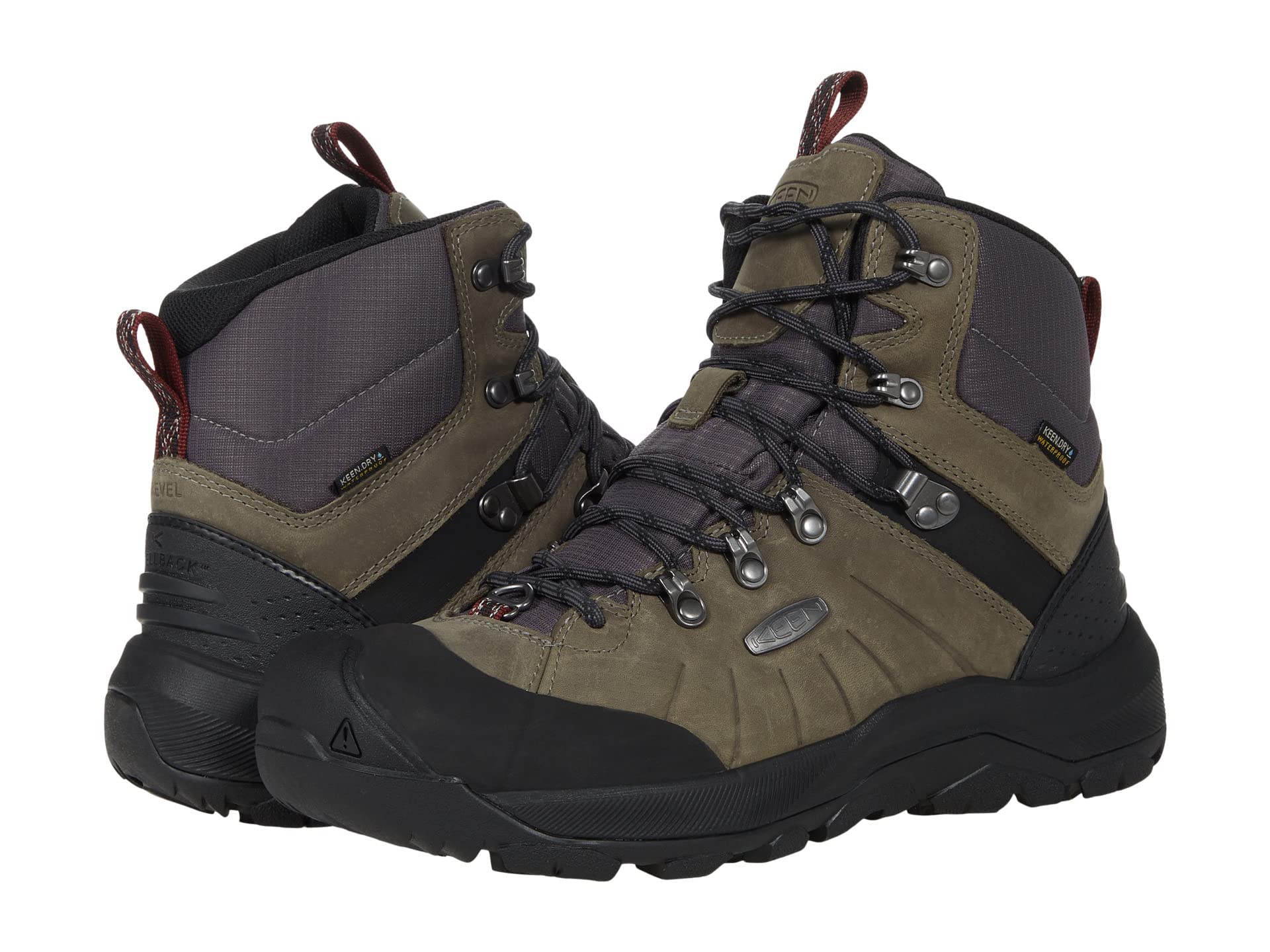
The KEEN Revel 4 Mid is a winter hiking boot that doubles as a lightweight work boot for outdoor winter tasks. Tested on a snowy Colorado fourteener in -5°F wind chill, the polar insulation kept feet warm while the waterproof build kept snow out. The roomy toe box is a signature KEEN feature, allowing toes to splay naturally during long descents.
Traction is phenomenal on snow and ice — many reviewers note they didn’t need crampons or additional traction devices. The boot is also compatible with snowshoes and strap-on cleats when conditions demand extra grip. The mid-height offers good ankle support without the bulk of a full-height work boot.
The Revel 4 is not a steel-toe boot, so it won’t meet jobsite safety requirements. The insulation, while warm, is not at the 1200g level of the Rocky Blizzard Stalker. For outdoor maintenance, trail work, and recreation in snow, this boot strikes an excellent balance of warmth, weight, and traction.
Why it’s great
- Remarkable traction on snow and ice without additional cleats
- Roomy toe box provides all-day comfort for long hikes
- Lightweight construction reduces fatigue during movement
Good to know
- No steel or alloy toe — not suitable for required safety-toe jobsites
- Insulation is good but not as heavy as dedicated extreme-cold boots
7. Carhartt Men’s RugFlx 8″ Soft Toe Work Boot

The Carhartt RugFlx boot is known for its buttery-soft leather and lightweight feel — impressive for an 8-inch work boot. Users wear it daily for two winters straight, reporting dry, warm feet down to 0°F with wool socks. The flexible sole and low weight mean no break-in soreness, which is a consistent theme across reviews.
Despite the soft toe (no safety certification), the boot holds up to heavy-duty construction and roofing work, lasting about a year of daily abuse. The waterproof membrane performs well in snow and rain, and the wide fit accommodates users who find other boots too tight. The RugFlx sole provides good grip on dry and mildly wet surfaces.
The soft toe limits this boot to worksites without toe protection requirements. Some users note the upper could use more padding around the ankle for additional support. For non-safety-toe winter work where comfort and lightweight feel are priorities, this Carhartt model delivers predictable quality.
Why it’s great
- Buttery-soft leather with zero break-in period
- Lightweight for an 8-inch boot, reducing fatigue
- Waterproof performance holds up over multiple winters
Good to know
- Soft toe does not meet safety-toe requirements
- Upper ankle padding could be more substantial
8. Hunthor Rubber Work Boots (Puncture-Proof, Steel Toe, 6mm Neoprene)
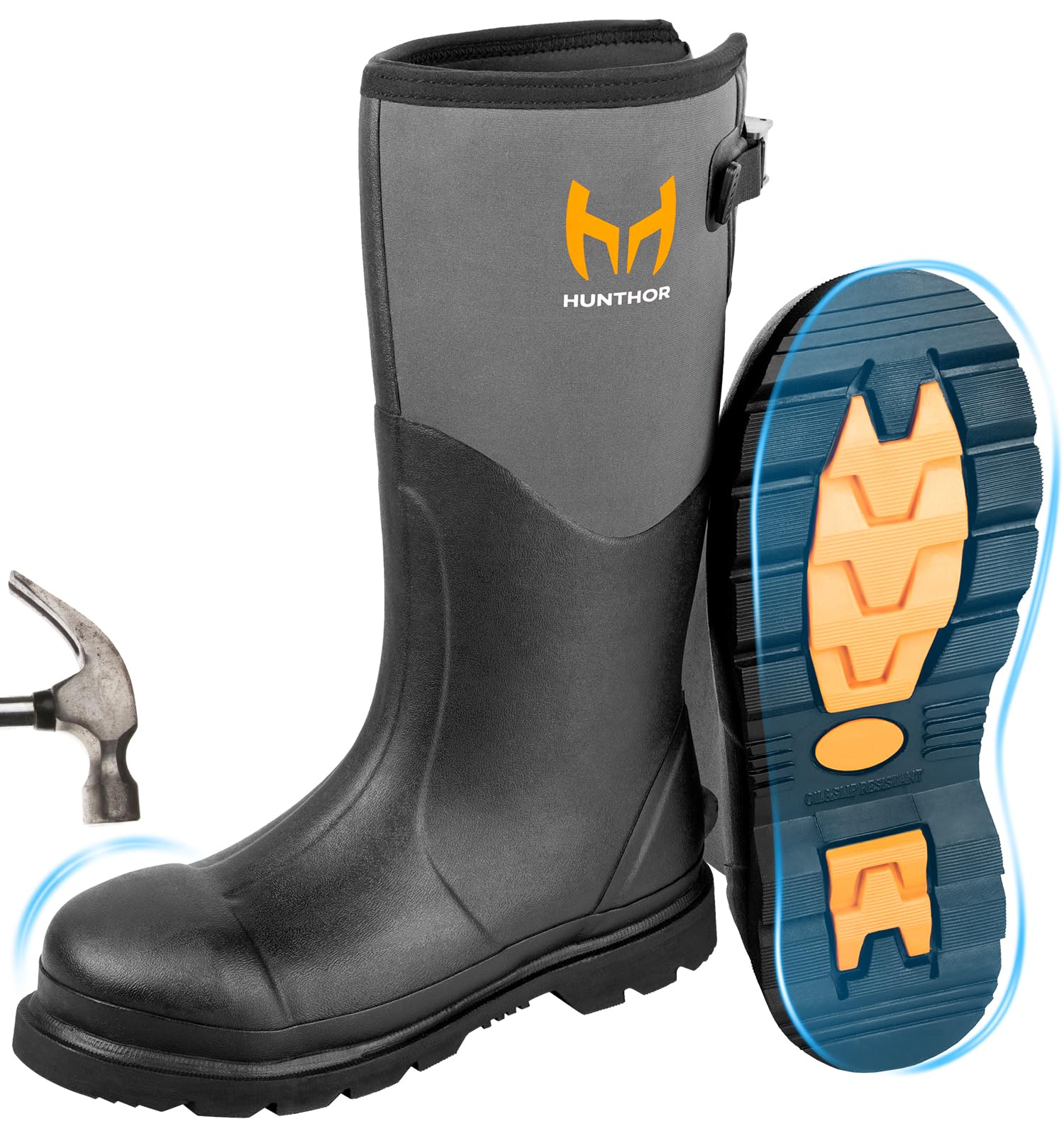
The Hunthor rubber work boot is a purpose-built wet-weather boot with steel toe protection, 6mm neoprene insulation, and a puncture-proof sole. Users in cold, wet environments like seafood packing plants report the boot keeps feet warm and dry through 12-hour shifts in 2–7 inches of standing water. The thick pliable rubber outsole resists cracking in cold temperatures.
The neoprene upper stretches slightly for easy pull-on access while maintaining a snug fit around the calf for most users. The steel toe meets impact protection standards, and the puncture-proof shank provides secondary underfoot safety. Compared to premium brands like Red Wing, reviewers found the Hunthor to offer comparable warmth and durability at a more accessible price point.
Sizing runs slightly small for some, and the calf circumference is narrow — users with thicker calves may find the fit restrictive. A few units arrived with minor cosmetic imperfections like discoloration from glue. For budget-conscious buyers who need steel-toe protection in wet, cold conditions, this is a strong contender.
Why it’s great
- Steel toe and puncture-proof shank for safety in wet worksites
- 6mm neoprene provides good insulation in standing water
- Comparable warmth and durability to premium brands at a lower price point
Good to know
- Narrow calf opening may not fit thicker legs
- Some units arrive with minor cosmetic glue marks
9. TIDEWE Work Boots for Men (Steel Toe, Neoprene, Black)
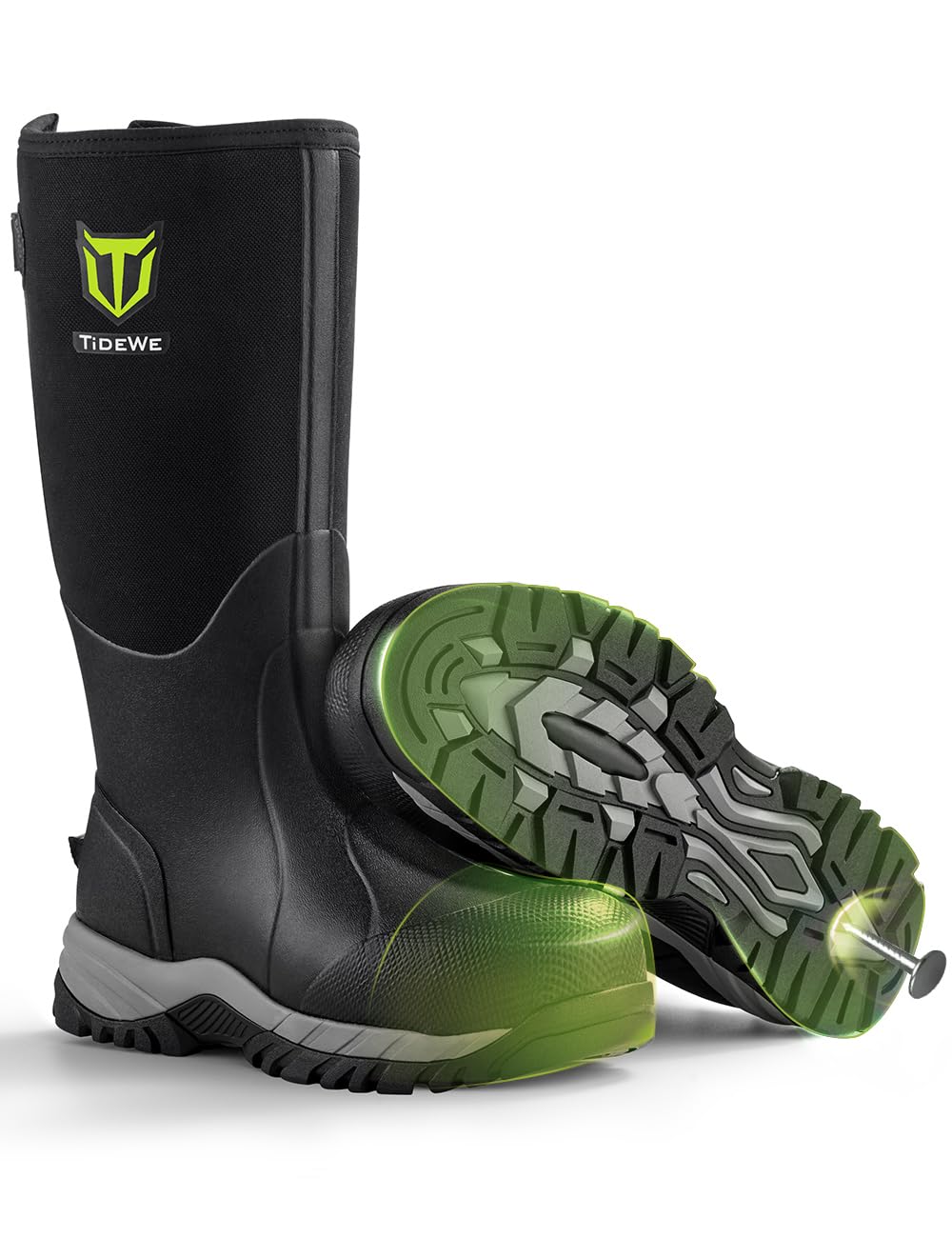
The TIDEWE work boot offers an entry-level option for wet and cold worksites with a steel toe, 6mm neoprene insulation, and a waterproof rubber shell. The pull-on design with kick tab makes for easy entry and exit. The deep tread outsole provides decent grip on farm, garden, and construction terrain, and the puncture-proof steel shank adds underfoot protection.
Users find the boot warm and waterproof, with many reporting dry feet during wet work days. The neoprene upper allows some flexibility while maintaining the waterproof seal. The ergonomic arch at the top of the boot improves fit for many, though the boot runs significantly large — most users recommend sizing down a full step.
Traction on wet surfaces is adequate but not exceptional — a few reviewers noted slipping on water. The neoprene material can cause feet to sweat during high-activity work. For light to moderate wet winter work on a budget, the TIDEWE boot provides solid protection, but sizing inconsistencies and moderate grip are factors to consider.
Why it’s great
- Steel toe and puncture-proof shank for safety
- 6mm neoprene insulation keeps feet warm in cold weather
- Pull-on design with kick tab for easy wear
Good to know
- Runs very large; size down one full step
- Traction on wet surfaces is moderate, not the best in class
FAQ
Should I choose steel toe, alloy toe, or composite toe for winter work?
How do I know if 400g or 1200g insulation is right for my work?
Final Thoughts: The Verdict
For most users, the boots for winter work winner is the Thorogood 1957 Series because it combines premium full-grain leather construction, immediate comfort, and steel-toe protection with enough waterproofing for daily winter use. If you need maximum warmth for stationary work in subzero temperatures, grab the Rocky Blizzard Stalker with 1200g insulation. And for wet worksites where standing water is constant, nothing beats the Irish Setter Two Harbors with its 11-inch shaft and proven oil-rig durability.

Mo Maruf
I created WellFizz to bridge the gap between vague wellness advice and actionable solutions. My mission is simple: to decode the research and give you practical tools you can actually use.
Beyond the data, I am a passionate traveler. I believe that stepping away from the screen to explore new environments is essential for mental clarity and physical vitality.